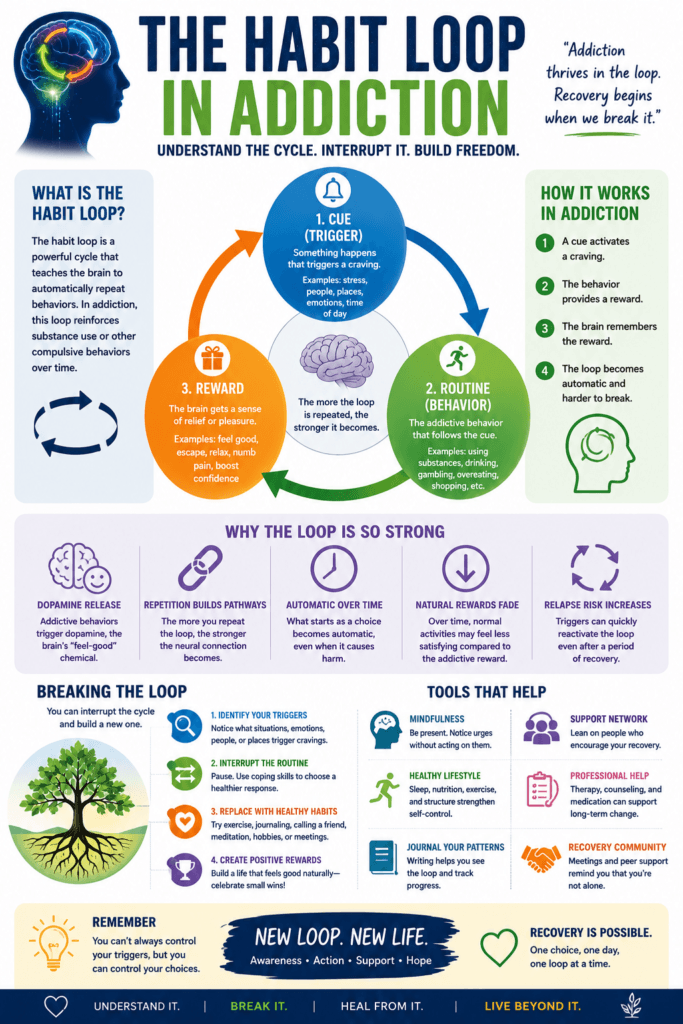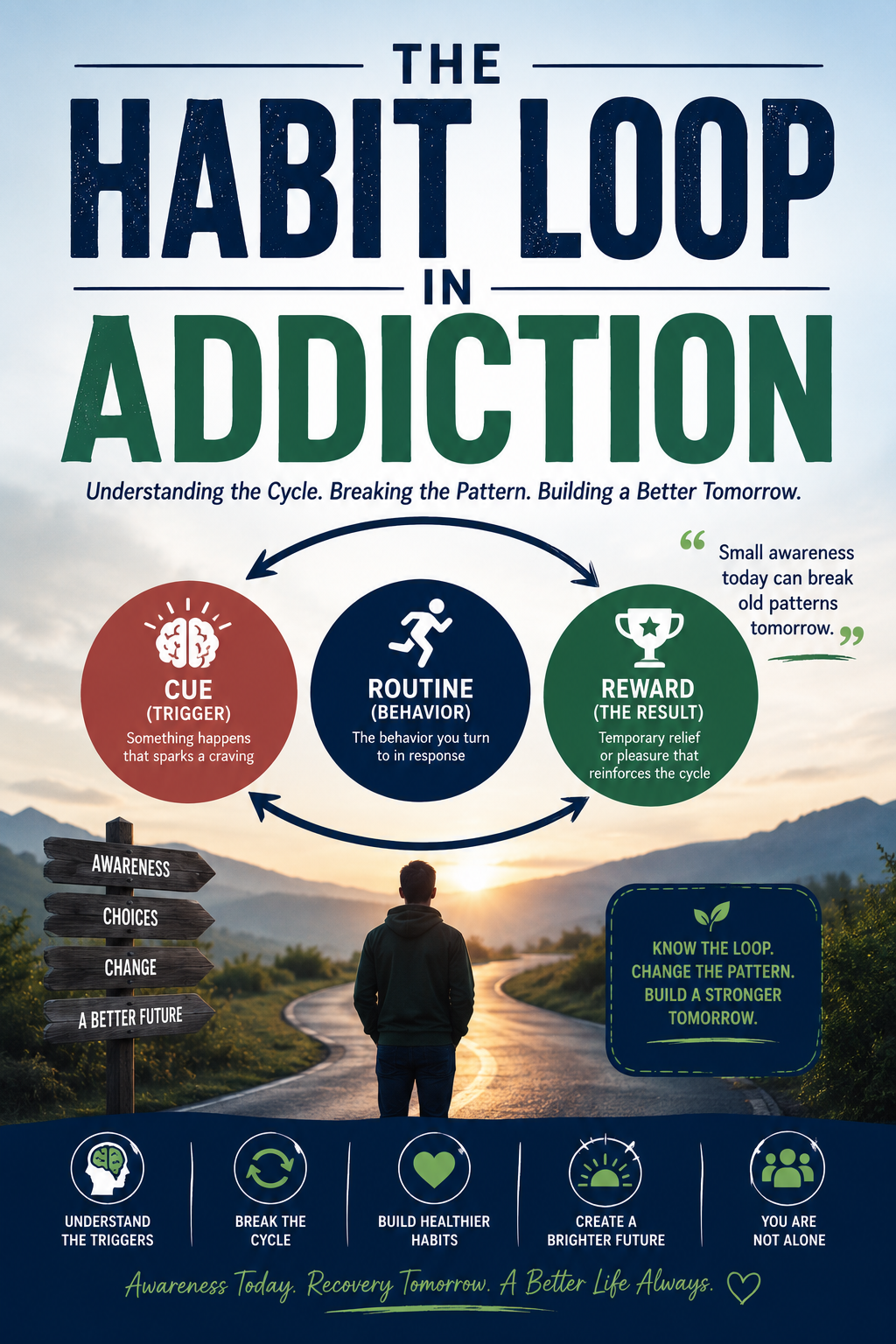
Addiction is more than repeated substance use or compulsive behavior—it is driven by powerful patterns in the brain that become stronger over time. One of the most helpful ways to understand these patterns is through the habit loop, a cycle consisting of a cue (trigger), routine (behavior), and reward. A stressful event, emotional discomfort, or familiar environment may trigger a craving, leading to substance use or another addictive behavior that temporarily provides relief or pleasure. As this cycle repeats, the brain strengthens the connection between the trigger and the behavior, making the response increasingly automatic. Understanding the habit loop helps explain why addiction is difficult to overcome and highlights how recovery involves replacing unhealthy routines with healthier behaviors that support long-term healing. By recognizing triggers and learning new coping strategies, individuals can begin to break the cycle of addiction and build lasting recovery.
The Habit Loop in Addiction
Addiction often develops through a repeating pattern known as the habit loop. This loop explains how certain behaviors become automatic over time and why breaking an addiction can be so difficult. The concept, originally described in behavioral psychology, consists of three main parts: cue, routine, and reward. Repeating this cycle strengthens brain pathways, making addictive behaviors feel increasingly automatic. Understanding the habit loop helps individuals recognize triggers, interrupt unhealthy patterns, and replace them with healthier habits that support long-term recovery.
The Three Parts of the Habit Loop
1. Cue (Trigger)
The habit loop begins with a cue, also called a trigger. A cue is anything that signals the brain to begin a behavior. Triggers may be internal or external.
Common cues include:
- Stress or anxiety
- Depression or loneliness
- Physical pain
- Boredom
- Fatigue
- Celebrations
- Certain people or social settings
- Specific places
- Smells, sounds, or music
- Seeing drug-related objects
- Financial stress
- Relationship conflict
Over time, the brain learns to associate these cues with substance use or another addictive behavior.
2. Routine (Behavior)
The routine is the behavior that follows the cue. In addiction, this may include:
- Drinking alcohol
- Using opioids, nicotine, cocaine, or other drugs
- Gambling
- Compulsive shopping
- Excessive gaming
- Pornography use
- Emotional eating
- Excessive social media use
Initially, the routine is often a conscious choice. With repetition, it becomes increasingly automatic and habitual.
3. Reward
The reward is what reinforces the behavior. Addictive substances and behaviors stimulate the brain’s reward system by increasing dopamine and other neurotransmitters involved in pleasure, motivation, and learning.
Rewards may include:
- Temporary relief from stress
- Reduced anxiety
- Feelings of pleasure or euphoria
- Emotional escape
- Increased confidence
- Relaxation
- Temporary numbness from emotional pain
Although these rewards are short-lived, the brain remembers them and becomes more likely to repeat the behavior when the same cue appears again.
How the Habit Loop Strengthens Addiction
Each repetition strengthens connections between the cue, routine, and reward. Eventually:
- Cravings begin before the substance or behavior occurs.
- The brain automatically anticipates the reward.
- Triggers become increasingly powerful.
- Self-control becomes more difficult.
- The behavior feels almost automatic.
Over time, the person may continue the behavior even when it no longer provides pleasure because the brain has learned the habit so well.
The Role of Dopamine
Dopamine is often called the brain’s “reward” neurotransmitter, but it is more accurately involved in motivation, learning, and anticipation. As addiction develops:
- The brain releases dopamine in response to the addictive behavior.
- Eventually, dopamine is released in anticipation of the behavior when cues appear.
- This anticipation creates cravings.
- Repeated dopamine surges strengthen the habit loop.
- Natural rewards such as hobbies, relationships, or healthy activities may become less satisfying.
Why Habits Become Difficult to Break
Repeated addictive behaviors create efficient neural pathways. The more often the habit loop is repeated, the stronger these pathways become. Breaking the cycle requires intentionally creating new patterns while allowing the old pathways to weaken over time.
Stress, lack of sleep, emotional distress, and exposure to familiar triggers can reactivate old habit loops, increasing the risk of relapse.
Breaking the Habit Loop
Recovery focuses on interrupting the cycle at one or more points.
Identify Triggers
Keep a journal to identify:
- Emotional states
- Locations
- Times of day
- People
- Thoughts
- Situations that increase cravings
Recognizing patterns is the first step toward change.
Replace the Routine
Instead of simply trying to eliminate the behavior, replace it with healthier alternatives such as:
- Exercise
- Walking
- Deep breathing
- Meditation
- Calling a supportive friend
- Journaling
- Creative hobbies
- Reading
- Listening to music
- Attending recovery meetings
Replacing the routine helps satisfy the brain’s need for a response without reinforcing addiction.
Create New Rewards
Healthy activities can also activate the brain’s reward system. Examples include:
- Completing a workout
- Achieving personal goals
- Spending time with loved ones
- Learning a new skill
- Volunteering
- Practicing gratitude
- Engaging in enjoyable hobbies
Although these rewards may feel less intense at first, they become more satisfying as the brain heals.
Delay the Response
Cravings are temporary. Delaying action for 10–20 minutes while using coping strategies often allows the urge to decrease before acting on it.
Build New Habits
Consistency is essential. Every time a healthy routine replaces an addictive one, the brain strengthens new neural pathways while the old ones gradually weaken.
The Importance of Professional Support
Many people benefit from structured treatment to break deeply established habit loops. Effective interventions may include:
- Cognitive behavioral therapy (CBT)
- Motivational interviewing
- Contingency management
- Medication for substance use disorders when appropriate
- Peer recovery support groups
- Family therapy
- Mindfulness-based relapse prevention
These approaches help individuals identify triggers, develop healthier coping skills, and maintain long-term recovery.
Recovery Is Brain Rewiring
The encouraging news is that the brain remains capable of change throughout life, a property known as neuroplasticity. Each healthy decision strengthens new neural pathways while reducing the influence of old addictive patterns. Recovery is not about relying solely on willpower—it is about consistently reshaping the habit loop through awareness, healthier routines, meaningful rewards, and ongoing support.
Conclusion
The habit loop provides a powerful framework for understanding how addiction develops and why it can be so difficult to overcome. By recognizing cues, replacing unhealthy routines with healthier behaviors, and reinforcing positive rewards, individuals can interrupt the cycle of addiction and create lasting change. With time, persistence, evidence-based treatment, and strong social support, new habits become stronger than old ones, allowing the brain to heal and recovery to become a sustainable way of life.
Self-Management Strategies to Understand the Habit Loop in Addiction
The habit loop is a cycle of cue, routine, and reward that helps explain how addictive behaviors develop and become automatic over time. Understanding this cycle allows individuals to recognize their personal triggers, interrupt unhealthy patterns, and replace them with healthier habits. Recovery is not simply about resisting urges—it is about creating new routines that strengthen healthier brain pathways. The following self-management strategies can help individuals understand and break the habit loop in addiction.
1. Learn the Habit Loop
Educate yourself about the three parts of the habit loop:
- Cue (Trigger): Something that prompts a craving, such as stress, boredom, or a specific place.
- Routine (Behavior): The addictive behavior, such as using a substance, gambling, or compulsive shopping.
- Reward: The temporary relief or pleasure that reinforces the behavior.
Understanding this cycle helps you recognize when it is happening in your own life.
2. Identify Your Personal Triggers
Keep a journal to identify situations that increase cravings. Pay attention to:
- Emotional states
- Time of day
- People
- Places
- Thoughts
- Physical discomfort
- Social situations
Recognizing patterns is the first step toward changing them.
3. Practice Mindful Awareness
Mindfulness helps you notice cravings without acting on them immediately. When an urge arises, pause and ask yourself:
- What am I feeling?
- What triggered this craving?
- What do I really need right now?
Creating a moment of awareness helps interrupt automatic behaviors.
4. Delay the Urge
Most cravings rise and fall within a short period. When a craving occurs:
- Wait 10–20 minutes before acting.
- Take slow, deep breaths.
- Go for a walk.
- Drink water.
- Distract yourself with a healthy activity.
Delaying the response often reduces the intensity of the craving.
5. Replace the Routine
Rather than simply trying to stop an addictive behavior, replace it with a healthier alternative, such as:
- Exercise
- Reading
- Journaling
- Listening to music
- Meditation
- Calling a supportive friend
- Practicing a hobby
- Spending time outdoors
Replacing the routine helps satisfy the brain’s need for action without reinforcing addiction.
6. Create Healthy Rewards
Your brain naturally seeks rewards. Choose positive activities that provide satisfaction, such as:
- Completing a workout
- Learning a new skill
- Reaching a personal goal
- Spending time with loved ones
- Volunteering
- Celebrating recovery milestones
Healthy rewards strengthen new habits over time.
7. Reduce Exposure to Triggers
Whenever possible:
- Avoid environments associated with substance use or addictive behaviors.
- Remove reminders or paraphernalia.
- Limit contact with people who encourage unhealthy behaviors.
- Unsubscribe from marketing or social media content that promotes addictive behaviors.
Reducing triggers lowers the likelihood of entering the habit loop.
8. Develop Healthy Stress Management Skills
Stress is a common trigger for addiction. Healthy coping strategies include:
- Deep breathing
- Progressive muscle relaxation
- Yoga
- Meditation
- Regular physical activity
- Spending time in nature
- Creative expression
Managing stress reduces the need to seek temporary relief through addictive behaviors.
9. Build a Structured Daily Routine
Predictable daily routines reduce idle time and help prevent impulsive decisions. Include:
- Regular sleep
- Healthy meals
- Physical activity
- Work or school responsibilities
- Relaxation
- Recovery activities
Structure provides stability during recovery.
10. Practice Self-Compassion
Recovery is rarely perfect. If you experience setbacks:
- Avoid harsh self-criticism.
- Learn from the experience.
- Identify what triggered the behavior.
- Adjust your recovery plan.
- Continue moving forward.
Self-compassion promotes resilience and long-term success.
11. Strengthen Emotional Awareness
Many addictive behaviors are attempts to manage uncomfortable emotions. Learn to identify feelings such as:
- Anxiety
- Anger
- Sadness
- Loneliness
- Frustration
- Shame
Understanding your emotions makes it easier to choose healthy coping strategies.
12. Set Small, Achievable Goals
Recovery happens one step at a time. Focus on goals such as:
- Getting through one craving without acting on it.
- Attending one support meeting.
- Practicing one healthy coping skill each day.
- Following a daily routine.
Small successes build confidence and momentum.
13. Build a Support Network
Stay connected with people who encourage recovery, including:
- Family members
- Trusted friends
- Sponsors
- Peer support groups
- Therapists
- Recovery coaches
Supportive relationships provide encouragement, accountability, and perspective.
14. Seek Professional Help
If the habit loop feels overwhelming, professional treatment can help. Evidence-based approaches such as cognitive behavioral therapy (CBT), motivational interviewing, medication-assisted treatment (when appropriate), and relapse prevention counseling can help identify triggers, reshape habits, and strengthen recovery.
15. Celebrate Progress
Every healthy choice weakens the old habit loop and strengthens new neural pathways. Celebrate milestones such as:
- Resisting a craving
- Completing a week or month of recovery
- Developing healthier coping skills
- Reaching financial or personal goals
- Improving relationships
Recognizing progress reinforces positive behavior and supports lasting change.
Conclusion
Understanding the habit loop empowers individuals to recognize the connection between triggers, behaviors, and rewards that drive addiction. By identifying personal cues, practicing mindfulness, replacing unhealthy routines with positive alternatives, managing stress, and seeking support when needed, individuals can gradually rewire the brain and build healthier habits. Recovery is a process of consistent, intentional choices, and every positive step strengthens resilience, promotes healing, and moves individuals closer to lasting freedom from addiction.
Family Support Strategies to Understand the Habit Loop in Addiction
The habit loop—cue, routine, and reward—helps explain how addiction develops and why it can be difficult to overcome. Triggers such as stress, anxiety, certain people, or familiar environments can lead to addictive behaviors that temporarily provide relief or pleasure. Over time, the brain strengthens this cycle until it becomes automatic. Families who understand the habit loop can provide more effective support by helping loved ones recognize triggers, develop healthier routines, and reinforce positive behaviors rather than unintentionally contributing to the cycle.
1. Learn About the Habit Loop
Educate yourself about the three parts of the habit loop:
- Cue (Trigger): An event, emotion, person, place, or thought that starts a craving.
- Routine (Behavior): The addictive behavior, such as using drugs, drinking alcohol, gambling, or compulsive shopping.
- Reward: The temporary relief or pleasure that reinforces the behavior.
Understanding this process helps families recognize that addiction involves learned brain patterns rather than simply a lack of willpower.
2. Recognize Common Triggers
Help identify situations that increase the risk of relapse, such as:
- Stress or conflict
- Anxiety or depression
- Loneliness
- Fatigue
- Financial problems
- Social gatherings involving substances
- Certain friends or locations
- Celebrations or holidays
Awareness allows families to plan healthier responses before cravings become overwhelming.
3. Encourage Open Communication
Create a safe environment where your loved one feels comfortable discussing cravings, emotional struggles, and recovery challenges. Listen without judgment, avoid interrupting, and focus on understanding rather than criticizing.
4. Avoid Shame and Blame
Shame and criticism can increase emotional distress, which may strengthen the habit loop. Instead of blaming your loved one for setbacks, express concern with compassion and encourage problem-solving. Recovery is more successful when individuals feel supported rather than judged.
5. Help Identify Patterns
Work together to recognize recurring patterns by asking questions such as:
- What happened before the craving?
- What emotions were present?
- What situations seem to increase risk?
- What healthy coping skills were effective?
Understanding patterns helps interrupt the habit loop before it progresses to the addictive behavior.
6. Support Healthy Replacement Behaviors
Encourage healthier routines that can replace addictive behaviors, including:
- Walking or exercising together
- Cooking healthy meals
- Gardening
- Playing games
- Practicing mindfulness or meditation
- Reading
- Creative hobbies
- Volunteering
- Spending quality family time
Replacing unhealthy routines with positive activities helps build new habits.
7. Reinforce Healthy Rewards
Celebrate recovery milestones rather than focusing solely on mistakes. Positive reinforcement may include:
- Words of encouragement
- Family activities
- Celebrating sobriety milestones
- Recognizing personal achievements
- Supporting healthy goals
Positive experiences help strengthen healthier reward pathways in the brain.
8. Reduce Environmental Triggers
Families can help create a recovery-friendly environment by:
- Removing alcohol or other substances from the home when appropriate
- Avoiding activities centered around substance use
- Limiting exposure to people who encourage addictive behaviors
- Creating calm, organized living spaces
- Encouraging healthy daily routines
Reducing triggers lowers the likelihood of entering the habit loop.
9. Promote Healthy Stress Management
Stress is one of the most common triggers for addiction. Encourage healthy ways to manage stress, such as:
- Deep breathing
- Yoga
- Exercise
- Relaxation techniques
- Family walks
- Listening to music
- Spending time outdoors
Learning healthy coping skills reduces reliance on addictive behaviors for relief.
10. Support Consistent Daily Routines
Regular schedules provide structure and reduce opportunities for impulsive behavior. Encourage:
- Consistent sleep schedules
- Balanced meals
- Physical activity
- Work, school, or volunteer activities
- Scheduled recovery meetings
- Time for relaxation and self-care
Routine helps strengthen healthier habits over time.
11. Encourage Professional Treatment
Support participation in evidence-based treatment, including:
- Cognitive behavioral therapy (CBT)
- Individual counseling
- Group therapy
- Medication-assisted treatment (when appropriate)
- Family therapy
- Peer support groups
Professional guidance helps individuals understand and reshape their habit loops more effectively.
12. Set Healthy Boundaries
Support does not mean removing all consequences. Healthy boundaries include:
- Avoiding enabling behaviors
- Encouraging personal responsibility
- Communicating expectations clearly
- Maintaining respect while protecting family well-being
Boundaries support accountability without damaging relationships.
13. Practice Patience During Recovery
Breaking the habit loop takes time because the brain must develop new neural pathways. Expect gradual progress rather than immediate change. Encourage persistence and remind your loved one that each healthy decision strengthens recovery.
14. Take Care of Yourself
Supporting someone with addiction can be emotionally demanding. Family members should:
- Maintain their own physical and emotional health
- Seek counseling or support groups if needed
- Continue personal hobbies and relationships
- Practice stress management
- Recognize that they cannot control another person’s choices
Healthy caregivers are better equipped to provide effective support.
15. Celebrate Long-Term Growth
Recovery is about more than abstaining from substances—it involves building a healthier lifestyle. Celebrate improvements such as:
- Better emotional regulation
- Stronger relationships
- Increased responsibility
- Healthy coping skills
- Personal achievements
- Continued commitment to recovery
Recognizing progress reinforces motivation and strengthens the new, healthy habit loop.
Conclusion
Families play a vital role in helping loved ones understand and overcome the habit loop in addiction. By learning about triggers, encouraging healthy replacement behaviors, reducing environmental risks, promoting open communication, and supporting professional treatment, families can help interrupt the cycle of addiction and reinforce lasting recovery. With patience, compassion, healthy boundaries, and consistent encouragement, families become powerful partners in helping individuals build new habits, strengthen resilience, and create a healthier future.
Community Resource Strategies to Understand the Habit Loop in Addiction
The habit loop—cue, routine, and reward—is a well-established framework for understanding how addictive behaviors develop and become automatic over time. Repeated exposure to triggers strengthens brain pathways that link cravings to substance use or other addictive behaviors. Communities play an essential role in helping individuals understand this process by providing education, prevention programs, access to treatment, and ongoing recovery support. A coordinated community approach can help individuals replace unhealthy habit loops with healthier routines that promote long-term recovery.
1. Increase Public Awareness
Community organizations, public health agencies, and healthcare providers should educate the public about the habit loop and its role in addiction. Educational campaigns can explain:
- How habits form
- The role of triggers and cravings
- Why addiction affects the brain
- The importance of early intervention
- Evidence-based treatment options
Greater awareness reduces stigma and encourages individuals to seek help sooner.
2. Expand Access to Behavioral Health Services
Communities should ensure access to affordable mental health and addiction treatment services, including:
- Individual counseling
- Cognitive behavioral therapy (CBT)
- Medication-assisted treatment (MAT) when appropriate
- Intensive outpatient programs
- Residential treatment
- Recovery coaching
Professional treatment helps individuals identify triggers and develop healthier behavioral patterns.
3. Support Early Screening and Referral
Healthcare providers, schools, workplaces, and community organizations should screen for substance use and behavioral addictions during routine interactions. Early identification allows individuals to receive timely referrals before the habit loop becomes deeply ingrained.
4. Promote Recovery Education Programs
Community centers, libraries, and nonprofit organizations can offer educational workshops on:
- The neuroscience of addiction
- Habit formation
- Stress management
- Emotional regulation
- Relapse prevention
- Healthy lifestyle habits
Knowledge empowers individuals and families to better understand the recovery process.
5. Strengthen Peer Recovery Support
Peer support programs provide encouragement from individuals with lived experience. Recovery groups offer:
- Accountability
- Practical coping strategies
- Hope and motivation
- Shared problem-solving
- Positive social connections
Peer support helps reinforce healthy routines and reduce isolation.
6. Increase Access to Family Education
Families often benefit from learning how the habit loop affects behavior. Community programs can provide:
- Family education classes
- Support groups
- Communication skills training
- Relapse prevention education
- Guidance on setting healthy boundaries
Educated families can better support long-term recovery.
7. Develop Healthy Community Activities
Communities should provide opportunities that replace unhealthy routines with rewarding alternatives, such as:
- Walking clubs
- Fitness classes
- Sports leagues
- Volunteer opportunities
- Art and music programs
- Community gardens
- Educational workshops
- Recreation centers
Meaningful activities help establish healthier habit loops.
8. Address Social Determinants of Health
Factors such as unemployment, housing instability, poverty, trauma, and limited healthcare access can reinforce addiction. Communities can reduce these risks by improving access to:
- Affordable housing
- Employment assistance
- Education and job training
- Food assistance
- Transportation
- Behavioral healthcare
Addressing these needs supports healthier coping strategies and recovery.
9. Promote Healthy Stress Management
Community wellness programs can teach practical skills for managing stress without substances, including:
- Mindfulness
- Meditation
- Yoga
- Deep breathing
- Exercise classes
- Resilience training
- Emotional regulation techniques
Learning healthy coping skills helps interrupt the habit loop before addictive behaviors occur.
10. Create Recovery-Friendly Workplaces
Employers can support recovery by offering:
- Employee Assistance Programs (EAPs)
- Mental health services
- Flexible scheduling for treatment
- Recovery-friendly workplace policies
- Financial wellness education
- Stress management resources
Supportive workplaces reduce relapse risk and encourage long-term recovery.
11. Reduce Stigma
Communities should promote the understanding that addiction is a treatable medical condition involving changes in brain function rather than a moral failing. Reducing stigma encourages individuals to seek treatment earlier and participate more fully in recovery.
12. Encourage Collaboration
An effective community response involves partnerships among:
- Healthcare providers
- Addiction specialists
- Mental health professionals
- Schools
- Employers
- Faith-based organizations
- Recovery community organizations
- Public health agencies
- Law enforcement and first responders
Collaboration ensures individuals receive comprehensive support across multiple areas of life.
13. Improve Access to Crisis Services
Individuals experiencing severe cravings, relapse, or mental health crises should have access to:
- Crisis hotlines
- Mobile crisis teams
- Emergency behavioral health services
- Crisis stabilization programs
- Naloxone distribution programs for opioid overdose prevention
Rapid intervention can prevent serious harm and reconnect individuals with treatment.
14. Support Long-Term Recovery Programs
Recovery extends well beyond initial treatment. Communities should provide continued access to:
- Recovery housing
- Peer recovery coaching
- Alumni recovery groups
- Vocational rehabilitation
- Educational opportunities
- Ongoing counseling
- Wellness programs
Long-term support helps individuals maintain healthier routines and prevents relapse.
15. Celebrate Recovery Successes
Community recovery events, educational campaigns, and recovery recognition programs help reduce stigma while celebrating the progress of individuals in recovery. Positive reinforcement strengthens hope, builds resilience, and demonstrates that lasting recovery is achievable.
Conclusion
Communities play a vital role in helping individuals understand and overcome the habit loop in addiction. Through education, early intervention, access to evidence-based treatment, peer support, family education, and healthy community programs, individuals can learn to recognize triggers, replace unhealthy routines, and build rewarding, recovery-focused lifestyles. By working together to reduce stigma and expand access to supportive resources, communities can help people rewire unhealthy habits, strengthen resilience, and achieve lasting recovery and improved overall well-being.
Frequently Asked Questions
Here are some common questions:
1. What is the habit loop in addiction?
The habit loop is a repeating cycle of cue (trigger), routine (behavior), and reward that explains how addictive behaviors become automatic over time. Repeated exposure to this cycle strengthens neural pathways, making the behavior more likely to recur.
2. What is a cue or trigger?
A cue is anything that starts a craving or urges a person to engage in an addictive behavior. Triggers may include emotions, stress, people, places, certain smells, specific times of day, or social situations.
3. What is the routine in the habit loop?
The routine is the behavior that follows the cue. In addiction, this may involve using alcohol or drugs, gambling, overeating, compulsive shopping, excessive gaming, or another addictive activity.
4. What is the reward?
The reward is the temporary feeling of pleasure, relief, relaxation, or escape that follows the addictive behavior. This rewarding feeling encourages the brain to repeat the same behavior in the future.
5. Why does the habit loop become stronger over time?
Every repetition strengthens neural connections in the brain. As the behavior is repeated, the brain becomes more efficient at following the same pattern, making the response feel automatic.
6. Is the habit loop the same as addiction?
No. The habit loop helps explain one important process involved in addiction, but addiction is a complex medical condition influenced by genetics, brain chemistry, mental health, trauma, environmental factors, and social experiences.
7. Does dopamine cause addiction?
Dopamine does not cause addiction by itself. It helps the brain learn which behaviors are rewarding and worth repeating. Over time, addictive substances and behaviors can alter this reward system, increasing cravings and reinforcing the habit loop.
8. Can the habit loop be broken?
Yes. The brain is capable of change through neuroplasticity. By identifying triggers, practicing healthier coping strategies, and consistently replacing unhealthy routines with healthier ones, individuals can weaken old habit loops and build new habits.
9. Why are cravings so powerful?
Cravings occur because the brain has learned to associate certain cues with expected rewards. Even after stopping substance use, triggers can temporarily reactivate these learned pathways and produce strong urges.
10. What are common addiction triggers?
Common triggers include:
- Stress
- Anxiety or depression
- Loneliness
- Conflict
- Boredom
- Fatigue
- Certain friends or social settings
- Specific places
- Holidays and celebrations
- Exposure to alcohol, drugs, or gambling environments
11. How does stress affect the habit loop?
Stress is one of the strongest triggers for addiction. Many individuals have learned to use substances or addictive behaviors to temporarily reduce emotional discomfort, reinforcing the cycle over time.
12. What are healthy replacements for addictive routines?
Healthy alternatives include exercise, mindfulness, journaling, creative hobbies, spending time outdoors, volunteering, talking with supportive friends or family, practicing relaxation techniques, and participating in recovery activities.
13. How can mindfulness help?
Mindfulness helps individuals notice cravings without immediately reacting to them. By observing thoughts and emotions without judgment, people can pause, make intentional choices, and reduce automatic responses to triggers.
14. Can family members help break the habit loop?
Yes. Families can support recovery by learning about addiction, recognizing triggers, encouraging healthy routines, communicating without judgment, reinforcing positive behaviors, and supporting participation in treatment and recovery programs.
15. What role does professional treatment play?
Treatment helps individuals identify triggers, develop healthier coping skills, address underlying mental health conditions, and create personalized relapse prevention plans. Therapies such as cognitive behavioral therapy (CBT), motivational interviewing, and medication-assisted treatment (when appropriate) are evidence-based approaches that support recovery.
16. Does everyone have the same triggers?
No. Triggers are unique to each individual and may be influenced by personal experiences, trauma, emotions, relationships, and environment. Identifying personal triggers is an important part of recovery.
17. Why do some people relapse after long periods of recovery?
Old habit loops may remain dormant for a long time. Exposure to powerful triggers, unmanaged stress, or major life changes can reactivate cravings. A relapse does not mean treatment has failed; it often signals that additional support or adjustments to the recovery plan are needed.
18. Can new healthy habits replace old ones?
Yes. Repeated healthy behaviors strengthen new neural pathways in the brain. Although the process takes time and consistent effort, positive habits can gradually become more automatic and reduce reliance on addictive behaviors.
19. How long does it take to change a habit loop?
There is no fixed timeline. The time required varies depending on the individual, the type of addiction, the duration of the behavior, available support, and consistency in practicing healthier routines. Recovery is a gradual process rather than a single event.
20. What is the most important message about the habit loop?
The most important message is that addiction is not simply a matter of willpower. The brain learns repeated patterns, but it is also capable of learning healthier ones. With education, evidence-based treatment, supportive relationships, and persistent practice, individuals can interrupt the habit loop, strengthen healthier behaviors, and achieve lasting recovery.
Conclusion
The habit loop provides valuable insight into how addiction develops, persists, and can ultimately be changed. While repeated exposure to cues and rewards strengthens unhealthy behaviors, the brain also has the remarkable ability to form new neural pathways through consistent practice of healthier habits. Recovery is not about relying solely on willpower but about recognizing personal triggers, interrupting automatic responses, and replacing addictive behaviors with positive routines that offer meaningful rewards. With education, evidence-based treatment, strong support from family and community, and ongoing commitment, individuals can gradually weaken old habit loops and strengthen healthier ones. Understanding the habit loop empowers people to take an active role in their recovery, improve emotional well-being, and create a sustainable foundation for a healthier, substance-free future.
Video: The habit loop is why you can’t stop #shorts #recovery