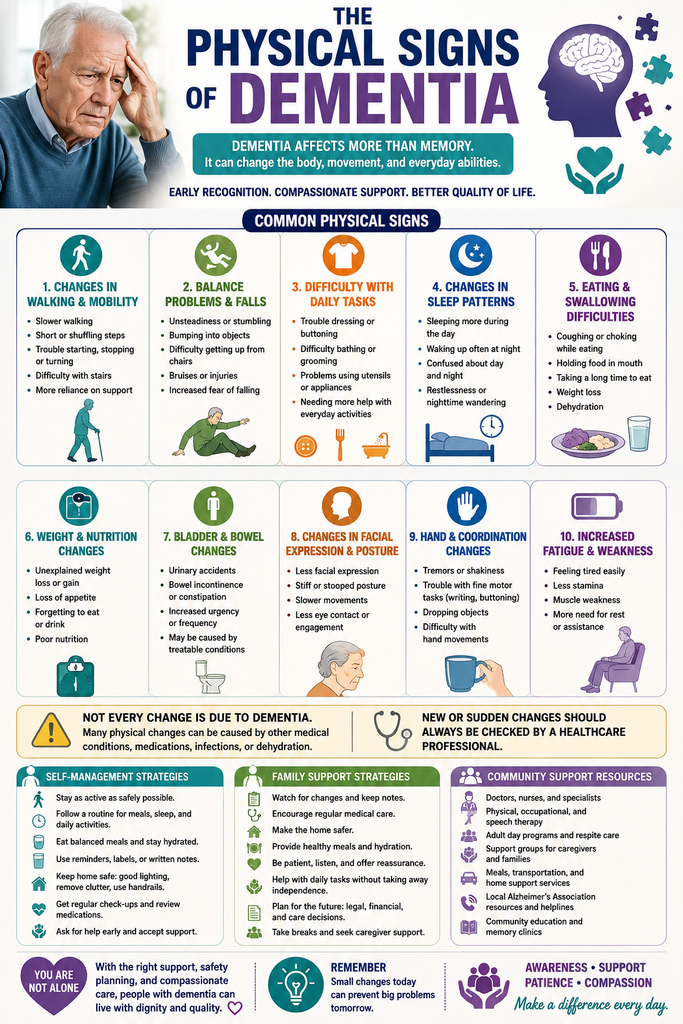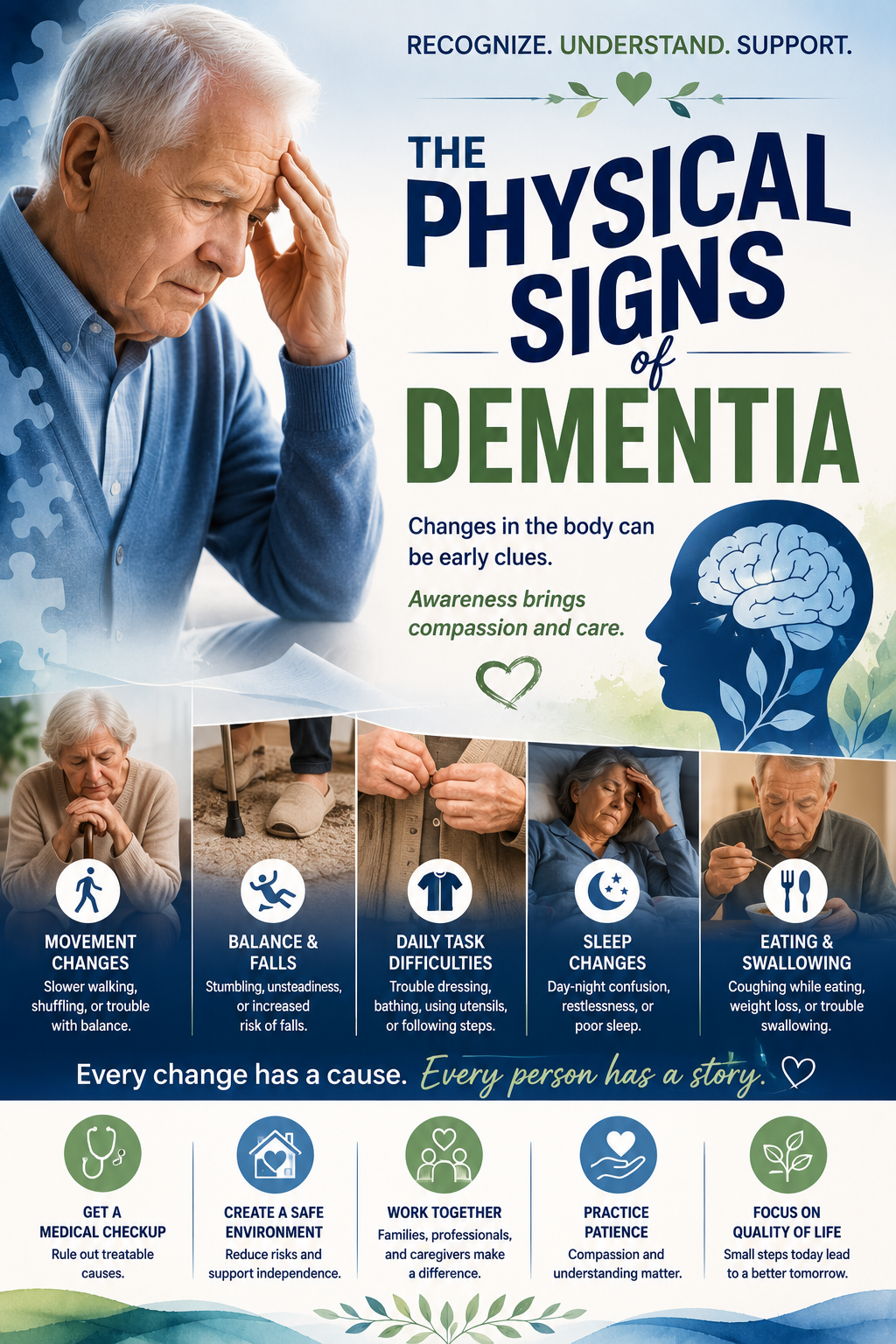
Dementia is commonly associated with memory loss, confusion, and changes in thinking, but its effects are not limited to the mind. Depending on the type and stage of dementia, people may also experience noticeable changes in walking, balance, coordination, swallowing, continence, sleep, and their ability to complete everyday physical activities.
These physical changes do not occur in everyone, and they can have many causes besides dementia. Arthritis, stroke, Parkinson’s disease, medication side effects, infections, vision problems, dehydration, and other medical conditions can produce similar symptoms. New or worsening physical changes therefore deserve medical evaluation rather than being automatically attributed to aging or dementia.
Changes in Walking and Mobility
As some dementias progress, walking may become slower or less coordinated. A person may take shorter steps, shuffle, have difficulty turning, or become hesitant when approaching stairs or uneven surfaces.
Possible changes include:
- Slower walking
- Short or shuffling steps
- Difficulty starting or stopping movement
- Problems turning safely
- Reduced coordination
- Increasing dependence on furniture or another person for support
- Difficulty navigating stairs
- Reduced overall physical activity
Changes in mobility can increase the risk of falls and eventually interfere with independence.
Balance Problems and Falls
A person with dementia may have difficulty judging distances, recognizing obstacles, or coordinating movements. Changes in vision and spatial processing can make navigating familiar surroundings harder.
Families may notice:
- Frequent stumbling
- Bumping into furniture
- Difficulty getting into or out of chairs
- Problems stepping over objects
- Increasing fear of falling
- Unexplained bruises
- Repeated falls
Falls should never simply be accepted as an inevitable consequence of dementia. Medication effects, blood-pressure changes, infections, vision problems, muscle weakness, and environmental hazards should also be considered.
Difficulty With Everyday Physical Tasks
Dementia can interfere with the brain’s ability to organize familiar movements. A person may have adequate muscle strength but struggle to remember or sequence the steps needed to complete an activity.
This can affect:
- Dressing
- Buttoning clothing
- Using utensils
- Brushing teeth
- Bathing
- Preparing meals
- Using household appliances
- Getting in and out of bed
What appears to be physical weakness may sometimes involve difficulty planning or coordinating movements.
Changes in Facial Expression and Body Language
Some people become less expressive as neurological disease progresses. Families may notice reduced facial expression, less spontaneous movement, changes in posture, or slower responses.
These changes should be interpreted carefully because depression, Parkinsonism, medications, fatigue, and other neurological conditions can produce similar signs.
Changes in Sleep
Sleep disturbances are common in many forms of dementia.
A person may:
- Sleep more during the daytime
- Wake repeatedly at night
- Become confused about day and night
- Wander during nighttime hours
- Become increasingly restless in the evening
- Experience unusual movements during sleep
Sleep disruption can increase confusion, irritability, fall risk, and caregiver exhaustion.
Eating, Chewing, and Swallowing Problems
As dementia advances, eating may become increasingly difficult. A person may forget to eat, have difficulty recognizing food, struggle to use utensils, or lose the ability to coordinate chewing and swallowing.
Warning signs of swallowing difficulty can include:
- Coughing while eating or drinking
- Choking
- Holding food in the mouth
- Taking unusually long to finish meals
- A wet or gurgling voice after swallowing
- Recurrent respiratory infections
- Unexplained weight loss
- Dehydration
Swallowing problems require professional assessment because food or liquid entering the airway can lead to aspiration and pneumonia.
Changes in Weight and Nutrition
Weight loss can occur for many reasons during dementia. Someone may forget meals, lose interest in food, have difficulty preparing meals, experience swallowing problems, or become unable to communicate hunger.
Families should watch for unexplained weight changes, loose-fitting clothing, dehydration, weakness, and significant changes in appetite.
A healthcare professional or registered dietitian can help identify potentially treatable causes and recommend appropriate nutritional support.
Changes in Bladder and Bowel Control
Urinary or bowel incontinence may develop as dementia progresses, but new incontinence should not automatically be blamed on dementia.
Urinary tract infections, constipation, medications, mobility limitations, prostate problems, diabetes, and other conditions may contribute.
A medical evaluation can help determine whether a treatable problem is present.
Self-Management Strategies for People With Early Dementia
People in the early stages of dementia may still actively maintain their physical health and independence.
Helpful strategies include:
- Stay physically active. Walking, stretching, strength exercises, or other clinician-approved activities can support mobility and balance.
- Maintain predictable routines. Familiar schedules can make daily activities easier to manage.
- Use supportive reminders. Calendars, labels, alarms, and written instructions may assist with everyday tasks.
- Eat regularly. Structured meals and adequate hydration support physical health.
- Protect sleep. Consistent waking and bedtime routines can support the sleep-wake cycle.
- Attend regular medical appointments. Hearing, vision, medications, cardiovascular health, and other conditions should be monitored.
- Reduce fall hazards. Improve lighting and remove clutter, loose rugs, and unnecessary obstacles.
- Ask for assistance early. Accepting help with difficult activities can preserve safety and independence longer.
Family Support Strategies
Families often become the first people to recognize subtle physical changes.
Family members can:
- Monitor changes in walking, balance, eating, and sleep.
- Keep a record of new or worsening symptoms.
- Attend medical appointments when appropriate.
- Review medications regularly with healthcare professionals.
- Encourage safe physical activity.
- Install adequate lighting and reduce household fall hazards.
- Provide simple, step-by-step instructions for daily activities.
- Allow extra time rather than rushing the person.
- Monitor nutrition and hydration.
- Arrange a swallowing evaluation when coughing or choking occurs.
- Consider occupational or physical therapy when mobility declines.
- Seek caregiver support before exhaustion becomes overwhelming.
The goal is to provide assistance while preserving as much dignity, choice, and independence as possible, and doing so as safely as possible.
Community Support Strategies
Dementia care often requires a team rather than a single caregiver.
Community resources may include:
- Primary-care clinicians
- Neurologists and geriatric specialists
- Memory clinics
- Physical therapists
- Occupational therapists
- Speech-language pathologists
- Registered dietitians
- Home-health services
- Adult day programs
- Respite-care programs
- Dementia caregiver support groups
- Transportation assistance
- Meals and nutrition programs
- Aging and disability resource organizations
- Assisted-living or memory-care services when appropriate
Care needs can change over time. Periodic reassessment helps families determine when additional assistance is necessary.
Not Every Physical Change Is Dementia
One of the most important lessons for families is not to assume that every new symptom represents dementia progression.
Sudden confusion, abrupt weakness, new difficulty speaking, rapid changes in walking, fever, severe sleepiness, or sudden loss of function can indicate an acute medical problem.
Possible causes include infection, stroke, medication effects, dehydration, low blood sugar, electrolyte abnormalities, or other illnesses.
A sudden change is particularly important because dementia usually produces a more gradual decline.
Sudden facial drooping, arm or leg weakness, difficulty speaking, severe new imbalance, or other possible stroke symptoms require emergency medical attention.
When Physical Changes Affect Safety
As dementia progresses, families may need to reconsider activities that were previously safe.
This can include:
- Driving
- Cooking alone
- Climbing stairs
- Bathing without assistance
- Walking outside independently
- Managing medications
- Using power tools or appliances
- Living alone
These conversations can be emotionally difficult because they involve independence and identity. Whenever possible, involve the person with dementia in decisions rather than simply making decisions for them.
Planning Ahead Matters
Families should not wait for a major fall, hospitalization, wandering episode, or swallowing emergency before discussing future care.
Early planning may include evaluating the home, discussing transportation, identifying caregivers, exploring community resources, reviewing legal and financial plans, and discussing future healthcare preferences while the individual can still participate meaningfully.
Planning does not mean giving up independence.
It means preparing to preserve safety, dignity, and quality of life as needs change.
Conclusion
Dementia can eventually affect much more than memory. Changes in walking, balance, coordination, sleep, eating, swallowing, continence, and everyday physical functioning may become increasingly important as neurological disease progresses.
However, these symptoms should never automatically be dismissed as “just dementia.” New physical changes may have treatable causes, and sudden deterioration can represent a medical emergency.
For individuals, maintaining activity and routine can help preserve function. For families, careful observation and early intervention can improve safety. And for communities, accessible medical care, rehabilitation, respite services, caregiver education, and long-term support can make an enormous difference.
Recognizing physical changes early is not about taking independence away. It is about providing the right support at the right time so that safety, dignity, and quality of life remain at the center of dementia care.
Frequently Asked Questions
Here are some common questions:
1. Can dementia cause physical symptoms?
Yes. Although dementia is often associated with memory and thinking problems, neurological changes can eventually affect movement, balance, coordination, sleep, eating, swallowing, continence, and the ability to perform everyday activities. The pattern varies depending on the type and stage of dementia.
2. What are some common physical signs associated with dementia?
Possible physical changes include:
- Slower or shuffling walking
- Poor balance or repeated falls
- Difficulty coordinating movements
- Problems dressing, bathing, or using utensils
- Changes in sleep patterns
- Difficulty chewing or swallowing
- Weight loss or changes in appetite
- Urinary or bowel incontinence
- Reduced facial expression
- Increasing weakness or dependence on assistance
These symptoms can also have causes unrelated to dementia.
3. Are physical symptoms usually early signs of dementia?
Not necessarily. Memory, language, reasoning, or behavioral changes are often the first to be noticed in many forms of dementia. However, certain neurological disorders that cause dementia can produce movement or physical symptoms relatively early.
4. Why might someone with dementia begin walking differently?
Dementia can affect areas of the brain responsible for movement, coordination, spatial awareness, and motor planning. Other conditions—including arthritis, stroke, Parkinsonism, medication effects, muscle weakness, and vision problems—can also change walking.
5. Why are falls more common in people with dementia?
Several factors can contribute, including impaired balance, difficulty judging distances, reduced attention, muscle weakness, medication effects, environmental hazards, and problems recognizing obstacles. A fall or sudden increase in falls deserves medical evaluation.
6. Can dementia make dressing and bathing difficult?
Yes. A person may have the physical strength to complete an activity but have difficulty remembering or sequencing its steps. For example, they may become confused about the correct order for putting on clothing or how to use familiar grooming items.
7. Does dementia affect sleep?
It can. Some people experience frequent nighttime waking, daytime sleeping, confusion between day and night, nighttime wandering, or increased restlessness later in the day.
8. Can dementia cause eating problems?
Yes. A person may forget to eat, have difficulty preparing food, stop recognizing certain foods, lose interest in meals, or struggle to use utensils. Changes in taste, medications, depression, dental problems, and other illnesses should also be considered.
9. Why can swallowing become difficult?
Advanced neurological disease can interfere with the coordination required for safe chewing and swallowing. This is known as dysphagia.
Warning signs include coughing or choking during meals, holding food in the mouth, taking unusually long to eat, a wet or gurgling voice after swallowing, recurrent respiratory infections, dehydration, and unexplained weight loss.
10. Why is swallowing difficulty dangerous?
Food, liquids, or saliva can enter the airway instead of traveling safely into the esophagus. This is called aspiration and can contribute to serious respiratory complications, including aspiration pneumonia. A swallowing evaluation may be needed.
11. Can dementia cause weight loss?
Yes, but unexplained weight loss should always be investigated. Reduced appetite, forgetting meals, difficulty shopping or cooking, swallowing problems, depression, medication effects, dental problems, and other medical conditions can contribute.
12. Is incontinence always a sign that dementia is getting worse?
No. Urinary or bowel incontinence can occur as dementia progresses, but new symptoms may have treatable causes such as urinary tract infection, constipation, medication effects, diabetes, prostate problems, or mobility limitations.
13. Are tremors a normal symptom of dementia?
Not all dementias cause tremors. Tremor, stiffness, slowed movement, or other Parkinson-like symptoms can occur with certain neurological conditions, but these symptoms should be evaluated rather than automatically attributed to dementia.
14. How can families make the home safer?
Families can improve lighting, remove loose rugs and clutter, install handrails or grab bars where appropriate, keep frequently used items within reach, and reduce obstacles along walking paths. Occupational and physical therapists can provide individualized recommendations.
15. Can exercise help someone with dementia?
Appropriate physical activity can help maintain strength, mobility, balance, cardiovascular health, sleep, and independence. The type and intensity of exercise should reflect the person’s health, abilities, and fall risk.
16. What healthcare professionals can help with physical dementia symptoms?
Care may involve primary care clinicians, neurologists, geriatric specialists, physical therapists, occupational therapists, speech-language pathologists, registered dietitians, nurses, and other professionals, depending on the person’s needs.
17. When should a family seek immediate medical attention?
A sudden change should not automatically be assumed to be dementia progression. Seek urgent medical evaluation for abrupt confusion, new weakness, sudden difficulty speaking or walking, loss of consciousness, significant injury after a fall, or other rapidly developing symptoms.
Sudden facial drooping, arm weakness, speech difficulty, or severe new balance problems may indicate a stroke and require emergency care.
18. How can caregivers support independence without compromising safety?
Offer assistance only when needed, simplify tasks, provide one instruction at a time, establish predictable routines, and allow additional time. Adaptive equipment and home modifications can also help preserve independence.
19. What community resources can help families?
Resources may include memory clinics, dementia care programs, home health services, adult day programs, respite care, caregiver support groups, transportation programs, rehabilitation services, community aging organizations, and, when appropriate, assisted living or memory care services.
20. What is the most important thing families should remember?
Not every physical change is caused by dementia. New symptoms should be evaluated because medications, infections, dehydration, pain, vision problems, stroke, and other conditions can cause physical or cognitive deterioration.
Recognizing changes early allows families and healthcare professionals to identify potentially treatable problems, improve safety, and preserve as much independence, dignity, and quality of life as possible.
Video: Why you should watch their walk for signs of dementia #dementia #caregiver