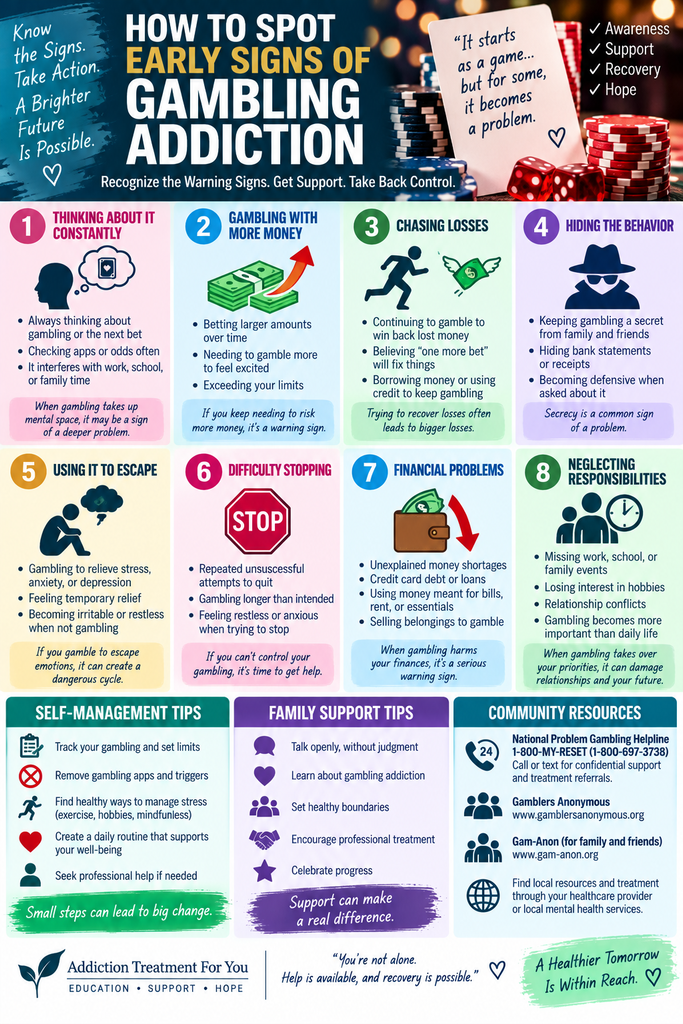
Gambling addiction, clinically known as gambling disorder, is a behavioral addiction that can affect a person’s financial stability, emotional well-being, relationships, and daily functioning. What begins as occasional entertainment through casinos, sports betting, lottery tickets, or online gambling can gradually develop into a pattern of compulsive behavior that becomes difficult to control.
Unlike substance use disorders, gambling disorder does not involve consuming alcohol or drugs. However, it shares important features with other addictions, including cravings, impaired behavioral control, and continued engagement despite harmful consequences.
The widespread availability of online casinos, mobile betting applications, and sports gambling platforms has made gambling accessible at almost any time. For some individuals, this convenience can contribute to increasingly frequent gambling and difficulty maintaining personal limits.
Recognizing the early signs of gambling addiction is important because intervention before severe financial, emotional, or relationship problems develop may help prevent further harm.
Understanding the warning signs, developing self-management strategies, and encouraging family and community support can help individuals recognize unhealthy gambling patterns and seek appropriate treatment.
1. Understanding Gambling Addiction: When Entertainment Becomes a Problem
What Is Gambling Disorder?
Gambling disorder is a recognized mental health condition characterized by persistent or recurrent problematic gambling behavior that causes significant distress or impairment.
It is classified as a behavioral addiction in the Diagnostic and Statistical Manual of Mental Disorders, Fifth Edition, Text Revision (DSM-5-TR).
Individuals with gambling disorder may experience increasing difficulty controlling their gambling behavior, even when it negatively affects their finances, relationships, employment, or emotional health.
Gambling can stimulate brain reward pathways associated with motivation, anticipation, and reinforcement.
Unpredictable rewards, such as occasional wins, can strengthen gambling behavior and encourage continued participation despite repeated losses.
Over time, some individuals may become increasingly focused on gambling and find it difficult to stop.
Common Forms of Gambling
Gambling disorder can develop in association with different gambling activities, including:
- Casino games such as slot machines, poker, and roulette.
- Sports betting through mobile applications or betting establishments.
- Online casinos and internet-based gambling platforms.
- Lottery tickets, scratch-off games, and number drawings.
- Horse racing and other competitive betting activities.
- Private betting arrangements involving money or valuables.
The type of gambling activity alone does not determine whether someone has a gambling disorder.
The most important concerns involve loss of control, continued gambling despite negative consequences, and the effect gambling has on everyday functioning.
2. Early Warning Sign #1: Thinking About Gambling Constantly
One of the earliest signs of problematic gambling is becoming increasingly preoccupied with gambling-related activities.
An individual may spend significant time thinking about previous wins, planning future bets, reviewing gambling strategies, or finding ways to obtain money for gambling.
These thoughts may interfere with work, school, family responsibilities, and personal relationships.
What to Watch For
- Frequently checking sports betting applications or gambling websites.
- Spending excessive time researching odds or gambling strategies.
- Constantly discussing previous wins or upcoming betting opportunities.
- Becoming distracted during work or family activities.
- Planning daily routines around gambling opportunities.
- Thinking about gambling even when participating in unrelated activities.
Occasional interest in gambling does not necessarily indicate addiction.
However, persistent preoccupation that interferes with daily responsibilities may signal an emerging problem.
3. Early Warning Sign #2: Gambling With Increasing Amounts of Money
Some individuals begin gambling with small amounts of money but gradually increase their wagers to experience the same level of excitement.
This pattern resembles tolerance, a feature commonly associated with substance use disorders.
A person may initially feel satisfied after placing a small bet but later develop a stronger desire to gamble larger amounts.
Warning Signs Include:
- Increasing the amount of money spent on gambling.
- Placing larger bets to experience excitement.
- Exceeding previously established spending limits.
- Using money intended for essential expenses.
- Taking greater financial risks to achieve the same emotional response.
- Feeling disappointed or restless when gambling with smaller amounts.
Increasing wagers does not automatically establish a diagnosis of gambling disorder.
However, escalating financial risk combined with difficulty controlling gambling behavior may indicate a developing problem.
4. Early Warning Sign #3: Chasing Gambling Losses
The Dangerous Belief That One More Bet Will Fix Everything
Chasing losses occurs when an individual continues gambling in an attempt to recover money previously lost.
For example, someone who loses $200 may place additional bets believing that another win will restore their original balance.
When those bets also result in losses, the person may continue gambling with increasingly larger amounts.
This pattern can create a cycle of financial stress, emotional distress, and repeated gambling.
Common signs of chasing losses include:
- Returning to gambling shortly after losing money.
- Increasing wagers to recover previous losses.
- Borrowing money to continue gambling.
- Using savings or credit cards to replace lost funds.
- Believing that a large win will resolve financial difficulties.
- Continuing to gamble despite recognizing that losses are accumulating.
Chasing losses is an important warning sign because it can rapidly increase financial harm.
A previous loss does not increase the probability of winning a future independent gambling event.
5. Early Warning Sign #4: Hiding Gambling Activities From Family and Friends
Individuals experiencing gambling-related problems may begin concealing their behavior because they feel embarrassed, fear criticism, or want to avoid conflict.
Secrecy can make it difficult for loved ones to recognize the severity of the problem.
Behavioral Changes to Watch For
- Hiding gambling applications or browsing history.
- Providing misleading explanations about financial transactions.
- Concealing credit card statements or gambling-related debts.
- Becoming defensive when asked about gambling.
- Spending unexplained periods of time gambling.
- Claiming gambling losses were caused by unrelated expenses.
- Avoiding conversations about money or financial responsibilities.
Secrecy alone does not establish gambling disorder.
However, repeated dishonesty about gambling combined with financial problems or impaired control may indicate a need for professional assessment.
6. Early Warning Sign #5: Gambling to Escape Stress, Anxiety, or Depression
For some individuals, gambling becomes a way to temporarily avoid uncomfortable emotions.
A person may gamble after experiencing relationship conflict, work-related stress, loneliness, or financial difficulties.
Although gambling may provide temporary excitement or distraction, repeated use as an emotional coping strategy can contribute to worsening problems.
Emotional Warning Signs Include:
- Gambling after stressful or upsetting experiences.
- Using betting applications to avoid loneliness or boredom.
- Feeling temporary relief while gambling.
- Becoming irritable or anxious when unable to gamble.
- Experiencing guilt or shame after losing money.
- Returning to gambling to escape distress caused by previous losses.
This pattern can create a cycle in which emotional discomfort triggers gambling, gambling creates additional problems, and those problems increase the desire to gamble again.
Developing healthier coping strategies is an important part of interrupting this cycle.
7. Early Warning Sign #6: Difficulty Stopping or Reducing Gambling
An individual may recognize that gambling is causing problems but repeatedly struggle to reduce or stop the behavior.
They may set spending limits, promise to stop after a specific event, or try to take a break.
However, cravings, emotional triggers, or the desire to recover losses may lead them to resume gambling.
Signs of Impaired Control
- Repeated unsuccessful attempts to stop gambling.
- Gambling longer than originally intended.
- Exceeding personal spending limits.
- Feeling restless or irritable when trying to stop.
- Returning to gambling after promising to quit.
- Continuing to gamble despite financial or relationship consequences.
Difficulty controlling gambling behavior is one of the central features of gambling disorder.
Professional assessment may be appropriate when repeated attempts to reduce gambling are unsuccessful.
8. Early Warning Sign #7: Financial Problems and Unexplained Money Shortages
Financial difficulties are among the most recognizable consequences of problematic gambling.
However, financial problems may not become apparent until gambling behavior has progressed.
Some individuals initially use discretionary income before turning to savings, credit cards, loans, or money intended for essential expenses.
Financial Warning Signs Include:
- Unexplained withdrawals or missing money.
- Increasing credit card balances.
- Frequent requests to borrow money.
- Difficulty paying rent, utilities, or other essential expenses.
- Selling personal belongings to obtain gambling funds.
- Taking out loans without a clear financial purpose.
- Using retirement savings or emergency funds for gambling.
- Experiencing significant financial stress despite having a stable income.
Family members may notice these changes before the individual acknowledges that gambling has become problematic.
Financial warning signs should be approached with concern and respectful communication rather than immediate accusations.
9. Early Warning Sign #8: Neglecting Responsibilities and Relationships
As gambling becomes increasingly important, individuals may begin spending less time on activities and responsibilities they previously valued.
Work performance, academic achievement, parenting responsibilities, and personal relationships may be affected.
Common Warning Signs
- Missing work or arriving late because of gambling.
- Spending less time with family members.
- Neglecting household responsibilities.
- Losing interest in hobbies and recreational activities.
- Canceling plans to participate in gambling.
- Becoming emotionally unavailable during family interactions.
- Experiencing repeated relationship conflicts related to gambling.
These changes may develop gradually.
Recognizing shifts in priorities and daily functioning can help identify problematic gambling before more severe consequences occur.
10. Self-Management Strategies: How to Recognize and Address Problematic Gambling
Self-management involves developing awareness of gambling patterns, identifying triggers, and establishing practical strategies to reduce harmful behavior.
Individuals who recognize early warning signs may benefit from taking immediate steps to protect their financial and emotional well-being.
Track Gambling Behavior
Keeping a record of gambling activities can help individuals recognize patterns that may otherwise go unnoticed.
Practical strategies include:
- Record how frequently gambling occurs.
- Document the amount of money spent and lost.
- Identify emotional states that precede gambling.
- Recognize situations that increase the urge to place bets.
- Track time spent using gambling applications.
- Review whether gambling interferes with personal responsibilities.
Monitoring behavior can help individuals identify whether gambling is becoming increasingly difficult to control.
Establish Financial Safeguards
Financial boundaries can help reduce access to money during periods of strong gambling urges.
Helpful strategies include:
- Remove gambling applications from personal devices.
- Use gambling-blocking software.
- Activate self-exclusion options offered by gambling operators.
- Disable gambling-related notifications and promotional messages.
- Limit access to funds that could be used impulsively.
- Avoid borrowing money to finance gambling.
- Seek assistance from a financial counselor when debt becomes difficult to manage.
For individuals with gambling disorder, spending limits alone may not provide sufficient protection.
Professional treatment and stronger access restrictions may be necessary.
Develop Healthier Coping Mechanisms
Individuals who gamble to manage stress or uncomfortable emotions may benefit from developing alternative coping strategies.
Examples include:
- Engage in physical activity or outdoor recreation.
- Practice mindfulness and relaxation techniques.
- Participate in hobbies that provide enjoyment without financial risk.
- Spend time with supportive family members and friends.
- Develop consistent sleep and daily routines.
- Seek counseling for anxiety, depression, or other emotional concerns.
- Participate in peer support groups focused on gambling recovery.
The goal is to develop healthier responses to emotional discomfort rather than relying on gambling for temporary relief.
11. Family Support: How Loved Ones Can Recognize and Respond to Gambling Addiction
Understanding the Impact on Families
Gambling disorder can affect the entire family through financial instability, emotional distress, secrecy, and relationship conflict.
Family members may experience anxiety about unpaid bills, frustration over repeated gambling, or uncertainty about how to provide support.
Some may attempt to resolve financial problems by repeatedly paying gambling-related debts.
Although these actions may be motivated by concern, repeatedly providing unrestricted financial assistance can sometimes allow harmful gambling behavior to continue.
Families benefit from developing supportive communication strategies while maintaining appropriate financial and emotional boundaries.
Family Strategies That Support Recovery
Helpful approaches include:
- Learn about gambling disorder and its warning signs.
- Discuss concerns calmly and without judgment.
- Focus on specific behaviors and consequences rather than personal criticism.
- Encourage professional assessment and treatment.
- Establish clear financial boundaries.
- Protect essential household expenses and shared financial resources.
- Avoid repeatedly providing unrestricted money to cover gambling losses.
- Participate in family counseling when appropriate.
- Seek personal support when gambling-related stress affects family well-being.
Family members should recognize that they cannot control another person’s gambling behavior.
Their role is to encourage treatment, protect their own well-being, and support healthy behavioral changes.
How to Start a Conversation About Gambling
A family member may begin by describing specific changes they have observed.
For example:
“I’ve noticed that you’ve been spending more time betting online, and we’ve had difficulty paying some of our bills. I’m concerned about how gambling is affecting you and our family. Can we talk about what has been happening and what support might help?”
This approach focuses on observable behavior and shared concerns rather than blame.
The goal is to encourage an open conversation that may lead to appropriate support.
12. Community Support: Creating Opportunities for Gambling Addiction Recovery
The Importance of Accessible Treatment
Individuals experiencing gambling disorder may delay seeking help because of shame, financial concerns, or uncertainty about available resources.
Community-based services can help reduce these barriers by providing education, treatment referrals, financial counseling, and peer support.
Communities can also increase awareness that gambling disorder is a recognized behavioral addiction rather than simply a lack of self-discipline.
Community Strategies That Support Recovery
Communities can help individuals and families by:
- Providing education about gambling disorder and its early warning signs.
- Increasing access to mental health professionals trained in gambling treatment.
- Supporting confidential gambling helplines and referral services.
- Offering financial counseling and debt-management assistance.
- Expanding peer recovery programs.
- Providing family education and support groups.
- Promoting responsible gambling safeguards and self-exclusion resources.
- Encouraging workplaces to provide confidential access to behavioral health services.
These resources can help individuals address both gambling behavior and its financial, emotional, and social consequences.
Peer Recovery Support
Peer support programs connect individuals with others who have experienced gambling-related difficulties.
Gamblers Anonymous provides mutual support through a 12-step recovery approach.
Other peer support programs may emphasize behavioral change, coping skills, and personal recovery goals.
Gam-Anon offers support for family members and loved ones affected by another person’s gambling.
Peer support can complement professional treatment by reducing isolation and providing ongoing encouragement.
13. Evidence-Based Treatment for Gambling Disorder
Cognitive Behavioral Therapy
Cognitive behavioral therapy (CBT) is one of the most extensively studied psychological treatments for gambling disorder.
CBT helps individuals identify thoughts, emotions, and behaviors that contribute to problematic gambling.
Treatment may focus on recognizing gambling triggers, challenging inaccurate beliefs about winning, developing healthier coping strategies, and preventing a return to harmful gambling.
For example, an individual may believe that repeated losses make a future win more likely.
CBT can help address this misunderstanding and develop a more realistic understanding of gambling probabilities.
Motivational Interviewing
Motivational interviewing is a counseling approach that helps individuals explore their feelings about gambling and identify personal reasons for change.
It emphasizes collaboration, personal choice, and the development of realistic behavioral goals.
This approach may be particularly useful for individuals who recognize some negative consequences of gambling but remain uncertain about seeking treatment.
Treatment for Co-Occurring Mental Health Conditions
Some individuals with gambling disorder also experience depression, anxiety, substance use disorders, or other mental health conditions.
A comprehensive assessment can help identify these concerns and determine whether additional treatment is needed.
Addressing co-occurring conditions may improve overall well-being and support recovery.
No medication is currently approved by the U.S. Food and Drug Administration specifically for gambling disorder. Some medications have been studied for certain patients, but psychotherapy remains a central treatment approach.
14. The Connection Between Gambling Addiction and Substance Use Disorders
Gambling disorder and substance use disorders share several behavioral and neurobiological features.
Both may involve impaired control, cravings, continued engagement despite negative consequences, and changes in reward-related learning.
Individuals experiencing gambling disorder may also use alcohol or other substances.
For some people, drinking or substance use can impair judgment and increase the likelihood of risky gambling decisions.
Others may use substances to cope with emotional distress or financial problems associated with gambling.
Strategies for Managing Co-Occurring Gambling and Substance Use Problems
- Seek a comprehensive assessment for both gambling and substance use disorders.
- Identify situations where alcohol or drug use increases gambling urges.
- Develop a treatment plan that addresses both conditions.
- Participate in counseling focused on emotional regulation and behavioral control.
- Establish financial safeguards and reduce access to gambling opportunities.
- Maintain supportive relationships and participate in recovery programs.
Treating gambling and substance use problems together may help address overlapping triggers and reduce the risk of continued harm.
15. When Should Someone Seek Professional Help?
Professional assessment is appropriate when gambling becomes difficult to control or begins negatively affecting finances, relationships, emotional health, or daily responsibilities.
Individuals do not need to experience severe financial losses before seeking help.
Early intervention may prevent gambling-related problems from becoming more serious.
Consider seeking professional assistance if:
- You repeatedly gamble more money than intended.
- You experience difficulty stopping despite repeated attempts.
- You borrow money or use essential funds for gambling.
- You hide gambling activities from loved ones.
- You gamble to escape emotional distress.
- You continue gambling despite relationship or financial problems.
- You experience significant anxiety, depression, or hopelessness related to gambling.
A qualified mental health professional can assess gambling behavior and recommend appropriate treatment.
Gambling Addiction Support Resources
National Problem Gambling Helpline: Call or text 1-800-MY-RESET (1-800-697-3738) for confidential support and treatment referrals in the United States.
Gamblers Anonymous: Offers peer support meetings for individuals seeking recovery from gambling problems.
Gam-Anon: Provides support for family members and loved ones affected by another person’s gambling.
988 Suicide & Crisis Lifeline: Call or text 988 if gambling-related distress is accompanied by suicidal thoughts or an immediate mental health crisis.
Gambling-related financial problems and emotional distress can increase suicide risk. Statements about hopelessness, feeling trapped, or wanting to die should always be taken seriously.
Conclusion: Recognizing the Warning Signs Before Gambling Takes Control
Gambling addiction often develops gradually, beginning with behaviors that may initially appear harmless.
Increasing preoccupation with gambling, escalating wagers, chasing losses, hiding financial problems, and difficulty stopping are important warning signs that gambling may be becoming problematic.
Recognizing these changes early creates an opportunity to seek support before severe financial, emotional, and relationship consequences develop.
Self-management strategies can help individuals identify triggers, establish financial safeguards, and develop healthier coping mechanisms.
Family members can provide encouragement while maintaining appropriate boundaries and protecting shared financial resources.
Community programs, peer support groups, and evidence-based treatment can help individuals rebuild stability and develop healthier relationships with money, emotions, and everyday activities.
Gambling addiction is not defined by how much money someone loses. It is defined by the loss of control and the harm gambling creates in their life. Recognizing the warning signs and seeking help can be the first step toward regaining financial stability, rebuilding relationships, and creating a healthier future.
Frequently Asked Questions
Here are some common questions:
1. What is gambling addiction?
Gambling addiction, clinically known as gambling disorder, is a behavioral addiction characterized by persistent or recurrent gambling behavior that causes significant distress or interferes with daily functioning.
Individuals with gambling disorder may experience difficulty controlling their gambling despite financial losses, relationship problems, or emotional distress.
Gambling disorder is recognized as a mental health condition in the Diagnostic and Statistical Manual of Mental Disorders, Fifth Edition, Text Revision (DSM-5-TR).
It is a treatable condition, and individuals can benefit from behavioral therapy, financial safeguards, and ongoing recovery support.
2. What are the earliest warning signs of gambling addiction?
Early warning signs may include changes in gambling frequency, spending habits, emotional responses, and personal responsibilities.
Common warning signs include:
- Thinking about gambling frequently.
- Increasing the amount of money spent on bets.
- Gambling longer than originally intended.
- Attempting to recover losses through additional gambling.
- Hiding gambling activities from family members.
- Becoming restless or irritable when unable to gamble.
- Using gambling to escape stress, anxiety, or sadness.
- Neglecting work, school, or family responsibilities.
Experiencing one warning sign does not automatically mean someone has gambling disorder. However, persistent or escalating symptoms may indicate a need for professional assessment.
3. How can someone tell the difference between recreational gambling and gambling addiction?
Recreational gambling generally involves occasional participation without significant financial, emotional, or relationship consequences.
Individuals who gamble recreationally are typically able to stop when they choose and maintain established spending limits.
Gambling disorder involves persistent difficulty controlling gambling behavior despite negative consequences.
A person may continue gambling after losing money, repeatedly exceed spending limits, or prioritize gambling over important responsibilities.
The amount of money spent alone does not determine whether someone has gambling disorder. The degree of impaired control and resulting harm are important considerations.
4. Can someone develop gambling addiction without gambling every day?
Yes. Gambling disorder does not require daily gambling.
Some individuals experience episodes of excessive gambling separated by periods when they do not gamble.
For example, someone may gamble primarily during major sporting events or on weekends, yet repeatedly lose more money than intended and have difficulty stopping.
The frequency of gambling is only one factor considered during assessment.
Persistent loss of control, chasing losses, financial harm, and continued gambling despite negative consequences may indicate a problem even when gambling occurs intermittently.
5. Why do people with gambling addiction continue gambling after losing money?
Some individuals continue gambling because they believe additional bets will help them recover previous losses.
This behavior is known as chasing losses.
Gambling activities often involve unpredictable rewards, which can reinforce continued participation even when losses occur frequently.
Emotional factors, including frustration, financial stress, and the desire to reverse a previous loss, may also contribute to continued gambling.
However, losing money does not increase the probability of winning a future independent gambling event.
Chasing losses can lead to escalating financial problems and increased emotional distress.
6. What does it mean when someone needs to gamble with increasing amounts of money?
Some individuals gradually increase their wagers to experience the same level of excitement they previously experienced with smaller bets.
This pattern resembles tolerance, a feature associated with substance use disorders.
A person may initially feel satisfied placing a $10 bet but eventually feel compelled to gamble significantly larger amounts.
Increasing wagers can create greater financial risk and may indicate that gambling behavior is becoming difficult to control.
However, increasing spending alone does not establish a diagnosis of gambling disorder.
7. Can online gambling and sports betting increase the risk of gambling addiction?
Online gambling and sports betting applications provide convenient access to gambling opportunities.
Features such as continuous availability, rapid betting, live wagering, and promotional notifications may encourage frequent participation.
For individuals vulnerable to problematic gambling, these features can make it more difficult to maintain spending and time limits.
However, not everyone who participates in online gambling develops gambling disorder.
Risk depends on multiple factors, including personal vulnerability, gambling behavior, mental health, and environmental influences.
8. Why do some people hide their gambling activities from family and friends?
Individuals experiencing gambling-related problems may conceal their behavior because they feel embarrassed, fear criticism, or want to avoid conflict.
They may hide financial statements, delete gambling applications, or provide misleading explanations about missing money.
Secrecy can make it difficult for loved ones to recognize the extent of gambling-related problems.
Repeated dishonesty about gambling, particularly when accompanied by financial difficulties or impaired control, may indicate a need for professional assessment.
Family members should approach these concerns with respectful communication rather than immediate accusations.
9. Can gambling addiction cause anxiety and depression?
Gambling disorder can contribute to significant emotional distress, including anxiety, depression, guilt, shame, and feelings of hopelessness.
Financial losses, relationship conflict, and difficulty controlling gambling may intensify these emotions.
Some individuals also use gambling to temporarily escape preexisting anxiety, depression, or other emotional difficulties.
This can create a cycle in which emotional distress contributes to gambling, and gambling-related consequences increase emotional distress.
A comprehensive mental health assessment can help identify co-occurring conditions and guide appropriate treatment.
10. What financial warning signs may indicate gambling addiction?
Financial difficulties are among the most recognizable consequences of problematic gambling.
Warning signs include:
- Unexplained withdrawals from bank accounts.
- Increasing credit card balances.
- Frequent requests to borrow money.
- Difficulty paying rent, utilities, or other essential expenses.
- Using savings or retirement funds for gambling.
- Selling personal belongings to obtain gambling money.
- Taking out loans to recover previous losses.
- Hiding financial statements from family members.
Financial problems do not automatically indicate gambling disorder, but unexplained financial changes combined with secretive gambling behavior may warrant further evaluation.
11. Can gambling addiction affect relationships and family life?
Yes. Gambling disorder can affect relationships through financial instability, secrecy, emotional distress, and reduced participation in family responsibilities.
Family members may experience anxiety about unpaid bills, frustration over repeated gambling, or difficulty rebuilding trust.
Children may also be affected when gambling-related problems interfere with household stability or caregiving responsibilities.
Family counseling, open communication, financial safeguards, and professional treatment can help address these concerns.
Recovery may involve rebuilding trust through consistent behavior and maintaining healthy boundaries.
12. What self-management strategies can help someone stop gambling?
Self-management strategies can help individuals recognize gambling triggers, reduce access to gambling opportunities, and develop healthier coping mechanisms.
Helpful approaches include:
- Remove gambling applications from personal devices.
- Activate self-exclusion programs.
- Use gambling-blocking software.
- Identify emotional and environmental triggers.
- Establish financial safeguards to reduce impulsive access to gambling funds.
- Avoid borrowing money to finance gambling.
- Develop healthy alternatives for managing stress and boredom.
- Participate in counseling or peer recovery programs.
- Seek professional assistance when gambling becomes difficult to control.
For individuals with gambling disorder, self-management strategies are often most effective when combined with evidence-based treatment.
13. How can family members help someone who may have a gambling addiction?
Family members can provide support by encouraging professional treatment while maintaining appropriate financial and emotional boundaries.
Helpful strategies include:
- Discuss concerns calmly and without judgment.
- Focus on specific gambling behaviors and their consequences.
- Encourage assessment by a qualified mental health professional.
- Protect essential household expenses and shared financial resources.
- Avoid repeatedly providing unrestricted money to cover gambling losses.
- Participate in family counseling when appropriate.
- Learn about gambling disorder and available treatment options.
- Seek personal support when gambling-related stress affects family well-being.
Family members should recognize that they cannot control another person’s gambling behavior or guarantee recovery.
14. What is the most effective treatment for gambling addiction?
Cognitive behavioral therapy (CBT) is one of the most extensively studied treatments for gambling disorder.
CBT helps individuals identify thoughts, emotions, and behaviors that contribute to problematic gambling.
Treatment may focus on recognizing triggers, challenging inaccurate beliefs about winning, developing healthier coping strategies, and preventing a return to harmful gambling.
Motivational interviewing may also help individuals explore their reasons for changing gambling behavior.
Some individuals benefit from combining professional counseling with peer recovery support and financial management strategies.
Treatment should be individualized based on gambling severity, co-occurring mental health conditions, and personal recovery goals.
15. Are medications available to treat gambling addiction?
There are currently no medications approved by the U.S. Food and Drug Administration specifically for gambling disorder.
However, certain medications, including opioid antagonists such as naltrexone, have been studied as potential treatments for some individuals.
The evidence is still developing, and medication decisions should be made by qualified healthcare professionals.
Individuals with co-occurring depression, anxiety, or substance use disorders may also benefit from appropriate treatment for those conditions.
Behavioral therapy remains a central component of gambling disorder treatment.
16. What is the connection between gambling addiction and substance use disorders?
Gambling disorder and substance use disorders share several behavioral and neurobiological features, including impaired control, cravings, and continued engagement despite harmful consequences.
Some individuals experience both gambling disorder and substance use disorders.
Alcohol or drug use may impair judgment and increase the likelihood of risky gambling decisions.
Other individuals may use substances to cope with financial stress, shame, or emotional distress associated with gambling.
When both conditions are present, integrated treatment can help address overlapping triggers and improve overall recovery outcomes.
17. Can someone recover from gambling addiction without attending a residential treatment program?
Yes. Many individuals receive treatment for gambling disorder through outpatient counseling, behavioral therapy, and community-based recovery programs.
Residential treatment may be considered for individuals with severe gambling-related problems, significant co-occurring mental health conditions, or circumstances that make outpatient treatment insufficient.
The appropriate level of care depends on individual needs, safety concerns, and available support.
A qualified mental health professional can help determine which treatment approach is most appropriate.
18. What community resources are available for people struggling with gambling addiction?
Community resources can provide education, emotional support, treatment referrals, and financial assistance.
Helpful resources include:
- National Problem Gambling Helpline: 1-800-MY-RESET (1-800-697-3738), for confidential support and treatment referrals in the United States.
- Gamblers Anonymous: Peer support meetings for individuals seeking recovery from gambling problems.
- Gam-Anon: Support for family members and loved ones affected by another person’s gambling.
- Mental health professionals: Counseling and evidence-based treatment for gambling disorder.
- Financial counseling services: Assistance with budgeting, debt management, and financial recovery.
- Community mental health centers: Access to behavioral health services and treatment referrals.
Individuals can explore different resources to identify the services that best meet their needs.
19. When should someone seek professional help for gambling behavior?
Professional assessment is appropriate when gambling becomes difficult to control or begins negatively affecting finances, relationships, emotional health, or daily responsibilities.
A person does not need to experience severe financial losses before seeking treatment.
Warning signs that indicate a need for professional assistance include repeated unsuccessful attempts to stop gambling, chasing losses, borrowing money to gamble, and continuing to gamble despite significant consequences.
Individuals experiencing severe emotional distress, depression, or hopelessness related to gambling should also seek mental health support.
If someone is experiencing suicidal thoughts or an immediate mental health crisis, call or text 988 in the United States.
20. What is the most important message about recognizing early signs of gambling addiction?
Gambling addiction often develops gradually, beginning with behaviors that may initially appear harmless.
Increasing preoccupation with gambling, escalating wagers, chasing losses, secrecy, and difficulty stopping are important warning signs that gambling may be becoming problematic.
Recognizing these changes early creates an opportunity to seek support before severe financial, emotional, and relationship consequences develop.
Self-management strategies can help individuals identify triggers and establish financial safeguards. Family support provides encouragement while maintaining healthy boundaries. Community resources offer access to professional treatment and ongoing recovery support.
Gambling addiction is not defined solely by how much money someone loses. It is characterized by impaired control and continued gambling despite harmful consequences. Recognizing the warning signs and seeking help can be the first step toward rebuilding financial stability, strengthening relationships, and creating a healthier future.
Video: