For many people, drinking soda is part of their daily routine. Whether it is a cold cola with lunch, an energy boost during the afternoon, or a sweet drink while watching television, soda can become a familiar habit that is difficult to change.
However, regularly consuming sugar-sweetened beverages can contribute to excess calorie intake, dental problems, and an increased risk of several chronic health conditions.
When you stop drinking soda, your body may experience changes in energy levels, appetite, blood sugar regulation, and hydration. Some individuals also experience temporary headaches, fatigue, irritability, or cravings, particularly when eliminating caffeinated beverages.
The effects of quitting soda depend on several factors, including how much soda you previously consumed, whether it contained sugar or caffeine, and what beverages you choose as replacements.
Understanding what happens when you quit soda can help you manage temporary discomfort, develop healthier habits, and make sustainable changes that support long-term physical and emotional well-being.
This article explores the potential benefits of reducing soda consumption and provides practical strategies for self-management, family support, and community support to maintain healthier beverage choices.
1. What Happens to Your Body When You Stop Drinking Soda?
Your Body Begins Adjusting to Less Added Sugar
Regular soda can contain substantial amounts of added sugar.
For example, a typical 12-ounce can of regular cola contains approximately 39 grams of sugar, equivalent to nearly 10 teaspoons.
Drinking several cans daily can contribute significantly to total added sugar intake.
When you stop consuming regular soda, your daily intake of added sugar may decrease considerably, especially if you replace it with water or unsweetened beverages.
Reducing added sugar can help lower overall calorie intake and support healthier dietary patterns.
However, the benefits depend on what replaces the soda. Switching to other sugar-sweetened beverages may provide little reduction in sugar consumption.
Potential benefits of reducing added sugar include:
- Lower daily intake of added sugars and excess calories.
- Improved ability to maintain a balanced dietary pattern.
- Reduced exposure to frequent sugar-related blood glucose increases.
- Lower risk of developing dental cavities.
- Potential improvements in weight management.
- Reduced long-term risk of certain metabolic conditions.
These changes are not guaranteed for every individual, and they may develop gradually rather than immediately.
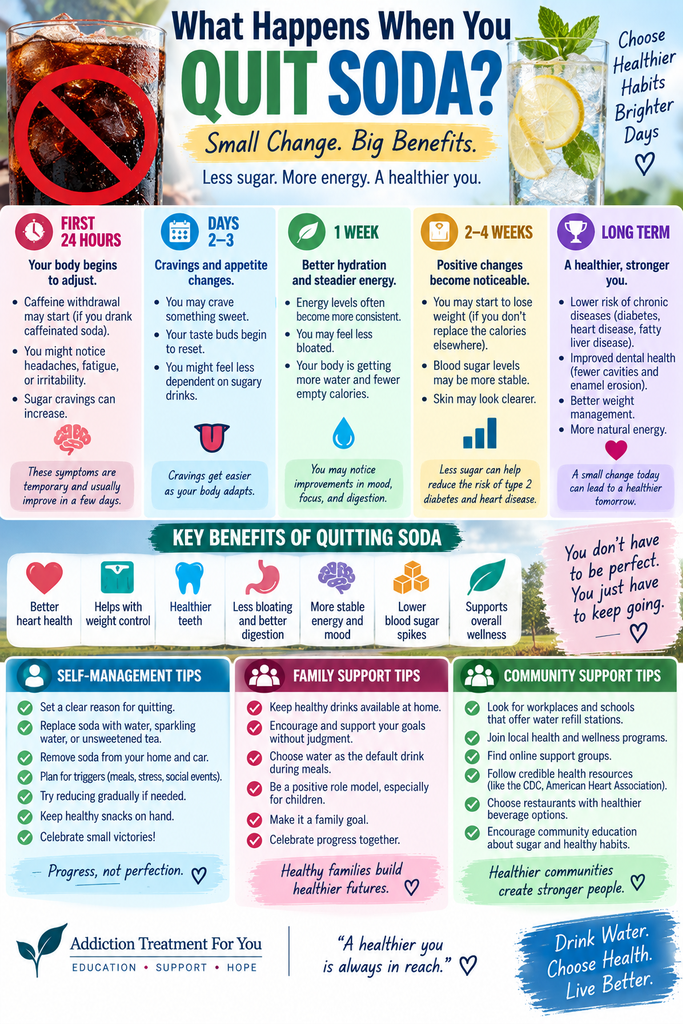
2. The First 24 Hours: Cravings and Caffeine Withdrawal May Begin
Why You Might Feel Tired or Develop a Headache
If you regularly consume caffeinated soda, suddenly stopping may cause caffeine withdrawal.
Caffeine affects the central nervous system by blocking adenosine receptors, which normally contribute to feelings of sleepiness.
With regular caffeine consumption, the body adapts to its effects.
When caffeine intake suddenly decreases, temporary withdrawal symptoms may develop.
Symptoms often begin approximately 12–24 hours after stopping caffeine and may become most noticeable during the following one to two days.
Common Caffeine Withdrawal Symptoms
- Headaches.
- Fatigue or decreased energy.
- Irritability.
- Difficulty concentrating.
- Increased sleepiness.
- Changes in mood.
- Temporary difficulty completing daily activities.
These symptoms are generally self-limited and often improve within several days.
However, the severity and duration vary depending on previous caffeine intake and individual sensitivity.
Self-Management Strategies
If you regularly drink large amounts of caffeinated soda, gradually reducing your intake may help minimize withdrawal symptoms.
Helpful strategies include:
- Reduce the number of caffeinated sodas consumed each day.
- Replace one serving at a time with water or caffeine-free alternatives.
- Maintain consistent sleep and wake times.
- Drink water regularly throughout the day.
- Eat balanced meals to support energy levels.
- Consider temporarily switching to smaller servings before stopping completely.
Caffeine withdrawal is usually not medically dangerous, but individuals with persistent or severe symptoms should seek medical advice.
3. Days 2–3: Sugar Cravings and Changes in Appetite
Why You May Suddenly Want Something Sweet
When soda is consumed regularly, its sweetness and association with particular activities can become part of an established behavioral routine.
For example, someone may automatically reach for soda while eating lunch, driving, or relaxing after work.
When the routine changes, cravings may occur because the person expects the familiar taste or experience.
These cravings do not necessarily indicate a clinical addiction to sugar.
Instead, they may reflect learned associations, food preferences, and habitual behavior.
What You Might Notice
- Increased desire for sweet beverages.
- Cravings during meals or familiar soda-drinking situations.
- Temporary changes in appetite.
- A desire to replace soda with candy or other sweet foods.
- Irritability related to changing established habits.
Some individuals notice that their preference for intensely sweet beverages decreases after reducing their consumption.
However, there is no universal timeline for changes in taste preferences.
Self-Management Strategies for Managing Cravings
Practical approaches include:
- Replace soda with sparkling water or unsweetened flavored water.
- Add lemon, lime, cucumber, or fresh fruit to plain water.
- Eat regular meals containing protein, fiber, and healthy fats.
- Identify situations that trigger soda cravings.
- Keep healthier beverages readily available.
- Avoid replacing soda with large amounts of other sugary drinks.
- Allow time for new drinking habits to become familiar.
Cravings often become easier to manage as individuals develop alternative routines.
4. The First Week: Hydration and Energy Levels May Change
Does Quitting Soda Improve Hydration?
Soda contributes to daily fluid intake, and caffeinated beverages generally provide net hydration when consumed in typical amounts.
Therefore, stopping soda does not automatically improve hydration.
However, replacing soda with water may help individuals maintain adequate fluid intake while reducing added sugar and calories.
Water is an effective beverage for everyday hydration because it contains no added sugar and is readily available.
Potential Changes During the First Week
Some individuals may notice:
- More consistent energy levels after caffeine withdrawal resolves.
- Reduced consumption of added sugar.
- Fewer cravings for sweet beverages.
- Changes in appetite or meal-related drinking habits.
- Improved confidence in maintaining healthier routines.
These effects vary and should not be interpreted as guaranteed physiological changes.
Tips for Maintaining Healthy Hydration
- Drink water regularly throughout the day.
- Keep a reusable water bottle nearby.
- Choose unsweetened beverages during meals.
- Increase fluid intake when exercising or spending time in hot environments.
- Monitor thirst and other signs of hydration.
- Avoid assuming that every beverage marketed as healthy is low in added sugar.
Individuals with heart failure, kidney disease, or other conditions requiring fluid restrictions should follow their healthcare professional’s recommendations.
5. Weeks 2–4: Changes in Weight and Blood Sugar Regulation
Can Quitting Soda Help With Weight Loss?
Replacing regular soda with water can reduce daily calorie intake.
For example, eliminating two 12-ounce cans of regular cola may reduce daily intake by approximately 280 calories.
Over time, this reduction may support weight management if those calories are not replaced through other foods or beverages.
However, weight loss is not guaranteed.
Body weight is influenced by total dietary intake, physical activity, sleep, medications, medical conditions, and other factors.
What About Blood Sugar?
Sugar-sweetened beverages contain rapidly absorbable carbohydrates that can increase blood glucose levels.
Replacing regular soda with water or unsweetened beverages reduces the amount of sugar consumed from drinks.
For individuals with diabetes or insulin resistance, this change may help improve dietary management of blood glucose.
However, changes in blood sugar depend on overall dietary patterns, medication use, and individual metabolic health.
Potential benefits over several weeks include:
- Reduced daily calorie intake.
- Lower consumption of added sugars.
- Improved adherence to a balanced eating plan.
- Potential improvements in weight management.
- Reduced exposure to repeated sugar-related blood glucose increases.
Individuals with diabetes should continue monitoring blood glucose and follow their prescribed treatment plans.
6. Long-Term Benefits: Protecting Your Heart, Teeth, and Metabolic Health
Reducing the Risk of Chronic Disease
Regular consumption of sugar-sweetened beverages is associated with increased risks of weight gain, type 2 diabetes, and cardiovascular disease.
Replacing these beverages with water or unsweetened alternatives can help reduce added sugar intake and support healthier dietary patterns.
However, reducing soda consumption is only one component of long-term health.
Overall nutrition, physical activity, sleep, smoking status, genetics, and access to healthcare also influence chronic disease risk.
Improving Dental Health
Regular soda contains sugar and acids that can contribute to tooth decay and enamel erosion.
Sugar provides fuel for oral bacteria that produce acids capable of damaging tooth enamel.
Acidic beverages can also directly contribute to enamel erosion.
Reducing soda consumption may decrease exposure to these harmful factors.
Dental health strategies include:
- Choose water instead of soda during meals.
- Avoid frequently sipping acidic beverages throughout the day.
- Maintain regular brushing with fluoride toothpaste.
- Floss daily and attend routine dental appointments.
- Rinse your mouth with water after consuming acidic beverages.
- Wait approximately 30 minutes after acidic drinks before brushing to avoid brushing temporarily softened enamel.
Importantly, diet soda may contain little or no sugar but can still be acidic and contribute to dental erosion.
7. Is Quitting Diet Soda Different From Quitting Regular Soda?
Diet soda typically contains low-calorie or nonnutritive sweeteners instead of substantial amounts of added sugar.
As a result, replacing diet soda with water generally does not yield the same reduction in sugar or calorie intake as replacing regular soda would.
However, reducing diet soda consumption may still be beneficial for individuals who want to decrease caffeine intake, limit exposure to acidic beverages, or develop a preference for unsweetened drinks.
What Happens When You Stop Drinking Diet Soda?
Possible changes include:
- Temporary caffeine withdrawal if the beverage contains caffeine.
- Reduced exposure to acidic ingredients that may affect dental enamel.
- Changes in taste preferences and established drinking habits.
- Reduced reliance on intensely sweet beverages.
- Increased water consumption if water replaces diet soda.
There is no strong evidence that stopping diet soda causes the body to undergo a special detoxification process.
The health effects of low-calorie sweeteners vary by substance, amount consumed, and individual circumstances.
8. Self-Management Strategies: How to Successfully Quit Soda
Changing a long-established beverage habit can require planning, patience, and consistent effort.
Self-management strategies help individuals recognize triggers, establish realistic goals, and develop healthier alternatives.
Identify Your Soda-Drinking Triggers
Common triggers include:
- Drinking soda with particular meals.
- Using caffeinated soda to manage afternoon fatigue.
- Purchasing soda during work breaks.
- Drinking soda while watching television.
- Choosing soda when feeling stressed or bored.
- Automatically ordering soda at restaurants.
Recognizing these patterns can help individuals prepare alternative responses.
Develop a Gradual Reduction Plan
For individuals who consume several sodas daily, gradual reduction may be more manageable than stopping abruptly.
A practical approach includes:
- Track how many sodas you drink each day.
- Identify which servings are easiest to replace.
- Gradually reduce consumption over several days or weeks.
- Replace soda with water, unsweetened tea, or sparkling water.
- Keep healthier beverages accessible at home and work.
- Establish realistic goals and monitor your progress.
- Adjust your plan when challenges arise.
The most appropriate approach depends on individual preferences, caffeine intake, and health considerations.
Build Healthier Daily Routines
Healthy routines can help reduce reliance on soda for energy, comfort, or enjoyment.
Helpful strategies include:
- Eat regular, balanced meals.
- Maintain consistent sleep habits.
- Engage in physical activity appropriate for your health.
- Drink water throughout the day.
- Prepare beverages in advance when leaving home.
- Develop alternative responses to stress and boredom.
- Recognize progress without expecting perfection.
A return to drinking soda does not erase previous progress. Individuals can reassess their goals and continue developing healthier habits.
9. Family Support: Creating Healthier Beverage Habits Together
How Family Habits Influence Beverage Choices
Family members often share similar eating and drinking patterns.
When soda is routinely available during meals, celebrations, or recreational activities, it may become a familiar part of daily life.
Families can encourage healthier beverage choices by creating supportive environments and making unsweetened alternatives accessible.
However, family support should avoid criticism, shame, or excessive control over another person’s food and beverage choices.
Family Strategies for Reducing Soda Consumption
Helpful approaches include:
- Keep water and unsweetened beverages readily available.
- Offer fruit-infused water during family meals.
- Gradually reduce the amount of soda purchased for the household.
- Encourage children to choose water as their primary everyday beverage.
- Avoid using soda as a reward for good behavior.
- Model healthy beverage choices without criticizing others.
- Plan family activities that do not revolve around sugary drinks.
- Celebrate progress toward healthier habits.
Families can also discuss how beverage choices affect dental health, nutrition, and overall well-being.
Helping Children Develop Healthier Drinking Habits
Children may develop preferences for sweet beverages when they are offered frequently.
Parents and caregivers can encourage healthier habits by providing water and age-appropriate milk options while limiting sugar-sweetened beverages.
Caffeinated beverages are generally not recommended for children.
Rather than creating strict rules based on shame or punishment, families can help children understand the benefits of hydration and balanced nutrition.
10. Community Support: Making Healthier Beverage Choices Easier
The Role of Schools, Workplaces, and Community Organizations
Individual choices are influenced by the environments in which people live, work, and learn.
When water is readily available and affordable, individuals may find it easier to reduce their consumption of sugar-sweetened beverages.
Schools, workplaces, healthcare facilities, and community organizations can support healthier beverage choices through education and improved access to alternatives.
Community Strategies That Encourage Healthier Habits
Communities can help by:
- Providing accessible drinking water in schools and public facilities.
- Installing and maintaining water refill stations.
- Offering unsweetened beverages at community events.
- Supporting nutrition education programs.
- Encouraging workplaces to provide free drinking water.
- Promoting dental health education.
- Increasing access to affordable, nutritious foods and beverages.
- Supporting programs that teach families about added sugar and healthy hydration.
These strategies can help individuals make informed choices without relying exclusively on personal motivation.
Healthcare Professionals and Nutrition Education
Healthcare professionals can help individuals understand how beverage choices affect their health.
Registered dietitians, primary care providers, and dental professionals may provide personalized recommendations based on medical history, nutritional needs, and personal goals.
For individuals with diabetes, obesity, dental disease, or other health concerns, professional guidance can help identify appropriate beverage substitutions and establish realistic dietary goals.
11. Is Soda Addiction Real?
Some individuals describe feeling addicted to soda because they experience strong cravings, difficulty reducing consumption, or repeated unsuccessful attempts to stop.
However, soda addiction is not recognized as a separate clinical diagnosis in the DSM-5-TR.
Several factors may contribute to difficulty reducing soda consumption, including caffeine dependence, learned behavioral habits, taste preferences, and emotional associations.
Caffeine withdrawal can produce recognized physiological symptoms, while cravings for sweet beverages may reflect established reward-related learning and dietary routines.
Understanding the Difference Between Habits and Addiction
A strong habit does not necessarily indicate a substance use disorder.
For example, someone may regularly drink soda with lunch because the behavior has become part of their daily routine.
Another individual may experience headaches and fatigue when suddenly stopping caffeinated soda because of caffeine withdrawal.
These experiences can make changing beverage habits difficult, but they do not automatically establish a clinical addiction.
Understanding the factors that sustain soda consumption can help individuals choose appropriate strategies to reduce it.
12. When Should You Seek Professional Guidance?
Most people can safely reduce or stop drinking soda without medical treatment.
However, professional guidance may be helpful when soda consumption is associated with significant health concerns or when symptoms persist after changing beverage habits.
Consider speaking with a healthcare professional if:
- You experience persistent or severe headaches after reducing caffeine.
- You have diabetes and need assistance adjusting your dietary intake.
- You experience frequent dizziness, weakness, or unexplained fatigue.
- You have significant dental erosion or recurrent cavities.
- You rely on large amounts of caffeinated beverages to function throughout the day.
- You experience distressing eating or drinking behaviors that interfere with daily life.
A healthcare professional can evaluate potential underlying causes and recommend appropriate treatment or nutritional counseling.
Conclusion: What Happens When You Quit Soda?
Quitting soda can be a meaningful step toward developing healthier drinking habits, particularly for individuals who regularly consume sugar-sweetened beverages.
During the first few days, some people experience caffeine withdrawal symptoms, cravings, or temporary changes in energy levels.
Over time, replacing regular soda with water or unsweetened beverages can reduce added sugar and calorie intake, support dental health, and contribute to healthier dietary patterns.
The benefits depend on previous soda consumption, individual health needs, and the beverages chosen as replacements.
Self-management strategies can help individuals recognize triggers and establish sustainable routines. Family support can encourage healthier beverage choices without shame or criticism. Community resources can make water and other nutritious options more accessible.
Quitting soda is not about following a perfect diet or eliminating every enjoyable beverage. It is about making informed choices that support your health, developing habits you can maintain, and recognizing that small changes can contribute to meaningful long-term improvements.
Frequently Asked Questions
Here are some common questions:
1. What happens to your body when you stop drinking soda?
When you stop drinking regular soda, your intake of added sugar and calories may decrease significantly, especially if you replace it with water or unsweetened beverages.
Over time, reducing sugar-sweetened beverages can support healthier dietary patterns, weight management, and dental health.
If you regularly consume caffeinated soda, you may initially experience caffeine withdrawal symptoms such as headaches, fatigue, irritability, and difficulty concentrating.
The effects of quitting soda depend on how much you previously consumed, whether it contained sugar or caffeine, and what beverages you choose as replacements.
2. How long does it take to notice changes after quitting soda?
Some changes may occur within the first few days, while others develop over several weeks or months.
A general timeline includes:
- First 24 hours: Caffeine withdrawal symptoms may begin if you regularly consume caffeinated soda.
- Days 2–3: Headaches, fatigue, and caffeine withdrawal symptoms may become more noticeable.
- First week: Caffeine withdrawal often begins to resolve, and you may become more comfortable with alternative beverages.
- Weeks 2–4: Reduced calorie intake may support weight management if those calories are not replaced elsewhere.
- Long-term: Lower consumption of sugar-sweetened beverages can contribute to healthier dietary patterns and reduced risks to dental and metabolic health.
There is no universal timeline, and not everyone experiences the same changes.
3. Can quitting soda help you lose weight?
Yes. Replacing regular soda with water can reduce daily calorie intake and may support weight loss.
For example, a typical 12-ounce can of regular cola contains approximately 140 calories. Eliminating two cans daily could reduce calorie intake by approximately 280 calories.
However, weight loss is not guaranteed. Results depend on overall dietary intake, physical activity, medications, metabolism, and other health factors.
Replacing soda with other high-calorie beverages may eliminate the potential calorie reduction.
4. Does quitting soda improve blood sugar levels?
Replacing regular soda with water or unsweetened beverages reduces the amount of rapidly absorbable sugar consumed from drinks.
This may help individuals manage blood glucose levels, particularly those with diabetes or insulin resistance.
Regular consumption of sugar-sweetened beverages is associated with an increased risk of developing type 2 diabetes.
However, stopping soda does not automatically reverse diabetes or eliminate the need for prescribed medications.
Individuals with diabetes should continue monitoring blood glucose and follow their healthcare professional’s treatment recommendations.
5. Why do you get headaches when you stop drinking soda?
Headaches after quitting soda are often associated with caffeine withdrawal.
Caffeine blocks adenosine receptors in the brain, which contributes to increased alertness.
When someone who regularly consumes caffeine suddenly stops, the body must adjust to the absence of caffeine’s effects.
Withdrawal symptoms may begin approximately 12–24 hours after the last caffeine intake and often become most noticeable during the following one to two days.
Gradually reducing caffeinated soda rather than stopping abruptly may help minimize headaches and other withdrawal symptoms.
6. How long does caffeine withdrawal last after quitting soda?
Caffeine withdrawal symptoms commonly begin within 12–24 hours after stopping caffeine.
Symptoms often peak within approximately 20–51 hours and generally resolve within two to nine days.
Common symptoms include:
- Headaches.
- Fatigue and increased sleepiness.
- Irritability.
- Difficulty concentrating.
- Reduced alertness.
- Changes in mood.
The severity and duration depend on previous caffeine intake and individual sensitivity.
Persistent or severe symptoms should be evaluated by a healthcare professional.
7. Will quitting soda give you more energy?
Some individuals experience more consistent energy levels after reducing their reliance on caffeinated soda.
However, people who regularly consume caffeine may initially experience fatigue and reduced alertness during withdrawal.
Once withdrawal symptoms resolve, energy levels may improve if stopping soda is accompanied by healthier sleep, nutrition, and hydration habits.
Quitting soda alone does not guarantee increased energy.
Persistent fatigue may be associated with sleep disorders, anemia, medication effects, or other medical conditions that require evaluation.
8. Does quitting soda improve hydration?
Soda contributes to daily fluid intake, and caffeinated beverages generally provide net hydration when consumed in typical amounts.
Therefore, stopping soda does not automatically improve hydration.
However, replacing soda with water can help maintain adequate fluid intake while reducing added sugar and calories.
Water is an effective everyday beverage because it contains no added sugar and is readily available.
Individuals should adjust fluid intake according to their activity level, environmental conditions, and medical needs.
9. What happens to your teeth when you stop drinking soda?
Regular soda contains sugar and acids that can contribute to tooth decay and enamel erosion.
Sugar provides fuel for oral bacteria that produce acids capable of damaging tooth enamel.
Acidic beverages can also directly contribute to enamel erosion.
Reducing soda consumption may decrease exposure to these harmful factors and help protect dental health.
However, existing cavities and enamel loss do not automatically reverse after quitting soda.
Regular dental care, fluoride toothpaste, and appropriate oral hygiene remain important.
10. Does quitting diet soda provide the same benefits as quitting regular soda?
Not necessarily. Regular soda and diet soda have different nutritional compositions.
Regular soda contains substantial amounts of added sugar and calories, while diet soda typically contains low-calorie or nonnutritive sweeteners.
Replacing regular soda with water can significantly reduce added sugar and calorie intake.
Replacing diet soda with water generally does not produce the same reduction in sugar or calories.
However, reducing diet soda consumption may help decrease caffeine intake and exposure to acidic beverages.
The benefits depend on the type of soda consumed and the beverages chosen as replacements.
11. Can quitting soda reduce your risk of heart disease?
Regular consumption of sugar-sweetened beverages is associated with an increased risk of cardiovascular disease.
Reducing intake of these beverages may improve overall dietary quality and support weight management, both of which can contribute to cardiovascular health.
However, quitting soda alone does not guarantee prevention of heart disease.
Other important factors include blood pressure, cholesterol levels, physical activity, smoking status, sleep, genetics, and overall nutrition.
A heart-healthy lifestyle involves addressing multiple risk factors rather than focusing on a single dietary change.
12. Does quitting soda help reduce belly fat?
Replacing regular soda with water can reduce calorie intake, which may support overall weight loss.
However, the body does not selectively lose fat from the abdominal area simply because soda consumption decreases.
Changes in abdominal fat depend on overall energy balance, genetics, hormones, physical activity, and other health factors.
Reducing sugar-sweetened beverages can be one component of a comprehensive weight-management plan.
13. Why do you crave soda after quitting?
Soda cravings may develop due to established habits, taste preferences, caffeine withdrawal, or associations between drinking soda and specific activities.
For example, someone who regularly drinks soda with lunch may experience cravings when eating that meal without their usual beverage.
Cravings may also occur during stressful situations or when someone feels tired or bored.
Helpful strategies include:
- Identify situations that trigger soda cravings.
- Keep water or unsweetened beverages readily available.
- Gradually reduce soda consumption if stopping abruptly feels difficult.
- Establish alternative routines during meals and work breaks.
- Maintain regular meals and adequate sleep.
- Practice stress-management techniques.
Cravings often become easier to manage as new habits develop.
14. Is soda addiction a real medical condition?
Soda addiction is not recognized as a separate clinical diagnosis in the Diagnostic and Statistical Manual of Mental Disorders, Fifth Edition, Text Revision (DSM-5-TR).
However, some individuals experience strong cravings, difficulty reducing consumption, and repeated unsuccessful attempts to change their soda-drinking habits.
Caffeine dependence, learned behavioral patterns, taste preferences, and emotional associations may contribute to these experiences.
Caffeine withdrawal is a recognized condition that can occur when someone abruptly reduces regular caffeine intake.
Understanding the factors that sustain soda consumption can help individuals develop effective strategies to change their habits.
15. What are the best alternatives to soda?
Healthier beverage alternatives can help individuals reduce added sugar while maintaining adequate hydration.
Options include:
- Plain water.
- Sparkling water without added sugar.
- Water infused with lemon, lime, cucumber, or fresh fruit.
- Unsweetened herbal tea.
- Unsweetened black or green tea.
- Plain milk or unsweetened fortified milk alternatives, when appropriate.
- Naturally flavored water without added sugar.
Individuals who are sensitive to caffeine should check whether tea and other beverages contain caffeine.
Sparkling water is generally a suitable alternative to soda, although flavored varieties containing citric acid may still contribute to dental erosion when consumed frequently.
16. Is it better to quit soda suddenly or gradually?
Both approaches can be effective, depending on personal preferences and previous soda consumption.
Individuals who drink large amounts of caffeinated soda may benefit from gradually reducing their intake to minimize caffeine withdrawal symptoms.
For example, someone who drinks four sodas daily might reduce consumption to three, then two, and eventually replace the remaining servings with water or other unsweetened beverages.
Individuals who consume caffeine-free soda may find it easier to stop immediately.
The most appropriate approach is one that supports sustainable behavior change without causing unnecessary discomfort.
17. How can family members support someone who wants to quit soda?
Family support can help individuals establish healthier beverage habits by creating an encouraging home environment.
Helpful strategies include:
- Keep water and unsweetened beverages readily available.
- Reduce the amount of soda routinely purchased for the household.
- Offer healthier beverage alternatives during family meals.
- Encourage children to develop healthy hydration habits.
- Avoid using soda as a reward for good behavior.
- Respect individual preferences without criticism or shame.
- Celebrate progress toward healthier habits.
- Participate in healthy lifestyle changes together.
Family members should focus on encouragement rather than pressuring someone to follow strict dietary rules.
18. What community resources can help people reduce soda consumption?
Community organizations can support healthier beverage choices by improving access to drinking water and providing nutrition education.
Helpful resources include:
- Community nutrition education programs.
- Registered dietitians and primary care professionals.
- Public health initiatives promoting reduced consumption of added sugars.
- Schools and workplaces that provide accessible drinking water.
- Community health centers offering nutritional counseling.
- Dental health education and preventive care programs.
- Local wellness programs that encourage healthier eating and drinking habits.
These resources can help individuals develop sustainable dietary changes while addressing barriers such as cost, accessibility, and limited nutritional knowledge.
19. When should someone seek medical advice after quitting soda?
Most individuals can safely reduce or stop drinking soda without medical treatment.
However, professional evaluation may be appropriate if symptoms are persistent, severe, or interfere with daily functioning.
Consider speaking with a healthcare professional if you experience:
- Severe or persistent headaches.
- Unexplained fatigue or weakness.
- Frequent dizziness or fainting.
- Significant changes in blood glucose levels.
- Difficulty maintaining adequate hydration.
- Persistent digestive symptoms.
- Distressing eating or drinking behaviors.
Individuals with diabetes, kidney disease, heart failure, or other conditions requiring specific dietary or fluid recommendations should follow individualized medical guidance.
20. What is the most important health benefit of quitting soda?
For individuals who regularly consume sugar-sweetened soda, one of the most significant benefits of quitting is reducing their intake of added sugar and calories.
This change can support healthier dietary patterns, weight management, dental health, and long-term metabolic health.
However, the benefits depend on what replaces soda and how the change fits into an individual’s overall lifestyle.
Self-management strategies can help individuals develop healthier drinking habits. Family support can encourage sustainable changes, while community resources can improve access to water and nutrition education.
Quitting soda is not about achieving a perfect diet. It is about making healthier choices that support your physical well-being, developing habits you can maintain, and recognizing that small changes can contribute to meaningful long-term health improvements.
Video: