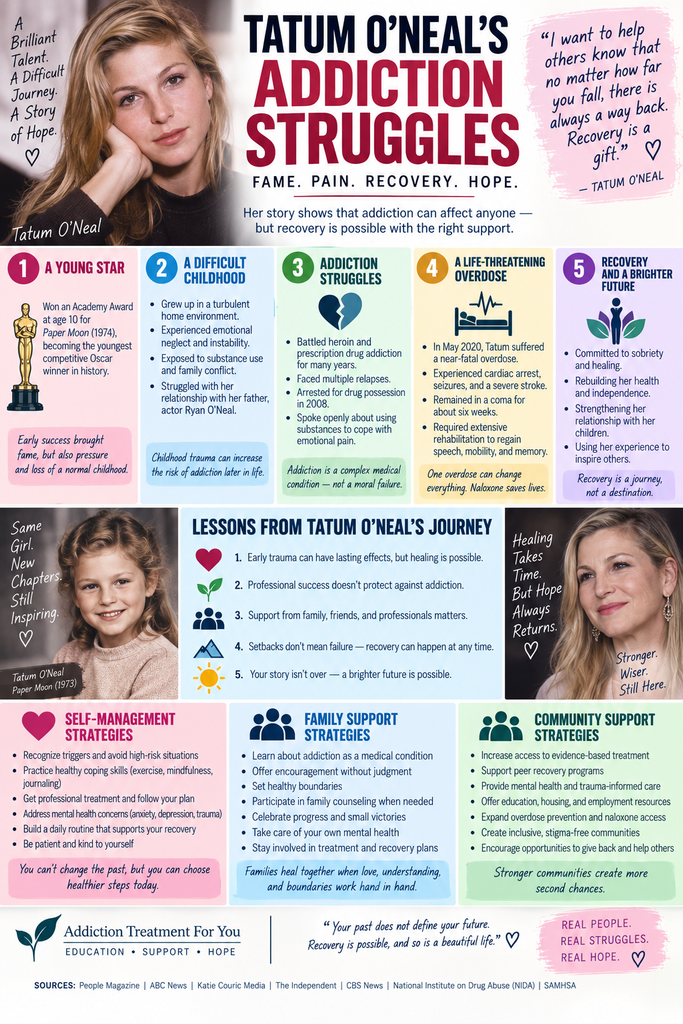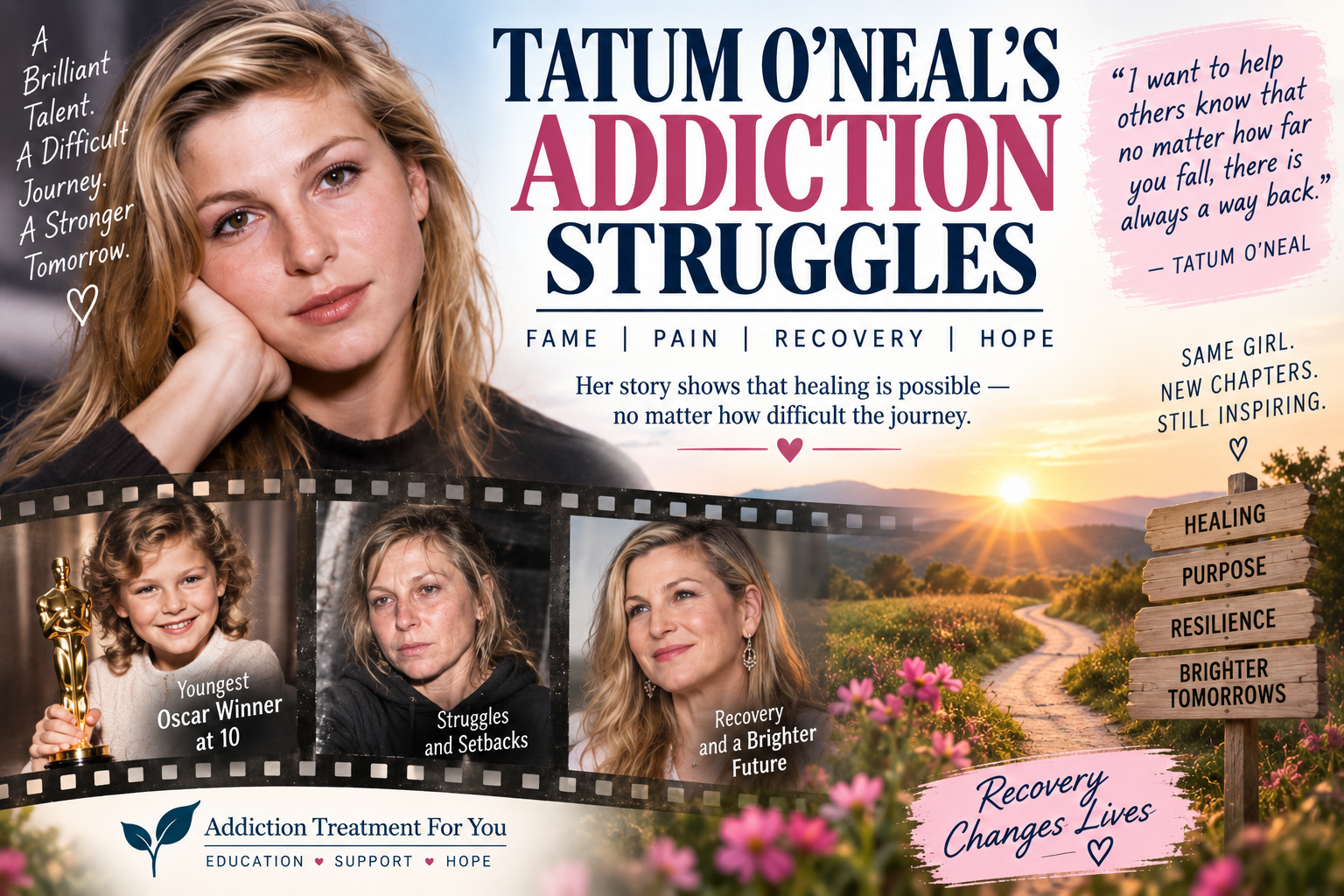
Tatum O’Neal made Hollywood history when she became the youngest person to win a competitive Academy Award at just 10 years old for her performance in Paper Moon. Despite her early success, her personal life was marked by childhood trauma, complicated family relationships, substance use, and repeated attempts at recovery.
Throughout her adult life, O’Neal has spoken publicly about her struggles with addiction, including heroin and prescription medications. In May 2020, she experienced a near-fatal drug overdose that resulted in a severe stroke and a six-week coma. Her recovery required extensive medical rehabilitation, emotional support, and a renewed commitment to sobriety.
In subsequent interviews, O’Neal has described her efforts to rebuild her life, improve her health, and strengthen her relationships with her children. Her experiences demonstrate how addiction can affect people regardless of fame, financial success, or professional accomplishments.
Her story also highlights the importance of trauma-informed addiction treatment, self-management, family involvement, and community support in helping individuals achieve meaningful, sustainable recovery.
1. Early Fame and Childhood Trauma: Understanding the Roots of Her Struggles
Growing Up in the Hollywood Spotlight
Born on November 5, 1963, Tatum O’Neal grew up in a family deeply connected to the entertainment industry.
Her father, Ryan O’Neal, was a successful actor, while her mother, Joanna Moore, also worked in Hollywood.
In 1974, Tatum received the Academy Award for Best Supporting Actress for her performance alongside her father in Paper Moon.
Although her professional achievements brought international recognition, her childhood was marked by family instability.
In her memoirs and public interviews, O’Neal has described experiencing emotional neglect, exposure to substance use, and difficulties maintaining secure relationships with her parents.
She has also discussed feeling lonely and emotionally unsupported despite her public success. CBS News
How Childhood Trauma Can Influence Addiction
Adverse childhood experiences, including neglect, abuse, family conflict, and exposure to substance use, can increase the risk of developing substance use disorders later in life.
Traumatic experiences may influence emotional regulation, stress responses, self-esteem, and the ability to establish trusting relationships.
Some individuals use alcohol or drugs to temporarily relieve emotional distress or manage painful memories.
However, trauma does not inevitably lead to addiction, and substance use disorders can develop in people without a history of childhood adversity.
Genetic vulnerability, environmental influences, mental health conditions, substance exposure, and social circumstances can all contribute to addiction risk.
Lessons from O’Neal’s childhood experiences include:
- Professional success does not guarantee emotional well-being.
- Childhood trauma may have lasting effects on relationships and coping behaviors.
- Emotional neglect can influence an individual’s sense of safety and self-worth.
- Early exposure to substance use may normalize unhealthy behaviors.
- Trauma-informed counseling can help individuals address painful experiences.
- Supportive relationships can provide opportunities to develop healthier coping skills.
Understanding the relationship between trauma and addiction encourages compassion while recognizing that each person’s experiences and recovery needs are different.
2. Tatum O’Neal’s Addiction Struggles: When Substance Use Becomes a Coping Mechanism
Her Publicly Documented History of Addiction
Throughout her adult life, O’Neal has spoken openly about her experiences with substance use.
She has discussed heroin addiction, periods of sobriety, and the difficulties of maintaining recovery while navigating family conflict, emotional distress, and chronic pain.
Her struggles also became public following a drug-related arrest in New York City in 2008.
In interviews and her memoirs, O’Neal has described how addiction affected her relationships, emotional well-being, and ability to maintain stability in her personal life.
Understanding Addiction as a Chronic, Treatable Condition
Substance use disorders involve changes in brain systems associated with reward, motivation, learning, and behavioral control.
Repeated substance exposure can contribute to cravings, tolerance, physical dependence, and difficulty controlling use despite harmful consequences.
Although the decision to begin using a substance may be voluntary, addiction can progressively interfere with a person’s ability to regulate substance use.
Emotional distress, trauma-related symptoms, chronic pain, and environmental triggers may further complicate recovery.
Common warning signs of a substance use disorder include:
- Using larger amounts of a substance than intended.
- Experiencing strong cravings or persistent thoughts about substance use.
- Making unsuccessful attempts to reduce or stop using.
- Continuing substance use despite physical, emotional, or relationship problems.
- Neglecting important responsibilities because of substance use.
- Spending significant time obtaining, using, or recovering from substances.
- Experiencing withdrawal symptoms when substance use is reduced or stopped.
Recognizing these symptoms early can help individuals seek appropriate treatment before serious complications develop.
3. The 2020 Overdose: A Life-Threatening Turning Point
When Addiction Led to a Medical Emergency
In May 2020, O’Neal experienced a near-fatal overdose involving multiple medications, including opioids.
According to her subsequent interviews and family accounts, the overdose was followed by cardiac arrest, seizures, and a severe stroke.
She remained in a coma for approximately six weeks.
After regaining consciousness, she faced significant neurological and physical difficulties, including problems with speech, memory, reading, writing, and mobility.
Her recovery required prolonged medical rehabilitation and assistance from healthcare professionals and family members.
Understanding the Medical Risks of Opioid Overdose
Opioids can suppress the brain’s respiratory drive, resulting in dangerously slow or absent breathing.
When the brain receives insufficient oxygen, severe neurological injury, cardiac arrest, and death can occur.
Combining opioids with alcohol, benzodiazepines, or other sedating medications can increase the risk of respiratory depression.
An overdose can also lead to long-term complications that require rehabilitation and ongoing medical care.
Important overdose prevention strategies include:
- Avoid combining opioids with alcohol or other sedating substances unless specifically directed by a healthcare professional.
- Take prescribed medications only as directed.
- Inform healthcare providers about all medications and substances being used.
- Keep naloxone available when opioid overdose is a risk.
- Seek medical treatment for opioid use disorder.
- Recognize that tolerance decreases after periods of abstinence, increasing overdose risk if previous doses are resumed.
If someone is unresponsive, breathing slowly, or not breathing after suspected opioid use, call 911 immediately. Administer naloxone if available, provide CPR according to dispatcher instructions, and remain with the person until emergency services arrive.
Naloxone can reverse opioid-induced respiratory depression, but emergency medical evaluation remains essential.
4. Recovery After Overdose: Rebuilding Physical and Emotional Health
A Long Road Toward Healing
O’Neal’s recovery following her overdose involved more than addressing substance use.
She also needed extensive rehabilitation to regain physical strength, improve communication, and recover neurological functions affected by her stroke.
Her son Kevin McEnroe has discussed the challenges she faced while relearning basic activities and rebuilding her independence.
In 2023, O’Neal publicly described her ongoing efforts to maintain sobriety while participating in rehabilitation and recovery programs.
By 2025, she was continuing to discuss her recovery and the importance of developing a healthier relationship with herself.
Her experience illustrates that recovery following a serious overdose may involve several overlapping needs.
These can include addiction treatment, neurological rehabilitation, mental health care, chronic pain management, and assistance with daily activities.
Why Integrated Treatment Matters
Individuals recovering from substance use disorders may have additional medical or psychological conditions that require attention.
Treating addiction without addressing these conditions can leave important recovery needs unmet.
A comprehensive treatment plan may include:
- Medical evaluation and treatment of overdose-related complications.
- Medications for opioid use disorder when appropriate.
- Individual counseling and trauma-focused psychotherapy.
- Physical, occupational, and speech rehabilitation.
- Assessment and treatment of co-occurring mental health conditions.
- Nonopioid and nonpharmacological pain management strategies.
- Family counseling and peer recovery support.
- Regular follow-up to monitor progress and adjust treatment.
Recovery is often more effective when healthcare professionals coordinate care rather than treating each concern independently.
5. Self-Management Strategies: Learning to Live Beyond Addiction
Self-management involves developing practical skills to recognize triggers, manage cravings, regulate emotions, and actively participate in their treatment.
O’Neal has publicly discussed participating in therapy and recovery meetings while working to rebuild her life following her overdose.
Her experience offers an opportunity to explore strategies that may help others manage addiction and maintain recovery.
Recognize Emotional and Environmental Triggers
Substance use may become associated with particular emotions, relationships, locations, or stressful situations.
For individuals with trauma histories, reminders of painful experiences can sometimes intensify cravings or emotional distress.
Recognizing these patterns can help individuals develop healthier responses.
Helpful self-management strategies include:
- Identify situations that increase cravings or emotional discomfort.
- Keep a journal documenting triggers, emotions, and coping responses.
- Develop a personalized plan for managing high-risk situations.
- Practice grounding techniques when experiencing trauma-related distress.
- Avoid environments where substance use is encouraged.
- Establish healthy boundaries with individuals who undermine recovery.
- Discuss persistent cravings with an addiction treatment professional.
Recognizing triggers is not about avoiding every uncomfortable experience. It is about developing the skills and support needed to respond safely.
Develop Healthy Coping Mechanisms
People recovering from addiction may need to learn new ways of managing stress, sadness, loneliness, and physical discomfort.
Healthy coping strategies can help reduce reliance on substances while improving overall well-being.
Practical approaches include:
- Practice mindfulness, meditation, or deep breathing.
- Participate in physical activity appropriate for individual health needs.
- Maintain consistent sleep and meal schedules.
- Engage in creative activities such as writing, music, or art.
- Develop supportive friendships and social connections.
- Attend individual or group counseling.
- Participate in enjoyable activities that provide a sense of accomplishment.
For people with chronic pain, self-management should also include an individualized pain treatment plan developed with qualified healthcare professionals.
Establish a Personalized Recovery Plan
A recovery plan can help individuals identify their goals and determine what to do when challenges arise.
The plan should address substance use, mental health, physical health, relationships, and practical needs.
It may include regular medical appointments, therapy sessions, peer recovery meetings, and emergency contacts.
Individuals recovering from opioid use disorder should also discuss evidence-based medications such as buprenorphine or methadone with their healthcare providers.
These medications reduce opioid-related mortality and can help individuals maintain recovery.
Recovery does not require relying on willpower alone. Effective treatment combines personal participation with appropriate medical, psychological, and social support.
6. Family Support: Rebuilding Relationships After Addiction
The Impact of Addiction on O’Neal’s Family
O’Neal’s relationship with her children has been an important part of her publicly documented recovery journey.
She shares three children, Kevin, Sean, and Emily McEnroe, with her former husband, tennis player John McEnroe.
Her children have spoken about the emotional difficulties associated with their mother’s addiction and the challenges of supporting her through repeated health crises.
Following her 2020 overdose, they became involved in supporting her medical recovery.
In a 2026 personal essay, Kevin reflected on the impact of his mother’s substance use on their relationship, his need to establish boundaries during his own recovery, and the process of rebuilding their connection.
He also described his mother’s more recent sobriety and the positive changes he had observed in their relationship. People.com
Their experiences illustrate that addiction affects family systems, not only the individual experiencing the disorder.
Family Strategies That Support Recovery
Families can provide meaningful support while recognizing that they cannot control another person’s substance use.
Helpful family strategies include:
- Learn about addiction as a chronic, treatable medical condition.
- Encourage professional treatment without using shame or threats.
- Maintain open and respectful communication.
- Establish clear boundaries regarding substance use and unsafe behavior.
- Participate in family counseling when appropriate.
- Recognize recovery milestones and positive behavioral changes.
- Avoid taking responsibility for another person’s treatment decisions.
- Seek personal counseling or family support groups when needed.
Supportive family involvement can help individuals feel connected while encouraging accountability and personal responsibility.
Understanding Healthy Boundaries
Families affected by addiction may experience fear, frustration, emotional exhaustion, and uncertainty.
Healthy boundaries allow family members to protect their well-being while maintaining compassion.
For example, a family member may offer transportation to treatment appointments while declining to provide money that could be used to purchase substances.
Boundaries may also involve limiting contact during active substance use or requiring respectful behavior during family interactions.
Healthy boundaries are not punishment. They help create safer relationships in which support and personal responsibility can coexist.
7. Healing Family Trauma Without Repeating Harmful Patterns
Understanding Complicated Parent-Child Relationships
O’Neal has described a difficult relationship with her father, Ryan O’Neal, involving periods of estrangement, conflict, and attempted reconciliation.
In her memoirs and interviews, she discussed how childhood experiences affected her emotional well-being and adult relationships.
Her father’s death in December 2023 brought another significant transition in her personal life.
In a 2025 interview, O’Neal reflected on her relationship with him and described efforts to develop a stronger sense of personal identity independent of their complicated history. ABC News
Her experiences highlight how unresolved family conflict can influence emotional well-being.
However, healing does not necessarily require reconciliation with someone who has caused harm.
For some individuals, maintaining distance or establishing firm boundaries may be the healthiest choice.
Strategies for Breaking Unhealthy Family Patterns
Individuals and families can work toward healthier relationships by:
- Recognizing patterns of neglect, conflict, or substance use within the family.
- Seeking trauma-informed individual or family counseling.
- Developing communication skills that reduce blame and defensiveness.
- Establishing boundaries that protect emotional and physical safety.
- Avoiding the normalization of harmful substance use.
- Encouraging children to express emotions in supportive environments.
- Recognizing that forgiveness and reconciliation are personal choices.
Family healing often requires time, consistent behavior, and respect for individual boundaries.
8. Community Support: Why Recovery Should Not Happen in Isolation
The Importance of Connection
Substance use disorders can contribute to social isolation, relationship difficulties, and reduced participation in meaningful activities.
Community support can help individuals rebuild connections and access resources that support long-term recovery.
O’Neal has discussed participating in recovery meetings and working with healthcare professionals as part of her efforts to maintain sobriety and rebuild her health. The Independent
Her experience illustrates how ongoing support may remain important even after a person has completed intensive treatment.
Community Strategies That Encourage Recovery
Communities can help individuals affected by addiction through:
- Increasing access to evidence-based addiction treatment.
- Providing affordable mental health and trauma-informed counseling.
- Expanding access to medications for opioid use disorder.
- Offering peer recovery support groups and mentorship programs.
- Supporting overdose prevention education and naloxone distribution.
- Providing transportation to medical appointments and treatment programs.
- Developing employment, education, and housing assistance programs.
- Creating recreational and social opportunities that do not involve substance use.
These resources can help address practical barriers that interfere with recovery.
The Role of Peer Recovery Support
Peer recovery programs connect individuals with others who have experienced substance use disorders.
These relationships may provide encouragement, practical guidance, and opportunities to develop healthier social connections.
Programs such as Narcotics Anonymous, SMART Recovery, and other peer-led organizations offer different approaches to recovery.
Some individuals benefit from structured group participation, while others prefer individual counseling or a combination of professional treatment and peer support.
Recovery services should be accessible, respectful, and responsive to individual needs.
9. What Tatum O’Neal’s Journey Teaches Us About Addiction Recovery
O’Neal’s experiences demonstrate that addiction can affect individuals across different stages of life, including those who have achieved significant professional success.
Her story also illustrates that recovery is not always a straightforward process.
Periods of sobriety may be followed by renewed substance use, medical complications, or emotional challenges.
These experiences do not mean that future recovery is impossible.
Five Important Lessons From Her Journey
1. Childhood trauma deserves appropriate attention.
Unresolved trauma can contribute to emotional difficulties and may complicate addiction treatment. Trauma-informed care helps individuals address these experiences without judgment.
2. Addiction requires more than personal determination.
Evidence-based treatment, medications when appropriate, behavioral therapy, and supportive relationships can help individuals manage substance use disorders.
3. Overdose survivors may need long-term medical care.
Severe overdose can result in neurological injury, physical disability, and other complications requiring coordinated rehabilitation.
4. Family support should include healthy boundaries.
Loved ones can provide encouragement while protecting their own emotional and physical well-being.
5. Recovery remains possible after serious setbacks.
A history of repeated substance use, previous treatment attempts, or severe medical complications does not eliminate the possibility of meaningful recovery.
10. Finding Hope and Purpose Beyond Addiction
For individuals recovering from substance use disorders, rebuilding a meaningful life may involve more than achieving abstinence.
Recovery can also include improving physical health, strengthening relationships, developing personal interests, and regaining independence.
O’Neal’s efforts to recover from her stroke and rebuild her relationships illustrate how medical rehabilitation and addiction recovery can become interconnected parts of a person’s life.
Her experience also emphasizes the importance of recognizing progress that may not be immediately visible to others.
For someone recovering from a serious medical complication, progress may involve regaining the ability to communicate, completing daily activities independently, or participating more fully in family life.
For another person, progress may involve consistently attending treatment, maintaining stable housing, reconnecting with loved ones, or developing healthier coping strategies.
Practical steps toward rebuilding a meaningful life include:
- Establish realistic goals that reflect individual abilities and circumstances.
- Recognize small improvements in physical and emotional health.
- Participate actively in medical treatment and rehabilitation.
- Rebuild supportive relationships when it is safe and appropriate.
- Explore meaningful hobbies, educational opportunities, or volunteer activities.
- Develop a daily routine that supports recovery and independence.
- Seek additional assistance when physical, emotional, or substance-related challenges arise.
Recovery is not defined by achieving perfection. It involves making meaningful progress toward improved health, stability, and quality of life.
Conclusion: Tatum O’Neal’s Journey From Addiction to Healing
Tatum O’Neal’s life illustrates the complicated relationship between childhood trauma, substance use, family relationships, and long-term recovery.
Despite achieving extraordinary professional success at a young age, she experienced significant personal challenges that continued into adulthood.
Her near-fatal overdose in 2020 and subsequent stroke created additional medical and emotional difficulties, requiring extensive rehabilitation and ongoing support.
Her more recent public accounts describe efforts to maintain sobriety, rebuild relationships, and develop a healthier sense of personal identity.
Her journey reminds us that addiction is a treatable medical condition and that recovery may require coordinated care addressing physical health, emotional well-being, trauma, and social relationships.
Self-management helps individuals recognize triggers and develop healthier coping skills. Family support provides encouragement while maintaining appropriate boundaries. Community resources create opportunities to access treatment, rebuild connections, and develop a meaningful life beyond substance use.
Tatum O’Neal’s story demonstrates that a person’s past does not have to determine their future. Even after years of addiction, serious medical complications, and difficult family experiences, meaningful recovery and personal growth remain possible.
Frequently Asked Questions
Here are some common questions:
1. Who is Tatum O’Neal, and why is her addiction story significant?
Tatum O’Neal is an American actress who became the youngest person to win a competitive Academy Award when she won Best Supporting Actress for Paper Moon in 1974 at age 10.
Despite her early Hollywood success, she experienced significant personal challenges, including childhood trauma, family conflict, substance use disorder, and a near-fatal overdose in 2020.
Her story illustrates how addiction can affect individuals regardless of fame, wealth, or professional accomplishments. It also highlights the importance of evidence-based treatment, family support, and long-term recovery.
2. What substances has Tatum O’Neal struggled with?
O’Neal has publicly discussed her struggles with heroin and prescription medications.
Her history includes periods of sobriety, renewed substance use, and participation in addiction treatment.
In May 2020, she experienced a near-fatal overdose involving multiple medications, including opioids.
Her experiences demonstrate the serious health risks associated with opioid use, particularly when opioids are combined with other medications that affect the central nervous system.
3. How did Tatum O’Neal’s childhood influence her addiction struggles?
O’Neal has described growing up in an unstable family environment marked by emotional neglect, exposure to substance use, and complicated relationships with her parents.
Childhood trauma can increase vulnerability to substance use disorders by affecting emotional regulation, stress responses, and the development of healthy coping mechanisms.
However, trauma does not inevitably cause addiction. Genetic, psychological, environmental, and social factors can also contribute to substance use disorders.
Her experiences highlight the importance of trauma-informed treatment that addresses both substance use and underlying emotional difficulties.
4. Did Tatum O’Neal’s early Hollywood success contribute to her addiction?
O’Neal became internationally famous at a young age, exposing her to public attention and the pressures of the entertainment industry.
She has also described experiencing family instability and emotional difficulties during childhood.
Although these experiences may have influenced her emotional well-being, it would be inaccurate to attribute her addiction to fame alone.
Substance use disorders typically develop through a combination of biological, psychological, environmental, and social influences.
5. What happened during Tatum O’Neal’s 2020 overdose?
In May 2020, O’Neal experienced a near-fatal overdose involving multiple medications.
According to her public accounts and statements from her family, she experienced cardiac arrest, seizures, and a severe stroke.
She remained in a coma for approximately six weeks.
Following the overdose, she experienced significant neurological difficulties involving speech, memory, reading, writing, and mobility.
Her recovery required extensive medical rehabilitation and ongoing support from healthcare professionals and family members.
6. Did Tatum O’Neal suffer permanent health complications from her overdose?
O’Neal experienced significant neurological complications following her 2020 overdose and stroke.
She required rehabilitation to regain physical strength, communication abilities, and independence in daily activities.
Her son, Kevin McEnroe, has publicly discussed the difficulties she experienced while recovering from her neurological injuries.
Although O’Neal has described improvements in her health, the full extent of any permanent neurological impairment cannot be determined from public information alone.
Her experience illustrates that surviving an overdose does not always mean escaping long-term medical consequences.
7. How can an opioid overdose cause brain damage or a stroke?
Opioids can suppress the brain’s respiratory drive, resulting in dangerously slow or absent breathing.
When oxygen delivery to the brain becomes insufficient, brain cells may sustain serious injury.
Severe opioid overdose can also lead to cardiac arrest, which further reduces oxygen delivery to vital organs.
A stroke may occur in association with an overdose through several mechanisms, including changes in blood flow, vascular injury, or other medical complications.
The exact mechanism of O’Neal’s stroke has not been fully established in the public information available.
8. What role did Tatum O’Neal’s children play in her recovery?
O’Neal shares three children—Kevin, Sean, and Emily McEnroe—with her former husband, John McEnroe.
Her children have discussed the challenges associated with their mother’s addiction and the emotional impact it had on their family.
Following her 2020 overdose, they became involved in supporting her medical recovery and rehabilitation.
Their experiences illustrate how family members can provide emotional encouragement and practical assistance while maintaining healthy boundaries.
Family involvement can support recovery, but loved ones should not be expected to assume complete responsibility for another person’s treatment or sobriety.
9. How did Tatum O’Neal’s relationship with her father affect her emotional well-being?
O’Neal has publicly described a complicated relationship with her father, actor Ryan O’Neal.
In her memoirs and interviews, she discussed periods of family conflict, emotional distress, estrangement, and attempted reconciliation.
Her experiences highlight how difficult parent-child relationships can influence emotional well-being and personal identity.
However, family conflict alone does not explain the development of addiction.
For individuals with similar experiences, trauma-informed counseling may help address unresolved emotions, establish healthy boundaries, and develop more effective coping strategies.
10. Is Tatum O’Neal currently sober?
O’Neal has publicly discussed her commitment to sobriety following her 2020 overdose.
In subsequent interviews, she described participating in recovery activities, rebuilding her physical health, and strengthening relationships with her children.
Her family has also spoken about her recovery progress.
However, an individual’s current sobriety status is personal and may change over time. Public statements should not be interpreted as independent confirmation of her present medical or recovery status.
11. What self-management strategies can help someone recovering from opioid addiction?
Self-management involves recognizing personal triggers, developing healthier coping mechanisms, and participating actively in treatment.
Helpful strategies include:
- Identify emotional, environmental, and social triggers.
- Develop a personalized plan for managing cravings.
- Establish consistent sleep, nutrition, and exercise routines.
- Practice mindfulness and stress-management techniques.
- Attend scheduled medical appointments and counseling sessions.
- Avoid situations that increase the risk of returning to substance use.
- Maintain access to naloxone and understand how to respond to an overdose.
- Seek professional assistance when cravings or emotional difficulties become difficult to manage.
Self-management should complement evidence-based treatment rather than replace it.
12. How can trauma-informed treatment help individuals with addiction?
Trauma-informed treatment recognizes that traumatic experiences may influence emotional regulation, relationships, and substance use behaviors.
The approach emphasizes physical and emotional safety, trust, collaboration, and respect for individual choices.
Treatment may include cognitive behavioral therapy, trauma-focused psychotherapy, and other evidence-based interventions.
Healthcare professionals should assess whether an individual has co-occurring conditions, such as post-traumatic stress disorder, depression, or anxiety.
Addressing trauma and addiction together can help individuals develop healthier coping strategies and improve their overall quality of life.
13. What medications are available for opioid use disorder?
Three medications are approved by the U.S. Food and Drug Administration for treating opioid use disorder:
Buprenorphine: A partial opioid agonist that reduces withdrawal symptoms and cravings. It can be prescribed in outpatient settings and is available in several formulations.
Methadone: A long-acting opioid agonist that reduces withdrawal symptoms and cravings. For opioid use disorder, it is generally provided through federally certified opioid treatment programs.
Naltrexone: An opioid antagonist that blocks opioid receptors. Extended-release injectable naltrexone is an option for individuals who have completed opioid withdrawal and are appropriate candidates.
Buprenorphine and methadone are associated with substantial reductions in opioid-related mortality.
Medication selection should be individualized based on clinical needs, patient preferences, treatment history, and medical considerations.
14. Why is naloxone important for individuals at risk of opioid overdose?
Naloxone is a medication that rapidly reverses opioid-induced respiratory depression by displacing opioids from their receptors.
It can restore breathing during an opioid overdose and prevent death when administered promptly.
Naloxone is available in several formulations, including over-the-counter nasal sprays.
Individuals who use opioids, their family members, and others who may witness an overdose should know how to recognize overdose symptoms and administer naloxone.
If an opioid overdose is suspected, call 911 immediately, administer naloxone, and provide CPR according to emergency dispatcher instructions. Additional naloxone doses may be necessary.
Emergency medical evaluation is essential even if the individual regains consciousness.
15. How can family members support someone struggling with addiction?
Families can provide meaningful support by encouraging treatment, maintaining open communication, and establishing healthy boundaries.
Helpful strategies include:
- Learn about substance use disorders and available treatment options.
- Encourage professional treatment without shame or criticism.
- Avoid providing money or resources that could facilitate unsafe substance use.
- Participate in family counseling when appropriate.
- Recognize recovery milestones and positive behavioral changes.
- Establish boundaries that protect emotional and physical safety.
- Keep naloxone available when opioid overdose is a concern.
- Seek personal counseling or family support groups when needed.
Family members can offer encouragement, but they cannot control another person’s substance use or guarantee recovery.
16. What community resources can help individuals recovering from opioid addiction?
Community support can help individuals access treatment, rebuild relationships, and develop healthier daily routines.
Important resources include:
- Outpatient and residential addiction treatment programs.
- Opioid treatment programs providing methadone.
- Healthcare professionals who prescribe buprenorphine.
- Mental health counseling and trauma-informed therapy.
- Narcotics Anonymous and SMART Recovery.
- Peer recovery support specialists.
- Community naloxone distribution programs.
- Housing, transportation, employment, and educational assistance.
These resources can address medical, psychological, and social barriers that may interfere with recovery.
17. Does experiencing a relapse mean addiction treatment has failed?
No. A return to substance use does not mean that recovery is impossible or that previous progress has been erased.
Substance use disorders can involve periods of improvement and renewed substance use.
When someone returns to using substances, healthcare professionals should reassess the treatment plan, identify contributing factors, and determine whether additional support is needed.
A return to opioid use after a period of abstinence can be especially dangerous because opioid tolerance may decrease, increasing the risk of overdose.
Continuing or reengaging in treatment can help individuals reduce risks and work toward their recovery goals.
18. Can someone recover from addiction after experiencing a near-fatal overdose?
Yes. Individuals can achieve meaningful recovery even after experiencing severe overdose-related complications.
However, recovery needs vary depending on the extent of medical injury, substance use history, mental health conditions, and available support.
Some individuals may require a combination of addiction treatment, neurological rehabilitation, physical therapy, occupational therapy, and mental health counseling.
O’Neal’s experience illustrates how medical rehabilitation and addiction recovery can become interconnected parts of rebuilding a person’s life.
Recovery may involve gradual improvements in physical health, emotional well-being, relationships, and independence.
19. What can people learn from Tatum O’Neal’s addiction struggles?
O’Neal’s experiences offer several important lessons about addiction and recovery.
Her childhood demonstrates how adverse experiences may influence emotional development and vulnerability to substance use.
Her history of addiction illustrates that professional success does not protect someone from developing a substance use disorder.
Her 2020 overdose highlights the potentially life-threatening consequences of opioid use and the importance of overdose prevention.
Her subsequent rehabilitation demonstrates how recovery may require coordinated medical treatment, family involvement, and long-term support.
Her journey reinforces the importance of addressing addiction with compassion, evidence-based treatment, and recognition of each individual’s unique circumstances.
20. What is the most important message from Tatum O’Neal’s recovery journey?
Tatum O’Neal’s story illustrates that addiction is a complex, treatable medical condition that can affect individuals from all backgrounds.
Her experiences with childhood trauma, substance use, overdose, and rehabilitation demonstrate how recovery may involve addressing multiple physical, psychological, and social challenges.
Self-management helps individuals recognize triggers and develop healthier coping strategies. Family support provides encouragement while maintaining healthy boundaries. Community resources create opportunities to access treatment and rebuild meaningful connections.
Her story also emphasizes that recovery is not defined by perfection or the absence of setbacks.
A person’s past does not have to determine their future. With appropriate treatment, supportive relationships, and access to recovery resources, meaningful healing and personal growth remain possible.
Video: