Starting a diet can feel surprisingly easy. The first few days may bring motivation, careful meal planning, and confidence that this time will be different. Then hunger increases, stress takes over, cravings set in, a social event disrupts the plan, or one unplanned meal leads to thoughts of giving up completely.
Why is sticking to a diet so difficult?
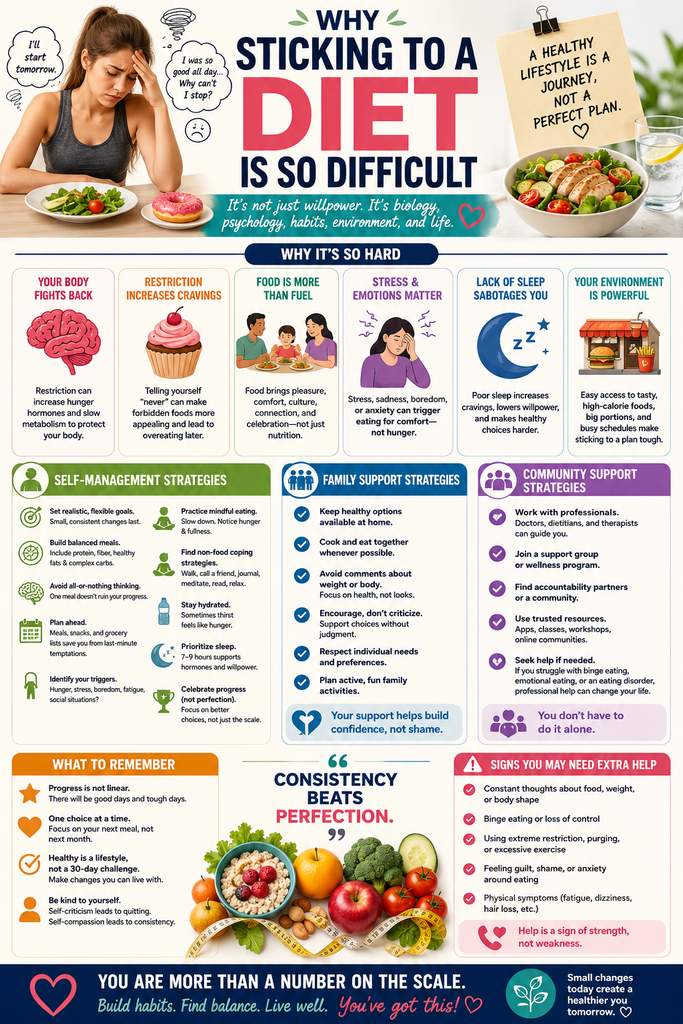
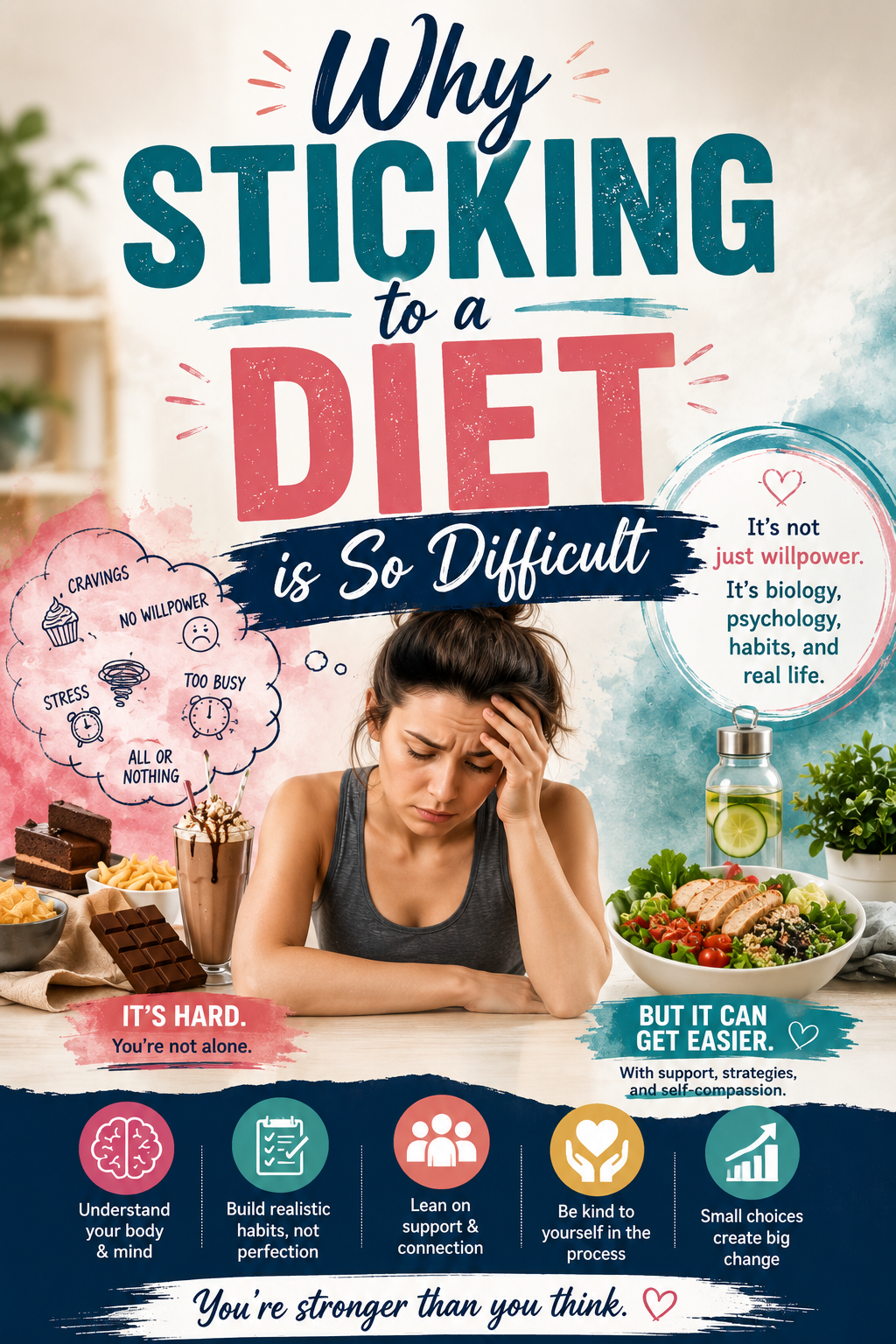
The answer is more complicated than willpower. Eating behavior is influenced by hunger and fullness signals, reward pathways, emotions, habits, sleep, stress, food availability, social environments, and expectations. Highly restrictive diets can make these pressures even harder to manage.
Understanding these influences can help people move away from repeated cycles of restriction and guilt and toward sustainable eating habits.
Your Body Is Designed to Respond to Food Restriction
The human body has biological systems designed to maintain adequate energy availability. When calorie intake decreases, hunger can increase, and the body may adapt in ways that make continued weight loss more difficult.
This helps explain why someone can begin a diet feeling highly motivated but later experience stronger hunger, food preoccupation, or fatigue.
Those responses are not simply evidence of poor discipline. Biology is participating in the process.
Restriction Can Make Certain Foods More Appealing
Strict diets often divide food into categories such as “good” and “bad.”
Someone might decide:
“I’m never eating bread again.”
Initially, the rule can create a feeling of control. Over time, however, constantly avoiding a desired food can make that food feel even more important.
A person eventually eats it and thinks:
“I broke my diet. I might as well eat whatever I want today.”
This all-or-nothing thinking can transform a normal eating decision into overeating followed by guilt and another attempt at restriction.
Food Is More Than Fuel
People do not eat solely for calories.
Food is connected to:
- Pleasure and reward
- Family traditions
- Celebrations
- Cultural identity
- Social connection
- Stress relief
- Comfort
- Boredom
- Convenience
- Memories and routines
A diet that ignores these roles can be extremely difficult to maintain in everyday life.
Stress Can Change Eating Behavior
After a difficult day, people may seek foods associated with comfort or reward. Stress can also make planning, cooking, and thoughtful decision-making harder.
Emotional eating occasionally is not necessarily a disorder. Problems can develop when food becomes the primary way someone manages sadness, loneliness, anxiety, boredom, anger, or chronic stress.
Instead of asking only:
“Why can’t I control my eating?”
It may be more useful to ask:
“What am I trying to cope with when I eat this way?”
Sleep Matters More Than Many People Realize
Insufficient sleep can affect appetite, energy, mood, and decision-making.
A tired person may have less energy to prepare meals or exercise and may gravitate toward convenient, highly rewarding foods. Sleep deprivation can also make cravings and hunger more difficult to manage.
Therefore, improving eating habits sometimes begins with improving sleep.
Your Environment Is Constantly Influencing You
Modern food environments provide frequent opportunities to eat. Restaurants, advertisements, delivery apps, workplace snacks, convenience stores, oversized portions, and highly palatable foods can make eating effortless.
Someone attempting to change eating behavior is therefore not making decisions in isolation.
Environment matters.
Changing the environment can sometimes be more effective than repeatedly asking yourself to demonstrate greater willpower.
Self-Management Strategies
Sustainable nutrition usually depends more on consistent habits than perfect adherence to rigid rules.
- Set realistic goals. Avoid expecting dramatic changes overnight.
- Build balanced meals. Include foods that provide protein, fiber, healthy fats, and other important nutrients.
- Avoid extreme restriction. A plan that eliminates numerous foods may become difficult to sustain unless medically necessary.
- Identify your eating triggers. Notice whether eating commonly occurs because of hunger, stress, boredom, loneliness, fatigue, or habit.
- Plan ahead. Keeping practical meal and snack options available reduces reliance on last-minute decisions.
- Practice flexible thinking. One unplanned meal does not ruin an entire week.
- Eat more mindfully. Slow down enough to notice hunger, taste, satisfaction, and fullness.
- Protect your sleep. Consistent sleep can support appetite regulation and decision-making.
- Develop non-food coping strategies. Walking, music, hobbies, relaxation techniques, journaling, or calling someone can provide alternatives when emotions—not hunger—are driving the urge to eat.
- Measure progress beyond the scale. Energy, strength, sleep, laboratory values, physical activity, and consistency can also reflect meaningful improvement.
Stop Thinking in Terms of “Perfect” and “Failed”
One of the biggest obstacles to sustainable eating is perfectionism.
Imagine someone plans nutritious meals throughout the week but eats dessert at a birthday party.
One response is:
“I ruined my diet.”
Another is:
“I enjoyed dessert at a celebration. My next meal can return to my usual routine.”
The second response prevents a single decision from turning into an entire day or week of abandoning healthy habits.
Consistency generally matters more than perfection.
Family Support Strategies
Families can strongly influence eating behaviors. Support is most helpful when it encourages health without creating shame or excessive monitoring.
Family members can:
- Prepare balanced meals together.
- Keep nutritious and convenient foods available.
- Avoid criticizing someone’s body or weight.
- Avoid labeling foods as morally “good” or “bad.”
- Respect individual food preferences and health needs.
- Participate in enjoyable physical activities together.
- Celebrate health improvements rather than focusing exclusively on weight.
- Avoid pressuring someone to eat foods they are trying to limit.
- Ask how they can provide support instead of becoming the “food police.”
- Model flexible and balanced eating habits.
Family encouragement should promote health, not fear of food.
Be Careful With Weight-Based Comments
Statements such as “You’ve gained weight,” “Are you really going to eat that?” or “You need to lose weight” may be intended as motivation but can produce shame, secrecy, or unhealthy eating behaviors.
A more supportive approach focuses on behaviors:
“How can we make healthy meals easier this week?”
This shifts attention from appearance toward practical support.
Community Support Strategies
Some people can successfully change eating habits independently. Others benefit from professional or community support, particularly when medical conditions, significant weight changes, or problematic eating behaviors are involved.
Helpful resources may include:
- Primary-care clinicians
- Registered dietitians
- Behavioral-health professionals
- Evidence-based weight-management programs
- Community nutrition programs
- Cooking and meal-planning classes
- Community recreation centers
- Walking or physical-activity groups
- Workplace wellness resources
- Support groups
- Eating-disorder specialists when appropriate
A registered dietitian can be particularly helpful in developing an eating plan that considers nutritional requirements, preferences, culture, medical conditions, budget, and lifestyle.
When Dieting Becomes Unhealthy
Not every attempt to lose weight is harmless.
Warning signs that deserve professional attention can include severe food restriction, repeated binge-eating episodes, self-induced vomiting, misuse of laxatives or other compensatory behaviors, intense fear surrounding food, compulsive exercise, significant nutritional deficiencies, or persistent preoccupation with weight and body shape.
These behaviors may indicate an eating disorder or another condition requiring professional assessment.
The goal of healthy eating should not be to fear food.
Build a Lifestyle Instead of Surviving a Diet
One useful question is:
“Could I realistically eat this way six months or a year from now?”
If the answer is no, the plan may be too restrictive.
Sustainable changes are often less dramatic:
Choosing water more frequently.
Adding vegetables to meals.
Preparing food at home more often.
Eating adequate protein and fiber.
Reducing mindless snacking.
Getting enough sleep.
Walking regularly.
Enjoying favorite foods without turning them into everyday habits.
None sounds revolutionary. That is precisely why these behaviors may be easier to continue.
Conclusion
Sticking to a diet is difficult because eating is influenced by far more than motivation. Biology, hunger, reward, emotions, sleep, stress, habits, family traditions, food availability, and the surrounding environment all influence what and how much we eat.
A sustainable approach therefore should not depend entirely on willpower.
Build routines. Modify your environment. Plan for difficult situations. Learn your emotional triggers. Seek professional support when needed. Most importantly, avoid treating one imperfect eating decision as evidence that the entire effort has failed.
The goal is not to follow a diet perfectly.
The goal is to develop eating habits that support your health while still allowing you to live your life.
Frequently Asked Questions
Here are some common questions:
1. Why is sticking to a diet so difficult?
Eating behavior is influenced by much more than willpower. Hunger, hormones, food preferences, stress, sleep, emotions, habits, social situations, food availability, and the restrictiveness of the diet can all affect how easy or difficult it is to maintain a plan.
2. Does struggling with a diet mean I lack willpower?
No. Self-control plays a role in many behaviors, but relying on willpower alone is usually difficult to sustain. Creating realistic routines and an environment that supports healthier choices can reduce the number of decisions requiring constant self-control.
3. Why do I become hungrier when I lose weight?
When calorie intake and body weight decrease, the body can respond with biological adaptations that encourage eating and conserve energy. Hunger may increase, while energy expenditure may decrease. These responses can make continued weight loss more challenging.
4. Why do strict diets sometimes increase cravings?
Strictly forbidding favorite foods can make people think about them more frequently. When someone eventually eats a “forbidden” food, all-or-nothing thinking may lead to overeating because they believe the diet is already ruined.
5. Why do I eat when I’m stressed even when I’m not physically hungry?
Food can provide temporary pleasure, comfort, distraction, or emotional relief. Stress, anxiety, loneliness, boredom, and sadness can therefore trigger eating even when the body does not require additional energy.
6. How can I tell physical hunger from emotional eating?
Physical hunger often develops gradually and can usually be satisfied by different foods. Emotional urges may appear suddenly, focus on a specific food, and occur after stress or another emotional trigger. However, the distinction is not always clear, and both can occur simultaneously.
7. Can lack of sleep make dieting harder?
Yes. Insufficient sleep can affect appetite, energy, mood, and decision-making. Fatigue can also make cooking and physical activity more difficult while making convenient, highly rewarding foods more appealing.
8. Why do I do well all week and then overeat on the weekend?
Weekends often involve different routines, restaurants, social events, alcohol, larger portions, and greater access to snack foods. Excessive restriction during the week may also contribute to stronger hunger or feelings of deprivation by the weekend.
9. Does one unhealthy meal ruin my progress?
No. One meal does not determine long-term health or weight outcomes. Instead of compensating through extreme restriction, simply return to your usual balanced eating pattern at the next meal.
10. Should I completely eliminate my favorite foods?
Usually not unless there is a medical reason to avoid a particular food. Allowing reasonable portions of enjoyable foods can make an eating plan more sustainable and reduce feelings of deprivation.
11. How can I make healthy eating easier?
Helpful strategies include:
- Planning meals before becoming extremely hungry
- Keeping convenient nutritious foods available
- Eating balanced meals containing protein and fiber
- Getting adequate sleep
- Identifying emotional and environmental eating triggers
- Preparing meals or ingredients ahead of time
- Practicing portion awareness
- Choosing realistic rather than extreme goals
- Returning to your routine after setbacks instead of giving up
12. How can my family support healthier eating?
Family members can prepare balanced meals together, keep nutritious options available, participate in physical activities, and avoid criticizing someone’s weight or food choices. Support should encourage healthier behaviors without becoming constant monitoring.
13. Why can comments about weight make dieting harder?
Weight-focused criticism can produce shame, anxiety, low self-esteem, or secrecy around food. Focusing on behaviors—such as cooking nutritious meals, improving sleep, or becoming more physically active—may be more constructive than repeatedly commenting on someone’s appearance.
14. Should I weigh myself every day?
It depends on the individual. Some people find regular weighing useful for tracking trends, while others become anxious or overly focused on normal daily fluctuations. Weight is only one measure of health and progress.
15. Is slow weight loss better than rapid weight loss?
For many people seeking weight loss, gradual, sustainable changes are easier to maintain than highly restrictive approaches. Individual goals should take into account medical conditions, medications, nutritional needs, and guidance from qualified healthcare professionals.
16. When should I consider seeing a registered dietitian?
A registered dietitian can be particularly helpful if you repeatedly struggle with restrictive diets, have medical conditions affected by nutrition, need individualized meal planning, or want an evidence-based approach that accommodates your preferences, culture, schedule, and health goals.
17. When can dieting become unhealthy?
Professional assessment is important when dieting involves severe restriction, binge eating, purging, misuse of laxatives, compulsive exercise, intense fear of food, significant weight changes, nutritional deficiencies, or persistent preoccupation with food, weight, or body shape.
18. What is the best diet for long-term success?
There is no single diet that works best for everyone. A useful eating pattern is nutritionally adequate, medically appropriate, affordable, culturally acceptable, enjoyable enough to continue, and flexible enough to fit everyday life.
19. Why is consistency more important than perfection?
Health outcomes develop from patterns repeated over time. A birthday dinner, vacation meal, or dessert does not erase weeks of healthier choices. Returning to your routine matters more than eating perfectly.
20. What is the most important lesson about sticking to a diet?
Build habits you can live with rather than rules you are constantly trying not to break. Sustainable nutrition is less about following a perfect diet and more about developing realistic behaviors that support your physical and emotional health over time.
Video: The secret reason you can’t stick to a diet 🤫 #dieting #fatloss