Tom Holland, best known for portraying Spider-Man in the Marvel Cinematic Universe, has become an inspiration to people reconsidering their relationship with alcohol. Despite his Hollywood success, Holland discovered that drinking had become an important part of his social life and daily routine. What began as a simple Dry January challenge in 2022 eventually transformed into a long-term commitment to sobriety.
Through self-reflection, lifestyle changes, and support from loved ones, Holland discovered that life without alcohol could be more fulfilling than he had imagined. His journey highlights the importance of recognizing unhealthy drinking patterns, developing healthier coping strategies, and building meaningful relationships that do not depend on alcohol.
His experience also offers valuable lessons about addiction recovery, emotional well-being, and the role of family and community support in maintaining a healthier lifestyle.
1. Tom Holland’s Journey: From Social Drinking to Sobriety
When a Simple Challenge Became a Life-Changing Decision
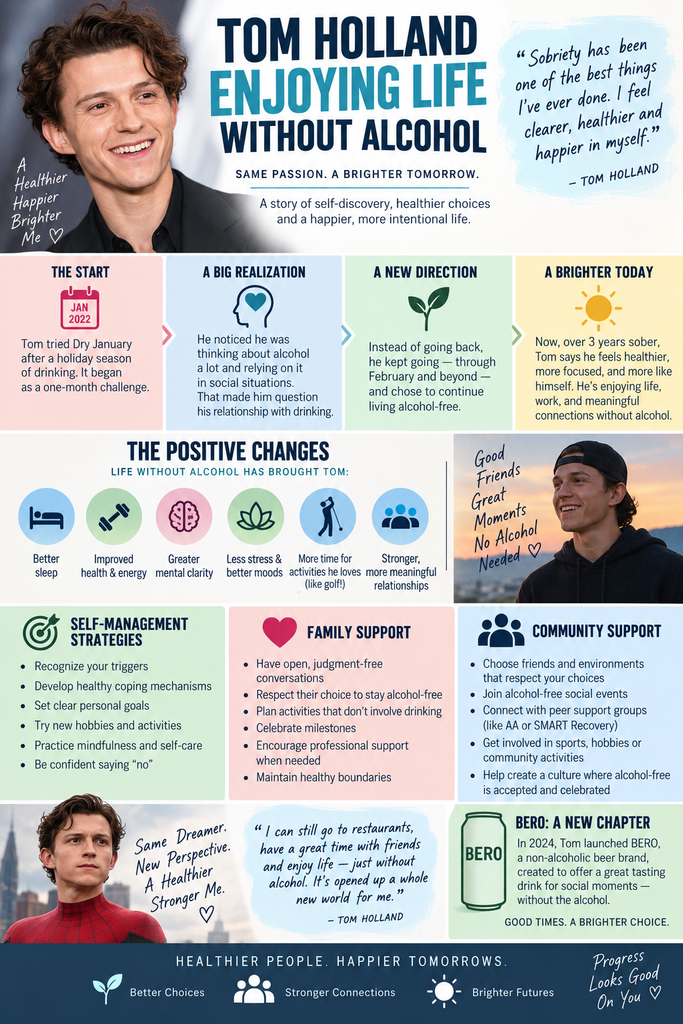
In January 2022, Holland decided to participate in Dry January after a holiday season that involved considerable drinking.
Initially, he intended to stop drinking for only one month. However, he soon noticed something unexpected: he was thinking about alcohol frequently and finding it difficult to imagine socializing without drinking.
During a July 2023 appearance on the On Purpose with Jay Shetty podcast, Holland explained that his preoccupation with alcohol made him question whether his drinking had become a problem.
Rather than returning to alcohol after January, he extended his challenge through February and eventually decided to continue until his birthday in June.
As the months passed, Holland began noticing significant improvements in his physical health, emotional well-being, and ability to manage everyday challenges.
He reported sleeping better, feeling healthier, experiencing greater mental clarity, and handling stressful situations more effectively. iHeart
His experience illustrates an important lesson: recognizing how alcohol affects daily life can be the beginning of meaningful behavioral change.
Understanding the Role Alcohol Played in His Life
One of Holland’s most significant realizations involved his relationship with alcohol in social situations.
He recognized that he frequently relied on drinking to feel more comfortable when attending social gatherings.
Without alcohol, activities such as going to restaurants, visiting pubs, or spending time with friends initially felt uncomfortable.
However, as he continued his sobriety journey, he began learning how to enjoy these experiences without drinking.
Holland also became more aware of how certain friendships and social environments had revolved around alcohol.
His experience demonstrates that reducing or eliminating alcohol often involves more than changing drinking habits. It can require developing new ways of socializing, managing emotions, and maintaining relationships. iHeart
2. Rediscovering Happiness Without Alcohol
Learning to Enjoy Everyday Experiences
For Holland, sobriety was not simply about avoiding alcohol. It became an opportunity to discover activities and experiences that brought him genuine satisfaction.
During an October 2024 interview with Good Morning America, he discussed how sobriety had improved his ability to handle stressful situations at work.
He also described enjoying early morning golf outings with friends without experiencing the fatigue and discomfort associated with drinking the previous night.
His experience illustrates how removing alcohol can create opportunities to establish healthier routines and enjoy activities that may have previously been affected by drinking. ABC News
Examples of activities that can support an alcohol-free lifestyle include:
- Participating in sports, exercise, or outdoor recreation.
- Spending quality time with family and friends.
- Developing new hobbies and creative interests.
- Exploring alcohol-free restaurants and social events.
- Practicing mindfulness, meditation, or relaxation techniques.
- Establishing consistent sleep and exercise routines.
- Celebrating personal achievements without using alcohol.
These activities can provide enjoyment, strengthen social connections, and help individuals develop a lifestyle that supports their recovery goals.
Creating a New Relationship With Socializing
Holland’s journey also demonstrates that sobriety does not necessarily require withdrawing from social activities.
Although he initially found it difficult to attend gatherings without alcohol, he gradually became more comfortable participating in these environments while remaining sober.
His experience highlights the importance of developing confidence and recognizing that meaningful social connections do not have to depend on drinking. iHeart
For some people, returning to alcohol-centered environments may increase cravings or the risk of returning to drinking. Others may eventually feel comfortable participating in these activities without alcohol.
The appropriate approach depends on an individual’s recovery needs, personal triggers, and available support.
3. Self-Management Strategies: Building a Healthier Alcohol-Free Life
Self-management involves recognizing personal triggers, developing healthier coping mechanisms, and making intentional decisions that support long-term well-being.
Holland has described examining why he drank and gradually changing how he approached social situations. These experiences offer useful lessons for individuals considering sobriety. iHeart
Recognize Personal Drinking Triggers
Alcohol consumption is often associated with emotional, environmental, or social triggers.
Common triggers include stress, loneliness, boredom, social anxiety, and pressure from friends.
Identifying these patterns can help individuals understand the circumstances that influence their drinking.
Practical self-management strategies include:
- Keep a journal documenting drinking patterns, cravings, and emotional triggers.
- Identify situations where alcohol feels necessary for relaxation or social confidence.
- Develop alternative coping strategies for stress and uncomfortable emotions.
- Establish realistic and measurable goals for reducing or eliminating alcohol.
- Avoid environments that create overwhelming pressure to drink.
- Practice declining alcoholic beverages without feeling obligated to explain your decision.
Understanding personal triggers allows individuals to make informed decisions about their alcohol use.
Develop Healthy Coping Mechanisms
Alcohol can become a familiar response to stress, anxiety, or emotional discomfort.
When someone stops drinking, developing alternative coping mechanisms can help reduce the temptation to return to alcohol.
Healthy coping strategies may include:
- Practicing deep breathing and mindfulness exercises.
- Engaging in regular physical activity.
- Establishing a consistent sleep schedule.
- Talking with trusted friends or family members.
- Participating in counseling or cognitive behavioral therapy.
- Developing hobbies that provide enjoyment and personal fulfillment.
- Seeking professional treatment when cravings or withdrawal symptoms become difficult to manage.
These strategies can help individuals build emotional resilience while supporting their recovery goals.
Establish a Personal Recovery Plan
A structured recovery plan can provide direction during challenging situations.
Individuals may benefit from identifying personal goals, recognizing potential obstacles, and developing strategies for managing cravings.
A recovery plan should also include contact information for supportive individuals and healthcare professionals.
Important medical consideration: People who drink heavily or regularly may develop physical dependence on alcohol. Abruptly stopping can cause dangerous withdrawal symptoms, including seizures and delirium tremens. Anyone at risk of alcohol withdrawal should seek medical guidance before stopping rather than attempting an unsupervised Dry January challenge.
4. Family Support: How Loved Ones Can Encourage Sobriety
The Importance of Supportive Relationships
Family and friends can play an important role in helping individuals maintain an alcohol-free lifestyle.
Holland has publicly acknowledged the support he received from people close to him, including Zendaya and members of his friendship circle.
He has also shared that his mother decided to stop drinking after seeing the positive changes he experienced.
His story demonstrates how one person’s lifestyle changes can encourage others to reconsider their own relationship with alcohol. ABC News
However, recovery remains an individual process, and family members should avoid assuming responsibility for another person’s decisions.
Family Strategies That Support Recovery
Families can create supportive environments by encouraging healthy communication, respecting personal boundaries, and participating in activities that do not revolve around alcohol.
Helpful family support strategies include:
- Encourage open conversations about alcohol without criticism or judgment.
- Respect an individual’s decision to stop drinking.
- Avoid pressuring someone to consume alcohol during celebrations or social gatherings.
- Plan family activities that do not involve drinking.
- Recognize personal achievements and meaningful recovery milestones.
- Encourage professional treatment when alcohol use becomes difficult to manage.
- Learn about alcohol use disorder and available treatment options.
- Maintain healthy boundaries while offering emotional support.
Family members should also recognize that recovery is not always a straightforward process.
Some individuals may experience cravings, emotional difficulties, or a return to drinking.
Responding with compassion while encouraging appropriate treatment can help individuals remain engaged in recovery.
Supporting Recovery Without Enabling Harmful Behaviors
Supporting a loved one does not mean ignoring behaviors that negatively affect the family.
Healthy boundaries help protect everyone involved while encouraging personal responsibility.
Families can express concern, offer assistance with accessing treatment, and communicate expectations regarding safety and respectful behavior.
Family counseling may also help improve communication and address relationship difficulties associated with alcohol use.
5. Community Support: Creating an Environment Where Sobriety Is Accepted
Reducing the Social Pressure to Drink
One of the challenges Holland described was navigating social environments where drinking was considered a normal part of spending time with friends.
His experience reflects a broader challenge for people who choose sobriety: alcohol is frequently present at celebrations, sporting events, restaurants, and professional gatherings.
Creating environments where individuals can participate without drinking can help reduce social pressure and encourage healthier choices. iHeart
Communities can support alcohol-free lifestyles by offering inclusive social opportunities and increasing awareness about the benefits of reducing alcohol consumption.
Community Strategies That Encourage Recovery
Communities can help individuals maintain sobriety through several approaches:
- Organize alcohol-free social gatherings, recreational activities, and community events.
- Provide access to addiction counseling and evidence-based treatment programs.
- Encourage peer recovery support groups and mentorship opportunities.
- Promote educational campaigns about alcohol use disorder and recovery.
- Offer recreational programs that encourage physical activity and social connection.
- Support workplaces that respect employees who choose not to drink.
- Increase awareness of local recovery resources and mental health services.
Community support can help individuals develop meaningful relationships while reducing feelings of isolation.
The Role of Peer Recovery Programs
Peer recovery programs connect individuals with others who have experienced similar challenges related to alcohol use.
Organizations such as Alcoholics Anonymous, SMART Recovery, and other community-based programs provide opportunities for individuals to share experiences, develop coping skills, and receive encouragement.
Different programs offer different approaches to recovery.
Some emphasize mutual support and abstinence, while others focus on cognitive-behavioral strategies, self-management, and personal goal-setting.
Individuals can explore available programs to determine which approach best meets their needs.
6. Tom Holland’s Alcohol-Free Beer Brand: Creating New Social Opportunities
In October 2024, Holland launched BERO, a nonalcoholic beer brand inspired by his personal sobriety journey.
He explained that he wanted to create a beverage that preserved the social aspects of drinking beer without the intoxicating effects of alcohol.
The brand reflects his interest in making alcohol-free options more accessible and socially acceptable.
For Holland, the project also became an opportunity to develop a business connected to his personal lifestyle changes.
Can Alcohol-Free Beverages Support Sobriety?
Non-alcoholic beverages can provide alternatives for individuals who want to participate in social activities without consuming conventional alcoholic drinks.
However, their suitability varies.
Some individuals find alcohol-free beer, mocktails, or other alternatives helpful when navigating social situations.
Others may find that the taste, smell, or appearance of alcohol-like beverages triggers cravings.
Additionally, products labeled nonalcoholic may contain small amounts of alcohol, depending on their formulation and labeling.
Strategies for choosing alcohol-free beverages include:
- Select beverages that align with personal recovery goals.
- Check labels when complete alcohol avoidance is important.
- Recognize whether alcohol-like beverages increase cravings.
- Consider alternatives such as sparkling water, flavored seltzer, tea, or alcohol-free cocktails.
- Avoid beverages or environments that create pressure to return to drinking.
Alcohol-free beverages can be one component of a healthier lifestyle, but they are not a substitute for addiction treatment when treatment is needed.
7. What Tom Holland’s Journey Teaches Us About Addiction Recovery
Holland’s decision to stop drinking illustrates how examining one’s relationship with alcohol can lead to meaningful lifestyle changes.
His experience also demonstrates that someone does not have to wait for a major personal or professional crisis before reconsidering unhealthy drinking patterns.
By recognizing his concerns, adjusting his social habits, and building supportive relationships, Holland developed a lifestyle that he has publicly described as more fulfilling.
In a September 2025 interview, he reported being three and a half years sober and described sobriety as feeling like a new identity. Just Jared
Important Lessons for Individuals Considering Sobriety
1. Recognizing a problem is an important first step.
Examining drinking patterns can help individuals identify whether alcohol is negatively affecting their physical health, emotional well-being, relationships, or daily functioning.
2. Recovery involves developing new habits.
Changing one’s relationship with alcohol may require learning alternative ways to manage stress, socialize, and experience enjoyment.
3. Supportive relationships can make a difference.
Family members, friends, healthcare professionals, and peer recovery communities can provide encouragement and practical assistance.
4. Sobriety does not require abandoning an enjoyable social life.
Alcohol-free activities and supportive friendships can help individuals maintain meaningful social connections.
5. Recovery is different for everyone.
Holland’s experience is personal and should not be viewed as a universal recovery plan.
Some individuals successfully stop drinking through behavioral changes and social support. Others benefit from structured treatment, counseling, or medications such as naltrexone or acamprosate.
The appropriate approach depends on individual needs, alcohol use severity, medical history, and treatment goals.
8. Finding Your Own Path to an Alcohol-Free Life
For individuals who are questioning their relationship with alcohol, Holland’s experience offers an opportunity to consider how drinking affects their everyday lives.
A person does not need to experience severe consequences before deciding to reduce alcohol consumption or seek professional guidance.
The process can begin by identifying personal concerns, discussing drinking patterns with a healthcare professional, and developing a plan to support healthier behaviors.
Questions to consider include:
- Do I rely on alcohol to feel comfortable in social situations?
- Has drinking negatively affected my sleep, relationships, or emotional well-being?
- Do I frequently think about drinking or experience difficulty controlling how much I consume?
- What activities could provide enjoyment without alcohol?
- Who can support me if I decide to reduce or stop drinking?
- Would professional counseling or addiction treatment help me achieve my goals?
These questions can encourage self-reflection and help individuals determine whether additional support may be beneficial.
For people experiencing alcohol use disorder, recovery may involve a combination of medical treatment, behavioral therapy, family involvement, and ongoing community support.
There is no single recovery approach that works for everyone.
Conclusion: Enjoying Life Without Alcohol
Tom Holland’s sobriety journey demonstrates that choosing an alcohol-free lifestyle can create opportunities for personal growth, healthier relationships, and greater enjoyment of everyday experiences.
What began as a temporary challenge became a lasting lifestyle change that allowed him to reconsider his relationship with alcohol and discover new ways to experience happiness.
His story also highlights the importance of self-awareness, supportive relationships, and social environments where individuals can enjoy themselves without pressure to drink.
For anyone questioning their relationship with alcohol, Holland’s experience offers an encouraging reminder that meaningful change can begin with recognizing a concern and taking steps toward a healthier future.
Recovery is not simply about removing alcohol from your life. It is about developing the skills, relationships, and opportunities that help you build a life you enjoy without it.
Frequently Asked Questions
Here are some common questions:
1. Why did Tom Holland decide to stop drinking alcohol?
Tom Holland initially stopped drinking in January 2022 as part of a Dry January challenge. During that month, he noticed how frequently he thought about alcohol and began questioning his relationship with drinking. He extended his alcohol-free challenge and eventually decided to make sobriety a long-term lifestyle choice.
2. When did Tom Holland become sober?
Tom Holland began his sobriety journey in January 2022. What started as a one-month challenge became a commitment to living without alcohol. In September 2026, his journey has lasted more than four and a half years, based on his publicly reported sobriety date.
3. Was Tom Holland diagnosed with alcohol use disorder?
Holland has publicly discussed his concerns about drinking and his decision to become sober. However, his personal experiences should not be interpreted as confirmation of a clinical diagnosis of alcohol use disorder.
Alcohol use disorder is diagnosed by a healthcare professional based on specific clinical criteria, including impaired control over drinking, continued use despite negative consequences, and other alcohol-related symptoms.
4. What benefits has Tom Holland experienced since quitting alcohol?
Holland has described several positive changes associated with his decision to stop drinking, including:
- Improved sleep quality and physical health.
- Greater mental clarity and emotional stability.
- Increased energy and productivity.
- Improved ability to manage stressful situations.
- Greater enjoyment of social activities without alcohol.
- A stronger sense of personal confidence and well-being.
His experience illustrates how reducing or eliminating alcohol consumption can positively affect various aspects of daily life.
5. Did Tom Holland find it difficult to stop drinking?
Yes. Holland has discussed how challenging the first few months of sobriety were, particularly because he frequently thought about alcohol.
He also found it difficult to imagine participating in social activities without drinking.
As he continued his alcohol-free lifestyle, he gradually became more comfortable socializing without alcohol and discovered new ways to enjoy everyday experiences.
6. How did Tom Holland learn to enjoy social activities without alcohol?
Holland gradually adjusted his social habits and discovered that he could enjoy spending time with friends without drinking.
He found fulfillment in activities such as playing golf, maintaining healthy routines, and developing meaningful relationships.
His experience demonstrates that alcohol is not necessary for enjoying social connections, although individuals may need time to develop confidence in alcohol-free environments.
7. How did Tom Holland’s family support his sobriety?
Holland has discussed receiving encouragement from people close to him during his sobriety journey.
He has also shared that his mother decided to stop drinking after observing the positive changes he experienced.
His experience highlights how supportive relationships can encourage healthier lifestyle choices and help individuals maintain their recovery goals.
8. What role did Zendaya play in Tom Holland’s sobriety journey?
Holland has publicly acknowledged the importance of supportive relationships in his life, including his relationship with Zendaya.
However, the specific details of her involvement in his sobriety journey remain personal.
In general, romantic partners can support recovery by respecting an individual’s decision not to drink, encouraging healthy activities, and maintaining open, nonjudgmental communication.
9. What is Tom Holland’s nonalcoholic beer brand?
In October 2024, Holland launched BERO, a nonalcoholic beer brand inspired by his personal experience with sobriety.
The brand was created to provide an alternative for people who enjoy the taste and social experience of beer without consuming alcohol.
Holland has described the project as an extension of his alcohol-free lifestyle.
10. Can nonalcoholic beer help someone maintain sobriety?
Nonalcoholic beer may provide a useful alternative for some individuals who want to enjoy social activities without consuming conventional alcoholic drinks.
However, it may not be appropriate for everyone.
Some products labeled nonalcoholic contain small amounts of alcohol. Additionally, the taste, smell, or appearance of beer may trigger cravings in certain individuals recovering from alcohol use disorder.
People should choose beverages that align with their personal recovery goals and avoid products that increase their desire to drink.
11. Does someone need to have an alcohol addiction to benefit from sobriety?
No. Individuals do not need to meet the diagnostic criteria for alcohol use disorder to benefit from reducing or eliminating alcohol.
Choosing sobriety may improve sleep, reduce alcohol-related health risks, and support emotional well-being.
People may decide to stop drinking for many reasons, including personal preference, medical concerns, mental health, family responsibilities, or a desire to develop healthier habits.
12. What self-management strategies can help someone stop drinking?
Self-management strategies can help individuals identify unhealthy drinking patterns and develop healthier behaviors.
Helpful approaches include:
- Identify emotional, environmental, and social triggers for drinking.
- Establish realistic alcohol-free goals.
- Develop healthy coping strategies for stress and anxiety.
- Maintain consistent sleep and exercise routines.
- Participate in enjoyable activities that do not involve alcohol.
- Practice declining alcoholic beverages in social situations.
- Seek professional guidance when cravings become difficult to manage.
Individuals who drink heavily or regularly should consult a healthcare professional before abruptly stopping alcohol because withdrawal can be medically dangerous.
13. How can family members support someone who wants to stop drinking?
Family members can provide emotional encouragement while respecting an individual’s personal recovery decisions.
Helpful strategies include planning alcohol-free activities, maintaining open communication, celebrating recovery milestones, and avoiding judgment or criticism.
Families should also maintain healthy boundaries and encourage professional treatment when appropriate.
Supportive relationships can help individuals feel connected and motivated throughout their recovery journey.
14. What community resources are available for people who want to stop drinking?
Several community-based resources can help individuals reduce or eliminate alcohol consumption.
These include Alcoholics Anonymous, SMART Recovery, addiction counseling services, outpatient treatment programs, and peer recovery support groups.
Healthcare professionals can also provide medical assessments, behavioral therapy referrals, and medications for alcohol use disorder when clinically appropriate.
Individuals can explore different resources to identify the approach that best meets their personal needs and recovery goals.
15. Is quitting alcohol without professional treatment safe?
The safety of stopping alcohol depends on an individual’s drinking history, level of physical dependence, and overall health.
People who drink heavily or regularly may experience withdrawal symptoms when they suddenly stop drinking.
Symptoms can include tremors, sweating, anxiety, nausea, increased heart rate, and difficulty sleeping. Severe withdrawal can cause seizures, hallucinations, and delirium tremens, which can be life-threatening.
Individuals at risk of alcohol withdrawal should seek medical guidance before stopping. Medically supervised withdrawal may be necessary.
16. Can someone enjoy a fulfilling social life without alcohol?
Yes. Alcohol is not necessary for meaningful relationships, enjoyable activities, or personal fulfillment.
Individuals can participate in sports, travel, hobbies, family gatherings, community events, and other social experiences without drinking.
For people who previously relied on alcohol to feel comfortable in social situations, developing confidence may require time and practice.
Tom Holland’s experience demonstrates how adjusting social habits can create opportunities for meaningful connections and enjoyable experiences without alcohol.
17. What should someone do if they experience cravings after quitting alcohol?
Alcohol cravings are common during early recovery and may occur in response to stress, emotional discomfort, or environmental triggers.
Helpful strategies include identifying triggers, temporarily leaving high-risk situations, practicing relaxation techniques, engaging in physical activity, and contacting a supportive friend or a recovery professional.
Behavioral therapies and medications such as naltrexone or acamprosate may also help reduce drinking or support abstinence when clinically appropriate.
Persistent cravings should be discussed with a healthcare professional who can help develop an individualized treatment plan.
18. Does returning to drinking mean someone has failed at recovery?
No. A return to drinking does not erase previous progress or mean that long-term recovery is impossible.
Recovery from alcohol use disorder can involve periods of improvement and setbacks.
If someone returns to drinking, identifying contributing factors and reassessing their treatment plan can help them determine what additional support may be needed.
Professional counseling, medication adjustments, peer recovery programs, and family support may help individuals reestablish their recovery goals.
19. What can people learn from Tom Holland’s sobriety journey?
Holland’s experience highlights the importance of self-awareness, personal responsibility, supportive relationships, and the development of healthier coping strategies.
His decision to examine his relationship with alcohol allowed him to identify habits he wanted to change and discover new ways to enjoy his life.
His story also demonstrates that individuals do not have to wait until alcohol causes severe consequences before reconsidering their drinking habits.
Although everyone’s recovery journey is different, recognizing concerns and taking steps toward healthier behaviors can create opportunities for meaningful personal growth.
20. What is the most important message from Tom Holland’s alcohol-free lifestyle?
Tom Holland’s journey demonstrates that sobriety can be an opportunity to discover new interests, strengthen relationships, and develop a healthier relationship with oneself.
Living without alcohol does not have to mean sacrificing enjoyable experiences or meaningful social connections.
For individuals struggling with alcohol use, recovery may require professional treatment, family involvement, and ongoing community support.
Video: