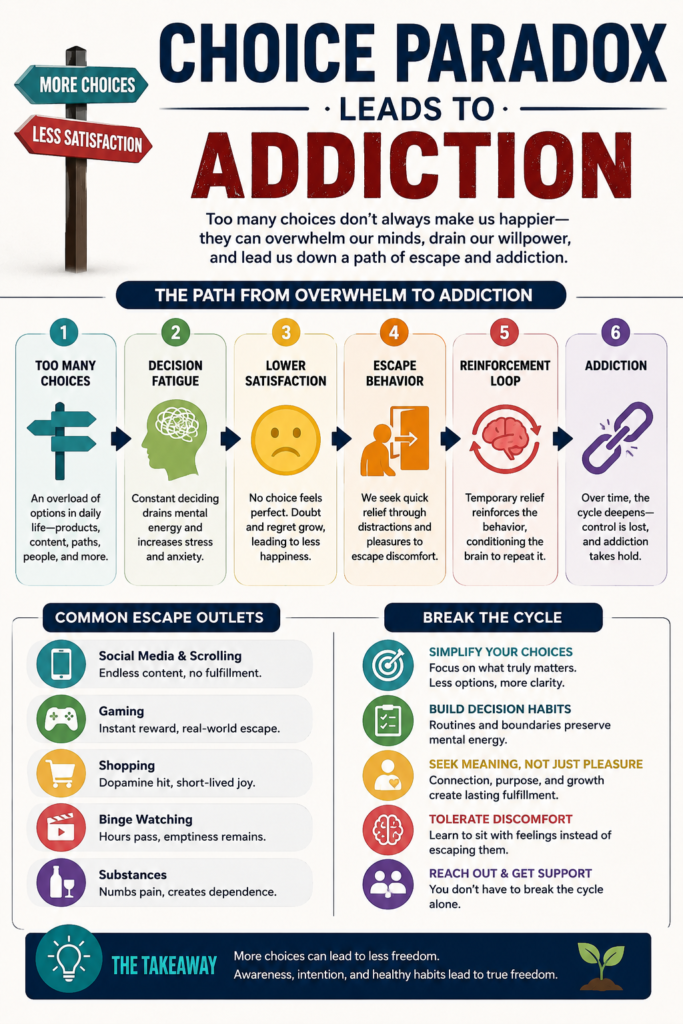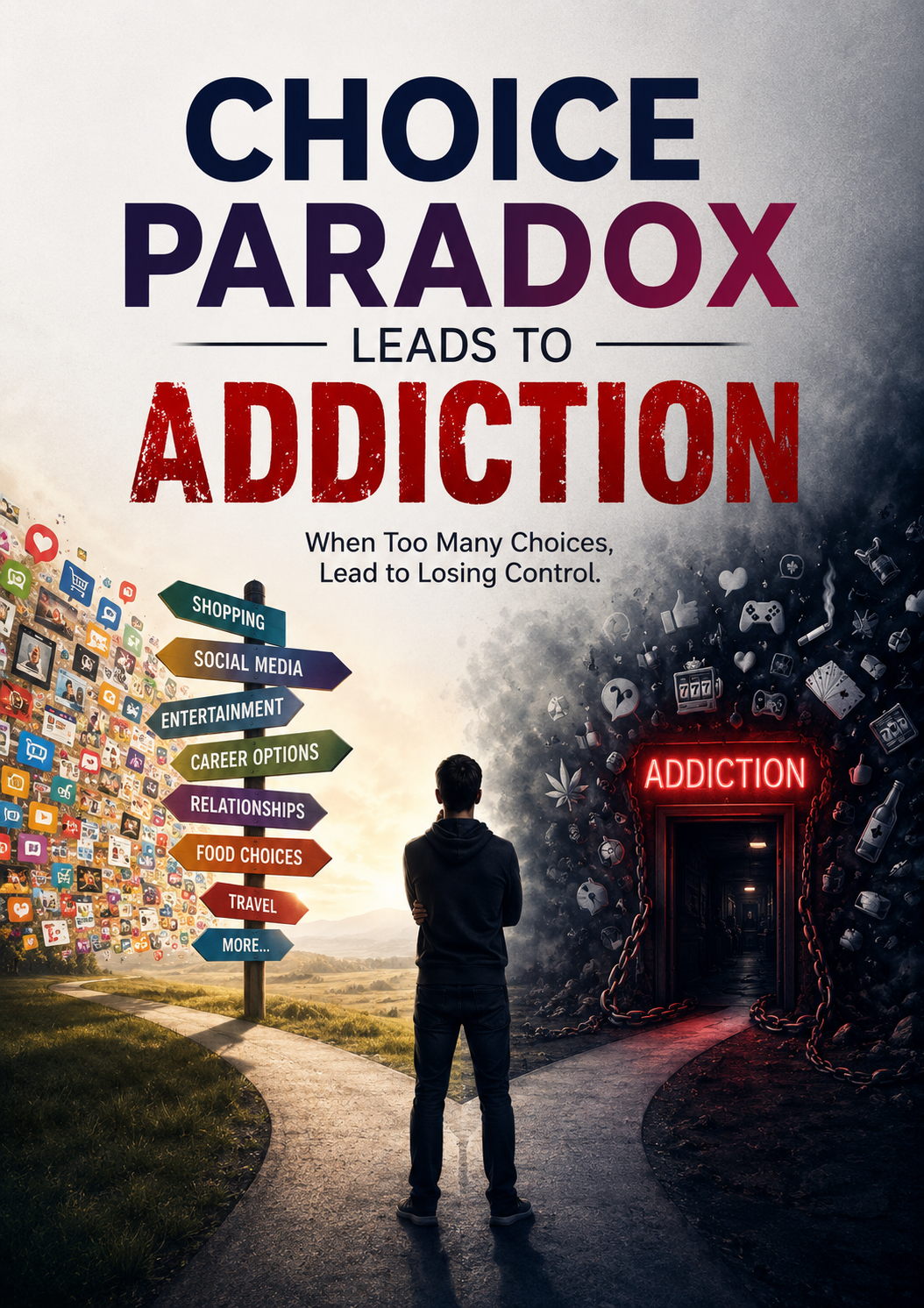
The paradox of choice is something I keep spotting in my own life, especially with apps, streaming services, online shopping, and even everyday things like picking what to eat. Having more options sounds awesome, right? The weird thing is, the more choices I get, the harder it feels to stop scrolling, swiping, or second-guessing what I’ve picked. In this article, I’m going to break down why having tons of options doesn’t just make life more complicated; it can actually turn into a sneaky recipe for addictive behavior.
What Is the Paradox of Choice?
The paradox of choice is the idea that while we think more options give us more freedom and happiness, they often lead to feeling overwhelmed, anxious, and sometimes regretful. Psychologist Barry Schwartz brought this idea into the spotlight, saying that when the menu is endless, making decisions becomes tougher and less satisfying.
Picture standing in the cereal aisle, looking at dozens of boxes: chocolate, gluten-free, ancient grains, three kinds of granola. Instead of feeling pumped, I end up stuck, trying to pick the “right” one. The more choices, the more mentally draining the whole process becomes, making me wonder whether I picked the best option even after my cart is full. Online, it gets even trickier, since the options are basically unlimited and algorithms keep throwing even more at you.
Choice Overload Fuels Addiction
When decisions start to drain you, it becomes really easy to get stuck endlessly browsing, binge-watching, swiping, or scrolling. This taps into the same reward systems in our brains behind other addictive behaviors. Each new option brings that tiny hit of excitement; maybe it’s just a new Netflix suggestion or a fresh profile popping up on a dating app.
Apps and services have figured out how much we crave novelty. Streaming platforms autoplay the next episode, shopping sites recommend more products, and social media keeps the feed going. We often spend more time than intended, are rarely satisfied, and keep coming back for more.
Where We Spot the Paradox of Choice Most
Certain parts of daily life have become the main playgrounds for choice-based addiction. Here are some of the most familiar spots:
- Streaming Services: Choosing what to watch turns into a time-consuming scavenger hunt, with previews and genres adding to the chaos.
- Dating Apps: Swiping is tough to quit because there’s always another match. “What if the next one is better?” It becomes a continuous loop.
- Online Shopping: Sites urge you to explore more by offering endless deals or variations, leading to major decision fatigue and sometimes to impulsive purchases.
- Food Delivery Apps: With a hundred cuisines at your fingertips, every meal feels like a big deal. You can easily get stuck browsing menus even after you’re already starving.
Notice a pattern? These platforms never run out of options, which makes it super hard to draw a line and just be done.
How Too Many Choices Drive Compulsive Behavior
The brain science here is pretty wild. Each decision brings the promise of a reward—that’s a dopamine boost. With endless options, our brains never get full closure. Instead of feeling good and shutting the laptop, we keep searching for the “best” and never quite feel sure.
This works a lot like reinforcement in other habits: sometimes you find an awesome movie or make the perfect pick, so your brain chases that “win.” Soon, the urge to keep looking, swiping, or scrolling grows stronger and harder to resist. Even after a choice is made, regret and second-guessing can keep nagging at you.
Easy Steps to Tone Down Choice Overload
Cutting back on choice overload doesn’t mean giving up on the perks of technology or convenience. Here’s what I do to avoid getting caught in that trap:
- Set a Timer: If I’m trying to pick a movie or food, I set a five-minute limit for browsing. After that, I just go with what feels good enough; time limits are a real lifesaver.
- Create Shortlists: Jot down your top three or five picks before you start. This helps keep your focus and stops endless loops.
- Let Go of Perfect: Remind yourself that most choices aren’t “once-in-a-lifetime.” Good enough is usually, well, more than enough.
- Disable AutoSuggestions: Turn off endless recommendations and notifications to set boundaries in your browsing.
- Practice Mindful Consumption: Pause and ask: Am I enjoying this, or just looking for what’s next?
Trying these tricks has helped me break out of the endless search. Plus, I’m usually happier with whatever I pick.
Why Fewer Options Are Actually Better Sometimes
The whole “less is more” thing really hits home once you start to feel overloaded. There was a time when streaming services had only a few movies, or when shopping meant choosing between just a couple of brands; life was simpler and, honestly, more enjoyable. Fewer choices mean less regret and more commitment to what you pick, which boosts satisfaction.
For food, meal kits, or restaurant daily specials, give me a break from endless decision-making. The same goes for activities; limiting myself to two or three weekend options makes it much easier to jump in and actually enjoy whatever I choose.
The Downside: Why Choice Can Still Feel Good
I’ll admit, more choice can definitely be exciting. There’s a nice feeling of possibility when new stuff keeps showing up, especially in areas like travel, entertainment, or hobbies. The trick is noticing when you’ve crossed from fun exploring into endless, grating loops of indecision.
It’s not about avoiding variety, but about giving yourself guardrails. If I realize I’m spending more time choosing than enjoying—or feeling anxious over a basic decision—that’s my cue to rein it in.
Real Life: Personal Experiences with Choice Overload
I’ve seen firsthand that adding streaming apps only makes it harder to pick a movie. Something meant to help me chill out turns into 20 minutes of previews. Same for online shopping: I’ll read reviews until I can’t make up my mind at all.
When talking with friends, I found out this is really common. A few rotate through apps or platforms each week to tone down the overwhelm; others have budgets and just buy the first option that seems awesome. Simple things, but they make you feel like you’re back in control instead of getting pushed around by the algorithm.
Tips for Tech and App Settings That Make a Difference
Lots of apps and device features can help break the addictive cycle. Here are a few to check out:
- Watchlists and “Up Next”: Make a playlist or shortlist in advance so you aren’t hunting for something to watch every time you start a new one.
- Turn Off “Infinite Scroll”: Some apps let you disable automatic loading, forcing a pause before you head back in.
- Use Parental Controls—Even for Yourself: Screen time limits aren’t just for kids. Setting app limits helps make your time online more intentional.
- Mute Notifications or Unsubscribe: Clearing clutter from your phone or inbox reduces the temptation to check what else is out there.
- Go Analog Sometimes: Grabbing a book, heading outside, or cooking a meal from scratch are great ways to skip the endless digital buffet.
Little tweaks like these help make things more manageable—and way more fun overall.
Frequently Asked Questions
Question: Can too many choices reduce the temptation to check, really make people unhappy?
Answer: Yes. Studies show that more options can actually lower satisfaction by bringing more regret and the worry that you might have missed out.
Question: Why do more options make it hard to stop scrolling or searching?
Answer: Every new option gives your brain a possible reward, which keeps you looking for the best—or at least another interesting—choice to pop up.
Question: What’s the quickest way to cut down on decision fatigue?
Answer: Set a tight time limit or create a shortlist before you start browsing. This way, you can make a choice and move on faster.
Getting swept up in an endless sea of options isn’t just a hassle—it really can fuel addictive loops and drain the fun from things you like. A little structure and some self-awareness go a long way. Trying out these tips has made a big difference for me, especially since pretty much every little decision now comes with so many choices. Add a dash of planning, keep an eye on your own patterns, and you’ll find it easier to enjoy life without wondering what you’re missing out on.
Video: How Too Much Freedom Backfires #mindset #psychology