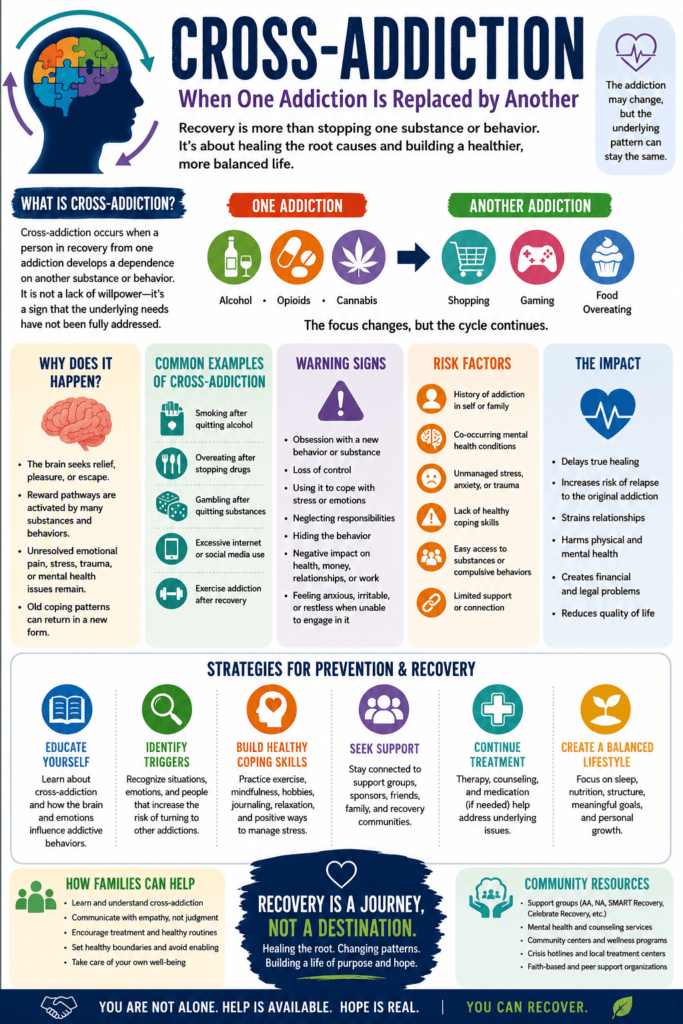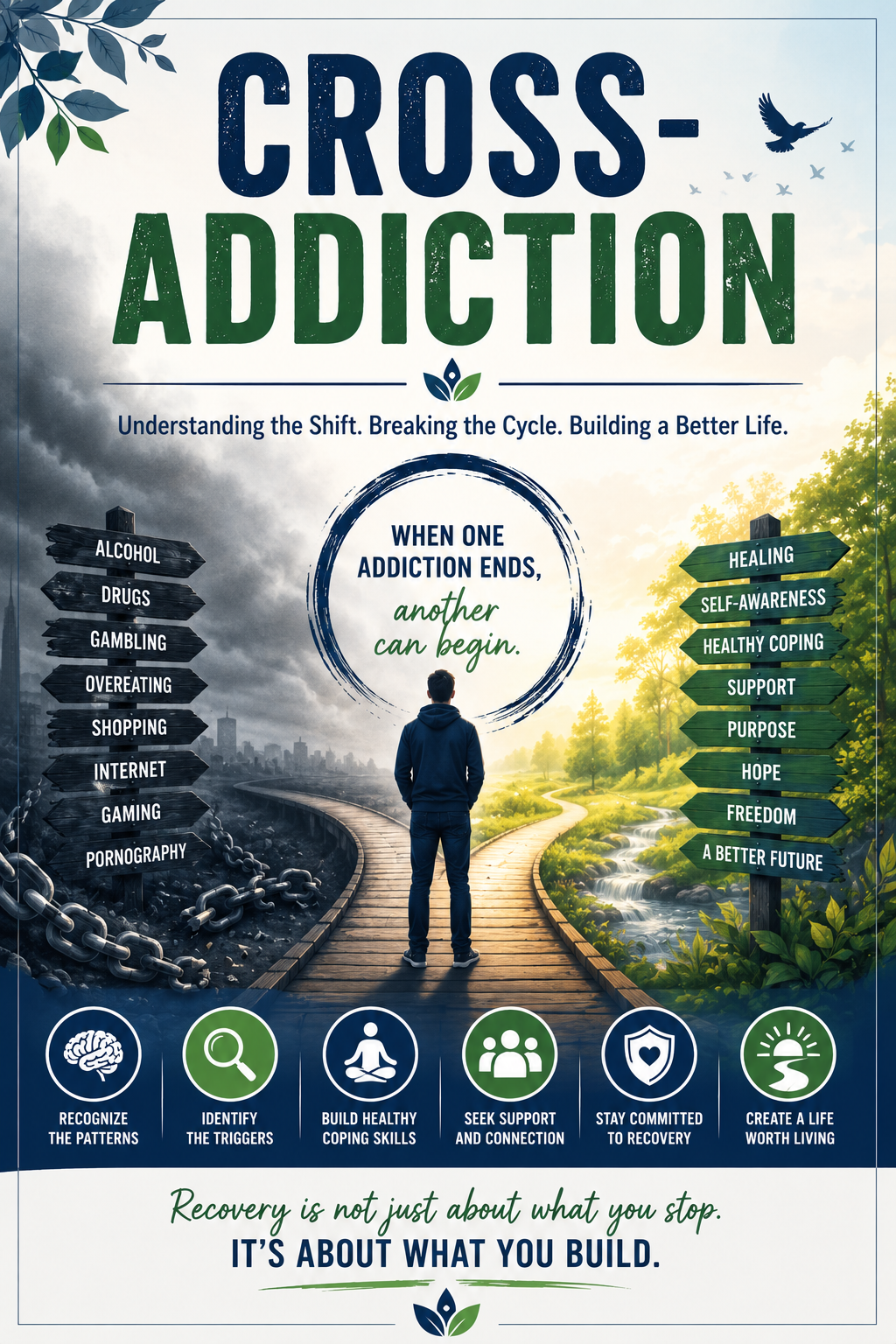
Cross-addiction, also called addiction transfer, occurs when a person recovering from one addiction develops a new dependence on a different substance or compulsive behavior. While the addiction may change, the underlying need to cope with stress, emotional pain, or other challenges often remains. Since many addictions activate the brain’s reward system in similar ways, individuals in recovery may be vulnerable to replacing one addiction with another if the root causes are not addressed. Successful recovery focuses on treating those underlying issues, building healthy coping skills, and making lasting lifestyle changes that support long-term health and well-being.
Understanding the Cross-Addiction Phenomenon
What Is Cross-Addiction?
Cross-addiction, also known as addiction transfer or addiction substitution, occurs when a person recovering from one addiction develops a new dependence on another substance or compulsive behavior. Instead of addressing the underlying causes of addiction, the brain seeks a different source of relief, pleasure, or escape. Although the specific addiction changes, the underlying cycle of compulsive behavior remains the same.
Cross-addiction can involve both substance use and behavioral addictions because many activate similar reward pathways in the brain.
Examples include:
- Alcohol replacing opioid use
- Nicotine replacing alcohol use
- Misuse of prescription medications during recovery
- Gambling after stopping drug use
- Compulsive shopping
- Excessive internet or social media use
- Video gaming addiction
- Compulsive exercise
- Pornography addiction
- Emotional or binge eating
Why Does Cross-Addiction Occur?
Addiction changes the brain’s reward system. Whether the addiction involves alcohol, drugs, gambling, or another behavior, many addictive activities increase dopamine release, creating temporary feelings of pleasure or relief. Over time, the brain begins to seek these rewards automatically.
When one addictive behavior is removed without developing healthier coping skills, another behavior may take its place. This is why successful recovery focuses on treating the whole person rather than simply eliminating one substance.
Risk Factors
Several factors increase the likelihood of developing cross-addiction.
Common risk factors include:
- Family history of addiction
- Childhood trauma or adverse experiences
- Depression or anxiety
- PTSD or other mental health disorders
- Chronic stress
- Poor coping skills
- Emotional dysregulation
- Limited social support
- Easy access to addictive substances or behaviors
- Lack of ongoing recovery treatment
Common Signs of Cross-Addiction
Cross-addiction often develops gradually and may not be recognized immediately. Individuals may believe the new behavior is harmless until it begins causing significant problems.
Warning signs include:
- Constantly thinking about the new behavior
- Increasing time spent engaging in the activity
- Difficulty controlling or stopping the behavior
- Cravings when unable to participate
- Continuing despite negative consequences
- Hiding the behavior from family or friends
- Financial, work, or relationship problems
- Neglecting personal responsibilities
- Replacing one addiction with another instead of addressing underlying issues
Health and Life Consequences
Although the new addiction may seem less harmful than the original one, it can still have serious consequences. Untreated cross-addiction may affect nearly every area of life.
Possible consequences include:
- Physical health problems
- Emotional distress
- Anxiety or depression
- Financial difficulties
- Family conflict
- Loss of trust
- Poor work or school performance
- Social isolation
- Increased risk of relapse to the original addiction
Prevention Strategies
Preventing cross-addiction requires recognizing that recovery involves changing long-term patterns of thinking and behavior rather than simply avoiding one substance.
Helpful prevention strategies include:
- Learning about cross-addiction early in recovery
- Identifying personal triggers
- Practicing healthy stress management
- Developing positive daily routines
- Participating in regular physical activity
- Using mindfulness and relaxation techniques
- Building supportive relationships
- Monitoring new habits before they become compulsive
- Maintaining regular follow-up with healthcare providers
Treatment Approaches
Professional treatment addresses both addiction and the underlying emotional or psychological factors that contribute to compulsive behaviors. Comprehensive care helps individuals recognize unhealthy patterns before they develop into another addiction.
Evidence-based treatment may include:
- Cognitive Behavioral Therapy (CBT)
- Dialectical Behavior Therapy (DBT)
- Motivational Interviewing (MI)
- Medication-Assisted Treatment (MAT), when appropriate
- Individual counseling
- Group therapy
- Family therapy
- Peer recovery support groups
- Relapse prevention planning
- Treatment for co-occurring mental health disorders
How Families Can Help
Families play an important role in preventing cross-addiction by creating a supportive recovery environment. Education and open communication help loved ones recognize unhealthy patterns before they become severe.
Families can:
- Learn about addiction and cross-addiction
- Encourage honest conversations
- Recognize new compulsive behaviors early
- Support healthy coping skills
- Celebrate recovery milestones
- Avoid enabling behaviors
- Encourage professional treatment when concerns arise
- Practice patience and compassion while maintaining healthy boundaries
Community Support
Communities provide valuable resources that strengthen long-term recovery and reduce the risk of addiction transfer.
Helpful community resources include:
- Addiction treatment centers
- Mental health clinics
- Peer recovery organizations
- Recovery community centers
- Faith-based recovery programs
- Employee Assistance Programs (EAPs)
- Educational workshops
- Wellness and fitness programs
- Volunteer opportunities
- Crisis intervention and behavioral health services
Conclusion
Cross-addiction reminds us that recovery is about more than stopping one substance or behavior—it is about healing the underlying causes of addiction and building healthier ways to cope with life’s challenges. By understanding how addiction affects the brain, recognizing early warning signs, developing effective coping skills, and seeking professional and community support, individuals can reduce the risk of addiction transfer. Lasting recovery is achieved by creating a balanced, healthy lifestyle that supports physical, emotional, and mental well-being while replacing harmful habits with positive, rewarding behaviors.
Self-Management Strategies to Understand Cross-Addiction
Cross-addiction, also known as addiction transfer or addiction substitution, occurs when a person recovering from one addictive behavior develops a dependence on another substance or compulsive behavior. While the specific addiction may change, the underlying drive to seek relief, pleasure, or escape often remains the same. Understanding this phenomenon helps individuals recognize unhealthy patterns early and build healthier coping strategies that support long-term recovery.
1. Learn About Cross-Addiction
Educate yourself about how addiction affects the brain’s reward system. Understanding that addiction can shift from one substance or behavior to another helps you recognize that recovery involves changing habits, thoughts, and coping skills—not simply avoiding one substance.
2. Identify Your Personal Triggers
Pay attention to situations that increase your risk of engaging in compulsive behaviors.
Common triggers include:
- Stress
- Anxiety
- Depression
- Loneliness
- Anger
- Boredom
- Fatigue
- Financial worries
- Relationship conflicts
- Social pressure
Keeping a daily journal can help identify patterns that lead to cravings or unhealthy behaviors.
3. Monitor New Habits
Recovery is an excellent time to evaluate new interests and routines. Ask yourself whether a new activity is becoming excessive or beginning to replace your previous addiction.
Consider these questions:
- Am I losing control over this behavior?
- Is it interfering with my responsibilities?
- Am I using it to avoid uncomfortable emotions?
- Do I feel anxious or irritable when I cannot engage in it?
Honest self-reflection helps prevent addiction transfer.
4. Develop Healthy Coping Skills
Replace unhealthy coping mechanisms with positive alternatives that promote emotional well-being.
Healthy coping strategies include:
- Regular physical activity
- Meditation
- Deep breathing exercises
- Journaling
- Reading
- Creative hobbies
- Spending time outdoors
- Listening to music
- Practicing gratitude
- Talking with supportive friends or family
These activities provide healthy ways to manage stress without reinforcing addictive behaviors.
5. Build a Structured Daily Routine
A predictable schedule reduces idle time and helps prevent impulsive decisions.
Include:
- Consistent sleep habits
- Balanced meals
- Exercise
- Work or school responsibilities
- Recovery meetings
- Relaxation time
- Meaningful hobbies
Daily structure supports healthy habits and reduces opportunities for compulsive behaviors.
6. Practice Mindfulness
Mindfulness increases awareness of thoughts, emotions, and cravings before they become automatic behaviors.
Practice:
- Deep breathing
- Body scans
- Guided meditation
- Grounding exercises
- Observing thoughts without judgment
Mindfulness helps interrupt the cycle between emotional triggers and unhealthy responses.
7. Manage Stress Effectively
Stress is one of the most common causes of addiction transfer. Develop healthy stress-management techniques before stress becomes overwhelming.
Helpful strategies include:
- Walking
- Yoga
- Stretching
- Progressive muscle relaxation
- Spending time in nature
- Time management
- Relaxation exercises
Managing stress reduces the urge to seek relief through addictive behaviors.
8. Address Emotional Health
Many addictive behaviors develop as attempts to manage emotional pain. Learning healthier emotional regulation skills reduces the risk of cross-addiction.
Work on:
- Identifying emotions
- Expressing feelings appropriately
- Building resilience
- Improving problem-solving skills
- Seeking counseling when needed
9. Build a Strong Support System
Recovery is more successful when individuals remain connected to supportive people.
Seek encouragement from:
- Family members
- Trusted friends
- Sponsors
- Recovery coaches
- Peer support groups
- Therapists
- Healthcare providers
Supportive relationships provide accountability and reduce isolation.
10. Continue Professional Treatment
Even after stopping one addictive behavior, ongoing treatment remains important. Therapy helps identify early signs of addiction transfer and strengthens long-term recovery skills.
Treatment may include:
- Cognitive Behavioral Therapy (CBT)
- Dialectical Behavior Therapy (DBT)
- Motivational Interviewing (MI)
- Medication-Assisted Treatment (MAT), when appropriate
- Individual counseling
- Group therapy
11. Set Healthy Boundaries
Protect your recovery by avoiding environments or situations that encourage compulsive behaviors.
Healthy boundaries may include:
- Limiting exposure to high-risk environments
- Avoiding relationships that encourage unhealthy behaviors
- Reducing unnecessary stress
- Learning to say no when appropriate
Healthy boundaries strengthen long-term recovery.
12. Focus on Overall Wellness
Recovery involves improving every aspect of health.
Prioritize:
- Nutritious eating
- Adequate sleep
- Regular exercise
- Preventive healthcare
- Emotional well-being
- Spiritual practices, if meaningful to you
- Positive social relationships
A healthy lifestyle supports both physical and emotional recovery.
13. Celebrate Healthy Progress
Recognize achievements throughout recovery instead of focusing only on setbacks.
Celebrate milestones such as:
- Completing treatment goals
- Maintaining healthy routines
- Managing cravings successfully
- Developing new coping skills
- Strengthening relationships
- Achieving personal or career goals
Positive reinforcement increases motivation and confidence.
14. Accept That Recovery Is Ongoing
Recovery is a lifelong process of growth and self-awareness. Remaining attentive to new behaviors and seeking help early when concerns arise can prevent one addiction from replacing another.
Be patient with yourself, remain committed to healthy habits, and remember that setbacks can become valuable learning opportunities rather than reasons to give up.
Conclusion
Understanding cross-addiction empowers individuals to recognize that recovery involves much more than stopping one addictive behavior. By identifying personal triggers, monitoring new habits, developing healthy coping skills, practicing mindfulness, maintaining structured routines, and staying connected to supportive people and professional care, individuals can reduce the risk of addiction transfer. Long-term recovery is built through consistent self-awareness, balanced living, and healthy choices that strengthen resilience and promote lasting physical, emotional, and mental well-being.
Family Support Strategies to Understand Cross-Addiction
Cross-addiction, also known as addiction transfer or addiction substitution, occurs when a person recovering from one addiction develops a new dependence on another substance or compulsive behavior. While the original addiction may have stopped, the underlying need to cope with stress, emotional pain, or discomfort through addictive behaviors can remain. Families who understand cross-addiction are better prepared to recognize early warning signs, encourage healthy coping strategies, and support long-term recovery without judgment.
1. Learn About Cross-Addiction
Education is one of the most effective ways families can support recovery. Understanding that addiction can shift from one substance or behavior to another helps families recognize that recovery involves healing the whole person rather than simply stopping one addictive behavior.
Learn about:
- How addiction affects the brain
- The brain’s reward system
- Addiction transfer
- Common triggers
- Healthy coping skills
- Relapse prevention
Knowledge reduces stigma and promotes compassionate support.
2. Recognize Early Warning Signs
Families are often the first to notice changes in behavior that may indicate cross-addiction.
Watch for signs such as:
- Becoming overly focused on a new activity
- Spending excessive amounts of time or money on a behavior
- Hiding activities from others
- Increased secrecy
- Mood changes
- Neglecting work, school, or family responsibilities
- Continuing the behavior despite negative consequences
Early recognition allows concerns to be addressed before the behavior becomes more severe.
3. Encourage Open and Honest Communication
Create an environment where your loved one feels safe discussing recovery challenges without fear of criticism. Listen carefully, ask supportive questions, and express concern with empathy rather than blame.
Healthy communication builds trust and encourages individuals to seek help when they notice unhealthy patterns.
4. Avoid Replacing One Dependency with Another
Families should avoid encouraging behaviors that may unintentionally become substitutes for the original addiction. Encourage moderation and balance while helping your loved one develop a variety of healthy interests instead of relying heavily on any single activity.
5. Support Healthy Coping Skills
Encourage your loved one to develop positive ways of managing stress and emotions.
Healthy coping activities include:
- Walking or exercising together
- Preparing nutritious meals
- Gardening
- Reading
- Creative hobbies
- Meditation
- Deep breathing exercises
- Spending time outdoors
- Volunteering
- Family game or movie nights
These activities provide healthy alternatives that promote well-being and strengthen recovery.
6. Help Identify Triggers
Work together to recognize situations, emotions, or environments that increase the risk of compulsive behaviors.
Common triggers include:
- Stress
- Anxiety
- Depression
- Loneliness
- Fatigue
- Financial difficulties
- Relationship conflict
- Boredom
- Social pressure
Understanding triggers allows families to support healthier responses before cravings or compulsive behaviors develop.
7. Encourage Continued Professional Treatment
Recovery continues long after substance use stops. Encourage your loved one to remain involved in treatment and recovery services.
Professional support may include:
- Cognitive Behavioral Therapy (CBT)
- Dialectical Behavior Therapy (DBT)
- Individual counseling
- Group therapy
- Medication-Assisted Treatment (MAT), when appropriate
- Peer recovery groups
- Family therapy
Ongoing treatment helps identify unhealthy patterns before they develop into another addiction.
8. Reinforce Healthy Daily Routines
Healthy routines provide structure and reduce opportunities for impulsive behaviors.
Encourage:
- Regular sleep schedules
- Balanced nutrition
- Daily physical activity
- Work or educational goals
- Scheduled recovery meetings
- Time for relaxation
- Meaningful hobbies
Consistency supports emotional stability and long-term recovery.
9. Celebrate Healthy Achievements
Recognize progress rather than focusing only on setbacks.
Celebrate accomplishments such as:
- Maintaining sobriety
- Practicing healthy coping skills
- Attending therapy or support meetings
- Reaching personal goals
- Improving relationships
- Managing stress effectively
Positive reinforcement encourages continued growth and motivation.
10. Set Healthy Boundaries
Supporting recovery does not mean removing all consequences. Healthy boundaries promote responsibility while protecting the well-being of everyone in the family.
Healthy boundaries include:
- Avoiding enabling behaviors
- Encouraging accountability
- Communicating expectations respectfully
- Protecting financial and emotional health
- Respecting each person’s responsibilities
Boundaries strengthen both recovery and family relationships.
11. Take Care of Your Own Well-Being
Supporting someone in recovery can be emotionally demanding. Family members should also prioritize their own health.
Practice:
- Regular self-care
- Healthy stress management
- Counseling if needed
- Family support groups
- Maintaining friendships
- Pursuing hobbies and personal interests
Healthy caregivers are better equipped to provide effective support.
12. Encourage Long-Term Recovery
Recovery is a lifelong journey that requires ongoing attention and support. Remind your loved one that developing healthy habits, maintaining treatment, and asking for help when challenges arise are signs of strength, not weakness.
Encourage continued learning, personal growth, and resilience while recognizing that recovery extends beyond avoiding substances—it includes building a balanced and meaningful life.
Conclusion
Families play a vital role in recognizing and preventing cross-addiction. By understanding addiction transfer, identifying early warning signs, encouraging healthy coping skills, supporting professional treatment, maintaining open communication, and setting healthy boundaries, families can help reduce the risk of replacing one addiction with another. Compassion, education, patience, and consistent support create a strong foundation for lasting recovery and help individuals build healthier lifestyles that promote emotional, physical, and mental well-being.
Community Resource Strategies to Understand Cross-Addiction
Cross-addiction, also known as addiction transfer or addiction substitution, occurs when an individual recovering from one addiction develops a dependence on another substance or compulsive behavior. Although the addictive behavior changes, the underlying patterns of seeking relief, pleasure, or escape often remain. Because recovery extends beyond abstinence from a single substance, communities play an essential role in providing education, treatment, prevention, and long-term support that address the whole person. By working together, healthcare providers, community organizations, employers, schools, and recovery groups can help individuals recognize cross-addiction early and build healthier, sustainable lifestyles.
1. Increase Community Education
Public education helps reduce stigma and increases awareness of cross-addiction as a recognized recovery challenge.
Communities can provide:
- Educational workshops
- Public awareness campaigns
- Community health fairs
- Library presentations
- School education programs
- Recovery awareness events
Education helps individuals and families recognize the warning signs of addiction transfer before significant problems develop.
2. Expand Access to Behavioral Health Services
Communities should ensure that individuals have access to comprehensive mental health and addiction treatment services that address both substance use disorders and behavioral addictions.
Available services should include:
- Mental health counseling
- Addiction treatment programs
- Medication-assisted treatment (MAT), when appropriate
- Intensive outpatient programs
- Residential treatment
- Recovery coaching
- Crisis intervention services
Accessible treatment improves recovery outcomes and reduces the risk of cross-addiction.
3. Promote Routine Screening
Healthcare providers, schools, workplaces, and community organizations should routinely screen for substance use disorders, behavioral addictions, and co-occurring mental health conditions.
Early screening can:
- Identify unhealthy behavior patterns
- Detect new compulsive behaviors
- Connect individuals with treatment sooner
- Prevent addiction from becoming more severe
4. Strengthen Peer Recovery Programs
Peer recovery specialists and support groups provide valuable encouragement from individuals with lived experience.
Community peer programs offer:
- Accountability
- Practical coping strategies
- Emotional support
- Recovery mentoring
- Hope through shared experiences
Peer support reduces isolation and reinforces healthy recovery habits.
5. Offer Family Education Programs
Families benefit from learning about cross-addiction and how to support long-term recovery.
Community organizations can provide:
- Family education classes
- Family counseling
- Support groups
- Communication workshops
- Relapse prevention education
- Healthy boundary training
Educated families become stronger partners in recovery.
6. Create Healthy Community Activities
Communities should provide enjoyable alternatives that promote physical, emotional, and social well-being.
Examples include:
- Walking clubs
- Fitness programs
- Recreational sports
- Art classes
- Music programs
- Gardening projects
- Volunteer opportunities
- Community service events
- Educational workshops
Healthy activities provide meaningful rewards that reduce reliance on addictive behaviors.
7. Address Social Determinants of Health
Recovery is strengthened when communities help address factors that contribute to addiction.
Important community resources include:
- Affordable housing assistance
- Employment services
- Job training programs
- Educational opportunities
- Food assistance
- Transportation services
- Childcare support
- Financial counseling
Meeting these basic needs reduces stress and improves recovery stability.
8. Support Workplace Recovery Programs
Employers can play an important role in preventing cross-addiction by creating recovery-friendly workplaces.
Helpful workplace resources include:
- Employee Assistance Programs (EAPs)
- Mental health benefits
- Flexible scheduling for treatment appointments
- Recovery-supportive workplace policies
- Stress management programs
- Wellness initiatives
Supportive workplaces encourage long-term recovery while reducing stigma.
9. Promote Healthy Stress Management
Communities should offer programs that teach effective coping skills before stress leads to unhealthy behaviors.
Examples include:
- Yoga classes
- Meditation programs
- Mindfulness training
- Exercise groups
- Nutrition education
- Sleep health education
- Resilience workshops
Learning healthy coping skills reduces dependence on addictive behaviors for emotional relief.
10. Reduce Stigma
Community leaders, healthcare professionals, schools, employers, and faith-based organizations should promote the understanding that addiction is a treatable medical condition rather than a moral failing.
Reducing stigma:
- Encourages individuals to seek treatment earlier
- Increases participation in recovery programs
- Improves family support
- Promotes acceptance and inclusion
11. Encourage Community Collaboration
A coordinated community response provides more comprehensive care than any single organization can offer.
Key partners include:
- Healthcare providers
- Mental health professionals
- Addiction specialists
- Schools
- Employers
- Faith-based organizations
- Public health departments
- Recovery community organizations
- Law enforcement
- Emergency medical services
Collaboration improves access to care and supports continuity throughout recovery.
12. Expand Long-Term Recovery Services
Recovery does not end after treatment. Communities should invest in services that support individuals over the long term.
Helpful recovery resources include:
- Recovery community centers
- Recovery housing
- Alumni programs
- Vocational rehabilitation
- Continuing counseling
- Peer recovery coaching
- Life skills training
- Wellness programs
Long-term support helps individuals maintain healthy habits and reduces the likelihood of addiction transfer.
13. Improve Crisis Response Services
Individuals experiencing relapse, severe cravings, or mental health crises should have immediate access to appropriate services.
Communities should provide:
- Crisis hotlines
- Mobile crisis teams
- Behavioral health crisis centers
- Emergency psychiatric services
- Naloxone distribution and overdose education programs for opioid-related emergencies
Rapid intervention can prevent serious harm and reconnect individuals with treatment and recovery support.
14. Celebrate Recovery Successes
Communities can foster hope by recognizing recovery milestones and sharing stories of resilience.
Examples include:
- Recovery celebration events
- Community recognition programs
- Educational campaigns highlighting recovery
- Volunteer recognition
- Recovery Month activities
Celebrating progress helps reduce stigma and demonstrates that lasting recovery is possible.
Conclusion
Communities are essential partners in preventing and addressing cross-addiction. Through education, accessible behavioral healthcare, early screening, peer recovery services, family support, healthy recreational opportunities, and coordinated long-term recovery programs, communities can help individuals recognize addiction transfer before it becomes another chronic problem. By reducing stigma, expanding access to evidence-based treatment, and promoting healthy coping strategies, communities empower individuals to replace addictive behaviors with meaningful, healthy lifestyles that support lifelong recovery and overall well-being.
Frequently Asked Questions
Here are some common questions:
1. What is cross-addiction?
Cross-addiction, also called addiction transfer or addiction substitution, occurs when a person recovering from one addiction develops a dependence on another substance or compulsive behavior instead of addressing the underlying causes of addiction.
2. Is cross-addiction the same as relapse?
No. A relapse involves returning to the original addictive substance or behavior, while cross-addiction involves developing a different addiction. Both situations require evaluation and appropriate treatment.
3. Why does cross-addiction happen?
Many addictive substances and behaviors activate the brain’s reward system in similar ways. If emotional, psychological, or behavioral issues remain untreated, individuals may seek relief through another addictive behavior.
4. What are common examples of cross-addiction?
Examples include replacing alcohol with gambling, opioids with excessive shopping, smoking with overeating, or drug use with compulsive gaming, internet use, or exercise. The specific addiction changes, but the compulsive pattern remains.
5. Can behavioral addictions lead to substance addictions?
Yes. Compulsive behaviors such as gambling, gaming, shopping, or internet use may increase vulnerability to substance use if the underlying need for reward, escape, or emotional relief is not addressed.
6. Who is at risk for cross-addiction?
Anyone recovering from an addiction may be at risk, especially individuals with a history of multiple addictions, trauma, chronic stress, untreated mental health conditions, or limited social support.
7. What are the warning signs of cross-addiction?
Warning signs include becoming obsessed with a new behavior, loss of control, spending excessive time or money, neglecting responsibilities, secrecy, mood changes, and continuing the behavior despite negative consequences.
8. Is cross-addiction caused by a lack of willpower?
No. Cross-addiction is not a sign of weak character or poor willpower. It reflects ongoing changes in the brain’s reward pathways and unresolved emotional or psychological factors that require appropriate treatment.
9. How can someone recognize cross-addiction early?
Pay attention to new habits that become compulsive, interfere with daily life, or are used to cope with stress or emotional discomfort. Honest self-reflection and regular communication with healthcare providers can help identify concerns early.
10. How is cross-addiction diagnosed?
There is no single test for cross-addiction. Healthcare professionals diagnose it through a comprehensive assessment that includes medical history, behavioral patterns, mental health evaluation, and substance use history.
11. Can cross-addiction be prevented?
While it cannot always be prevented, the risk can be reduced through ongoing recovery support, counseling, healthy coping skills, stress management, self-awareness, and treatment of co-occurring mental health conditions.
12. What treatments are available for cross-addiction?
Treatment may include individual counseling, Cognitive Behavioral Therapy (CBT), Dialectical Behavior Therapy (DBT), Motivational Interviewing (MI), peer support groups, family therapy, and Medication-Assisted Treatment (MAT) when appropriate.
13. Why is mental health treatment important?
Conditions such as depression, anxiety, post-traumatic stress disorder (PTSD), and other mental health disorders may contribute to addictive behaviors. Treating these conditions reduces the likelihood of addiction transfer.
14. How can families help prevent cross-addiction?
Families can educate themselves about addiction, encourage open communication, support healthy coping skills, recognize early warning signs, avoid enabling behaviors, and encourage continued participation in treatment and recovery programs.
15. What role do support groups play?
Support groups provide accountability, encouragement, practical coping strategies, and connection with others who understand the challenges of recovery, helping reduce isolation and strengthen long-term recovery.
16. Are healthy activities enough to prevent cross-addiction?
Healthy activities such as exercise, hobbies, and mindfulness are valuable, but they should complement—not replace—professional treatment and ongoing recovery support when needed.
17. Can someone recover from cross-addiction?
Yes. With early recognition, evidence-based treatment, healthy lifestyle changes, and ongoing support, many individuals successfully overcome cross-addiction and maintain long-term recovery.
18. What should someone do if they think they are developing another addiction?
Speak with a healthcare provider, therapist, addiction specialist, or recovery sponsor as soon as possible. Early intervention can prevent the behavior from becoming more severe and improve recovery outcomes.
19. Why is long-term recovery important?
Recovery is an ongoing process. Continuing treatment, monitoring new behaviors, managing stress, and maintaining healthy relationships help reduce the risk of future addiction transfer and support lasting well-being.
20. What is the most important message about cross-addiction?
Recovery involves more than stopping one substance or behavior. Lasting recovery requires healing the underlying causes of addiction, developing healthy coping skills, maintaining supportive relationships, and creating a balanced, meaningful lifestyle that promotes lifelong physical, emotional, and mental health.
Conclusion
Cross-addiction highlights the importance of treating the whole person rather than focusing on a single substance or behavior. Long-term recovery depends on recognizing personal triggers, developing healthy coping strategies, maintaining supportive relationships, and addressing the emotional, psychological, and social factors that contribute to addiction. Ongoing participation in evidence-based treatment, peer support, and recovery-focused activities can help individuals identify early warning signs of addiction transfer and prevent new compulsive behaviors from taking hold. With education, self-awareness, professional guidance, and strong support from family and the community, individuals can reduce the risk of cross-addiction, strengthen their recovery, and build healthier, more balanced lives that promote lasting physical, emotional, and mental well-being.
Video: What happens when you replace one addiction with another? #shorts #mentalhealth