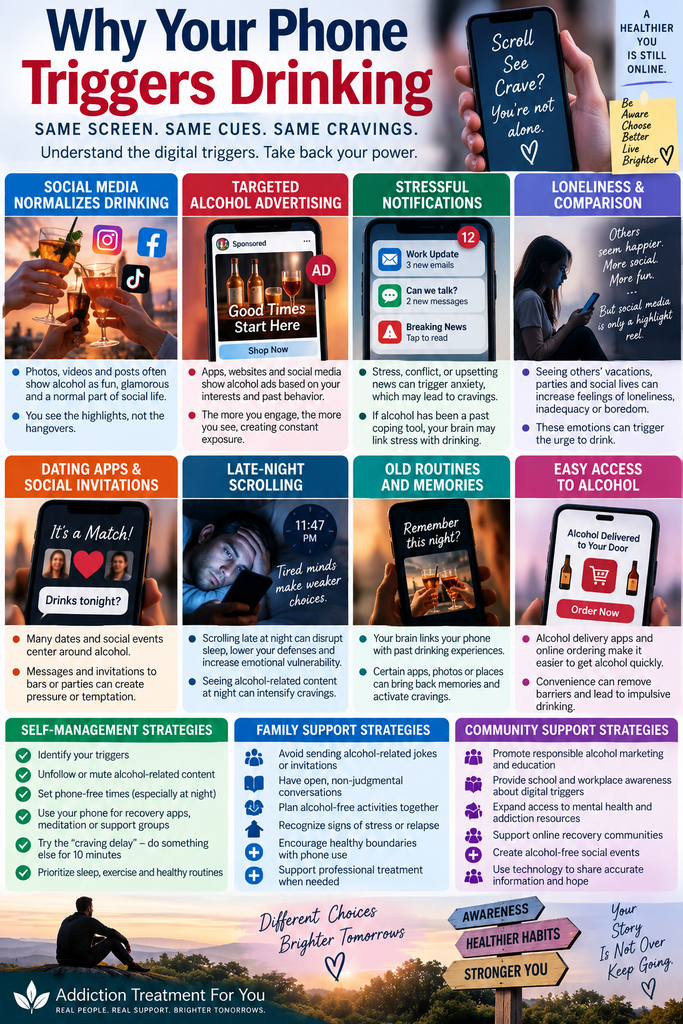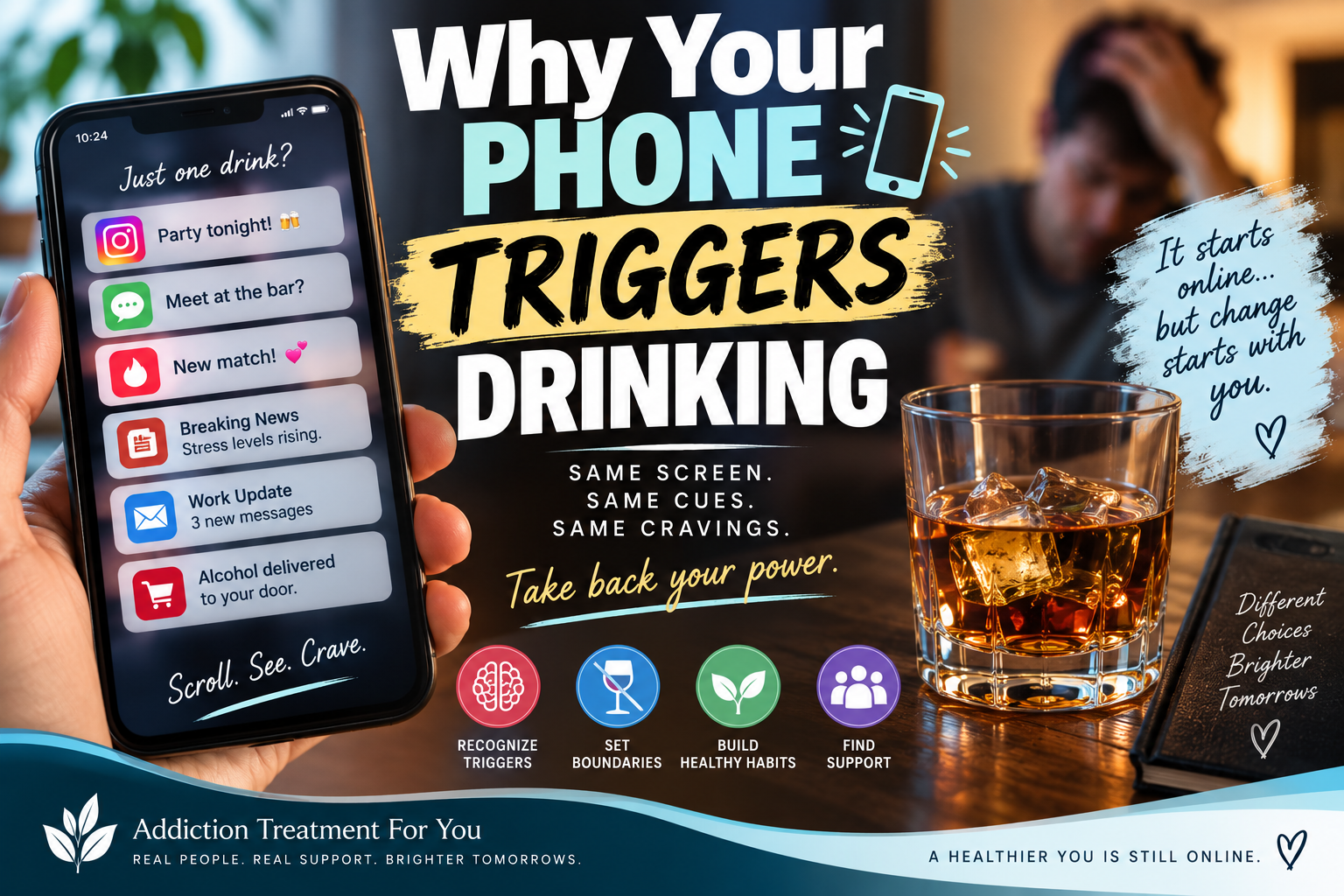
Your smartphone may seem unrelated to alcohol use, but what happens on your screen can influence emotions, habits, and cravings. Social media posts featuring alcohol, advertisements, stressful messages, loneliness, dating apps, late-night scrolling, and even memories of past drinking experiences can become cues associated with alcohol.
This does not mean that phones cause alcohol addiction. Instead, digital environments can expose people to triggers that activate learned associations with drinking. For someone trying to reduce alcohol use or maintain recovery, recognizing these digital triggers can become an important part of relapse prevention.
How Does a Phone Become a Drinking Trigger?
The brain learns through repetition and association. If someone regularly scrolls through social media while drinking, orders alcohol through an app, texts friends before going to bars, or watches videos while drinking at night, the phone itself can become connected with that routine.
Eventually, opening a particular app, seeing an alcohol-related photograph, receiving a message from a drinking friend, or simply reaching a certain time of night may activate thoughts about alcohol.
A trigger does not guarantee that someone will drink. It creates a cue that may increase craving or make an old behavior feel more automatic.
Social Media Can Normalize Drinking
Social media frequently presents alcohol as part of celebrations, vacations, sporting events, dating, relaxation, and friendship. Pictures often capture the attractive beginning of drinking while leaving out hangovers, arguments, impaired driving, financial problems, dependence, or withdrawal.
For someone vulnerable to problematic alcohol use, repeatedly seeing these images may strengthen the perception that “everyone drinks.”
Alcohol-related content can also reactivate memories. A photograph of a favorite cocktail, bar, or drinking group may bring back positive memories while temporarily pushing negative consequences into the background.
Alcohol Advertising Follows You Everywhere
Unlike a television commercial that ends when the program changes, digital advertising can appear repeatedly as people browse websites, watch videos, use apps, or interact with social media.
Algorithms may also learn from online behavior. Engaging with alcohol-related content can contribute to seeing more similar content, potentially creating repeated exposure to drinking cues.
For someone in recovery, that exposure can be difficult because alcohol is already widely available and socially normalized.
Stressful Notifications Can Become Triggers
Not every phone-related drinking trigger involves pictures of alcohol.
A stressful email from work, financial notification, relationship conflict through text messages, upsetting news story, or social-media argument can produce anxiety, anger, sadness, or frustration.
If alcohol previously served as a coping mechanism, the brain may respond to these emotions with an old learned message:
“I need a drink.”
The actual trigger may therefore be emotional distress delivered through the phone rather than alcohol-related content itself.
Loneliness and the Comparison Trap
Phones connect us with thousands of people while sometimes making us feel surprisingly alone.
Seeing carefully selected images of other people’s relationships, vacations, careers, bodies, homes, and social lives can encourage comparison. Someone who already feels isolated may interpret these posts as evidence that everyone else is happier.
Alcohol may then become an attempted escape from loneliness, inadequacy, boredom, or sadness.
The important question becomes not simply, “Why do I want alcohol?” but “What happened immediately before I wanted alcohol?”
Sometimes the answer is sitting directly on the screen.
Dating Apps, Messages, and Drinking Culture
Digital dating can also intersect with alcohol use. Meeting at a bar or having drinks remains a common social activity, and alcohol may be viewed as a way to reduce nervousness during a date.
For someone trying to remain sober, repeated invitations involving alcohol can become challenging.
Recovery may require developing alternatives such as coffee, breakfast, hiking, museums, exercise, community events, or other activities where drinking is not the central focus.
Late-Night Scrolling Can Lower Your Defenses
Late-night phone use can interfere with sleep, and fatigue can make emotional regulation and decision-making more difficult.
Imagine someone who has had a stressful day. They are tired and alone, scrolling through social media at midnight, when they suddenly see pictures of friends drinking.
Several vulnerabilities have now converged: stress, isolation, fatigue, environmental cues, and easy access to alcohol.
Relapse prevention often involves identifying these combinations before they become overwhelming.
Self-Management Strategies
Understanding your digital triggers allows you to change how you interact with them rather than relying entirely on willpower.
- Track the trigger. When a craving occurs, identify what you were viewing, thinking, or feeling immediately beforehand.
- Remove alcohol-related content. Unfollow, mute, or block accounts that repeatedly trigger cravings.
- Reduce alcohol advertising when possible. Adjust advertising preferences and avoid intentionally engaging with alcohol-related posts.
- Create phone-free periods. Consider putting your phone away during vulnerable periods, particularly before bedtime.
- Change old routines. If drinking and scrolling were paired behaviors, replace the drinking component with another activity.
- Use technology for recovery. Recovery apps, online meetings, meditation programs, supportive podcasts, and communication with sober peers can transform the phone from a trigger into a recovery resource.
- Use a craving delay. Before acting on an urge, change locations, drink water, take a walk, call someone supportive, or engage in another activity.
- Protect your sleep. Establishing a consistent bedtime and reducing late-night screen exposure may improve emotional regulation.
Family Support Strategies
Families can help without becoming the “phone police.” Excessive monitoring can create conflict and secrecy rather than recovery.
Instead, family members can:
- Ask which online situations tend to increase cravings.
- Avoid sending alcohol-related jokes, pictures, or invitations.
- Create occasional phone-free family activities.
- Encourage activities that do not revolve around alcohol.
- Learn the individual’s relapse warning signs.
- Support healthy boundaries around stressful communication.
- Avoid criticizing every instance of phone use.
- Encourage treatment when cravings become difficult to manage.
A helpful approach is curiosity rather than control.
Instead of saying, “You’re always on that phone,” consider asking, “Does anything you’re seeing online make recovery harder?”
That question can start a much more productive conversation.
Community Support Strategies
Communities can also help people develop healthier relationships with both technology and alcohol.
Healthcare professionals can incorporate questions about social media, alcohol advertising, online purchasing, and digital triggers into substance-use assessments.
Treatment programs can teach digital relapse-prevention skills alongside traditional strategies.
Schools and colleges can educate young adults about the way social media can normalize alcohol consumption.
Recovery organizations can use the same technology that sometimes creates triggers to provide:
- Virtual recovery meetings
- Peer-support communities
- Educational videos
- Recovery-focused social-media accounts
- Crisis resources
- Telehealth counseling
- Sober social events
- Digital relapse-prevention tools
Technology itself is neither the enemy nor the solution. How we use it matters.
Turn Your Phone Into a Recovery Tool
A smartphone that once connected someone with drinking can gradually become something very different.
Delete alcohol delivery shortcuts. Leave drinking-centered group chats when necessary. Follow recovery educators. Save your counselor, sponsor, trusted friend, or peer-support contact as a favorite. Keep recovery meetings on your calendar. Use reminders for medications, appointments, meals, exercise, sleep, and other healthy routines.
The goal does not necessarily have to be using your phone less. It may be learning to use it differently.
When Cravings Signal a Bigger Problem
Frequent alcohol cravings, unsuccessful attempts to reduce drinking, withdrawal symptoms, drinking despite significant consequences, or feeling unable to function without alcohol may indicate alcohol use disorder.
In these circumstances, digital boundaries alone are unlikely to be sufficient.
Evidence-based treatment may include behavioral therapies, peer support, mutual-help programs, and medications such as naltrexone, acamprosate, or disulfiram when clinically appropriate.
People who may be physically dependent on alcohol should seek medical guidance before abruptly stopping because alcohol withdrawal can become medically dangerous.
The Takeaway
Your phone does not make you drink. But it can deliver powerful cues—stress, loneliness, alcohol advertising, social comparison, memories, invitations, and images associated with previous drinking.
Recovery becomes stronger when those cues are recognized instead of remaining invisible.
Ask yourself: What do I see, read, hear, or feel on my phone immediately before I want a drink?
That answer may reveal an important part of your personal trigger pattern.
Self-management can change digital habits. Family support can reduce isolation. Community resources can strengthen recovery. And the same phone that once delivered a drinking trigger can become a tool that connects you to help.
Frequently Asked Questions
Here are some common questions:
1. Can your phone actually trigger alcohol cravings?
Yes, it can act as a trigger for some people. The phone itself does not cause alcohol addiction, but things encountered through it—such as alcohol-related images, invitations, stressful messages, or reminders of previous drinking—can become cues associated with alcohol. NIAAA explains that environmental cues associated with drinking can produce urges to drink.
2. Why does seeing alcohol on social media make some people want to drink?
The brain can learn associations between alcohol and particular people, places, activities, or images. Repeated exposure to drinking-related cues can therefore activate memories and expectations connected with alcohol. Research discussed by NIAAA also suggests that alcohol-related social-media content can normalize drinking and portray it as socially rewarding.
3. Does social media cause alcohol addiction?
No. Alcohol use disorder is complex and cannot be attributed to social media alone. Biological, psychological, environmental, and social factors can all contribute. However, social-media content may provide drinking cues or reinforce beliefs that drinking is common, desirable, or socially rewarding.
4. Can alcohol advertisements on a phone influence drinking?
Advertising can influence perceptions about alcohol. This is particularly concerning for younger people. The CDC reports that seeing alcohol advertisements can make drinking appear more positive and normal to adolescents, and greater advertising exposure is associated with increased likelihood of drinking and binge drinking among youth.
5. Can stressful text messages or notifications trigger drinking?
They can for someone who has learned to use alcohol to cope with stress or uncomfortable emotions. A work email, relationship conflict, upsetting news, or financial notification might produce anxiety, frustration, or sadness. NIAAA identifies emotions such as frustration and nervousness as possible internal triggers for alcohol cravings.
6. Why do I suddenly want alcohol after scrolling on my phone?
Consider what happened immediately before the craving. You may have seen someone drinking, received a stressful message, felt lonely after comparing yourself with others, encountered an advertisement, or remembered a previous drinking experience.
NIAAA recommends identifying and tracking the situations surrounding urges because understanding personal triggers makes it easier to develop strategies for managing them.
7. Can seeing friends drinking online trigger a craving?
Yes. People and situations previously associated with alcohol can become learned cues. Even indirect social pressure—simply seeing other people drinking—can make alcohol more tempting for some individuals.
8. Why can nighttime phone use be especially challenging during recovery?
Nighttime may already be associated with someone’s previous drinking routine. Stress, loneliness, boredom, or fatigue can occur at the same time as exposure to alcohol-related content. Because triggers can include particular times of day, emotions, people, and situations, several triggers may sometimes occur together.
9. Should I delete social media if it triggers drinking?
Not necessarily. The appropriate response depends on the individual. Some people may benefit from temporarily avoiding particularly triggering apps, while others may be able to unfollow alcohol-centered accounts, mute certain people, change their routines, or establish phone-free periods.
NIAAA recommends recognizing, avoiding when practical, and developing coping strategies for drinking triggers.
10. How can I turn my phone into a recovery tool?
Instead of allowing your phone to primarily deliver triggers, intentionally fill it with resources that support recovery. Follow recovery-focused accounts, save supportive contacts, schedule treatment appointments, participate in virtual meetings, use relaxation or mindfulness resources, and remove shortcuts that make alcohol easier to obtain.
Technology can therefore become part of a recovery strategy rather than only a source of temptation.
11. What should I do when something on my phone triggers a craving?
First, recognize the craving rather than immediately reacting to it. Consider closing the app, leaving the environment, talking with someone supportive, distracting yourself with another activity, reviewing your reasons for changing your drinking, or allowing the craving to pass without acting on it.
NIAAA describes alcohol urges as generally short-lived and recommends strategies including avoiding triggers, talking through urges, distracting yourself, challenging drinking-related thoughts, and riding out the craving.
12. How can families help with digital drinking triggers?
Families can discuss triggers without judgment, avoid sending alcohol-related pictures or invitations, encourage alcohol-free activities, and help the person develop a plan for difficult moments.
Support should focus on collaboration rather than constantly monitoring someone’s phone. Building a strong social support system is an important component of behavioral treatment for alcohol problems.
13. What can communities do about digital alcohol triggers?
Communities can provide accurate alcohol education, improve access to mental health and addiction services, support alcohol-free social activities, teach digital and media literacy, and promote responsible approaches to alcohol advertising. Prevention strategies can also include reducing alcohol-advertising exposure among young people.
14. Does having an alcohol craving mean I have alcohol use disorder?
Not necessarily. Cravings can occur without someone meeting diagnostic criteria for alcohol use disorder. However, persistent cravings combined with difficulty controlling drinking, unsuccessful attempts to stop, continued drinking despite consequences, withdrawal symptoms, or interference with work and relationships can indicate a more serious alcohol problem.
15. When should someone seek professional treatment?
Professional help should be considered when drinking becomes difficult to control, repeatedly causes problems, interferes with responsibilities or relationships, or when attempts to cut down have been unsuccessful. Evidence-based treatment can include behavioral therapies, medications, and mutual-support approaches.
16. Can someone who drinks heavily simply stop drinking?
Not always safely. People who have developed physical dependence on alcohol can experience withdrawal when alcohol is stopped. Symptoms can include anxiety, irritability, insomnia, sweating, tremors, and other physical problems. Severe alcohol withdrawal can require medical treatment, so someone concerned about dependence should discuss stopping with a healthcare professional.
17. What is the most important lesson about phones and drinking triggers?
The phone is usually the messenger, not the underlying cause.
A screen can deliver external triggers such as alcohol pictures, advertisements, invitations, and reminders. It can also produce internal triggers by creating stress, loneliness, frustration, or anxiety.
Understanding the connection gives someone an opportunity to interrupt the pattern:
Trigger → Craving → Pause → Healthy Response
With practice, the goal is to make the healthy response increasingly familiar instead of automatically turning toward alcohol.
Video: Why you need a social media detox for recovery #sobriety #mentalhealth #triggers