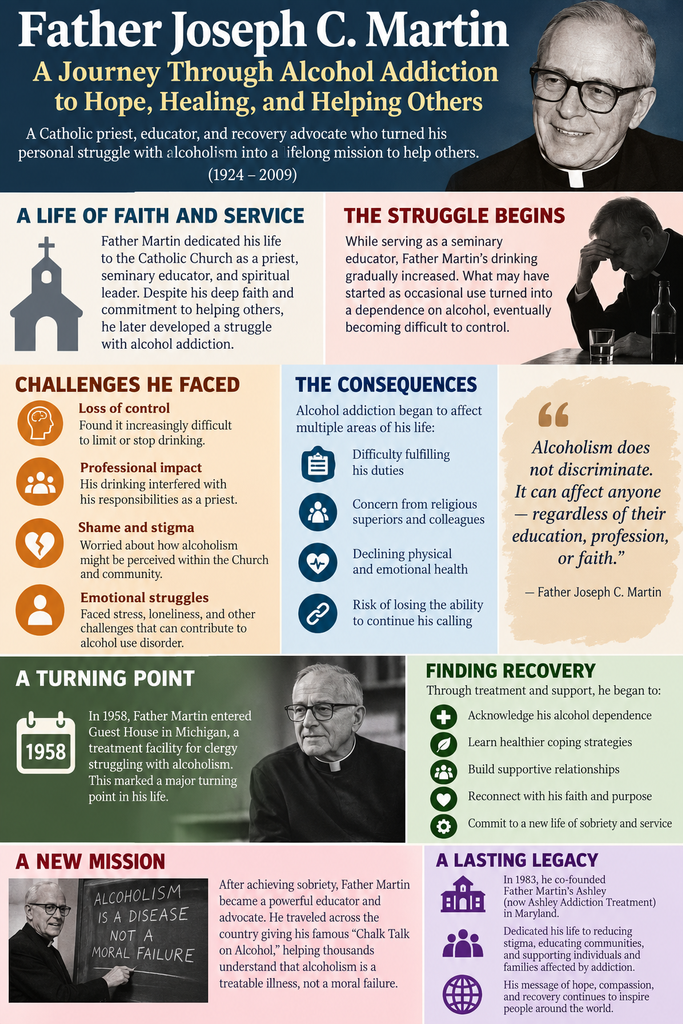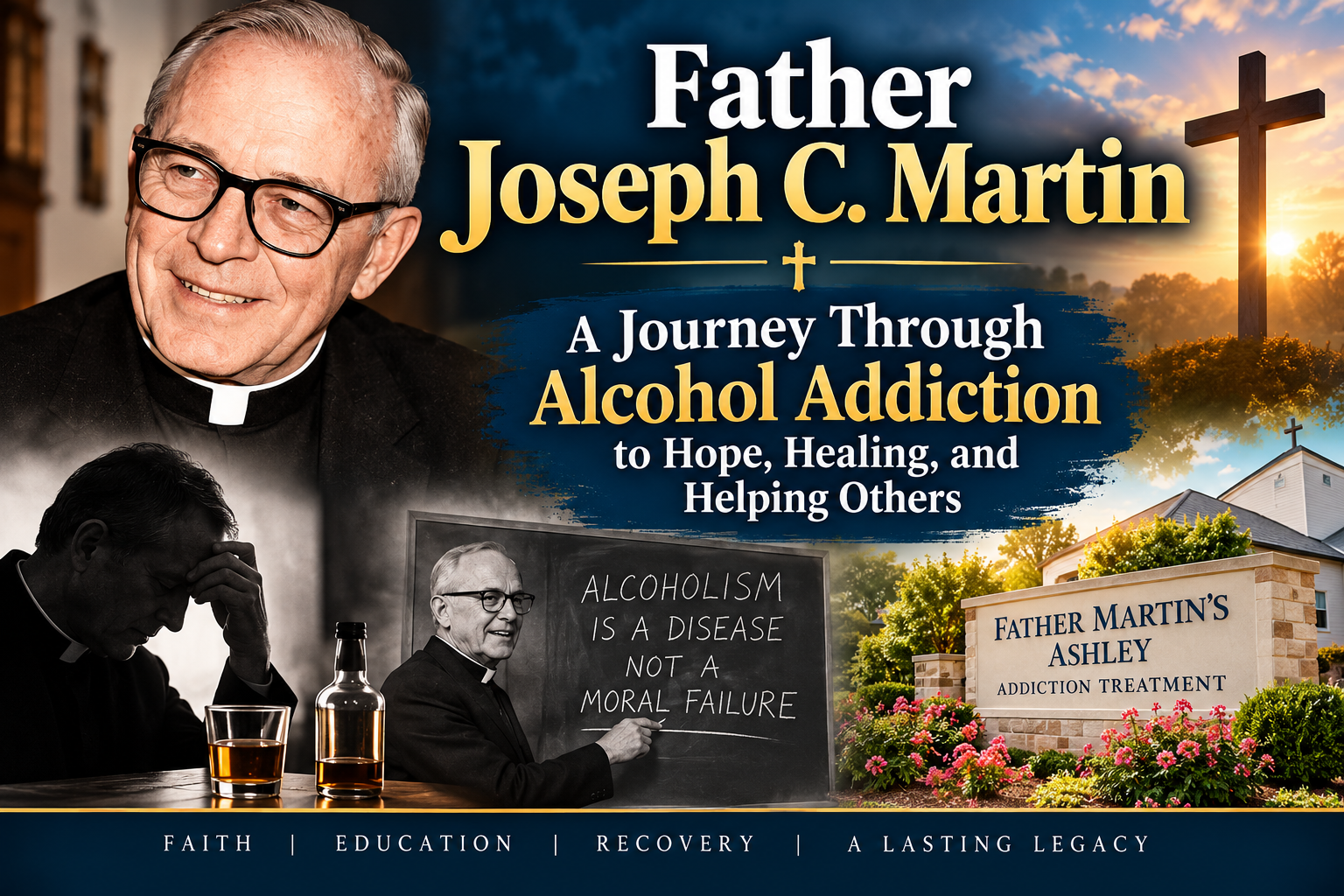
Alcohol addiction can affect anyone, regardless of education, profession, religious beliefs, or social standing. Father Joseph C. Martin, a Catholic priest and internationally recognized alcoholism educator, demonstrated this reality through his personal struggles with alcohol dependence and his dedication to helping others achieve recovery.
Known affectionately as “Father Martin,” he transformed his experiences with alcoholism into a powerful message of hope, compassion, and healing. His educational work helped families, healthcare professionals, and individuals understand that alcoholism is a treatable medical condition rather than a moral failure.
His journey illustrates three essential elements of sustainable recovery: personal responsibility, supportive relationships, and access to effective treatment and community resources.
Who Was Father Joseph C. Martin?
Father Joseph C. Martin (1924–2009) was an American Catholic priest who became one of the most influential voices in alcoholism education.
Although he devoted his life to religious service, he struggled with alcohol dependence. His experience challenged the misconception that strong religious faith, professional achievement, or moral character automatically protects individuals from developing substance use disorders.
Rather than allowing addiction to define his life, Father Martin eventually embraced recovery and devoted decades to educating others.
His story reminds us that addiction does not discriminate and that recovery can become a foundation for meaningful service to others.
Father Martin’s Personal Struggles With Alcohol Addiction
Father Martin’s problems with alcohol developed during his years as a seminary educator. Over time, his drinking became increasingly difficult to control, eventually interfering with his professional responsibilities.
Despite his religious commitments and education, he experienced the loss of control associated with alcohol dependence.
His struggles reflected several common features of alcohol use disorder:
- Loss of control: Difficulty limiting alcohol consumption despite intentions to stop.
- Continued drinking despite consequences: Alcohol use persisted even as problems became apparent.
- Shame and stigma: His position as a priest created additional concerns about how alcoholism might be perceived.
- Difficulty recognizing the severity of addiction: Like many individuals, he needed help to address his drinking.
- Need for professional intervention: His condition ultimately required specialized treatment.
Historical accounts describe his increasing drinking, concerns from religious superiors, and eventual referral for treatment.
His experience demonstrates that addiction is not simply a matter of insufficient willpower. Alcohol use disorder involves changes in brain function, behavior, motivation, and the ability to control substance use.
The Turning Point: Accepting Treatment in 1958
In 1958, Father Martin entered Guest House in Michigan, a treatment facility specializing in alcoholism among members of the clergy.
This decision marked a major turning point in his life.
During treatment, he learned more about alcoholism, encountered people who understood his experiences, and began developing a foundation for long-term recovery.
He came to recognize that acknowledging alcohol dependence was not a rejection of his faith or personal values. Instead, accepting help allowed him to restore his health and pursue a new purpose.
His recovery would eventually inspire decades of education and advocacy.
Self-Management Strategies: Lessons From Father Martin’s Recovery
Self-management is an important part of maintaining recovery from alcohol use disorder. It involves recognizing personal vulnerabilities, developing healthy coping mechanisms, and making consistent decisions that support sobriety.
Although detailed records of Father Martin’s private daily recovery practices are limited, his experiences and teachings illustrate several principles that remain relevant today.
1. Recognizing and Accepting Alcohol Dependence
Recovery often begins when individuals acknowledge that their alcohol consumption has become harmful.
Self-management strategies include:
- Identifying patterns of excessive drinking.
- Recognizing alcohol cravings and emotional triggers.
- Understanding how alcohol affects physical and mental health.
- Accepting responsibility for seeking treatment without engaging in self-blame.
- Practicing honesty with healthcare professionals and trusted supporters.
2. Developing Healthy Coping Mechanisms
Alcohol may become a way to cope with stress, loneliness, anxiety, or emotional discomfort.
Learning alternative coping skills can help reduce the risk of returning to alcohol use.
Helpful strategies include:
- Practicing mindfulness, meditation, or prayer.
- Participating in regular physical activity.
- Maintaining healthy sleep and nutrition.
- Developing enjoyable hobbies that do not involve alcohol.
- Seeking counseling to address emotional difficulties.
- Establishing structured daily routines.
3. Creating a Relapse Prevention Plan
Long-term recovery requires preparation for situations that may increase the temptation to drink.
A relapse prevention plan may involve:
- Recognizing early warning signs of returning to alcohol use.
- Avoiding or planning for high-risk environments.
- Developing strategies to manage cravings.
- Identifying trusted individuals to contact during difficult moments.
- Attending recovery meetings or therapy sessions.
- Discussing medications such as naltrexone or acamprosate with a qualified clinician when appropriate.
Individuals with significant physical alcohol dependence should seek medical guidance before stopping drinking abruptly because withdrawal can cause seizures, delirium, and other life-threatening complications.
Family Support Strategies: Creating Understanding Instead of Judgment
Family relationships can influence recovery outcomes. Supportive family members can provide encouragement, emotional stability, and practical assistance while maintaining appropriate boundaries.
Father Martin’s story highlights the importance of treating individuals experiencing alcoholism with dignity rather than shame.
His friendship with Mae Ashley Abraham and her husband, Tommy, became an important part of his later life and recovery advocacy. Their partnership also helped transform his educational mission into a residential addiction treatment program.
1. Encouraging Open Communication
Families can support recovery by creating opportunities for honest, respectful conversations.
Helpful approaches include:
- Listening without immediately criticizing or blaming.
- Expressing concerns using calm, supportive language.
- Learning about alcohol use disorder as a medical condition.
- Encouraging professional treatment when necessary.
- Recognizing and celebrating meaningful recovery milestones.
2. Establishing Healthy Boundaries
Supporting someone with alcohol addiction does not mean ignoring harmful behavior or sacrificing personal well-being.
Families can establish boundaries by:
- Refusing to provide money that would directly support harmful drinking.
- Avoiding excuses that conceal dangerous behavior.
- Clearly communicating expectations for safety and respect.
- Encouraging accountability without humiliation.
- Seeking professional support when family relationships become strained.
3. Participating in Family Recovery Programs
Addiction affects relationships, trust, communication, and emotional well-being.
Family-centered recovery services may include:
- Family counseling and education.
- Al-Anon or other family support groups.
- Communication and conflict-resolution training.
- Education about relapse and recovery.
- Support for children affected by parental alcohol misuse.
Family involvement can improve understanding, but relatives cannot control another person’s recovery. They also deserve support for their own emotional health.
Community Support Strategies: The Importance of Connection
One of Father Martin’s greatest contributions was his commitment to building communities where individuals experiencing addiction could receive education, treatment, and encouragement.
He believed that people should not be defined by their alcoholism and that compassionate treatment could help restore hope.
The Famous “Chalk Talk on Alcohol”
Father Martin became widely known for his educational presentation, Chalk Talk on Alcohol.
Using a blackboard and straightforward explanations, he helped audiences understand alcoholism as an illness rather than a character defect.
His presentations became influential educational resources in treatment centers, schools, military programs, and other organizations. The U.S. Navy filmed his 1972 lecture, helping expand its reach.
His approach demonstrated how education can reduce stigma and encourage people to seek treatment.
The Founding of Father Martin’s Ashley
In 1983, Father Martin and Mae Ashley Abraham opened Father Martin’s Ashley in Havre de Grace, Maryland.
The treatment center, now known as Ashley Addiction Treatment, was founded on compassion, dignity, and comprehensive recovery support.
Its mission emphasized that individuals experiencing addiction deserve professional care without humiliation or judgment.
Community Resources That Support Recovery
Communities can strengthen recovery by providing accessible treatment and long-term support.
Important resources include:
- Alcoholics Anonymous (AA): Peer support and 12-step recovery meetings.
- SMART Recovery: Evidence-informed mutual support focused on self-management skills.
- Outpatient treatment programs: Counseling, medication management, and continuing care.
- Residential treatment facilities: Structured treatment for individuals requiring intensive support.
- Faith-based recovery programs: Optional spiritual guidance and supportive relationships.
- Community mental health services: Treatment for co-occurring psychiatric conditions.
- Recovery community organizations: Peer mentorship, employment assistance, and sober social activities.
Not everyone benefits from the same recovery approach. Effective care should reflect individual medical needs, preferences, beliefs, and circumstances.
Father Martin’s Lasting Impact on Addiction Treatment
Father Martin’s contributions extended far beyond his personal sobriety.
He helped reshape public conversations about alcoholism by emphasizing education, compassion, and the possibility of recovery.
His most important contributions included:
- Challenging the stigma surrounding alcohol dependence.
- Educating healthcare professionals, clergy, families, and communities.
- Using his personal recovery experience to inspire others.
- Promoting treatment that respected each individual’s dignity.
- Co-founding a treatment center dedicated to compassionate addiction care.
- Demonstrating that meaningful personal growth is possible after addiction.
Father Martin maintained his recovery for approximately 50 years before his death in 2009.
His work continues to influence how individuals and families understand alcohol use disorder.
Lessons We Can Learn From Father Martin’s Journey
Father Martin’s experience provides valuable insights into addiction and recovery.
Addiction does not discriminate. Professional achievement, religious commitment, and education do not eliminate the possibility of developing alcohol use disorder.
Asking for help demonstrates courage. Seeking professional treatment can be a critical step toward regaining stability and health.
Shame should never prevent someone from seeking treatment. Individuals are more likely to seek help when they are treated with compassion and respect.
Recovery involves more than stopping alcohol consumption. Sustainable recovery may require emotional healing, behavioral changes, medical treatment, and supportive relationships.
Personal experiences can inspire meaningful change. Father Martin transformed his struggles into a mission that benefited thousands of individuals and families.
Conclusion: Turning Personal Struggles Into a Legacy of Hope
Father Joseph C. Martin’s journey from alcohol dependence to internationally recognized recovery advocate demonstrates the transformative potential of treatment, compassion, and perseverance.
His struggles remind us that addiction can affect anyone, while his recovery shows that individuals can rebuild their lives and discover renewed purpose.
Through his educational presentations and the founding of Father Martin’s Ashley, he helped change how society understands and responds to alcoholism.
His legacy reinforces three interconnected pillars of recovery: self-management, family encouragement, and community support.
For individuals struggling with alcohol addiction, his story offers an important message: seeking help can become the beginning of a healthier and more meaningful life.
For families, his experience encourages understanding rather than judgment.
For communities, his work demonstrates that education, accessible treatment, and compassionate support can change lives.
Father Martin’s greatest contribution was not simply overcoming his own addiction. It was using his recovery to help others believe that healing was possible.
Frequently Asked Questions and Answers
1. Who was Father Joseph C. Martin?
Father Joseph C. Martin (1924–2009) was an American Catholic priest, alcoholism educator, and recovery advocate. After overcoming his own struggles with alcohol dependence, he dedicated much of his life to helping individuals and families understand alcoholism as a treatable disease rather than a moral failure. He became widely recognized for his educational presentation, Chalk Talk on Alcohol, and co-founded Father Martin’s Ashley addiction treatment center in Maryland.
2. Did Father Joseph C. Martin struggle with alcohol addiction?
Yes. Father Martin experienced alcohol dependence while serving as a Catholic priest and seminary educator. His drinking progressively interfered with his professional responsibilities and personal well-being. His experience demonstrated that alcohol addiction can affect anyone, regardless of religious beliefs, education, or professional accomplishments.
3. When did Father Martin begin struggling with alcoholism?
Father Martin’s problematic drinking developed during his years in religious service and became serious enough to require treatment by 1958. Although the exact onset of his alcohol dependence is not clearly documented, his struggles eventually affected his responsibilities as a priest and educator.
4. What caused Father Martin’s alcohol addiction?
There is no definitive public evidence identifying a single cause of Father Martin’s alcoholism. Alcohol use disorder generally develops through a combination of genetic vulnerability, environmental influences, psychological factors, and repeated alcohol exposure. His experience reinforces that addiction is a complex medical condition rather than a weakness of character.
5. How did alcoholism affect Father Martin’s religious responsibilities?
His drinking began interfering with his work as a priest and seminary educator. Concerns about his alcohol use eventually led to his receiving specialized treatment. His experience helped challenge the belief that religious commitment or spiritual discipline alone could prevent or overcome addiction.
6. When did Father Martin seek treatment for alcoholism?
In 1958, Father Martin entered Guest House in Michigan, a treatment facility specializing in helping Catholic clergy experiencing alcohol dependence. This became a significant turning point in his life, providing him with treatment, education, and a foundation for sustained recovery.
7. What helped Father Martin overcome alcohol addiction?
Professional treatment, acceptance of his alcohol dependence, recovery education, and supportive relationships played important roles in his recovery. His later advocacy also reflected his commitment to helping others understand alcoholism. Specific details about every aspect of his personal recovery routine are not publicly documented.
8. Did Father Martin participate in Alcoholics Anonymous?
Father Martin was strongly associated with the principles and recovery philosophy of Alcoholics Anonymous. His educational work frequently complemented 12-step recovery approaches, emphasizing honesty, acceptance, personal responsibility, and mutual support. AA principles influenced his recovery advocacy.
9. What was Father Martin’s famous “Chalk Talk on Alcohol”?
Chalk Talk on Alcohol was an educational presentation in which Father Martin used a blackboard and straightforward explanations to describe alcoholism as a disease. His presentation helped individuals, families, clergy, and healthcare professionals understand alcohol dependence without shame or judgment. A filmed version became widely used in addiction treatment and education.
10. Why did Father Martin describe alcoholism as a disease?
Father Martin believed that alcoholism should be understood as a medical condition rather than a moral weakness. Modern medical research supports recognizing alcohol use disorder as a chronic, treatable condition involving changes in brain function, behavior, and the ability to control alcohol consumption. This perspective encourages treatment instead of punishment or humiliation.
11. What is Father Martin’s Ashley Addiction Treatment Center?
Father Martin’s Ashley was a residential addiction treatment center established in 1983 in Havre de Grace, Maryland, by Father Martin and Mae Ashley Abraham. Now known as Ashley Addiction Treatment, it provides addiction treatment and recovery services. Its founding philosophy emphasized compassionate care, dignity, and the belief that individuals can recover from substance use disorders.
12. How did Father Martin help reduce the stigma surrounding alcoholism?
Father Martin openly discussed his personal experience with alcoholism and educated audiences about addiction as a medical condition. By sharing his story as a respected Catholic priest, he challenged stereotypes suggesting that addiction resulted from poor character, weak faith, or insufficient willpower. His presentations encouraged individuals to seek treatment without shame.
13. Did Father Martin remain sober for the rest of his life?
Biographical accounts describe Father Martin as maintaining long-term sobriety following his treatment in 1958 until his death in 2009. His approximately 50 years in recovery became an important part of his educational message, demonstrating that sustained recovery from alcohol dependence is possible.
14. What self-management strategies can individuals learn from Father Martin’s recovery?
His experience highlights the importance of accepting treatment, understanding addiction, and maintaining ongoing recovery support.
Practical self-management strategies include:
- Recognizing personal alcohol triggers and cravings.
- Developing healthy stress-management techniques.
- Establishing consistent sleep, nutrition, and exercise routines.
- Attending counseling or peer recovery meetings.
- Creating a personalized relapse prevention plan.
- Discussing evidence-based medications for alcohol use disorder with a healthcare professional.
- Seeking immediate professional guidance when alcohol withdrawal may be medically dangerous.
These modern recovery recommendations reflect his overall message, not a documented list of his personal daily practices.
15. How can families support someone struggling with alcohol addiction?
Families can provide encouragement while maintaining healthy boundaries. Helpful strategies include:
- Listening without judgment or criticism.
- Learning about alcohol use disorder.
- Encouraging professional assessment and treatment.
- Avoiding behaviors that unintentionally support harmful drinking.
- Participating in family counseling or support groups.
- Recognizing recovery progress without demanding perfection.
- Protecting their own emotional and physical well-being.
Family support can strengthen recovery, but relatives cannot force another person to become sober.
16. What role does community support play in alcohol addiction recovery?
Community support provides opportunities for connection, accountability, education, and continued encouragement.
Resources include Alcoholics Anonymous, SMART Recovery, outpatient counseling, residential treatment, recovery community organizations, and faith-based programs when desired.
Father Martin’s work demonstrated that communities can reduce stigma and make treatment more accessible through education and compassionate support.
17. Can faith and spirituality help individuals recover from alcoholism?
Yes. Faith and spirituality can provide meaning, hope, emotional comfort, and supportive relationships for individuals who find them helpful.
Father Martin’s recovery advocacy reflected the importance of compassion and personal purpose.
However, spirituality is not required for successful recovery. Evidence-based medical treatment, psychotherapy, medications, and peer support can benefit individuals regardless of religious beliefs.
18. What are common warning signs of alcohol use disorder?
Common warning signs include:
- Drinking more alcohol than intended.
- Repeated unsuccessful attempts to reduce drinking.
- Experiencing strong alcohol cravings.
- Neglecting work, family, or personal responsibilities.
- Continuing to drink despite physical or emotional consequences.
- Developing tolerance to alcohol.
- Experiencing withdrawal symptoms when alcohol consumption decreases.
- Giving up important activities because of drinking.
A healthcare professional can evaluate these symptoms using established diagnostic criteria.
19. What should someone do if they recognize similarities between their drinking and Father Martin’s struggles?
The first step is seeking an assessment from a qualified healthcare professional or addiction specialist.
Treatment options may include medically supervised withdrawal management, behavioral therapy, medications such as naltrexone or acamprosate, peer recovery programs, and ongoing counseling.
Important: Individuals who drink heavily or have experienced alcohol withdrawal should not abruptly stop drinking without medical advice. Severe withdrawal can cause seizures, delirium, and life-threatening complications.
20. What is the difference between sobriety and long-term recovery?
Sobriety generally refers to abstaining from alcohol. Recovery is a broader process that may include improved physical health, emotional stability, relationships, coping skills, and quality of life.
Father Martin’s life illustrated this distinction. His recovery extended beyond abstinence into education, service, and helping others overcome addiction.
21. Did Father Martin believe that people with alcoholism could recover?
Yes. His educational work emphasized that individuals experiencing alcoholism could receive treatment and build meaningful lives in recovery.
He advocated understanding addiction without shame and providing people with the tools, knowledge, and support needed to pursue lasting change.
22. How can healthcare professionals apply Father Martin’s teachings today?
Healthcare professionals can apply his compassionate, nonjudgmental approach while using modern evidence-based addiction treatment.
Important practices include:
- Screening patients for unhealthy alcohol use.
- Using respectful, person-first language.
- Explaining the biological and behavioral aspects of addiction.
- Assessing withdrawal risks and co-occurring mental health conditions.
- Offering medications and behavioral treatments when indicated.
- Encouraging shared decision-making.
- Coordinating ongoing recovery and family support.
His message remains particularly relevant to reducing stigma in healthcare settings.
23. What is Father Martin’s greatest contribution to addiction recovery?
One of Father Martin’s greatest contributions was making alcoholism education understandable and accessible to the public.
Through Chalk Talk on Alcohol, his personal recovery story, and his role in establishing Father Martin’s Ashley, he helped change perceptions of alcoholism and encouraged compassionate treatment.
24. What can individuals learn from Father Martin’s personal struggles?
His journey provides several important lessons:
- Addiction can affect anyone.
- Acknowledging a problem is an important step toward recovery.
- Professional treatment can change lives.
- Recovery is strengthened through meaningful relationships.
- Shame and stigma can prevent individuals from seeking help.
- Personal struggles do not have to determine a person’s future.
- Recovery can create opportunities for purpose, service, and personal growth.
25. What is Father Joseph C. Martin’s lasting legacy?
Father Martin’s lasting legacy is his contribution to changing how individuals, families, and communities understand alcohol addiction.
He helped promote the recognition of alcoholism as a treatable medical condition, encouraged compassionate recovery services, and demonstrated that individuals can rebuild their lives after addiction.
His educational work and the treatment organization he helped establish continue to embody dignity, understanding, and hope.
Video: