Addiction can affect individuals from every background, but the journey toward recovery may involve additional challenges for people who identify as lesbian, gay, bisexual, transgender, queer, questioning, or other sexual and gender minorities (LGBTQ+). Experiences of discrimination, family rejection, social isolation, and barriers to affirming healthcare can contribute to emotional distress and increase vulnerability to substance use.
For some LGBTQ+ individuals, alcohol or drugs may initially seem like a way to cope with anxiety, depression, trauma, or the emotional burden of concealing their identity. Others may encounter substance use in social environments where drinking or drug use is normalized. These experiences do not mean that queer identity causes addiction. Rather, minority stress, discrimination, trauma, and unequal access to supportive resources can influence substance use risk.
Recovery involves more than stopping alcohol or drug use. It may also include rebuilding self-worth, developing healthy relationships, finding affirming communities, and creating a life where individuals feel safe expressing their authentic identities.
Understanding the intersection of queer identity and addiction can help individuals, families, healthcare professionals, and communities develop compassionate, culturally responsive approaches to recovery.
Understanding Queer Identity and Addiction
The term queer is an umbrella term used by some individuals whose sexual orientation or gender identity falls outside traditional heterosexual or cisgender expectations. Not everyone within the LGBTQ+ community identifies with this term, and personal preferences should always be respected.
Substance use disorder is a treatable medical condition characterized by impaired control over substance use, continued use despite harmful consequences, and changes in behavior or functioning.
LGBTQ+ individuals are not inherently more vulnerable to addiction because of their identity. Instead, social and environmental experiences may create additional stressors that influence mental health and substance use.
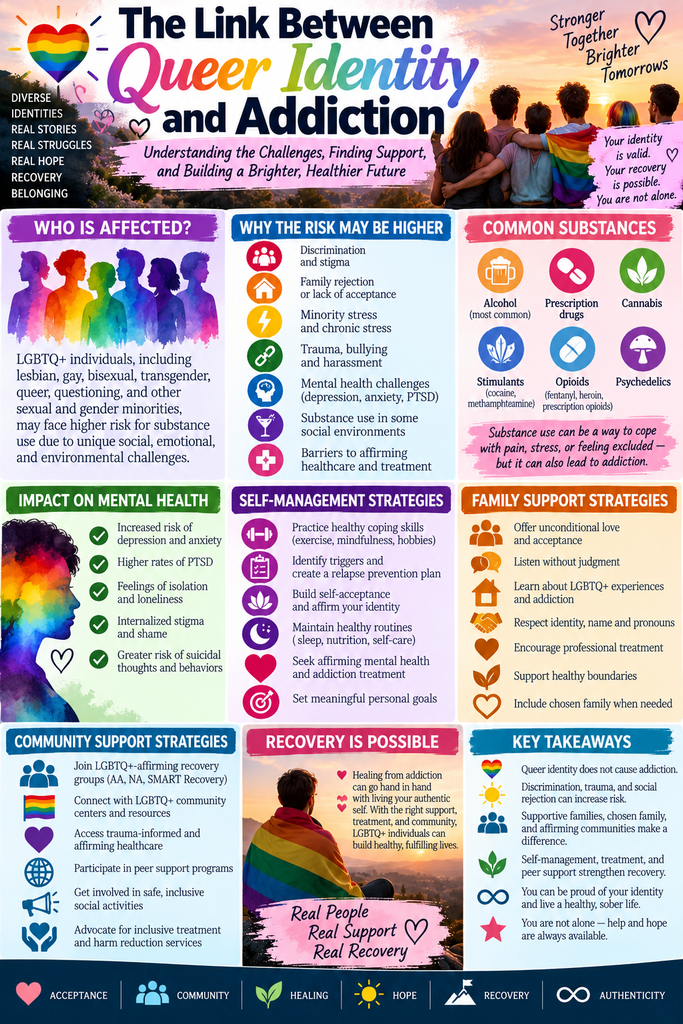
Factors That May Increase Substance Use Risk
- Discrimination: Experiences of prejudice in schools, workplaces, healthcare settings, or communities.
- Family rejection: Lack of acceptance or support from parents, relatives, or caregivers.
- Minority stress: Chronic stress associated with stigma, concealment, and expectations of rejection.
- Social isolation: Difficulty finding safe and affirming relationships.
- Trauma: Experiences of bullying, harassment, violence, or emotional abuse.
- Mental health challenges: Depression, anxiety, and trauma-related symptoms that may coexist with substance use.
- Barriers to healthcare: Limited access to culturally responsive addiction and mental health treatment.
- Substance-centered social environments: Social settings where alcohol or drugs are frequently present.
These factors affect individuals differently. Many LGBTQ+ people experience strong community connections, supportive families, and excellent mental health without developing substance use problems.
The Minority Stress Model: Understanding the Connection
The minority stress model helps explain how chronic exposure to stigma and discrimination can influence psychological well-being.
Developed through research on sexual minority populations, this framework describes how external stressors and internalized responses to stigma may contribute to mental health disparities.
External stressors may include harassment, discrimination, rejection, and violence.
Internal stressors may involve fear of rejection, concealment of identity, or internalized negative beliefs about one’s sexual orientation or gender identity.
Over time, these experiences may contribute to anxiety, depression, emotional exhaustion, and unhealthy coping behaviors.
For some individuals, alcohol or drugs may temporarily reduce emotional discomfort. However, repeated substance use can eventually worsen psychological distress and increase the risk of addiction.
Recovery does not aim to change or suppress a person’s identity. It is to address substance use, reduce harmful stressors, and support emotional well-being in an affirming environment.
The Role of Trauma in LGBTQ+ Addiction
Trauma can play a significant role in the development and maintenance of substance use disorders.
Some LGBTQ+ individuals experience bullying, family rejection, discrimination, intimate partner violence, or other traumatic events.
Traumatic experiences may affect emotional regulation, stress responses, sleep, and interpersonal relationships.
Substances may become a coping mechanism for distressing memories, fear, or emotional pain.
Common Trauma-Related Challenges
- Persistent anxiety or hypervigilance.
- Difficulty trusting others.
- Emotional numbness or avoidance.
- Sleep disturbances and nightmares.
- Feelings of shame or low self-worth.
- Difficulty maintaining relationships.
- Increased vulnerability to substance cravings.
Trauma-informed treatment recognizes that past experiences of harm may influence behavior.
Effective care emphasizes safety, trust, collaboration, personal choice, and empowerment.
Self-Management Strategies: Building Recovery Through Self-Acceptance
Self-management involves developing skills that support emotional stability, reduce substance use risk, and strengthen personal recovery goals.
For LGBTQ+ individuals, self-management may also involve developing self-acceptance and identifying environments where they can safely express their identity.
1. Practice Self-Acceptance and Identity Affirmation
Recovery can become more sustainable when individuals develop a positive relationship with their identity.
Helpful strategies include:
- Recognizing that sexual orientation and gender identity are not disorders.
- Challenging internalized shame and negative stereotypes.
- Practicing self-compassion.
- Connecting with affirming friends and mentors.
- Exploring identity through journaling or creative expression.
- Seeking LGBTQ+-affirming counseling when needed.
Self-acceptance does not require disclosing one’s identity to everyone. Coming out should remain a personal decision based on individual readiness and safety.
2. Identify Emotional and Environmental Triggers
Understanding substance use triggers can help individuals develop healthier responses.
Triggers may include:
- Experiences of discrimination or rejection.
- Family conflict.
- Loneliness or isolation.
- Anxiety related to identity disclosure.
- Social events involving alcohol or drugs.
- Reminders of traumatic experiences.
- Depression or relationship difficulties.
A recovery journal can help individuals recognize patterns between emotions, environments, and substance cravings.
3. Develop Healthy Coping Mechanisms
Healthy coping strategies can reduce reliance on alcohol or drugs during stressful situations.
Examples include:
- Practicing mindfulness and meditation.
- Participating in physical activity.
- Maintaining consistent sleep and nutrition.
- Developing creative hobbies.
- Spending time in supportive social environments.
- Learning emotional regulation skills.
- Practicing grounding techniques during anxiety.
- Seeking professional mental health treatment when appropriate.
These approaches complement evidence-based addiction treatment rather than replacing it.
4. Seek LGBTQ+-Affirming Addiction Treatment
Affirming treatment respects an individual’s identity and addresses substance use without judgment.
Individuals can look for providers who:
- Use respectful names and pronouns.
- Understand minority stress and discrimination.
- Provide confidential and inclusive services.
- Offer evidence-based addiction treatment.
- Screen for co-occurring psychiatric conditions.
- Respect individual relationships and family structures.
- Understand trauma-informed care.
- Avoid practices intended to change sexual orientation or gender identity.
Treatment may include cognitive behavioral therapy, motivational interviewing, contingency management, medications for substance use disorders, and peer recovery support.
5. Create a Personalized Relapse Prevention Plan
A relapse prevention plan should address both general addiction triggers and identity-related stressors.
Important components include:
- Recognizing early warning signs of returning to substance use.
- Identifying safe people to contact during cravings.
- Planning substance-free social activities.
- Developing responses to discrimination or rejection.
- Maintaining treatment appointments.
- Establishing emergency and crisis contacts.
- Reviewing recovery goals regularly.
For opioid use disorder, medications such as buprenorphine and methadone are effective treatments associated with reduced overdose and mortality risk.
For alcohol use disorder, medications such as naltrexone and acamprosate may support recovery when clinically appropriate.
Family Support Strategies: Acceptance Can Strengthen Recovery
Family acceptance can be an important protective factor for LGBTQ+ individuals.
Supportive family relationships may reduce isolation, improve emotional well-being, and encourage participation in treatment.
However, some individuals experience rejection, criticism, or conflict related to their sexual orientation or gender identity.
Family support should therefore focus on respect, emotional safety, and the individual’s autonomy.
1. Practice Unconditional Respect
Families can demonstrate support by:
- Respecting a loved one’s name and pronouns.
- Avoiding judgment about sexual orientation or gender identity.
- Listening without interrupting or criticizing.
- Recognizing the individual’s relationships and support network.
- Avoiding shame-based language.
- Encouraging open conversations when the person feels comfortable.
Acceptance does not require families to understand every aspect of someone’s identity immediately. It does require treating the individual with dignity and respect.
2. Learn About Addiction and Minority Stress
Families may better understand substance use challenges when they recognize the effects of discrimination, trauma, and social rejection.
Education can help relatives distinguish addiction-related behaviors from identity-related experiences.
Families should understand that being LGBTQ+ does not cause addiction and that attempts to change someone’s identity are not appropriate addiction treatment.
3. Encourage Professional Treatment
Families can support recovery by helping loved ones access qualified healthcare professionals.
Helpful actions include:
- Sharing information about affirming treatment providers.
- Offering transportation to appointments.
- Supporting medication adherence when requested.
- Encouraging participation in therapy.
- Helping navigate insurance or financial barriers.
- Respecting confidentiality and treatment decisions.
4. Establish Healthy Boundaries
Family acceptance and healthy boundaries are compatible.
Families can support individuals while maintaining expectations regarding safety, respectful communication, and substance-related behavior.
Boundaries should focus on behavior, not identity.
For example, a family may establish rules against substance use in the home without rejecting a loved one’s sexual orientation or gender identity.
5. Recognize the Importance of Chosen Family
Not all LGBTQ+ individuals have supportive biological families.
Chosen family refers to trusted friends, partners, mentors, and community members who provide meaningful emotional and practical support.
Chosen-family relationships can help individuals feel a sense of belonging, receive encouragement, and find stability during recovery.
Healthcare professionals should respect the role of chosen family and include these supporters in treatment planning when the individual consents.
Community Support Strategies: Finding Belonging and Healing
Community connection can help reduce isolation and strengthen recovery.
For LGBTQ+ individuals, affirming recovery spaces may provide opportunities to discuss experiences that are not always understood in traditional treatment environments.
1. Expand LGBTQ+-Affirming Recovery Programs
Communities can support recovery through:
- LGBTQ+-inclusive addiction treatment centers.
- Identity-affirming counseling services.
- Peer-led recovery meetings.
- Trauma-informed mental healthcare.
- Programs addressing co-occurring psychiatric disorders.
- Affordable outpatient and residential treatment.
- Confidential telehealth services.
Treatment providers should receive training in culturally responsive care and avoid making assumptions about patients’ identities or relationships.
2. Encourage LGBTQ+-Affirming Peer Support
Peer recovery programs provide opportunities to connect with others who understand both addiction and identity-related stressors.
Resources may include:
- LGBTQ+-focused Alcoholics Anonymous meetings.
- LGBTQ+-inclusive Narcotics Anonymous groups.
- SMART Recovery meetings.
- Peer recovery coaching.
- Community-based sobriety groups.
- Online recovery communities with appropriate privacy protections.
Not everyone needs an identity-specific group, but having access to affirming options can improve comfort and participation.
3. Support LGBTQ+ Community Centers
Community centers may provide mental health referrals, peer support, educational programs, social activities, and connections to healthcare services.
These organizations can help individuals build relationships outside environments centered on alcohol or drug use.
4. Address Housing and Employment Barriers
Housing instability, unemployment, and discrimination may complicate recovery.
Communities can strengthen support through:
- LGBTQ+-inclusive housing assistance.
- Employment and vocational training.
- Legal assistance related to discrimination.
- Transportation to treatment.
- Affordable healthcare programs.
- Supportive services for LGBTQ+ youth and young adults.
5. Promote Inclusive Healthcare Policies
Healthcare organizations can improve access to treatment by establishing respectful intake procedures, confidentiality protections, nondiscrimination practices, and staff training.
Inclusive care should be combined with evidence-based treatment and measurable clinical outcomes.
The Importance of Mental Health Treatment in Addiction Recovery
LGBTQ+ individuals experiencing substance use disorders may also have depression, anxiety, post-traumatic stress disorder, or other psychiatric conditions.
When mental health and substance use disorders occur together, integrated treatment is generally recommended.
Treatment may include:
- Psychiatric assessment and medication management.
- Cognitive behavioral therapy.
- Trauma-focused psychotherapy when appropriate.
- Addiction counseling.
- Peer recovery support.
- Family or chosen-family involvement.
- Long-term recovery planning.
Clinicians should avoid assuming that emotional distress is solely related to LGBTQ+ identity. A comprehensive assessment should consider biological, psychological, social, and environmental factors.
Overcoming Shame and Rebuilding Self-Worth
Shame can become a significant obstacle during addiction recovery.
Individuals may experience shame related to substance use, family conflict, trauma, or internalized stigma.
For LGBTQ+ individuals, these experiences may be intensified by discrimination or pressure to conceal their identity.
Recovery can involve separating personal worth from past behaviors and harmful social messages.
Helpful approaches include:
- Practicing self-compassion.
- Challenging negative beliefs about identity.
- Participating in affirming psychotherapy.
- Building supportive relationships.
- Recognizing personal strengths.
- Celebrating recovery progress.
- Developing meaningful goals beyond substance use.
A person’s identity is not something that needs to be cured. Addiction treatment should help individuals improve their health while respecting who they are.
Lessons We Can Learn About Queer Identity and Addiction
Several important principles emerge from understanding the relationship between LGBTQ+ experiences and addiction.
1. Queer identity does not cause addiction. Discrimination, minority stress, trauma, and other factors may influence substance use risk.
2. Acceptance can be protective. Supportive relationships may reduce isolation and encourage healthier coping.
3. Recovery requires individualized treatment. Effective care should address substance use, mental health, trauma, and personal circumstances.
4. Family support matters. Respectful communication and acceptance can strengthen emotional well-being.
5. Chosen family can provide meaningful support. Trusted relationships outside biological families may be essential sources of connection.
6. Communities influence recovery opportunities. Accessible, affirming treatment and peer support can reduce barriers to care.
7. Recovery and identity affirmation can coexist. Individuals should not have to choose between receiving addiction treatment and living authentically.
Conclusion: Finding Community, Acceptance, and Healing
The intersection of queer identity and addiction highlights the importance of understanding how social experiences, discrimination, trauma, and access to healthcare can influence substance use and recovery.
LGBTQ+ individuals may encounter unique challenges, but their identities are not the cause of addiction. The barriers they face often reflect broader social and healthcare inequalities that education, acceptance, and inclusive treatment can address.
Self-management strategies help individuals recognize triggers, build coping skills, and stay engaged in treatment. Family support provides encouragement, emotional safety, and understanding. Community resources create opportunities for affirming healthcare, peer connection, and long-term recovery support.
Together, these elements can help individuals build resilience, improve mental health, and develop meaningful lives beyond addiction.
Recovery should not require someone to hide their identity, abandon supportive relationships, or accept discrimination as part of treatment.
Healing becomes more accessible when people are treated with dignity, supported by their communities, and free to pursue recovery as their authentic selves.
Every individual deserves access to compassionate, evidence-based addiction treatment and the opportunity to build a healthier future.
Helpful LGBTQ+ Mental Health and Addiction Recovery Resources
- The Trevor Project — Crisis support and mental health resources for LGBTQ+ young people.
- LGBTQ+ Healthcare Directory — Search for LGBTQ+-affirming healthcare professionals.
- SAMHSA — Mental health and substance use treatment information.
- FindTreatment.gov — Locate addiction treatment services.
- SMART Recovery — Evidence-informed mutual support.
- Alcoholics Anonymous — Recovery meetings, including LGBTQ+-focused groups in some areas.
- 988 Suicide & Crisis Lifeline — Call or text 988 for immediate crisis support.
Frequently Asked Questions and Answers
Understanding the Connection Between Queer Identity and Addiction
1. What is the connection between queer identity and addiction?
The connection between queer identity and addiction involves social, psychological, and environmental factors rather than sexual orientation or gender identity itself. LGBTQ+ individuals may experience discrimination, family rejection, bullying, trauma, and chronic minority stress that can contribute to emotional distress and substance use.
Some individuals may use alcohol or drugs to cope with these experiences, increasing their risk of developing substance use disorders. However, being LGBTQ+ does not cause addiction, and many LGBTQ+ individuals maintain healthy lives without substance-related problems.
2. Are LGBTQ+ individuals at greater risk of substance use disorders?
Research indicates that some LGBTQ+ populations experience higher rates of substance use and substance use disorders than their heterosexual or cisgender counterparts. However, risks vary significantly by age, sexual orientation, gender identity, substance, and social circumstances.
Discrimination, chronic stress, trauma, and barriers to affirming healthcare may contribute to these disparities. Supportive relationships and inclusive healthcare can help reduce vulnerability.
3. What is minority stress, and how does it influence addiction?
Minority stress refers to the additional psychological burden experienced by individuals who belong to socially stigmatized groups.
For LGBTQ+ individuals, minority stress may involve discrimination, harassment, fear of rejection, identity concealment, or internalized negative beliefs.
Chronic stress can contribute to anxiety, depression, and unhealthy coping behaviors, including substance use. Reducing stigma and strengthening social support are important strategies for improving mental health.
4. Does being queer cause someone to develop an addiction?
No. Sexual orientation and gender identity are not causes of addiction or mental illness.
Substance use disorders develop through interactions among biological vulnerability, substance exposure, psychological factors, and environmental circumstances.
LGBTQ+ individuals may encounter additional social stressors, but their identities are not pathological and do not require treatment or correction.
5. Why might some LGBTQ+ individuals use alcohol or drugs to cope with emotional distress?
Some individuals may use substances to temporarily manage anxiety, depression, loneliness, trauma, or the emotional impact of discrimination.
Alcohol and drugs can produce short-term changes in mood or emotional awareness, but repeated use may worsen psychological symptoms and increase addiction risk.
Evidence-based treatment helps individuals develop healthier coping strategies while addressing underlying emotional and environmental stressors.
6. What substances are commonly involved in addiction among LGBTQ+ populations?
Substance use patterns vary across LGBTQ+ populations. Substances that may be involved include:
- Alcohol.
- Nicotine and vaping products.
- Cannabis.
- Stimulants such as cocaine and methamphetamine.
- Prescription medications used nonmedically.
- Opioids.
Patterns differ considerably among demographic groups. No substance should be assumed to be commonly used by a particular person simply because of their identity.
7. How does discrimination contribute to substance use risk?
Discrimination can create chronic psychological stress, social isolation, reduced self-esteem, and difficulty accessing supportive services.
Some individuals may turn to alcohol or drugs as a coping mechanism. Discrimination can also discourage people from seeking healthcare because they fear judgment or mistreatment.
Inclusive policies, supportive communities, and culturally responsive treatment can help address these barriers.
8. How does family rejection affect LGBTQ+ mental health and addiction risk?
Family rejection may increase emotional distress, loneliness, housing instability, and vulnerability to substance use.
For LGBTQ+ adolescents and young adults, family acceptance can be especially important because relatives often provide housing, financial assistance, emotional support, and access to healthcare.
Supportive families can strengthen protective factors by respecting identity, encouraging treatment, and maintaining healthy communication.
Mental Health, Trauma, and Addiction
9. Are LGBTQ+ individuals more likely to experience depression and anxiety?
Some LGBTQ+ populations experience higher rates of depression, anxiety, and psychological distress than comparison populations.
These disparities are associated in part with stigma, discrimination, violence, social rejection, and barriers to appropriate care.
LGBTQ+ identity itself is not a mental health disorder. Mental health outcomes improve when individuals have supportive relationships and access to affirming services.
10. What role does trauma play in addiction among LGBTQ+ individuals?
Traumatic experiences such as bullying, harassment, sexual violence, intimate partner violence, and family rejection may contribute to substance use vulnerability.
Trauma can affect stress responses, sleep, emotional regulation, and relationships.
Trauma-informed addiction treatment helps individuals address these experiences while emphasizing safety, trust, collaboration, and personal choice.
11. What are co-occurring mental health and substance use disorders?
Co-occurring disorders occur when an individual experiences both a substance use disorder and a psychiatric condition, such as depression, anxiety, bipolar disorder, or post-traumatic stress disorder.
These conditions can interact and complicate recovery.
Integrated treatment addressing both psychiatric symptoms and substance use is generally recommended.
12. Can internalized stigma contribute to addiction?
Internalized stigma occurs when individuals absorb negative social messages about their identity and begin applying those beliefs to themselves.
This may contribute to shame, low self-esteem, emotional distress, and difficulty forming supportive relationships.
For some people, substance use becomes a way to cope with these feelings. Affirming psychotherapy and supportive relationships can help individuals challenge internalized stigma.
13. How can social isolation affect LGBTQ+ addiction recovery?
Social isolation may increase loneliness, emotional distress, and vulnerability to substance cravings.
People without affirming relationships may struggle to find others who understand their experiences.
Connecting with supportive friends, recovery peers, LGBTQ+ community organizations, and mental health professionals can strengthen recovery and reduce isolation.
Self-Management Strategies for LGBTQ+ Addiction Recovery
14. What self-management strategies can help LGBTQ+ individuals maintain recovery?
Helpful strategies include:
- Identifying personal substance use triggers.
- Developing healthy stress-management techniques.
- Practicing self-acceptance and self-compassion.
- Maintaining consistent sleep and exercise routines.
- Attending addiction treatment appointments.
- Taking prescribed medications as directed.
- Building supportive relationships.
- Creating a personalized relapse prevention plan.
- Seeking affirming mental health services.
These strategies work best when combined with individualized, evidence-based treatment.
15. How does self-acceptance support addiction recovery?
Self-acceptance means recognizing your worth and developing a healthy relationship with your identity.
For LGBTQ+ individuals, it may include challenging shame, rejecting harmful stereotypes, and finding supportive environments.
Self-acceptance can strengthen emotional well-being and reduce distress associated with identity concealment or social rejection.
However, individuals should never feel pressured to disclose their identity when doing so could compromise their safety.
16. How can LGBTQ+ individuals identify and manage substance use triggers?
Triggers may include discrimination, family conflict, loneliness, traumatic memories, stressful relationships, or environments associated with previous substance use.
Individuals can manage triggers by developing coping plans, practicing emotional regulation, seeking counseling, and contacting trusted supporters.
Keeping a journal may help identify patterns between emotional experiences and substance cravings.
17. Can mindfulness and meditation help with addiction recovery?
Mindfulness and meditation may help individuals recognize cravings, regulate emotional responses, and manage stress.
These practices can complement psychotherapy, medications, and peer support.
They should not replace professional treatment for severe substance use disorders, psychiatric conditions, or medically dangerous withdrawal.
18. What should LGBTQ+ individuals look for in an addiction treatment program?
An affirming treatment program should provide:
- Respectful use of names and pronouns.
- Confidential and inclusive healthcare.
- Evidence-based addiction treatment.
- Trauma-informed counseling.
- Screening for co-occurring mental health conditions.
- Respect for diverse relationships and family structures.
- Access to appropriate medications.
- Supportive peer recovery opportunities.
- Clear policies against discrimination.
Treatment should focus on substance use and mental health needs rather than attempting to change sexual orientation or gender identity.
19. Are medications for addiction effective for LGBTQ+ individuals?
Yes. Evidence-based medications for substance use disorders can be effective for LGBTQ+ individuals just as they are for other populations.
Examples include buprenorphine and methadone for opioid use disorder, and naltrexone or acamprosate for alcohol use disorder.
When selecting medication, consider medical history, individual preferences, potential interactions, and co-occurring health conditions.
Family Support and Chosen Family
20. How can families support LGBTQ+ loved ones experiencing addiction?
Families can provide support by:
- Respecting sexual orientation and gender identity.
- Listening without judgment.
- Avoiding shame-based language.
- Encouraging professional treatment.
- Learning about minority stress and addiction.
- Establishing healthy boundaries.
- Participating in family counseling when appropriate.
- Supporting positive peer relationships.
- Recognizing recovery progress.
Acceptance and accountability can coexist within healthy family relationships.
21. What is chosen family, and why is it important in LGBTQ+ recovery?
Chosen family refers to trusted friends, partners, mentors, and community members who provide emotional and practical support similar to that traditionally associated with biological family.
For individuals experiencing rejection or estrangement, chosen family may provide belonging, stability, encouragement, and assistance during recovery.
Healthcare professionals should recognize the importance of chosen family and include these supporters in treatment planning when the patient wishes.
22. Can family rejection increase the risk of relapse?
Family rejection may contribute to stress, isolation, and emotional distress, which can increase vulnerability to returning to substance use for some individuals.
However, many factors influence relapse, and you shouldn’t attribute it to a single family interaction.
Supportive relationships, professional treatment, and effective coping strategies can help individuals manage these risks.
23. What if an LGBTQ+ individual does not have supportive relatives?
Individuals without supportive relatives can develop meaningful connections through chosen family, LGBTQ+ community centers, peer recovery groups, counseling, and supportive social organizations.
Recovery does not require reconciliation with relatives who remain abusive or unsafe.
Emotional safety and personal autonomy should remain priorities.
24. How can parents support LGBTQ+ teenagers who may be experimenting with substances?
Parents can:
- Maintain open, nonjudgmental communication.
- Affirm their teenager’s identity.
- Discuss alcohol and drug risks honestly.
- Recognize signs of emotional distress.
- Address bullying and discrimination.
- Encourage healthy friendships and activities.
- Seek adolescent-focused behavioral healthcare when needed.
- Protect privacy while maintaining appropriate safety oversight.
Supportive parenting can strengthen trust and encourage early help-seeking.
Community Support and Inclusive Addiction Treatment
25. Why are LGBTQ+-affirming recovery groups important?
Affirming recovery groups provide environments where individuals can discuss addiction without fearing discrimination based on sexual orientation or gender identity.
These groups may offer peer understanding, emotional support, and opportunities to build substance-free friendships.
Identity-specific groups are not necessary for everyone, but access to them can improve comfort and participation.
26. Where can LGBTQ+ individuals find recovery support?
Resources may include:
- LGBTQ+-focused Alcoholics Anonymous meetings.
- Narcotics Anonymous groups.
- SMART Recovery.
- LGBTQ+ community centers.
- Affirming addiction treatment programs.
- Peer recovery support specialists.
- Trauma-informed mental health clinics.
- Online recovery communities.
Individuals should evaluate programs for safety, confidentiality, accessibility, and evidence-based practices.
27. What role do LGBTQ+ community centers play in addiction recovery?
Community centers may provide mental health referrals, social activities, peer support, housing assistance, and connections to healthcare.
They can also help individuals develop supportive relationships outside social settings centered on alcohol or drugs.
Services vary by location and organization.
28. How can healthcare professionals provide culturally responsive addiction treatment?
Healthcare professionals can improve care by:
- Asking respectfully about names and pronouns.
- Avoiding assumptions about sexual orientation or relationships.
- Maintaining confidentiality.
- Screening for substance use and psychiatric conditions.
- Understanding minority stress.
- Providing trauma-informed care.
- Offering evidence-based treatment.
- Supporting patient autonomy.
- Referring patients to affirming community resources.
Integrate culturally responsive care into standard clinical practice rather than treating it as an optional service.
29. Can faith-based recovery programs support LGBTQ+ individuals?
Yes, some faith-based programs offer inclusive, affirming addiction recovery services.
However, programs vary significantly in their beliefs and practices.
Individuals should seek programs that respect their identity, avoid coercion, and provide evidence-based treatment.
Spirituality may support recovery for those who find it meaningful, but religious participation is not required for successful addiction treatment.
30. What is the most important message about queer identity and addiction?
The most important message is that queer identity does not cause addiction, and recovery should never require someone to deny or change who they are.
LGBTQ+ individuals deserve compassionate, evidence-based treatment that recognizes the effects of discrimination, trauma, and social stress while respecting personal identity.
Self-management, family acceptance, chosen family, and community support can help strengthen recovery and emotional well-being.
Video: Why queer people turn to substances #lgbtq #mentalhealth