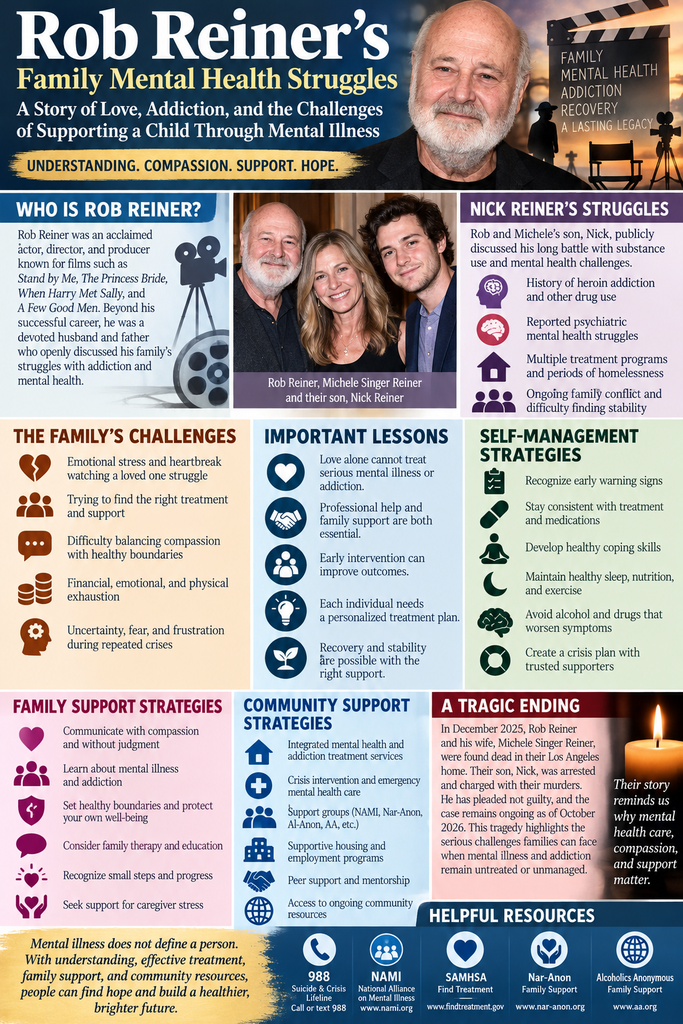
Mental illness and substance use disorders can affect families regardless of their wealth, fame, or access to resources. For acclaimed Hollywood director and actor Rob Reiner, family life included the difficult experience of supporting a son struggling with addiction and reported mental health challenges.
Rob Reiner and his wife, Michele Singer Reiner, spent years trying to help their son, Nick Reiner, navigate substance use problems and repeated treatment experiences. Their journey reflected the emotional exhaustion, uncertainty, hope, and frustration that many families encounter when a loved one experiences addiction or mental illness.
Their story took a devastating turn in December 2025, when Rob and Michele were found dead in their Los Angeles home. Their son Nick was subsequently charged with their murders. As of October 2026, he has pleaded not guilty, and the criminal proceedings remain unresolved.
The Reiner family’s tragedy has renewed conversations about mental healthcare, addiction treatment, family caregiving, and the importance of early intervention.
Their experiences also highlight a critical distinction: mental illness does not automatically lead to violence, and most individuals living with psychiatric conditions are not violent.
Who Was Rob Reiner?
Rob Reiner (1947–2025) was an American actor, filmmaker, producer, and advocate known for directing several celebrated films, including Stand by Me, The Princess Bride, When Harry Met Sally, and A Few Good Men.
He was the son of legendary comedian Carl Reiner and established a successful entertainment career spanning decades.
Behind his professional accomplishments, however, Rob faced significant personal challenges as a father trying to help a child experiencing addiction.
His son Nick publicly discussed struggling with substance use beginning in adolescence, including heroin addiction, repeated rehabilitation experiences, and periods of homelessness.
Rob and Michele sought professional assistance and explored different treatment approaches while attempting to protect their son’s well-being.
Their experience demonstrates that financial resources and professional connections cannot guarantee successful treatment or eliminate the challenges associated with severe behavioral health conditions.
Nick Reiner’s Struggles With Addiction and Mental Health
Nick Reiner’s history of substance use became publicly known through interviews and the family’s involvement in addiction-related filmmaking.
During his teenage years and early adulthood, he experienced significant problems with drugs and underwent multiple treatment episodes.
Publicly reported challenges included:
- Substance use disorder: A history of heroin addiction and other drug-related difficulties.
- Repeated rehabilitation: Multiple attempts to address substance use through treatment programs.
- Periods of homelessness: Housing instability during his struggles with addiction.
- Family conflict: Disagreements about treatment decisions and personal independence.
- Mental health concerns: Reports of psychiatric difficulties, including reported treatment for schizophrenia.
- Emotional distress: Challenges involving identity, family expectations, and relationships.
Reports concerning Nick’s psychiatric history should be interpreted carefully. His complete medical records are private, and the available public information does not establish the precise role, if any, of psychiatric symptoms or substance use in the deaths of his parents.
Understanding Co-Occurring Disorders
When an individual experiences both a mental health condition and a substance use disorder, healthcare professionals describe this as co-occurring disorders or a dual diagnosis.
These conditions can interact in ways that complicate treatment.
For example:
- Substance use may worsen psychiatric symptoms.
- Untreated psychiatric symptoms may interfere with addiction recovery.
- Drug use can complicate psychiatric assessment.
- Medication adherence may become more difficult during periods of instability.
- Repeated crises can disrupt housing, employment, and family relationships.
Integrated treatment that addresses both conditions is generally preferable to treating them as unrelated problems.
Rob Reiner’s Experience as a Father Seeking Help
One of the most revealing aspects of Rob Reiner’s journey was his willingness to discuss the mistakes and uncertainties he experienced while helping Nick.
In interviews surrounding the 2015 film Being Charlie, Rob described relying heavily on treatment professionals while struggling to understand his son’s needs.
He later reflected that he wished he had listened more carefully to Nick’s perspective during treatment decisions.
The experience helped him recognize that professional expertise and family knowledge should complement one another rather than compete.
The Emotional Challenges Families Face
Parents supporting children with addiction or serious mental illness may experience:
- Persistent anxiety about their child’s safety.
- Guilt over past parenting decisions.
- Frustration when treatment does not produce lasting improvement.
- Fear of overdose, relapse, or psychiatric hospitalization.
- Financial and emotional exhaustion.
- Difficulty establishing healthy boundaries.
- Conflict between respecting independence and protecting safety.
These experiences can be particularly difficult when an adult child refuses assistance or does not recognize the need for treatment.
Families benefit from professional guidance that helps them balance compassion, autonomy, and safety.
Being Charlie: Turning Family Struggles Into Understanding
In 2015, Rob Reiner directed Being Charlie, a film co-written by Nick Reiner and Matt Elisofon.
The movie follows a young man experiencing addiction, family conflict, and repeated rehabilitation.
Although fictionalized, the story drew inspiration from Nick’s experiences and the family’s struggles.
The project allowed Rob and Nick to explore difficult subjects involving addiction, communication, independence, and the relationship between parents and children.
Rob described the filmmaking process as personally meaningful and therapeutic, helping him understand his son’s experiences from a different perspective.
Their collaboration illustrates how storytelling and open communication can sometimes help families discuss painful experiences.
However, creative expression should complement—not replace—appropriate psychiatric and addiction treatment.
The Tragic Deaths of Rob and Michele Reiner
On December 14, 2025, Rob Reiner and Michele Singer Reiner were found dead in their Brentwood home in Los Angeles.
Their son Nick was arrested and subsequently charged with two counts of first-degree murder.
In February 2026, Nick pleaded not guilty. In September 2026, prosecutors announced that they would not seek the death penalty. He continues to face the possibility of life imprisonment without parole if convicted.
The tragedy generated widespread discussion about the challenges of managing serious mental illness, substance use disorders, and family safety.
However, it is essential not to assume that psychiatric illness caused these deaths. The criminal case remains unresolved, and the relationship between Nick’s reported psychiatric history and the alleged acts has not been established.
Most individuals living with schizophrenia or other serious mental illnesses do not commit serious violence. Stigmatizing people with psychiatric conditions can discourage treatment and increase social isolation.
Self-Management Strategies for Individuals Experiencing Mental Illness and Addiction
Self-management involves developing skills to recognize symptoms, maintain treatment, and improve daily functioning.
The following strategies are general evidence-informed recommendations, not a description of Nick Reiner’s private treatment plan.
1. Recognizing Early Warning Signs
Individuals can learn to identify changes that may indicate worsening mental health or substance use.
Important warning signs include:
- Increasing anxiety, depression, or irritability.
- Changes in sleep patterns or appetite.
- Social withdrawal and isolation.
- Increasing substance cravings.
- Difficulty concentrating or functioning.
- Missing treatment appointments.
- Discontinuing prescribed medications without medical guidance.
- New or worsening hallucinations, paranoia, or disorganized thinking.
Early recognition lets treatment providers adjust care before symptoms worsen.
2. Maintaining Consistent Treatment
Individuals experiencing co-occurring disorders often benefit from coordinated psychiatric and addiction care.
Strategies include:
- Attending scheduled medical and counseling appointments.
- Taking prescribed medications as directed.
- Discussing side effects or treatment concerns with clinicians.
- Participating in evidence-based psychotherapy.
- Addressing substance use and psychiatric symptoms together.
- Creating a crisis plan with trusted supporters.
- Considering assertive community treatment or intensive case management when appropriate.
3. Developing Healthy Coping Mechanisms
Stress and emotional discomfort can contribute to psychiatric instability or substance use.
Helpful coping strategies include:
- Practicing mindfulness and relaxation techniques.
- Maintaining regular sleep and physical activity.
- Developing structured daily routines.
- Participating in meaningful hobbies.
- Building supportive friendships.
- Avoiding alcohol and recreational drugs when they worsen symptoms.
- Seeking assistance when symptoms become difficult to manage.
4. Creating a Personalized Crisis Plan
A crisis plan can help individuals and families respond to worsening symptoms.
It should identify:
- Early signs of psychiatric deterioration.
- Emergency contacts and treatment providers.
- Current medications and relevant medical information.
- Preferred treatment facilities.
- Strategies that help reduce distress.
- Situations requiring emergency evaluation.
For individuals with serious mental illness, a psychiatric advance directive may also help communicate treatment preferences during periods when decision-making becomes impaired.
Family Support Strategies: Lessons From the Reiner Family
The Reiner family’s experience highlights the importance of communication, collaboration, and professional guidance.
Family members often struggle to know when to intervene, set boundaries, and maintain relationships during periods of instability.
1. Practicing Compassionate Communication
Families can support loved ones by:
- Listening without immediately criticizing or arguing.
- Acknowledging emotional distress.
- Avoiding shame-based language.
- Encouraging honest discussions about treatment.
- Respecting the person’s dignity and independence.
- Recognizing improvements without expecting immediate recovery.
2. Establishing Healthy Boundaries
Compassion does not require accepting unsafe or harmful behavior.
Families can:
- Establish expectations for respectful communication.
- Avoid providing money that directly supports harmful substance use.
- Protect other household members from unsafe situations.
- Seek professional advice about housing and financial arrangements.
- Develop safety plans when threats or escalating behavior occur.
- Recognize that family members have a right to protect their own well-being.
3. Participating in Family Therapy
Family therapy can improve communication, address conflict, and help relatives understand psychiatric and substance use conditions.
Potential benefits include:
- Improving problem-solving skills.
- Reducing blame and misunderstandings.
- Learning effective responses to symptoms.
- Supporting treatment participation.
- Developing realistic expectations.
- Addressing caregiver stress.
For schizophrenia-spectrum disorders, structured family psychoeducation can be a valuable component of comprehensive treatment.
4. Recognizing Caregiver Burnout
Family caregivers may become emotionally exhausted after years of managing crises.
Signs include chronic stress, disrupted sleep, anxiety, irritability, isolation, and difficulty maintaining personal relationships.
Encourage caregivers to seek their own counseling, respite services, and peer support.
Supporting someone with serious mental illness should not require sacrificing the caregiver’s physical or emotional safety.
Community Support Strategies: Building Stronger Mental Health Systems
The Reiner family’s experiences also raise questions about the accessibility, continuity, and coordination of behavioral healthcare.
Even families with significant resources may struggle to navigate fragmented services.
1. Expanding Integrated Mental Health and Addiction Treatment
Communities should support programs that address psychiatric conditions and substance use disorders simultaneously.
Effective services may include:
- Coordinated psychiatric and addiction treatment.
- Medication management.
- Individual and group psychotherapy.
- Intensive outpatient treatment.
- Residential care when clinically indicated.
- Peer recovery support.
- Case management and follow-up services.
2. Improving Access to Crisis Intervention
Mental health crises require timely assessment and appropriate intervention.
Communities can strengthen crisis response through:
- Mobile crisis teams.
- Crisis stabilization centers.
- Emergency psychiatric evaluations.
- Trained behavioral health responders.
- Hospital-based psychiatric services.
- Coordinated follow-up after discharge.
When someone poses an immediate danger to themselves or others, contact emergency services.
3. Supporting Families Through Education
Family education programs can help relatives understand symptoms, treatment options, communication techniques, and crisis planning.
Organizations such as the National Alliance on Mental Illness (NAMI) offer education and family support resources.
4. Addressing Housing and Social Stability
Individuals with severe psychiatric or substance use disorders may experience unstable housing, unemployment, or social isolation.
Community programs can provide:
- Supportive housing.
- Vocational rehabilitation.
- Employment assistance.
- Peer mentorship.
- Transportation to appointments.
- Assistance navigating insurance and benefits.
- Social and recreational opportunities.
Stable housing and meaningful community connections can improve treatment engagement and quality of life.
The Importance of Early Intervention
One of the most important lessons for families is recognizing when mental health symptoms require professional assessment.
Early intervention may help reduce psychiatric deterioration, improve functioning, and prevent avoidable crises.
Families should seek prompt professional evaluation when a loved one experiences:
- New hallucinations or delusional beliefs.
- Significant changes in behavior or personality.
- Severe sleep disruption accompanied by agitation.
- Increasing substance use alongside psychiatric symptoms.
- Inability to meet basic needs.
- Suicidal statements or threats of harm.
- Escalating aggression or threatening behavior.
These warning signs require assessment, not assumptions about a diagnosis.
Lessons We Can Learn From Rob Reiner’s Family Journey
The Reiner family’s experiences provide several important lessons about mental illness, addiction, and caregiving.
1. Love alone cannot treat serious mental illness. Family support is valuable, but psychiatric disorders and substance use disorders often require specialized medical treatment.
2. Families need support, too. Parents, siblings, spouses, and caregivers may experience substantial emotional distress and deserve their own services.
3. Treatment should be individualized. Different people require different combinations of medication, psychotherapy, addiction treatment, and social support.
4. Communication matters. Listening to the individual’s experiences can improve collaboration and engagement in treatment.
5. Safety and compassion must coexist. Families can care deeply while setting boundaries and seeking emergency intervention when necessary.
6. Mental illness should not be equated with violence. Most individuals with psychiatric conditions are not violent, and public tragedies should not reinforce harmful stereotypes.
7. Recovery and stability remain possible. Many individuals living with serious mental illness and addiction improve with appropriate treatment and long-term support.
Conclusion: Understanding Mental Illness, Family Love, and the Need for Compassionate Care
Rob Reiner’s family journey illustrates the profound challenges that can arise when addiction, psychiatric difficulties, and family relationships intersect.
For years, Rob and Michele attempted to support their son through substance use problems and treatment experiences. Their story reflects the uncertainty and emotional demands familiar to many families caring for loved ones with complex behavioral health needs.
Their tragic deaths should not be used to portray individuals with mental illness as dangerous or to suggest that families inevitably face similar outcomes.
Instead, their experience provides an opportunity to discuss the importance of accessible psychiatric care, integrated addiction treatment, family education, crisis intervention, and caregiver support.
Self-management can help individuals recognize symptoms and participate in treatment. Family support can strengthen communication and emotional stability. Community resources can provide the professional services and continuity of care that families cannot supply alone.
The lasting lesson is that compassion, effective treatment, appropriate boundaries, and access to coordinated mental healthcare are all essential.
Families should never have to navigate serious mental illness and addiction without meaningful support.
Mental Health and Addiction Support Resources
- National Alliance on Mental Illness (NAMI) — Education, family support, and resources for serious mental illness.
- SAMHSA Find Help — Mental health and substance use treatment information.
- FindTreatment.gov — Locate mental health and addiction treatment services.
- 988 Suicide & Crisis Lifeline — Call or text 988 for mental health crisis support.
- Nar-Anon Family Groups — Support for families affected by another person’s drug use.
Frequently Asked Questions and Answers
Understanding Rob Reiner’s Family Journey
1. Who was Rob Reiner, and what mental health challenges affected his family?
Rob Reiner (1947–2025) was an American actor, filmmaker, and director known for movies such as Stand by Me, The Princess Bride, and When Harry Met Sally.
Beyond his successful Hollywood career, Reiner and his wife, Michele Singer Reiner, faced challenges involving their son Nick’s substance use disorder and reported mental health difficulties. Their family experiences brought attention to the emotional challenges of supporting a loved one through addiction and psychiatric treatment.
2. What mental health problems did Rob Reiner’s son Nick experience?
Nick Reiner publicly discussed his struggles with substance use, including heroin addiction, repeated rehabilitation experiences, and periods of homelessness. Media reports also described psychiatric difficulties, including reported treatment for schizophrenia.
However, his complete medical history is private. Public reporting does not establish every diagnosis, its severity, or how psychiatric symptoms may have affected his behavior.
3. When did Nick Reiner’s addiction struggles begin?
Nick’s substance use problems reportedly began during adolescence and continued into adulthood. He experienced multiple treatment episodes as his family attempted to help him achieve stability and recovery.
His experiences illustrate how substance use disorders beginning during adolescence can interfere with emotional development, education, relationships, and independent living.
4. How did Rob Reiner respond to his son’s addiction?
Rob and Michele sought professional treatment for Nick and supported him through multiple rehabilitation experiences.
Rob later discussed how difficult it was to balance parental responsibility with respecting his son’s perspective. He acknowledged that listening more carefully to Nick might have improved their communication during treatment decisions.
Their experience reflects the uncertainty many parents face when trying to help a child with complex behavioral health needs.
5. Did Nick Reiner receive treatment for his mental health and addiction problems?
Public accounts indicate that Nick participated in multiple addiction treatment programs and received psychiatric care.
The exact details of his treatment, medication history, and clinical outcomes are not fully public.
His experiences highlight the importance of coordinated care when mental illness and substance use disorders occur together.
6. What happened to Rob Reiner and his wife, Michele?
Rob Reiner and Michele Singer Reiner were found dead in their Los Angeles home on December 14, 2025.
Their son Nick was subsequently charged with their murders. He pleaded not guilty in February 2026. As of October 10, 2026, the criminal proceedings remain unresolved.
It is important to distinguish criminal allegations from proven facts and not assume that mental illness caused the alleged violence.
7. Did Nick Reiner’s reported mental illness cause the family tragedy?
There is no established public evidence demonstrating that a specific psychiatric diagnosis caused the deaths of Rob and Michele Reiner.
Mental illness should not automatically be associated with violence. Most people living with schizophrenia, depression, bipolar disorder, or other psychiatric conditions are not violent.
Understanding the circumstances of a criminal case requires verified evidence rather than assumptions based on a person’s reported mental health history.
8. What was the movie Being Charlie, and how was it connected to the Reiner family?
Being Charlie was a drama directed by Rob Reiner and co-written by Nick Reiner and Matt Elisofon.
The film explores addiction, rehabilitation, family conflict, and the relationship between a father and son. Although fictionalized, it drew inspiration from Nick’s experiences with substance use treatment.
9. Did working on Being Charlie help Rob and Nick understand each other?
Rob Reiner publicly described the filmmaking process as meaningful and therapeutic. Collaborating with Nick helped him better understand his son’s experiences and perspective on addiction treatment.
Their work showed how communication and shared activities can create opportunities for emotional understanding, though they cannot replace professional treatment.
Mental Illness and Addiction
10. What is the relationship between mental illness and substance use disorders?
Mental illness and substance use disorders can occur simultaneously. Healthcare professionals call this co-occurring disorders or dual diagnosis.
Substance use may worsen psychiatric symptoms, while untreated mental health problems may complicate addiction recovery.
Effective treatment often requires integrated care that addresses both conditions.
11. Can addiction make psychiatric symptoms worse?
Yes. Alcohol and drug use can worsen anxiety, depression, psychosis, sleep disturbances, and emotional instability.
Certain substances, including stimulants and high-potency cannabis, can also trigger or aggravate psychotic symptoms in vulnerable individuals.
However, not every person with a substance use disorder develops serious mental illness, and not every psychiatric condition is caused by substance use.
12. What are common warning signs of serious mental health problems?
Warning signs may include:
- Significant changes in mood or behavior.
- Persistent social withdrawal.
- Hallucinations or delusional beliefs.
- Severe sleep disturbances.
- Difficulty maintaining personal hygiene or daily responsibilities.
- Increasing substance use.
- Confusion or disorganized thinking.
- Statements about suicide or harming others.
These symptoms warrant professional evaluation, particularly when they represent a significant change from usual functioning.
13. Why can treating co-occurring mental illness and addiction be difficult?
Treatment may be complicated by psychiatric symptoms, substance cravings, medication side effects, limited insight, housing instability, and difficulty accessing coordinated services.
Repeated treatment episodes do not necessarily mean recovery is impossible. They may indicate a need to reassess diagnosis, treatment intensity, medication options, social support, and continuity of care.
Self-Management Strategies
14. What self-management strategies can help someone experiencing mental illness and addiction?
Self-management strategies can improve treatment participation and daily stability.
Helpful approaches include:
- Recognizing early warning signs of worsening symptoms.
- Taking prescribed medications as directed.
- Attending psychiatric and addiction treatment appointments.
- Maintaining consistent sleep and exercise routines.
- Avoiding substances that worsen psychiatric symptoms.
- Learning stress-management and emotional regulation techniques.
- Creating a relapse prevention and crisis response plan.
- Building relationships with trusted supporters.
These are general clinical recommendations, not a description of Nick Reiner’s private treatment practices.
15. How important is medication adherence for people with serious mental illness?
Medication adherence can be essential for individuals whose psychiatric conditions respond to pharmacological treatment.
For schizophrenia, antipsychotic medications can reduce psychotic symptoms and help prevent relapse. Long-acting injectable medications may be appropriate for some patients who have difficulty taking daily medication.
Treatment decisions should involve shared decision-making, side-effect monitoring, and regular follow-up with qualified clinicians.
16. Can individuals recover from both addiction and serious mental illness?
Yes. Many people living with co-occurring disorders experience meaningful improvements in symptoms, functioning, relationships, and quality of life.
Recovery may involve medication, psychotherapy, addiction treatment, stable housing, peer support, and ongoing medical care.
For some individuals, recovery focuses on managing chronic symptoms while maintaining independence and meaningful daily activities.
Family Support Strategies
17. How can parents support an adult child experiencing mental illness and addiction?
Parents can offer emotional support, encourage professional treatment, and respect appropriate boundaries.
Helpful strategies include:
- Listening without judgment.
- Learning about psychiatric and substance use conditions.
- Encouraging treatment participation.
- Avoiding arguments during periods of severe psychiatric distress.
- Establishing clear expectations for respectful behavior.
- Seeking family counseling and education.
- Developing crisis and safety plans.
- Obtaining support for their own emotional well-being.
Family members can offer encouragement, but they cannot independently control another person’s recovery.
18. What challenges do families face when a loved one repeatedly enters rehabilitation?
Repeated treatment experiences can create emotional exhaustion, financial strain, frustration, and uncertainty.
Families may question whether treatment is effective or whether they are making appropriate decisions.
A comprehensive reassessment can help identify untreated psychiatric symptoms, inappropriate treatment intensity, barriers to follow-up, or the need for additional community support.
19. How can families establish healthy boundaries without abandoning their loved ones?
Healthy boundaries protect relationships and personal safety.
Families can establish boundaries by communicating expectations, declining to finance harmful substance use, protecting other household members, and seeking professional guidance when behavior becomes unsafe.
Boundaries should be clear, realistic, and consistently maintained.
Compassion and accountability can exist together.
20. What should families do when a loved one refuses psychiatric treatment?
Families can begin by listening to the person’s concerns, offering choices, and encouraging a voluntary assessment.
They may benefit from family psychoeducation, motivational communication techniques, and consultation with mental health professionals.
When a person presents an imminent danger to themselves or others, emergency evaluation may be necessary. Involuntary treatment laws vary by jurisdiction and generally require specific legal criteria.
21. What is caregiver burnout, and how can families prevent it?
Caregiver burnout is physical and emotional exhaustion associated with prolonged caregiving demands.
Symptoms may include chronic stress, anxiety, disrupted sleep, irritability, isolation, and difficulty concentrating.
Families can reduce burnout by seeking counseling, joining peer support groups, sharing caregiving responsibilities, establishing boundaries, and using respite services when available.
22. Can family therapy help when addiction and mental illness occur together?
Yes. Family therapy and structured family psychoeducation can improve communication, strengthen problem-solving skills, and help relatives understand psychiatric symptoms and addiction.
For schizophrenia-spectrum disorders, family psychoeducation is an evidence-based component of comprehensive care.
Participation should fit the family’s circumstances and not compromise anyone’s safety.
Community Support and Crisis Intervention
23. What community resources can help families facing serious mental illness and addiction?
Community resources include:
- NAMI: Mental health education and family support.
- SAMHSA: Treatment information and referral resources.
- 988 Suicide & Crisis Lifeline: Immediate mental health crisis support.
- Assertive Community Treatment (ACT): Intensive multidisciplinary services for eligible individuals with serious mental illness.
- SMART Recovery and AA: Peer recovery support.
- Family counseling programs: Help with communication and coping.
- Supportive housing programs: Provide housing stability and support community integration.
24. When should families seek emergency mental health intervention?
Emergency intervention may be necessary when an individual:
- Threatens serious harm to themselves or others.
- Has made a suicide attempt.
- Displays escalating violence or credible threats.
- Experiences severe confusion or agitation that poses an immediate safety risk.
- Cannot meet essential needs because of severe psychiatric impairment.
- Has a suspected overdose or another life-threatening medical emergency.
In the United States, call 911 for immediate danger or a medical emergency. Call or text 988 for suicide-related or other mental health crisis support.
25. How can communities improve care for individuals with co-occurring disorders?
Communities can improve care by expanding integrated psychiatric and addiction services, increasing access to crisis stabilization programs, supporting affordable housing, and providing long-term case management.
Additional priorities include reducing stigma, strengthening family education, improving continuity after hospitalization, and making evidence-based treatment financially accessible.
Lessons and Legacy
26. Does wealth or celebrity status protect families from mental illness?
No. Mental illness and addiction affect individuals across socioeconomic backgrounds.
Financial resources may improve access to certain services, but they do not guarantee treatment success, sustained recovery, or freedom from family stress.
The Reiner family’s experiences demonstrate that behavioral health challenges can affect families regardless of professional success or public recognition.
27. What lessons can parents learn from Rob Reiner’s experiences?
Rob Reiner’s public reflections emphasize the importance of listening to a loved one’s perspective and staying involved in treatment decisions, without assuming one approach works for everyone.
Parents can learn the value of compassionate communication, coordinated professional care, healthy boundaries, and support for their own well-being.
28. How can society reduce the stigma surrounding mental illness and addiction?
Reducing stigma requires education, respectful language, and accurate information.
Communities can help by:
- Recognizing mental illness and addiction as health conditions.
- Avoiding stereotypes that equate psychiatric diagnoses with violence.
- Encouraging early assessment and treatment.
- Supporting individuals and families without judgment.
- Promoting recovery stories alongside realistic discussions of challenges.
- Improving access to effective mental healthcare.
29. What is the most important message from the Reiner family’s experiences?
The Reiner family’s story highlights how difficult it can be to navigate addiction, psychiatric treatment, and complicated family relationships.
Their tragedy should not be viewed as an inevitable outcome of mental illness.
Instead, it reinforces the importance of accessible treatment, family support, individualized care, crisis planning, and respect for everyone’s safety and dignity.
30. Can families maintain hope when a loved one experiences severe mental illness and addiction?
Yes. Many individuals living with serious mental illness and substance use disorders achieve improved stability and meaningful recovery.
Hope should be combined with realistic expectations, evidence-based treatment, professional guidance, and appropriate safety planning.
Families deserve compassion and support throughout the process, regardless of their loved one’s treatment decisions or outcomes.
Video: