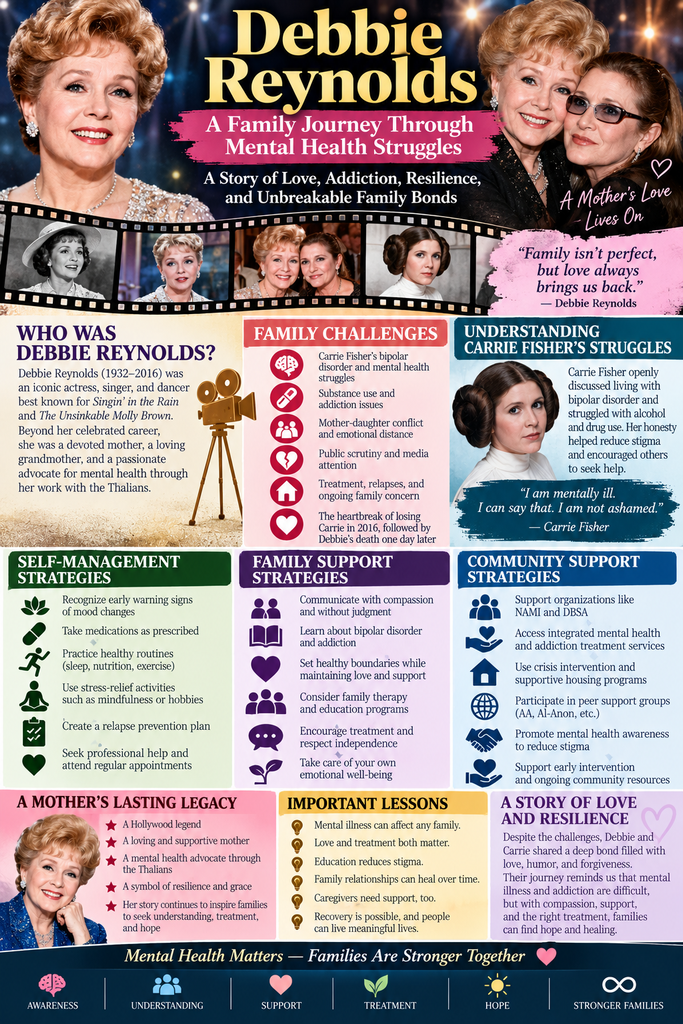
Behind the glamour of Hollywood, many celebrities face deeply personal struggles involving mental illness, addiction, family relationships, and emotional loss. Legendary actress Debbie Reynolds experienced these challenges throughout her life, particularly while supporting her daughter, Carrie Fisher, who lived with bipolar disorder and struggled with substance use.
Although Debbie Reynolds was celebrated for her talent, resilience, and unforgettable performances, her role as a mother presented emotional challenges that fame and financial success could not eliminate. Her family journey included psychiatric illness, addiction, difficult relationships, public scrutiny, and devastating grief.
Reynolds’s experiences highlight the complicated emotions families may encounter when supporting loved ones with mental health conditions. Her story also demonstrates the importance of self-management, family understanding, professional treatment, and community support in promoting recovery and emotional well-being.
Who Was Debbie Reynolds?
Debbie Reynolds (1932–2016) was an American actress, singer, dancer, and entertainer whose career spanned nearly seven decades.
She rose to fame in the 1952 musical Singin’ in the Rain and later received an Academy Award nomination for her performance in The Unsinkable Molly Brown.
Beyond her professional accomplishments, Reynolds was the mother of two children, Carrie Fisher and Todd Fisher, from her marriage to singer Eddie Fisher.
Her daughter Carrie became internationally recognized for portraying Princess Leia in the Star Wars franchise.
Despite their successful entertainment careers, the family experienced significant personal challenges involving mental illness, substance use, financial difficulties, and complicated family relationships.
Reynolds remained deeply connected to her children throughout her life, even during periods of disagreement and emotional distance.
Carrie Fisher’s Mental Health and Addiction Struggles
Carrie Fisher publicly discussed living with bipolar disorder and experiencing substance use disorders.
Bipolar disorder is a psychiatric condition characterized by episodes of depression and mania or hypomania that can significantly affect mood, energy, judgment, sleep, and daily functioning.
Fisher also described struggling with alcohol and drug use, including cocaine and prescription medications, during different periods of her life.
Her openness helped challenge stigma surrounding psychiatric illness and addiction.
Challenges That Affected the Family
- Bipolar disorder: Carrie experienced significant mood episodes requiring psychiatric care.
- Substance use: Drug and alcohol problems complicated her emotional and physical health.
- Treatment challenges: Managing psychiatric symptoms and substance use required ongoing professional support.
- Family tension: Debbie and Carrie experienced periods of conflict and emotional distance.
- Public scrutiny: Their celebrity status exposed personal struggles to widespread attention.
- Caregiver concerns: Debbie faced the emotional challenges of supporting a daughter with complex behavioral health needs.
Although Carrie was open about her diagnoses, it is important not to assume that every family disagreement or difficult experience resulted from bipolar disorder.
Many factors shape family relationships, including personalities, communication styles, expectations, and past experiences.
The Complicated Mother-Daughter Relationship
Debbie Reynolds and Carrie Fisher shared a relationship characterized by affection, humor, conflict, and eventual reconciliation.
Carrie sometimes struggled with the pressures of growing up as the daughter of famous entertainers. She also explored the emotional complexities of her family relationships through writing and performance.
Her semi-autobiographical novel Postcards from the Edge examined addiction, recovery, and a complicated mother-daughter relationship. Its characters were fictionalized and should not be treated as exact portrayals of her family.
Over time, Debbie and Carrie grew closer.
Bright Lights: Starring Carrie Fisher and Debbie Reynolds is a documentary that explores their lives, personalities, and enduring bond.
The film showed their mother-daughter affection while acknowledging the complexities of aging, family history, and emotional connection.
Their experiences demonstrate that family relationships can evolve, even after years of misunderstandings.
The Emotional Challenges of Supporting a Loved One With Mental Illness
Families caring for individuals with serious psychiatric conditions often experience uncertainty, emotional exhaustion, and concerns about their loved one’s safety.
Debbie Reynolds’s experience as Carrie’s mother reflects challenges many caregivers face, though her private thoughts and specific coping practices are not always clear.
Common family challenges include:
- Fear of psychiatric relapse or hospitalization.
- Worry about medication adherence and treatment effectiveness.
- Anxiety about substance use and overdose.
- Difficulty understanding unpredictable changes in mood or behavior.
- Emotional fatigue from repeated crises.
- Balancing independence with the desire to protect a loved one.
- Maintaining healthy communication during stressful periods.
Family members may also experience guilt, frustration, helplessness, or grief.
These emotions do not mean that they lack compassion. They demonstrate why caregivers need education, emotional support, and opportunities to maintain their own well-being.
Self-Management Strategies: Protecting Emotional and Mental Well-Being
Debbie Reynolds was not publicly known to have bipolar disorder herself. However, her experience as a parent provides an opportunity to discuss self-management strategies for individuals supporting family members with psychiatric conditions.
Self-management involves recognizing personal stress, developing coping mechanisms, and maintaining physical and emotional health.
1. Recognizing Caregiver Stress
Parents may become so focused on their loved one’s condition that they neglect their own needs.
Helpful strategies include:
- Recognizing symptoms of anxiety, exhaustion, and emotional burnout.
- Acknowledging feelings of sadness, fear, or frustration.
- Establishing realistic expectations about recovery.
- Maintaining regular sleep, nutrition, and physical activity.
- Seeking individual counseling when stress becomes overwhelming.
2. Developing Healthy Emotional Coping Skills
Caregivers benefit from activities that reduce stress and encourage emotional stability.
Strategies include:
- Practicing mindfulness, meditation, or relaxation exercises.
- Maintaining hobbies and meaningful personal interests.
- Spending time with supportive friends.
- Keeping a journal to process difficult emotions.
- Participating in creative activities such as music, art, or writing.
- Allowing time for rest without guilt.
Reynolds maintained a demanding entertainment career and participated in charitable activities, but these were not necessarily prescribed coping strategies.
3. Encouraging Treatment Adherence
For individuals living with bipolar disorder, maintaining appropriate treatment is essential.
Self-management recommendations include:
- Taking prescribed medications consistently.
- Attending regular psychiatric appointments.
- Tracking changes in mood, sleep, and energy.
- Recognizing early warning signs of manic or depressive episodes.
- Avoiding alcohol and recreational drugs that may worsen symptoms.
- Maintaining predictable daily routines.
- Discussing medication side effects with healthcare professionals before making changes.
The National Institute of Mental Health emphasizes that bipolar disorder often requires long-term treatment involving medication, psychotherapy, and supportive lifestyle practices.
Family Support Strategies: Lessons From Debbie and Carrie’s Relationship
One of the most meaningful aspects of Debbie Reynolds’s family journey was how her relationship with Carrie Fisher evolved.
Despite periods of estrangement, they eventually developed a close relationship and lived near one another for many years.
Their experiences illustrate how family relationships can improve through understanding, acceptance, and continued communication.
1. Practicing Compassionate Communication
Families can strengthen relationships by communicating without judgment.
Helpful approaches include:
- Listening carefully to the individual’s concerns.
- Avoiding criticism about psychiatric symptoms.
- Using respectful, supportive language.
- Recognizing that mental illness does not define a person’s identity.
- Encouraging honest conversations about treatment.
- Respecting the individual’s independence and choices.
2. Understanding Bipolar Disorder
Education can help families distinguish psychiatric symptoms from ordinary disagreements or personality differences.
Bipolar disorder may involve:
- Manic episodes characterized by increased energy, decreased need for sleep, impulsivity, or unusually elevated or irritable mood.
- Depressive episodes involving sadness, loss of interest, fatigue, or hopelessness.
- Changes in concentration and decision-making.
- Periods of relatively stable mood between episodes.
- Increased vulnerability to substance use problems in some individuals.
Understanding these symptoms can help relatives respond appropriately and recognize when professional evaluation is necessary.
3. Establishing Healthy Boundaries
Supporting someone with mental illness does not mean accepting harmful behavior or abandoning personal needs.
Families can:
- Establish respectful communication expectations.
- Avoid assuming responsibility for every treatment decision.
- Encourage independence when appropriate.
- Seek professional help during serious psychiatric episodes.
- Maintain personal relationships and interests.
- Protect their own emotional and physical safety.
4. Participating in Family Therapy
Family-focused therapy can help individuals with bipolar disorder and their relatives improve communication and manage stress.
Potential benefits include:
- Reducing family conflict.
- Improving understanding of psychiatric symptoms.
- Developing strategies for recognizing relapse.
- Strengthening problem-solving skills.
- Supporting treatment participation.
- Improving emotional connections.
Family-focused therapy is among the evidence-based psychosocial approaches used alongside medication in bipolar disorder treatment.
Community Support Strategies: Debbie Reynolds’s Mental Health Advocacy
Debbie Reynolds’s contribution to mental health awareness extended beyond her family.
She was closely involved with the Thalians, a charitable organization founded in 1955 by entertainment industry figures to support mental health causes.
Reynolds became the organization’s president in 1957 and remained involved for decades.
Through fundraising and advocacy, the organization supported psychiatric services and mental health initiatives, including programs associated with Cedars-Sinai and UCLA.
Her advocacy showed that public figures can use their influence to raise awareness and improve access to mental healthcare.
1. Expanding Mental Health Education
Communities can reduce stigma by providing accurate information about psychiatric conditions.
Effective initiatives include:
- Public education campaigns about bipolar disorder.
- Mental health awareness programs in schools.
- Workshops for parents and caregivers.
- Training for healthcare professionals.
- Community discussions about addiction and psychiatric treatment.
- Programs encouraging early assessment and intervention.
2. Supporting Integrated Mental Health and Addiction Treatment
Individuals experiencing both bipolar disorder and substance use disorders often benefit from coordinated treatment.
Integrated services may include:
- Psychiatric medication management.
- Addiction counseling and treatment.
- Cognitive behavioral therapy.
- Family-focused therapy.
- Peer recovery support.
- Case management.
- Relapse prevention planning.
SAMHSA recommends integrated care for co-occurring mental health and substance use disorders because coordinated treatment can improve psychiatric symptoms, substance use outcomes, and quality of life.
3. Providing Family and Caregiver Support
Community organizations can help families understand mental illness while protecting their own emotional health.
Important resources include:
- National Alliance on Mental Illness (NAMI): Family education and support programs.
- Depression and Bipolar Support Alliance (DBSA): Peer support for individuals with mood disorders and their supporters.
- Al-Anon and Nar-Anon: Support for families affected by another person’s substance use.
- Community mental health centers: Psychiatric treatment and counseling.
- 988 Suicide & Crisis Lifeline: Crisis assistance and emotional support.
The Tragic Loss of Carrie Fisher and Debbie Reynolds
In December 2016, the Reynolds family experienced devastating losses.
Carrie Fisher suffered a medical emergency aboard a flight from London to Los Angeles on December 23, 2016.
She died on December 27 at age 60.
The following day, December 28, Debbie Reynolds suffered a stroke and died at age 84.
Todd Fisher publicly described his mother’s profound grief following Carrie’s death.
Their deaths occurring one day apart became a heartbreaking moment in Hollywood history.
Although grief can affect cardiovascular health, it would be medically inappropriate to conclude that emotional distress alone caused Reynolds’s stroke.
Understanding Grief and Emotional Trauma
Losing a loved one can cause profound emotional and physical stress.
Common grief reactions include:
- Intense sadness and emotional pain.
- Difficulty sleeping or concentrating.
- Changes in appetite.
- Feelings of loneliness or disbelief.
- Anxiety about the future.
- Fatigue and physical discomfort.
Grief is not automatically a psychiatric disorder. However, persistent or disabling symptoms may require professional assessment.
Supportive counseling, family relationships, and community resources can help individuals navigate bereavement.
Lessons We Can Learn From Debbie Reynolds’s Family Journey
Debbie Reynolds’s experiences offer important insights into mental illness, addiction, and family resilience.
1. Mental illness can affect any family. Fame, professional success, and financial resources do not eliminate the challenges associated with psychiatric conditions.
2. Love and professional treatment serve different purposes. Family affection provides emotional support, while evidence-based treatment addresses clinical symptoms.
3. Understanding reduces stigma. Learning about bipolar disorder can help families respond with compassion rather than blame.
4. Relationships can heal over time. Debbie and Carrie’s eventual reconciliation demonstrates that family connections can improve despite past conflicts.
5. Caregivers need support. Parents and relatives deserve emotional care, education, and opportunities to maintain their own well-being.
6. Mental health advocacy can create lasting change. Reynolds’s involvement with the Thalians helped fund psychiatric services.
7. Recovery and meaningful living are possible. Individuals with bipolar disorder and substance use disorders can pursue fulfilling lives with appropriate treatment and ongoing support.
Conclusion: Debbie Reynolds’s Legacy of Love, Resilience, and Mental Health Awareness
Debbie Reynolds’s life was filled with extraordinary professional achievements, but her family experiences revealed a more personal story involving mental illness, addiction, reconciliation, and grief.
Her relationship with Carrie Fisher demonstrated the emotional challenges of supporting a loved one with bipolar disorder and substance use difficulties. Despite periods of conflict, mother and daughter ultimately developed a close and affectionate relationship.
Reynolds also contributed to mental health awareness through decades of charitable involvement, helping raise support for psychiatric treatment and related services.
Her story reinforces three interconnected elements of mental health recovery: self-management, family understanding, and community support.
Self-management helps individuals recognize emotional challenges and maintain healthy routines. Family support encourages communication, acceptance, and participation in treatment. Community resources provide education, specialized care, and opportunities for long-term recovery.
Debbie Reynolds’s legacy reminds us that families don’t have to face mental illness alone.
With compassion, evidence-based treatment, healthy boundaries, and meaningful support, individuals and families can build stronger relationships and improve their quality of life.
The greatest lesson from Debbie Reynolds and Carrie Fisher’s journey is that mental illness may create challenges, but it does not eliminate the possibility of love, connection, dignity, and hope.
Frequently Asked Questions and Answers
Debbie Reynolds and Her Family’s Mental Health Journey
1. Who was Debbie Reynolds, and what mental health challenges affected her family?
Debbie Reynolds (1932–2016) was a legendary American actress, singer, and dancer best known for Singin’ in the Rain and The Unsinkable Molly Brown. Beyond her Hollywood success, she faced personal challenges involving her daughter, Carrie Fisher, who publicly discussed living with bipolar disorder and substance use disorders. Their family experienced periods of conflict, emotional distance, reconciliation, and profound grief.
2. What mental illness did Debbie Reynolds’ daughter Carrie Fisher have?
Carrie Fisher lived with bipolar disorder, a psychiatric condition characterized by episodes of depression and mania or hypomania. These mood episodes can affect energy, sleep, judgment, behavior, and daily functioning. Fisher openly discussed her diagnosis and treatment, helping reduce stigma surrounding mental illness.
3. Did Debbie Reynolds personally struggle with mental illness?
There is no widely established public documentation confirming that Debbie Reynolds had a diagnosed serious psychiatric disorder. Her publicly discussed mental health experiences largely involved supporting family members, managing stressful relationships, and coping with emotional challenges. Experiencing stress or grief does not automatically indicate a mental health disorder.
4. How did Carrie Fisher’s bipolar disorder affect her relationship with Debbie Reynolds?
Their relationship experienced periods of conflict, misunderstandings, and emotional distance. Carrie’s psychiatric symptoms and substance use were among the challenges affecting her life, although their relationship difficulties cannot be attributed entirely to mental illness. Over time, mother and daughter developed a closer relationship built on affection, humor, and mutual understanding.
5. Did Carrie Fisher struggle with drug and alcohol addiction?
Yes. Carrie Fisher publicly discussed difficulties with cocaine, prescription medications, and other substances. She underwent treatment and became an outspoken advocate for addiction recovery and mental health awareness. Her experiences demonstrated how substance use disorders and psychiatric conditions can occur together and complicate recovery.
6. What is the relationship between bipolar disorder and addiction?
Bipolar disorder and substance use disorders can occur simultaneously, a situation known as co-occurring disorders or dual diagnosis. Alcohol and drugs may worsen mood symptoms, disrupt sleep, interfere with treatment, and increase the likelihood of psychiatric instability. Integrated treatment addressing both conditions is often recommended.
7. Did Debbie Reynolds and Carrie Fisher experience periods of estrangement?
Yes. Mother and daughter experienced periods of emotional distance, particularly during Carrie’s younger adulthood. Their relationship gradually improved, and they became exceptionally close later in life. Their reconciliation demonstrated that strained family relationships can improve through communication, acceptance, and time.
8. How did Debbie Reynolds support Carrie Fisher through her mental health challenges?
Reynolds maintained a meaningful relationship with Carrie and remained an important presence in her life. Their bond evolved as they navigated personal differences and difficult experiences. Although their private treatment-related conversations are not fully documented, their later relationship reflected mutual affection and continued family connection.
9. What was Postcards from the Edge, and how did it relate to their family?
Postcards from the Edge was Carrie Fisher’s semi-autobiographical novel, later adapted into a 1990 film. It explored addiction, recovery, Hollywood pressures, and a complicated mother-daughter relationship. Although inspired partly by Fisher’s experiences, the fictional characters are not exact representations of Debbie Reynolds or Carrie Fisher.
10. What did the documentary Bright Lights reveal about Debbie Reynolds and Carrie Fisher?
Bright Lights: Starring Carrie Fisher and Debbie Reynolds explored their close relationship, personal histories, and experiences with aging and family life.
The documentary highlighted their humor, affection, occasional disagreements, and enduring emotional connection. It offered a personal view of two women who maintained a strong bond despite earlier difficulties.
Self-Management and Mental Health Recovery
11. What self-management strategies can help individuals living with bipolar disorder?
Self-management strategies include:
- Taking prescribed psychiatric medications consistently.
- Attending regular mental health appointments.
- Maintaining consistent sleep and daily routines.
- Tracking changes in mood and energy.
- Recognizing early warning signs of mania or depression.
- Avoiding alcohol and recreational drugs.
- Practicing stress-management techniques.
- Developing a personalized relapse prevention plan.
These strategies complement professional psychiatric treatment rather than replacing it.
12. Why is medication adherence important for bipolar disorder?
Medications such as mood stabilizers and certain atypical antipsychotics can help manage bipolar symptoms and reduce the risk of recurring mood episodes. Discontinuing medication without medical supervision may increase relapse risk. Individuals experiencing side effects should discuss alternatives or adjustments with their healthcare professionals.
13. Can individuals with bipolar disorder achieve long-term stability?
Yes. Many individuals living with bipolar disorder maintain meaningful relationships, successful careers, and fulfilling lives. Long-term stability often involves appropriate medication, psychotherapy, consistent routines, stress management, and supportive relationships. Treatment needs vary by individual.
14. What warning signs may indicate a worsening bipolar episode?
Warning signs can include:
- Decreased need for sleep.
- Unusually elevated energy or irritability.
- Racing thoughts or rapid speech.
- Impulsive spending or risky behavior.
- Persistent sadness or hopelessness.
- Social withdrawal.
- Loss of interest in usual activities.
- Thoughts of suicide or self-harm.
Early professional evaluation may prevent symptoms from worsening.
15. How can someone manage both bipolar disorder and substance use disorder?
Integrated treatment is generally recommended. This may include psychiatric medication management, addiction counseling, psychotherapy, relapse prevention planning, and peer support. Treatment should address the relationship between mood symptoms and substance use while considering the individual’s preferences and clinical needs.
Family Support Strategies
16. How can families support a loved one with bipolar disorder?
Families can provide meaningful support by:
- Learning about bipolar disorder.
- Listening without judgment.
- Encouraging treatment participation.
- Recognizing early warning signs of mood episodes.
- Supporting healthy sleep and daily routines.
- Establishing respectful boundaries.
- Participating in family-focused therapy.
- Seeking assistance during psychiatric crises.
Family involvement can improve understanding and treatment engagement when it respects the individual’s autonomy.
17. What can parents learn from Debbie Reynolds and Carrie Fisher’s relationship?
Their relationship illustrates the importance of patience, communication, forgiveness, and recognizing a loved one’s individuality. Although they experienced periods of conflict, they eventually developed a close relationship. Their experience reminds families that emotional connections can evolve and improve over time.
18. What is caregiver burnout, and how can families prevent it?
Caregiver burnout involves physical and emotional exhaustion associated with prolonged caregiving responsibilities. Symptoms may include anxiety, irritability, disrupted sleep, fatigue, and social withdrawal.
Families can reduce burnout through counseling, support groups, shared responsibilities, respite care, and healthy personal boundaries.
19. Should family members blame themselves for a loved one’s mental illness?
No. Psychiatric conditions such as bipolar disorder arise through complex biological, genetic, and environmental influences. They are not simply caused by poor parenting or family disagreements. Families can support recovery without assuming responsibility for causing the condition.
20. Can family therapy improve relationships affected by mental illness?
Yes. Family-focused therapy and psychoeducation can help relatives improve communication, manage conflict, recognize symptoms, and develop problem-solving skills. For bipolar disorder, family-focused therapy may be beneficial when combined with appropriate medical treatment.
21. How can families establish healthy boundaries while remaining supportive?
Healthy boundaries involve communicating expectations, respecting personal autonomy, and protecting emotional and physical well-being. Families can encourage treatment without attempting to control every decision. Support should be compassionate but should not require accepting unsafe or harmful behavior.
Community Support and Mental Health Advocacy
22. Was Debbie Reynolds involved in mental health advocacy?
Yes. Debbie Reynolds was closely involved with the Thalians, a charitable organization supporting mental health causes. She served as its president for many years and helped raise funds and awareness for psychiatric treatment and mental health services. Her advocacy extended beyond her personal family experiences.
23. What was the Thalians organization?
Members of the entertainment industry established the Thalians in 1955 to support mental health services. Through fundraising and charitable activities, it contributed to psychiatric care and related programs. Debbie Reynolds became one of its most recognizable advocates.
24. How can communities support families affected by bipolar disorder and addiction?
Communities can strengthen support through:
- Accessible psychiatric and addiction treatment.
- Family education and counseling programs.
- Mental health awareness campaigns.
- Peer support groups.
- Crisis intervention services.
- Supportive housing and employment assistance.
- Affordable healthcare and medication access.
- Programs that reduce stigma and discrimination.
25. What organizations provide support for individuals and families affected by bipolar disorder?
Several organizations offer educational and support resources, including the National Alliance on Mental Illness (NAMI), Depression and Bipolar Support Alliance (DBSA), National Institute of Mental Health (NIMH), and Substance Abuse and Mental Health Services Administration (SAMHSA).
These organizations provide information about treatment, support groups, crisis services, and family education.
Grief, Loss, and Family Resilience
26. When did Carrie Fisher and Debbie Reynolds die?
Carrie Fisher died on December 27, 2016, at age 60, following a medical emergency during an international flight.
Debbie Reynolds died the following day, December 28, 2016, at age 84, after suffering a stroke.
Their deaths occurring one day apart became a heartbreaking moment for their family and admirers.
27. Did Debbie Reynolds die from a broken heart?
Debbie Reynolds died following a stroke, not from a medically established diagnosis of broken heart syndrome.
Her son Todd Fisher publicly described her profound grief following Carrie’s death. Although severe emotional stress can affect cardiovascular health, it is not possible to conclude that grief alone caused her stroke.
28. How can families cope with the loss of a loved one experiencing mental illness or addiction?
Grief support strategies include:
- Allowing time to process difficult emotions.
- Seeking bereavement counseling when needed.
- Maintaining connections with supportive relatives and friends.
- Participating in grief support groups.
- Practicing healthy sleep, nutrition, and physical activity.
- Remembering the loved one’s life beyond their diagnosis.
- Seeking professional help if grief significantly interferes with daily functioning.
Grief is a natural response to loss, and there is no single correct timeline for healing.
29. What lessons can families learn from Debbie Reynolds’ personal experiences?
Her family’s journey highlights several important lessons:
- Mental illness can affect families from every background.
- Addiction and psychiatric disorders require appropriate professional treatment.
- Compassionate communication can strengthen relationships.
- Family conflict does not always prevent future reconciliation.
- Caregivers need emotional support and healthy boundaries.
- Community education can reduce stigma.
- Love and treatment serve complementary roles in recovery.
30. What is Debbie Reynolds’ lasting legacy in mental health awareness?
Debbie Reynolds is remembered not only for her entertainment career but also for her charitable contributions and enduring relationship with Carrie Fisher.
Her involvement with the Thalians supported mental health initiatives, while her family’s public experiences helped encourage conversations about bipolar disorder, addiction, caregiving, and emotional resilience.
Her legacy illustrates the importance of compassion, education, family connection, and community involvement.
Video: