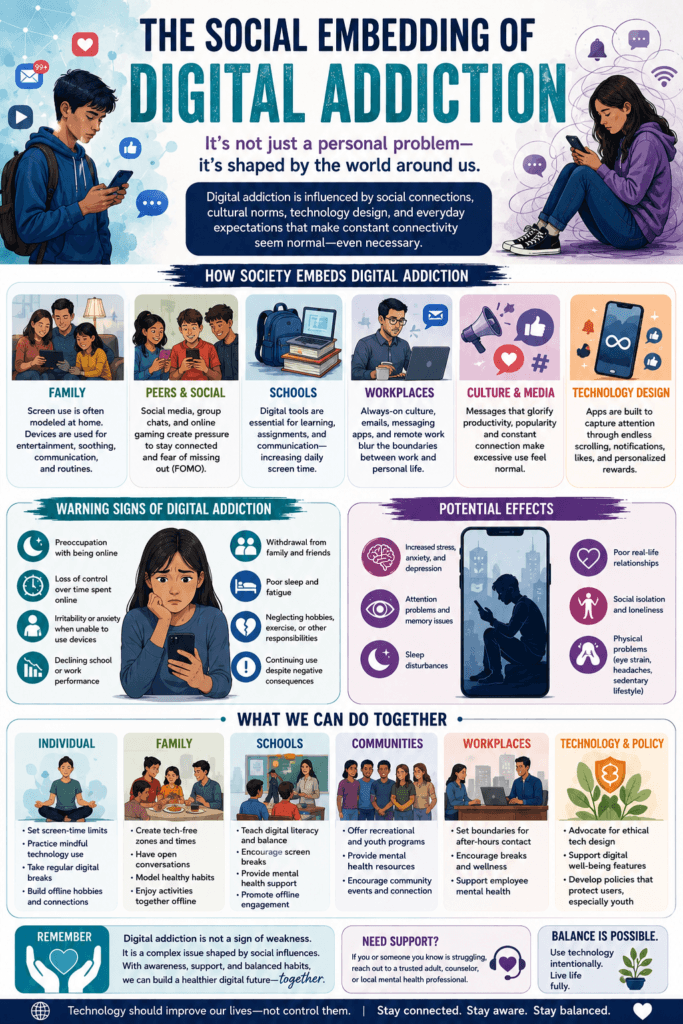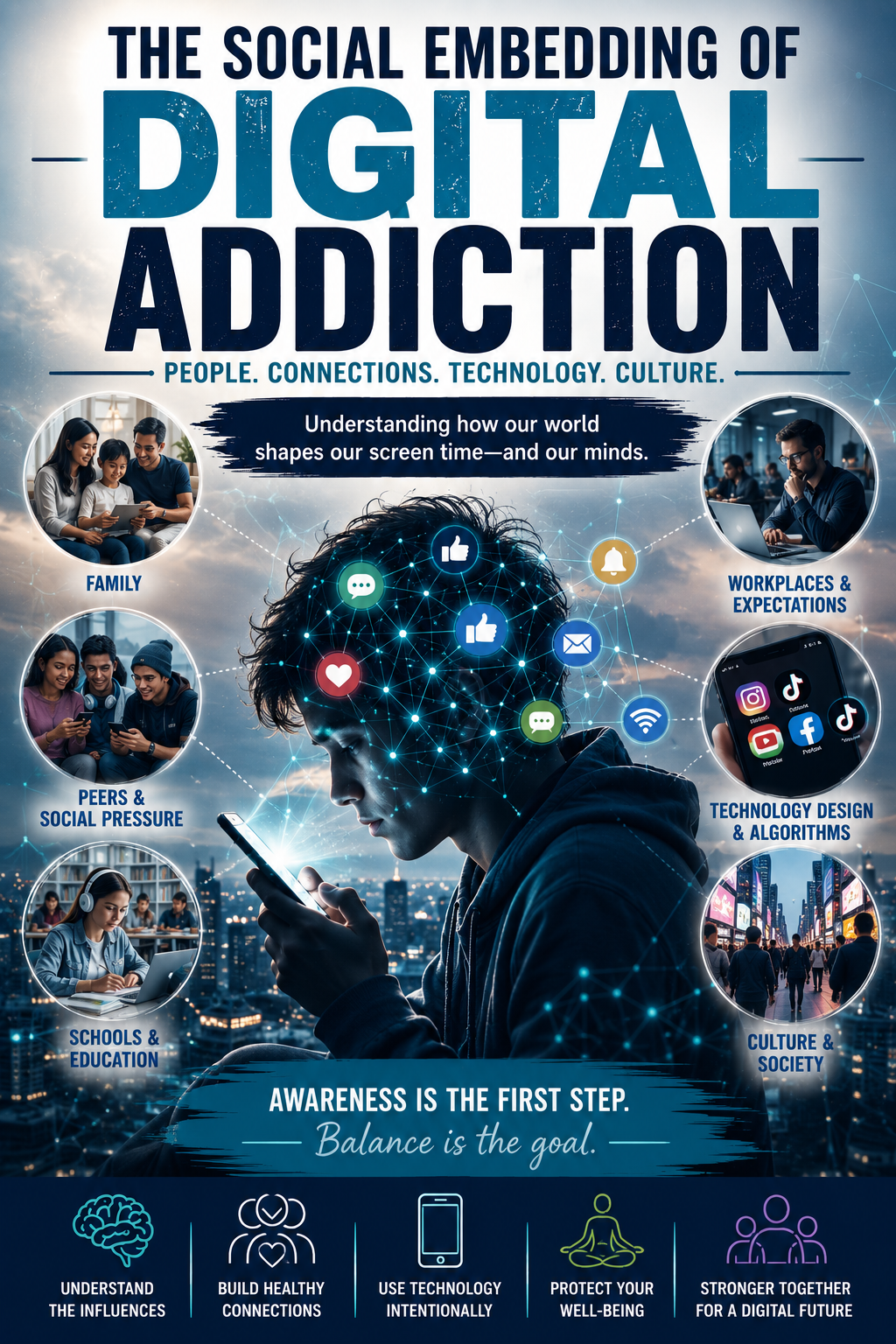
Digital technology has become an essential part of modern life, influencing how people communicate, learn, work, shop, and build relationships. Smartphones, social media, online gaming, streaming services, and digital platforms offer many benefits, but they have also raised concerns about excessive and compulsive technology use. The concept of the social embedding of digital addiction recognizes that problematic digital behaviors are shaped not only by individual choices but also by family dynamics, peer influences, educational demands, workplace expectations, cultural norms, and the design of digital technologies themselves. Understanding these broader social influences helps explain why digital addiction is a complex public health issue that requires balanced, evidence-based solutions involving individuals, families, communities, educators, healthcare professionals, employers, and technology developers.
Social Embedding of Digital Addiction
The social embedding of digital addiction refers to how excessive use of digital technologies—such as smartphones, social media, online gaming, video streaming, and internet platforms—is shaped and reinforced by social relationships, cultural norms, technology design, and everyday routines. Rather than viewing digital addiction solely as an individual’s lack of self-control, this perspective recognizes that digital behaviors are shaped by family, peers, schools, workplaces, communities, and the broader digital environment.
Researchers increasingly emphasize that digital addiction is not simply about screen time. Instead, it develops through an interaction of biological, psychological, social, and technological factors that make constant connectivity feel normal or even expected.
What Does “Social Embedding” Mean?
Social embedding refers to the way behaviors become integrated into everyday social life. Digital technology is deeply embedded in modern society because it is used for:
- Communication
- Education
- Employment
- Entertainment
- Shopping
- Healthcare
- Banking
- Navigation
- Social relationships
Because digital devices serve so many essential functions, distinguishing healthy use from problematic use can be challenging.
How Society Reinforces Digital Use
Modern society often encourages continuous digital engagement through:
Social Expectations
Many people feel pressure to:
- Respond immediately to messages
- Maintain an active social media presence
- Stay constantly available
- Follow online trends
- Participate in digital conversations
Fear of disappointing others or of missing important information can lead to excessive device use.
Workplace Demands
Many occupations require:
- Email monitoring
- Virtual meetings
- Remote work
- Instant messaging
- After-hours communication
The boundary between work and personal life has become increasingly blurred.
Educational Requirements
Students often rely on:
- Online learning platforms
- Digital assignments
- Virtual classrooms
- Educational apps
- Electronic textbooks
Extended screen time may therefore be unavoidable in many educational settings.
Technology Design
Digital platforms are intentionally designed to encourage continued engagement through features such as:
- Infinite scrolling
- Personalized recommendations
- Push notifications
- Variable reward schedules
- Autoplay videos
- “Likes,” comments, and social feedback
- Streaks and achievement systems in games
These features capitalize on the brain’s reward and attention systems, making it easier to remain engaged for longer than intended.
Psychological Factors
Digital addiction is also influenced by individual psychological characteristics, including:
- Anxiety
- Depression
- Loneliness
- Stress
- Low self-esteem
- Trauma
- Social anxiety
- Attention difficulties
- Impulsivity
For some individuals, digital activities become coping mechanisms for emotional distress.
Family Influence
Family environments strongly shape digital habits.
Healthy family practices include:
- Screen-free meals
- Technology-free bedrooms
- Shared recreational activities
- Open discussions about technology
- Parental role modeling
- Consistent screen-time expectations
Children often develop digital habits by observing how adults use technology.
Peer Influence
Peers influence technology use through:
- Group chats
- Social media interactions
- Online gaming communities
- Viral trends
- Fear of missing out (FOMO)
Adolescents and young adults may be especially sensitive to peer expectations surrounding digital engagement.
Cultural Influences
Different societies vary in:
- Acceptance of technology
- Work-life balance
- Educational expectations
- Social media popularity
- Gaming culture
- Family communication styles
These cultural differences influence how digital behaviors are viewed and managed.
Health Consequences
Problematic digital use may contribute to:
- Sleep disturbances
- Reduced physical activity
- Eye strain
- Neck and back pain
- Anxiety
- Depression
- Social isolation
- Academic difficulties
- Reduced work productivity
- Relationship conflict
The severity of these effects varies widely among individuals.
Prevention Strategies
Reducing the risk of digital addiction involves creating healthier digital habits rather than eliminating technology altogether.
Helpful strategies include:
- Setting screen-time limits
- Scheduling device-free periods
- Turning off nonessential notifications
- Prioritizing face-to-face relationships
- Maintaining regular physical activity
- Protecting sleep by avoiding screens before bedtime
- Practicing mindfulness
- Using technology intentionally rather than automatically
Community and Public Health Approaches
Communities can support healthier technology use by:
- Teaching digital literacy
- Providing mental health education
- Encouraging outdoor recreation
- Supporting youth activities
- Promoting workplace wellness
- Educating parents about healthy technology use
- Developing school policies that encourage balanced technology use
Future Research
Researchers continue to study:
- How social media algorithms influence behavior
- Brain changes associated with excessive digital use
- Effective prevention programs
- Digital wellness interventions
- Age-specific recommendations
- The long-term effects of artificial intelligence and immersive technologies
Conclusion
The social embedding of digital addiction highlights that excessive technology use is influenced by much more than individual choice. Modern digital environments, social expectations, workplace demands, educational systems, peer relationships, and technology design all contribute to patterns of excessive use. Understanding these broader influences allows healthcare professionals, families, educators, employers, and communities to move beyond blaming individuals and instead promote balanced, intentional technology use. By combining healthy personal habits with supportive family practices, responsible technology design, and community education, society can help individuals enjoy the benefits of digital technology while reducing the risk of problematic use and its impact on mental, physical, and social well-being.
Self-Management Strategies to Understand the Social Embedding of Digital Addiction
Self-management is an essential part of developing a healthy relationship with technology in today’s digital world. Because smartphones, social media, online gaming, streaming services, and digital communication are deeply embedded in everyday life, it is easy for technology use to become automatic or excessive. Understanding how social expectations, technology design, and personal habits influence digital behavior can help individuals make intentional choices that support their mental, physical, and emotional well-being.
1. Recognize How Technology Shapes Daily Habits
Become aware that digital platforms are designed to capture and maintain your attention. Features such as notifications, infinite scrolling, autoplay videos, personalized recommendations, and “likes” encourage prolonged engagement. Understanding these design features helps you make more conscious decisions about your screen time.
2. Monitor Your Screen Time
Use your smartphone or device’s built-in screen-time tracker to review how much time you spend on social media, gaming, streaming, or browsing. Identifying patterns can help you recognize which activities contribute most to excessive use.
3. Identify Personal Triggers
Pay attention to situations that increase your urge to use digital devices. Common triggers include:
- Stress
- Anxiety
- Loneliness
- Boredom
- Procrastination
- Social pressure
- Fear of missing out (FOMO)
- Difficulty sleeping
Keeping a journal can help identify emotional and environmental triggers.
4. Set Healthy Digital Boundaries
Create limits that support balance, such as:
- Designating screen-free meals
- Avoiding devices before bedtime
- Scheduling daily technology breaks
- Turning off unnecessary notifications
- Keeping phones out of the bedroom during sleep
These boundaries reduce automatic device use and improve overall well-being.
5. Practice Mindful Technology Use
Before picking up your device, ask yourself:
- Why am I using it?
- What do I hope to accomplish?
- Is this helping me or simply filling time?
Using technology with intention helps prevent mindless scrolling and excessive use.
6. Replace Screen Time with Meaningful Activities
Balance digital activities with offline experiences, such as:
- Reading
- Exercising
- Spending time outdoors
- Cooking
- Gardening
- Creative hobbies
- Volunteering
- Face-to-face conversations
- Practicing music or art
Developing enjoyable alternatives reduces dependence on digital entertainment.
7. Prioritize Healthy Sleep
Limit screen exposure for at least 30–60 minutes before bedtime. Blue light and stimulating online content can interfere with sleep quality. Establish a relaxing bedtime routine that supports healthy sleep habits.
8. Strengthen Real-Life Relationships
Spend regular time with family, friends, coworkers, and community members without digital distractions. Face-to-face interactions improve emotional well-being and reduce feelings of isolation that can contribute to excessive technology use.
9. Manage Stress in Healthy Ways
If you find yourself using technology primarily to escape stress or difficult emotions, practice healthier coping strategies such as:
- Deep breathing
- Meditation
- Mindfulness
- Journaling
- Physical activity
- Prayer or spiritual practices
- Talking with trusted friends or family
Developing multiple coping skills decreases reliance on digital devices for emotional relief.
10. Evaluate Social Media Influences
Be selective about the content you consume. Consider unfollowing accounts that increase stress, comparison, or negativity, and follow educational, supportive, or inspiring content that aligns with your values and goals.
11. Accept That Constant Connectivity Is Not Required
Many people feel pressure to respond immediately to messages or remain available at all times. Give yourself permission to disconnect periodically, delay responses when appropriate, and establish realistic expectations with friends, family, and coworkers.
12. Seek Professional Help When Needed
If digital use begins to interfere with your work, education, relationships, sleep, mental health, or daily responsibilities, consult a healthcare professional. A psychologist, counselor, or behavioral health specialist can help you develop healthier technology habits and address underlying concerns such as anxiety, depression, or attention difficulties.
Key Takeaway
The social embedding of digital addiction reminds us that excessive technology use is influenced not only by personal choices but also by social expectations, workplace demands, educational requirements, peer relationships, and the design of digital platforms. Self-management strategies such as monitoring screen time, setting healthy boundaries, practicing mindful technology use, strengthening offline relationships, managing stress, and seeking help when needed empower individuals to use technology intentionally rather than automatically. By creating a balanced relationship with digital devices, individuals can enjoy the benefits of technology while protecting their mental, physical, and social well-being.
Family Support Strategies to Understand the Social Embedding of Digital Addiction
Families play a vital role in helping one another develop healthy digital habits in a world where technology is deeply integrated into daily life. Smartphones, social media, online gaming, streaming platforms, and digital communication are valuable tools for learning, work, and staying connected, but they can also contribute to excessive or unhealthy use. Understanding the social embedding of digital addiction helps families recognize that technology use is shaped not only by individual choices but also by social expectations, peer influences, workplace demands, school requirements, and the design of digital platforms. By creating supportive home environments and modeling balanced technology use, families can reduce the risk of problematic digital behaviors.
1. Learn About Digital Addiction Together
Educate the entire family about how digital technology influences attention, emotions, and behavior. Understanding that notifications, endless scrolling, personalized content, and social media interactions are intentionally designed to encourage continued engagement helps everyone make more informed decisions about technology use.
2. Model Healthy Technology Habits
Children and adolescents often learn by observing adults. Parents and caregivers should demonstrate healthy digital behaviors by:
- Limiting unnecessary phone use.
- Avoiding constant multitasking with devices.
- Being fully present during conversations.
- Taking regular breaks from screens.
- Practicing balanced technology use themselves.
Positive role modeling is one of the most effective teaching tools.
3. Encourage Open Communication
Create a safe environment where family members can discuss:
- Social media experiences
- Online friendships
- Cyberbullying concerns
- Gaming habits
- Screen-time challenges
- Feelings of stress or fear of missing out (FOMO)
Open conversations help identify problems early and strengthen trust.
4. Establish Family Technology Guidelines
Develop household expectations that everyone follows, such as:
- Screen-free family meals
- Device-free bedrooms at night
- Technology-free family activities
- Agreed-upon recreational screen-time limits
- Respectful online behavior
Involving family members in creating these guidelines increases cooperation and accountability.
5. Encourage Face-to-Face Relationships
Plan regular opportunities for in-person connection through family dinners, outdoor activities, board games, hobbies, volunteering, or community events. Positive social interactions reduce dependence on digital devices for entertainment and social fulfillment.
6. Promote Healthy Coping Skills
Help family members develop ways to manage stress, boredom, anxiety, or loneliness without relying solely on technology. Encourage activities such as:
- Physical exercise
- Reading
- Music
- Creative arts
- Gardening
- Cooking together
- Mindfulness or relaxation exercises
- Spending time in nature
A variety of coping strategies support emotional well-being.
7. Support Healthy Sleep Habits
Encourage everyone in the household to avoid screens before bedtime and establish consistent sleep routines. Keeping electronic devices out of bedrooms at night can improve sleep quality and reduce late-night screen use.
8. Recognize Signs of Problematic Digital Use
Be aware of behaviors that may indicate unhealthy technology use, including:
- Declining school or work performance
- Withdrawal from family or friends
- Irritability when unable to use devices
- Loss of interest in offline activities
- Sleep disturbances
- Excessive gaming or social media use
- Difficulty limiting screen time despite negative consequences
Early recognition allows families to seek support before problems become more severe.
9. Avoid Shaming or Punishment
If digital use becomes excessive, avoid blaming or criticizing your loved one. Instead, approach the issue with curiosity, empathy, and a problem-solving mindset. Work together to identify underlying causes and develop realistic solutions rather than focusing solely on restricting device use.
10. Encourage Balanced Technology Use
Help family members understand that technology itself is not inherently harmful. Encourage the intentional use of digital tools for education, work, creativity, communication, and meaningful recreation, while maintaining balance with offline activities and relationships.
11. Seek Professional Help When Needed
If digital use begins to interfere with mental health, relationships, education, work, or daily functioning, encourage evaluation by a healthcare professional. Psychologists, counselors, and behavioral health specialists can help identify underlying concerns such as anxiety, depression, attention difficulties, or behavioral addictions.
12. Care for the Whole Family
Technology habits affect everyone in the household. Family members should regularly evaluate their own digital behaviors, maintain healthy boundaries, prioritize self-care, and support one another in developing balanced routines. A family-wide commitment to healthy technology use creates a stronger and more supportive environment.
Key Takeaway
The social embedding of digital addiction reminds us that technology use is influenced by family routines, peer relationships, school and workplace expectations, and the design of digital platforms—not simply individual willpower. Families can reduce the risk of problematic digital use by modeling healthy habits, encouraging open communication, establishing reasonable technology guidelines, promoting offline relationships, and supporting healthy coping skills. By fostering a balanced approach to technology, families help one another enjoy the benefits of digital tools while protecting mental, emotional, physical, and social well-being.
Community Resource Strategies to Understand the Social Embedding of Digital Addiction
The social embedding of digital addiction highlights that excessive technology use is influenced by more than individual choices. Schools, workplaces, families, healthcare systems, social networks, and technology platforms all shape how people interact with digital devices. Community resources are essential for promoting healthy digital habits, increasing awareness, providing education, and ensuring that individuals have access to support when technology use begins to negatively affect their health and daily functioning.
1. Expand Digital Wellness Education
Schools, libraries, public health departments, and community organizations can offer educational programs that teach healthy technology habits, digital literacy, responsible social media use, online safety, and strategies for maintaining a balanced relationship with technology. Education helps individuals recognize both the benefits and potential risks of excessive digital use.
2. Strengthen Mental Health Services
Community mental health centers, counselors, psychologists, and behavioral health providers can assess excessive technology use while also addressing underlying conditions such as anxiety, depression, attention-deficit/hyperactivity disorder (ADHD), trauma, or social anxiety. Treating these conditions often reduces problematic digital behaviors.
3. Support Schools in Promoting Healthy Technology Use
Schools can encourage balanced digital habits by:
- Teaching digital citizenship.
- Providing education on cyberbullying and online safety.
- Incorporating screen breaks during learning.
- Encouraging face-to-face collaboration.
- Offering extracurricular activities that reduce excessive recreational screen time.
These strategies help students develop healthy technology habits that extend beyond the classroom.
4. Encourage Workplace Digital Wellness Programs
Employers can support healthy technology use by promoting work-life balance, encouraging regular breaks from screens, establishing reasonable expectations for after-hours communication, and offering employee wellness programs that include stress management and mental health resources.
5. Increase Access to Recreation and Community Activities
Communities can provide opportunities that encourage offline engagement, such as:
- Parks and walking trails
- Recreation centers
- Youth sports
- Arts and music programs
- Volunteer opportunities
- Community gardens
- Book clubs
- Cultural events
Meaningful in-person activities reduce reliance on digital entertainment for social connection and recreation.
6. Promote Parent and Caregiver Education
Community workshops can help parents and caregivers understand healthy screen-time practices, age-appropriate technology use, online safety, and ways to model balanced digital behaviors at home. Informed caregivers are better equipped to guide children and adolescents through an increasingly digital world.
7. Develop Peer Support Networks
Youth organizations, community centers, and support groups can create safe environments where individuals discuss technology use, social media pressures, online gaming, and digital well-being. Peer support encourages accountability and reduces feelings of isolation.
8. Encourage Collaboration Among Professionals
Primary care providers, mental health professionals, educators, social workers, public health specialists, and community leaders should work together to identify individuals at risk for problematic digital use and coordinate comprehensive care. A multidisciplinary approach recognizes that digital addiction often involves emotional, social, educational, and environmental factors.
9. Promote Public Awareness Campaigns
Community education campaigns can increase understanding that excessive digital use is influenced by technology design, social expectations, and environmental factors—not simply a lack of willpower. Public awareness reduces stigma and encourages individuals to seek help when needed.
10. Advocate for Responsible Technology Design
Communities can support policies and encourage technology companies to develop features that promote digital well-being, such as:
- Screen-time monitoring tools
- Notification management options
- Time reminders
- Parental controls
- Privacy protections
- Features that encourage healthy breaks from prolonged use
These design features can help users make more intentional choices about their use of technology.
11. Expand Access to Professional Treatment
Individuals whose digital use significantly affects relationships, school, work, sleep, or mental health should have access to qualified healthcare providers. Communities can improve access by expanding behavioral health services, telehealth options, school counseling programs, and referral networks for technology-related behavioral concerns.
12. Foster a Culture of Balance
Community leaders, educators, healthcare professionals, faith organizations, and local businesses can work together to promote the message that technology is a valuable tool when used intentionally and in moderation. Encouraging healthy boundaries, regular physical activity, meaningful social connections, and adequate rest helps create environments where digital wellness is valued alongside technological innovation.
Key Takeaway
The social embedding of digital addiction demonstrates that technology use is shaped by families, schools, workplaces, peer relationships, community environments, and the design of digital platforms. Community resources play a critical role in promoting digital literacy, mental health, balanced technology habits, and access to evidence-based support. Through education, collaboration, recreation, public awareness, and compassionate care, communities can help individuals enjoy the many benefits of technology while reducing the risk of excessive use and protecting their mental, physical, and social well-being.
Frequently Asked Questions
Here are some common questions:
1. What is the social embedding of digital addiction?
The social embedding of digital addiction refers to the idea that excessive or compulsive technology use is influenced not only by personal choices but also by social relationships, cultural expectations, educational demands, workplace norms, family habits, peer influences, and the design of digital platforms. It emphasizes that digital behaviors develop within a broader social environment.
2. How is the social embedding of digital addiction different from digital addiction itself?
Digital addiction focuses on an individual’s problematic technology use, while social embedding examines the larger social and environmental factors that encourage or reinforce those behaviors. It recognizes that constant connectivity has become a normal expectation in many areas of modern life.
3. Why are digital technologies so difficult to put down?
Many digital platforms are intentionally designed to keep users engaged through features such as:
- Infinite scrolling
- Personalized recommendations
- Push notifications
- Autoplay videos
- “Likes” and comments
- Achievement badges and streaks
- Variable reward systems
These features encourage repeated use and make disengaging more difficult.
4. Can social media contribute to digital addiction?
Yes. Social media platforms may encourage excessive use by promoting continuous interaction, social comparison, fear of missing out (FOMO), and frequent notifications. For some individuals, these features can contribute to compulsive checking and prolonged screen time.
5. What role do families play in digital habits?
Families strongly influence technology use by:
- Modeling screen behaviors
- Establishing household technology rules
- Encouraging offline activities
- Promoting healthy communication
- Creating screen-free times and spaces
Healthy family routines can reduce the risk of problematic digital use.
6. How do peers influence digital addiction?
Friends and classmates often communicate through social media, messaging apps, and online gaming. Pressure to stay connected, respond quickly, or participate in online trends can increase screen time, especially among adolescents and young adults.
7. Can schools and workplaces contribute to excessive screen time?
Yes. Many schools and workplaces depend on digital platforms for communication, learning, assignments, meetings, and collaboration. While these tools improve efficiency, they may also increase daily screen exposure and blur the boundaries between work, school, and personal life.
8. What are the warning signs of problematic digital use?
Common signs include:
- Difficulty limiting screen time
- Anxiety or irritability when unable to access devices
- Declining work or academic performance
- Sleep disturbances
- Withdrawal from family or friends
- Loss of interest in offline activities
- Continuing excessive use despite negative consequences
Recognizing these signs early can help prevent more serious problems.
9. Can digital addiction affect mental health?
Yes. Excessive digital use has been associated with increased stress, anxiety, depression, loneliness, reduced attention, sleep problems, and lower overall well-being in some individuals. However, technology can also provide valuable social support, education, and access to mental health resources when used in balanced ways.
10. Does spending many hours online automatically mean someone has a digital addiction?
No. High screen time alone does not necessarily indicate addiction. The key concerns are whether technology use causes significant distress, loss of control, interference with daily responsibilities, or negative effects on relationships, health, or functioning.
11. How can someone develop healthier technology habits?
Helpful strategies include:
- Monitoring screen time
- Turning off unnecessary notifications
- Scheduling screen-free periods
- Limiting device use before bedtime
- Spending more time in face-to-face activities
- Exercising regularly
- Practicing mindfulness
- Developing offline hobbies
The goal is intentional, balanced use of technology rather than complete avoidance.
12. How can communities help reduce digital addiction?
Communities can:
- Provide digital wellness education
- Expand access to mental health services
- Offer recreational and social activities
- Promote digital literacy
- Educate parents and caregivers
- Encourage healthy workplace and school technology policies
- Increase awareness about responsible technology use
Community support creates healthier environments for everyone.
13. When should someone seek professional help?
Professional evaluation may be helpful if digital use:
- Interferes with school or work
- Damages relationships
- Causes significant anxiety or depression
- Disrupts sleep
- Feels impossible to control
- Replaces important daily activities or responsibilities
Mental health professionals can help identify underlying concerns and develop healthier coping strategies.
14. Can technology also have positive effects?
Absolutely. Technology provides many benefits, including:
- Access to education
- Communication with loved ones
- Telehealth and mental health services
- Professional collaboration
- Creativity and learning
- Community engagement
- Emergency communication
The goal is not to eliminate technology but to use it in ways that enhance rather than diminish well-being.
15. What is the most important message about the social embedding of digital addiction?
The social embedding of digital addiction reminds us that excessive technology use is shaped by a combination of personal, social, cultural, educational, workplace, and technological influences. Addressing digital addiction requires more than individual willpower—it calls for healthy family habits, supportive schools and workplaces, responsible technology design, accessible mental health resources, and community education. By promoting balanced and intentional technology use, individuals and communities can enjoy the benefits of digital innovation while protecting their mental, physical, and social well-being.
Conclusion
The social embedding of digital addiction reminds us that healthy technology use depends on more than personal self-control. Modern digital environments are designed to encourage frequent engagement, while social expectations often reinforce constant connectivity. Promoting digital wellness requires a comprehensive approach that includes education, healthy family routines, responsible technology use, supportive workplace and school policies, accessible mental health services, and strong community involvement. By recognizing the social, psychological, and environmental factors that contribute to excessive digital use, individuals and communities can develop practical strategies to foster balanced technology habits, strengthen real-world relationships, protect mental and physical health, and enjoy the benefits of digital innovation without becoming overwhelmed.
Video: Society Built the Perfect Addiction Machine #technology #darkside