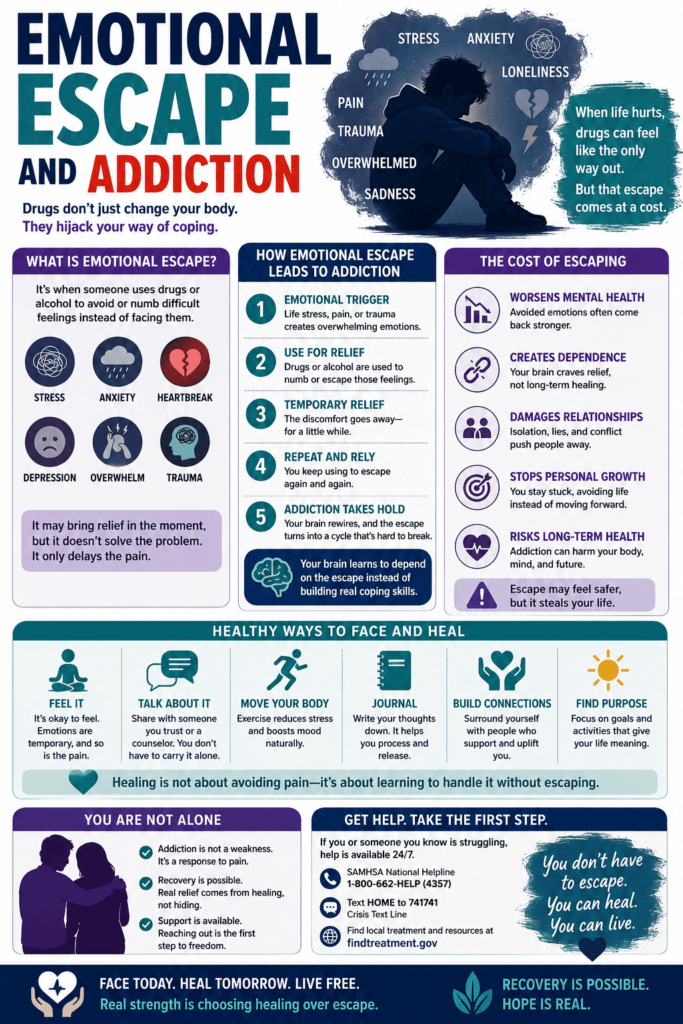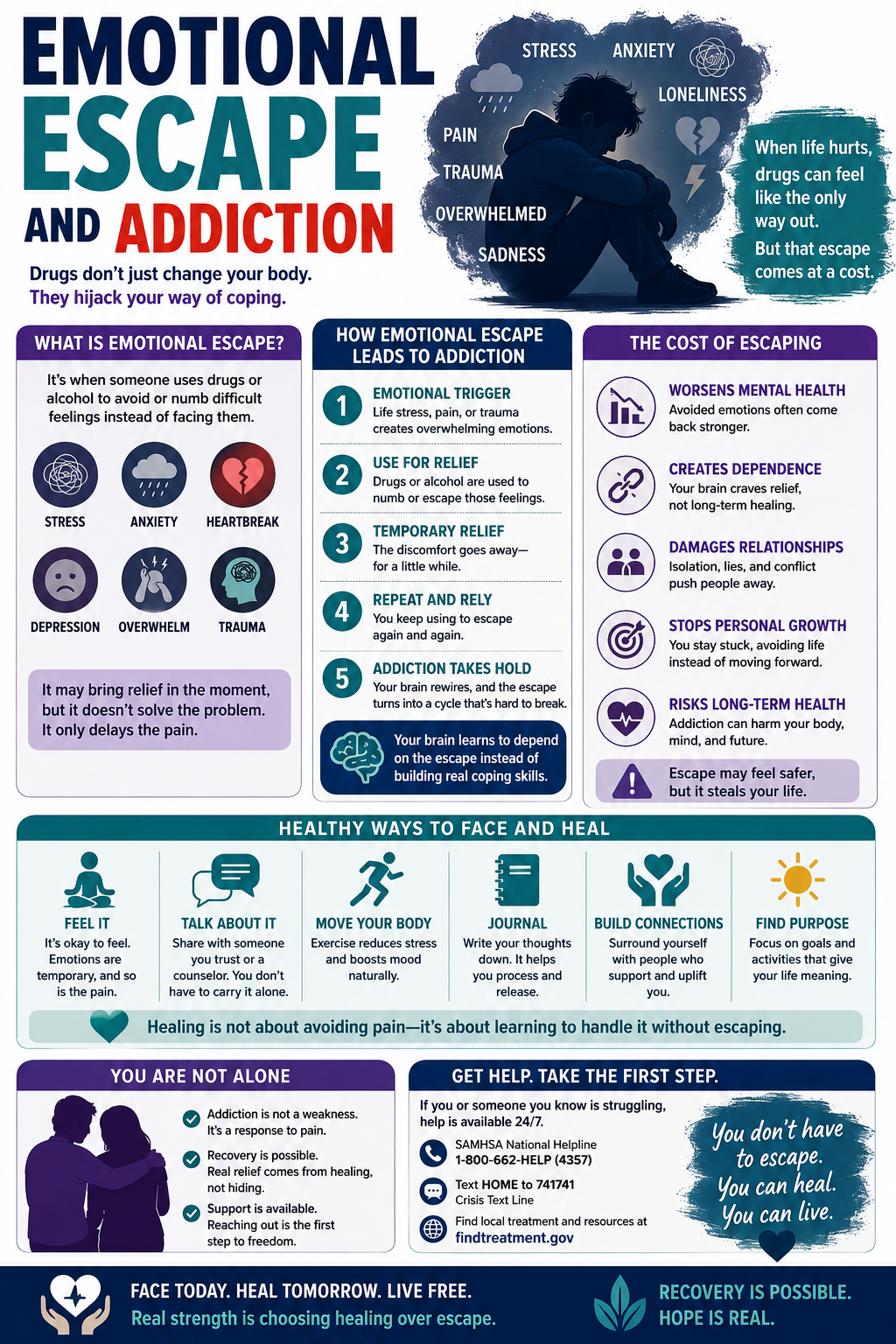
Many people picture addiction as simply a problem with substances, but for a lot of folks, it actually starts with searching for relief from uncomfortable feelings. Drugs often get used as a way to escape from stress, anxiety, sadness, or past pain. When the escape becomes the reason for using, that’s where addiction can quietly begin. Sharing some insights from my own experiences and plenty of research, this guide unpacks how emotional escape can spark addictive behavior, why it feels tempting, and what might help someone break the cycle.
How Emotional Pain Sets the Stage for Addiction
Almost everyone faces tough emotions sometimes. Maybe it’s dealing with heartbreak, losing a loved one, getting overwhelmed at work, or living with trauma. When those feelings get too heavy, the idea of a shortcut to relief can be seriously tempting. I’ve seen many people (and honestly, I’ve felt it myself) reach for something, whether that’s a drink, a pill, or even just zoning out on social media, to get a break from anxiety, sadness, or pressure.
This search for relief isn’t about weakness or bad character. Brains are wired to steer us away from pain and discomfort. Drugs and alcohol work fast at numbing those feelings, and that powerful sensation of quick comfort is what pulls people back to use them again. Over time, using a substance to escape becomes a learned way of coping. Eventually, that pattern can set the groundwork for addiction by making the act of escaping from feelings a default reaction.
Why Seeking Escape Feels So Strong
There’s some real brain science behind why escaping with drugs gets so sticky. Substances act on the brain’s reward system, boosting dopamine levels, a neurotransmitter associated with pleasure and relief. The result feels like a break from whatever’s hurting inside. That quick dose of feeling better links drug use with emotional relief, and soon enough, the brain starts treating the substance almost like a prescription for any bad mood.
This cycle can be sneaky. Maybe it starts as an occasional stress-buster, like a glass of wine after a tough day or a pill when things feel like too much. But if it turns into the only way to handle tough emotions, that’s when the risk of addiction grows. Instead of processing feelings, people start reaching for escape every time things get uncomfortable, and dependence starts to creep in. Over time, that dependency can make it much harder to face painful feelings directly or develop other coping strategies.
Early Warning Signs: When Numbing Becomes a Problem
Catching the switch from casual use to using as an escape isn’t always obvious. Here are a few signs I’ve noticed that can show when things might be heading in a risky direction:
- Using substances as the go-to coping tool: If drugs or alcohol become the first solution for stress, sadness, or anger, that’s a warning flag.
- Needing more to feel okay: Over time, it can take more of the substance to get the same level of escape or relief, and tolerance builds up quickly.
- Feeling anxious or upset without it: When not using, people might feel edgy, irritable, or even panicked.
- Starting to skip out on normal life stuff: Missing work, avoiding friends, or losing interest in hobbies can happen when substance use takes over your regular routines.
These signs can develop slowly, so it’s important to be honest with yourself or pay attention if friends point something out. Awareness is the first step toward making positive changes, and noticing these early signs gives you or a loved one a better shot at stepping off the path toward addiction.
Common Triggers for Emotional Escape
Everyone has their own stress points, but there are a few classic triggers I’ve seen come up over and over again that can make escaping into drugs feel almost irresistible. Recognizing these triggers is really important for anyone hoping to move away from addictive behaviors:
- Loneliness: Feeling isolated often drives people to look for comfort, and drugs can fill that gap temporarily.
- Unresolved trauma: Old wounds, like abuse, neglect, or major loss, can leave behind tough feelings that are hard to face head-on.
- High-pressure environments: Stress from work, school, or family drama pushes some to seek a break through substances.
- Mental health struggles: Anxiety, depression, or other mental health conditions sometimes lead folks to self-medicate.
For a lot of people, several triggers might pile up at the same time, making emotional escape feel like the only option. It’s not unusual for these factors to overlap, which can make the pull of substances even stronger.
Better Ways to Cope with Emotional Pain
Finding healthier coping strategies makes a big difference when the urge to escape comes up. It isn’t always easy; old patterns have a way of sticking around, but it’s worth it. Personal experience has shown me that building a toolkit of safe, real-life ways to deal with feelings helps keep addictive patterns in check. Here are a few that really helped me and others I know:
- Talking it out: Sometimes just opening up to a friend, counselor, or support group can take some of the power out of tough feelings. Honest conversations can break down the walls that isolation builds up.
- Physical activity: Going for a walk, working out, or even dancing in your room can lift mood and help burn off stress. Exercise causes real chemical changes in the body that support emotional health.
- Creative outlets: Journaling, drawing, making music, or other creative hobbies offer a safe place to work through emotions. These activities put energy into something tangible and often provide a sense of accomplishment.
- Mindfulness and breathing: Techniques such as meditation, deep breathing, or simply being present in the moment can help settle the mind. Mindfulness helps you recognize cravings and emotions as they come up without automatically acting on them.
- Learning emotional skills: Therapy, self-help books, or online courses that teach you to identify and manage feelings can go a long way. Building these skills gives you more options besides escape.
Replacing drug use with positive coping tools isn’t always a quick change, but with practice and some support, it really does help. Try out different approaches to see which ones best fit your needs. Even small steps forward count as progress.
Why Honest Conversations Help Break the Cycle
Denial often comes with addiction; sometimes it’s easier to pretend things are fine than to admit struggling. Being honest, whether with yourself or someone else, is a big first step toward change. I’ve found that sharing your story with someone trustworthy can feel like a weight has been lifted, even if you’re worried it might sound weak. Most people in recovery say that finding one person to be real with was the start of things turning around.
If you’re reaching out to a loved one you think might be using drugs to escape, try to keep things supportive instead of judgmental. Simple, open-ended questions—like How have you been feeling lately?—and listening without a lot of advice can make a world of difference. Sometimes just knowing someone cares makes it easier to face hard truths.
Challenges and Misconceptions to Watch For
Addiction tied to emotional escape gets misunderstood a lot. People might say it’s just about willpower, or they might judge someone for using drugs to handle pain. But addiction has nothing to do with being lazy or weak; it’s about the way our brains and emotions work together when we look for relief.
- Misconception: “People who get addicted are weak.” Reality: Anyone can develop addiction if the need for escape feels overwhelming enough. Real strength is about seeking help and facing pain honestly.
- Misconception: “It’s only a problem if you use every day.” Reality: Even using occasionally, if it’s always for emotional relief, can put someone at risk.
- Misconception: “If I stop using, my problems will go away.” Reality: The underlying issues will still need attention, and learning new coping strategies can make the process much smoother.
It’s important to challenge these myths and see addiction for what it really is: a learned response to pain that can happen to anyone. Breaking down stigmas and misinformation makes it safer for people to reach out for help.
Helpful Resources For Support and Recovery
If you’re worried about your own patterns or someone else’s, you’re not alone—and it totally makes sense to get support. Here are some resources I always recommend:
- SAMHSA National Helpline (free, confidential help in the US)
- SMART Recovery (science-based group support)
- Local counseling centers or therapists trained in addiction and emotional wellness
- Trusted friends, family, or mentors who encourage open, honest dialogue
Using these supports can make a huge difference, even if it feels awkward at first. Each step counts, and nobody has to go it alone. You don’t need to have everything figured out before reaching out; sometimes asking for help is the bravest and best thing you can do.
Frequently Asked Questions
Here are some questions people ask me about addiction and emotional escape:
Question: How do I know if I’m using drugs to escape my feelings?
Answer: If drugs or alcohol are always your go-to when you’re upset, anxious, or bored, it may be a sign you’re using them mainly to handle tough emotions. Think about how you felt before, during, and after using.
Question: Can someone get addicted even if they don’t use every day?
Answer: Yes, addiction can develop even with less frequent use if it’s tied to a need for emotional escape. It’s about why and how you’re using, not just how often.
Question: What should I do if I notice these patterns in myself?
Answer: Reaching out to talk about what you’re feeling is a strong first step. You can connect with a counselor, support group, or someone you trust. There’s help and hope, no matter where you’re starting from.
Takeaway: Choosing Real Help Over Temporary Escape
I know how easy it is to want a break from the pain, but relying on drugs for that escape creates new struggles on top of the old ones. Facing tough emotions and finding healthier support is worth it, even if it feels hard at first. If you notice yourself reaching for substances to hide from feelings, it might be time to check in with yourself, and maybe someone else too. Recovery is possible, and the relief that comes with it is way more lasting than anything a substance can offer.
Video: Why escaping pain feels so good (until it doesn’t) #addiction #trauma #healing