Fentanyl overdoses have been rising sharply in recent years. I see a lot of confusion and worry around this topic, which makes sense considering how strong fentanyl is compared to other opioids. Even a very small amount can cause an overdose, and it’s super important to know what to do if you or someone else is at risk. In this guide, I’ll explain what you need to know to survive a fentanyl overdose, what steps to take if you think someone is overdosing, and some real-world tips about prevention and recovery.
Understanding Fentanyl and Overdose Risk
Fentanyl is a superpotent synthetic opioid, much stronger than heroin or oxycodone. It’s used in medical settings for severe pain, but illegally made fentanyl is what’s involved in most overdose deaths these days. A tiny bit, sometimes just a few grains, can be deadly. Because it’s often mixed into other street drugs, many people might not even know they’ve taken it.
Key facts about fentanyl overdose risk:
- Potency: Fentanyl’s so strong that a dose as small as 2 milligrams can cause an overdose.
- Onset: Signs of overdose can appear within minutes. Timing matters.
- Accidental exposure: People can be exposed through pills, powder, or even contaminated cocaine or meth.
Understanding the real risks helps people spot dangers and prepare for emergencies. For more details on overdose statistics, the CDC overdose data is worth checking out.
Recognizing the Signs of Overdose Quickly
Surviving a fentanyl overdose is all about acting fast. The first step is knowing the warning signs so you can act right away. Fentanyl works so quickly that every minute counts.
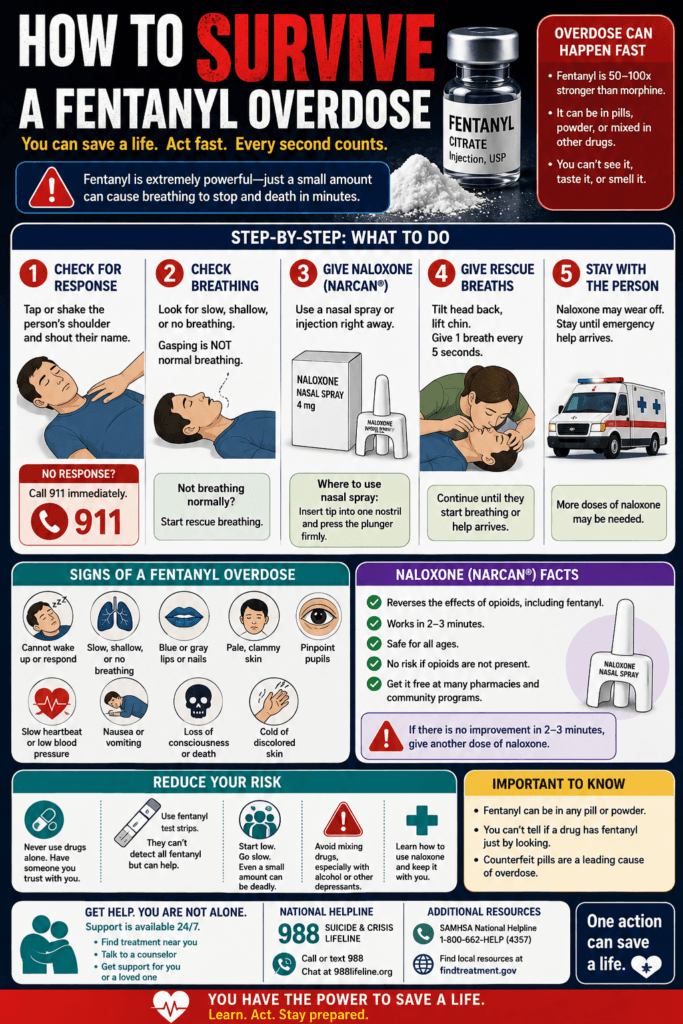
- Very slow or stopped breathing (the most dangerous symptom)
- Blue or gray lips, nails, or skin
- Unresponsive or can’t wake up
- Choking sounds, gurgling, or snoring noises
- Limp body and pinpoint pupils
- Cold, clammy, or pale skin
If you notice any of these, don’t wait. Even if you’re unsure, it’s better to act because opioid overdoses can turn deadly very quickly.
What To Do Step-by-Step in a Fentanyl Overdose
Reacting fast and following a few key steps can make all the difference. Here’s what I’d do if I thought someone was overdosing on fentanyl:
- Call Emergency Services (911): Always start by calling for professional help. Even if the person wakes up, medical supervision is still needed.
- Give Naloxone (Narcan): This opioid reversal medicine comes as a nasal spray or injection. Most harm reduction programs and pharmacies offer it without a prescription in many states. If you have naloxone, use it right away, and follow the instructions on the box.
- Try to wake them up: Shake their shoulders, shout their name, or rub your knuckles on their breastbone (this is a firm, unpleasant way to try to wake someone).
- Rescue breathing: If the person isn’t breathing normally, tilt their head back, pinch their nose, and give one breath every 5 seconds until emergency help arrives or they start breathing on their own.
- Keep them on their side: Place them in the recovery position to keep their airway clear and prevent choking if they vomit.
- Stay with them: Wait until professional help arrives, and be ready to give another dose of naloxone if they don’t respond within 2 or 3 minutes.
Quick access to naloxone is the single most helpful thing to have in these situations. Learn how to use it in advance. Many community centers and pharmacies offer free training. It’s definitely worth checking out if you or someone in your life is at risk.
Prevention and Safety Tips
Staying safe isn’t only about acting in emergencies. Avoiding overdose in the first place is just as important. Real prevention means practical steps you can actually use, not just warnings.
- Never use alone: If you’re using any drug that could contain fentanyl, make sure someone else is around, or use an app like Never Use Alone.
- Go low and slow: If you can’t avoid using, start with a very small test dose to check for unexpected strength.
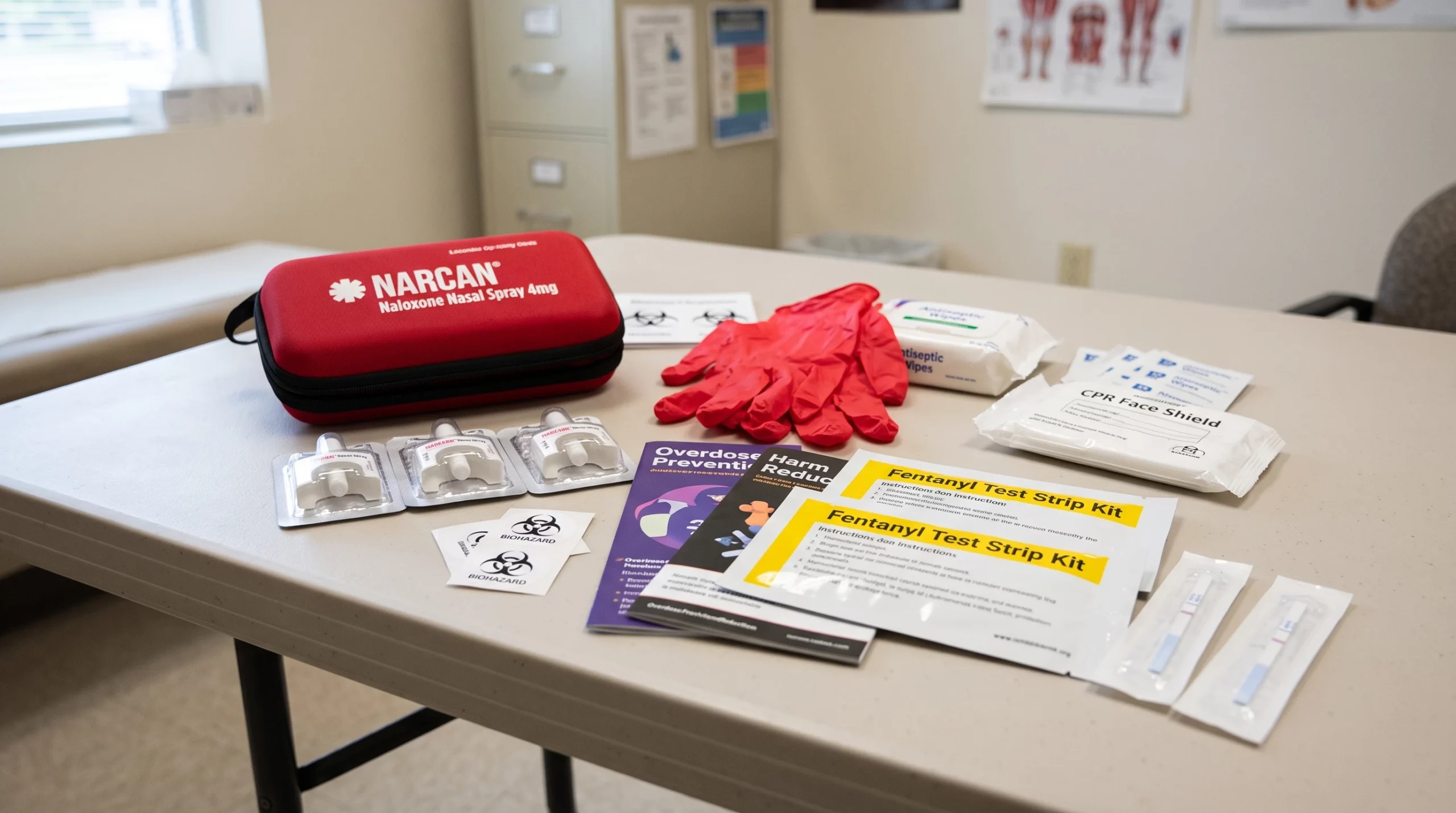
- Keep naloxone nearby: I always have a kit on hand at home, even if no one in my house is a regular opioid user. Guests or friends might need it someday.
- Use fentanyl test strips: These strips can show if your drugs contain fentanyl. Many harm reduction groups give them out for free.
- Have a plan: Talk to roommates, friends, or loved ones about what to do if someone overdoses. It sounds awkward, but it could save a life.
Common Challenges and How to Handle Them
Dealing with fentanyl risk brings up challenges that aren’t always obvious right away. Here are a few I’ve noticed come up pretty often, along with simple ways to address them:
- Getting Naloxone: Some states or areas have strict rules, but most places now have programs or standing orders at pharmacies. Try local harm reduction orgs if you run into roadblocks.
- Stigma: People sometimes avoid asking for help because they’re worried about judgment. Health pros and most first responders care about saving lives, not causing trouble. Reminding yourself or others of this can help cut through the shame.
- Fentanyl test strips confusion: Sometimes they’re confusing to use, or people forget about them. If you have questions, YouTube has practical short demos that explain the steps in real time.
- Access to healthcare: If you’re uninsured or worried about costs, many cities have free clinics or resources. Calling 211 or checking local health department websites often points to practical options.
Naloxone: How It Works
Naloxone (brand name Narcan) kicks opioids off brain receptors. It doesn’t harm someone who isn’t overdosing and can fully revive someone who might be close to death from an overdose. Side effects are usually mild, but it wears off in about 30 to 90 minutes, so emergency help is still needed since fentanyl can last longer.
Legal Protections: Good Samaritan Laws
Most U.S. states have Good Samaritan laws that protect people from certain drug charges if they call 911 for an overdose. That protection makes it a lot safer to get involved and help out. It’s always worth double-checking your local laws; look up your state at NCSL Good Samaritan Overview.
Extra Tips for Building a Safer Environment
Creating safer habits and sharing information are really important when fentanyl is in the mix. A few things I always recommend:
- Keep supplies accessible: Store naloxone somewhere everyone in your household or community space knows about.
- Practice overdose response: Run through a drill. Knowing what to do in advance helps everyone stay calm and effective if the real thing happens.
- Talk openly: Normalizing these conversations helps friends and families spot risks and respond quickly if needed.
- Support recovery: Access to mental health, addiction resources, or peer support groups can help reduce risk over the long term. SAMHSA’s helpline and FindTreatment.gov offer lots of options if you’re ready for change or want to help someone else get connected.
Frequently Asked Questions
There are a bunch of practical questions I hear all the time. Here are a few:
Question: How do I get naloxone?
Answer: Most pharmacies will sell or provide naloxone without a prescription; ask at the pharmacy counter. Community clinics and harm reduction centers often give it for free.
Question: Is it safe to give naloxone if I’m not sure it’s fentanyl?
Answer: Yes. Naloxone only affects opioids. If there’s no opioid, it won’t harm the person.
Question: Can I get in trouble for calling 911 during an overdose?
Answer: Good Samaritan laws protect people in most states. It’s usually safer to call than not to. For state-specific info, check NCSL’s resource.
Question: How long should I wait before giving a second dose of naloxone?
Answer: If there’s no response in 2 to 3 minutes, give a second dose and keep trying to wake them until help arrives.
Final Words
Knowing how to identify, respond to, and prevent fentanyl overdose can save lives. Having naloxone on hand, recognizing early warning signs, and creating plans with roommates or friends all help stack the odds in your favor. Everyone deserves a chance to recover, and quick action makes all the difference.
For further reading and training resources, check out CDC’s opioid overdose information and local harm reduction groups. Sharing this info could make you the person who saves a life one day.
Video: This Is What Fentanyl Does to Your Body #overdoseawareness