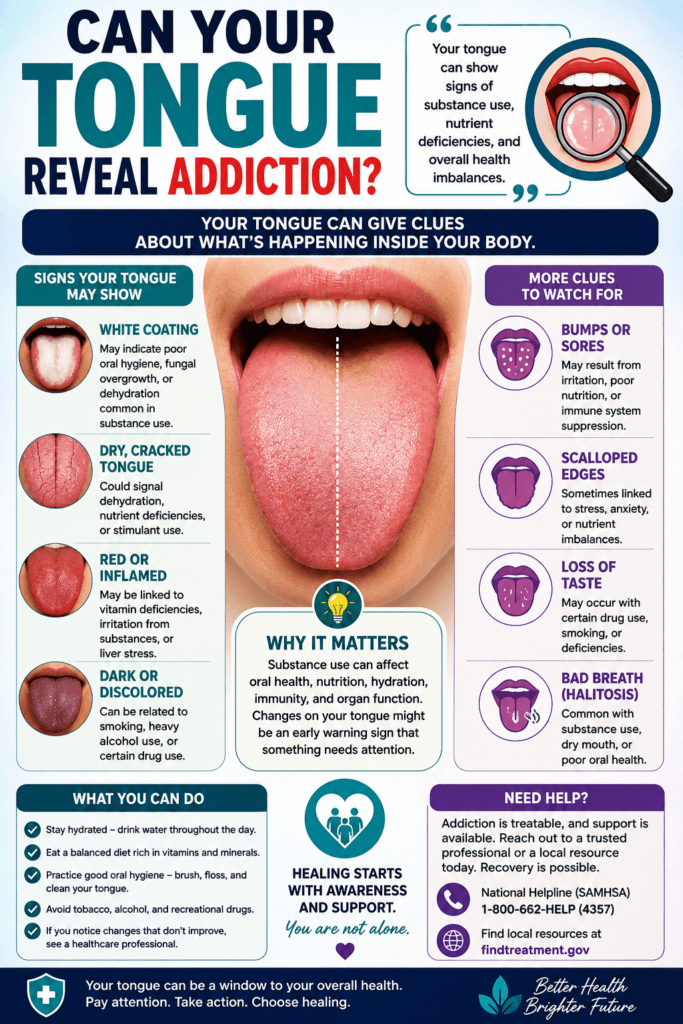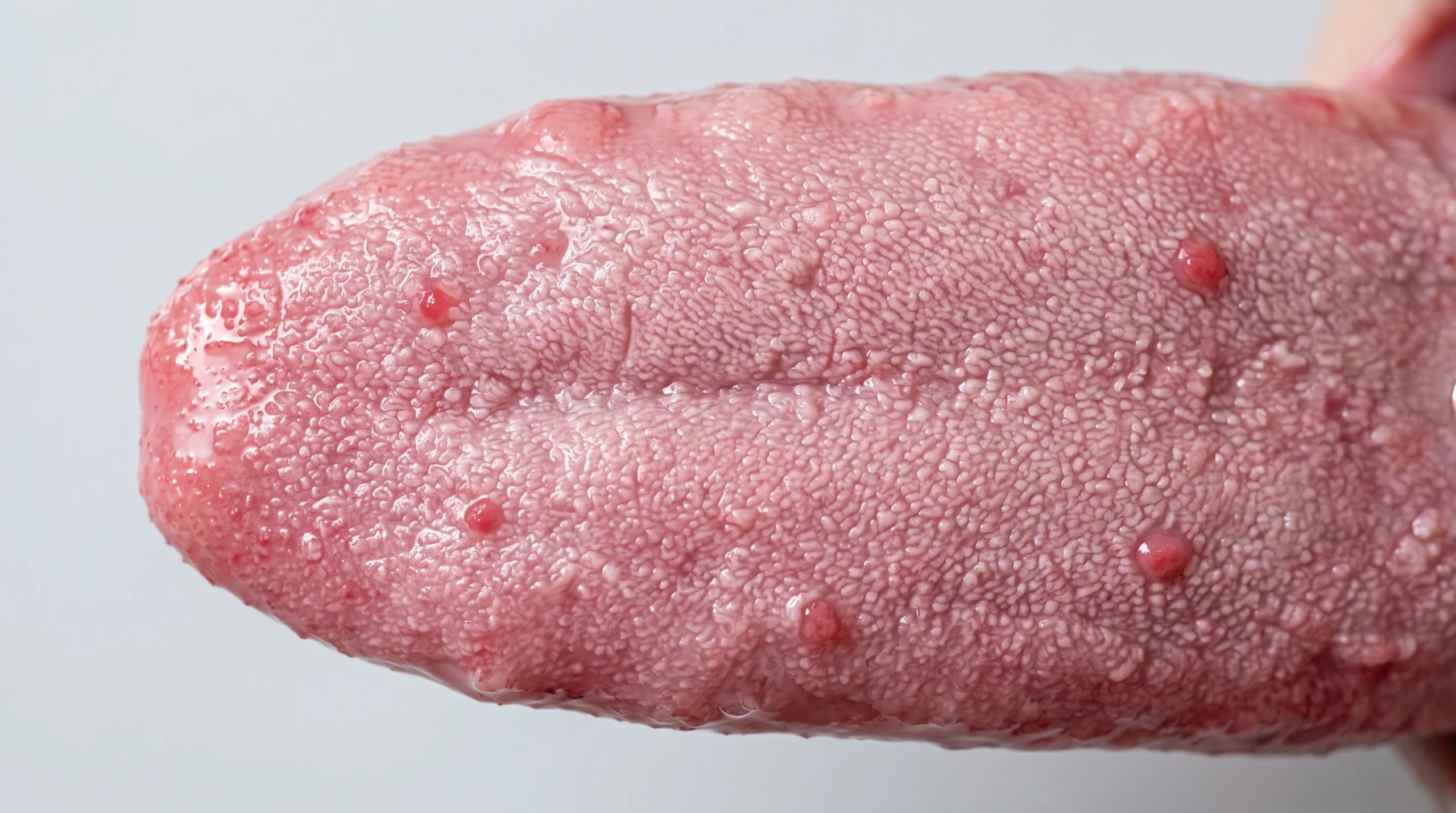
Your tongue isn’t just for tasting food and helping you speak. It also holds clues about what’s going on with your health, including signs of addiction you might not even expect. From changes in color and texture to odd patches or unusual coatings, your tongue can often drop hints before you even realize your body is struggling with substance use or withdrawal.
Why Your Tongue Matters Beyond Taste
The tongue acts kind of like a window into your body’s inner health. Dentists, doctors, and even traditional medicine practitioners have been looking at tongues for centuries because they can show issues you might not notice otherwise. If you’re dealing with addiction, whether to alcohol, nicotine, prescription meds, or other substances, your tongue can actually start to show weird signs long before you even think about talking to a doctor.
The medical field recognizes oral signs as part of the “oral manifestations of systemic diseases.” Addiction falls under this in a pretty unique way because it often impacts the mouth first, especially the soft tissues. So, checking your tongue isn’t just a random curiosity. It can actually help people spot hidden problems, making it a super useful habit for everyone, especially those with a history of substance use.
On top of that, your tongue is exposed to whatever goes through your mouth. Whether it’s smoke, alcohol, or prescription pills, these substances leave their mark much quicker on the soft tissue. Even some dietary supplements or over-the-counter medications can change how the tongue looks or feels, so regular checkups help you track changes over time.
Common Tongue Changes Linked to Addiction
Different substances can lead to quite different changes on your tongue. Some changes are pretty obvious, while others feel more subtle. Here are a few things that might pop up:
- White Coating: Alcohol, tobacco, and some prescription drugs can cause fungal overgrowth (like oral thrush), which shows up as a thick white or patchy coating.
- Soreness or Ulcers: Stimulants and opioids might cause chronic ulcers, burning sensations, or inflamed spots. Ongoing mouth dryness (often caused by drugs) makes this worse.
- Glossy, Red Tongue: Alcoholism and vitamin deficiencies linked to addiction can result in a smooth, beefy-looking red tongue. This is mostly caused by nutrient deficits.
- Brown or Black Stains: Smoking or using certain drugs can stain the tongue’s surface brown, dark yellow, or black. Poor oral hygiene tends to make it darker.
- Geographic Tongue: Some substances create patchy, maplike patterns. While not always a problem, this is worth checking if it appears suddenly or gets worse.
How Addiction Leads to Changes on Your Tongue
Addiction affects the whole body, but the mouth is often one of the first places to show the damage. Here’s how it works:
- Dehydration: Substances like alcohol, opioids, and stimulants dry out the mouth. This affects the saliva that helps protect your tongue, making it more likely to develop infections or sores.
- Nutrient Shortages: People dealing with addiction might not eat well, skip meals, or have trouble absorbing nutrients. This leaves the tongue lacking key vitamins and minerals such as B12, folic acid, and iron.
- Suppressed Immunity: Substances can weaken the immune system, letting bacteria or fungi grow faster on the tongue’s surface. That’s often where the white coating or sore spots come from.
- Irritation and Toxins: The direct contact of tobacco, alcohol, or certain drugs with the tongue can irritate or even burn the tissues, sometimes permanently changing the texture or color.
Over time, these changes not only affect your tongue but can make eating, drinking, or even speaking a challenge. This leads to a feedback loop of worsening problems—poor nutrition, increased stress, and even more serious health issues if not caught early.
Spotting Signs Early: Why It’s Really Important
Checking your tongue in the mirror only takes a minute. Oddly enough, for some people, it’s the tongue’s changes that finally push them to notice something is off. Catching these signs early makes it way easier for doctors or dentists to give timely advice, or point you toward support if there’s an addiction problem that needs addressing.
Not all tongue changes are caused by addiction, of course. But if you (or someone you care about) have a history or are worried about possible substance use, paying attention to weird tongue symptoms is a smart move. Early detection helps prevent bigger oral and general health issues down the road.
Paying attention to your tongue’s health is also good for general wellbeing. Oral changes sometimes point to conditions like diabetes, anemia, and vitamin deficiencies long before other symptoms show up. In many ways, your tongue is like a health snapshot—it reflects issues that might be happening elsewhere in the body.
What to Watch For: Addiction and Tongue Symptoms
- Persistent Dryness: If your tongue feels sticky, rough, or difficult to move, dehydration from substance use may be a contributing factor.
- Pain or Irritation: Ongoing burning, tingling, or sensitivity may appear, sometimes accompanied by ulcers or cracks along the sides.
- Coating or Unusual Colors: Watch for patches, streaks, or overall darkening, especially if you smoke or drink regularly.
- Lasting Bad Breath: Substances (and dry mouth) let bacteria thrive, making persistent bad breath a common symptom.
- Weird-Looking Papillae: Those little bumps on your tongue can get inflamed or change shape.
Challenges in Identifying Addiction by Tongue Alone
Just looking at your tongue won’t give you all the answers. Lots of other conditions, including vitamin imbalances, infections, stress, and autoimmune problems, can look pretty similar. So, while your tongue can be a clue or an early warning system, it’s not a guaranteed diagnostic tool for addiction. Still, noticing these signs early and sharing them with your doctor can speed up the process of getting the help you need.
Other Factors That Affect What You See
Besides addiction, stuff like recent illness, dehydration after a workout, spicy food, or even toothpaste reactions can change the look of your tongue. That’s why context matters. If tongue changes persist for more than two weeks, or if they are accompanied by other health issues, it’s time to check in with a healthcare provider.
Substances and Their Signature Tongue Clues
- Alcohol: Causes dry mouth, smooth red tongue, ulcers, or white coating from thrush.
- Tobacco: Yields brown-black stains, thickened surface (sometimes called “hairy tongue”), and a high risk of oral cancers.
- Opioids: Create dryness, pale or bluish tongue, and sores caused by lowered immunity.
- Stimulants (like meth): Famous for mouth dryness but also deep cracks, ulcers, or strange patterns.
- Benzodiazepines and Sedatives: Linked to swollen spots, soreness, and sometimes ulcers from constant mouth breathing.
It’s important to know that these signs might appear alone or together, and sometimes they can come and go depending on your health, diet, or habits. If you are seeing a pattern, especially if it lines up with substance use, take note of when the changes started and how long they last. Keeping a simple daily log can help your doctor or dentist spot trends and give better advice.
Tips on Protecting Your Oral Health When Facing Addiction
- Stay Hydrated: Sip water regularly and avoid caffeine, which can further dry your mouth.
- Oral Hygiene: Brush your teeth and tongue gently after meals. Use alcoholfree mouthwash to reduce irritation.
- Balance Your Diet: Focus on nutrient-rich foods—fresh veggies, fruits, and protein help heal the tongue’s surface faster.
- Regular Dental Visits: Tell your dentist about your substance use history for personalized care. They can spot problems early and suggest specific treatments.
- Talk to Your Doc: Flag any lasting changes so a doctor can check for underlying health problems or direct you to addiction resources if needed.
Good oral health habits act as a buffer against the worst effects of addiction on your tongue and mouth. Sometimes, even small tweaks like switching to a gentler toothpaste or eating more vitamin-rich foods can help your tongue heal faster. Don’t forget, your dental team is there to help—not judge. Being honest about your habits means you get care tailored to what your body needs right now.
Frequently Asked Questions
Question: Can my tongue alone reveal if I have an addiction?
Answer: Not completely. While some signs strongly hint at substance use, other health issues can mimic these changes. Your tongue can raise a red flag, but you’ll need professional screening and advice for a clear answer.
Question: How fast do tongue changes appear after starting or stopping a substance?
Answer: This can happen within a few days for things like dry mouth or patchiness (especially if you start or stop suddenly). Chronic signs, like stains or lasting soreness, might take weeks or months to appear or fade.
Question: Should I be worried if my tongue is sore but I don’t use drugs or drink much?
Answer: Occasional soreness can come from other causes, like spicy foods, stress, or a mild infection. Longterm or repeated changes are worth bringing up with your dentist or doctor just to be safe.
When to Reach Out for Help
If you notice persistent weirdness with your tongue, pain, coatings, new colors, or sores that just won’t quit, it’s a good idea to check with your dentist or healthcare provider. They might spot patterns tied to substance use or other hidden health issues. Starting that conversation can lead to early treatment or good resources for addiction recovery, making your tongue not just a silent observer but a helpful messenger for your whole health.
Video: This sign on your tongue means trouble #addiction #shorts