Performance-enhancing drugs (PEDs) have long been a topic of debate in sports, fitness, and medicine. While some people use them to improve strength, endurance, or athletic performance, growing research shows these substances can harm vital organs much sooner than many realize. Damage to the heart, liver, kidneys, and other organs may begin developing even before obvious symptoms appear. Because many users focus on short-term performance gains, the long-term health risks are often overlooked. Whether you’re an athlete, fitness enthusiast, healthcare professional, or simply interested in the facts, understanding how PEDs affect the body can help you make informed decisions and recognize the importance of protecting your long-term health.
How PEDs Work In The Body: Quick Results, Quicker Risks
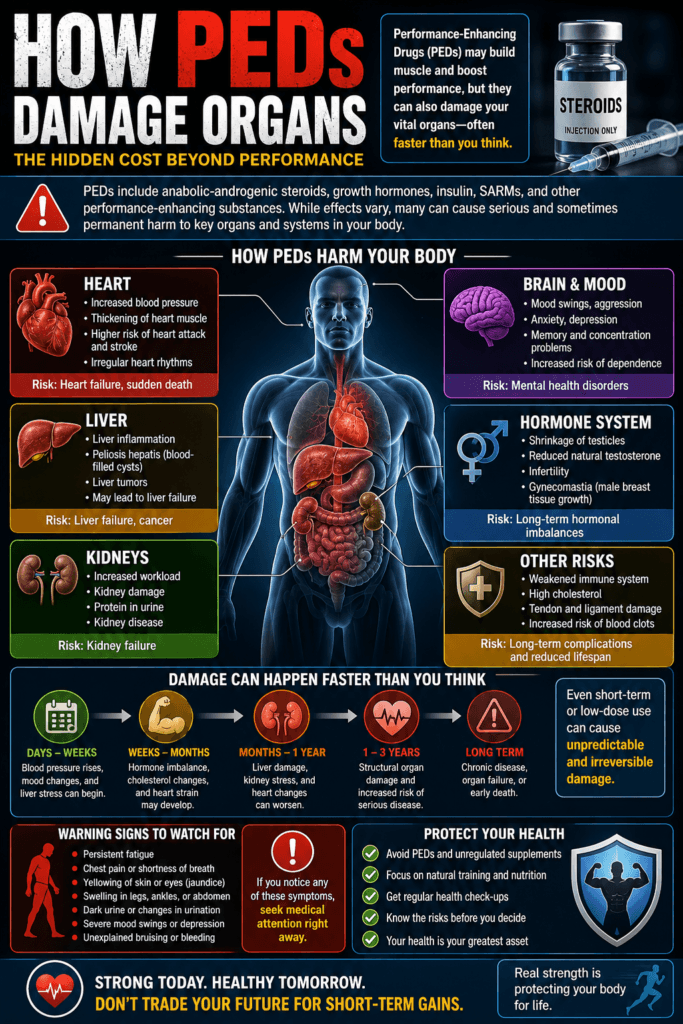
Performance-boosting drugs cover a range of substances, including anabolic steroids, human growth hormone (HGH), stimulants, and blood doping agents. Most people know they ramp up muscle growth, speed up recovery, and boost performance. What’s sometimes overlooked is how quickly these same substances accelerate the aging and breakdown of organs such as the liver, heart, and kidneys.
Anabolic steroids, for example, mimic hormones like testosterone to build muscle. But as they flood the system, the liver works overtime to break them down, which can lead to liver toxicity within months of starting use, possibly even earlier if dosages are higher or taken without breaks. Stimulants raise heart rate and blood pressure, straining cardiovascular tissue every time you exercise, lift heavy weights, or compete while these substances are in your system. Some people want to get stronger faster, but these short-term gains can mask major risks that surface with little warning.
The body is a complex network, and PEDs force its organs to adapt in ways nature never intended. Boosting performance on the outside can mean sacrificing vital organ health on the inside, especially when used without supervision or understanding of the risks involved.
The Surprising Speed of Organ Damage
There’s a myth floating around that PED damage only shows up after years of heavy use. The reality is that for some people, changes in liver enzyme levels, cholesterol, and heart structure are seen in medical tests within just a few weeks. In some cases, early liver scarring, enlarged heart muscles, and kidney strain can be detected in just months. What’s especially alarming is that these issues are increasingly documented in younger individuals who start using PEDs without realizing the rapid impact on their bodies.
- Liver: Elevated liver enzymes, jaundice, and even tumors have been reported in less than a year of steroid cycles.
- Heart: Studies published in the last five years have picked up thickening of the heart’s walls and high blood pressure sometimes after only three to six months of steroid use.
- Kidneys: High protein diets and PEDs together can bring on proteinuria (protein in the urine) and swelling, sometimes within a few cycles of steroid use.
This damage isn’t just theoretical or limited to older athletes. Reports from clinics and hospitals show younger users, some barely out of their teens, dealing with advanced symptoms of organ stress much sooner than anyone predicted a decade ago.
Warning Signs Most People Overlook
One of the main issues I see is that PED users, especially those new to these substances, often ignore or misunderstand early warning signs. It’s easy to blame things like fatigue or odd-colored urine on a tough workout or a bad diet day. Here are a few changes you shouldn’t brush off:
- Unusual fatigue that lasts more than a day or two, especially with normal sleeping habits
- Yellowish eyes or skin (jaundice), signaling a struggling liver
- Dark urine, swelling in the ankles, or puffy hands/face, which can point to kidney strain
- Frequent headaches or chest discomfort, even mild, which can be early signs of blood pressure changes
Getting regular checkups with blood panels and heart scans is super important for anyone using or thinking about using PEDs. Early damage doesn’t always come with pain or obvious symptoms, so catching these changes requires active monitoring. Online communities often share these experiences, but it’s not a substitute for real medical advice.
Common PEDs With The Fastest Impact On Organs
Different PEDs come with different risk profiles, but a few are especially rough on organs, even with short-term use:
- Anabolic Androgenic Steroids: These are the classic muscle builders. They hit the liver especially hard and tend to spike cholesterol numbers, which is tough on your heart and blood vessels.
- Trenbolone: Often considered a “strong” steroid, it’s notorious for raising blood pressure fast and putting extra pressure on kidneys.
- Oral Steroids (like Dianabol): Pills go directly to the liver in high concentrations, and even short-term use can trigger enzyme spikes and, occasionally, sudden liver inflammation.
- Stimulants (clenbuterol, amphetamines): These are often taken for fat loss or focus, but even at low doses, they can quickly mess with heart rate and blood pressure.
- Growth Hormone: Misuse has been linked to heart enlargement, swelling, and diabetes-like symptoms, especially in higher or unregulated doses.
Why Organ Damage Happens So Fast
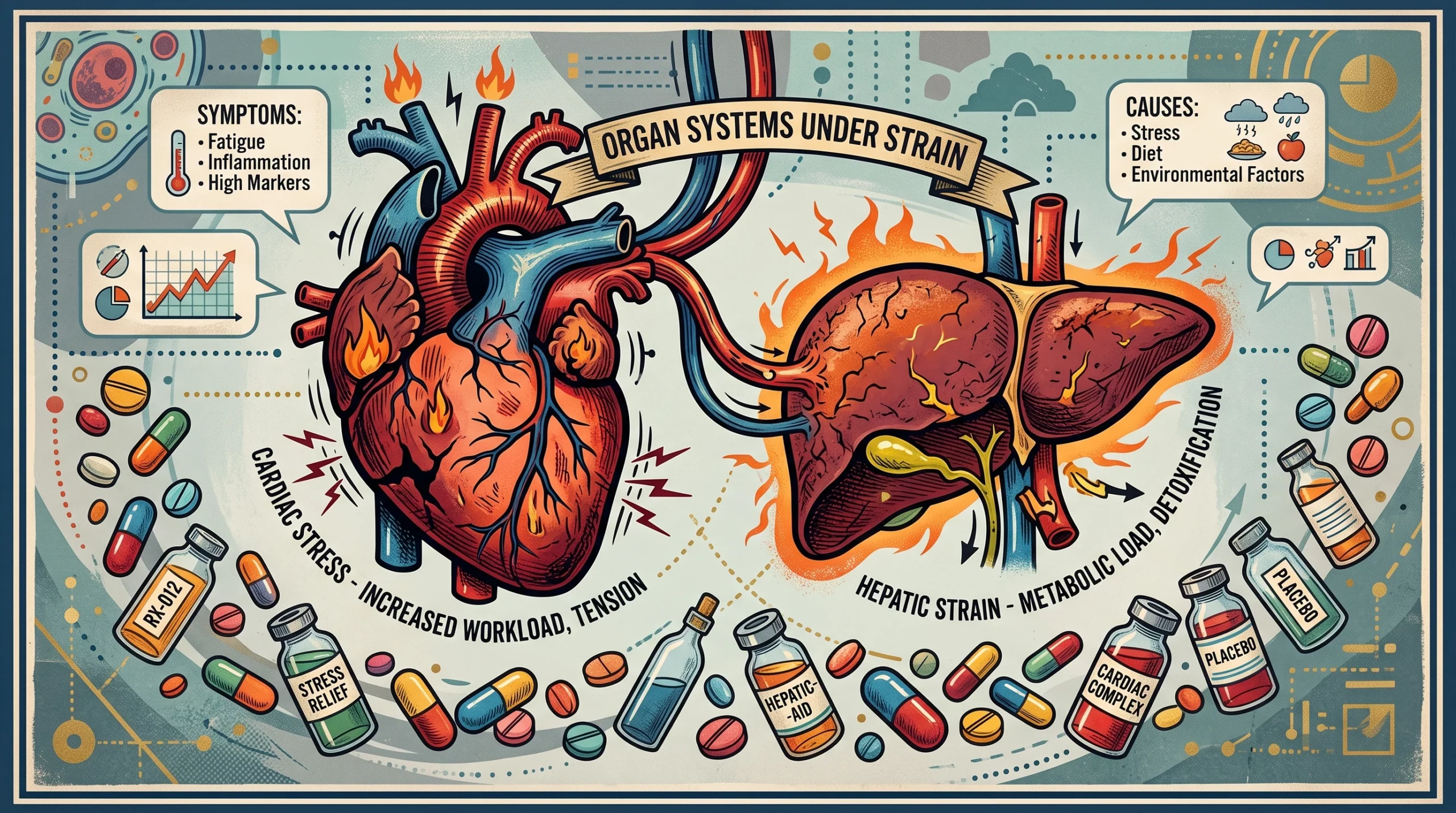
A lot of people ask why these effects show up so quickly with PEDs. The answer comes down to how these substances change the body’s balance. Organs like the liver and heart are used to working within a narrow range. PEDs push these ranges way beyond normal, so the liver must detoxify more chemicals, the heart is asked to pump harder, faster, longer, and the kidneys need to filter out the extra byproducts.
There’s some genetic variation. A few people seem to process these stresses better, but nobody is immune. Even if you don’t feel anything right away, the changes happening at a cellular level can build up very quickly, with scar tissue and dysfunction sometimes taking hold before a single year of use is over.
Real Stories and What They Reveal
I’ve checked out stories from competitive bodybuilders and athletes who started PED cycles as teens or young adults and noticed odd symptoms long before their performance peaked. One lifter described a case of sudden jaundice after just two steroid cycles, leading to a hospital visit and liver biopsy. Another talked about being diagnosed with high blood pressure by age 23, something they thought didn’t happen to “healthy,” athletic people. These personal stories align with data from doctors, reinforcing that the risk isn’t just theoretical; it’s happening now to everyday people.
Experts from sports medicine clinics are warning younger athletes that PED-induced organ damage is much more common than most believe. Some doctors are calling for better education around these issues, as increasing cases of early-onset organ stress put pressure on the healthcare system. Social media and fitness forums are filled with firsthand accounts that echo what traditional research is now confirming: these drugs can affect organ health in subtle ways that are easy to miss unless you’re actively checking.
Steps For Reducing The Risk (If You’re Currently Using PEDs)
If you or someone you know is already using PEDs, there are a few practical steps to reduce risk, but none will completely erase the danger:
- Regular bloodwork: Check liver, kidney, and lipid panels every couple of months.
- Heart monitoring: Even simple blood pressure checks at home help spot trouble early.
- Avoid stacking: Mixing several PEDs increases risk. At the very least, stick to one and be aware of interactions.
- Lower the dose: Even small reductions can ease stress on organs.
- Prioritize breaks: Take off cycles seriously. Longer breaks are better.
- Watch for symptoms: Never ignore any of the warning signs above. Even mild symptoms deserve attention.
Seeing a medical professional who understands sports medicine or endocrinology is really important, even if you’re not comfortable telling a family doctor everything. Some clinics specialize in harm reduction approaches for PED users, and they won’t shame or report you. They just want to keep you safe and healthy for the long haul.
It’s also worth mentioning that nutrition and hydration play supporting roles in overall organ health, but they can’t fully offset the strain PEDs put on major organs. A careful approach to both drug use and diet can make a difference, though the key is always staying proactive with monitoring and honest with health professionals about your habits.
Frequently Asked Questions
Below are a few questions that come up all the time among gym buddies, forums, and online research groups. These answers can help those on the fence or just seeking more info:
How quickly can steroids damage organs?
Damage can begin in a matter of weeks, especially with oral steroids. Bloodwork and scans can show lasting effects after a handful of cycles or a year of steady use. The window for damage is often much shorter than people assume, meaning everyone should be cautious—even in the first months.
Are natural supplements safer for organs?
Most natural supplements are not as hard on organs as PEDs, but misuse or high doses (like some “prohormones”) can still lead to problems. It’s smart to use moderation and research thoroughly before starting any supplement, as “natural” doesn’t always mean safe.
Is there a safe way to use PEDs?
No way is completely safe, but careful monitoring, low doses, and plenty of off-cycles can help reduce the risks. Consulting knowledgeable healthcare providers and never relying solely on online advice is the safest approach.
Can organ damage from PEDs be reversed?
Some early effects (like liver enzyme spikes) might reverse with time off and healthy habits, but scarring or structural changes (like enlarged heart tissue) can be permanent. Catching problems early offers the best chance for recovery.
Key Tips for Staying Informed and Protecting Your Health
New research, regular medical checkups, and honest conversations with healthcare providers can make a difference when it comes to organ health and PED use. The game is changing fast: new drugs, new approaches, and a lot we still don’t fully understand about the longterm effects of these substances when used at high doses or for extended periods. If you care about your health and want to avoid the speedier-than-expected risks to your organs, keep up with science, listen to your body, and make thoughtful choices at every step.
Taking PEDs isn’t just about getting bigger, faster, or leaner. It’s about being aware of what’s happening on the inside before symptoms demand your attention. Staying informed and sharing what you learn can save someone you care about from a lifetime of health problems.
Video: How PEDs Destroy Your Organs #shorts