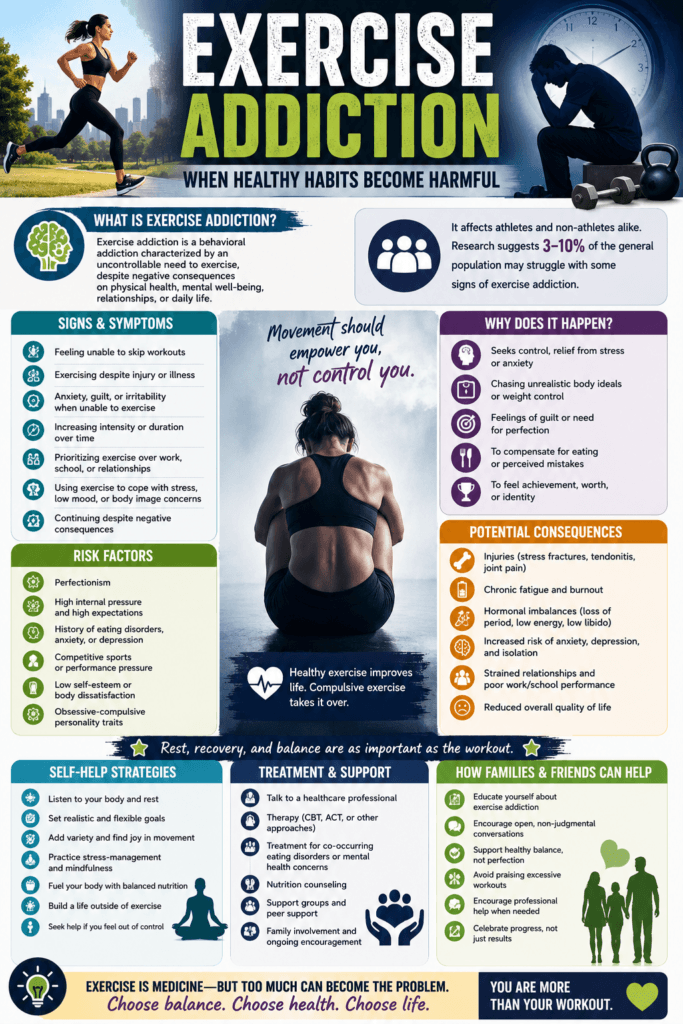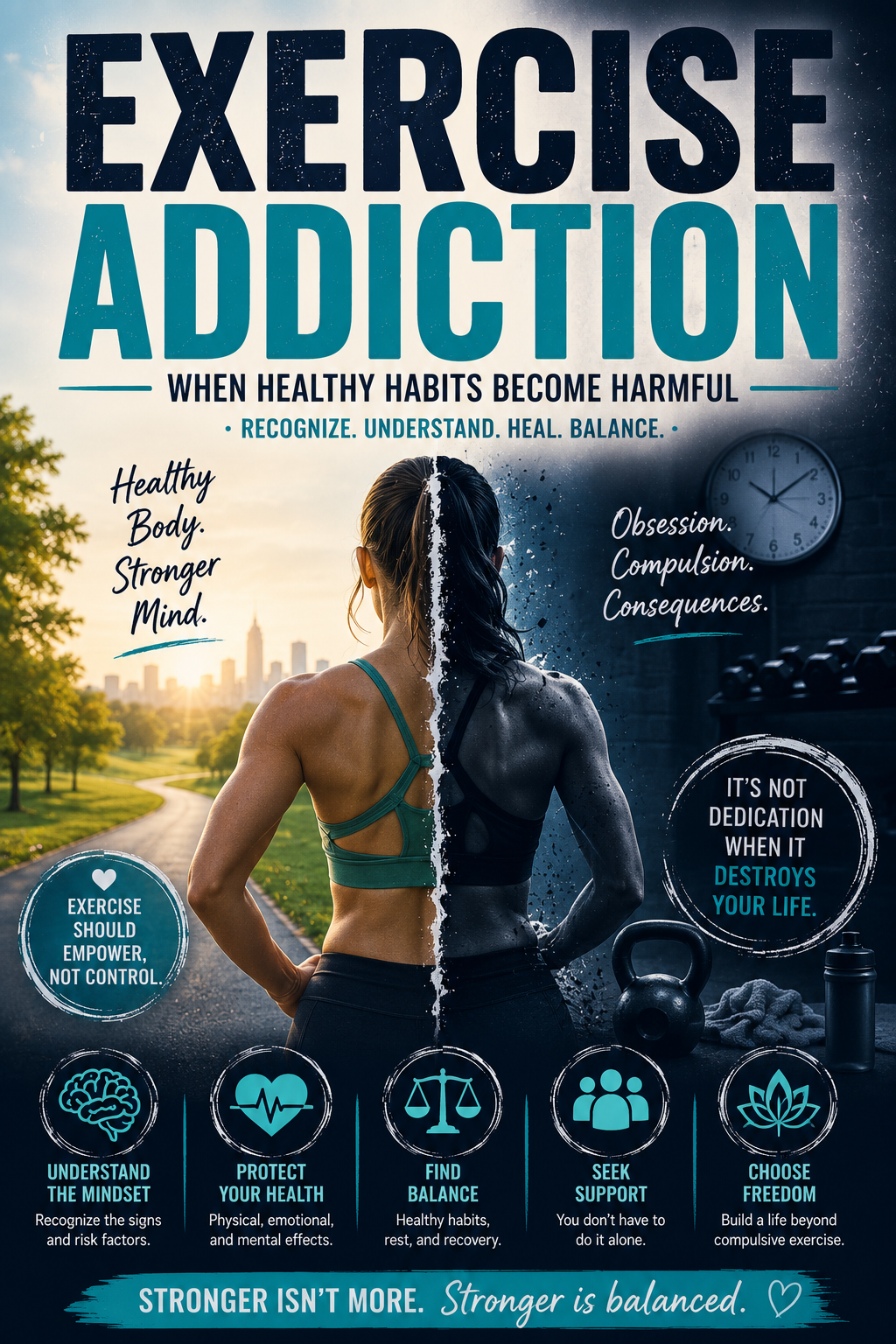
Regular exercise is an essential part of a healthy lifestyle, offering numerous benefits for physical fitness, mental health, and overall well-being. It can improve cardiovascular health, build strength, reduce stress, enhance mood, and help prevent many chronic illnesses. However, like any behavior, exercise can become harmful when it becomes excessive, compulsive, or continues despite injury, illness, or other negative consequences. Individuals with exercise addiction may feel driven to exercise even when it interferes with their physical health, relationships, work, or daily responsibilities. Recognizing the warning signs, underlying risk factors, and potential consequences of exercise addiction is essential for distinguishing healthy commitment from unhealthy compulsion and promoting a balanced, sustainable approach to fitness and wellness.
Exercise Addiction
Exercise is widely recognized as one of the healthiest habits a person can develop. Regular physical activity improves cardiovascular health, strengthens muscles and bones, enhances mood, reduces stress, and lowers the risk of many chronic diseases. However, like many healthy behaviors, exercise can become unhealthy when it becomes excessive, compulsive, and difficult to control. This condition is often referred to as exercise addiction or compulsive exercise.
Although exercise addiction is not currently recognized as a standalone diagnosis in major psychiatric diagnostic manuals, it is increasingly recognized by researchers and healthcare professionals as a behavioral pattern that can lead to significant physical, psychological, and social harm. It is particularly common among individuals with eating disorders, body image concerns, perfectionistic personality traits, or other behavioral addictions.
What Is Exercise Addiction?
Exercise addiction is characterized by an overwhelming urge to exercise despite negative consequences. Individuals often feel compelled to continue exercising even when they are injured, exhausted, ill, or experiencing problems in their personal, social, or professional lives, due to their exercise habits.
Unlike a healthy commitment to fitness, exercise addiction involves a loss of control, where exercise becomes a psychological necessity rather than a choice.
Primary vs. Secondary Exercise Addiction
Researchers generally describe two forms:
Primary Exercise Addiction
- Exercise itself becomes the primary source of reward.
- The individual exercises for the emotional “high,” stress relief, or sense of control.
- There is no underlying eating disorder driving the behavior.
Secondary Exercise Addiction
- Excessive exercise occurs primarily to lose weight or change body shape.
- It commonly occurs alongside eating disorders such as anorexia nervosa or bulimia nervosa.
- The compulsive exercise is driven by concerns about weight, calories, or body image.
Signs and Symptoms
Common signs include:
- Feeling unable to skip workouts
- Exercising despite injury or illness
- Anxiety, guilt, or irritability when unable to exercise
- Increasing exercise duration or intensity over time
- Prioritizing exercise over family, work, or relationships
- Continuing despite medical advice to rest
- Exercising secretly or feeling compelled to “make up” missed workouts
- Using exercise primarily to regulate emotions
- Difficulty reducing exercise despite wanting to cut back
Risk Factors
Several factors increase the likelihood of developing compulsive exercise:
- Perfectionism
- Obsessive-compulsive personality traits
- Anxiety or depression
- Eating disorders
- Body dissatisfaction
- History of addiction
- Athletic participation
- Social media pressure
- Fitness-focused occupations
- Low self-esteem
Physical Consequences
Excessive exercise can lead to numerous medical problems:
- Stress fractures
- Chronic muscle and joint injuries
- Tendon injuries
- Overtraining syndrome
- Hormonal imbalances
- Menstrual irregularities or loss of menstruation
- Reduced bone density
- Fatigue
- Weakened immune system
- Sleep disturbances
- Cardiac complications in severe cases
Psychological Consequences
Exercise addiction may contribute to:
- Anxiety
- Depression
- Irritability
- Emotional distress
- Social isolation
- Relationship difficulties
- Poor work or academic performance
- Low self-worth is tied solely to exercise performance
Relationship to Eating Disorders
Compulsive exercise frequently occurs alongside eating disorders. Some individuals use excessive exercise to compensate for eating, burn calories, or maintain their weight. Because of this overlap, healthcare professionals often evaluate both eating behaviors and exercise habits together.
Diagnosis
There is no universally accepted diagnostic test for exercise addiction. Healthcare providers evaluate:
- Exercise patterns
- Motivation for exercising
- Physical injuries
- Mental health symptoms
- Eating behaviors
- Functional impairment
- Impact on relationships and daily responsibilities
Assessment often includes screening for co-occurring mental health conditions.
Treatment
Treatment focuses on restoring a healthy relationship with exercise rather than eliminating physical activity.
Common treatment approaches include:
- Cognitive Behavioral Therapy (CBT)
- Acceptance and Commitment Therapy (ACT)
- Treatment of co-occurring anxiety or depression
- Treatment for eating disorders when present
- Nutritional counseling
- Gradual modification of exercise routines
- Stress management
- Mindfulness training
- Family therapy, when appropriate
In some cases, medications may be prescribed to treat underlying anxiety, depression, or obsessive-compulsive symptoms.
Prevention
Healthy exercise habits include:
- Taking scheduled rest days
- Exercising for enjoyment as well as fitness
- Listening to your body’s signals
- Allowing injuries to heal
- Maintaining balanced nutrition
- Sleeping adequately
- Participating in varied forms of movement
- Avoiding exercise as punishment for eating
When to Seek Professional Help
Individuals should consider seeking professional evaluation if they:
- Feel unable to reduce exercise
- Continue despite injuries
- Experience significant distress when missing workouts
- Exercise primarily to compensate for eating
- Notice worsening anxiety or depression
- Experience repeated overuse injuries
- Find that exercise is interfering with relationships, work, or school
Conclusion
Exercise is one of the most effective tools for improving physical and mental health, but balance is essential. When exercise becomes compulsive, interferes with daily life, or continues despite harm, it may indicate exercise addiction rather than healthy fitness. Early recognition, compassionate assessment, and evidence-based treatment can help individuals restore a balanced relationship with physical activity while protecting both their physical health and emotional well-being. The goal is not to stop exercising but to ensure that exercise remains a positive, flexible, and enjoyable part of a healthy lifestyle rather than a source of distress or impairment.
Self-Management Strategies to Understand Exercise Addiction
Self-management is an important part of developing a healthy relationship with physical activity. Exercise is beneficial for physical and mental health, but when it becomes compulsive or begins to interfere with daily life, it may signal exercise addiction. Learning to recognize unhealthy patterns, establish balance, and prioritize overall well-being can help individuals enjoy the benefits of exercise while reducing the risk of physical injury and emotional distress.
1. Understand the Difference Between Commitment and Compulsion
Healthy exercise is flexible and enjoyable, while exercise addiction is characterized by feeling obligated to exercise regardless of injury, illness, or personal responsibilities. Ask yourself whether you exercise because you want to or because you feel you must.
2. Monitor Your Motivation
Take time to reflect on why you exercise. Healthy motivations include improving fitness, managing stress, increasing energy, and enjoying movement. If your primary motivation is to relieve guilt, control weight, avoid anxiety, or compensate for eating, it may be helpful to discuss these concerns with a healthcare professional.
3. Listen to Your Body
Pay attention to signs of fatigue, pain, and overtraining. Rest days are an essential part of fitness because they allow muscles, joints, and the cardiovascular system to recover. Ignoring persistent pain or exercising through injuries can lead to long-term health problems.
4. Schedule Rest and Recovery
Include one or more rest days each week and vary the intensity of your workouts. Recovery activities such as stretching, yoga, walking, or gentle mobility exercises can support healing while maintaining an active lifestyle.
5. Set Realistic Goals
Focus on gradual improvements rather than perfection. Set goals based on health, strength, endurance, or overall wellness rather than unrealistic body-image expectations or excessive exercise milestones.
6. Diversify Your Activities
Participate in different forms of physical activity to reduce boredom and overuse injuries. Mixing cardiovascular exercise, strength training, flexibility exercises, and recreational activities promotes balanced fitness and long-term enjoyment.
7. Maintain Proper Nutrition
Fuel your body with balanced meals that include lean proteins, whole grains, healthy fats, fruits, and vegetables. Adequate nutrition supports recovery, energy, immune function, and muscle repair while reducing the risk of fatigue and injury.
8. Prioritize Sleep
Aim for 7–9 hours of quality sleep each night. Sleep is essential for muscle recovery, hormone regulation, emotional well-being, and physical performance. Chronic sleep deprivation can increase stress and impair decision-making.
9. Develop Healthy Coping Skills
Exercise can reduce stress, but it should not be the only coping strategy. Build a variety of healthy outlets for emotions, including:
- Deep breathing exercises
- Meditation or mindfulness
- Journaling
- Spending time with friends and family
- Reading
- Music
- Creative hobbies
- Time in nature
Having multiple coping tools reduces the risk of relying solely on exercise to manage emotions.
10. Keep an Exercise Journal
Record your workouts along with your mood, energy level, sleep quality, and reasons for exercising. Reviewing your journal may help identify patterns, such as exercising excessively during periods of stress or anxiety.
11. Learn to Be Flexible
Missing a workout due to illness, travel, family obligations, or rest should not cause overwhelming guilt or anxiety. Practicing flexibility helps maintain a healthy perspective and reduces compulsive behaviors.
12. Seek Professional Help When Needed
If exercise begins to interfere with your health, relationships, work, or emotional well-being, consult a healthcare professional. A physician, psychologist, therapist, or sports medicine specialist can help evaluate your symptoms and develop an individualized treatment plan. If compulsive exercise occurs alongside an eating disorder, specialized treatment is especially important.
Key Takeaway
Exercise is an important part of a healthy lifestyle, but balance is essential. Self-management strategies such as monitoring your motivations, listening to your body, scheduling rest, maintaining proper nutrition, managing stress, and seeking help when needed can prevent healthy exercise from becoming compulsive. By focusing on overall wellness rather than perfection, individuals can enjoy the physical and mental health benefits of exercise while maintaining a positive, flexible, and sustainable relationship with physical activity.
Family Support Strategies to Understand Exercise Addiction
Family members can play an important role in recognizing the signs of exercise addiction and supporting a loved one in developing a healthier relationship with physical activity. While regular exercise is beneficial for physical and mental health, excessive or compulsive exercise can lead to injuries, emotional distress, strained relationships, and impaired daily functioning. By responding with understanding rather than judgment, families can help encourage recovery and promote long-term well-being.
1. Learn About Exercise Addiction
Educate yourself about the difference between healthy exercise habits and compulsive exercise. Understand that exercise addiction is characterized by a loss of control, where an individual feels compelled to exercise despite injury, illness, exhaustion, or negative consequences. Learning about the condition helps reduce misconceptions and encourages compassionate support.
2. Encourage Open and Honest Communication
Create a safe, nonjudgmental environment where your loved one feels comfortable discussing their thoughts, emotions, and exercise habits. Listen carefully without criticizing or minimizing their concerns. Supportive conversations build trust and make it easier to seek help when needed.
3. Recognize Warning Signs
Be aware of behaviors that may indicate exercise addiction, including:
- Exercising despite injuries or illness
- Anxiety, guilt, or irritability when unable to exercise
- Skipping family events or responsibilities to work out
- Prioritizing exercise over work, school, or relationships
- Exercising to compensate for eating
- Persistent fatigue or frequent overuse injuries
Recognizing these signs early allows families to encourage timely professional evaluation.
4. Promote Balance Rather Than Perfection
Encourage a balanced approach to health that values rest, recovery, nutrition, emotional well-being, and relationships alongside physical fitness. Reinforce that overall wellness is more important than achieving unrealistic exercise goals or body ideals.
5. Avoid Reinforcing Unhealthy Behaviors
While it is helpful to support healthy exercise, avoid praising excessive workouts or linking a person’s worth to their appearance or athletic performance. Instead, acknowledge qualities such as kindness, perseverance, resilience, creativity, and personal growth.
6. Encourage Healthy Recovery Habits
Support habits that promote physical recovery and emotional health, including:
- Regular rest days
- Nutritious meals and adequate hydration
- Sufficient sleep
- Stress management
- Enjoyable leisure activities
- Time spent with family and friends
These routines help reduce the risk of overtraining and burnout.
7. Participate in Healthy Activities Together
Engage in activities that emphasize enjoyment and connection rather than competition or calorie burning. Examples include:
- Family walks
- Hiking
- Recreational sports
- Gardening
- Dancing
- Yoga
- Outdoor activities
Shared experiences reinforce that movement can be enjoyable without becoming compulsive.
8. Watch for Co-Occurring Mental Health Concerns
Exercise addiction may occur alongside anxiety, depression, perfectionism, body image concerns, or eating disorders. If you notice significant emotional distress or unhealthy eating behaviors, encourage evaluation by a qualified healthcare professional.
9. Support Professional Treatment
If compulsive exercise is affecting health or daily life, encourage your loved one to seek help from healthcare professionals, including physicians, psychologists, therapists, sports medicine specialists, or registered dietitians. Family encouragement can make it easier to begin treatment.
10. Respect Recovery Without Controlling It
Offer support without attempting to control every aspect of your loved one’s behavior. Recovery is most successful when individuals feel empowered to make healthy choices while knowing their family is available to provide encouragement and accountability.
11. Celebrate Healthy Progress
Recognize improvements such as:
- Taking scheduled rest days
- Recovering from injuries
- Developing healthier coping skills
- Maintaining balanced nutrition
- Attending counseling appointments
- Improving work-life balance
- Participating in social and family activities
Celebrating these milestones reinforces positive change.
12. Take Care of Yourself
Supporting someone with exercise addiction can be emotionally challenging. Family members should also prioritize their own well-being by:
- Maintaining healthy routines
- Seeking counseling if needed
- Joining family support groups when appropriate
- Practicing stress-management techniques
- Maintaining healthy personal boundaries
Caring for yourself allows you to provide consistent, compassionate support over time.
Key Takeaway
Families play a valuable role in helping loved ones recognize and address exercise addiction by promoting balance, encouraging open communication, supporting healthy lifestyle habits, and seeking professional care when needed. Rather than focusing solely on fitness or appearance, families can help reinforce the importance of overall physical, emotional, and social well-being. Through patience, education, and compassionate support, families can contribute to a healthier relationship with exercise and support lasting recovery from compulsive exercise behaviors.
Community Resource Strategies to Understand Exercise Addiction
Exercise addiction is a complex behavioral health concern that often involves physical, psychological, and social factors. Although regular physical activity is encouraged for overall health, excessive or compulsive exercise can lead to serious physical injuries, emotional distress, and impaired daily functioning. Community resources help individuals and families recognize unhealthy exercise patterns, access appropriate healthcare, and promote balanced, lifelong wellness through education and evidence-based support.
1. Utilize Primary Healthcare Services
Primary care providers can screen for signs of compulsive exercise, evaluate exercise-related injuries, assess mental health concerns, and refer individuals to appropriate specialists. Regular health checkups provide opportunities to identify unhealthy exercise habits before they become more serious.
2. Access Mental Health Services
Psychologists, licensed counselors, psychiatrists, and behavioral health specialists can help individuals address the emotional and psychological factors associated with exercise addiction. Evidence-based therapies, including Cognitive Behavioral Therapy (CBT), Acceptance and Commitment Therapy (ACT), and mindfulness-based approaches, can improve coping skills and reduce compulsive behaviors.
3. Seek Support from Registered Dietitians
Registered dietitians can educate individuals about balanced nutrition, energy needs, and healthy fueling for exercise. Proper nutrition supports physical recovery and helps reduce unhealthy behaviors related to excessive exercise or body image concerns.
4. Participate in Community Wellness Programs
Many hospitals, community centers, fitness facilities, and public health organizations offer wellness programs that emphasize balanced fitness, injury prevention, stress management, and healthy lifestyle habits. These programs encourage exercise for overall well-being rather than appearance or perfection.
5. Join Support Groups
Peer support groups for individuals recovering from eating disorders, body image concerns, behavioral addictions, or compulsive behaviors can provide encouragement, accountability, and practical coping strategies. Sharing experiences with others facing similar challenges can reduce isolation and strengthen recovery.
6. Promote Education in Schools and Colleges
Schools, colleges, and universities can provide education about healthy exercise habits, body image, nutrition, stress management, and mental health. Early education helps students recognize unhealthy exercise behaviors before they become established patterns.
7. Encourage Responsible Fitness Culture
Fitness centers, athletic organizations, coaches, and personal trainers can promote balanced exercise by encouraging rest days, proper recovery, realistic goal setting, and injury prevention. Professionals should be trained to recognize warning signs of compulsive exercise and refer individuals for appropriate care when necessary.
8. Address Body Image and Social Media Influences
Community education programs can teach media literacy and encourage critical thinking about unrealistic fitness standards often portrayed on social media. Promoting body diversity and realistic health goals helps reduce pressure to pursue unhealthy exercise behaviors.
9. Support Athletes Through Sports Medicine Programs
Sports medicine physicians, athletic trainers, physical therapists, and coaches can help athletes maintain healthy training schedules while preventing overtraining, burnout, and chronic injuries. Regular monitoring encourages long-term athletic performance and overall health.
10. Foster Collaboration Among Healthcare Professionals
Comprehensive care is most effective when physicians, mental health professionals, dietitians, physical therapists, athletic trainers, and fitness professionals work together. This multidisciplinary approach addresses both the physical and emotional aspects of exercise addiction.
11. Encourage Workplace and Community Wellness Initiatives
Employers and community organizations can promote wellness by offering fitness programs that emphasize balance, stress reduction, mental health, and work-life harmony rather than competition or unrealistic performance goals.
12. Expand Public Awareness and Reduce Stigma
Public health campaigns can educate communities that exercise addiction is a behavioral health concern rather than simply a sign of dedication or discipline. Increasing awareness encourages early recognition, reduces stigma, and promotes timely access to professional support.
Key Takeaway
Community resources play an essential role in helping individuals understand and prevent exercise addiction by promoting balanced physical activity, mental health awareness, and evidence-based care. Healthcare providers, behavioral health professionals, registered dietitians, educators, athletic organizations, fitness professionals, and community wellness programs all contribute to creating supportive environments where exercise is viewed as a tool for overall health rather than a measure of personal worth. Through education, collaboration, and compassionate support, communities can help individuals develop lifelong healthy exercise habits while reducing the risk of compulsive exercise and its associated physical and emotional consequences.
Frequently Asked Questions
Here are some common questions:
1. What is exercise addiction?
Exercise addiction is a pattern of compulsive physical activity in which a person feels unable to reduce or stop exercising despite negative physical, emotional, or social consequences. Exercise becomes a psychological necessity rather than a healthy choice.
2. Is exercise addiction an officially recognized mental health disorder?
Exercise addiction is not currently recognized as a standalone diagnosis in major psychiatric diagnostic manuals. However, many healthcare professionals recognize compulsive exercise as a behavioral health concern that can significantly affect physical and mental well-being.
3. How is exercise addiction different from simply enjoying exercise?
People who enjoy exercise can usually take rest days without significant distress and can adjust their routines when needed. Individuals with exercise addiction often experience intense guilt, anxiety, or irritability if they miss a workout and may continue exercising despite injuries, illness, or advice to rest.
4. What are the common warning signs of exercise addiction?
Common signs include:
- Feeling unable to skip workouts
- Exercising despite pain or injury
- Increasing workout duration or intensity over time
- Feeling guilty or anxious when unable to exercise
- Prioritizing exercise over work, family, or relationships
- Exercising to compensate for eating
- Ignoring medical advice to rest
5. Who is most at risk for developing exercise addiction?
Risk factors include:
- Perfectionism
- Obsessive-compulsive personality traits
- Anxiety or depression
- Eating disorders
- Body dissatisfaction
- Competitive athletics
- Social media pressure
- Low self-esteem
- Previous history of addiction
Having one or more risk factors does not mean someone will develop exercise addiction, but it may increase vulnerability.
6. Can exercise addiction occur alongside eating disorders?
Yes. Compulsive exercise frequently occurs in individuals with eating disorders such as anorexia nervosa and bulimia nervosa. In these cases, exercise may be used to burn calories, lose weight, or manage body image concerns. Treating both conditions together often leads to better outcomes.
7. What physical health problems can result from excessive exercise?
Potential complications include:
- Stress fractures
- Muscle and tendon injuries
- Joint pain
- Chronic fatigue
- Overtraining syndrome
- Hormonal imbalances
- Menstrual irregularities
- Reduced bone density
- Weakened immune function
- Sleep disturbances
8. Can exercise addiction affect mental health?
Yes. It may contribute to:
- Anxiety
- Depression
- Irritability
- Emotional distress
- Social isolation
- Low self-esteem
- Difficulty relaxing
- Feeling that self-worth depends on exercise performance
9. Is it unhealthy to exercise every day?
Not necessarily. Some people safely exercise daily by varying the intensity, incorporating recovery activities, and allowing adequate rest. Problems arise when exercise becomes compulsive, prevents recovery, or continues despite injury or significant distress.
10. How is exercise addiction treated?
Treatment focuses on restoring a healthy relationship with physical activity and may include:
- Cognitive Behavioral Therapy (CBT)
- Acceptance and Commitment Therapy (ACT)
- Treatment for anxiety or depression
- Nutritional counseling
- Treatment for eating disorders when present
- Stress-management techniques
- Gradual adjustments to exercise routines
The goal is balance—not eliminating exercise.
11. Can someone recover from exercise addiction?
Yes. With appropriate treatment and support, many individuals develop healthier exercise habits, improve emotional well-being, and return to enjoying physical activity without feeling controlled by it. Recovery often involves learning new coping skills and addressing underlying emotional concerns.
12. How can family members help?
Families can:
- Learn about exercise addiction
- Encourage open communication
- Avoid praising excessive exercise
- Support balanced nutrition and rest
- Encourage professional evaluation when needed
- Celebrate healthy progress instead of perfection
Compassion and understanding are more effective than criticism.
13. When should someone seek professional help?
Professional evaluation is recommended if:
- Exercise continues despite injuries
- Missing workouts cause severe anxiety or guilt
- Exercise interferes with work, school, or relationships
- There are signs of an eating disorder
- Repeated injuries occur
- Exercise feels uncontrollable
Early intervention can prevent more serious physical and emotional complications.
14. Can social media contribute to exercise addiction?
Yes. Constant exposure to unrealistic fitness ideals, appearance-focused content, and messages that promote “never missing a workout” can contribute to unhealthy exercise behaviors in some individuals. Following evidence-based fitness professionals and limiting exposure to unrealistic content may help promote a healthier perspective.
15. What is the most important message about exercise addiction?
Exercise is one of the best tools for improving physical and mental health when practiced in moderation. The goal is not to stop exercising but to develop a flexible, balanced relationship with physical activity that includes rest, recovery, proper nutrition, and attention to overall well-being. When exercise enhances your life without controlling it, it supports long-term health and quality of life.
Conclusion
Exercise addiction is a behavioral health concern that demonstrates how even healthy activities can become harmful when taken to extremes. While regular exercise remains an essential part of a healthy lifestyle, balance, flexibility, and recovery are equally important. Recognizing the warning signs of compulsive exercise, addressing underlying mental health concerns, and seeking professional support when needed can help individuals restore a healthier relationship with physical activity. By emphasizing overall well-being rather than perfection or appearance, individuals, families, healthcare professionals, and communities can work together to promote sustainable fitness habits that support both physical and emotional health for the long term.
Video: That Gym Guilt Means Something’s Wrong #health #fitness