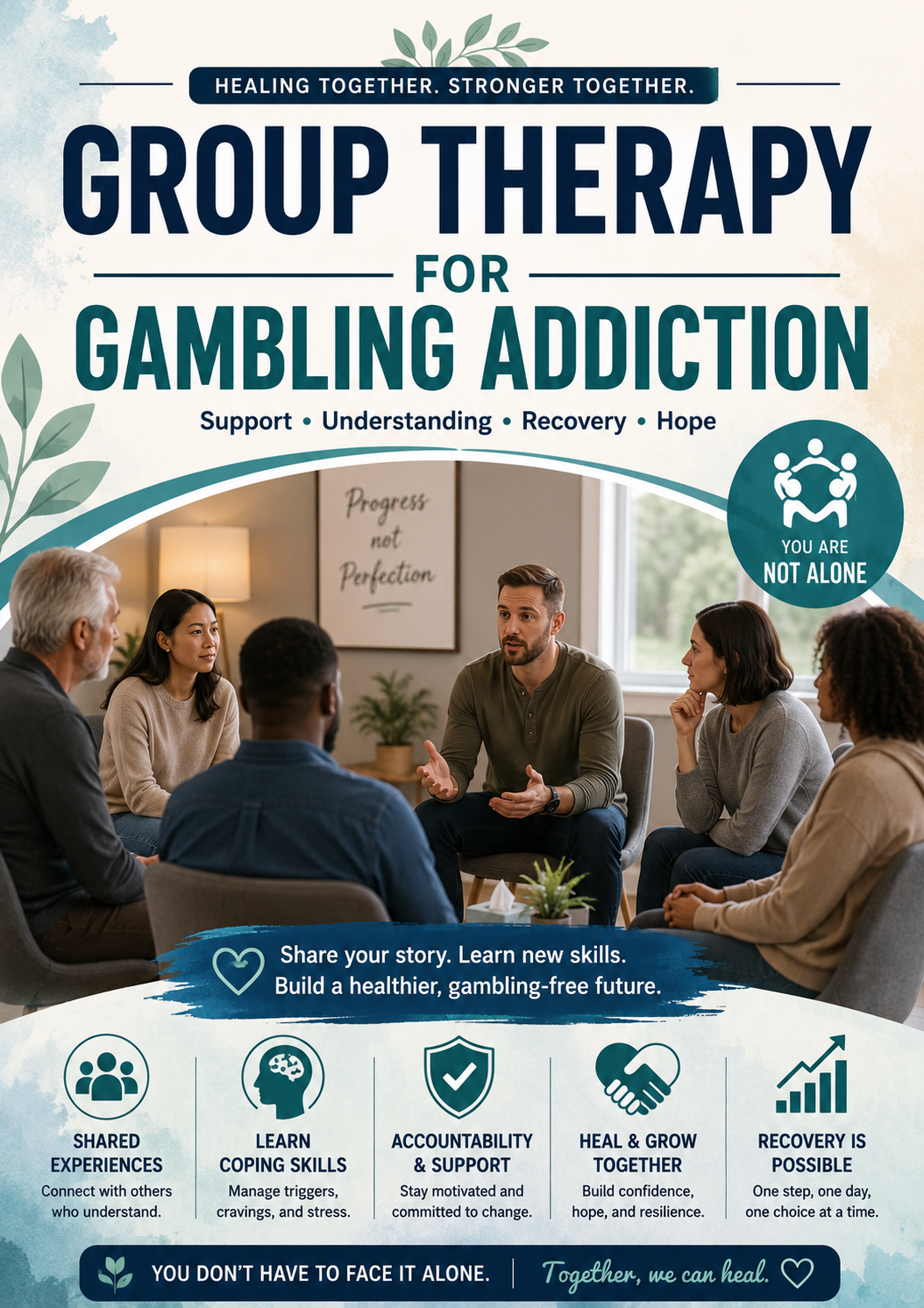
Gambling addiction, also known as gambling disorder, is a behavioral addiction that can have devastating effects on an individual’s financial stability, emotional well-being, relationships, and overall quality of life. Many people who struggle with gambling experience feelings of shame, isolation, anxiety, and hopelessness, making it difficult to seek help on their own. Group therapy has become one of the most effective evidence-based treatment approaches because it combines professional guidance with peer support, accountability, and practical skill development. In a safe and confidential environment, participants learn to recognize gambling triggers, challenge unhealthy thought patterns, develop healthier coping strategies, and build meaningful connections with others who understand the recovery journey. Through shared experiences and mutual encouragement, group therapy helps individuals realize that lasting recovery is possible and that they do not have to face addiction alone.
Group Therapy for Gambling Addiction
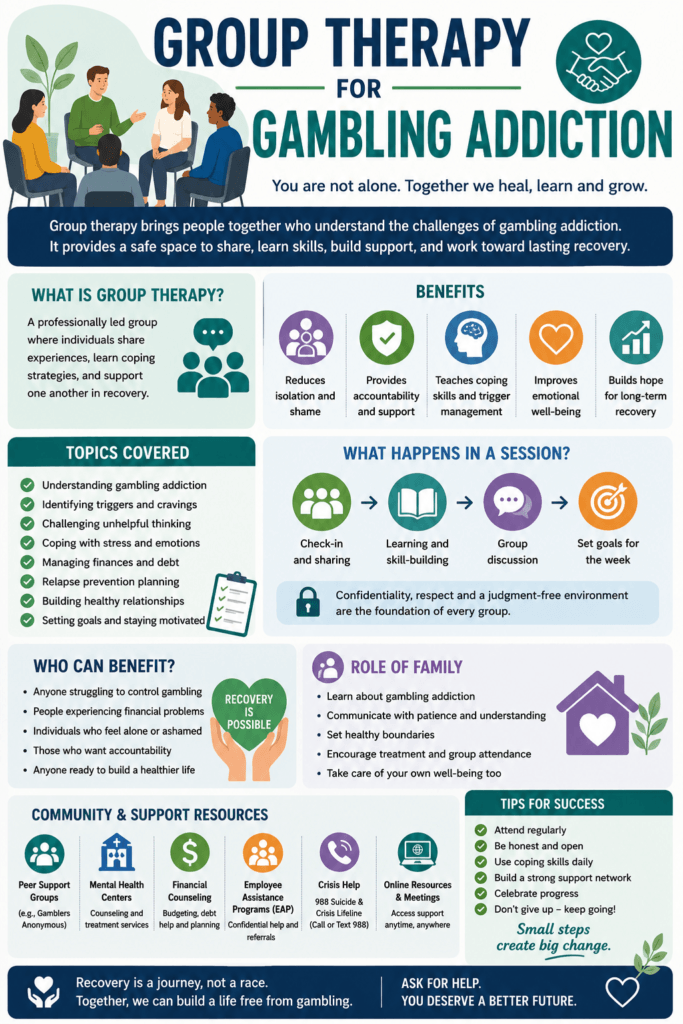
Group therapy is one of the most effective psychosocial treatments for gambling addiction because it combines professional guidance with peer support, accountability, and opportunities to learn from others facing similar challenges. Many people with a gambling disorder experience isolation, shame, financial stress, and damaged relationships. Group therapy helps reduce these feelings by providing a safe environment where participants realize they are not alone and that recovery is possible.
Unlike individual therapy, group therapy allows participants to hear different perspectives, learn practical coping strategies, and receive encouragement from others who understand the emotional highs and lows of gambling addiction. The shared experiences often increase motivation and help members remain committed to their recovery goals.
Benefits of Group Therapy
Reduces isolation and shame
Many individuals with gambling addiction hide their behavior from family and friends. Sharing experiences in a confidential group helps reduce guilt and normalizes the recovery process.
Provides accountability
Regular attendance encourages participants to report successes and setbacks honestly. Knowing that others will ask about progress often strengthens commitment to recovery.
Teaches coping skills
Therapists guide discussions on identifying gambling triggers, managing cravings, handling stress, and replacing gambling with healthier activities.
Improves emotional regulation
Participants learn healthier ways to manage anxiety, depression, boredom, anger, and loneliness without turning to gambling.
Builds healthy relationships
Group members practice communication, honesty, empathy, and problem-solving while rebuilding trust in themselves and others.
Encourages hope
Watching peers achieve months or years of recovery reminds participants that lasting recovery is attainable.
Common Topics Covered in Group Therapy
- Understanding gambling addiction as a behavioral addiction
- Identifying emotional and environmental triggers
- Managing urges and cravings
- Cognitive distortions (such as believing a “big win” will solve financial problems)
- Financial recovery and debt management
- Stress management techniques
- Mindfulness and emotional awareness
- Healthy recreational activities
- Repairing family relationships
- Relapse prevention planning
- Developing long-term recovery goals
Types of Group Therapy
Psychoeducational Groups
Participants learn about the science of gambling addiction, brain reward pathways, financial consequences, and evidence-based treatment approaches.
Cognitive Behavioral Therapy (CBT) Groups
These groups focus on identifying irrational gambling beliefs, challenging distorted thinking, and developing healthier behaviors.
Process Groups
Members openly discuss emotions, life challenges, recovery experiences, and interpersonal relationships while receiving feedback from peers.
Relapse Prevention Groups
Participants identify high-risk situations, create coping plans, and practice strategies for maintaining long-term recovery.
Skills-Based Groups
Sessions emphasize practical skills such as stress reduction, budgeting, communication, emotional regulation, and problem-solving.
What Happens During a Typical Session?
A typical group therapy session lasts between 60 and 90 minutes and is led by a licensed mental health professional, addiction counselor, psychologist, or social worker. Sessions often include:
- Check-ins about the previous week
- Discussion of current challenges
- Education on a recovery topic
- Group exercises or role-playing
- Sharing successes and setbacks
- Setting recovery goals before the next meeting
Everything discussed in the group is expected to remain confidential, creating a safe and supportive environment.
Evidence-Based Approaches Used
Many gambling treatment groups incorporate:
- Cognitive Behavioral Therapy (CBT) to change unhealthy thought patterns.
- Motivational Interviewing (MI) to strengthen motivation for recovery.
- Mindfulness-Based Relapse Prevention to manage cravings without acting on them.
- Acceptance and Commitment Therapy (ACT)
- Financial counseling and budgeting education
- Family education when appropriate
Peer Support Programs
Professional therapy is often complemented by peer support groups such as Gamblers Anonymous. These meetings provide ongoing support, accountability, sponsorship, and encouragement between therapy sessions. Many people benefit from participating in both professionally led therapy groups and peer-led recovery meetings.
Challenges of Group Therapy
Although highly beneficial, group therapy may present challenges:
- Feeling nervous about sharing personal experiences
- Fear of being judged
- Different stages of recovery among participants
- Emotional discussions that may temporarily increase distress
- Attendance requires ongoing commitment
Most participants report that these concerns lessen after attending several sessions.
Who Benefits Most?
Group therapy may be especially helpful for individuals who:
- Gamble despite serious financial consequences
- Experience repeated relapses
- Feel isolated or ashamed
- Need additional accountability
- Have supportive goals for long-term recovery
- Want to improve relationships damaged by gambling
The Role of Family
Recovery is often stronger when family members participate in education or family therapy. Loved ones can learn how gambling addiction affects the brain, establish healthy financial boundaries, encourage treatment participation, recognize relapse warning signs, and support recovery without enabling gambling behaviors.
Conclusion
Group therapy is a powerful, evidence-based treatment for gambling addiction that combines professional guidance with peer support. By helping individuals understand their addiction, challenge unhealthy thinking, develop healthier coping strategies, and build meaningful connections with others in recovery, group therapy addresses both the psychological and social aspects of gambling disorder. When combined with individual counseling, financial counseling, family involvement, and ongoing peer support, group therapy can significantly improve recovery outcomes and help individuals build a healthier, more stable future free from gambling.
Self-Management Strategies to Understand Group Therapy for Gambling Addiction
Self-management plays a critical role in getting the most benefit from group therapy for gambling addiction. While group sessions provide education, accountability, and peer support, lasting recovery depends on applying the skills learned in everyday life. Developing healthy routines, increasing self-awareness, and practicing coping strategies can help individuals maintain recovery and reduce the risk of relapse.
1. Attend Group Therapy Consistently
Make group therapy a regular part of your recovery routine. Consistent attendance builds trust among members, strengthens accountability, and reinforces the coping skills discussed in each session. Even when you feel discouraged or have experienced a setback, attending your group can provide encouragement and guidance.
2. Be Honest About Your Experiences
Recovery begins with honesty. Share your successes, struggles, urges, and setbacks openly during group discussions. Honest participation allows both the therapist and fellow group members to provide meaningful support, practical suggestions, and encouragement while reducing feelings of shame and isolation.
3. Identify Your Gambling Triggers
Keep a journal to identify situations, emotions, people, or environments that increase the urge to gamble. Common triggers include stress, boredom, loneliness, financial pressure, celebrations, or easy access to gambling opportunities. Understanding these triggers allows you to develop healthier responses before cravings become overwhelming.
4. Practice Coping Skills Daily
Use the coping techniques introduced in group therapy outside of meetings. These may include deep breathing, mindfulness, physical exercise, journaling, progressive muscle relaxation, positive self-talk, or contacting a trusted support person when cravings arise. Repeated practice strengthens these skills and makes them easier to use during stressful situations.
5. Challenge Unhealthy Gambling Thoughts
Learn to recognize common thinking errors such as believing that one big win will solve financial problems, feeling “due” for a win after repeated losses, or believing gambling is the only way to escape stress. Replace these distorted beliefs with realistic, evidence-based thinking that supports recovery.
6. Develop Healthy Daily Routines
A structured schedule reduces idle time and helps prevent boredom, which is a common trigger for gambling. Include regular sleep, nutritious meals, exercise, work or volunteering, hobbies, family time, and recovery activities in your daily routine.
7. Set Small Recovery Goals
Break recovery into manageable steps. Goals may include attending every group session for a month, avoiding gambling venues, paying off a portion of debt, practicing a coping skill each day, or reaching out to a support person when experiencing cravings. Celebrate progress rather than striving for perfection.
8. Build a Personal Support Network
Stay connected with supportive family members, trusted friends, recovery mentors, or peer support groups. Having people to encourage you during difficult times increases resilience and reduces the temptation to return to gambling.
9. Manage Financial Risks
Reduce opportunities to gamble by limiting access to money. Consider creating a budget, using automatic bill payments, allowing a trusted family member to temporarily assist with finances, setting banking limits, or enrolling in casino self-exclusion programs if appropriate. Financial safeguards can reduce impulsive gambling during periods of high stress.
10. Prepare for Cravings and Relapse Risks
Develop a written relapse prevention plan. Include your personal warning signs, common triggers, coping strategies, emergency contacts, reasons for staying in recovery, and steps to take if you experience a strong urge to gamble. Reviewing this plan regularly helps you respond quickly before a lapse becomes a relapse.
11. Practice Self-Compassion
Recovery is a process that involves learning and growth. If setbacks occur, avoid self-criticism or giving up. Instead, view them as opportunities to identify what happened, strengthen your recovery plan, and continue moving forward with renewed commitment.
12. Continue Learning About Gambling Addiction
Read reliable educational materials, participate actively during group sessions, ask questions, and stay informed about evidence-based treatments. Understanding how gambling addiction affects the brain, decision-making, and emotions can increase motivation and improve long-term recovery.
Conclusion
Successful self-management enhances the benefits of group therapy by helping individuals apply what they learn in everyday life. Through consistent participation, honest self-reflection, healthy coping skills, structured routines, financial safeguards, and ongoing support, individuals can strengthen their recovery and reduce the likelihood of relapse. Group therapy provides the guidance and community, while self-management transforms those lessons into lasting lifestyle changes that support long-term freedom from gambling addiction.
Family Support Strategies to Understand Group Therapy for Gambling Addiction
Family members play an important role in supporting a loved one participating in group therapy for gambling addiction. Gambling disorder affects not only the individual but also spouses, children, parents, and close friends through financial strain, broken trust, emotional distress, and relationship conflicts. While family members cannot control another person’s recovery, they can create a supportive environment that encourages healing, accountability, and long-term success. Learning about the purpose of group therapy helps families become effective partners in the recovery process.
1. Learn About Gambling Addiction
Educate yourself about gambling disorder as a recognized behavioral addiction rather than viewing it as simply poor decision-making or a lack of willpower. Understanding how gambling affects the brain’s reward system, impulse control, and decision-making can foster greater empathy while reinforcing the importance of professional treatment.
2. Understand the Purpose of Group Therapy
Recognize that group therapy provides more than emotional support. It helps participants develop coping skills, identify triggers, challenge unhealthy thinking, improve emotional regulation, and build accountability through shared experiences. Family members who understand these goals are better prepared to encourage continued participation.
3. Encourage Consistent Attendance
Support your loved one in attending group therapy regularly by helping reduce practical barriers such as transportation, scheduling conflicts, or childcare when possible. Consistent participation increases the effectiveness of treatment and strengthens recovery.
4. Practice Open and Respectful Communication
Create opportunities for honest conversations without criticism or blame. Ask open-ended questions such as, “What did you learn in group today?” or “How can I support your recovery this week?” Listen without interrupting or immediately trying to solve every problem.
5. Rebuild Trust Gradually
Trust often takes time to restore after gambling-related deception or financial losses. Focus on consistent behaviors rather than expecting immediate change. Celebrate small improvements while recognizing that rebuilding healthy relationships is an ongoing process.
6. Establish Healthy Financial Boundaries
Work together to create financial safeguards that support recovery. This may include developing a household budget, monitoring shared accounts, limiting access to large amounts of money, or agreeing on financial transparency. Healthy boundaries protect both the individual in recovery and the family’s financial well-being.
7. Avoid Enabling Gambling Behaviors
Supporting recovery does not mean rescuing someone from the consequences of continued gambling. Avoid providing money to cover gambling debts, hiding gambling problems from others, or making excuses for repeated gambling behavior. Instead, encourage personal responsibility while offering emotional support for recovery efforts.
8. Recognize Progress Beyond Abstinence
Recovery includes improvements in honesty, emotional regulation, communication, financial responsibility, and healthy coping skills. Acknowledge these positive changes to reinforce continued growth and increase motivation.
9. Participate in Family Therapy When Appropriate
Family counseling can improve communication, address unresolved conflicts, rebuild trust, and teach healthy coping strategies for everyone affected by gambling addiction. Participating together often strengthens long-term recovery outcomes.
10. Encourage Healthy Lifestyle Changes
Support activities that reduce stress and improve overall well-being, such as regular exercise, family meals, hobbies, volunteering, outdoor activities, and quality time together. Positive shared experiences help replace gambling with healthier sources of enjoyment and connection.
11. Prepare for Relapse Prevention
Learn the warning signs of relapse, such as increased secrecy, financial problems, mood changes, frequent discussions about gambling, unexplained absences, or renewed interest in gambling opportunities. If concerns arise, encourage your loved one to reconnect with their therapist, attend additional group sessions, or seek professional guidance early.
12. Take Care of Your Own Well-Being
Family members are also affected by gambling addiction and may experience stress, anxiety, anger, or burnout. Practice self-care by maintaining your own social connections, hobbies, exercise, counseling, or support groups. Caring for yourself allows you to provide healthier support while maintaining appropriate boundaries.
Conclusion
Family support can significantly strengthen the benefits of group therapy for gambling addiction. By learning about the recovery process, encouraging consistent participation in treatment, communicating with compassion, establishing healthy financial boundaries, and recognizing progress over time, families become valuable partners in recovery. At the same time, maintaining their own emotional well-being and avoiding enabling behaviors creates a healthier environment for everyone. Recovery is most successful when individuals and their families work together with patience, accountability, and hope toward lasting healing.
Community Resource Strategies to Understand Group Therapy for Gambling Addiction
Community resources are an essential part of recovery from gambling addiction because they extend support beyond formal therapy sessions. While group therapy provides evidence-based treatment, community organizations, peer support groups, financial counseling services, and educational programs help individuals maintain recovery, build healthy relationships, and prevent relapse. Utilizing these resources creates a strong support network that promotes long-term healing and improves overall quality of life.
1. Participate in Peer Support Groups
Peer support groups offer ongoing encouragement from individuals who have experienced gambling addiction firsthand. Organizations such as Gamblers Anonymous (GA) provide regular meetings where members share experiences, celebrate recovery milestones, and support one another through challenges. These meetings complement professional group therapy by reinforcing accountability and reducing feelings of isolation.
2. Utilize Community Mental Health Centers
Many community mental health centers offer counseling, addiction treatment, crisis intervention, and group therapy services for individuals with gambling disorder. These centers may also provide treatment for co-occurring conditions such as depression, anxiety, or substance use disorders, improving overall recovery outcomes.
3. Access Financial Counseling Services
Financial problems are common among individuals with gambling addiction. Community-based financial counselors and nonprofit credit counseling agencies can help develop realistic budgets, manage debt, negotiate with creditors, and create long-term financial recovery plans. Reducing financial stress supports emotional healing and lowers the risk of relapse.
4. Seek Family Education Programs
Many treatment centers and nonprofit organizations offer educational workshops that help family members understand gambling addiction, healthy boundaries, communication skills, and relapse prevention. Educated families are better equipped to provide supportive, nonjudgmental encouragement throughout recovery.
5. Explore Employee Assistance Programs (EAPs)
Individuals who are employed may have access to confidential counseling and referral services through their workplace’s Employee Assistance Program. EAPs often connect employees with gambling treatment providers, mental health professionals, financial counselors, and community support services at little or no cost.
6. Utilize Crisis and Behavioral Health Resources
If gambling addiction leads to severe emotional distress, suicidal thoughts, or overwhelming financial crises, individuals should seek immediate assistance through local behavioral health crisis centers, emergency mental health services, or the 988 Suicide & Crisis Lifeline. Early intervention can prevent worsening mental health and improve access to ongoing treatment.
7. Participate in Educational Workshops and Community Events
Many hospitals, universities, recovery organizations, and behavioral health agencies provide seminars, webinars, and educational events about behavioral addictions, relapse prevention, stress management, and healthy coping strategies. Continuing education reinforces the skills learned during group therapy.
8. Engage in Healthy Community Activities
Recovery is strengthened by replacing gambling with meaningful activities. Community recreation centers, fitness programs, volunteer organizations, hobby clubs, faith communities, and adult education classes provide opportunities to build healthy social connections and reduce boredom, which is a common trigger for gambling.
9. Use Online Recovery Resources
For individuals with limited transportation or those living in rural areas, reputable online recovery meetings, telehealth counseling, educational websites, and virtual support communities can provide valuable access to treatment and peer support. These resources help maintain recovery between in-person therapy sessions.
10. Collaborate with Healthcare Providers
Primary care providers, psychologists, psychiatrists, addiction specialists, and licensed therapists can coordinate treatment plans, monitor mental health conditions, and refer individuals to appropriate community resources. Regular communication among healthcare professionals promotes comprehensive, person-centered care.
11. Encourage Community Advocacy and Awareness
Community organizations that promote responsible gambling education, public awareness campaigns, and early intervention programs help reduce stigma and encourage individuals to seek treatment sooner. Supporting these efforts contributes to a healthier and more informed community.
12. Develop a Long-Term Recovery Network
Recovery is strongest when individuals build a diverse network of support. Combining professional group therapy with peer recovery meetings, financial counseling, healthcare providers, family support, community organizations, and healthy recreational activities creates multiple layers of protection against relapse.
Conclusion
Community resources significantly enhance the effectiveness of group therapy for gambling addiction by providing ongoing education, peer support, financial guidance, mental health services, and opportunities for healthy social engagement. These resources help individuals apply the skills learned in therapy while building a supportive environment that encourages long-term recovery. When professional treatment is combined with strong community involvement, individuals are better equipped to overcome gambling addiction, rebuild relationships, improve financial stability, and achieve lasting wellness.
Frequently Asked Questions
Here are some common questions:
1. What is group therapy for gambling addiction?
Answer: Group therapy is a form of treatment where individuals with gambling addiction meet regularly with a licensed therapist and others in recovery. Participants share experiences, learn coping skills, receive support, and develop strategies to maintain long-term recovery.
2. How does group therapy help people recover from gambling addiction?
Answer: Group therapy reduces isolation, provides accountability, teaches healthy coping skills, challenges unhealthy gambling beliefs, improves emotional regulation, and offers encouragement from others who understand the recovery journey.
3. Is group therapy as effective as individual therapy?
Answer: Both treatments are effective and often work best when combined. Individual therapy provides personalized treatment, while group therapy offers peer support, accountability, and opportunities to learn from others with similar experiences.
4. Who leads group therapy sessions?
Answer: Sessions are typically led by licensed mental health counselors, psychologists, clinical social workers, addiction specialists, or other trained behavioral health professionals experienced in treating gambling disorder.
5. What happens during a typical group therapy session?
Answer: Sessions often include check-ins, discussions about challenges and successes, education about gambling addiction, coping skill development, group activities, and relapse prevention planning. Members are encouraged—but not forced—to participate.
6. How many people usually attend a group?
Answer: Most therapy groups include between 6 and 12 participants, allowing everyone to participate and benefit from diverse perspectives.
7. Do I have to talk during every session?
Answer: No. While active participation is encouraged because it enhances recovery, new members may choose to listen until they feel comfortable sharing. Most people become more engaged as trust develops.
8. Is everything discussed in group therapy confidential?
Answer: Yes. Confidentiality is a fundamental part of group therapy. Members are expected to respect each other’s privacy by not sharing personal information discussed during sessions outside the group.
9. Can group therapy help prevent relapse?
Answer: Yes. Group therapy teaches participants to recognize triggers, manage cravings, challenge unhealthy thoughts, develop coping strategies, and create relapse prevention plans that reduce the likelihood of returning to gambling.
10. What coping skills are taught in group therapy?
Answer: Common skills include stress management, mindfulness, emotional regulation, problem-solving, communication, financial planning, healthy decision-making, and techniques for managing gambling urges.
11. Can family members participate in treatment?
Answer: Yes. Many treatment programs offer family education or family therapy to improve communication, rebuild trust, establish healthy boundaries, and help loved ones understand the recovery process.
12. Is group therapy only for severe gambling addiction?
Answer: No. Individuals at any stage of gambling addiction can benefit from group therapy. Early intervention often improves treatment outcomes and may prevent more serious financial, emotional, and relationship problems.
13. How long does group therapy usually last?
Answer: The length of treatment varies depending on individual needs. Some programs meet weekly for several months, while others provide ongoing support as part of long-term recovery.
14. What if I relapse while attending group therapy?
Answer: Relapse does not mean treatment has failed. It is often viewed as an opportunity to identify triggers, strengthen coping skills, adjust the treatment plan, and continue working toward recovery. Honest discussion of setbacks can help prevent future relapses.
15. Can I attend group therapy if I also have depression or anxiety?
Answer: Yes. Many individuals with gambling addiction also experience depression, anxiety, or other mental health conditions. Treatment programs often address both conditions simultaneously because integrated care leads to better outcomes.
16. What is the difference between group therapy and peer support groups?
Answer: Group therapy is led by a licensed mental health professional and focuses on evidence-based treatment. Peer support groups are led by individuals with lived recovery experience and emphasize mutual encouragement, accountability, and ongoing support. Many people benefit from participating in both.
17. Will I be judged by others in the group?
Answer: No. Group therapy is designed to be a respectful, supportive, and nonjudgmental environment where participants can openly discuss their experiences without fear of criticism.
18. How can I get the most benefit from group therapy?
Answer: Attend sessions consistently, participate honestly, practice coping skills between meetings, complete recommended assignments, build healthy routines, stay connected with your support system, and ask for help when challenges arise.
19. Is online group therapy available?
Answer: Yes. Many treatment providers offer secure virtual group therapy sessions, making treatment more accessible for individuals with transportation challenges, work obligations, or those living in rural communities.
20. What is the ultimate goal of group therapy for gambling addiction?
Answer: The goal is to help individuals stop harmful gambling behaviors, develop healthier coping strategies, improve emotional and financial well-being, rebuild relationships, prevent relapse, and create a fulfilling, gambling-free life supported by healthy habits and meaningful social connections.
Conclusion
Group therapy is a powerful component of comprehensive treatment for gambling addiction because it addresses both the emotional and behavioral aspects of recovery while fostering connection and accountability. By learning from trained professionals and peers with similar experiences, individuals gain valuable coping skills, improve emotional regulation, strengthen problem-solving abilities, and develop confidence in their ability to maintain long-term recovery. Although recovery requires commitment, patience, and ongoing effort, the support within a therapeutic group can offer hope during difficult times and motivation to keep moving forward. When combined with individual counseling, family involvement, financial counseling, and healthy lifestyle changes, group therapy offers a strong foundation for lasting recovery, improved relationships, and a healthier, more fulfilling future free from the harmful effects of gambling addiction.
Video: Group therapy broke my gambling addiction faster than I expected #recovery #addictionrecovery #hope