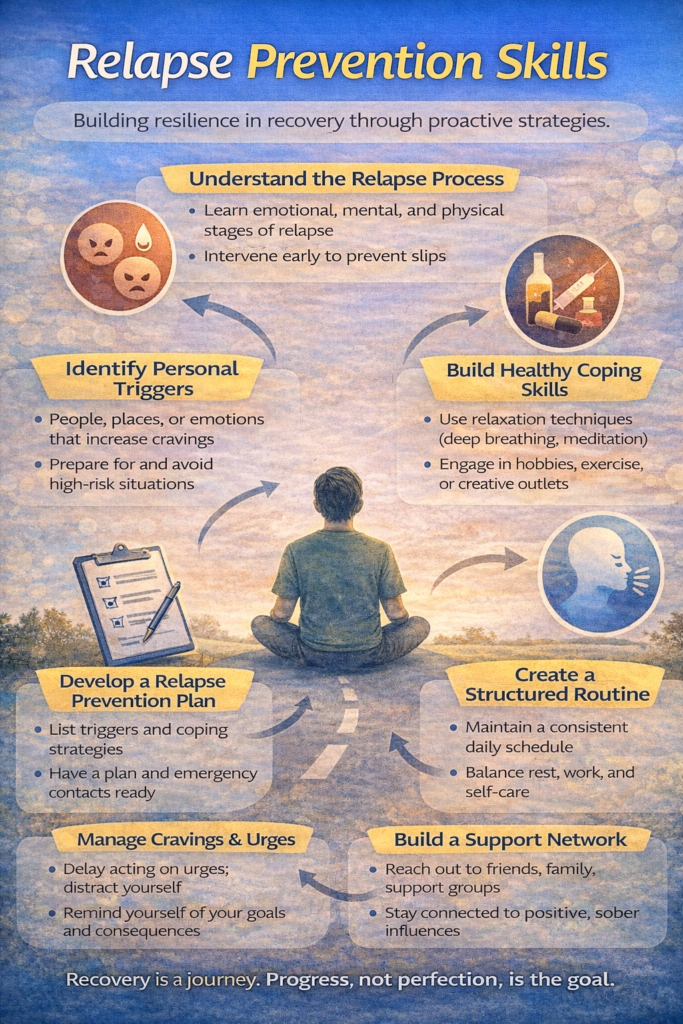
Relapse prevention skills are a vital part of maintaining long-term recovery from substance use. While stopping use is an important first step, sustaining recovery requires ongoing awareness, planning, and the ability to respond effectively to challenges. Relapse is often a gradual process influenced by emotional, mental, and environmental factors. By developing strong relapse prevention skills, individuals can better recognize early warning signs, manage triggers, and build healthier coping strategies that support stability and growth.
Staying Strong: Essential Relapse Prevention Skills for Lasting Recovery
Recovery is more than just stopping substance use—it’s about building a life that supports long-term stability and well-being. One of the most important parts of that process is developing relapse prevention skills. These skills help you recognize risks, manage challenges, and stay grounded when faced with triggers or cravings.
Relapse doesn’t usually happen suddenly—it’s often a gradual process. With the right tools, it can be recognized early and prevented.
Understand the Relapse Process
Relapse is not just a physical return to substance use—it often starts emotionally and mentally.
Stages may include:
- Emotional relapse: Bottling up feelings, isolating, neglecting self-care
- Mental relapse: Thinking about using, romanticizing past use
- Physical relapse: Returning to substance use
Understanding these stages helps you intervene early, before things escalate.
Identify Personal Triggers
Triggers are situations, emotions, or environments that increase the urge to use.
Common triggers include:
- Stress or overwhelming emotions
- People or places associated with past use
- Loneliness or boredom
- Celebrations or social pressure
Recognizing your personal triggers allows you to prepare instead of react.
Develop Healthy Coping Skills
Replacing old habits with healthier ones is key to preventing relapse.
Effective coping strategies:
- Deep breathing and grounding techniques
- Physical activity to reduce stress
- Journaling or creative expression
- Talking to a trusted person
Having multiple coping options gives you flexibility in difficult moments.
Create a Structured Routine
Unstructured time can increase vulnerability. A consistent daily routine helps maintain stability.
Include:
- Regular sleep schedule
- Balanced meals
- Planned activities or responsibilities
- Time for self-care and relaxation
Structure provides a sense of purpose and reduces impulsivity.
Build a Strong Support System
Recovery is not meant to be done alone. Support systems provide accountability and encouragement.
Consider:
- Friends and family who support your recovery
- Support groups (AA, NA, SMART Recovery)
- Therapists or counselors
Connection helps reduce isolation—a major relapse risk factor.
Learn to Manage Cravings
Cravings are normal, especially early in recovery. The key is learning how to handle them.
Techniques include:
- Delay: Wait 10–15 minutes before acting on the urge
- Distract: Engage in another activity
- Remind yourself why you chose recovery
- Ride the urge: Understand that cravings pass
Cravings are temporary—even when they feel intense.
Set Boundaries and Avoid High-Risk Situations
Part of relapse prevention is protecting your environment.
This may involve:
- Avoiding certain people or places
- Saying no to situations that feel unsafe
- Limiting exposure to triggers when possible
Boundaries are not limitations—they’re safeguards for your recovery.
Have a Relapse Prevention Plan
Planning ahead increases confidence and preparedness.
Your plan might include:
- A list of triggers and coping strategies
- Emergency contacts
- Steps to take if you feel at risk
- Ongoing treatment or support commitments
Writing it down makes it easier to follow in stressful moments.
Focus on Progress, Not Perfection
Recovery is a process, and setbacks can happen. What matters is how you respond.
If a slip occurs:
- Reach out for support immediately
- Reflect on what led to it
- Adjust your prevention plan
A slip doesn’t erase progress—it’s an opportunity to strengthen your approach.
Final Thought
Relapse prevention skills are not just about avoiding substance use—they’re about building resilience, awareness, and a healthier way of living. The more you practice these skills, the more confident and prepared you’ll feel in maintaining your recovery.
Staying sober isn’t just about willpower—it’s about having the right tools, support, and strategies in place every day.
Taking Control of Your Recovery: Self-Management Strategies for Relapse Prevention Skills
Relapse prevention is not just about avoiding substance use—it’s about actively managing your thoughts, emotions, and behaviors in a way that supports long-term recovery. While support systems and treatment programs are important, self-management strategies empower you to take ownership of your recovery on a daily basis.
Learning how to recognize risks, respond to challenges, and stay grounded in your goals can make the difference between feeling vulnerable and feeling prepared.
Build Self-Awareness First
Self-management starts with understanding yourself.
Ask:
- What situations make me feel vulnerable?
- What emotions tend to lead to cravings?
- What patterns have led to relapse in the past?
Keeping a journal or tracking your moods and triggers can help you identify patterns and stay one step ahead.
Recognize Early Warning Signs
Relapse often begins before substance use actually happens. Being aware of early warning signs allows you to intervene early.
Common signs:
- Increased stress or irritability
- Isolation or withdrawing from support
- Romanticizing past substance use
- Neglecting routines or responsibilities
Catching these signs early gives you the chance to act before things escalate.
Create a Personal Coping Plan
Instead of reacting in the moment, prepare in advance.
Your coping plan might include:
- Go-to grounding techniques (deep breathing, mindfulness)
- A list of people you can call
- Activities that help distract or reset your mindset
- Reminders of your reasons for recovery
Having a plan reduces impulsive decisions during high-risk moments.
Practice Urge Management Techniques
Cravings are normal, but they don’t have to control your behavior.
Try:
- Delay: Wait 10–15 minutes before acting
- Distract: Engage in a different activity
- Ride the urge: Let the craving pass without reacting
- Reframe thoughts: Remind yourself of consequences and goals
These techniques help you build confidence in your ability to handle urges.
Develop Structure and Routine
A structured day reduces uncertainty and idle time, both of which can increase relapse risk.
Focus on:
- Consistent sleep and wake times
- Planned daily activities
- Time for self-care and relaxation
- Balanced responsibilities
Structure creates stability, which supports better decision-making.
Set Personal Boundaries
Self-management includes protecting your environment.
This may involve:
- Avoiding people or places linked to past use
- Saying no to risky situations
- Limiting exposure to triggers when possible
Boundaries are a proactive way to reduce temptation and maintain control.
Use Self-Talk to Your Advantage
Your internal dialogue plays a powerful role in your behavior.
Shift from:
- “I can’t handle this.” → “I’ve handled this before.”
- “One time won’t hurt” → “I know where that leads.”
Positive, realistic self-talk reinforces your commitment to recovery.
Stay Connected to Support
Even with strong self-management, connection is essential.
Stay engaged with:
- Support groups (AA, NA, SMART Recovery)
- Therapists or counselors
- Trusted friends or family
Self-management doesn’t mean doing it alone—it means knowing when to reach out.
Track Progress and Adjust
Recovery is not static. Regularly check in with yourself.
Ask:
- What’s working well?
- Where am I struggling?
- Do I need to adjust my coping strategies?
Being flexible and honest helps you stay aligned with your goals.
Focus on Progress, Not Perfection
Self-management is about consistency, not perfection. Setbacks can happen, but they don’t define your recovery.
What matters most:
- Learning from challenges
- Recommitting to your goals
- Continuing to build healthier habits
Final Thought
Self-management strategies turn relapse prevention into an active, daily practice. By building awareness, planning ahead, and staying engaged in your recovery, you create a strong foundation for lasting change.
Recovery isn’t just about avoiding relapse—it’s about learning how to live in a way that supports your well-being every day.
Stronger Together: Family Support Strategies for Relapse Prevention Skills
Recovery doesn’t happen in isolation. While individuals build their own coping tools and strategies, family support can play a powerful role in preventing relapse. The way families communicate, set boundaries, and provide encouragement can either strengthen recovery or unintentionally make it more difficult.
Understanding how to support a loved one effectively can help create a stable, recovery-friendly environment that promotes long-term success.
Learn the Basics of Relapse Prevention
Before offering support, it’s important for families to understand what relapse actually looks like.
Relapse is often a process, not a single event:
- Emotional changes (stress, isolation, irritability)
- Mental struggle (cravings, thinking about using)
- Physical relapse (returning to substance use)
When families recognize early warning signs, they can respond sooner and more effectively.
Encourage Open and Honest Communication
Creating a safe space for conversation is one of the most valuable things a family can offer.
Helpful approaches:
- Listen without interrupting or judging
- Use supportive language (“I’m here for you”)
- Avoid criticism, blame, or lectures
- Check in regularly—not just during crises
Open communication reduces secrecy, which is a common risk factor for relapse.
Recognize and Respond to Triggers
Families can help identify and minimize triggers in the home environment.
This may include:
- Reducing exposure to substances or high-risk situations
- Being aware of stressors (conflict, pressure, instability)
- Supporting healthy routines and structure
You don’t need to eliminate every trigger—but awareness helps reduce unnecessary risk.
Support Healthy Routines
Consistency and structure are key components of relapse prevention.
Families can encourage:
- Regular sleep and meal schedules
- Attendance at therapy or support groups
- Engagement in positive activities
Even small daily routines can create stability and reduce vulnerability.
Set Clear and Healthy Boundaries
Support does not mean removing all consequences. Boundaries are essential for both recovery and family well-being.
Examples:
- Not allowing substance use in the home
- Not providing money that could be misused
- Holding consistent expectations around behavior
Boundaries should be communicated clearly and enforced consistently—with care, not punishment.
Avoid Enabling Behaviors
Enabling often comes from a place of love, but can unintentionally support the cycle of relapse.
Be mindful of:
- Making excuses for harmful behavior
- Covering up consequences
- Taking over responsibilities
True support helps a person take responsibility—not avoid it.
Encourage Continued Treatment and Support
Relapse prevention is ongoing. Families can reinforce the importance of staying connected to recovery resources.
Encourage:
- Ongoing therapy or counseling
- Participation in support groups (AA, NA, SMART Recovery)
- Following through with aftercare plans
Consistency in treatment greatly reduces relapse risk.
Have a Plan for High-Risk Situations
Preparing ahead can make a big difference when challenges arise.
Work together to:
- Identify warning signs of relapse
- Create a list of contacts for support
- Decide how the family will respond if concerns arise
Having a plan reduces panic and promotes calm, effective action.
Take Care of Yourself as a Family Member
Supporting someone in recovery can be emotionally demanding. Your well-being matters too.
Consider:
- Your own counseling or support groups
- Setting aside time for rest and personal needs
- Learning stress management strategies
A healthy, supported family is better equipped to support recovery.
Be Patient and Focus on Progress
Recovery is not a straight line. There may be setbacks, but that doesn’t mean failure.
Focus on:
- Small improvements over time
- Consistent effort rather than perfection
- Encouragement instead of criticism
Your steady support can make a lasting difference.
Final Thought
Family support is one of the strongest protective factors in relapse prevention—but it works best when it’s balanced, informed, and consistent. By combining empathy with boundaries and staying engaged in the recovery process, families can help create an environment where lasting change is possible.
You don’t have to do everything perfectly—just showing up with understanding and intention is a powerful place to start.
Building a Network of Support: Community Resource Strategies for Relapse Prevention Skills
Relapse prevention isn’t just an individual effort—it’s strengthened by the environment and support systems around you. While personal coping skills are essential, community resources provide structure, connection, and accountability that help reinforce those skills in real-life situations.
Using community-based support can turn recovery from something you manage alone into something that’s supported, sustainable, and connected.
Understand the Role of Community in Relapse Prevention
Recovery thrives in connection. Community resources help:
- Reduce isolation
- Provide accountability
- Offer guidance during difficult moments
- Reinforce healthy habits and routines
When you’re connected to a recovery-focused environment, you’re less likely to rely solely on willpower.
Engage in Peer Support Groups
Peer support is one of the most effective community-based relapse prevention tools.
Options include:
- 12-step programs (AA, NA)
- SMART Recovery
- Local recovery support meetings
Benefits:
- Shared experiences and understanding
- Real-life coping strategies
- A sense of belonging and accountability
Hearing how others manage triggers and cravings can strengthen your own relapse prevention skills.
Utilize Professional Community Services
Local mental health and addiction services provide structured support beyond initial treatment.
These may include:
- Outpatient counseling or therapy
- Case management services
- Medication management (when appropriate)
- Relapse prevention groups
Professional support helps reinforce skills learned in treatment and provides guidance as new challenges arise.
Leverage National and Local Resources
Organizations like the Substance Abuse and Mental Health Services Administration (SAMHSA) offer valuable tools for ongoing recovery support.
They provide:
- Treatment locators
- Helplines for immediate support
- Educational resources on relapse prevention
Having access to reliable information and support can make a difference during high-risk moments.
Create a Recovery-Friendly Environment
Community resources can help shape your daily environment in ways that support sobriety.
Examples:
- Sober living homes
- Recovery community centers
- Structured day programs
These environments reduce exposure to triggers and provide built-in support systems.
Address Practical Barriers Through Community Support
Relapse risk often increases when basic needs aren’t met. Community resources can help stabilize daily life.
Support may include:
- Employment assistance
- Transportation to meetings or appointments
- Housing support
- Educational or vocational programs
When stressors are reduced, it becomes easier to focus on recovery.
Stay Connected During Transitions
Transitions—such as leaving treatment or changing levels of care—can increase vulnerability.
Community resources help by:
- Providing continuity of care
- Offering consistent support during change
- Reinforcing relapse prevention strategies in real-world settings
Staying connected during these times is critical.
Build a Personal Recovery Network
Think of community resources as part of your personal support system.
This network might include:
- Sponsors or peer mentors
- Therapists or counselors
- Support group members
- Trusted community contacts
The stronger your network, the more support you have when challenges arise.
Participate, Don’t Just Attend
Engagement matters. Actively participating in community resources strengthens their impact.
Ways to engage:
- Share in meetings
- Volunteer or help others in recovery
- Attend regularly and consistently
Active involvement builds confidence and reinforces commitment.
Final Thought
Relapse prevention skills are most effective when they’re supported by a strong, connected community. By using available resources—peer groups, professional services, and local support systems—you create a safety net that extends beyond individual effort.
Recovery is not just about avoiding relapse—it’s about building a life where support, connection, and growth are part of your everyday experience.
Frequently Asked Questions
Here are some common questions:
1. What are relapse prevention skills?
Relapse prevention skills are strategies and tools that help individuals recognize risks, manage triggers, and maintain recovery from substance use. These skills focus on preventing relapse by addressing thoughts, emotions, and behaviors early.
2. Does relapse happen suddenly?
Not usually. Relapse is often a process that develops over time:
- Emotional relapse (stress, isolation, poor self-care)
- Mental relapse (thinking about using, cravings)
- Physical relapse (actual use)
Recognizing early stages is key to prevention.
3. What are common triggers for relapse?
Triggers vary but often include:
- Stress or overwhelming emotions
- People or places linked to past use
- Loneliness or boredom
- Celebrations or social pressure
Knowing your personal triggers helps you prepare and respond effectively.
4. How can I manage cravings?
Cravings are normal and temporary. Helpful techniques include:
- Delay: Wait before acting on the urge
- Distract: Do something else (walk, call someone)
- Ride it out: Let the feeling pass
- Remind yourself of your recovery goals
Cravings usually peak and pass quickly.
5. What role does routine play in relapse prevention?
A structured routine helps reduce stress and idle time, both of which can increase the risk of relapse. Regular sleep, meals, and planned activities create stability and support better decision-making.
6. Do I need a relapse prevention plan?
Yes. A written plan helps you stay prepared. It may include:
- Personal triggers
- Coping strategies
- Emergency contacts
- Steps to take if you feel at risk
Having a plan makes it easier to respond during high-stress moments.
7. How important is a support system?
Very important. Support systems provide:
- Accountability
- Encouragement
- Someone to reach out to during difficult times
This can include friends, family, therapists, or support groups like AA, NA, or SMART Recovery.
8. What are the early warning signs of relapse?
Some common signs include:
- Withdrawing from others
- Increased stress or irritability
- Skipping meetings or therapy
- Thinking “just one time won’t hurt.”
Catching these signs early allows you to take action.
9. What should I do if I feel close to relapsing?
Take immediate action:
- Reach out to someone you trust
- Use coping strategies (grounding, distraction)
- Remove yourself from risky situations
- Review your relapse prevention plan
Acting quickly can prevent a slip from becoming a relapse.
10. If I relapse, does that mean I failed?
No. Relapse can happen and does not erase progress. It’s a signal that something in your plan needs adjustment. The most important step is to seek support and re-engage in recovery right away.
11. Can relapse prevention skills improve over time?
Yes. Like any skill, they get stronger with practice. The more you use them, the more natural and effective they become.
12. Are relapse prevention skills enough on their own?
They are important, but most effective when combined with:
- Ongoing treatment or therapy
- Support systems
- Healthy lifestyle habits
Recovery is strongest when multiple supports are in place.
Conclusion
Relapse prevention is not about perfection—it’s about preparation, consistency, and resilience. With the right skills in place, individuals can navigate stress, cravings, and setbacks without returning to substance use. Over time, these strategies become habits that strengthen confidence and independence in recovery. By staying proactive, connected, and committed to personal growth, relapse prevention skills can help transform recovery from a fragile state into a sustainable and empowering way of life.
Video: Why High-Risk Situations Catch You Off Guard #CopingSkills #StaySober #recoveryjourney