Digital gambling has rapidly expanded with the rise of smartphones, apps, and online platforms, making it easier than ever to place a bet at any time and from virtually anywhere. While it can appear to be a harmless form of entertainment, the constant accessibility, fast pace, and anonymity of digital gambling can increase the risk of problematic behavior. Many individuals may not immediately recognize how quickly casual use can shift into something more harmful. Understanding how digital gambling works—and the risks associated with it—is an important step in making informed, responsible decisions.
Betting Behind the Screen: Understanding Digital Gambling and Its Risks
Digital gambling has transformed the way people engage with games of chance. With just a smartphone or computer, individuals can access casinos, sports betting, poker, and slot-style games anytime, anywhere. While this convenience and accessibility can make gambling feel harmless or मनोरanjing, it also introduces unique risks that are often less visible than traditional, in-person gambling.
Understanding these risks is essential for making informed choices and maintaining control.
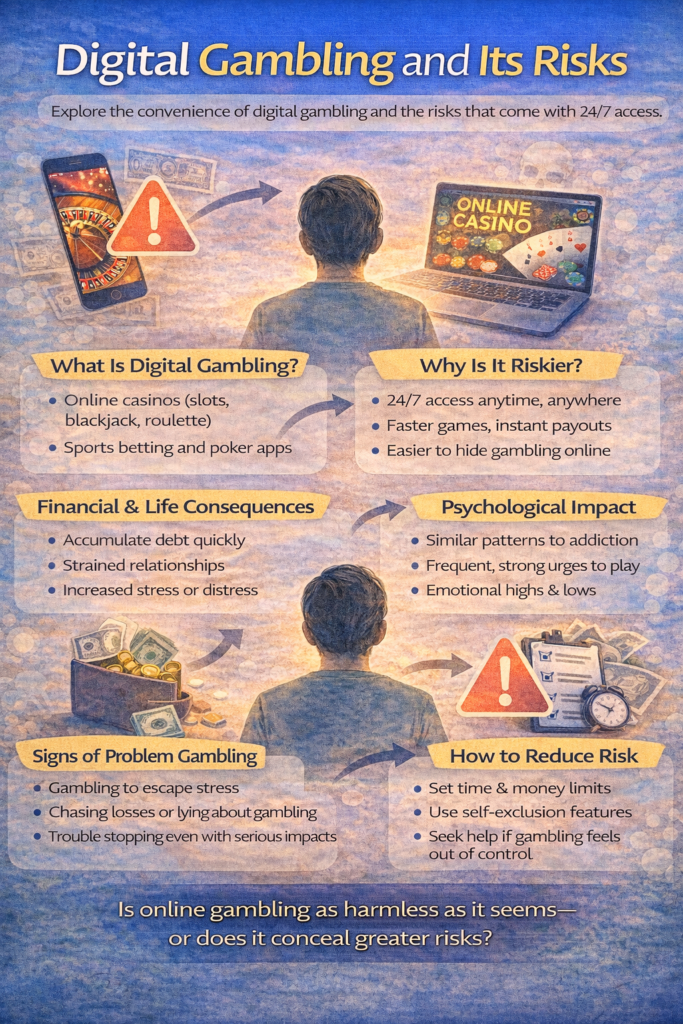
What Is Digital Gambling?
Digital gambling refers to online or app-based betting activities, including:
- Online casinos (slots, blackjack, roulette)
- Sports betting platforms
- Poker and card games
- Mobile gambling apps
- Cryptocurrency-based betting
Unlike physical casinos, digital platforms are available 24/7 and often have lower barriers to entry.
Why Digital Gambling Can Be Riskier
The online environment changes how people interact with gambling—and not always in positive ways.
Key risk factors include:
- Constant access: No closing times or travel required
- Privacy: Gambling can be hidden from others
- Speed of play: Faster games mean quicker losses
- Easy payments: One-click deposits and digital wallets reduce the “feel” of spending money
- Targeted ads: Personalized promotions can encourage continued play
These features can make it easier to lose track of time, money, and control.
The Psychological Impact
Digital gambling is designed to be engaging—and sometimes addictive.
It can affect the brain by:
- Triggering reward pathways similar to substance use
- Encouraging “near-miss” thinking (almost winning feels like winning)
- Creating a cycle of chasing losses
Over time, this can lead to increased urges, compulsive behavior, and difficulty stopping.
Warning Signs of Problem Gambling
It’s important to recognize when gambling may be becoming harmful.
Common signs include:
- Spending more money or time than intended
- Feeling restless or irritable when trying to stop
- Chasing losses or trying to win back money
- Hiding gambling behavior from others
- Neglecting responsibilities or relationships
Early awareness can help prevent more serious consequences.
Financial and Life Consequences
The impact of digital gambling often extends beyond the screen.
Potential consequences:
- Debt or financial instability
- Strained relationships
- Work or academic problems
- Increased anxiety, stress, or depression
Because transactions are digital, losses can accumulate quickly—sometimes without immediate realization.
Who Is Most at Risk?
While anyone can be affected, certain factors increase vulnerability:
- History of addiction or impulsive behavior
- Mental health challenges like anxiety or depression
- High stress or major life changes
- Social isolation
Young adults and individuals comfortable with technology may also be at higher risk due to increased exposure.
Strategies to Reduce Risk
If you choose to engage in digital gambling, setting limits is essential.
Helpful strategies:
- Set strict time and spending limits
- Avoid gambling when stressed or emotional
- Use platform tools like self-exclusion or deposit limits
- Keep gambling as entertainment—not a way to make money
- Track your activity honestly
Being intentional can help maintain control.
When to Seek Help
It may be time to seek support if:
- Gambling feels difficult to control
- You’re experiencing financial or emotional consequences
- You’ve tried to cut back without success
Support options include counseling, support groups, and national resources such as the Substance Abuse and Mental Health Services Administration (SAMHSA), which can help connect individuals with appropriate services.
Final Thought
Digital gambling may seem convenient and harmless, but its risks are real—especially when access is constant, and behavior goes unchecked. By understanding how it works and recognizing early warning signs, individuals can make informed choices and protect their well-being.
Gambling should never come at the cost of your financial stability, mental health, or quality of life. Awareness is the first step toward staying in control.
Staying in Control: Self-Management Strategies for Understanding Digital Gambling and Its Risks
Digital gambling is designed to be fast, accessible, and engaging—but those same features can make it difficult to recognize when it’s becoming a problem. Self-management strategies help you stay aware, set limits, and make intentional decisions rather than reacting in the moment.
Understanding your behavior is the first step toward maintaining control and reducing risk.
Build Awareness of Your Habits
Self-management begins with honest observation.
Ask yourself:
- How often am I gambling online?
- How much money am I spending?
- What times of day or situations lead me to gamble?
Tracking your activity—through notes or app history—can reveal patterns you might not notice otherwise.
Identify Your Triggers
Digital gambling is often linked to emotional or situational triggers.
Common triggers include:
- Stress or anxiety
- Boredom or loneliness
- Financial pressure
- Celebrations or social influence
Recognizing what drives the behavior allows you to pause and choose a different response.
Set Clear Personal Limits
Without boundaries, it’s easy to lose track of time and money in digital environments.
Create limits such as:
- A fixed budget you can afford to lose
- Specific time limits for gambling
- Pre-set days or times when gambling is allowed
The key is to decide these limits before you start—not during.
Use Technology to Your Advantage
Many platforms offer built-in tools to support safer use.
Consider:
- Deposit limits
- Time reminders or session alerts
- Self-exclusion options
Using these features adds an extra layer of accountability when willpower alone isn’t enough.
Practice Pause and Reflection
Digital gambling thrives on quick decisions. Slowing down disrupts that cycle.
Before placing a bet, ask:
- Why am I doing this right now?
- Am I trying to change how I feel?
- What are the possible outcomes?
Even a brief pause can shift behavior from impulsive to intentional.
Replace the Habit with Healthier Alternatives
Self-management isn’t just about stopping behavior—it’s about replacing it.
Try:
- Physical activity or movement
- Social interaction (calling a friend, attending a group)
- Hobbies or creative outlets
- Relaxation techniques like mindfulness or deep breathing
Having alternatives ready reduces the urge to default to gambling.
Manage Emotional States
Strong emotions often increase the urge to gamble.
Helpful strategies:
- Recognize and name your emotions
- Use grounding techniques during stress
- Avoid gambling when feeling overwhelmed, upset, or bored
Learning to sit with emotions reduces the need to escape them.
Monitor Financial Impact
Digital transactions can feel less “real,” making it easier to overspend.
Stay grounded by:
- Regularly checking your bank or account statements
- Setting spending alerts
- Keeping a record of wins and losses
Seeing the full picture helps prevent denial or minimization.
Create Accountability
Self-management is stronger with support.
Consider:
- Sharing your goals with a trusted person
- Checking in regularly about your progress
- Seeking guidance from a counselor or support group if needed
Accountability adds structure and reduces isolation.
Know When to Seek Help
If gambling starts to feel difficult to control, self-management alone may not be enough.
Signs to reach out:
- Repeatedly exceeding limits
- Financial or emotional consequences
- Difficulty stopping despite efforts
Resources like the Substance Abuse and Mental Health Services Administration (SAMHSA) can help connect you to support and treatment options.
Final Thought
Digital gambling can blur the line between entertainment and risk—but self-management strategies help you stay aware and in control. By building habits of reflection, setting boundaries, and recognizing triggers, you can make intentional choices that protect your well-being.
Control doesn’t come from avoiding the issue—it comes from understanding it and managing it with purpose.
Protecting What Matters: Family Support Strategies for Understanding Digital Gambling and Its Risks
Digital gambling can be easy to overlook. Unlike traditional casinos, it happens quietly—on phones, tablets, or computers—often without obvious signs. For families, this can make it harder to recognize when gambling is becoming a problem. However, informed and supportive family involvement can play a critical role in identifying risks, encouraging healthy behavior, and preventing harm.
Understanding how to approach digital gambling as a family can help create awareness, accountability, and a safer environment for everyone involved.
Start with Awareness and Education
Before addressing concerns, families should understand how digital gambling works and why it can be risky.
Key points to learn:
- 24/7 access increases frequency of use
- Digital payments make spending feel less “real.”
- Games are designed to encourage continued play
- Privacy makes it easier to hide behavior
When families understand these factors, they’re better equipped to respond thoughtfully instead of reactively.
Encourage Open, Judgment-Free Conversations
Talking about gambling can be sensitive. A supportive approach makes a difference.
Helpful strategies:
- Ask questions with curiosity, not accusation
- Use “I” statements (“I’ve noticed you’ve been on betting apps more lately”)
- Listen without interrupting or criticizing
- Focus on concern, not control
Open communication builds trust and increases the likelihood that concerns will be taken seriously.
Recognize Warning Signs Early
Families are often the first to notice subtle changes.
Watch for:
- Increased time spent on devices, especially late at night
- Secrecy around phone or computer use
- Unexplained financial issues or frequent money requests
- Mood changes (irritability, anxiety, or withdrawal)
- Talking about “winning it back” or chasing losses
Early recognition allows for early intervention.
Set Healthy Boundaries Around Technology and Finances
Clear, consistent boundaries can reduce risk without creating conflict.
Examples:
- Setting limits on screen time or app usage
- Monitoring or discussing online spending habits
- Establishing financial boundaries (no borrowing for gambling)
Boundaries should be communicated calmly and enforced consistently.
Promote Healthy Alternatives
Families can help shift focus away from gambling by encouraging positive activities.
Suggestions:
- Physical activities or hobbies
- Social time with friends and family
- Creative outlets or skill-building activities
- Structured routines that reduce idle time
Providing alternatives reduces reliance on gambling for entertainment or escape.
Use Available Tools and Safeguards
Many digital platforms offer features that can help limit gambling behavior.
Families can encourage:
- Setting deposit or spending limits
- Using app blockers or parental controls
- Activating self-exclusion options
These tools add an extra layer of protection, especially when self-control is difficult.
Avoid Enabling Behaviors
It’s natural to want to help, but some actions can unintentionally support the problem.
Avoid:
- Providing money to cover losses
- Ignoring or minimizing the behavior
- Making excuses for financial or behavioral consequences
Support should encourage responsibility—not remove it.
Encourage Professional Support When Needed
If digital gambling becomes difficult to manage, outside help may be necessary.
Options include:
- Counseling or therapy
- Support groups for gambling-related concerns
- Financial counseling is needed
Families can frame this as support:
- “You don’t have to handle this alone—there are people who understand and can help.”
Resources such as the Substance Abuse and Mental Health Services Administration (SAMHSA) can help connect individuals with appropriate services.
Take Care of the Family System
Supporting someone with risky behaviors can be stressful. Families need support, too.
Consider:
- Setting aside time for your own well-being
- Seeking guidance from counselors or support groups
- Maintaining routines and boundaries
A balanced, supported family is better able to provide effective help.
Be Patient and Stay Consistent
Change doesn’t happen overnight. There may be resistance or setbacks along the way.
Focus on:
- Consistent communication
- Clear expectations
- Encouragement over criticism
Progress often comes in small steps.
Final Thought
Digital gambling risks can be harder to see—but they are no less real. Family support, when informed and balanced, can make a meaningful difference in recognizing problems early and guiding healthier choices.
You don’t need to have all the answers. Showing up with awareness, boundaries, and support is a powerful place to start—and it can help protect both your loved one and your family’s well-being.
Stronger Together: Community Strategies to Understand Digital Gambling and Its Risks
Digital gambling has become more accessible than ever, making it easier for individuals to engage—but also easier to overlook the risks. Because much of this activity occurs privately on personal devices, understanding its impact often requires looking beyond the individual to the broader community.
Community strategies play a key role in raising awareness, providing education, and offering support systems that help individuals recognize and manage the risks associated with digital gambling.
Promote Community Education and Awareness
One of the most effective strategies is increasing public understanding of digital gambling.
Communities can support awareness by:
- Hosting workshops or seminars on gambling risks
- Providing educational materials in schools, workplaces, and health centers
- Encouraging open conversations about mental health and behavioral addictions
When people understand how digital gambling works—and how it can become harmful—they’re more likely to make informed decisions.
Leverage Local Mental Health Services
Community mental health centers and clinics are valuable resources for understanding and addressing gambling-related concerns.
They can offer:
- Assessments for problematic gambling behavior
- Counseling and therapy services
- Referrals to specialized treatment programs
These services help connect individuals to professional support early, before issues escalate.
Engage Peer Support Networks
Peer support groups provide real-world insight and shared experience.
Examples include:
- Gambling recovery groups
- SMART Recovery programs
- General addiction support groups
These spaces allow individuals to:
- Share challenges openly
- Learn coping strategies from others
- Build accountability and connection
Hearing from others who have faced similar struggles can make the risks feel more real and relatable.
Partner with Schools and Workplaces
Educational institutions and employers can play a preventive role.
They can:
- Offer awareness programs about digital gambling risks
- Provide access to counseling or employee assistance programs (EAPs)
- Encourage healthy digital habits and financial literacy
These environments reach individuals early and consistently, helping reduce risk over time.
Utilize National and Local Resources
Organizations like the Substance Abuse and Mental Health Services Administration (SAMHSA) provide tools and support for individuals and communities.
They offer:
- Helplines for confidential support
- Treatment locators
- Educational materials on behavioral health risks
These resources can guide individuals toward appropriate help when needed.
Address Social and Environmental Factors
Digital gambling behavior is often influenced by broader life stressors.
Community support can help by addressing:
- Financial stress through budgeting or counseling services
- Social isolation through community programs or events
- Lack of recreational options by promoting healthy activities
Reducing these underlying stressors can lower the urge to engage in risky behaviors.
Encourage Responsible Technology Use
Communities can promote healthier relationships with technology.
Strategies include:
- Educating about screen time balance
- Encouraging use of app limits or blockers
- Promoting digital literacy and awareness of targeted advertising
Understanding how technology influences behavior is key to managing digital risks.
Create Safe and Supportive Environments
A strong community provides spaces where individuals feel supported rather than judged.
This includes:
- Recovery-friendly environments
- Accessible support groups
- Inclusive, stigma-free conversations about addiction and mental health
Supportive environments make it easier for individuals to seek help without fear.
Foster Collaboration Across Community Systems
Effective community strategies often involve collaboration between:
- Healthcare providers
- Schools and universities
- Employers
- Local organizations and nonprofits
Working together creates a more comprehensive support network.
Final Thought
Understanding digital gambling and its risks isn’t just an individual responsibility—it’s a shared effort. Community strategies provide education, connection, and support that help individuals recognize risks earlier and make healthier choices.
When communities come together to address digital gambling, they create an environment where awareness grows, stigma decreases, and support becomes accessible—making it easier for individuals to stay informed, balanced, and in control.
Frequently Asked Questions
Here are some common questions:
1. What is digital gambling?
Digital gambling refers to betting or wagering money on online platforms or mobile apps, including online casinos, sports betting, poker, and other games of chance.
2. Is digital gambling more risky than traditional gambling?
It can be. Digital gambling offers:
- 24/7 access
- Faster gameplay
- Greater privacy
These factors can make it easier to lose track of time and money, increasing the risk of problematic behavior.
3. Why is online gambling so addictive?
Digital gambling is designed to be engaging. It uses:
- Quick rewards and instant results
- Bright visuals and sound effects
- “Near wins” that encourage continued play
These features can trigger the brain’s reward system, making it harder to stop.
4. What are the common signs of problematic digital gambling?
Warning signs include:
- Spending more time or money than intended
- Chasing losses (trying to win money back)
- Hiding gambling activity
- Feeling anxious or irritable when not gambling
- Neglecting responsibilities
5. Can digital gambling affect mental health?
Yes. It can contribute to:
- Increased stress and anxiety
- Depression
- Guilt or shame
- Sleep problems
Over time, these effects can worsen overall well-being.
6. What are the financial risks?
Because transactions are digital, losses can happen quickly and feel less “real.”
Risks include:
- Accumulating debt
- Overspending due to easy deposits
- Financial instability
7. Who is most at risk for developing problems?
Higher risk groups include:
- Individuals with a history of addiction
- People experiencing stress, anxiety, or depression
- Young adults and frequent technology users
- Those facing financial pressure
8. How can I reduce my risk if I gamble online?
Helpful strategies:
- Set strict time and money limits
- Avoid gambling when emotional or stressed
- Use platform tools like deposit limits or self-exclusion
- Treat gambling as entertainment—not income
9. What should I do if I feel like I’m losing control?
Take action early:
- Pause gambling activity
- Talk to someone you trust
- Seek professional support
- Use blocking or self-exclusion tools
10. Can digital gambling lead to addiction?
Yes. Repeated exposure and reliance on gambling for emotional relief can lead to behavioral addiction, making it difficult to stop without support.
11. How can families help someone struggling with digital gambling?
Families can:
- Approach the situation with empathy, not judgment
- Encourage open conversation
- Set clear financial and behavioral boundaries
- Suggest professional help if needed
12. Where can I find help or support?
You can reach out to:
- Therapists or counselors
- Support groups for gambling concerns
- National resources like the Substance Abuse and Mental Health Services Administration (SAMHSA), which offers confidential support and treatment referrals
Conclusion
Although digital gambling offers convenience and entertainment, its risks should not be overlooked. The potential for financial loss, emotional distress, and compulsive behavior highlights the importance of awareness and self-regulation. By recognizing warning signs early, setting clear boundaries, and seeking support when needed, individuals can reduce harm and maintain control. Ultimately, informed choices and a balanced approach are key to ensuring that digital gambling does not negatively impact overall well-being.
Video: The Trap Nobody Talks About with Online Betting #gambling #psychology #awareness