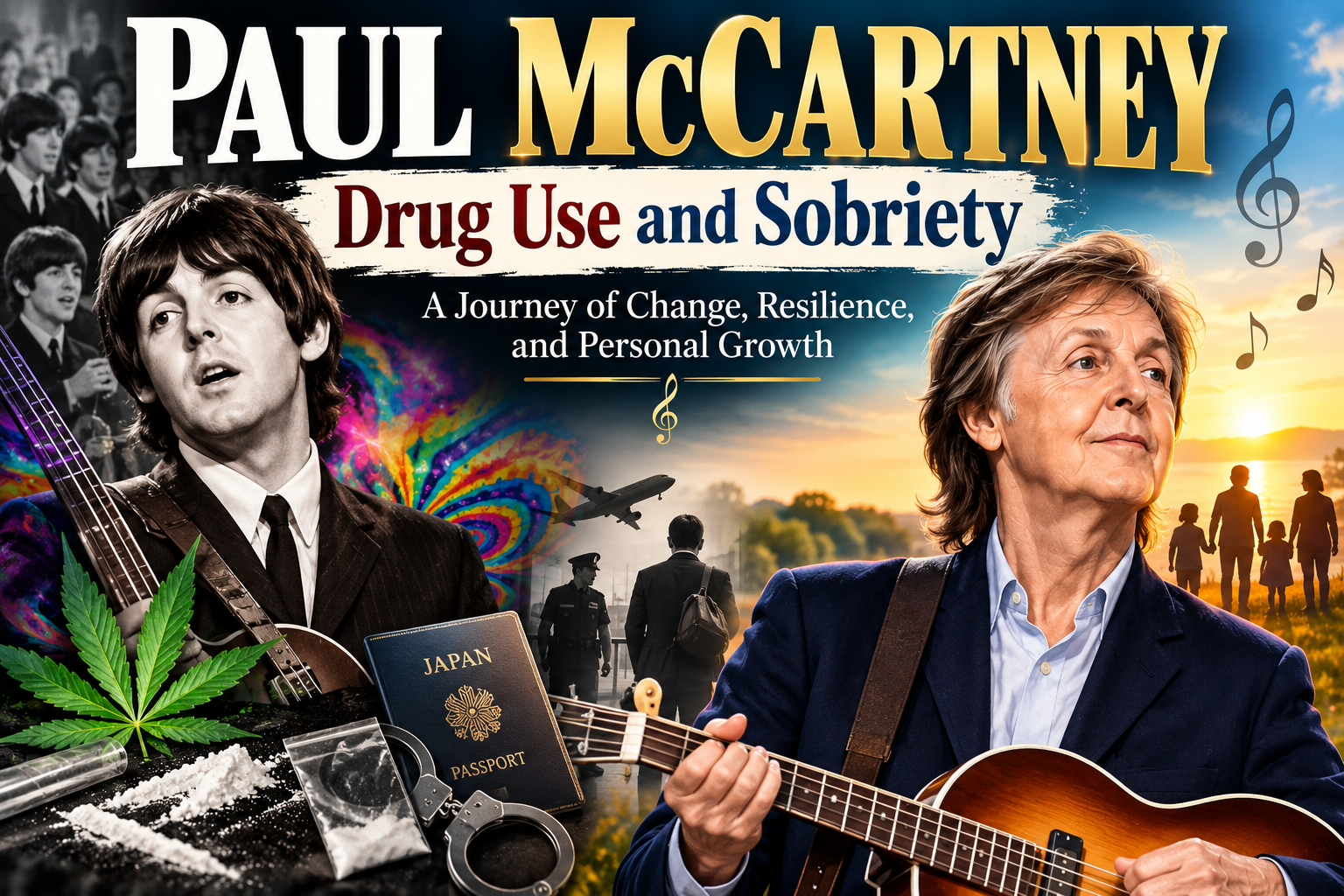
Paul McCartney is one of the most influential musicians in history, celebrated for his extraordinary songwriting, legendary career with The Beatles, and decades of musical success. However, behind the fame and creativity, McCartney experienced a period of recreational drug use during the cultural revolution of the 1960s and beyond.
Throughout his life, McCartney has spoken openly about experimenting with marijuana, LSD, and other substances. His experiences reflect the complicated relationship between celebrity culture, social influences, personal choices, and substance use.
Unlike some musicians whose struggles resulted in severe addiction and repeated rehabilitation, McCartney’s publicly documented experiences do not establish a history of severe substance use disorder. His story is better understood as one of drug experimentation, changing attitudes, and decisions to reduce or discontinue certain substances.
By examining his journey through self-management, family support, and community resources, we can explore how individuals can reevaluate substance use, establish healthier priorities, and make meaningful lifestyle changes.
Paul McCartney’s Early Drug Use and Experiences
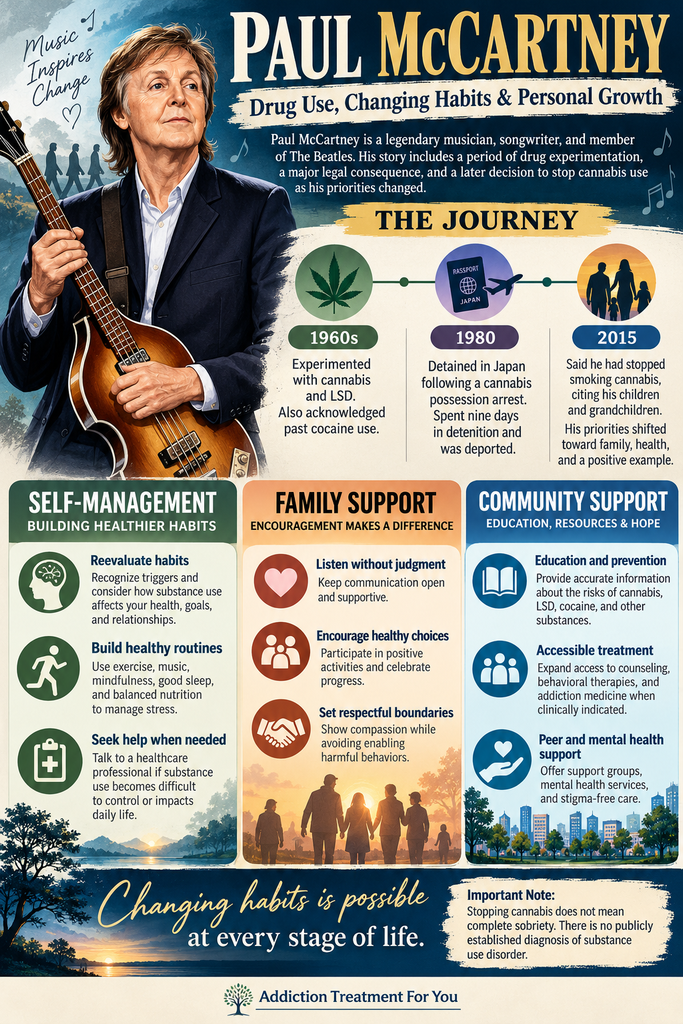
During the 1960s, The Beatles became closely associated with changing social attitudes, experimentation, and the counterculture movement. McCartney acknowledged using marijuana and LSD, and later discussed his past cocaine use.
Although these substances were common in some entertainment circles, their use carried significant health, psychological, and legal risks.
Some important aspects of McCartney’s experiences include:
- Marijuana: McCartney used cannabis for many years and publicly discussed his views on it.
- LSD: He experimented with LSD during The Beatles’ psychedelic period and spoke about its influence on his perceptions.
- Cocaine: He acknowledged past cocaine use but described becoming uncomfortable with the drug culture surrounding it.
- Legal consequences: In January 1980, McCartney was arrested in Japan after customs officials discovered marijuana in his luggage. He spent nine days in detention, was released without charges, and was deported. The incident forced the cancellation of Wings’ Japanese tour.
The arrest brought significant personal and professional consequences. McCartney later described the experience as frightening, particularly because he worried about being separated from his family.
His experiences demonstrate that substance use can have consequences even when an individual does not meet the diagnostic criteria for addiction.
Choosing a Different Lifestyle: McCartney’s Decision to Stop Cannabis Use
As McCartney grew older, his priorities evolved. Family relationships, personal health, and maintaining an active musical career became increasingly important.
In a 2015 interview, McCartney revealed that he had stopped smoking cannabis because he did not want to set a negative example for his children and grandchildren.
His decision reflected a change in personal values rather than a publicly documented addiction-treatment experience. He also acknowledged continuing to drink alcohol occasionally, meaning it would be inaccurate to describe him as completely abstinent from all psychoactive substances.
His story illustrates several important lessons:
- People can reconsider substance use at different stages of life.
- Family responsibilities can influence decisions about health and behavior.
- Changing priorities can encourage healthier routines.
- Stopping one substance does not necessarily mean complete sobriety.
- Personal growth does not require a history of severe addiction.
McCartney’s journey provides an opportunity to discuss prevention, self-awareness, and the importance of making informed decisions.
Self-Management Strategies: Developing Healthier Habits
Self-management involves recognizing behaviors that may interfere with physical health, emotional well-being, relationships, and long-term goals.
For individuals who use substances recreationally or struggle with addiction, developing self-awareness is an important starting point.
McCartney’s decision to discontinue cannabis use offers an example of how changing personal priorities can motivate behavioral change.
Practical self-management strategies include:
- Recognize triggers: Identify situations, emotions, environments, or social pressures that encourage substance use.
- Establish personal goals: Develop meaningful reasons to reduce or discontinue substance use, such as improving health or strengthening family relationships.
- Practice stress management: Use exercise, meditation, music, relaxation techniques, or mindfulness to manage emotional stress.
- Build healthy routines: Maintain regular sleep, balanced nutrition, physical activity, and meaningful daily responsibilities.
- Avoid high-risk environments: Limit exposure to situations where substance use is encouraged or difficult to resist.
- Seek professional guidance: Consult healthcare professionals when substance use becomes difficult to control or affects daily functioning.
- Monitor progress: Reflect on improvements in mood, relationships, concentration, and overall well-being.
Creative activities can also provide healthy opportunities for emotional expression. McCartney’s continued involvement in music demonstrates the value of maintaining meaningful interests throughout life.
However, creative activities alone are not substitutes for evidence-based addiction treatment when a substance use disorder is present.
Family Support Strategies: The Importance of Relationships
Family relationships can strongly influence decisions about substance use, treatment, and long-term recovery.
McCartney’s comments about his children and grandchildren demonstrate how family responsibilities helped shape his decision to stop smoking cannabis.
His relationship with his late wife, Linda McCartney, was also an important part of his personal and professional life. They raised a family together and collaborated musically. However, it would be speculative to credit Linda or other relatives with treating an addiction that McCartney has not publicly established.
For families supporting someone who wants to change their substance use, encouragement, communication, and healthy boundaries can make a meaningful difference.
Helpful family support strategies include:
- Encourage open communication: Create opportunities to discuss substance use without criticism or judgment.
- Provide emotional reassurance: Recognize that changing long-standing habits may involve uncertainty and setbacks.
- Promote healthy activities: Participate in family outings, exercise, hobbies, and substance-free celebrations.
- Respect personal decisions: Support an individual’s goals without attempting to control every aspect of their behavior.
- Establish healthy boundaries: Avoid enabling harmful behaviors while maintaining compassion and respect.
- Learn about addiction: Understand the differences between recreational use, risky use, physical dependence, and substance use disorder.
- Recognize progress: Acknowledge positive changes, including improved communication, healthier routines, and greater responsibility.
Family support is valuable, but it should not replace professional treatment when addiction, withdrawal, or co-occurring mental health conditions require clinical care.
McCartney’s decision to stop cannabis use highlights how personal relationships can influence motivation and lifestyle choices.
Community Support Strategies: Encouraging Healthier Choices
Communities play an essential role in preventing substance-related harm, reducing stigma, and helping individuals access appropriate care.
McCartney’s experiences occurred during an era when public attitudes toward recreational drugs were changing rapidly. Today, greater scientific understanding of substance use disorders provides opportunities for education, prevention, and evidence-based treatment.
Not everyone who uses drugs develops an addiction. Nevertheless, communities benefit from providing accurate information about risks and offering accessible support for individuals who want to reduce or stop substance use.
Effective community support strategies include:
- Substance use education: Provide accurate information about cannabis, stimulants, hallucinogens, alcohol, and their potential health consequences.
- Early intervention: Encourage screening and brief interventions before substance use becomes more harmful.
- Accessible treatment: Expand access to counseling, behavioral therapies, addiction medicine, and medications when clinically indicated.
- Peer support programs: Offer recovery communities and support groups that encourage connection and accountability.
- Mental health services: Address anxiety, depression, trauma, and other conditions that may coexist with substance use.
- Family education programs: Teach families how to communicate effectively, establish boundaries, and recognize warning signs.
- Stigma reduction: Promote the understanding that substance use disorders are treatable medical conditions rather than moral failures.
- Healthy recreational opportunities: Support music programs, sports, volunteer activities, and community events that encourage meaningful social connections.
Organizations such as the Substance Abuse and Mental Health Services Administration (SAMHSA) and the National Institute on Drug Abuse (NIDA) provide educational resources about substance use, prevention, treatment, and recovery.
These resources can help individuals and families make informed decisions about substance-related health concerns.
Understanding the Difference Between Substance Use and Addiction
One important lesson from McCartney’s history is the need to distinguish substance use from a diagnosed substance use disorder.
Using a substance does not automatically mean someone has an addiction. A substance use disorder involves a clinically significant pattern of problematic use, potentially including impaired control, cravings, continued use despite harm, and disruption of important responsibilities.
McCartney’s public accounts establish a history of drug use and legal consequences, but they do not establish that he underwent rehabilitation or experienced a diagnosed substance use disorder.
This distinction matters because inaccurate assumptions about public figures can reinforce misconceptions about addiction and recovery.
Individuals with substance use disorders may require comprehensive care, including psychotherapy, medication when appropriate, relapse-prevention strategies, and ongoing recovery support.
Lessons From Paul McCartney’s Journey
McCartney’s experiences offer broader lessons about personal responsibility, behavioral change, and the influence of family relationships.
Change can happen at any age.
Individuals can reevaluate long-standing habits when their goals, responsibilities, or priorities change.
Family relationships can provide motivation.
Caring about loved ones may encourage healthier choices and greater personal accountability.
Fame does not eliminate consequences.
Substance use can create legal, professional, and personal difficulties regardless of wealth or public recognition.
Healthy routines support well-being.
Physical activity, creative interests, social connections, and meaningful goals can help individuals maintain positive lifestyle changes.
Recovery and behavior change are individual experiences.
Some people change their substance use independently, while others benefit from structured treatment and long-term professional support.
Conclusion: A Story of Changing Priorities and Personal Growth
Paul McCartney’s journey from the experimental drug culture of the 1960s to his later decision to stop using cannabis illustrates how personal values and responsibilities can evolve throughout life.
Although his experiences should not be misrepresented as a documented journey through severe addiction and rehabilitation, they provide meaningful lessons about self-awareness, consequences, and lifestyle change.
Through self-management, individuals can recognize harmful patterns, establish healthier routines, and develop meaningful goals. Families can encourage positive decisions through understanding, communication, and emotional support. Communities can strengthen these efforts by providing education, accessible healthcare, and compassionate treatment resources.
McCartney’s story reminds us that our past decisions do not have to determine our future choices. Whether someone is reconsidering recreational substance use or recovering from a substance use disorder, meaningful change can begin with recognizing what matters most.
The message is simple: Personal growth is possible at every stage of life, and healthier choices can create a more fulfilling future.
Frequently Asked Questions and Answers
1. Did Paul McCartney struggle with drug addiction?
Paul McCartney has openly acknowledged experimenting with marijuana, LSD, and cocaine during his musical career. However, there is no well-established public evidence that he was diagnosed with a severe substance use disorder or underwent formal addiction rehabilitation. His experiences demonstrate the difference between recreational drug use, potentially harmful substance use, and clinically diagnosed addiction.
2. What drugs did Paul McCartney use?
McCartney has publicly discussed using several substances, particularly during the 1960s and 1970s, including:
- Marijuana: Used for many years before eventually quitting.
- LSD: Experimented with during The Beatles’ psychedelic period.
- Cocaine: Acknowledged past use but later expressed dissatisfaction with its effects and associated lifestyle.
His experiences occurred during an era when drug experimentation was prominent in certain musical and cultural circles.
3. Why did Paul McCartney start using drugs?
McCartney’s early drug experimentation was influenced by the cultural environment of the 1960s, including changing social attitudes, artistic experimentation, and exposure to other musicians who used substances. He has discussed curiosity and the influence of his social environment. However, it would be inaccurate to attribute his drug use to one specific psychological cause without supporting evidence.
4. Was Paul McCartney arrested for drug possession?
Yes. In January 1980, McCartney was arrested at Narita Airport in Japan after authorities discovered approximately 219 grams of marijuana in his luggage. He spent nine days in detention before being released without charges and deported. The incident resulted in the cancellation of Wings’ Japanese concert tour and became one of the most publicized drug-related events of his career.
5. When did Paul McCartney stop using marijuana?
In a 2015 interview, McCartney stated that he had stopped smoking marijuana. He explained that he stopped partly to set a positive example for his children and grandchildren. His comments reflected a change in personal priorities as he grew older.
6. Is Paul McCartney completely sober today?
McCartney has publicly stated that he stopped smoking cannabis, but that does not necessarily mean he is completely abstinent from alcohol or every psychoactive substance. He has previously acknowledged occasional alcohol consumption. His current substance use cannot be independently confirmed, so describing him as completely sober would be misleading.
7. Did Paul McCartney attend drug rehabilitation?
There is no widely documented evidence that McCartney attended a formal drug rehabilitation program. His publicly discussed decision to stop cannabis use appears to have been a personal lifestyle choice rather than part of a documented addiction-treatment program.
8. Did drug use influence Paul McCartney’s music?
McCartney has acknowledged that psychedelic experiences influenced his perceptions during The Beatles’ experimental period. Albums such as Revolver and Sgt. Pepper’s Lonely Hearts Club Band emerged during an era of musical experimentation. However, The Beatles’ creativity also reflected their musical talent, collaboration, recording innovations, and artistic development. Drug use should not be considered a requirement for creativity.
9. How did family influence Paul McCartney’s decision to stop using marijuana?
McCartney explained that his children and grandchildren influenced his decision to discontinue cannabis use. He wanted to demonstrate healthier choices and serve as a positive role model. His experience illustrates how family responsibilities and changing personal values can motivate behavioral change.
10. What self-management strategies can individuals learn from Paul McCartney’s experiences?
McCartney’s changing attitudes toward substance use provide an opportunity to discuss healthier lifestyle choices. Useful strategies include recognizing substance-related risks, identifying personal motivations for change, avoiding high-risk situations, maintaining meaningful activities, practicing stress management, and seeking professional assistance when substance use becomes difficult to control.
11. How can families support someone who wants to stop using drugs?
Families can encourage positive behavioral changes by maintaining open communication, avoiding judgment, and providing emotional reassurance. Setting healthy boundaries, participating in substance-free activities, and recognizing progress can also help. When a substance use disorder is present, family members can encourage professional treatment while respecting the individual’s autonomy.
12. What community resources are available for individuals struggling with substance use?
Community resources can provide education, treatment, and long-term recovery support. These include addiction counseling, behavioral therapy, mental health services, peer recovery groups, and family education programs.
In the United States, individuals can contact SAMHSA’s National Helpline at 1-800-662-HELP (4357) for confidential treatment referrals and information.
13. Can someone stop using drugs without attending rehabilitation?
Some individuals can discontinue certain substances without formal rehabilitation, particularly when they do not have a substance use disorder or significant physical dependence. However, people experiencing addiction may benefit from structured treatment, counseling, medication, and continuing support.
Importantly, abruptly stopping alcohol or benzodiazepines after prolonged heavy use can cause dangerous withdrawal symptoms and may require medical supervision.
14. What is the difference between recreational drug use and addiction?
Recreational drug use refers to substance consumption for pleasure or other nonmedical reasons. Addiction, clinically described as a substance use disorder, involves a problematic pattern of use that can include impaired control, cravings, continued use despite harmful consequences, and interference with daily responsibilities.
Not everyone who uses substances develops addiction, but recreational use can still create significant health, safety, and legal risks.
15. What are the most important lessons from Paul McCartney’s drug use and lifestyle changes?
McCartney’s experiences show that personal priorities can change over time. His decision to stop using cannabis highlights the potential influence of family responsibilities, self-awareness, and long-term goals.
His story also reinforces the importance of distinguishing drug experimentation from diagnosed addiction and recognizing that people follow different paths toward healthier behaviors.
Video: