Relapse stories involving celebrities, athletes, musicians, and other public figures often attract headlines, but behind the publicity is an experience shared by many people living with substance use disorders. Recovery is rarely a perfectly straight path. A return to substance use can occur after months or even years of progress, especially when stress, cravings, untreated mental health concerns, isolation, or exposure to familiar triggers begin to build.
A public figure’s relapse should not be treated as entertainment or proof that treatment “failed.” Instead, these stories can help families understand an important lesson: warning signs often appear before a crisis, and recognizing them early can create an opportunity for intervention.
Relapse Can Begin Before Substance Use
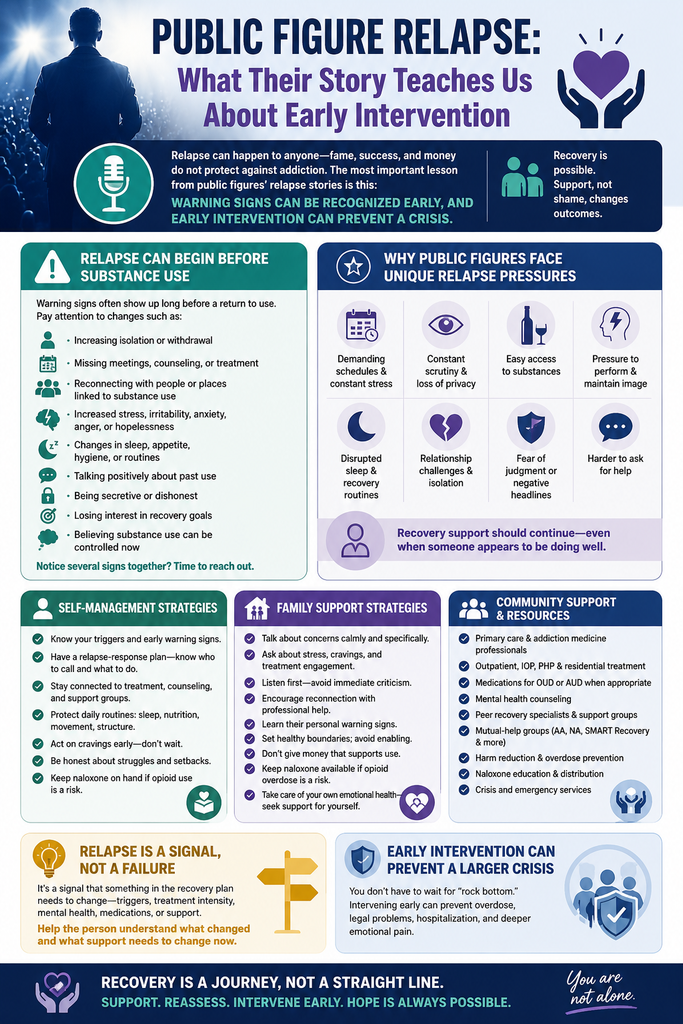
Relapse is often viewed as the moment someone drinks alcohol or uses drugs again. In reality, changes may develop much earlier. A person may gradually stop participating in recovery activities, withdraw from supportive relationships, romanticize past substance use, or return to environments associated with previous use.
Possible warning signs may include:
- Increasing isolation from family, friends, or recovery supports
- Missing counseling, treatment, or peer-support meetings
- Reconnecting with people or environments strongly associated with substance use
- Increased stress, irritability, anxiety, anger, or hopelessness
- Changes in sleep, appetite, hygiene, or daily routines
- Talking positively about previous substance use
- Becoming secretive about activities, money, medications, or whereabouts
- Believing that substance use can now be controlled
- Losing interest in previously important recovery goals
- Experiencing stronger or more frequent cravings
Not every change means relapse is occurring. However, several warning signs appearing together deserve attention.
Why Public Figures May Face Unique Relapse Pressures
Fame and financial success do not protect someone from addiction. Public figures may experience demanding schedules, constant scrutiny, easy access to substances, occupational stress, disrupted sleep, relationship difficulties, and pressure to maintain a successful public image.
They may also fear that acknowledging cravings or emotional difficulties will become a public story. This can make asking for help more complicated.
Their experiences reinforce an important principle: recovery support should continue even when someone appears to be doing well.
Self-Management Strategies for Early Intervention
People in recovery can learn to recognize their personal warning signs and respond before substance use occurs.
- Identify individual triggers. Keep track of situations, emotions, relationships, environments, and thoughts that increase cravings.
- Develop a relapse-response plan. Decide in advance whom to contact and what actions to take when warning signs appear.
- Maintain treatment connections. Counseling, medical care, medications when appropriate, and recovery programs can provide ongoing stability.
- Protect daily routines. Consistent sleep, nutrition, exercise, responsibilities, and meaningful activities can support recovery.
- Respond quickly to cravings. Contact a trusted person, leave triggering environments, use coping skills, or seek professional support rather than waiting for cravings to become overwhelming.
- Be honest about setbacks. Hiding cravings or a return to substance use can delay help.
- Keep naloxone accessible when opioid use is possible. Reduced tolerance after abstinence can increase overdose risk if opioid use resumes.
Family Support Strategies
Families frequently notice behavioral changes before they understand what is happening. Early conversations can be valuable, but confrontation, humiliation, or constant accusations may push someone further into secrecy.
Family members can:
- Discuss concerning changes calmly and specifically.
- Ask about stress, cravings, treatment participation, and emotional well-being.
- Listen without immediately criticizing or lecturing.
- Encourage reconnection with treatment professionals or recovery supports.
- Learn the person’s individual relapse warning signs.
- Establish healthy boundaries rather than enabling substance use.
- Avoid providing money or resources that knowingly support substance use.
- Keep naloxone available when opioid overdose is a potential risk.
- Seek counseling or support groups for their own emotional well-being.
Families cannot control another person’s recovery, but they can create an environment where asking for help is easier.
Community Support and Resources
Recovery becomes more difficult when people are expected to manage addiction alone. Communities can provide multiple levels of support before, during, and after a relapse.
Helpful resources may include:
- Primary care and addiction medicine professionals
- Outpatient substance use treatment
- Intensive outpatient and partial hospitalization programs
- Residential treatment when clinically appropriate
- Medications for opioid or alcohol use disorders when indicated
- Mental health counseling
- Peer recovery specialists
- Recovery community organizations
- Mutual-help groups such as AA, NA, SMART Recovery, and other peer-support programs
- Harm-reduction and overdose-prevention services
- Naloxone education and distribution
- Crisis and emergency services when immediate safety is threatened
The appropriate level of care depends on the individual. A professional assessment can help determine whether treatment should be intensified following new warning signs or a return to substance use.
Relapse Is a Signal to Reassess the Recovery Plan
A relapse does not erase previous recovery progress, but it should be taken seriously. It may indicate that triggers have changed, that treatment intensity is insufficient, that medications need evaluation, that mental health symptoms require additional attention, or that the person’s support network needs strengthening.
The question should not simply be, “Why did you use again?”
A more useful question may be, “What changed before this happened, and what support needs to change now?”
That shift encourages problem-solving rather than shame.
Early Intervention Can Prevent a Larger Crisis
Public figures often receive widespread attention only after hospitalization, overdose, arrest, or another major event. Families should not assume that intervention must wait for such a dramatic turning point.
Someone does not need to “hit rock bottom” before receiving help. Increasing cravings, isolation, treatment disengagement, emotional deterioration, or a brief return to substance use can all be reasons to reassess the recovery plan.
Early intervention may mean calling a counselor, scheduling an addiction assessment, increasing treatment frequency, reconnecting with peer support, reviewing medications with a clinician, developing an overdose-safety plan, or entering a higher level of care.
Conclusion
Public stories of relapse remind us that addiction can remain vulnerable to recurrence even after significant periods of recovery. Fame, success, money, and previous treatment do not eliminate that risk.
The most valuable lesson is not that relapse is inevitable. It is that changes can often be recognized and addressed before they become a devastating crisis.
For individuals, this means recognizing personal warning signs and seeking help early. For families, it means responding with concern, boundaries, and action rather than shame. For communities, it means making evidence-based treatment, mental health care, peer support, harm reduction, and recovery resources accessible when people need them.
A relapse should trigger support, reassessment, and early intervention—not abandonment. Recovery can continue, and responding sooner may prevent the next warning sign from becoming an emergency.
Frequently Asked Questions
Here are some common questions:
1. What can we learn when a public figure experiences relapse?
Public figures’ experiences can remind us that addiction can affect anyone, regardless of fame, wealth, career success, or access to resources. Their stories can also highlight the importance of recognizing warning signs and seeking help before substance use develops into a larger crisis.
2. Does relapse mean addiction treatment has failed?
No. A relapse or return to substance use does not automatically mean that treatment has failed. Substance use disorders can have a chronic, recurring course. A relapse may indicate that the recovery plan needs to be reassessed or intensified.
3. Can relapse begin before someone actually uses a substance?
Yes. Changes in thoughts, emotions, behaviors, and routines may occur before substance use. Increasing isolation, skipping treatment, romanticizing previous substance use, worsening stress, and returning to high-risk environments can be warning signs.
4. What are common early warning signs of relapse?
Possible warning signs include:
- Increased cravings
- Isolation from supportive people
- Missing counseling or recovery meetings
- Changes in sleep or daily routines
- Increased irritability, anxiety, or hopelessness
- Reconnecting with people or places associated with substance use
- Becoming increasingly secretive
- Losing interest in recovery goals
- Thinking, “I can control it this time”
One sign alone does not necessarily indicate relapse, but multiple changes warrant attention.
5. Why might public figures be vulnerable to relapse?
Public figures may experience intense work demands, disrupted schedules, loss of privacy, constant criticism, relationship pressures, and easy access to substances. Some may also hesitate to seek help for fear of judgment or negative publicity.
6. Why is early intervention so important?
Early intervention can address problems while they are still manageable. Reconnecting someone with treatment, strengthening support, addressing mental health symptoms, and creating a safety plan may help prevent overdose, hospitalization, legal consequences, or further deterioration.
7. Should families wait until someone “hits rock bottom”?
No. A person does not need to experience catastrophic consequences before receiving help. Families can respond when they notice concerning behavioral changes, increasing cravings, treatment disengagement, or other warning signs.
8. How should family members approach someone showing warning signs?
Start with specific observations rather than accusations. Express concern, listen carefully, and encourage professional support. Statements such as “I’ve noticed you’ve stopped going to counseling and seem more isolated. How are you doing?” are generally more constructive than criticism or threats.
9. What should happen after a relapse?
The recovery plan should be reassessed. A healthcare professional may evaluate triggers, substance use, overdose risk, mental health symptoms, medications, treatment participation, and the appropriate level of care. The goal is to understand what changed and strengthen the plan moving forward.
10. Is overdose risk higher after a period of abstinence?
It can be, particularly with opioids. Tolerance may decrease during abstinence, meaning an amount previously tolerated could become dangerous. Illicit fentanyl and other unpredictable drug supplies further increase overdose risk. Naloxone should be readily available when opioid exposure is possible.
11. How can someone in recovery reduce relapse risk?
Helpful strategies can include identifying personal triggers, maintaining treatment, developing a relapse-response plan, protecting sleep and daily routines, maintaining supportive relationships, addressing mental health concerns, and asking for help when cravings or warning signs appear.
12. What community resources can help?
Resources may include addiction-medicine professionals, primary care clinicians, behavioral health services, outpatient or residential treatment, peer recovery specialists, recovery community organizations, mutual-help groups, harm-reduction programs, and medications for opioid or alcohol use disorder when clinically appropriate.
13. How should the media and public discuss a celebrity’s relapse?
With respect and without sensationalizing the person’s illness or struggles. Public discussion should focus on accurate education, treatment, recovery, overdose prevention, and hope rather than humiliation or speculation about private medical information.
14. Can someone recover again after relapse?
Yes. Many people return to recovery after one or more episodes of substance use. A setback can provide important information about triggers, unmet treatment needs, and areas where additional support may be necessary.
15. What is the biggest lesson from public stories of relapse?
Do not wait for a crisis to offer help. Changes in behavior, emotional health, treatment participation, or recovery routines can be opportunities for early intervention. Recognizing warning signs, responding without shame, and connecting someone with appropriate care can help protect recovery and potentially save a life.
Video: Why Public Figures Relapse #addictionrecovery #relapseprevention