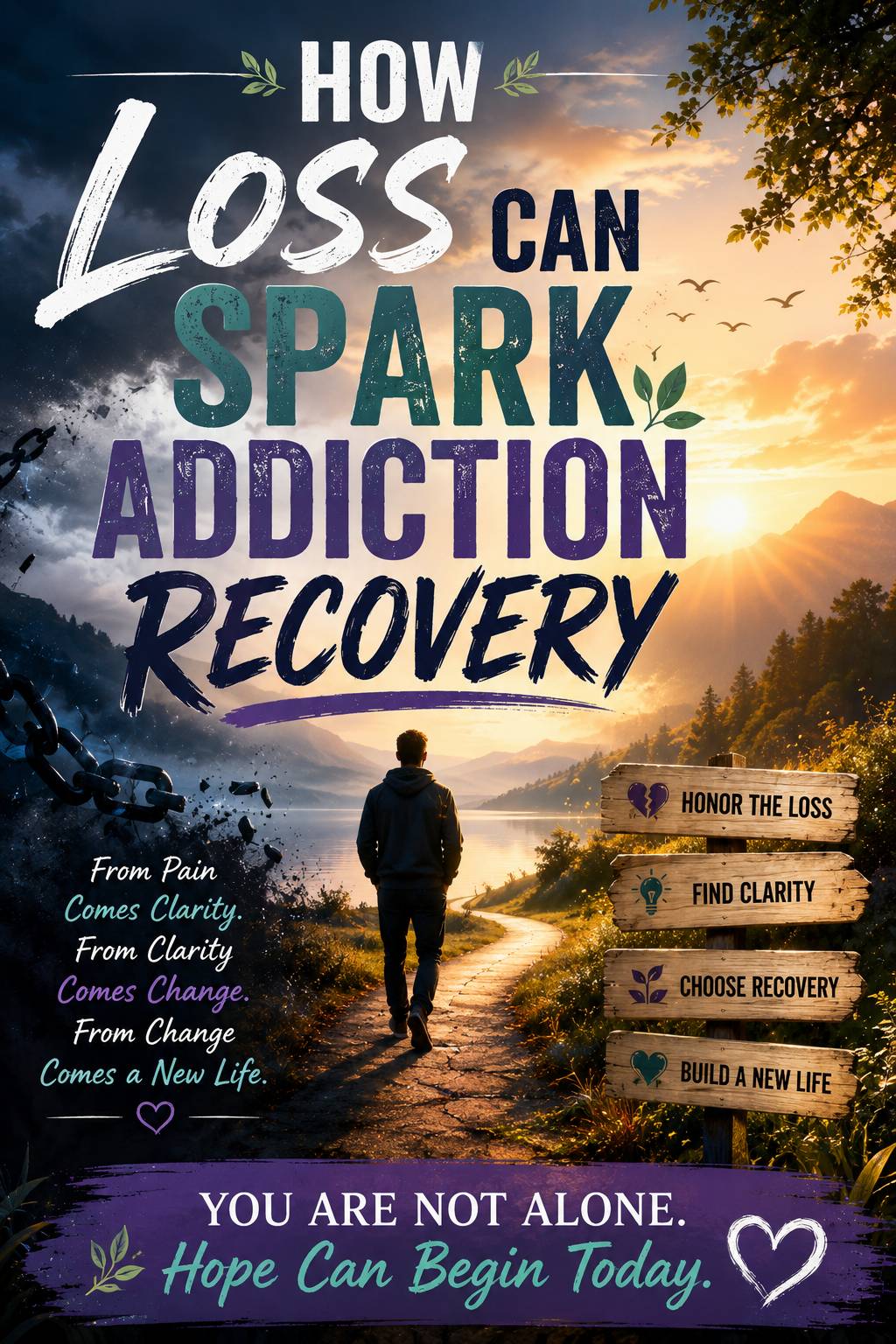
Loss can change a person’s life in an instant. The death of a loved one, divorce, separation from children, loss of employment, declining health, damaged relationships, or even the loss of one’s sense of identity can create overwhelming emotional pain. For someone struggling with addiction, that pain can lead in two very different directions. It may increase substance use as the person tries to escape grief, or it may become a powerful moment of realization that encourages recovery.
Loss alone does not cure addiction. In fact, grief can increase relapse and overdose risk. But for some people, experiencing significant consequences or recognizing what addiction has taken away becomes a turning point. Recovery can begin when the question changes from “How can I escape this pain?” to “How do I build a life I don’t need to escape from?”
Understanding the Connection Between Loss and Addiction
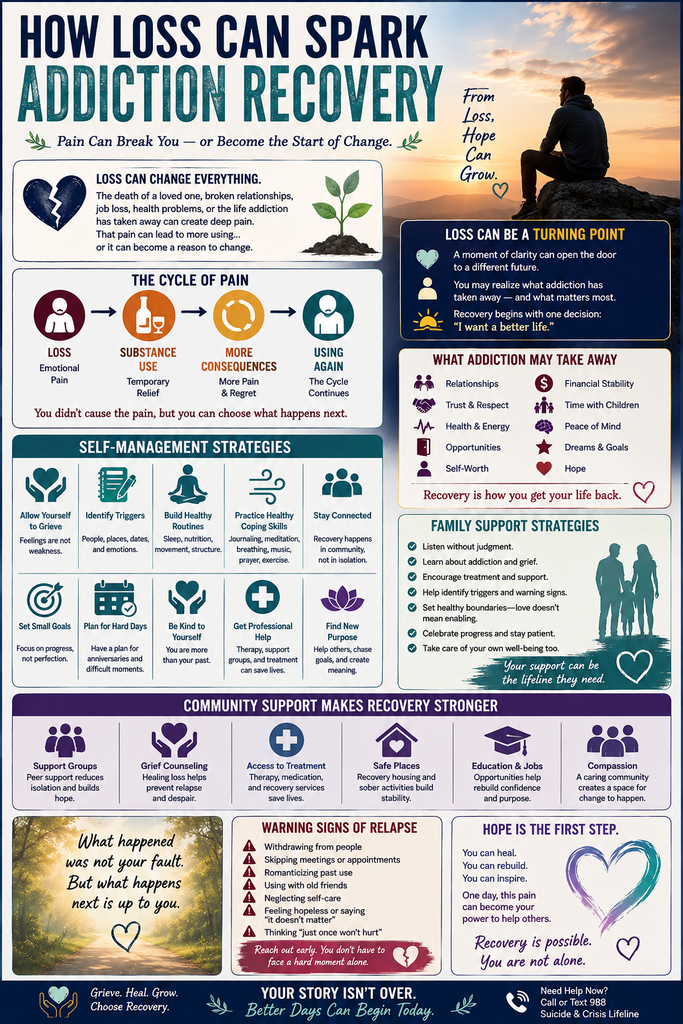
Alcohol and other drugs can temporarily numb emotional pain. Someone grieving a death, relationship, career, or major life change may discover that substances provide short-term relief from sadness, loneliness, anxiety, anger, or intrusive memories.
Unfortunately, temporary relief can create another cycle:
Loss → emotional pain → substance use → temporary relief → consequences → more pain → more substance use
Over time, the original grief remains unresolved while addiction creates additional losses.
A person may eventually lose:
- Trust from family members
- Friendships and relationships
- Employment or educational opportunities
- Financial stability
- Physical and mental health
- Housing or independence
- Custody or contact with children
- Personal values and self-respect
- Activities that once provided meaning
- Hope for the future
When these losses accumulate, some people begin questioning whether continuing to use substances is worth the cost.
When Loss Becomes a Turning Point
A turning point does not always happen dramatically. Sometimes it begins with a quiet realization.
A person might look around and recognize that the life they once valued has gradually disappeared. Another person may survive an overdose, attend the funeral of a friend who died from addiction, lose an important relationship, or hear a child say they no longer trust them.
These experiences can produce painful clarity.
The person may begin thinking:
“I can’t keep living this way.”
That thought does not automatically create recovery, but it can create readiness for change.
Grieving What Addiction Has Taken Away
Recovery itself can involve grief.
People entering treatment may grieve relationships, missed opportunities, damaged health, lost years, financial problems, or things they did while intoxicated. They may also grieve substances themselves.
That last form of grief can surprise families.
Substances may have served as a source of comfort, social connection, emotional escape, confidence, or temporary relief. Giving them up can therefore feel like losing a familiar coping mechanism—even when the person understands how destructive it became.
Recovery involves learning how to experience emotions without automatically escaping them.
Loss Can Also Increase Relapse Risk
It is important not to romanticize grief as a pathway to sobriety. Loss can destabilize recovery.
Anniversaries, funerals, relationship changes, loneliness, financial difficulties, and reminders of the person who died can trigger intense cravings.
Warning signs may include:
- Increasing isolation
- Skipping recovery meetings or appointments
- Romanticizing past substance use
- Contacting former using friends
- Changes in sleep or appetite
- Increasing anger or hopelessness
- Neglecting medications or treatment
- Saying, “Nothing matters anymore”
- Returning to places associated with substance use
- Increasing impulsive behavior
Recognizing these changes early can provide an opportunity to intervene before a full relapse occurs.
Self-Management Strategies
Recovery after loss requires learning how to tolerate grief rather than continuously escaping it.
Helpful strategies include:
- Allow yourself to grieve. Sadness, anger, guilt, confusion, and loneliness can be normal responses to loss.
- Identify emotional triggers. Notice when memories, anniversaries, places, music, or relationships increase cravings.
- Develop a grief-and-relapse plan. Decide beforehand whom you will contact when emotional pain becomes overwhelming.
- Maintain structure. Regular sleep, meals, exercise, appointments, and recovery activities can provide stability.
- Avoid isolation. Grief often creates the desire to withdraw, but connection can protect recovery.
- Replace substance use with healthier coping strategies. Walking, journaling, meditation, prayer, music, creative activities, or talking with someone can help process emotions.
- Attend treatment consistently. Addiction treatment and grief counseling may need to occur simultaneously.
- Recognize high-risk dates. Birthdays, anniversaries, holidays, and the anniversary of a death may require additional support.
- Practice self-compassion. Recovery is about changing future behavior, not endlessly punishing yourself for the past.
- Create new meaning. Volunteer work, relationships, spirituality, education, employment, or helping others in recovery can create renewed purpose.
Turning Guilt Into Responsibility
Loss can produce powerful guilt.
Someone may think:
“If I had been sober, maybe things would have been different.”
Some guilt can motivate accountability, but chronic self-condemnation can increase relapse risk.
Recovery requires distinguishing between responsibility and shame.
Responsibility says:
“I made choices that caused harm, and I can make different choices now.”
Shame says:
“I am permanently bad and don’t deserve another chance.”
The first can support change. The second can trap someone in the same cycle they are trying to escape.
Family Support Strategies
Families experiencing addiction often grieve too. They may have lost trust, financial security, emotional closeness, or the relationship they once had with their loved one.
Family support can be powerful, but it needs healthy boundaries.
Families can:
- Listen without immediately lecturing or criticizing.
- Recognize that grief may temporarily increase cravings.
- Encourage addiction and grief treatment.
- Avoid using the loss to shame the person into sobriety.
- Help identify important relapse triggers.
- Encourage healthy routines and social connection.
- Celebrate progress without expecting instant transformation.
- Set clear boundaries around substance use and unsafe behavior.
- Avoid providing money or resources that directly enable substance use.
- Participate in family counseling when appropriate.
- Develop an emergency plan for overdose or relapse.
- Keep naloxone available when opioid use is a risk.
Support means helping recovery become possible—not removing every consequence of continued substance use.
When a Family Has Lost Someone to Addiction
Overdose deaths can affect entire families and communities. Survivors may experience grief mixed with anger, guilt, unanswered questions, or stigma.
Family members may repeatedly wonder:
“What could I have done differently?”
These questions can become emotionally exhausting.
Bereavement counseling, grief-support groups, faith communities, peer networks, and mental-health professionals can help families understand that grief after an addiction-related death may be particularly complicated.
Families deserve support too.
Community Support Strategies
Recovery becomes more sustainable when people have somewhere to turn after the initial crisis passes.
Communities can support grief-informed addiction recovery by:
- Expanding affordable addiction treatment.
- Integrating grief counseling with substance-use treatment.
- Providing peer-recovery specialists.
- Offering bereavement groups for families affected by overdose.
- Making medications for opioid use disorder accessible.
- Expanding naloxone availability and overdose education.
- Providing recovery housing.
- Supporting employment and educational opportunities.
- Creating sober recreational activities.
- Connecting people with transportation and social services.
- Offering faith-based support when desired by the individual.
- Reducing stigma surrounding both addiction and overdose loss.
Treatment should address the person’s entire life—not simply whether they used a substance today.
Creating Meaning From Loss
One of the most powerful stages of recovery can occur when someone begins transforming pain into purpose.
A person who lost a friend to overdose may become a peer recovery specialist. A parent who experienced addiction may rebuild a relationship with their children. Someone who lost years to substance use may return to school, volunteer, mentor others, or simply become present for their family again.
Creating meaning does not erase grief.
It gives grief somewhere to go.
The goal is not to pretend that the loss was somehow necessary or beneficial. The goal is to decide what happens because you survived it.
Recovery Is About More Than Stopping Drugs
Sobriety is important, but sustainable recovery involves rebuilding a meaningful life.
That may mean restoring relationships, developing healthier coping skills, addressing trauma, treating depression or anxiety, finding stable housing, returning to employment, rebuilding physical health, or learning to trust oneself again.
Eventually, the person’s motivation can shift from:
“I don’t want to lose anything else.”
to:
“I have something worth protecting.”
That transition can be one of the most meaningful changes in recovery.
Conclusion
Loss can become one of addiction’s greatest dangers—or one of recovery’s most powerful turning points. Grief can intensify cravings and relapse risk, which is why people experiencing significant loss need additional support rather than judgment. Yet loss can also create clarity. It can reveal what addiction has taken away and encourage someone to imagine a different future.
Recovery does not require forgetting the person who died, pretending painful experiences never happened, or denying regret. It means learning how to carry those experiences without allowing substances to control what happens next.
With professional treatment, healthy coping strategies, supportive families, recovery communities, and opportunities to rebuild meaning, people can gradually transform grief into motivation.
Loss may explain why someone is hurting. It does not have to determine where their story ends. Sometimes recovery begins when a person decides that what remains is worth fighting for.
Frequently Asked Questions
Here are some common questions:
1. How can loss become a turning point in addiction recovery?
Loss can force someone to recognize how substance use is affecting their life. Losing a relationship, employment, health, financial stability, custody, independence, or someone to an overdose may create a moment of clarity. For some people, that realization increases motivation to seek treatment and make changes.
2. Does someone need to “hit rock bottom” before entering recovery?
No. A person does not have to lose everything before seeking help. Treatment can begin at any stage of addiction, and earlier intervention may prevent additional medical, emotional, financial, and relationship consequences.
3. Can grief make addiction worse instead of encouraging recovery?
Yes. Grief can increase loneliness, depression, anxiety, insomnia, and emotional distress, potentially increasing cravings and relapse risk. Loss should therefore never be romanticized as something that automatically produces recovery.
4. Why might someone use alcohol or drugs after experiencing a loss?
Substances can temporarily numb grief or provide relief from painful emotions. Unfortunately, the relief is temporary and can create a repeating cycle:
Loss → emotional pain → substance use → temporary relief → consequences → more emotional pain → continued use
Breaking this cycle usually requires healthier coping strategies and, when appropriate, professional treatment.
5. What types of loss can influence addiction?
Loss does not only mean death. Addiction may be affected by:
- Death of a loved one
- Divorce or separation
- Loss of child custody
- Broken friendships
- Job or career loss
- Financial problems
- Housing instability
- Declining physical health
- Loss of independence
- Loss of trust
- Missed opportunities
- Loss of identity, purpose, or self-respect
Different losses can require different forms of support.
6. Can losing someone to an overdose motivate another person to seek recovery?
It can. An overdose death may make the dangers of continued substance use feel immediate and personal. Some people decide to enter treatment after losing a friend or loved one. Others may experience increased substance use because of overwhelming grief, so additional support is especially important after an overdose death.
7. Can surviving an overdose become a turning point?
Yes. For some people, surviving an overdose creates an opportunity to reconsider continued substance use and accept treatment. Ideally, overdose survivors should be connected quickly with evidence-based addiction treatment rather than simply discharged without follow-up care.
8. Why does someone sometimes grieve drugs or alcohol after quitting?
Substances may have become associated with comfort, socialization, confidence, stress relief, or escape. Giving them up can therefore feel like losing a familiar coping mechanism, even when the person understands that substance use has become harmful.
9. What is the difference between guilt and shame in recovery?
Guilt can focus on behavior: “I did something that hurt someone.”
Shame attacks identity: “I am a terrible person who cannot change.”
Healthy recovery emphasizes responsibility, repairing harm when possible, and changing future behavior rather than remaining trapped in self-condemnation.
10. Can guilt after a loss cause relapse?
Yes. Intense guilt, regret, or self-blame can become relapse triggers, particularly when substances were previously used to escape difficult emotions. Counseling can help someone process these feelings without returning to substance use.
11. What self-management strategies can help during grief and recovery?
Helpful approaches include:
- Maintaining regular treatment appointments
- Identifying grief and relapse triggers
- Maintaining sleep, nutrition, and daily routines
- Staying connected with supportive people
- Attending recovery or peer-support meetings
- Journaling or using other healthy emotional outlets
- Planning additional support around anniversaries and holidays
- Developing coping strategies for cravings
- Creating a relapse-prevention plan
- Seeking grief counseling when needed
12. What are warning signs that grief may be threatening someone’s recovery?
Warning signs may include increasing isolation, skipping treatment, romanticizing previous substance use, contacting former using companions, abandoning healthy routines, severe sleep changes, increasing hopelessness, or believing that sobriety no longer matters.
13. How can families support recovery after a major loss?
Families can listen without judgment, encourage grief and addiction treatment, maintain regular contact, help identify triggers, recognize progress, and provide emotional support without attempting to control every aspect of recovery.
14. Is supporting someone the same as enabling them?
No. Support helps recovery; enabling can protect continued substance use from its consequences. A family might provide transportation to treatment while refusing to provide money that could be used for drugs. Compassion and boundaries can exist together.
15. Should families use a painful loss to convince someone to stop using drugs?
Shaming statements such as “After everything that happened, how can you still use?” can increase guilt and isolation. A more constructive approach is to acknowledge the person’s grief while encouraging treatment and accountability.
16. How can communities help people recovering after loss?
Communities can provide:
- Affordable addiction treatment
- Grief counseling
- Peer-recovery services
- Recovery housing
- Family and bereavement support groups
- Naloxone and overdose education
- Medications for opioid use disorder
- Mental-health treatment
- Employment and educational assistance
- Transportation and social services
- Sober recreational opportunities
Recovery becomes more sustainable when people have both treatment and a supportive environment.
17. How can someone create meaning from a painful loss?
Creating meaning does not mean pretending the loss was beneficial. It means deciding how to live after it. Some people volunteer, mentor others, participate in overdose-prevention programs, rebuild family relationships, return to school, pursue meaningful employment, or become involved in recovery communities.
18. Can helping others strengthen someone’s recovery?
For some people, yes. Peer support, volunteering, sponsorship, advocacy, or simply helping another person can provide connection and purpose. However, helping others should complement rather than replace attention to one’s own recovery needs.
19. What if someone relapses while grieving?
A relapse should be taken seriously, particularly because reduced tolerance can increase overdose risk after a period of abstinence. It does not mean recovery is permanently lost. The treatment and relapse-prevention plan should be reassessed, and additional support may be necessary.
20. Why is naloxone important when opioid use is involved?
Naloxone can temporarily reverse an opioid overdose and provide time for emergency medical treatment. Families and communities affected by opioid use should consider keeping naloxone available and learning how to recognize and respond to an overdose.
21. What is the biggest lesson about loss and addiction recovery?
Loss can be both a risk and a turning point. It can intensify substance use and relapse, but it can also create clarity about what addiction has taken away and what remains worth protecting.
Video: