Psychedelic-assisted therapy has emerged as one of the most closely studied innovations in mental health treatment for people living with post-traumatic stress disorder (PTSD) and depression. Researchers are investigating whether medications such as psilocybin and MDMA, when administered in carefully controlled clinical settings alongside psychotherapy, can help individuals process traumatic experiences, reduce depressive symptoms, and improve overall emotional well-being. Although early clinical studies have shown encouraging results—particularly for people whose symptoms have not responded to conventional treatments—these therapies are not a cure and remain appropriate only under professional medical supervision. Understanding the potential benefits, risks, and current evidence allows patients and families to make informed decisions about this rapidly evolving area of mental health care.
Psychedelic Therapy for PTSD and Depression
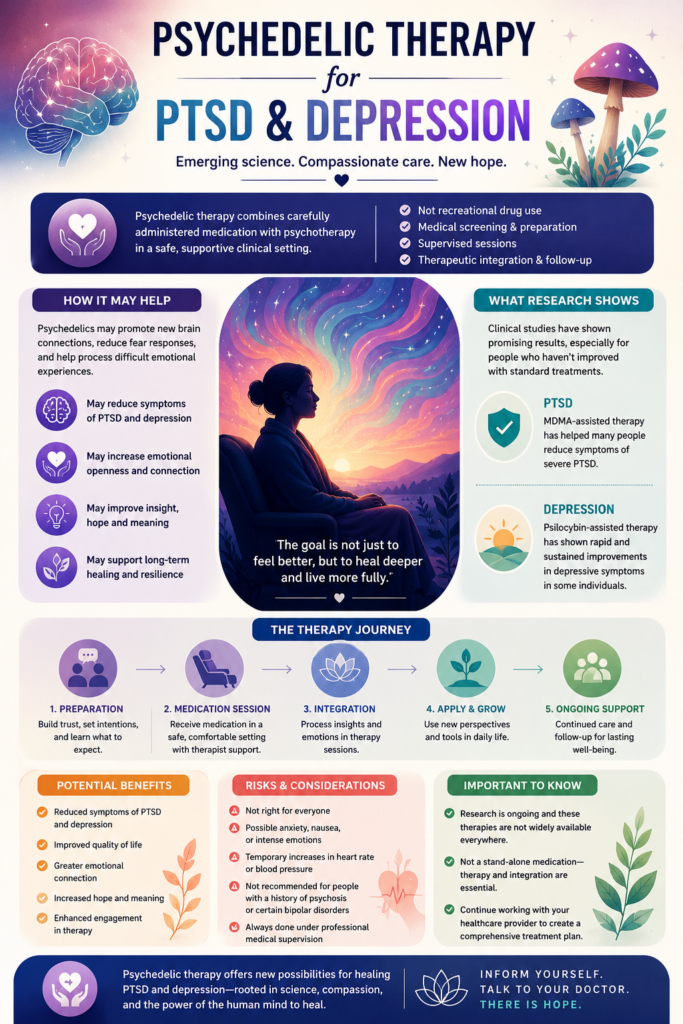
Psychedelic therapy is an emerging area of mental health treatment that combines carefully supervised use of certain psychedelic medications with psychotherapy. Unlike recreational drug use, psychedelic therapy occurs in a structured medical or research setting with trained clinicians who prepare patients before treatment, provide support during the medication session, and help patients process their experiences afterward. Researchers are studying whether these therapies can help people whose symptoms have not improved with traditional treatments.
How Psychedelic Therapy Works
Scientists believe psychedelics temporarily alter communication between brain networks involved in mood, fear, and self-awareness. They may also promote neuroplasticity—the brain’s ability to form new connections—which could make it easier for people to process traumatic memories and adopt healthier thought patterns. The therapy itself is considered just as important as the medication, helping patients integrate insights gained during treatment into everyday life.
Psychedelic Therapy for PTSD
Post-traumatic stress disorder (PTSD) develops after exposure to traumatic events and can cause intrusive memories, nightmares, avoidance behaviors, anxiety, emotional numbness, and hypervigilance.
Research suggests that psychedelic-assisted therapy may help by:
- Reducing fear responses associated with traumatic memories.
- Increasing emotional openness during therapy sessions.
- Helping patients revisit traumatic experiences without becoming overwhelmed.
- Improving trust and engagement in psychotherapy.
- Promoting long-term changes in emotional regulation.
One of the most studied medications for PTSD is MDMA-assisted therapy. Although MDMA is not a classic psychedelic, it produces unique effects that can reduce fear while increasing empathy and emotional connection. Clinical trials have shown meaningful improvements in many participants with severe PTSD, but regulatory review is ongoing, and access remains limited to research settings or approved programs where available.
Psychedelic Therapy for Depression
Depression affects mood, motivation, sleep, appetite, and concentration. Some individuals develop treatment-resistant depression, meaning multiple antidepressants and psychotherapy have not provided adequate relief.
Research on psilocybin-assisted therapy has shown encouraging results, including:
- Rapid improvement in depressive symptoms for some patients.
- Increased feelings of hope, meaning, and emotional connection.
- Reduced repetitive negative thinking.
- Greater psychological flexibility.
- Potential benefits lasting weeks to months after one or two supervised sessions when combined with psychotherapy.
Not everyone responds, and many people still require ongoing mental health treatment.
Potential Benefits
Clinical studies have identified several possible advantages:
- Improvement in PTSD and depressive symptoms.
- Reduced anxiety in some individuals.
- Greater emotional insight.
- Enhanced engagement in psychotherapy.
- Improved quality of life.
- Increased resilience and psychological flexibility.
Risks and Side Effects
Psychedelic therapy is not appropriate for everyone. Possible risks include:
- Temporary increases in anxiety or fear during treatment.
- Elevated heart rate and blood pressure.
- Nausea or dizziness.
- Emotionally intense experiences.
- Temporary confusion.
- Rare but serious worsening of symptoms in susceptible individuals.
People with a personal or family history of psychotic disorders, such as schizophrenia, or certain forms of bipolar disorder may be at higher risk of adverse psychiatric effects and often are excluded from clinical trials.
Who May Benefit
Psychedelic-assisted therapy may be considered in research or specialized clinical settings for adults who:
- Have PTSD or treatment-resistant depression.
- Have not responded adequately to conventional therapies.
- Are medically and psychiatrically appropriate candidates.
- Are willing to participate in structured psychotherapy before and after treatment.
A thorough medical and psychiatric evaluation is essential before considering this type of treatment.
Current Status
Psychedelic therapy remains an evolving field. Some psychedelic-based treatments have received regulatory approval in certain countries or for limited indications, while others are available only through clinical trials or specialized programs. Researchers continue to study their long-term safety, effectiveness, optimal dosing, and which patients are most likely to benefit.
Key Takeaway
Psychedelic-assisted therapy represents a promising new approach for PTSD and depression, particularly for people who have not responded to standard treatments. However, these therapies are not stand-alone medications. Their effectiveness appears to depend on careful patient screening, professional supervision, structured psychotherapy, and ongoing follow-up. While the early research is encouraging, more evidence is needed to fully understand their long-term benefits, risks, and appropriate role in mental health care.
Self-Management Strategies to Understand Psychedelic Therapy for PTSD and Depression
Psychedelic-assisted therapy has generated significant interest as a potential treatment for post-traumatic stress disorder (PTSD) and depression, especially for individuals who have not responded to traditional therapies. While research is encouraging, these treatments are not a quick fix and should always occur under the guidance of qualified healthcare professionals. The following self-management strategies can help you make informed decisions and support your mental health.
1. Learn the Difference Between Medical Therapy and Recreational Use
Understand that psychedelic-assisted therapy is very different from using psychedelic substances recreationally. In clinical settings, treatment includes medical screening, carefully controlled dosing, therapeutic support during the experience, and follow-up psychotherapy to help process insights safely.
2. Build a Strong Foundation for Mental Health
Healthy daily habits remain essential whether or not psychedelic therapy is part of your treatment plan. Prioritize regular sleep, balanced nutrition, physical activity, stress management, and meaningful social connections, as these all contribute to emotional resilience.
3. Continue Evidence-Based Treatment
Do not stop antidepressants, trauma therapy, or other prescribed treatments without discussing changes with your healthcare provider. Psychedelic therapy is generally viewed as an addition to—not a replacement for—comprehensive mental health care.
4. Keep a Mental Health Journal
Track your mood, anxiety, sleep quality, PTSD symptoms, triggers, and emotional responses. Journaling can help you recognize patterns, monitor progress, and provide valuable information for your therapist or healthcare provider.
5. Practice Emotional Regulation Skills
Strengthen coping techniques such as deep breathing, mindfulness meditation, grounding exercises, progressive muscle relaxation, and self-compassion. These skills can reduce distress and improve emotional stability during everyday life.
6. Understand the Importance of Integration
One of the most important parts of psychedelic-assisted therapy is integrating the experience afterward. Reflecting on emotions, discussing insights with a therapist, and applying healthy behavioral changes help transform temporary experiences into lasting improvements.
7. Educate Yourself Using Reliable Sources
Learn about psychedelic therapy from peer-reviewed research, academic medical centers, and licensed mental health professionals rather than relying solely on social media or anecdotal reports. Understanding both the potential benefits and limitations leads to more realistic expectations.
8. Be Honest During Screening
If you are considering psychedelic-assisted therapy, openly discuss your complete medical history, psychiatric history, medications, and family history with your healthcare provider. Certain conditions, including psychotic disorders or some forms of bipolar disorder, may increase the risks associated with these treatments.
9. Set Realistic Expectations
While some people experience significant improvement, psychedelic therapy does not work for everyone and is not an instant cure. Healing from PTSD and depression usually requires continued therapy, lifestyle changes, and long-term self-care.
10. Build a Support System
Recovery is often stronger when supported by trusted family members, friends, therapists, or peer support groups. Having people available to encourage healthy habits and provide emotional support can improve long-term outcomes.
Key Takeaway
Psychedelic-assisted therapy is a promising but still evolving approach for treating PTSD and depression. Successful outcomes depend on much more than the medication itself—they require careful medical evaluation, structured psychotherapy, thoughtful integration of the experience, and ongoing self-management. Staying informed, maintaining healthy routines, and working closely with qualified healthcare professionals are the best ways to support recovery and make well-informed treatment decisions.
Family Support Strategies to Understand Psychedelic Therapy for PTSD and Depression
When a loved one is considering or participating in psychedelic-assisted therapy for post-traumatic stress disorder (PTSD) or depression, family support can play an important role in recovery. Learning about the treatment, maintaining open communication, and encouraging ongoing professional care can help create a safe and supportive environment. While psychedelic-assisted therapy shows promise, it works best as part of a comprehensive treatment plan that includes psychotherapy and follow-up care.
1. Learn About the Treatment Together
Take time to understand how psychedelic-assisted therapy differs from recreational drug use. Read information from reputable medical organizations, ask healthcare providers questions, and become familiar with the treatment process, including preparation, supervised treatment sessions, and post-treatment integration therapy.
2. Encourage Open, Judgment-Free Communication
Invite your loved one to talk about their thoughts, concerns, and expectations without fear of criticism. Listening with empathy rather than trying to solve every problem helps build trust and encourages honest conversations throughout recovery.
3. Support Professional Treatment
Encourage your loved one to work closely with licensed mental health professionals and to attend all scheduled therapy and follow-up appointments. Psychedelic-assisted therapy is intended to complement—not replace—ongoing mental health care.
4. Respect Privacy and Personal Boundaries
Some individuals may wish to discuss their treatment experiences in detail, while others may need time to process them privately. Respecting these preferences helps create a sense of emotional safety and supports healthy recovery.
5. Watch for Changes in Mood or Behavior
Pay attention to improvements as well as signs that additional support may be needed, such as worsening depression, increased anxiety, severe mood swings, thoughts of self-harm, or withdrawal from daily activities. If concerning symptoms develop, encourage prompt contact with the treatment team or emergency services when appropriate.
6. Reinforce Healthy Daily Habits
Support routines that promote recovery, including regular sleep, nutritious meals, physical activity, medication adherence when prescribed, stress management, and participation in meaningful social activities.
7. Participate in Family Therapy if Appropriate
When recommended, family counseling can improve communication, strengthen relationships, reduce misunderstandings about PTSD or depression, and help everyone develop healthier ways to support recovery together.
8. Avoid Unrealistic Expectations
While some people experience significant improvements after psychedelic-assisted therapy, others improve gradually or require additional treatments. Celebrate progress without expecting immediate or permanent symptom relief after a single treatment.
9. Help Reduce Mental Health Stigma
Use respectful, person-first language and recognize that PTSD and depression are legitimate medical conditions. Encouraging compassionate conversations can make it easier for your loved one to seek help and remain engaged in treatment.
10. Take Care of Your Own Well-Being
Supporting someone with PTSD or depression can be emotionally demanding. Family members should also prioritize their own mental health by seeking counseling, joining caregiver support groups, practicing self-care, and maintaining healthy boundaries to prevent burnout.
Key Takeaway
Family members can make a meaningful difference by educating themselves about psychedelic-assisted therapy, encouraging professional treatment, providing consistent emotional support, and fostering realistic expectations. Recovery from PTSD and depression is often a gradual process, and compassionate involvement from loved ones can strengthen resilience, improve treatment engagement, and contribute to long-term healing.
Community Resource Strategies to Understand Psychedelic Therapy for PTSD and Depression
As interest in psychedelic-assisted therapy for post-traumatic stress disorder (PTSD) and depression continues to grow, community resources can help individuals and families separate scientific evidence from misinformation. Accessing reliable education, mental health services, and peer support can improve understanding while promoting safe, evidence-based care.
1. Connect with Licensed Mental Health Providers
Psychiatrists, psychologists, licensed therapists, and primary care providers can explain whether psychedelic-assisted therapy may be appropriate based on an individual’s medical history, current symptoms, and previous treatment response. They can also discuss established treatment options and make referrals when appropriate.
2. Use Reputable Medical Organizations
Seek information from trusted organizations such as the American Psychiatric Association (APA), National Institute of Mental Health (NIMH), Substance Abuse and Mental Health Services Administration (SAMHSA), and academic medical centers. These sources provide balanced, evidence-based information about emerging therapies, benefits, risks, and current research.
3. Participate in Support Groups
PTSD and depression support groups—whether in person or online—can provide encouragement, shared experiences, and practical coping strategies. Hearing from others facing similar challenges may reduce feelings of isolation while reinforcing the importance of professional treatment.
4. Attend Educational Programs
Many hospitals, universities, behavioral health organizations, and community mental health centers offer seminars, webinars, or educational workshops on trauma, depression, and new treatment approaches. These events can help individuals and families better understand how psychedelic-assisted therapy is being studied and used in clinical settings.
5. Explore Clinical Trial Opportunities
For individuals who meet eligibility requirements, participation in regulated clinical trials may provide access to investigational psychedelic-assisted therapies while contributing to scientific research. Discuss potential opportunities with a healthcare provider and review studies listed through recognized clinical research registries.
6. Utilize Crisis and Mental Health Services
People experiencing worsening depression, PTSD symptoms, or thoughts of self-harm should seek immediate assistance through local crisis services, emergency departments, or the 988 Suicide & Crisis Lifeline. Community crisis resources remain essential regardless of the type of treatment being considered.
7. Work with Trauma-Informed Community Programs
Many nonprofit organizations and community behavioral health agencies provide trauma-informed counseling, peer recovery services, case management, vocational support, and wellness programs that complement formal mental health treatment.
8. Improve Mental Health Literacy
Community libraries, public health departments, and educational organizations often offer reliable books, articles, and educational materials that explain PTSD, depression, and emerging therapies. Learning from credible sources helps reduce stigma and prevents misinformation from social media or unverified websites.
9. Advocate for Safe, Evidence-Based Care
Community members can support policies that expand access to high-quality mental health care, encourage continued scientific research, and ensure that emerging treatments are delivered safely by qualified professionals under appropriate medical oversight.
Key Takeaway
Community resources play an important role in helping individuals and families understand psychedelic-assisted therapy for PTSD and depression. Reliable education, licensed mental health providers, support groups, crisis services, trauma-informed programs, and ongoing research all contribute to informed decision-making. Combining these resources with evidence-based mental health care offers the best opportunity for safe treatment and long-term recovery.
Frequently Asked Questions
Here are some common questions:
1. What is psychedelic-assisted therapy?
Psychedelic-assisted therapy combines specific medications, such as psilocybin or MDMA (where legally available or in research settings), with structured psychotherapy. The medication is given under professional supervision, followed by therapy sessions that help individuals process their experiences and apply insights to daily life.
2. How is psychedelic therapy different from recreational drug use?
Medical psychedelic therapy occurs in a controlled clinical setting with careful screening, standardized dosing, trained healthcare professionals, and ongoing psychotherapy. Recreational use lacks these safety measures and carries significantly greater risks.
3. Which mental health conditions are being studied?
Researchers are studying psychedelic-assisted therapy for PTSD, treatment-resistant depression, anxiety associated with serious illness, substance use disorders, obsessive-compulsive disorder (OCD), and other mental health conditions. The strongest evidence to date is for PTSD and treatment-resistant depression.
4. Does psychedelic therapy cure PTSD or depression?
No. Psychedelic-assisted therapy is not considered a cure. It may reduce symptoms and improve quality of life for some individuals, but most people still benefit from ongoing psychotherapy, healthy lifestyle habits, and, when appropriate, other medical treatments.
5. Who may be a good candidate?
Adults with PTSD or treatment-resistant depression who have not responded adequately to conventional treatments may be considered candidates after a comprehensive medical and psychiatric evaluation by qualified healthcare professionals.
6. Who should avoid psychedelic therapy?
People with certain psychiatric conditions—such as a personal history of psychotic disorders or some forms of bipolar disorder—may be at increased risk of adverse effects. Treatment may also be inappropriate for individuals with certain cardiovascular conditions or other medical concerns. A thorough screening is essential.
7. What happens during treatment?
Treatment usually involves three phases:
- Preparation sessions with a therapist.
- One or more supervised medication sessions.
- Integration therapy to help process the experience and incorporate insights into everyday life.
8. Which medications are most commonly studied?
The medications receiving the most research attention include:
- Psilocybin for depression and some anxiety disorders.
- MDMA-assisted therapy for PTSD (MDMA is not a classic psychedelic but is studied in this context).
Other compounds continue to be investigated in clinical research.
9. How quickly do people notice improvement?
Some participants report symptom improvement within days after treatment, while others improve more gradually over several weeks. Responses vary considerably, and not everyone experiences significant benefit.
10. What are the possible side effects?
Temporary side effects may include:
- Anxiety or emotional distress during treatment.
- Nausea.
- Increased heart rate and blood pressure.
- Headache.
- Fatigue.
- Temporary confusion or emotional sensitivity after treatment.
Most side effects occur during or shortly after the supervised session and are monitored by trained clinicians.
11. Is psychotherapy still necessary?
Yes. Psychotherapy is considered a central part of psychedelic-assisted treatment. Therapy before, during, and after medication sessions helps individuals prepare, safely navigate the experience, and integrate what they learn into lasting behavioral changes.
12. Is psychedelic therapy available everywhere?
No. Availability varies by country and region. Some treatments are available only through approved clinical trials or specialized treatment programs, while others remain under regulatory review or have limited approved uses depending on local laws.
13. Can psychedelic therapy replace antidepressants?
Not necessarily. Some individuals continue taking antidepressants or other psychiatric medications, while others may require medication adjustments under close medical supervision. Medication changes should never be made without guidance from a qualified healthcare provider.
14. What questions should I ask my healthcare provider?
Consider asking:
- Am I an appropriate candidate?
- What are the potential benefits and risks for my situation?
- Are there any interactions with my current medications?
- What should I expect during preparation and recovery?
- Are there legitimate clinical trials or specialized treatment programs available?
15. What is the biggest takeaway about psychedelic therapy?
Psychedelic-assisted therapy is a promising area of mental health research that may benefit some people with PTSD or depression, particularly when conventional treatments have not been effective. However, it should only be pursued through qualified healthcare professionals in appropriate clinical settings. Safe treatment depends on careful screening, professional supervision, psychotherapy, and long-term follow-up rather than the medication alone.
Conclusion
Psychedelic-assisted therapy offers hope for individuals struggling with PTSD and depression, especially when traditional treatments have provided limited relief. However, successful outcomes depend on much more than the medication itself. Careful patient selection, comprehensive medical and psychiatric evaluations, structured psychotherapy, and ongoing integration sessions are essential components of safe and effective treatment. As research continues to expand, psychedelic-assisted therapy may become an important addition to evidence-based mental health care. Until then, individuals considering these therapies should work closely with qualified healthcare professionals and continue to view recovery as a comprehensive process that includes therapy, healthy lifestyle habits, social support, and long-term follow-up.
Video: Why Doctors Are Using Magic Mushrooms Now #PTSD #mentalhealth