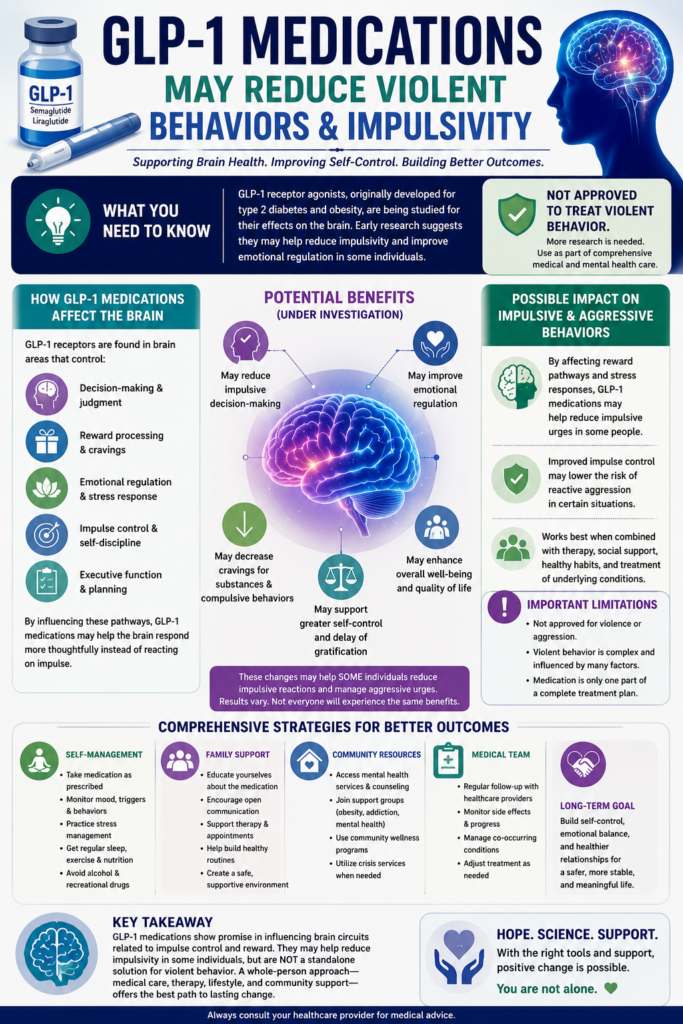
GLP-1 receptor agonists, including medications such as semaglutide and liraglutide, have transformed the treatment of type 2 diabetes and obesity by improving blood sugar control and promoting weight loss. More recently, researchers have begun exploring their effects on the brain, particularly in areas involved in reward processing, impulse control, emotional regulation, and decision-making. Early studies suggest these medications may help reduce certain impulsive and compulsive behaviors in some individuals, raising interest in their potential role in behavioral health. However, it is important to recognize that current evidence does not support the use of GLP-1 medications as approved treatments for violent behavior, and much of the research in this area is still in its early stages.
How GLP-1 Medications May Influence Violent Behaviors and Impulsivity
Glucagon-like peptide-1 (GLP-1) receptor agonists, such as Semaglutide and Liraglutide, were originally developed to treat type 2 diabetes and obesity. More recently, researchers have become interested in how these medications affect the brain. While there is growing evidence that GLP-1 medications can reduce impulsive behaviors and cravings in some people, there is currently no strong evidence that they directly treat violent behavior. Any discussion of violence should be understood within the broader context of mental health, neurological function, and underlying medical conditions.
How GLP-1 Medications Affect the Brain
GLP-1 receptors are found not only in the digestive system but also in several brain regions involved in:
- Decision-making
- Reward processing
- Emotional regulation
- Stress responses
- Impulse control
- Executive functioning
By influencing these brain circuits, GLP-1 medications may indirectly improve behaviors related to self-control.
Potential Effects on Impulsivity
Early research suggests GLP-1 medications may:
- Reduce impulsive decision-making.
- Decrease compulsive eating behaviors.
- Lower alcohol and nicotine cravings in some individuals.
- Reduce reward-seeking behaviors.
- Improve the ability to delay gratification.
- Enhance executive function in some patients.
These changes may help some individuals make more thoughtful decisions instead of acting on immediate urges.
Could This Affect Aggressive or Violent Behavior?
At present, researchers have not demonstrated that GLP-1 medications are treatments for violent behavior. However, impulsivity contributes to certain forms of reactive aggression, particularly when combined with:
- Substance use disorders
- Poor emotional regulation
- Traumatic brain injury
- Severe mood disorders
- Some personality disorders
- Neurodevelopmental disorders
If GLP-1 medications improve impulse control in certain individuals, they could theoretically reduce some impulsive reactions. However, this remains a hypothesis and requires much more clinical research.
Possible Biological Mechanisms
Scientists are investigating several ways GLP-1 medications may influence behavior:
Reduced Reward Sensitivity
GLP-1 medications decrease dopamine signaling within reward pathways, making immediate rewards less compelling. This may reduce impulsive behaviors driven by instant gratification.
Improved Emotional Regulation
Animal studies suggest GLP-1 signaling may reduce excessive stress responses and inflammation in the brain, potentially supporting emotional stability. Human evidence is still limited.
Better Executive Function
Some early studies suggest improved attention and decision-making, allowing individuals more time to evaluate consequences before acting.
Improved Sleep and Metabolic Health
Better blood sugar control, weight loss, and improved sleep may indirectly reduce irritability, fatigue, and emotional instability that can worsen impulsive behavior.
Important Limitations
Several important points should be emphasized:
- GLP-1 medications are not approved to treat aggression or violent behavior.
- Current evidence primarily examines appetite, obesity, diabetes, addiction, and compulsive behaviors—not violence.
- Violent behavior is usually influenced by multiple biological, psychological, social, and environmental factors.
- Individuals exhibiting violent behavior require comprehensive psychiatric and medical evaluation.
Comprehensive Treatment Remains Essential
For people struggling with impulsivity or aggressive behavior, treatment typically involves:
- Comprehensive psychiatric assessment.
- Cognitive behavioral therapy (CBT).
- Trauma-informed therapy when appropriate.
- Treatment of substance use disorders.
- Management of underlying mood, psychotic, or personality disorders.
- Sleep optimization and stress reduction.
- Family education and support.
- Medication targeted to the underlying diagnosis when indicated.
GLP-1 medications, if prescribed, should be viewed as treating approved medical conditions—not as a replacement for evidence-based psychiatric care.
Current Research
Researchers continue to explore whether GLP-1 receptor agonists may have broader effects on:
- Addiction recovery
- Compulsive behaviors
- Decision-making
- Emotional regulation
- Cognitive function
- Neuroinflammation
These areas are promising but remain under investigation, and more large, well-controlled human studies are needed before conclusions can be drawn about their effects on impulsivity or aggression.
Key Takeaway
GLP-1 medications appear to influence brain circuits involved in reward, decision-making, and impulse control, and early research suggests they may help reduce certain impulsive or compulsive behaviors. However, there is currently no evidence that GLP-1 medications are established treatments for violent behavior. Any improvement in aggression would most likely occur indirectly through better emotional regulation, reduced impulsivity, treatment of coexisting conditions, or improved overall health. Individuals experiencing violent thoughts or behaviors should receive a thorough evaluation from qualified mental health professionals and evidence-based treatment tailored to the underlying causes.
Self-Management Strategies to Understand How GLP-1 Medications May Reduce Violent Behaviors and Impulsivity
GLP-1 receptor agonists, such as semaglutide and liraglutide, are approved to treat type 2 diabetes and obesity. Researchers are also studying how these medications affect the brain, including areas involved in reward, impulse control, and emotional regulation. Although early studies suggest GLP-1 medications may help reduce impulsive behaviors in some individuals, they are not approved treatments for violent behavior, and more research is needed. The following self-management strategies can help you better understand their role while supporting healthy emotional and behavioral control.
1. Learn What GLP-1 Medications Can—and Cannot—Do
Understand that GLP-1 medications are designed to improve blood sugar regulation and promote weight loss. While they may influence brain pathways involved in cravings and impulsivity, they should not be viewed as medications that directly prevent violence or aggression.
2. Take Your Medication as Prescribed
If you have been prescribed a GLP-1 medication, follow your healthcare provider’s instructions carefully. Do not change the dose or stop treatment without medical guidance, even if you notice changes in your mood or behavior.
3. Monitor Your Mood and Behavior
Keep a journal to record emotional changes, irritability, impulsive urges, stress levels, sleep quality, and situations that trigger strong emotional reactions. Sharing this information with your healthcare provider can help determine whether treatment adjustments are needed.
4. Practice Emotional Regulation Skills
Medication works best when combined with healthy coping strategies. Deep breathing, mindfulness meditation, grounding exercises, progressive muscle relaxation, and pausing before reacting can help strengthen self-control and reduce impulsive responses.
5. Improve Sleep and Physical Health
Poor sleep, unmanaged stress, chronic pain, and unstable blood sugar can increase irritability and impulsive behavior. Prioritize consistent sleep, regular physical activity, balanced nutrition, and hydration to support overall brain health.
6. Identify Personal Triggers
Recognize situations, environments, or emotions that increase frustration or impulsive reactions. Planning ahead and using coping strategies before stress escalates can reduce the likelihood of acting impulsively.
7. Continue Mental Health Treatment
If you have a history of depression, anxiety, PTSD, substance use disorder, ADHD, or another mental health condition, continue attending therapy and taking prescribed medications. GLP-1 medications should complement—not replace—evidence-based mental health care.
8. Avoid Alcohol and Recreational Drugs
Alcohol and other substances can impair judgment, increase impulsivity, and interfere with emotional regulation. Reducing or avoiding substance use supports both medication effectiveness and overall mental well-being.
9. Build Healthy Daily Routines
Maintaining regular meal times, exercise, structured activities, and social connections helps improve emotional stability and reduces opportunities for impulsive decision-making.
10. Seek Help Early if Symptoms Worsen
If you experience increasing anger, aggressive thoughts, severe mood changes, thoughts of harming yourself or others, or significant changes in behavior, contact your healthcare provider immediately. Seek emergency assistance if there is an immediate risk of harm.
Key Takeaway
Early research suggests that GLP-1 medications may influence brain circuits involved in impulse control, reward processing, and emotional regulation, potentially reducing certain impulsive behaviors in some individuals. However, they are not approved treatments for violent behavior, and current evidence does not support using them for that purpose alone. The most effective approach combines appropriate medical treatment, psychotherapy, healthy lifestyle habits, emotional regulation skills, and ongoing support from qualified healthcare professionals.
Family Support Strategies to Understand How GLP-1 Medications May Reduce Violent Behaviors and Impulsivity
GLP-1 receptor agonists, such as semaglutide and liraglutide, are approved to treat type 2 diabetes and obesity. Researchers are also studying how these medications affect brain circuits involved in reward, decision-making, and impulse control. While early findings suggest they may help reduce certain impulsive behaviors in some individuals, there is currently no evidence that GLP-1 medications are approved or established treatments for violent behavior. Families can play an important role by supporting healthy habits, encouraging comprehensive mental health care, and maintaining realistic expectations.
1. Learn About the Medication Together
Take time to understand why the medication was prescribed and what it is designed to do. Recognize that any effects on impulsivity are still being researched and should not be expected in every person.
2. Encourage Open and Respectful Communication
Create a safe environment where your loved one can discuss emotional changes, frustrations, or concerns without fear of criticism. Listening calmly and avoiding judgment can strengthen trust and encourage treatment adherence.
3. Support Comprehensive Mental Health Care
If your loved one has depression, anxiety, ADHD, PTSD, substance use disorder, or another mental health condition, encourage them to continue psychotherapy, counseling, and prescribed psychiatric medications. GLP-1 medications should be viewed as one part of an overall treatment plan rather than a replacement for evidence-based mental health care.
4. Reinforce Healthy Daily Habits
Families can help promote routines that support brain health, including:
- Consistent sleep schedules.
- Balanced, nutritious meals.
- Regular physical activity.
- Stress-reducing activities.
- Limiting alcohol and recreational drug use.
These lifestyle habits may improve emotional regulation and complement medical treatment.
5. Observe Behavioral Changes Objectively
Notice improvements in mood, decision-making, or impulse control without assuming that all behavioral changes are due to the medication. Likewise, be aware of increased irritability, depression, anxiety, or unusual behavioral changes and report concerns to the healthcare provider.
6. Avoid Unrealistic Expectations
Some people may notice positive emotional or behavioral changes, while others may experience little or no difference. Recovery from impulsive behaviors is usually gradual and often requires therapy, skill-building, and ongoing support in addition to medication.
7. Help Identify Emotional Triggers
Work together to recognize situations that increase stress, frustration, or impulsive reactions. Developing plans to manage these triggers can reduce conflict and encourage healthier coping strategies.
8. Encourage Medication Adherence
Support your loved one in taking medications exactly as prescribed and attending follow-up appointments. Encourage them to discuss any side effects or concerns with their healthcare provider rather than stopping treatment on their own.
9. Develop a Family Safety Plan
If your loved one has a history of aggressive behavior or poor impulse control, work with mental health professionals to create a plan for managing escalating situations. This may include identifying warning signs, using de-escalation techniques, knowing when to leave a potentially unsafe situation, and understanding when to contact emergency services.
10. Care for Your Own Well-Being
Supporting someone with emotional or behavioral challenges can be stressful. Family members should also prioritize their own mental health through self-care, counseling, caregiver support groups, and healthy boundaries to prevent burnout.
Key Takeaway
Emerging research suggests that GLP-1 medications may influence brain pathways involved in impulse control and emotional regulation, but they are not proven or approved treatments for violent behavior. Families can best support recovery by encouraging evidence-based mental health care, promoting healthy lifestyle habits, maintaining open communication, and responding promptly to concerning behavioral changes. A comprehensive approach that includes medical care, psychotherapy, and family support offers the greatest opportunity for long-term emotional and behavioral improvement.
Community Resource Strategies to Understand How GLP-1 Medications May Reduce Violent Behaviors and Impulsivity
GLP-1 receptor agonists, such as semaglutide and liraglutide, are approved to treat type 2 diabetes and obesity and are being studied for their effects on brain function, including impulse control and reward processing. Although early research suggests these medications may reduce certain impulsive or compulsive behaviors, there is currently no evidence that they are approved or established treatments for violent behavior. Community resources can help individuals and families better understand the emerging science while ensuring access to evidence-based care.
1. Seek Guidance from Healthcare Professionals
Primary care providers, endocrinologists, psychiatrists, psychologists, and pharmacists can explain how GLP-1 medications work, discuss their approved uses, and answer questions about the current evidence regarding impulsivity and emotional regulation. They can also evaluate whether these medications are appropriate based on an individual’s medical and psychiatric history.
2. Learn from Trusted Medical Organizations
Rely on information from reputable organizations such as the American Diabetes Association (ADA), the National Institute of Mental Health (NIMH), the Substance Abuse and Mental Health Services Administration (SAMHSA), and academic medical centers. These sources provide balanced, evidence-based updates about GLP-1 medications and ongoing research.
3. Participate in Mental Health Education Programs
Many community mental health centers, hospitals, and nonprofit organizations offer educational classes on emotional regulation, anger management, impulse control, and stress management. These programs teach practical skills that complement medical treatment.
4. Join Peer Support Groups
Support groups for obesity, diabetes, addiction recovery, ADHD, or mental health conditions can provide encouragement, shared experiences, and healthy coping strategies. Learning from others who are managing similar challenges may improve treatment adherence and emotional well-being.
5. Access Behavioral Health Services
Community behavioral health agencies often provide counseling, psychiatric evaluations, cognitive behavioral therapy (CBT), trauma-informed care, and case management. These services address the underlying causes of impulsive behavior more directly than medication alone.
6. Utilize Crisis Resources When Needed
If someone experiences escalating aggression, thoughts of harming themselves or others, or severe emotional distress, seek immediate assistance through local emergency services, crisis intervention programs, or the 988 Suicide & Crisis Lifeline. Early intervention can help prevent crises and connect individuals with appropriate care.
7. Explore Ongoing Clinical Research
Individuals interested in the potential neurological effects of GLP-1 medications may discuss participation in regulated clinical trials with their healthcare provider. Clinical research helps determine whether these medications have future roles beyond the treatment of diabetes and obesity.
8. Promote Healthy Lifestyle Programs
Community wellness initiatives that encourage physical activity, healthy eating, smoking cessation, stress reduction, and sleep hygiene support overall brain health and emotional regulation. These programs can enhance the benefits of medical and psychological treatment.
9. Help Reduce Stigma
Community organizations can educate the public about mental health, impulse-control disorders, and obesity to reduce stigma and encourage individuals to seek treatment early. Understanding that impulsive behaviors often have complex biological, psychological, and social causes fosters compassion and supports recovery.
Key Takeaway
Research into GLP-1 medications and their effects on impulse control is promising but still evolving. Current evidence does not support using GLP-1 medications as treatments for violent behavior, and more human studies are needed before conclusions can be drawn. Community resources—including healthcare professionals, behavioral health services, educational programs, peer support groups, wellness initiatives, and crisis services—play an essential role in helping individuals and families make informed decisions and access comprehensive, evidence-based care.
Frequently Asked Questions
Here are some common questions:
1. What are GLP-1 medications?
GLP-1 receptor agonists are prescription medications primarily used to treat type 2 diabetes and obesity. They help regulate blood sugar, slow stomach emptying, reduce appetite, and promote weight loss. Researchers are also studying their effects on the brain.
2. Can GLP-1 medications reduce impulsive behavior?
Possibly. Early research suggests that GLP-1 medications may improve impulse control by acting on brain regions involved in reward processing, decision-making, and emotional regulation. However, more human studies are needed to confirm these effects.
3. Do GLP-1 medications treat violent behavior?
No. GLP-1 medications are not approved to treat violent or aggressive behavior. While they may influence brain pathways related to impulsivity, there is currently insufficient evidence to recommend them as treatments for violence.
4. How might GLP-1 medications affect the brain?
GLP-1 receptors are found in several brain areas that regulate:
- Appetite and cravings
- Reward processing
- Emotional regulation
- Executive functioning
- Decision-making
- Impulse control
Researchers believe these effects may contribute to healthier behavioral responses in some individuals.
5. Why are scientists studying GLP-1 medications for behavior?
Researchers have observed that some people taking GLP-1 medications report reductions in cravings, compulsive eating, alcohol use, nicotine use, and other reward-driven behaviors. These findings have sparked interest in whether the medications also influence impulsivity and self-control.
6. Can GLP-1 medications help people with addiction?
Early studies suggest GLP-1 medications may reduce cravings for alcohol, nicotine, and certain other substances in some individuals. However, they are not currently approved as treatments for substance use disorders, and more research is underway.
7. Are these medications a substitute for mental health treatment?
No. Individuals experiencing impulsive behaviors, aggression, or mental health disorders should continue evidence-based treatment, including psychotherapy, psychiatric care, and other prescribed medications when appropriate.
8. What factors contribute to violent behavior?
Violent behavior is complex and may be influenced by:
- Mental health disorders
- Substance use
- Trauma
- Brain injuries
- Environmental stress
- Personality factors
- Social circumstances
Medication alone cannot address all of these contributing factors.
9. What are the common side effects of GLP-1 medications?
Common side effects include:
- Nausea
- Vomiting
- Diarrhea
- Constipation
- Decreased appetite
- Abdominal discomfort
These symptoms often improve as the body adjusts to treatment.
10. Are there serious risks associated with GLP-1 medications?
Although uncommon, serious risks may include pancreatitis, gallbladder disease, dehydration, kidney problems related to severe gastrointestinal symptoms, and rare allergic reactions. Your healthcare provider will discuss your individual risk factors before starting treatment.
11. Who should not take GLP-1 medications?
These medications may not be appropriate for everyone. Individuals with certain medical conditions, such as a personal or family history of medullary thyroid carcinoma or multiple endocrine neoplasia syndrome type 2 (MEN2), may need alternative treatments. A healthcare provider can determine whether these medications are appropriate.
12. Can lifestyle changes improve impulse control?
Yes. Healthy sleep, regular exercise, balanced nutrition, stress management, mindfulness practices, avoiding alcohol and recreational drugs, and consistent mental health treatment all support better emotional regulation and impulse control.
13. Should I stop my psychiatric medications if I start a GLP-1 medication?
No. Never discontinue psychiatric medications without consulting your healthcare provider. GLP-1 medications are not replacements for treatments prescribed for depression, anxiety, bipolar disorder, schizophrenia, ADHD, or other mental health conditions.
14. What questions should I ask my healthcare provider?
Helpful questions include:
- Why is this medication being recommended for me?
- What benefits and side effects should I expect?
- How will this medication interact with my current medications?
- How should my progress be monitored?
- What lifestyle changes can improve my overall health while taking this medication?
15. What is the biggest takeaway?
GLP-1 medications are promising treatments for diabetes and obesity, and early research suggests they may also influence brain circuits involved in reward processing, emotional regulation, and impulse control. However, they are not approved treatments for violent behavior, and more research is needed before they can be recommended for that purpose. The most effective approach to managing impulsivity or aggression combines comprehensive medical care, mental health treatment, healthy lifestyle habits, and strong social support.
Conclusion
The emerging research on GLP-1 medications offers promising insights into how these drugs may influence brain function beyond their metabolic benefits. While improvements in impulse control, craving reduction, and emotional regulation have been observed in some studies, these findings should be interpreted cautiously. Violent behavior is a complex issue influenced by biological, psychological, social, and environmental factors, and no medication alone can address all of these contributors. Individuals experiencing impulsive or aggressive behaviors should receive a comprehensive evaluation and evidence-based treatment that may include psychotherapy, appropriate medications, lifestyle changes, and ongoing support. As scientific understanding continues to evolve, GLP-1 medications may become an important area of behavioral health research, but more high-quality human studies are needed before broader clinical recommendations can be made.
Video: GLP-1 Changes More Than Your Appetite #glp1 #brainhealth