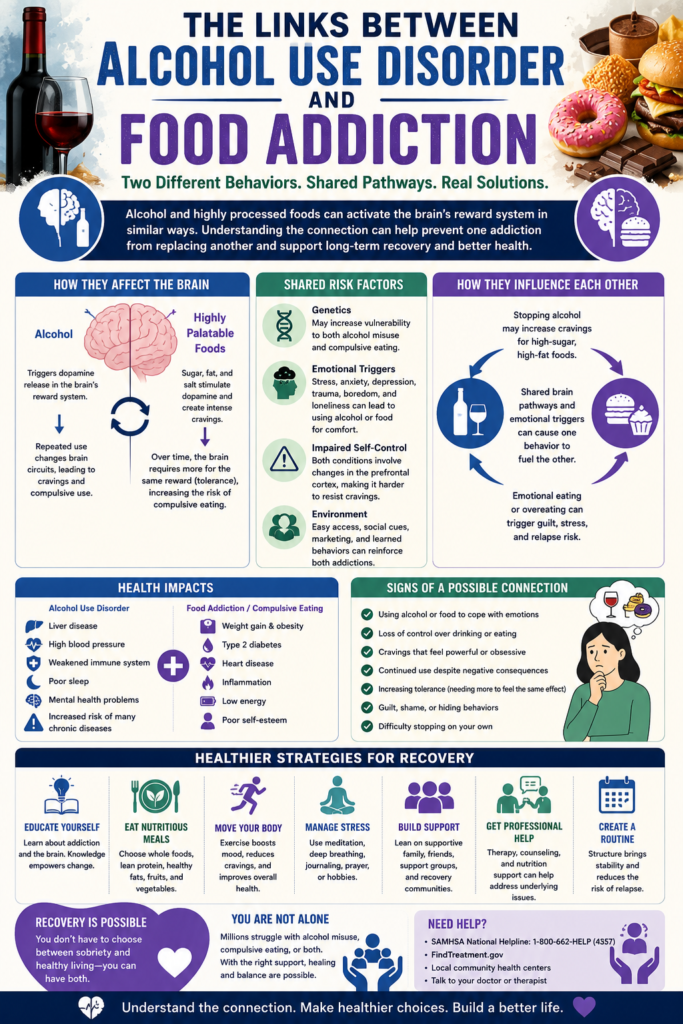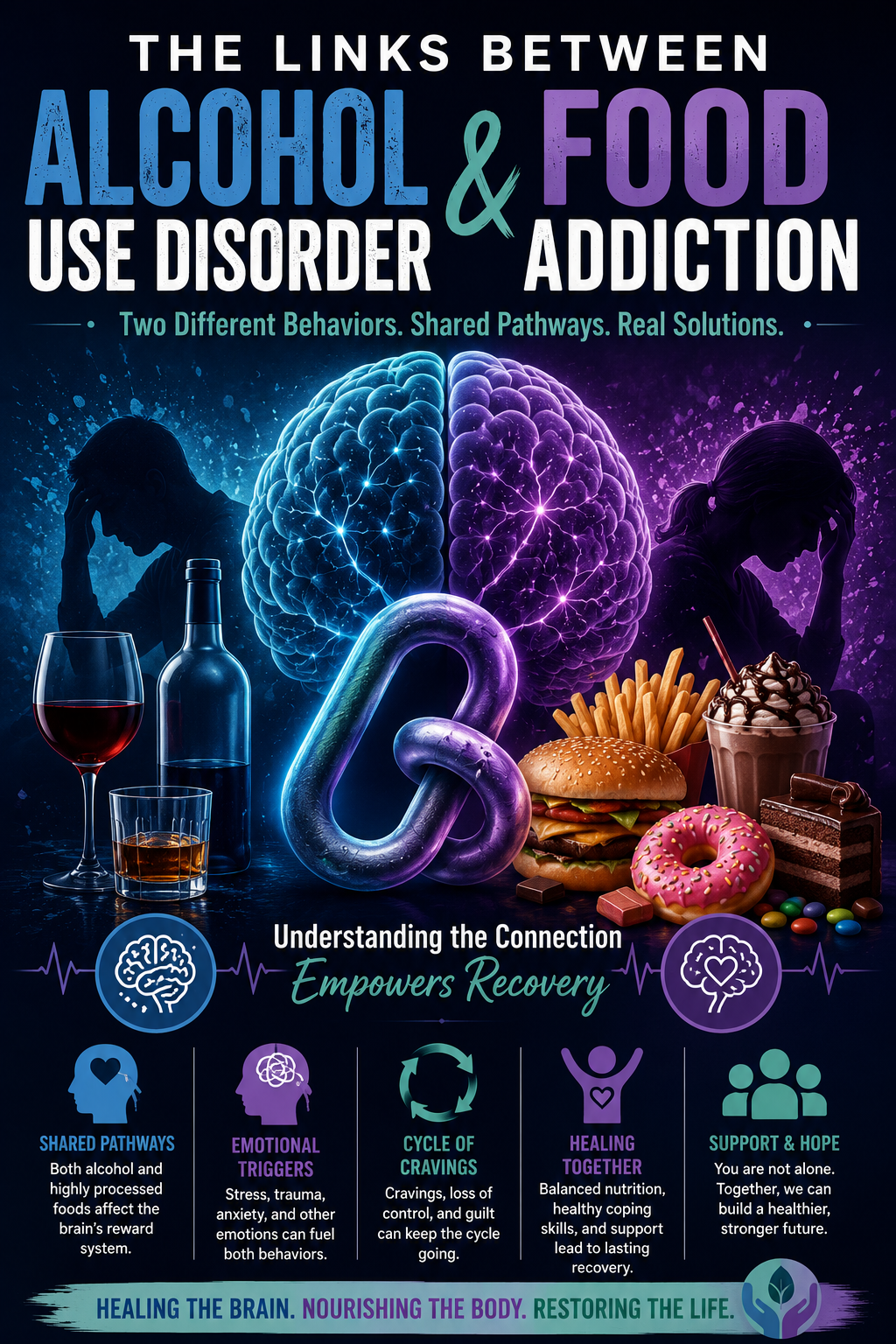
Alcohol use disorder (AUD) and food addiction are complex conditions that share many similarities in brain function, behavior, and emotional regulation. Although food addiction is not currently recognized as an official diagnosis in the Diagnostic and Statistical Manual of Mental Disorders (DSM-5), research suggests that some highly processed foods rich in sugar, refined carbohydrates, fat, and salt can activate the brain’s reward system in ways that resemble addictive substances. Both alcohol and highly palatable foods stimulate dopamine release, reinforcing behaviors that can become compulsive over time. Individuals may use alcohol or food to cope with stress, anxiety, depression, trauma, loneliness, or other emotional challenges, creating patterns that are difficult to break. During recovery from alcohol use disorder, some people also experience increased cravings for sweets or highly processed foods as the brain adapts to the absence of alcohol. Understanding the relationship between alcohol use disorder and food addiction helps individuals, families, healthcare professionals, and communities recognize shared risk factors, develop healthier coping strategies, and support comprehensive, long-term recovery.
The Links Between Alcohol Use Disorder and Food Addiction
Alcohol use disorder (AUD) and food addiction are complex conditions that share many similarities in brain function, behavior, and environmental influences. Although food addiction is not currently recognized as an official diagnosis in the Diagnostic and Statistical Manual of Mental Disorders (DSM-5), growing evidence suggests that highly processed foods—especially those high in sugar, refined carbohydrates, fat, and salt—can activate the brain’s reward system in ways that resemble addictive substances. Understanding the connection between alcohol use disorder and compulsive eating can help healthcare professionals and individuals develop more comprehensive approaches to prevention, treatment, and long-term recovery.
Shared Brain Reward Pathways
One of the strongest links between alcohol use disorder and food addiction is their effect on the brain’s reward system. Both alcohol and highly palatable foods stimulate the release of dopamine, the neurotransmitter associated with pleasure, motivation, and reinforcement. Repeated exposure can gradually alter the brain’s reward circuitry, making individuals more likely to crave alcohol or certain foods while needing increasing amounts to achieve the same pleasurable effect. Over time, these brain changes contribute to compulsive behaviors and reduced control over consumption.
Common effects on the brain include:
- Increased dopamine release
- Stronger cravings
- Reduced sensitivity to rewards
- Development of tolerance
- Compulsive use despite negative consequences
Changes in Decision-Making and Self-Control
Both alcohol use disorder and compulsive eating affect the prefrontal cortex, the part of the brain responsible for decision-making, planning, impulse control, and self-regulation. As this region becomes less effective, individuals may continue drinking alcohol or eating highly processed foods despite experiencing harmful consequences.
Possible consequences include:
- Weight gain
- Liver disease
- Type 2 diabetes
- Cardiovascular disease
- Relationship problems
- Financial difficulties
- Depression and anxiety
- Reduced overall quality of life
Emotional Regulation and Coping
Emotional regulation plays a major role in both conditions. Many individuals use alcohol or food to cope with difficult emotions such as stress, anxiety, depression, loneliness, boredom, grief, or trauma. This behavior is often described as emotional eating or self-medication.
While alcohol or food may provide temporary comfort, they do not resolve the underlying emotional issues. Instead, they often reinforce unhealthy coping patterns and increase the risk of dependence.
Common emotional triggers include:
- Chronic stress
- Anxiety
- Depression
- Loneliness
- Trauma
- Grief
- Boredom
- Low self-esteem
Shared Risk Factors
Research shows that alcohol use disorder and food addiction share many biological, psychological, and environmental risk factors. Individuals with adverse childhood experiences (ACEs), chronic stress, or untreated mental health conditions may be particularly vulnerable.
Common risk factors include:
- Adverse childhood experiences (ACEs)
- Trauma
- Chronic stress
- Depression
- Anxiety disorders
- Post-traumatic stress disorder (PTSD)
- Attention-deficit/hyperactivity disorder (ADHD)
- Family history of addiction
- Easy access to alcohol or highly processed foods
The Role of Genetics
Genetics also influence the development of both alcohol use disorder and compulsive eating. Inherited differences affecting dopamine signaling, stress responses, metabolism, and impulse control may increase susceptibility. However, genetics alone do not determine whether someone develops an addiction.
Protective factors include:
- Healthy coping skills
- Strong family and social support
- Early intervention
- Positive lifestyle habits
- Access to treatment
Cross-Addiction During Recovery
Cross-addiction is another important consideration. Some individuals recovering from alcohol use disorder notice increased cravings for sweets or highly processed foods. This occurs because the brain continues seeking dopamine stimulation after alcohol use stops.
Signs of cross-addiction may include:
- Increased sugar cravings
- Frequent snacking
- Emotional eating
- Overeating processed foods
- Weight gain during recovery
Although increased carbohydrate intake is common during early recovery, long-term reliance on unhealthy foods can contribute to obesity, metabolic disease, and new compulsive eating behaviors. Recognizing this pattern allows treatment providers to encourage balanced nutrition instead of replacing one addiction with another.
Important Differences Between Alcohol and Food
Despite their similarities, alcohol and food are fundamentally different. Alcohol is not necessary for survival, whereas food is essential for life. Recovery from food-related problems focuses on developing a healthy relationship with eating rather than complete abstinence.
Healthy eating goals include:
- Mindful eating
- Recognizing hunger and fullness cues
- Choosing nutritious foods
- Limiting highly processed foods when appropriate
- Managing emotional triggers without using food for comfort
Evidence-Based Treatment
Successful treatment addresses both the biological and psychological aspects of alcohol use disorder and compulsive eating. Individualized care helps people identify triggers, improve emotional regulation, and build healthier coping skills.
Evidence-based treatments include:
- Cognitive Behavioral Therapy (CBT)
- Motivational Interviewing (MI)
- Dialectical Behavior Therapy (DBT)
- Mindfulness-based therapies
- Nutrition counseling
- Relapse prevention planning
- Recovery support groups
For alcohol use disorder, medications may also be appropriate for some individuals, including:
- Naltrexone
- Acamprosate
- Disulfiram
These medications are most effective when combined with counseling and behavioral therapies.
Healthy Lifestyle Strategies
Long-term recovery is strengthened through healthy daily habits that improve both physical and emotional well-being.
Helpful lifestyle strategies include:
- Regular physical activity
- Balanced nutrition
- Adequate sleep
- Stress management
- Mindfulness practices
- Strong family and social support
- Participation in peer recovery groups
- Treatment for co-occurring mental health conditions
Current Research
Researchers continue to study whether food addiction represents a distinct clinical disorder or whether it overlaps with other eating disorders. Regardless of the terminology, growing evidence shows that alcohol use disorder and compulsive overeating share common neurobiological pathways involving reward processing, emotional regulation, stress, and learned behaviors.
Conclusion
Understanding the links between alcohol use disorder and food addiction highlights the importance of treating the whole person rather than focusing on a single behavior. Comprehensive care should address brain health, emotional well-being, nutrition, physical health, trauma, and lifestyle factors in an integrated way. By recognizing shared risk factors, developing healthier coping strategies, and seeking evidence-based treatment, individuals can break cycles of compulsive behavior, improve overall health, and build a balanced, fulfilling life that supports lasting recovery.
Self-Management Strategies to Understand the Links Between Alcohol Use Disorder and Food Addiction
Alcohol use disorder (AUD) and food addiction share many biological and psychological characteristics, including changes in the brain’s reward system, emotional regulation, and impulse control. During recovery, some individuals notice increased cravings for sugary or highly processed foods as the brain adapts to life without alcohol. While occasional cravings are common, replacing alcohol with compulsive eating can create new health challenges. Self-management strategies help individuals recognize these patterns, develop healthier coping skills, and support long-term recovery by addressing both alcohol use and eating behaviors.
1. Learn About the Brain’s Reward System
Understanding how alcohol and highly processed foods affect dopamine and other reward pathways helps explain why cravings occur. Learning about the science of addiction reduces self-blame and reinforces that recovery involves healing changes in the brain over time.
2. Identify Personal Triggers
Keep a journal to identify situations, emotions, or environments that increase cravings for alcohol or highly processed foods. Common triggers include stress, loneliness, boredom, anxiety, fatigue, celebrations, or exposure to alcohol or certain foods. Recognizing triggers allows you to prepare healthier responses before cravings become overwhelming.
3. Practice Mindful Eating
Eat slowly, minimize distractions during meals, and pay attention to hunger and fullness cues. Mindful eating helps distinguish physical hunger from emotional eating and encourages healthier food choices while reducing impulsive overeating.
4. Develop Healthy Coping Skills
Replace alcohol and emotional eating with healthier stress-management techniques such as walking, exercise, deep breathing, meditation, journaling, reading, listening to music, gardening, creative hobbies, or spending time in nature. Healthy coping skills reduce reliance on alcohol or food for emotional relief.
5. Follow a Balanced Nutrition Plan
Eat regular, balanced meals that include lean proteins, whole grains, fruits, vegetables, healthy fats, and fiber. Consistent nutrition helps stabilize blood sugar levels, reduce cravings, improve mood, and support brain healing during recovery.
6. Avoid Skipping Meals
Skipping meals can increase hunger, lower blood sugar, and intensify cravings for alcohol or highly processed foods. Eating regularly throughout the day helps maintain energy levels and supports better decision-making regarding food choices.
7. Stay Physically Active
Regular exercise improves mood, reduces stress, enhances sleep, and naturally stimulates the brain’s reward system by releasing endorphins. Physical activity can also reduce cravings and improve overall physical health during recovery.
8. Build Emotional Awareness
Learn to identify emotions before responding to them with food or alcohol. Ask yourself whether you are experiencing physical hunger or emotional distress. If emotions are driving cravings, choose a healthy coping strategy instead of turning to alcohol or highly processed foods.
9. Participate in Recovery Support
Attend counseling, peer recovery meetings, or support groups that address addiction and emotional well-being. Sharing experiences with others provides accountability, encouragement, and practical strategies for managing cravings and preventing relapse.
10. Prioritize Sleep and Stress Management
Poor sleep and chronic stress increase cravings and impair decision-making. Maintain a consistent sleep schedule, practice relaxation techniques, and set aside time each day for stress reduction to strengthen both physical and emotional recovery.
11. Practice Self-Compassion
Recovery is a gradual process that may include setbacks. Avoid self-criticism if cravings occur or if unhealthy eating patterns develop temporarily. Instead, focus on learning from the experience, adjusting your recovery plan, and continuing to make healthy choices one day at a time.
12. Seek Professional Help When Needed
If alcohol cravings, binge eating, emotional eating, or compulsive eating become difficult to control, speak with your healthcare provider, counselor, or registered dietitian. Early intervention can help prevent one addictive behavior from replacing another and improve long-term recovery outcomes.
Conclusion
Understanding the connection between alcohol use disorder and food addiction allows individuals to recognize that both conditions involve similar brain pathways, emotional triggers, and coping behaviors. By learning about the brain’s reward system, practicing mindful eating, maintaining balanced nutrition, identifying triggers, managing stress, and participating in ongoing recovery support, individuals can reduce the risk of replacing alcohol with unhealthy eating patterns. Recovery is about more than abstaining from alcohol—it is about developing healthy habits that support physical health, emotional resilience, and overall well-being. With education, self-awareness, and evidence-based support, individuals can build a healthier relationship with both food and recovery while creating a strong foundation for lasting sobriety and improved quality of life.
Family Support Strategies to Understand the Links Between Alcohol Use Disorder and Food Addiction
Alcohol use disorder (AUD) and food addiction share many similarities, including changes in the brain’s reward system, emotional regulation, and coping behaviors. During recovery from alcohol use disorder, some individuals may experience increased cravings for sugary or highly processed foods as the brain adapts to the absence of alcohol. Families who understand this connection can provide informed, compassionate support while encouraging healthy habits that promote both physical and emotional recovery. By recognizing that recovery involves more than abstaining from alcohol, families can help their loved one develop healthier coping strategies and reduce the risk of replacing one addictive behavior with another.
1. Learn About the Relationship Between Alcohol and Food Addiction
Educate yourself about how alcohol and highly processed foods affect the brain’s reward system. Understanding that increased food cravings during alcohol recovery are often related to changes in brain chemistry helps reduce blame and encourages empathy rather than criticism.
2. Create a Supportive Home Environment
Maintain a home environment that encourages healthy choices. Keep nutritious foods readily available, limit highly processed snack foods when appropriate, and avoid keeping alcohol in the home if it may increase the risk of relapse. A supportive environment makes healthier decisions easier.
3. Encourage Balanced Nutrition
Support your loved one in eating regular, balanced meals that include lean proteins, fruits, vegetables, whole grains, healthy fats, and adequate hydration. Good nutrition supports brain healing, stabilizes blood sugar, improves mood, and may reduce cravings for both alcohol and highly processed foods.
4. Recognize Emotional Triggers
Many individuals use alcohol or food to cope with stress, anxiety, loneliness, boredom, grief, or frustration. Help your loved one identify emotional triggers and encourage healthier coping strategies, such as walking, exercising, journaling, meditating, engaging in creative hobbies, or talking with a trusted friend.
5. Avoid Judgment and Shame
Recovery often includes changes in eating habits, especially during early sobriety. Avoid criticizing weight gain, food choices, or increased appetite. Instead, focus on encouraging overall health and long-term recovery rather than striving for perfection.
6. Encourage Healthy Daily Routines
Support regular sleep schedules, physical activity, meal planning, hydration, and consistent attendance at counseling or recovery meetings. Structured daily routines promote emotional stability and reduce the likelihood of impulsive behaviors.
7. Participate in Healthy Activities Together
Prepare nutritious meals as a family, go for walks, exercise together, or participate in enjoyable hobbies. Shared healthy activities strengthen family relationships while reinforcing positive coping strategies that do not involve alcohol or food for emotional comfort.
8. Support Professional Treatment
Encourage participation in addiction treatment, counseling, nutritional education, and behavioral therapy. If emotional eating or binge eating becomes problematic, support referrals to registered dietitians or mental health professionals experienced in both addiction and eating behaviors.
9. Celebrate Recovery Milestones
Recognize progress such as maintaining sobriety, attending treatment, practicing healthy coping skills, or making positive lifestyle changes. Celebrating achievements encourages motivation and reinforces healthy behaviors throughout recovery.
10. Learn Healthy Communication Skills
Practice open, respectful communication by listening without interrupting, expressing concern without criticism, and avoiding arguments about food or recovery. Honest conversations strengthen trust and create a safe environment for discussing challenges.
11. Respect Personal Responsibility
Families can provide encouragement without taking responsibility for another person’s recovery. Maintain healthy boundaries by offering support while allowing your loved one to make their own treatment decisions and remain accountable for their recovery goals.
12. Take Care of Your Own Well-Being
Supporting someone recovering from alcohol use disorder can be emotionally demanding. Family members should prioritize their own physical and mental health by participating in family support groups, seeking counseling when needed, practicing stress management, and maintaining healthy social connections. Self-care improves your ability to provide consistent and compassionate support.
Conclusion
Families play an important role in helping loved ones understand and manage the connection between alcohol use disorder and food addiction. By learning about the brain’s reward system, encouraging balanced nutrition, recognizing emotional triggers, promoting healthy routines, and supporting evidence-based treatment, families create an environment that strengthens recovery and reduces the risk of replacing alcohol with unhealthy eating behaviors. Compassion, patience, and healthy boundaries are essential because recovery is a gradual process that extends beyond abstinence from alcohol. When families work together with healthcare professionals and recovery resources, they help build resilience, improve
Community Resource Strategies to Understand the Links Between Alcohol Use Disorder and Food Addiction
Alcohol use disorder (AUD) and food addiction share many biological, psychological, and behavioral characteristics, including changes in the brain’s reward system, emotional regulation, and impulse control. Because these conditions often occur alongside mental health disorders, trauma, and chronic stress, recovery is most effective when individuals have access to comprehensive community resources that address the whole person. Community organizations, healthcare providers, nutrition professionals, recovery programs, and public health agencies all play important roles in helping individuals understand the connection between alcohol use disorder and food addiction while promoting long-term recovery and healthy lifestyle changes.
1. Access Integrated Behavioral Health Services
Community behavioral health centers often provide comprehensive treatment that addresses addiction, mental health, nutrition, and co-occurring conditions simultaneously. Integrated care allows healthcare professionals to develop personalized treatment plans that recognize the relationship between alcohol use disorder, emotional eating, and overall wellness.
2. Participate in Addiction Recovery Programs
Community-based recovery programs provide education, counseling, relapse prevention, peer support, and long-term recovery planning. Individuals recovering from alcohol use disorder can benefit from discussing changes in eating habits and food cravings with counselors who understand how one compulsive behavior may influence another.
3. Utilize Nutrition Counseling Services
Registered dietitians can help individuals develop balanced meal plans that support recovery, stabilize blood sugar levels, improve mood, and reduce cravings. Nutrition education is especially valuable for individuals who experience increased cravings for sugary or highly processed foods after stopping alcohol use.
4. Join Peer Support Groups
Peer recovery groups provide encouragement, accountability, and shared experiences from others living in recovery. Some individuals also benefit from community support groups that address emotional eating, binge eating, or the development of healthier relationships with food. Peer support reduces isolation and reinforces healthy coping strategies.
5. Access Mental Health Counseling
Many people with alcohol use disorder and compulsive eating behaviors also experience depression, anxiety, trauma, or chronic stress. Community mental health professionals provide evidence-based therapies that help individuals manage emotional triggers while developing healthier coping skills that do not rely on alcohol or food.
6. Participate in Community Wellness Programs
Community recreation centers, fitness facilities, parks, and wellness organizations often offer exercise classes, walking groups, yoga, mindfulness training, cooking classes, and stress-management workshops. These programs promote physical activity, improve emotional well-being, and provide healthy alternatives to using alcohol or food for comfort.
7. Attend Public Health Education Programs
Hospitals, universities, nonprofit organizations, and public health departments frequently offer educational programs on addiction, nutrition, obesity prevention, emotional wellness, and healthy lifestyle choices. Community education increases awareness of the similarities between alcohol use disorder and compulsive eating while reducing stigma.
8. Encourage Family Education Programs
Community family education classes and support groups help loved ones understand addiction, emotional eating, relapse prevention, and healthy communication. Educated families are better prepared to support recovery without enabling unhealthy behaviors.
9. Promote Healthy Food Access
Communities can improve recovery by increasing access to affordable, nutritious foods through food banks, community gardens, farmers markets, meal assistance programs, and nutrition education initiatives. The availability of healthy food supports better physical health and reduces dependence on highly processed foods.
10. Support Trauma-Informed Community Services
Many individuals with alcohol use disorder and food addiction have experienced adverse childhood experiences or other forms of trauma. Community programs that incorporate trauma-informed care help individuals address the underlying emotional factors contributing to addictive behaviors while creating safe, supportive treatment environments.
11. Advocate for Comprehensive Recovery Services
Community leaders can improve recovery outcomes by supporting policies that expand access to addiction treatment, mental health services, nutritional counseling, peer recovery specialists, housing assistance, transportation services, and affordable healthcare. Removing barriers allows more individuals to receive comprehensive care.
12. Reduce Stigma Through Community Awareness
Public awareness campaigns that explain addiction as a chronic medical condition rather than a personal failure encourage individuals to seek help earlier. Education about the shared brain mechanisms involved in alcohol use disorder and compulsive eating promotes compassion, reduces discrimination, and strengthens community support for recovery.
Conclusion
Communities play an essential role in helping individuals understand the complex relationship between alcohol use disorder and food addiction. By providing integrated behavioral healthcare, nutrition counseling, peer recovery support, mental health services, family education, wellness programs, and trauma-informed care, communities create environments that support lasting recovery and overall well-being. Collaboration among healthcare providers, dietitians, counselors, public health agencies, recovery organizations, and community leaders helps address both the biological and emotional factors that contribute to addictive behaviors. Through education, accessible treatment, healthy lifestyle programs, and stigma reduction, communities empower individuals to build healthier relationships with alcohol, food, and themselves while supporting lifelong recovery and improved quality of life.
Frequently Asked Questions
Here are some common questions:
1. What is alcohol use disorder (AUD)?
Alcohol use disorder is a chronic medical condition in which a person has difficulty controlling or stopping alcohol use despite experiencing negative physical, emotional, social, or occupational consequences. It ranges from mild to severe and is treatable with evidence-based interventions.
2. What is food addiction?
Food addiction refers to compulsive eating behaviors in which highly processed foods—particularly those high in sugar, fat, refined carbohydrates, and salt—may trigger cravings and loss of control that resemble addictive behaviors. Although food addiction is not currently recognized as an official diagnosis in the Diagnostic and Statistical Manual of Mental Disorders (DSM-5), it is an active area of scientific research.
3. How are alcohol use disorder and food addiction connected?
Both conditions involve similar brain reward pathways. Alcohol and highly processed foods stimulate dopamine release, reinforcing behaviors that may become compulsive over time. Both conditions are also influenced by emotional stress, genetics, environmental factors, and impaired impulse control.
4. Why do some people crave sweets after stopping alcohol?
Alcohol contains large amounts of calories and can stimulate the brain’s reward system. During early recovery, the brain may seek other sources of dopamine, leading to increased cravings for sugary or highly processed foods. These cravings often decrease as the brain gradually adapts to recovery.
5. Can food replace alcohol during recovery?
Some individuals unintentionally replace alcohol with overeating or frequent consumption of sweets because both can temporarily activate similar reward pathways. While this may occur during recovery, developing healthier eating habits and coping skills helps prevent one compulsive behavior from replacing another.
6. Do alcohol use disorder and food addiction share risk factors?
Yes. Common risk factors include:
- Genetics
- Trauma or adverse childhood experiences (ACEs)
- Chronic stress
- Anxiety or depression
- Poor emotional regulation
- Family history of addiction
- Environmental influences
- Easy access to alcohol or highly processed foods
7. What are signs that someone may be struggling with both conditions?
Possible signs include:
- Using alcohol or food to cope with emotions
- Frequent cravings
- Loss of control over drinking or eating
- Continuing despite negative consequences
- Feelings of guilt or shame
- Hiding alcohol or food use
- Difficulty stopping once started
- Repeated unsuccessful attempts to cut back
8. How are alcohol use disorder and food addiction treated?
Treatment often includes:
- Cognitive Behavioral Therapy (CBT)
- Motivational Interviewing (MI)
- Dialectical Behavior Therapy (DBT)
- Nutrition counseling
- Recovery support groups
- Stress-management training
- Medications for alcohol use disorder when appropriate
- Treatment for co-occurring mental health conditions
An individualized treatment plan offers the greatest chance for long-term success.
9. Can healthy eating improve alcohol recovery?
Yes. A balanced diet supports brain healing, stabilizes blood sugar, improves energy levels, reduces mood swings, and may decrease cravings. Proper nutrition is an important part of comprehensive recovery from alcohol use disorder.
10. How can families help?
Families can:
- Learn about addiction and nutrition
- Encourage healthy meals and routines
- Avoid judgment or criticism
- Support treatment participation
- Recognize emotional triggers
- Celebrate recovery milestones
- Practice healthy communication
- Encourage self-care and physical activity
Compassionate family support can strengthen recovery and reduce the risk of relapse.
11. What community resources are available?
Helpful resources include:
- Addiction treatment centers
- Community mental health clinics
- Registered dietitians
- Peer recovery support groups
- Family education programs
- Wellness and fitness programs
- Community health centers
- Public health education initiatives
These resources provide education, treatment, and ongoing recovery support.
12. Can someone recover from both alcohol use disorder and unhealthy eating behaviors?
Yes. Many individuals successfully recover by addressing both conditions together. Recovery focuses on improving emotional regulation, developing healthier coping skills, building balanced eating habits, participating in therapy, strengthening social support, and maintaining long-term recovery plans.
13. Is it normal to gain weight during alcohol recovery?
Some people gain weight during early recovery because alcohol cravings may be replaced by cravings for sugary or high-calorie foods. Others lose weight as they improve their nutrition and overall health. Working with a healthcare provider or registered dietitian can help establish healthy eating habits while supporting sobriety.
14. What are the most important lifestyle changes for long-term recovery?
Long-term recovery is supported by:
- Maintaining a balanced, nutritious diet
- Exercising regularly
- Getting adequate sleep
- Managing stress through healthy coping strategies
- Attending counseling or recovery meetings
- Building supportive relationships
- Avoiding high-risk situations
- Seeking help early if cravings or emotional challenges return
These healthy habits strengthen both physical and mental health, helping individuals sustain recovery from alcohol use disorder while developing a healthier relationship with food.
Conclusion
The relationship between alcohol use disorder and food addiction highlights the importance of viewing addictive behaviors through a comprehensive, whole-person approach. Both conditions involve changes in the brain’s reward system, emotional regulation, impulse control, and stress response, making it possible for one compulsive behavior to replace another if underlying issues are not addressed. Lasting recovery involves more than eliminating alcohol—it also requires developing a healthy relationship with food, learning effective stress-management techniques, improving emotional resilience, and adopting balanced lifestyle habits. Families, healthcare professionals, registered dietitians, peer support groups, and community organizations all play essential roles in supporting individuals as they build healthier coping strategies and prevent relapse. Through evidence-based treatment, proper nutrition, regular physical activity, mental health care, and ongoing recovery support, individuals can overcome the challenges associated with both alcohol use disorder and compulsive eating. By understanding these interconnected conditions and addressing them together, people can achieve lasting recovery, improved physical and mental health, and a greater sense of balance and well-being.
Video: Same addiction, different substance: alcohol vs food #brain #dopamine #psychology