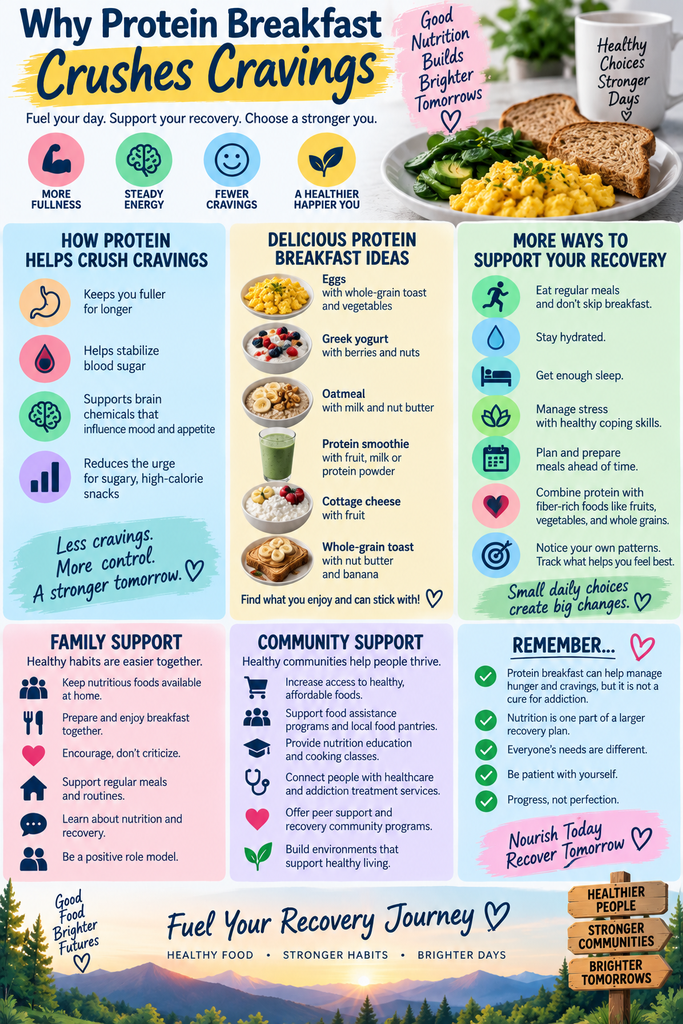
Cravings can feel powerful, especially when someone is hungry, tired, stressed, or adjusting to new routines during recovery. One simple strategy that may help some people start the day with greater stability is eating a breakfast that contains adequate protein.
Protein is not a cure for addiction, and breakfast cannot eliminate substance cravings. However, a balanced morning meal may help manage hunger, support steady energy, and reduce the urge to reach for highly palatable foods later in the day. During addiction recovery, regular nutrition can also become part of rebuilding daily structure and caring for physical health.
Why Protein at Breakfast Matters
Protein takes longer to digest than many rapidly absorbed carbohydrates and contributes to fullness after a meal. A protein-rich breakfast may therefore help someone feel satisfied longer than one consisting primarily of refined carbohydrates or added sugars.
Protein-containing breakfast foods include:
- Eggs
- Greek yogurt
- Cottage cheese
- Milk or fortified soy milk
- Tofu or tempeh
- Beans
- Nut or seed butters
- Nuts and seeds
- Fish or lean meats
- Protein-rich oatmeal combinations
Protein works particularly well as part of a balanced meal that includes fiber-rich carbohydrates and healthy fats, rather than being viewed as the only important nutrient.
Hunger Can Feel Like a Craving
Sometimes what feels like an intense desire for sweets or snack foods is partly driven by physical hunger. Skipping breakfast and going many hours without eating can make highly rewarding foods especially appealing.
A balanced breakfast can create a more predictable eating pattern.
For example, instead of having only a sugary pastry, consider combining:
Protein + fiber-rich carbohydrate + fruit or vegetables + healthy fat.
Examples include eggs with whole-grain toast and fruit, Greek yogurt with berries and nuts, or oatmeal with milk and nut butter.
Protein, Fullness, and the Brain
Protein provides amino acids that the body uses for many essential functions, including producing enzymes, hormones, and neurotransmitter-related compounds. Protein also contributes to physiological signals involved in satiety.
This does not mean that eating a high-protein breakfast directly “resets dopamine” or cures an addicted brain. Claims like these oversimplify complicated brain processes.
Nutrition is better understood as one supportive component of recovery.
Food Cravings During Addiction Recovery
Changes in appetite can occur during recovery. Some people develop stronger preferences for sweets or highly palatable foods, particularly during early alcohol recovery. Sleep disruption, stress, medication changes, irregular eating patterns, and emotional triggers may also influence appetite.
Rather than responding with severe food restriction, establishing regular meals can provide structure.
A protein-rich breakfast may help by:
- Increasing morning fullness
- Reducing excessive hunger later in the day
- Supporting a consistent eating routine
- Providing important nutrients
- Making balanced food choices easier
- Supporting recovery of general physical health
Importantly, food strategies should complement—not replace—evidence-based addiction treatment.
Self-Management Strategies
Start the Morning With Protein
Choose a protein source you actually enjoy and can realistically prepare. A complicated breakfast routine is unlikely to last.
Simple options include:
- Greek yogurt with berries
- Eggs and whole-grain toast
- Cottage cheese with fruit
- Oatmeal made with milk and topped with nuts
- Tofu scramble with vegetables
- Whole-grain toast with nut butter and banana
Don’t Wait Until You’re Extremely Hungry
Long periods without food can make it harder to make intentional food choices. Establishing regular meals and planned snacks may be particularly helpful for people whose eating patterns became irregular during active substance use.
Combine Protein With Fiber
Protein does not need to work alone. Fiber-rich foods such as vegetables, fruits, beans, oats, and whole grains can promote fullness and support digestive health.
Prepare Breakfast the Night Before
Recovery is easier when healthy choices require less effort.
Try preparing overnight oats, boiled eggs, washed fruit, yogurt portions, or other convenient foods ahead of time.
Track Your Own Patterns
Instead of assuming protein will eliminate cravings, observe what actually happens.
For a week or two, record:
- What you ate for breakfast
- Hunger levels
- Food cravings
- Substance cravings
- Sleep quality
- Mood
- Stress
- Meal timing
Patterns may reveal whether skipped meals, poor sleep, stress, or specific situations contribute to cravings.
Family Support Strategies
Families can support better nutrition without becoming the “food police.” Criticism about eating habits can create unnecessary tension, especially when someone is already navigating recovery.
Family members can:
- Keep convenient nutritious foods available
- Prepare balanced breakfasts together
- Encourage regular meals without forcing them
- Avoid shaming food choices
- Eat together when possible
- Learn about nutrition during recovery
- Encourage adequate hydration and sleep
- Support professional nutritional counseling when needed
Family members should also understand that a craving for alcohol or drugs cannot simply be solved by feeding someone breakfast. Substance cravings can require coping strategies, counseling, medications, peer support, and professional addiction treatment.
Community Support Strategies
Not everyone has reliable access to nutritious food. Recovery programs that discuss healthy eating without addressing food insecurity may overlook an important barrier.
Communities can support healthier recovery by connecting individuals with:
- Food assistance programs
- Community food pantries
- Affordable grocery resources
- Nutrition education
- Cooking classes
- Registered dietitians
- Primary healthcare
- Addiction treatment programs
- Recovery community organizations
- Peer-support services
Treatment programs can also incorporate basic nutrition education into whole-person recovery services.
Don’t Forget Sleep, Stress, and Hydration
Breakfast is only one piece of craving management. Poor sleep can affect appetite and decision-making, while stress can increase the desire for immediate comfort or reward.
A stronger morning routine might include:
Wake up → drink water → eat a balanced breakfast → take prescribed medications → move your body → review your recovery plan → begin the day.
Repeated routines reduce the number of decisions someone has to make during vulnerable periods.
Protein Is a Tool, Not a Cure
It is tempting to search for one food that will eliminate cravings. Addiction and appetite are much more complicated.
A protein-rich breakfast cannot replace medications for addiction treatment, counseling, behavioral therapies, peer support, relapse-prevention planning, or medical care.
Instead, nutrition can support the body while the larger work of recovery continues.
When to Seek Professional Guidance
A healthcare professional or registered dietitian can provide individualized advice for people with diabetes, kidney disease, liver disease, gastrointestinal conditions, pregnancy, eating disorders, significant weight changes, or other medical concerns.
Anyone experiencing strong or escalating substance cravings should contact their addiction treatment team rather than relying on dietary changes alone.
Building a Stronger Morning
Recovery is often strengthened through small behaviors repeated consistently. Breakfast may seem minor compared with counseling, medication, meetings, and relapse-prevention strategies, but daily routines can contribute to stability.
Self-management creates healthier eating patterns. Family support makes nutritious choices easier without judgment. Community support improves access to healthy food and professional care.
A protein-rich breakfast may not magically erase every craving, but it can help start the morning with nourishment, structure, and greater control over hunger.
Don’t expect breakfast to cure cravings. Use it to build a morning that supports recovery—one healthy choice at a time.
Frequently Asked Questions
Here are some common questions:
1. Why can a protein-rich breakfast help reduce cravings?
Protein can increase feelings of fullness and help keep hunger from returning quickly after a meal. Starting the morning with protein may therefore make it easier for some people to manage hunger and reduce later urges for highly palatable snack foods.
2. Does eating protein at breakfast eliminate cravings?
No. “Crushes cravings” is a catchy phrase, but protein cannot eliminate every craving. Cravings are influenced by hunger, stress, sleep, habits, emotions, medications, environment, and—in the case of substance cravings—addiction-related processes.
3. Can a protein breakfast reduce sugar cravings?
It may help some people. A satisfying breakfast containing protein, fiber-rich carbohydrates, and healthy fats can reduce excessive hunger, making sugary foods less tempting later in the morning.
4. Can protein help with alcohol or drug cravings?
Good nutrition can support overall health during recovery, but protein is not a treatment for substance cravings or substance use disorder. Strong alcohol or drug cravings may require counseling, medications, peer support, relapse-prevention strategies, and professional addiction treatment.
5. Why are regular meals important during addiction recovery?
Active substance use can disrupt normal eating patterns. Establishing regular meals during recovery can provide structure, improve nutritional intake, and prevent extreme hunger from becoming another source of physical and emotional stress.
6. What are good high-protein breakfast foods?
Options include eggs, Greek yogurt, cottage cheese, tofu, beans, milk or fortified soy milk, nuts, seeds, and nut or seed butters. Lean meat or fish can also be included, depending on individual preferences.
7. What is an example of a balanced protein breakfast?
Try scrambled eggs with whole-grain toast and fruit, Greek yogurt with berries and nuts, oatmeal prepared with milk and topped with nut butter, or a tofu scramble with vegetables and whole-grain toast.
8. Is protein alone enough for breakfast?
A balanced breakfast generally offers more than protein alone. Combining protein with fiber-rich carbohydrates, fruits or vegetables, and healthy fats can provide a wider variety of nutrients and help make the meal satisfying.
9. What if I am not hungry in the morning?
Not everyone needs the same eating schedule. Rather than forcing a large breakfast, consider a smaller nutritious option and discuss persistent appetite problems with a healthcare professional, particularly if they are accompanied by significant weight loss or other symptoms.
10. Can skipping breakfast increase cravings?
For some people, skipping breakfast can lead to greater hunger later in the day, potentially making high-calorie or sugary foods more appealing. Individual responses vary, so paying attention to your own hunger and craving patterns is useful.
11. How does sleep affect cravings?
Poor sleep can influence appetite, mood, energy, and decision-making. Someone who is exhausted may also have more difficulty following planned eating or recovery routines. Protecting sleep is therefore an important part of overall craving management.
12. How can families support healthy eating during recovery?
Families can keep nutritious foods available, prepare meals together, encourage regular eating routines, and avoid criticizing or policing someone’s food choices. Support is usually more productive than shame or pressure.
13. How can community resources improve nutrition during recovery?
Food pantries, food assistance programs, community kitchens, nutrition education, cooking programs, registered dietitians, healthcare services, and recovery organizations can help address both nutritional needs and barriers to healthy eating.
14. Should everyone in recovery follow a high-protein diet?
No. Nutritional needs vary with age, medical conditions, medications, activity level, pregnancy status, and other factors. People with conditions such as kidney or liver disease should discuss major dietary changes with their healthcare professional.
15. What is the most important takeaway about protein and cravings?
Think of breakfast as one supportive tool rather than a cure. A protein-rich, balanced breakfast may improve fullness and help manage hunger-related food cravings, while recovery from substance use disorder requires a much broader approach.
Video: Why you’re ALWAYS hungry (and how to fix it) #nutritiontips #highprotein #healthyeating