Recovery from substance use disorder involves more than stopping alcohol or drugs. Physical health, mental health, relationships, medications, reproductive health, and access to healthcare can all influence a person’s recovery journey. For people who can become pregnant, birth control may be an important part of that larger picture.
Birth control does not generally cause or prevent addiction, and using contraception is not inherently harmful to recovery. Instead, contraception can affect recovery indirectly through pregnancy planning, side effects, medication interactions, healthcare access, and a person’s sense of control over reproductive decisions. Understanding these connections can help people make informed choices with their healthcare professionals.
Why Reproductive Health Matters During Recovery
Substance use can sometimes contribute to inconsistent healthcare, disrupted routines, risky sexual behavior, or difficulty using a daily contraceptive method consistently. At the same time, an unintended pregnancy can introduce significant medical, emotional, financial, and social considerations during an already challenging period.
Access to voluntary reproductive healthcare allows people to decide whether and when pregnancy fits into their lives and recovery goals.
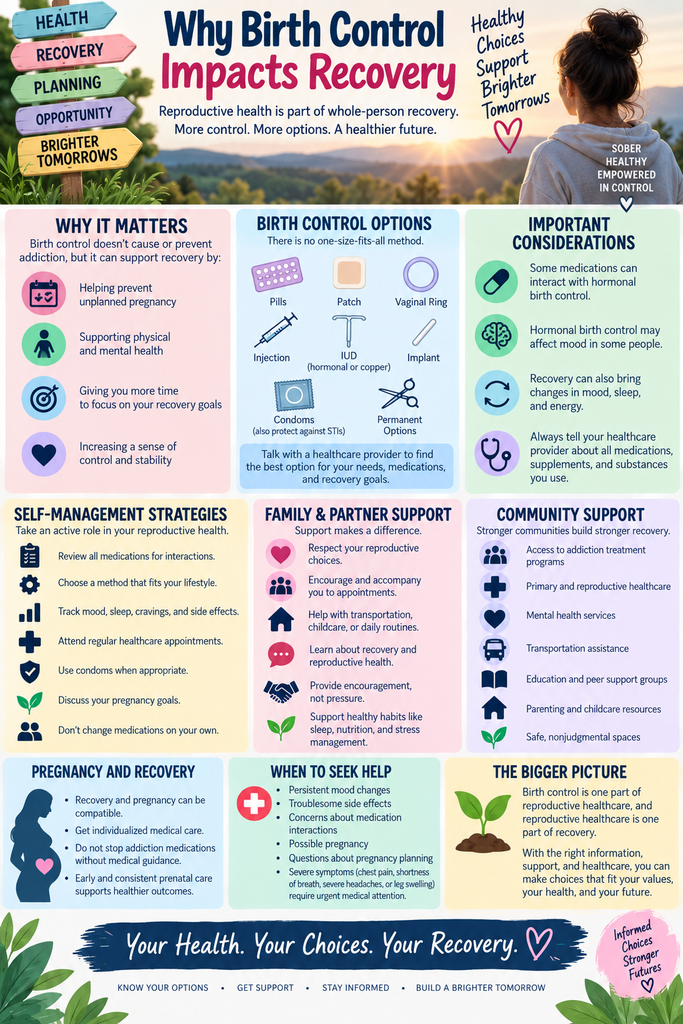
Birth control options include:
- Birth control pills
- Hormonal patches
- Vaginal rings
- Contraceptive injections
- Hormonal and copper intrauterine devices (IUDs)
- Contraceptive implants
- Barrier methods such as condoms
- Permanent contraception
No single method is best for everyone. Medical history, personal preferences, pregnancy goals, medications, side effects, and ability to use the method consistently should guide the decision.
Birth Control and Recovery Medications
Medication review is particularly important during recovery. Most commonly used medications for opioid use disorder do not automatically prevent someone from using hormonal contraception. However, certain medications used for other conditions can reduce the effectiveness of some hormonal contraceptives.
This is why someone in recovery should tell their healthcare professional about all medications, supplements, and substances they use rather than stopping or changing treatment independently.
A pharmacist, primary care professional, addiction specialist, or reproductive healthcare clinician can check for clinically significant interactions and recommend appropriate options.
Hormonal Changes and Emotional Well-Being
Some people report mood changes while using hormonal contraception, although individual responses vary considerably. Recovery itself can also involve changes in sleep, stress, anxiety, depression, cravings, and emotional regulation.
When several changes occur simultaneously, determining the cause can be difficult.
Consider tracking:
- Mood changes
- Sleep patterns
- Cravings
- Menstrual symptoms
- Medication changes
- Birth control side effects
- Stressful situations
If significant mood symptoms develop after starting or changing contraception, discuss them with a healthcare professional rather than abruptly discontinuing prescribed medication.
Self-Management Strategies
Taking an active role in reproductive health can support broader recovery goals. The objective is not to find a universally “perfect” contraceptive but to choose an approach that works safely and realistically for the individual.
Helpful strategies include:
- Review all medications. Ask a clinician or pharmacist to check for interactions with contraception.
- Choose a realistic method. Someone who struggles with daily routines may want to discuss methods that do not require remembering a pill every day.
- Track symptoms. Record changes in mood, bleeding, headaches, sleep, cravings, or other symptoms.
- Attend preventive healthcare appointments. Recovery should include reproductive and general healthcare rather than focusing exclusively on substance use.
- Use condoms when appropriate. Most contraceptive methods do not protect against sexually transmitted infections.
- Discuss pregnancy goals. Tell healthcare professionals whether pregnancy is currently desired, possible in the future, or something you want to avoid.
- Avoid changing medications independently. A healthcare professional can help determine whether symptoms are related to contraception, another medication, recovery, or another health condition.
Family and Partner Support Strategies
Partners and families can provide meaningful support, but reproductive decisions ultimately belong to the person receiving care. Support should never become pressure or coercion.
Families and partners can:
- Respect personal reproductive choices
- Encourage attendance at healthcare appointments when requested
- Help with transportation, childcare, or medication routines
- Learn about addiction recovery and reproductive health
- Avoid blaming hormonal contraception for every emotional change
- Encourage professional evaluation when concerning symptoms develop
- Support healthy sleep, nutrition, exercise, and stress management
- Respect privacy and bodily autonomy
A supportive partner might ask, “How can I help you with your recovery and health goals?” rather than telling someone which contraceptive method they should use.
Community Support Strategies
Recovery programs can better support individuals when reproductive healthcare is integrated with other health services. Fragmented care can make it difficult for someone to manage addiction treatment, primary care, mental health services, and reproductive healthcare simultaneously.
Communities can help by improving access to:
- Addiction treatment programs
- Primary healthcare
- Reproductive healthcare and contraceptive counseling
- Prenatal and postpartum care
- Mental health services
- STI testing and treatment
- Transportation assistance
- Peer recovery support
- Domestic violence resources
- Parenting and childcare services
Healthcare organizations should provide contraceptive information without making access to addiction treatment dependent on accepting contraception.
Protecting Reproductive Autonomy
People with substance use disorders have historically faced stigma surrounding pregnancy and parenting. This makes voluntary, informed decision-making especially important.
Contraception should be offered as an option—not imposed as a condition of recovery.
Healthcare professionals should explain the benefits, potential side effects, alternatives, and relevant drug interactions so the individual can make a decision consistent with their personal values and reproductive goals.
Pregnancy and Recovery
Anyone who becomes pregnant during recovery should receive individualized medical care. Some addiction medications should not be abruptly discontinued during pregnancy because sudden changes can create risks.
Pregnancy should prompt a conversation with addiction and obstetric healthcare professionals so treatment can be adjusted safely when necessary.
Recovery and pregnancy are not incompatible. Evidence-based treatment, prenatal care, mental health support, stable housing, nutrition, and compassionate healthcare can all contribute to healthier outcomes.
When to Talk With a Healthcare Professional
Seek professional guidance when experiencing severe or persistent mood changes, troublesome contraceptive side effects, concerns about medication interactions, difficulty using a contraceptive method consistently, possible pregnancy, or questions about pregnancy planning.
Urgent symptoms after starting certain hormonal contraceptives—such as severe chest pain, significant shortness of breath, sudden neurologic symptoms, or severe leg swelling—require prompt medical evaluation.
The Bigger Picture
Birth control is only one part of reproductive healthcare, and reproductive healthcare is only one part of recovery. The strongest approach considers the whole person.
Self-management encourages informed choices, symptom tracking, and consistent healthcare. Family support provides encouragement without controlling reproductive decisions. Community support improves access to addiction treatment, mental health services, and reproductive healthcare.
Recovery is about rebuilding health, stability, relationships, and personal agency. When reproductive healthcare is respectful, voluntary, and coordinated with addiction treatment, it can become another part of helping people build the future they choose.
Frequently Asked Questions
Here are some common questions:
1. Why is birth control important during addiction recovery?
Birth control can be part of comprehensive reproductive healthcare during recovery. It can help a person plan whether and when to become pregnant while focusing on physical health, emotional stability, treatment, relationships, and other recovery goals. Contraception itself does not treat addiction.
2. Does birth control affect addiction recovery directly?
Usually not directly. However, contraceptive choices can intersect with recovery through medication interactions, side effects, mood changes, adherence challenges, pregnancy planning, and access to healthcare.
3. Can birth control interact with medications used during recovery?
Some medications can interact with certain hormonal contraceptives, although many commonly used addiction-treatment medications do not make contraception ineffective. Because the answer depends on the specific medications and contraceptive method, a physician, PA, pharmacist, or other qualified clinician should review the complete medication list.
4. Can hormonal birth control affect mood during recovery?
Some people experience mood changes after beginning or changing hormonal contraception, while many do not. Recovery itself can also involve changes in mood, sleep, stress, and emotional regulation. Significant or persistent symptoms should be discussed with a healthcare professional rather than automatically attributed to birth control.
5. Can birth control increase drug or alcohol cravings?
There is not good evidence that standard contraceptives generally cause substance cravings. If cravings increase after a medication or contraceptive change, other factors such as stress, sleep, mental health symptoms, environmental triggers, and changes in recovery treatment should also be considered.
6. What type of birth control is best for someone in recovery?
There is no single best method. Options can include pills, patches, vaginal rings, injections, implants, IUDs, condoms, and permanent contraception. The choice should consider medical history, medications, pregnancy goals, preferences, side effects, and how easy the method will be to use consistently.
7. What if remembering a daily birth control pill is difficult?
A healthcare professional can discuss methods that require less frequent action, such as an implant or IUD. The decision should remain voluntary and based on the individual’s preferences rather than assumptions about people with substance use disorders.
8. Why should pregnancy planning be discussed during recovery?
Pregnancy can affect medication and healthcare decisions. Discussing pregnancy goals allows addiction treatment, reproductive healthcare, mental healthcare, and prenatal planning to be coordinated appropriately.
9. Should someone stop addiction medication if they become pregnant?
Not without medical guidance. Abruptly stopping certain medications used to treat substance use disorders can create significant risks. Anyone who is pregnant or thinks they may be pregnant should contact their healthcare professionals so treatment can be evaluated individually.
10. Do birth control methods protect against sexually transmitted infections?
Most do not. Condoms can reduce the risk of many sexually transmitted infections, while methods such as pills, IUDs, implants, injections, patches, and rings primarily prevent pregnancy.
11. How can someone monitor the effects of birth control during recovery?
Keeping a simple record of mood, sleep, cravings, menstrual changes, medication changes, and possible side effects can help identify patterns. Bring significant changes to a healthcare appointment for evaluation.
12. How can partners and families provide support?
They can encourage healthcare appointments, provide transportation or childcare when requested, support healthy routines, and listen without judgment. Most importantly, they should respect the person’s reproductive autonomy and avoid pressuring them to use or discontinue contraception.
13. How can community programs support reproductive health during recovery?
Communities can improve access to addiction treatment, primary care, contraception counseling, STI services, mental healthcare, prenatal care, peer recovery programs, transportation, childcare, and parenting resources. Coordinated services can reduce barriers to receiving care.
14. When should someone contact a healthcare professional about birth control?
Professional guidance is appropriate for troublesome side effects, significant mood changes, suspected medication interactions, difficulty using a contraceptive method, pregnancy concerns, or plans to become pregnant. Sudden severe symptoms such as chest pain, shortness of breath, neurologic symptoms, or substantial leg swelling require prompt medical evaluation.
15. What is the most important message about birth control and recovery?
Birth control should be an informed and voluntary healthcare choice, not a requirement for treatment or recovery. Recovery is about rebuilding health and personal agency. Reproductive healthcare can support that process when people receive accurate information, respectful counseling, and the freedom to make decisions that fit their health needs and future goals.
Video: Why birth control is a recovery tool #recovery #health #shorts