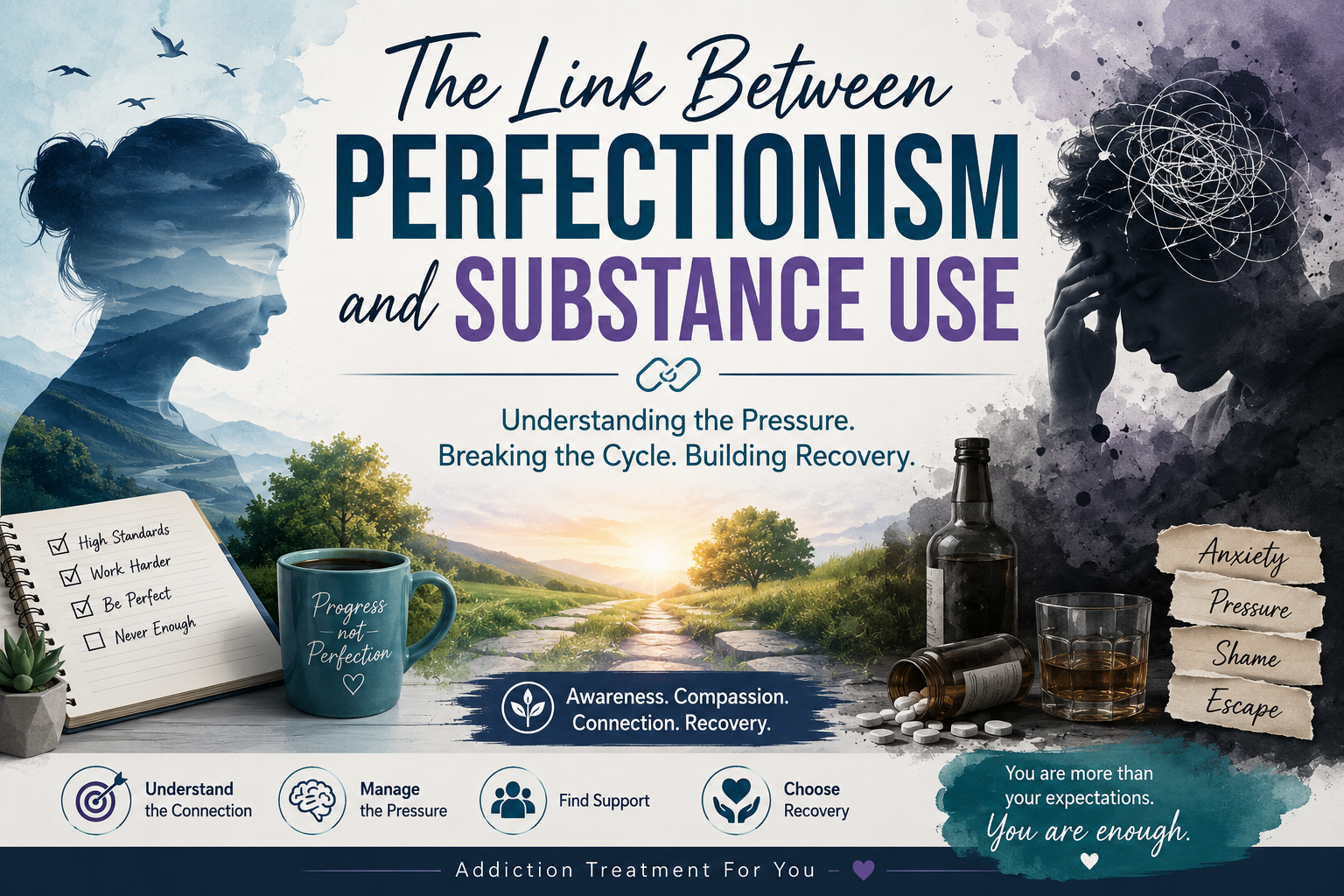
Perfectionism is often viewed as a positive quality because it can encourage hard work, organization, and achievement. However, when the desire to succeed becomes an intense need to avoid mistakes, criticism, or failure, perfectionism can create significant emotional pressure. For some people, substances may become a way to temporarily escape anxiety, shame, exhaustion, or the feeling that they are never “good enough.”
Understanding the relationship between perfectionism and substance use can help individuals and families recognize emotional triggers, develop healthier coping strategies, and support long-term recovery.
How Perfectionism Can Affect Emotional Health
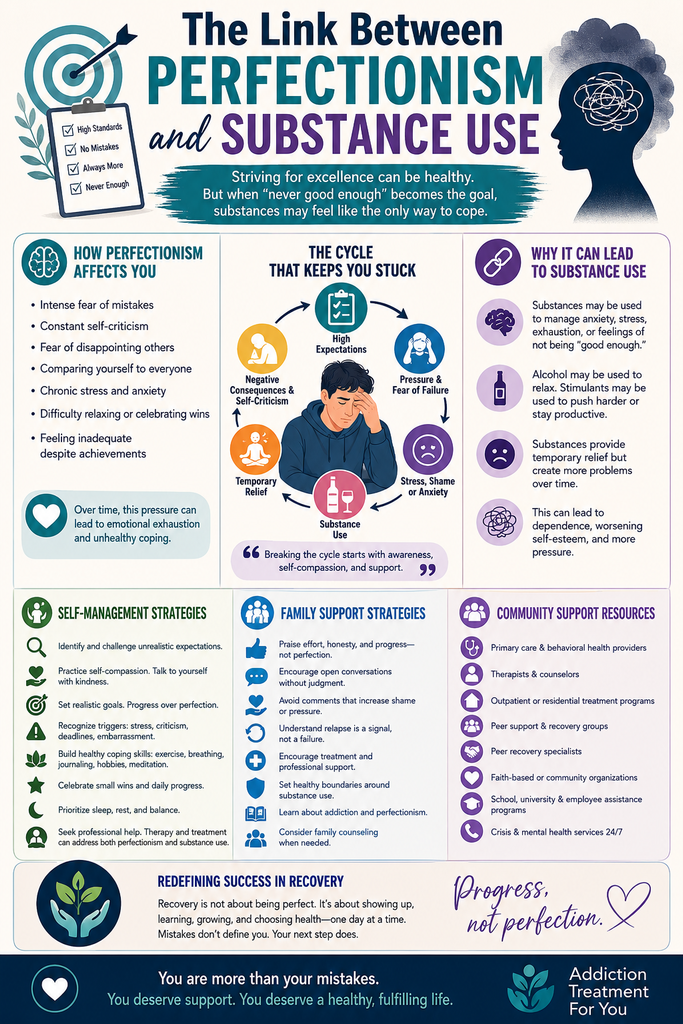
Healthy ambition involves working toward meaningful goals while accepting that mistakes and setbacks are normal. Maladaptive perfectionism is different. A person may set unrealistic standards and judge their self-worth based on whether they meet them.
Someone struggling with perfectionism may experience:
- Intense fear of making mistakes
- Excessive self-criticism
- Difficulty accepting constructive feedback
- Constant comparison with others
- Anxiety about disappointing family, coworkers, or friends
- Procrastination because of fear of doing something imperfectly
- Difficulty relaxing without feeling guilty
- A strong need for approval or validation
- Feelings of inadequacy despite significant accomplishments
Over time, this internal pressure can contribute to chronic stress and emotional exhaustion.
The Link Between Perfectionism and Substance Use
Perfectionism does not automatically cause addiction. Substance use disorders develop through a complex interaction of biological, psychological, social, and environmental factors. However, certain perfectionistic patterns may create emotional conditions in which substance use becomes an unhealthy coping strategy.
For example, someone experiencing constant performance pressure might use alcohol to relax after work. Another person may misuse stimulants while trying to study longer, work harder, or remain productive despite exhaustion. Someone experiencing shame after making a mistake might use substances to temporarily numb uncomfortable emotions.
The substance may initially appear to solve a problem by reducing anxiety, increasing confidence, improving energy, or providing emotional escape. Unfortunately, repeated use can introduce new problems and may eventually contribute to dependence or addiction.
A cycle can develop:
High expectations → pressure → fear of failure → stress or shame → substance use → temporary relief → negative consequences → greater self-criticism → more pressure
Breaking this cycle requires addressing both substance use and the emotional patterns surrounding it.
Why Asking for Help Can Be Difficult
Perfectionism can also interfere with recovery. A person who believes he must always appear successful or in control may have difficulty acknowledging that substance use has become a problem.
He may think:
- “I should be able to handle this myself.”
- “People will think I failed.”
- “I cannot let my family know I am struggling.”
- “I need to fix everything before asking for help.”
- “If I relapse, recovery has failed.”
These beliefs can increase secrecy and delay treatment.
Recovery challenges the idea that success means never struggling. Instead, recovery involves learning from setbacks, recognizing limitations, accepting support, and continuing to make healthier choices.
Self-Management Strategies
Self-management involves recognizing perfectionistic thinking and developing healthier responses to stress, mistakes, and uncomfortable emotions.
Helpful strategies include:
- Identify unrealistic expectations. Ask whether your standards are achievable or whether you are demanding perfection from yourself.
- Challenge all-or-nothing thinking. A mistake does not mean the entire effort was a failure.
- Practice realistic goal setting. Break large goals into smaller, manageable steps.
- Recognize substance-use triggers. Pay attention to whether cravings increase after criticism, conflict, deadlines, embarrassment, or perceived failure.
- Practice self-compassion. Speak to yourself with the same patience you would offer someone you care about.
- Develop alternative coping skills. Exercise, journaling, meditation, hobbies, breathing exercises, and supportive conversations can provide healthier ways to manage stress.
- Protect sleep and recovery time. Constant productivity can contribute to burnout and increase vulnerability to unhealthy coping.
- Celebrate progress rather than perfection. Recovery is built through repeated healthy choices rather than flawless performance.
- Seek professional treatment when needed. Counseling and evidence-based substance use treatment can address both addictive behaviors and underlying emotional patterns.
Family Support Strategies
Families can play an important role in recovery, but support does not mean controlling every decision or preventing every mistake. A healthier approach combines compassion, communication, accountability, and appropriate boundaries.
Family members can:
- Avoid reinforcing the idea that personal worth depends on achievements.
- Praise effort, honesty, persistence, and healthy choices rather than perfection.
- Encourage open conversations about stress, anxiety, cravings, and setbacks.
- Listen without immediately criticizing or trying to solve every problem.
- Avoid statements such as “You should be stronger than this.”
- Recognize that relapse or setbacks may indicate that treatment needs to be reassessed rather than that the person is a failure.
- Encourage participation in professional treatment.
- Establish clear boundaries around substance use and unsafe behaviors.
- Learn about addiction, perfectionism, and recovery.
- Consider family counseling when communication or trust has been significantly affected.
Family members should also protect their own emotional well-being. Supporting someone through recovery can be stressful, and caregivers may benefit from counseling, education, or peer support themselves.
Community Support Strategies
Recovery becomes easier when a person does not have to manage every challenge alone. Community resources can provide professional guidance, accountability, encouragement, and connection.
Helpful resources may include:
- Primary care and behavioral health professionals
- Addiction medicine specialists
- Licensed therapists and counselors
- Outpatient or residential substance use treatment programs
- Peer recovery specialists
- Recovery community organizations
- Mutual-help and peer-support groups
- Family support programs
- School or university counseling services
- Employee assistance programs
- Faith-based recovery communities when consistent with the individual’s preferences
- Crisis and mental health services when immediate support is needed
Community support can also help reduce isolation. Hearing other people openly discuss mistakes, cravings, setbacks, and recovery can challenge the perfectionistic belief that everyone else has life completely under control.
Redefining Success in Recovery
One of the most important changes for someone struggling with perfectionism may be learning to redefine success.
Recovery does not require perfection.
Success may mean attending treatment even when it feels uncomfortable. It may mean telling someone about a craving instead of hiding it. It may mean apologizing after making a mistake, setting a healthier boundary, getting enough sleep, or returning to treatment after a setback.
Instead of asking, “Did I do everything perfectly?” a healthier question may be, “What can I learn from this, and what is my next healthy step?”
Conclusion
Perfectionism can look like determination from the outside while creating tremendous pressure internally. When self-worth becomes tied to flawless performance, substances may become an appealing but dangerous way to manage stress, anxiety, exhaustion, or shame.
Recovery involves more than removing a substance. For some individuals, it also means learning that mistakes can be tolerated, help can be accepted, and personal worth does not depend on perfect performance. Through self-management strategies, supportive family relationships, professional treatment, and community resources, a person can develop healthier ways to cope with pressure and gradually replace perfectionism with flexibility, self-awareness, and a focus on progress.
The goal of recovery is not to become perfect. It is to build a healthier life in which setbacks become opportunities to learn rather than reasons to give up.
Frequently Asked Questions
Here are some common questions:
1. What is perfectionism?
Perfectionism is a pattern of setting extremely high standards and placing significant pressure on oneself to avoid mistakes or failure. Healthy striving can encourage achievement, but unhealthy perfectionism may involve excessive self-criticism, fear of disappointing others, and feeling that nothing is ever good enough.
2. Is perfectionism linked to substance use?
It can be. Perfectionism does not directly cause addiction, but certain perfectionistic patterns may contribute to stress, anxiety, shame, and emotional exhaustion. Some individuals may turn to alcohol or other substances as an unhealthy way to cope with these feelings.
3. Why might someone with perfectionism use substances?
Substances may temporarily provide relaxation, emotional escape, confidence, energy, or relief from overwhelming expectations. However, temporary relief can reinforce repeated substance use and potentially contribute to harmful patterns or dependence.
4. Can someone be successful and still struggle with perfectionism and addiction?
Yes. Academic achievement, professional success, financial stability, or social status does not protect someone from substance use disorders. A person may appear highly successful while privately experiencing anxiety, substance misuse, or significant emotional distress.
5. What does the perfectionism-substance use cycle look like?
A common pattern may involve high expectations → fear of failure → stress or shame → substance use → temporary relief → negative consequences → increased self-criticism → greater pressure. Recognizing this cycle can be an important step toward changing it.
6. Can perfectionism make it harder to ask for help?
Yes. Someone may believe that needing treatment represents weakness or failure. They may try to hide their substance use or convince themselves they should be able to solve the problem independently. These beliefs can delay treatment.
7. Can perfectionism interfere with addiction recovery?
It can. Someone may expect recovery to happen perfectly and become extremely discouraged by cravings, difficult emotions, or setbacks. Recovery is generally a process rather than a flawless progression, and treatment plans sometimes need to be adjusted along the way.
8. What are healthier ways to manage perfectionism during recovery?
Helpful strategies can include:
- Setting realistic and flexible goals
- Challenging all-or-nothing thinking
- Practicing self-compassion
- Identifying stress and craving triggers
- Prioritizing sleep and healthy routines
- Using exercise, mindfulness, or journaling for stress management
- Celebrating gradual progress
- Seeking counseling or addiction treatment when appropriate
9. How can family members help?
Families can encourage honest communication without increasing shame. Praising effort and progress instead of demanding perfection, maintaining healthy boundaries, learning about addiction, and encouraging professional treatment can create a more supportive recovery environment.
10. Should families lower all expectations for someone in recovery?
Not necessarily. Support does not mean eliminating accountability. Families can maintain reasonable expectations and boundaries while recognizing that mistakes and setbacks can occur. The goal is to encourage responsibility without using humiliation, unrealistic demands, or constant criticism.
11. What professional treatments may help?
Treatment depends on the individual’s needs and substances involved. Options may include behavioral therapy, addiction counseling, medications for certain substance use disorders, outpatient programs, residential treatment, peer recovery support, and treatment for co-occurring mental health concerns.
12. Can therapy help with perfectionistic thinking?
Yes. Psychotherapy can help individuals recognize rigid expectations, challenge unhelpful thinking patterns, develop healthier coping skills, and separate personal worth from achievement. When substance use is also present, both concerns should be addressed as part of an individualized treatment plan.
13. Does relapse mean someone has failed at recovery?
No. A return to substance use can be serious and may carry significant overdose or other health risks, but it should not automatically be interpreted as personal failure. It can indicate that treatment, coping strategies, medications, recovery supports, or the recovery environment need to be reassessed.
14. What community resources can support recovery?
Resources may include addiction medicine professionals, therapists, treatment programs, peer recovery specialists, mutual-help groups, recovery community organizations, employee or school assistance programs, and family-support services.
15. What is the most important message for someone struggling with perfectionism and substance use?
Recovery requires progress, not perfection. Asking for help is not evidence of failure. Learning to tolerate mistakes, manage stress differently, accept support, and make healthier choices can gradually weaken the cycle connecting perfectionistic pressure with substance use.
Video: Perfectionism and Substance Use