Music can inspire, unite communities, and give people hope in their darkest moments. For the Boston-based Celtic punk rock band Dropkick Murphys, music has become more than entertainment. It also serves as a platform for addiction recovery advocacy, charitable giving, and community transformation.
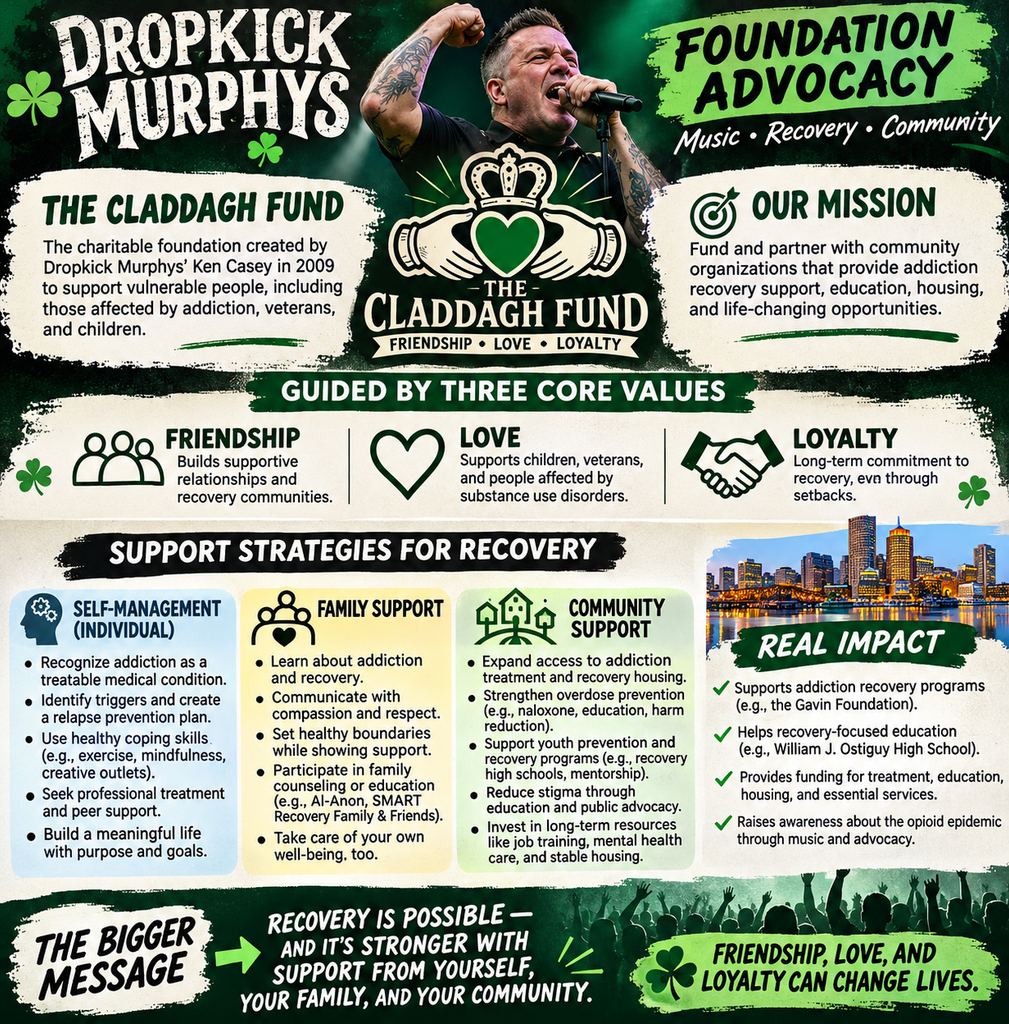
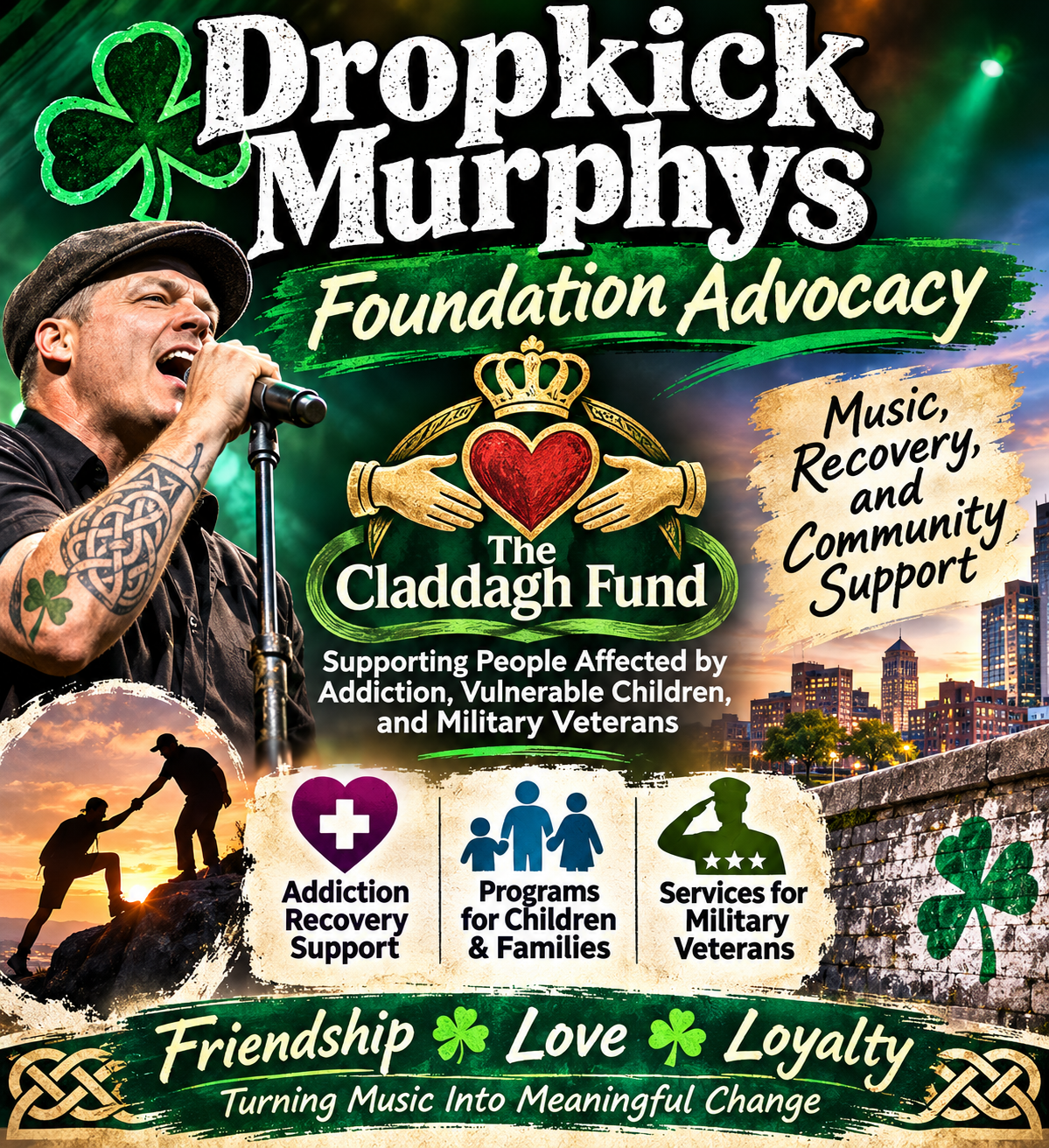
In 2009, band founder and singer Ken Casey established the Claddagh Fund, a charitable foundation dedicated to supporting vulnerable children, military veterans, and individuals struggling with alcohol and drug addiction.
The foundation represents three powerful values symbolized by the traditional Irish Claddagh ring: Friendship, Love, and Loyalty. These principles guide its mission to strengthen communities and support underfunded nonprofit organizations.
Through fundraising, recovery education, and partnerships with community organizations, Dropkick Murphys demonstrate how public influence can be used to address substance use disorders and encourage lasting recovery.
Ken Casey’s Personal Recovery Journey and Commitment to Advocacy
Ken Casey’s commitment to addiction recovery is deeply personal. Long before establishing the Claddagh Fund, Casey experienced his own struggles with alcohol and substance use.
In a 2017 interview with WBUR, Casey discussed being in long-term recovery for more than 25 years. He also described witnessing the devastating consequences of opioid addiction among friends, families, and members of the Boston community.
His experiences helped shape his belief that people experiencing addiction deserve compassion, meaningful opportunities, and continued support rather than judgment or abandonment.
Instead of keeping his experiences private, Casey used his musical career and community connections to create opportunities for others.
His advocacy demonstrates several important recovery principles:
- Recovery is possible: Substance use disorders are treatable, and individuals can achieve long-term recovery.
- Personal experiences can inspire change: People with lived experience can become effective advocates and mentors.
- Compassion reduces stigma: Addiction should be addressed as a health condition rather than a moral failure.
- Community relationships matter: Supportive environments can strengthen recovery.
- Helping others can provide purpose: Meaningful service may reinforce personal recovery goals.
Casey’s journey illustrates how lived experience can contribute to a broader mission of helping others.
The Claddagh Fund: Friendship, Love, and Loyalty in Action
The Claddagh Fund was established to raise financial support for organizations serving underserved and vulnerable populations.
Its work emphasizes three major areas:
Friendship: Building Supportive Communities
Friendship represents the importance of human connection. Individuals recovering from addiction often benefit from supportive relationships, recovery peers, mentors, and community organizations.
Love: Supporting Vulnerable Individuals
Love reflects the foundation’s commitment to assisting children, veterans, and people affected by substance use disorders through charitable grants and community partnerships.
Loyalty: Remaining Committed to Recovery
Loyalty symbolizes continued support, especially when individuals experience setbacks or require additional treatment and recovery resources.
The foundation prioritizes community-based organizations and programs providing addiction treatment, education, housing, and ongoing social support.
Fighting the Opioid Epidemic Through Music and Awareness
The opioid epidemic has affected countless individuals and families across the United States.
Dropkick Murphys have used their music to bring attention to addiction, overdose deaths, grief, and the importance of recovery.
Their 2017 album 11 Short Stories of Pain & Glory addresses difficult experiences involving addiction, loss, resilience, and community solidarity.
Songs such as Rebels with a Cause explore the devastating effects of addiction on relationships, while the band’s rendition of You’ll Never Walk Alone communicates solidarity with people experiencing grief and hardship.
Casey has described attending numerous funerals connected to opioid-related deaths, experiences that influenced the band’s advocacy.
Music-based advocacy can contribute to addiction prevention and recovery by:
- Encouraging conversations about substance use and overdose prevention.
- Reducing shame associated with seeking treatment.
- Helping families recognize that addiction affects entire communities.
- Connecting individuals through shared experiences.
- Encouraging public support for treatment and recovery services.
Although music cannot replace professional treatment, it can create emotional connections that motivate people to seek help.
Self-Management Strategies: Lessons From Recovery Advocacy
The Claddagh Fund’s mission emphasizes hope, connection, and long-term support. Individuals working toward recovery can apply these principles through practical self-management strategies.
Recognize addiction as a treatable medical condition
Substance use disorder involves changes in brain reward, motivation, learning, and behavioral control. Effective treatment addresses biological, psychological, and social factors.
Individuals should avoid interpreting addiction as a personal weakness.
Self-management strategies include:
- Recognize patterns of substance use and identify personal triggers.
- Seek an assessment from a qualified addiction healthcare professional.
- Establish realistic recovery goals and review progress regularly.
- Consider evidence-based treatment, including medications when clinically indicated.
- Develop a written relapse prevention and overdose safety plan.
- Address co-occurring conditions such as depression, anxiety, and trauma.
For opioid use disorder, medications such as buprenorphine and methadone reduce overdose and mortality risk. Naltrexone may also be appropriate for selected patients. Individualize treatment rather than limiting it to a single recovery philosophy.
Develop healthy coping mechanisms
Stress, grief, loneliness, and emotional distress can contribute to substance use and recurrence of symptoms.
Learning healthier coping strategies is a key part of recovery.
Helpful activities include:
- Practicing mindfulness, meditation, or breathing exercises.
- Participating in regular physical activity.
- Maintaining consistent sleep and nutrition routines.
- Using music, writing, or creative activities for emotional expression.
- Attending counseling or peer recovery meetings.
- Reaching out for support when cravings intensify.
Build a meaningful life beyond addiction
Long-term recovery involves more than stopping substance use. It also means rebuilding relationships, finding purpose, and engaging in meaningful activities.
Volunteer work, education, employment, and creative interests can strengthen a person’s sense of identity and belonging.
Ken Casey’s advocacy shows how community service can become a powerful source of purpose.
Family Support Strategies: Helping Loved Ones Through Addiction
Addiction affects entire families. Parents, spouses, siblings, and children may experience fear, frustration, financial stress, grief, and uncertainty.
Families can provide valuable support while maintaining healthy boundaries and protecting their own well-being.
Educate family members about addiction
Understanding substance use disorder helps families respond with informed compassion.
Family members should recognize that addiction is a chronic, treatable condition and that recovery often requires ongoing care.
Helpful family strategies include:
- Learn about addiction, withdrawal, relapse, and treatment options.
- Avoid blaming or humiliating a loved one for substance use.
- Encourage professional evaluation and evidence-based treatment.
- Recognize warning signs of overdose and learn how to administer naloxone.
- Understand that a return to substance use indicates a need to reassess support and treatment, not that recovery is impossible.
Practice supportive communication
Effective communication can reduce conflict and improve trust.
Instead of using accusations, family members can express concern through supportive statements.
For example:
“I care about you, and I’m worried about how substance use is affecting your health. I want to help you find support when you’re ready.”
Family members should listen without immediately criticizing, arguing, or attempting to control every decision.
Establish healthy boundaries
Compassion does not require tolerating harmful behavior.
Families can support recovery while setting limits around financial assistance, substance use in the home, threats, and unsafe behavior.
Communicate boundaries clearly and consistently.
Encourage family involvement in treatment
Family counseling and structured education programs can help address communication problems, relationship difficulties, and emotional distress.
Support organizations such as Al-Anon, SMART Recovery Family & Friends, and other family recovery groups can provide education and emotional support.
Families also need opportunities to heal independently of their loved one’s treatment progress.
Community Support Strategies: Turning Advocacy Into Action
The Claddagh Fund demonstrates how community partnerships can expand recovery resources.
Its charitable work includes supporting organizations such as the Gavin Foundation, which provides addiction recovery programs, and William J. Ostiguy High School, a recovery-focused educational environment for young people.
These partnerships highlight the importance of meeting individuals where they are and supporting their long-term needs.
Expand access to addiction treatment
Communities can improve recovery outcomes by supporting affordable, accessible services.
Important priorities include:
- Increasing access to outpatient and residential addiction treatment.
- Supporting medications for opioid use disorder.
- Expanding mental health services and integrated treatment.
- Providing transportation assistance and recovery housing.
- Supporting continuity of care after hospitalization, incarceration, or residential treatment.
Strengthen overdose prevention programs
Community overdose prevention initiatives can save lives.
Effective approaches include naloxone distribution, overdose response training, fentanyl test strip access where permitted, and education about the dangers of using substances alone.
Harm reduction services and evidence-based treatment can work together to reduce mortality and help people engage in care.
Support youth prevention and recovery
Adolescents experiencing substance use problems often need specialized services that address developmental, educational, family, and mental health needs.
Community organizations can support:
- School-based substance use education.
- Youth counseling and early intervention.
- Recovery high schools and educational scholarships.
- Mentorship programs and supervised recreational activities.
- Family education and prevention workshops.
Reduce stigma through public advocacy
Stigma can discourage individuals from seeking treatment and prevent families from discussing addiction openly.
Community leaders, musicians, healthcare professionals, and educators can help normalize conversations about addiction.
Public campaigns should emphasize that recovery is possible and that treatment deserves the same respect as care for other medical conditions.
The Importance of Long-Term Recovery Support
One of the most meaningful aspects of the Claddagh Fund’s approach is its recognition that people need ongoing support beyond short-term treatment.
The foundation highlights programs that provide education, training, housing, and consistent social services.
Several interconnected resources can strengthen long-term recovery.
| Recovery need | Community support |
|---|---|
| Medical stability | Addiction treatment and ongoing healthcare |
| Emotional well-being | Counseling and mental health services |
| Social connection | Peer support and recovery communities |
| Financial independence | Job training and employment assistance |
| Safe living environment | Recovery housing and housing assistance |
| Family stability | Family counseling and educational programs |
| Personal purpose | Volunteering, mentorship, and creative activities |
Recovery outcomes differ between individuals. Some benefit from abstinence-oriented programs, while others benefit from medication-supported recovery and harm reduction services. The most effective approach is individualized, evidence-based, and responsive to changing needs.
How Individuals and Communities Can Support the Claddagh Fund
The Claddagh Fund offers supporters opportunities to contribute through fundraising, charitable donations, sponsorships, volunteer work, and community events.
Individuals interested in supporting its mission can:
- Donate to the foundation or organizations it supports.
- Participate in charity fundraising events.
- Volunteer professional skills or services.
- Support local addiction recovery organizations.
- Share educational resources about addiction and overdose prevention.
- Encourage businesses to sponsor community recovery initiatives.
According to Catholic Charities Boston, Ken Casey received the Jack Shaughnessy Service Award in 2022 for the Claddagh Fund’s community contributions. The organization reported that the foundation’s support had helped more than 200 Boston residents access essential services, including mental health counseling, childcare, education, and basic necessities.
For more information, visit the official Claddagh Fund website.
Lessons From Dropkick Murphys’ Addiction Recovery Advocacy
Ken Casey and Dropkick Murphys’ journey shows that addiction advocacy can extend far beyond clinical settings.
Their charitable work offers several lessons for individuals, families, healthcare professionals, and communities.
First, human connection strengthens recovery. Isolation and stigma can create barriers to treatment, while supportive relationships help individuals feel valued.
Second, lived experience can inspire meaningful advocacy. People who have experienced addiction or supported affected loved ones can help educate others and encourage treatment engagement.
Third, community resources are essential. Recovery requires more than individual determination. Access to healthcare, stable housing, employment, and supportive relationships can make a substantial difference.
Fourth, advocacy should lead to practical assistance. Awareness campaigns are valuable, but sustainable improvements require financial support, accessible treatment, and effective community programs.
Finally, hope must be accompanied by action. Encouragement is important, but individuals and families also need clear pathways to professional care.
Conclusion: Friendship, Love, and Loyalty Can Change Lives
Dropkick Murphys’ Claddagh Fund represents the powerful connection between music, compassion, and community service.
Through Ken Casey’s personal recovery experience and the band’s commitment to helping vulnerable populations, the foundation demonstrates how public influence can support addiction treatment, prevention, and long-term recovery.
Its guiding values of friendship, love, and loyalty remind us that individuals experiencing addiction deserve understanding, dignity, and continued opportunities to rebuild their lives.
For individuals, recovery begins with seeking support, developing healthier coping strategies, and accessing appropriate treatment.
For families, meaningful support involves education, compassion, healthy boundaries, and encouragement.
For communities, lasting change requires investment in treatment, prevention, housing, mental healthcare, and recovery services.
Addiction can affect anyone, but recovery should never be a journey someone must face alone.
When individuals, families, and communities work together, hope can become meaningful action—and meaningful action can help save lives.
Resources and Support
Individuals seeking help for substance use disorders can contact the SAMHSA National Helpline at 1-800-662-HELP (4357) or visit FindTreatment.gov to locate treatment services.
For immediate overdose emergencies, call 911 and administer naloxone if available.
Frequently Asked Questions and Answers
About the Claddagh Fund
1. What is the Dropkick Murphys’ Claddagh Fund?
The Claddagh Fund is a charitable organization founded in 2009 by Dropkick Murphys’ Ken Casey. It supports nonprofit organizations assisting vulnerable populations, including individuals affected by addiction, children, and military veterans.
Its mission emphasizes friendship, love, loyalty, and community involvement.
2. Who founded the Claddagh Fund?
Ken Casey, a founding member and singer of Dropkick Murphys, established the foundation. His experiences with recovery and the effects of addiction on his community helped motivate his charitable work.
3. What does the name Claddagh Fund represent?
The name comes from the traditional Irish Claddagh symbol, which features two hands holding a crowned heart.
The symbol represents three important values:
- Friendship: Building meaningful relationships and supportive communities.
- Love: Demonstrating compassion toward individuals experiencing hardship.
- Loyalty: Maintaining commitment to people and communities through difficult times.
These values reflect the foundation’s charitable mission.
4. What populations does the Claddagh Fund support?
The foundation focuses on three primary populations:
- Individuals affected by alcohol and drug addiction.
- Children and young people experiencing disadvantages.
- Military veterans and their families.
The foundation provides charitable support to organizations serving these groups.
5. Is the Claddagh Fund an addiction treatment center?
No. The Claddagh Fund is a charitable organization, not a licensed addiction treatment facility.
It helps support nonprofit organizations and community programs that provide services such as addiction treatment, education, housing assistance, and recovery support.
Individuals seeking medical treatment should contact a qualified healthcare professional or addiction treatment provider.
Ken Casey’s Recovery Journey and Advocacy
6. Has Ken Casey personally experienced addiction?
Yes. Ken Casey has publicly discussed his history with substance use and long-term recovery.
In a 2017 interview, Casey stated that he had been in recovery for more than 25 years. His experiences, along with witnessing addiction-related deaths among friends and community members, influenced his advocacy.
His journey illustrates that people with a history of addiction can build meaningful careers, support others, and make lasting contributions to society.
7. Why is Ken Casey passionate about opioid addiction awareness?
Casey has witnessed the devastating effects of opioid addiction in Boston and surrounding communities.
He has spoken publicly about attending numerous funerals involving individuals who died during the opioid crisis.
These experiences motivated him to raise awareness, support recovery programs, and encourage communities to respond to addiction with greater urgency and compassion.
8. How does Dropkick Murphys use music to raise addiction awareness?
The band incorporates themes of addiction, grief, resilience, and hope into its music.
Its 2017 album, 11 Short Stories of Pain & Glory, includes songs that reflect the emotional consequences of addiction and the loss of community.
Music can encourage individuals to discuss substance use, recognize the importance of recovery, and support affected families.
9. Can music help someone recover from addiction?
Music can complement addiction treatment by promoting emotional expression, reducing perceived isolation, and helping individuals develop healthy coping skills.
Music-based activities may include listening to meaningful songs, songwriting, playing instruments, or participating in music therapy.
However, music is not a replacement for evidence-based addiction treatment, particularly when medication or structured behavioral therapy is indicated.
10. What makes Dropkick Murphys’ addiction advocacy different?
The band’s advocacy combines personal recovery experience, music, charitable fundraising, and direct support for community organizations.
Rather than focusing exclusively on public awareness, the Claddagh Fund raises money for underfunded nonprofits that provide practical assistance to vulnerable populations.
This approach helps connect public attention with community resources.
Addiction Treatment and Recovery Support
11. What addiction recovery organizations has the Claddagh Fund supported?
The foundation’s published list of supported organizations includes:
- Gavin Foundation: Provides substance use treatment and recovery services.
- William J. Ostiguy High School: Offers a recovery-supportive educational environment for adolescents.
- Cushing House: Provides structured residential support for young people affected by substance use disorders.
- Right Turn Addiction Services: Offers addiction treatment and creative recovery programming.
These organizations illustrate the foundation’s interest in treatment, education, housing, and sustained recovery support.
12. Why is long-term support important in addiction recovery?
Addiction is often a chronic, relapsing medical condition. Some individuals require continuing care to maintain stability and reduce the risk of returning to harmful substance use.
Long-term recovery support may include counseling, medication, peer support, stable housing, employment assistance, and family involvement.
Recovery plans should be individualized and adjusted as circumstances change.
13. What self-management strategies can individuals learn from the foundation’s advocacy?
Individuals can apply the foundation’s principles of friendship, love, and loyalty to their personal recovery plans.
Helpful strategies include:
- Identify triggers and develop a relapse prevention plan.
- Seek professional addiction treatment.
- Build relationships with supportive people.
- Practice healthy coping skills and stress management.
- Establish realistic personal goals.
- Participate in meaningful activities, including volunteering.
- Maintain follow-up appointments and ongoing recovery support.
14. Does addiction relapse mean treatment has failed?
No. A return to substance use does not erase previous progress or automatically mean treatment has failed.
However, it can indicate that the treatment plan needs reassessment.
Healthcare professionals may recommend changes in medication, counseling intensity, recovery support, or the treatment setting.
For individuals with opioid use disorder, a return to use after a period of abstinence can be particularly dangerous because reduced tolerance increases overdose risk.
15. What role do medications play in addiction recovery?
Evidence-based medications can improve outcomes for certain substance use disorders.
For opioid use disorder, buprenorphine and methadone substantially reduce overdose and mortality risk. Extended-release naltrexone is another option for appropriately selected patients.
For alcohol use disorder, medications such as naltrexone and acamprosate may help reduce drinking or support abstinence.
Medication decisions should be individualized with a qualified healthcare professional.
Family Support and Addiction Education
16. How can families support a loved one experiencing addiction?
Families can provide emotional encouragement while helping loved ones access professional treatment.
Helpful approaches include listening without judgment, learning about substance use disorders, offering practical assistance, and maintaining healthy boundaries.
Families should also prioritize their own emotional and physical well-being.
17. What should families avoid when helping someone with addiction?
Families should avoid:
- Using shame, threats, or humiliation to force recovery.
- Assuming addiction is simply a lack of willpower.
- Ignoring dangerous behavior or personal safety concerns.
- Attempting to manage withdrawal without appropriate medical guidance.
- Neglecting their own mental health and support needs.
Supportive communication and consistent boundaries are generally more constructive than confrontation and blame.
18. How can parents protect teenagers from substance use disorders?
Parents can reduce risk by maintaining open communication, discussing substance-related harms, recognizing behavioral changes, and seeking early professional evaluation when concerns arise.
Protective strategies include family engagement, supportive school environments, healthy recreational activities, and access to mental healthcare.
Recovery-focused educational programs, such as William J. Ostiguy High School, provide additional support for students already experiencing substance use disorders.
19. What resources are available for families affected by addiction?
Families may benefit from professional counseling, family therapy, addiction education, and peer support.
Organizations such as Al-Anon and SMART Recovery Family & Friends offer support for people affected by a loved one’s substance use.
Families can also contact SAMHSA’s National Helpline at 1-800-662-HELP (4357) for treatment referral information.
Community Advocacy and Prevention
20. How can communities follow the Claddagh Fund’s example?
Communities can partner with healthcare providers, schools, nonprofits, employers, and local government agencies.
Effective initiatives may include fundraising for treatment programs, expanding recovery housing, organizing overdose prevention training, and supporting youth prevention services.
Community leaders can also promote public education that reduces addiction-related stigma.
21. Why is reducing addiction stigma important?
Stigma can discourage individuals from seeking healthcare, disclosing substance use problems, or participating in recovery programs.
Using respectful language, recognizing addiction as a treatable medical condition, and sharing recovery experiences can encourage more compassionate community responses.
Reducing stigma also helps families discuss addiction more openly.
22. How can communities help prevent opioid overdose deaths?
Communities can implement evidence-based overdose prevention measures, including:
- Expanding access to naloxone.
- Providing overdose recognition and response training.
- Improving access to medications for opioid use disorder.
- Supporting harm reduction services.
- Educating individuals about fentanyl contamination and overdose risk.
- Improving treatment access after nonfatal overdoses.
Naloxone can reverse an opioid overdose when administered promptly, but emergency medical assistance remains essential.
23. How does the Claddagh Fund support military veterans?
The foundation includes veterans among its primary charitable priorities.
Its published charity listings include organizations that address veteran homelessness, employment, healthcare-related housing, and family support.
Veterans experiencing addiction may also benefit from integrated treatment for post-traumatic stress disorder, depression, chronic pain, and substance use disorders.
24. How can healthcare professionals support addiction advocacy?
Healthcare professionals can support addiction advocacy through clinical care, education, and community involvement.
Important strategies include screening for substance use disorders, providing evidence-based treatment, discussing overdose prevention, prescribing or distributing naloxone when appropriate, and connecting patients with community resources.
They can also help reduce stigma by using nonjudgmental, person-first language.
Supporting the Foundation
25. How can someone donate or volunteer with the Claddagh Fund?
Individuals can support the foundation through charitable donations, fundraising events, corporate sponsorships, volunteering, or donated professional services.
The foundation provides information about these opportunities on its official website.
Visit The Claddagh Fund for information about its charitable mission and involvement opportunities.
26. Has Ken Casey received recognition for his charitable work?
Yes. In April 2022, Catholic Charities Boston awarded Ken Casey the Jack Shaughnessy Service Award for the Claddagh Fund’s community contributions.
Catholic Charities reported that the foundation’s support had helped more than 200 Boston residents access services including mental health counseling, childcare, education, and basic necessities.
27. What is the most important message behind Dropkick Murphys’ foundation advocacy?
The central message is that friendship, love, and loyalty can help communities respond to addiction and other forms of hardship.
The foundation shows how personal experiences, charitable giving, and community partnerships can turn compassion into meaningful help.
For people affected by addiction, its mission reinforces the importance of connection, accessible treatment, and sustained support.
Video: Dropkick Murphys Frontman Ken Casey Gave Back in a Big Way