For decades, the United States has struggled with the consequences of substance use disorders, overdose deaths, incarceration, and unequal access to addiction treatment. Traditional drug policies have often emphasized criminal penalties, sometimes without adequately addressing the underlying medical, psychological, and social factors contributing to substance use.
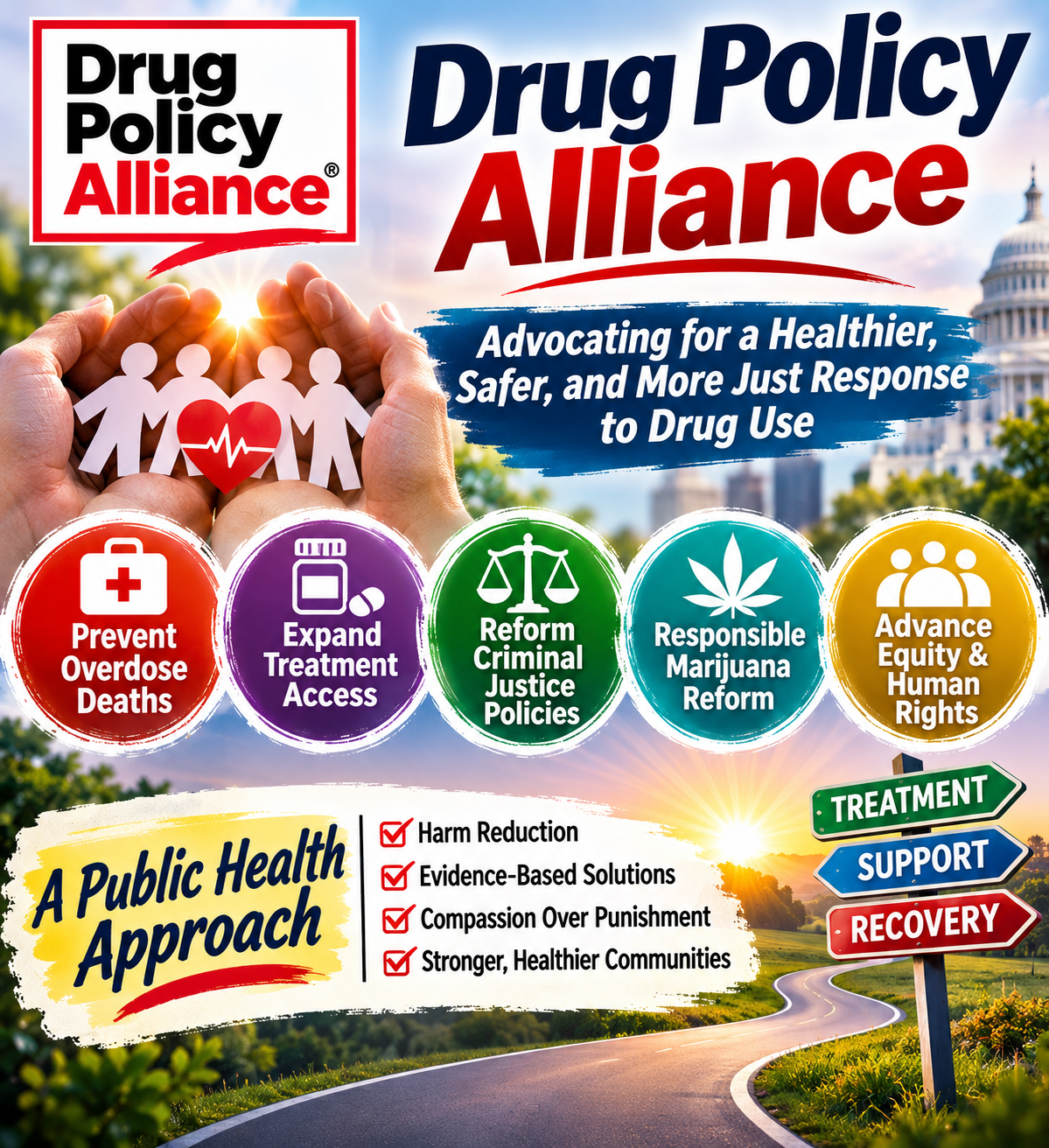
The Drug Policy Alliance (DPA) advocates for a different approach—one that prioritizes public health, human rights, harm reduction, and evidence-based drug policies.
Rather than treating every instance of drug use primarily as a criminal justice issue, DPA argues that effective policies should focus on reducing preventable deaths, expanding healthcare access, addressing social inequalities, and protecting individual dignity.
The organization works to reform drug laws, reduce unnecessary incarceration, and encourage compassionate responses to substance use.
Its advocacy also raises an important question: How can society protect public health while helping individuals and families affected by addiction build healthier, more stable lives?
Understanding DPA’s history, advocacy, and policy priorities can help individuals, families, healthcare professionals, and communities evaluate different approaches to substance use prevention, treatment, and recovery.
The History and Advocacy Journey of the Drug Policy Alliance
The Drug Policy Alliance formed in 2000 through a merger of the Lindesmith Center and the Drug Policy Foundation.
Ethan Nadelmann, a prominent drug policy reform advocate, played a central role in the organization’s development and served as its executive director until 2017.
The organization’s early work challenged the effectiveness of punitive drug laws and encouraged policymakers to examine alternatives based on public health research and human rights.
Over time, DPA expanded its efforts to include overdose prevention, marijuana legalization, criminal justice reform, access to addiction treatment, and protection against discrimination.
Unlike an individual’s personal addiction recovery story, DPA’s journey is an organizational history of policy reform and public health advocacy.
Major milestones in its advocacy
- 2000: The Drug Policy Alliance was established.
- 2000s: DPA supported expanded access to sterile syringes and overdose prevention measures.
- 2010s: The organization participated in campaigns supporting marijuana legalization and alternatives to criminal penalties for drug possession.
- 2020s: DPA continued advocating for overdose prevention, addiction treatment access, and reform of drug-related criminal penalties.
- 2026: The organization continues to promote health-centered policies, including increased access to methadone, treatment services, and overdose prevention programs.
DPA reports that it helped advance syringe access legislation in several states, including Indiana in 2015 and Florida in 2016.
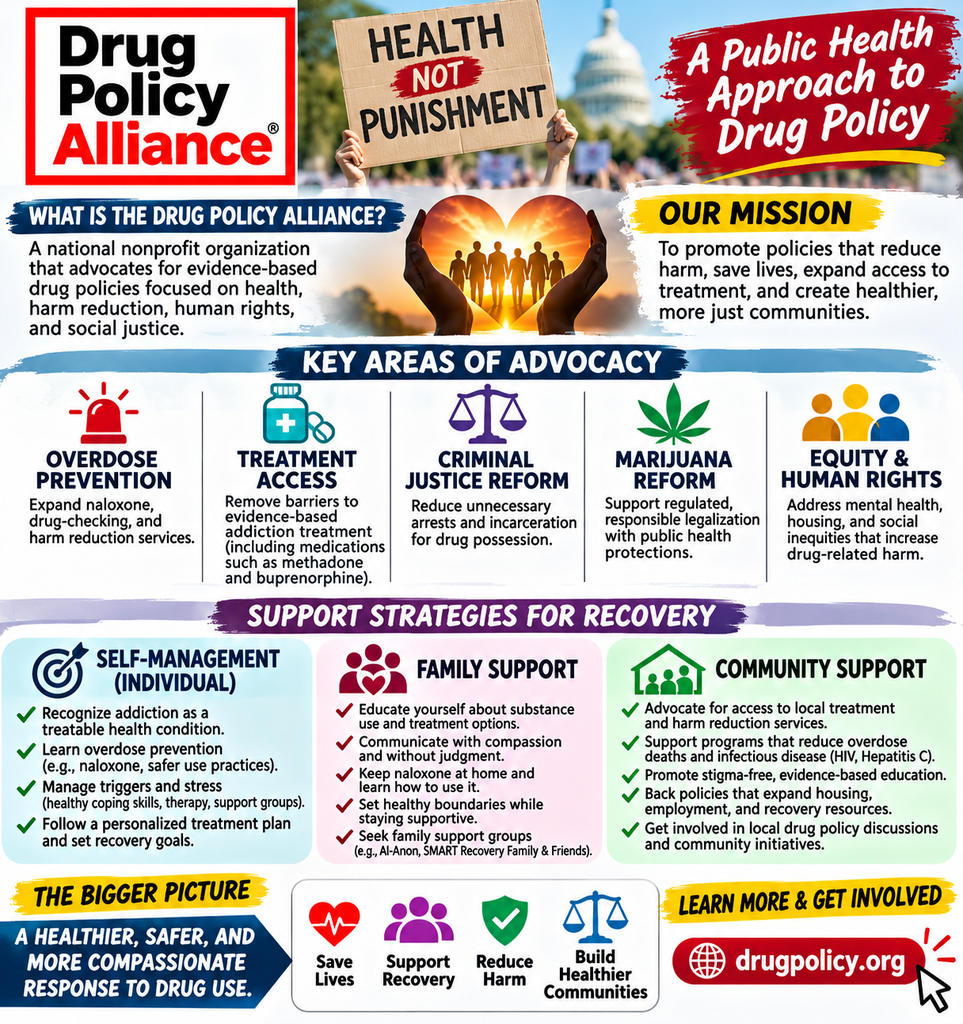
Understanding the Drug Policy Alliance’s Core Mission
The Drug Policy Alliance believes that drug policies should be guided by scientific evidence, health, equity, and human rights.
Its advocacy focuses on several interconnected priorities.
Preventing overdose deaths
Drug overdose is a preventable cause of death, but the unpredictable illicit drug supply creates significant risks.
DPA supports expanding access to:
- Naloxone for opioid overdose reversal.
- Fentanyl and other drug-checking technologies.
- Syringe service programs.
- Evidence-based addiction treatment.
- Overdose prevention education.
- Healthcare and social services for people who use drugs.
These initiatives aim to reduce preventable deaths and help individuals remain connected to healthcare.
Expanding access to addiction treatment
DPA advocates reducing financial, legal, and geographic barriers that keep people from getting treatment.
Key priorities include affordable treatment, timely access to medications, and integrated mental health care.
Reforming criminal justice policies
DPA argues that criminal penalties for drug possession can create long-term barriers to housing, employment, education, and healthcare.
The organization supports reducing criminal penalties for personal drug possession and expanding health-based alternatives.
This approach remains a subject of policy debate. Supporters emphasize reduced incarceration and improved access to services, while critics raise concerns about public drug use, treatment engagement, and community safety. Outcomes depend on implementation, available services, and local conditions.
Promoting equitable drug policies
DPA also advocates for marijuana legalization with public health protections and for exploring regulated alternatives to unregulated drug markets.
These proposals require careful consideration of potential benefits, substance-related harms, youth protection, commercial incentives, and public safety.
Self-Management Strategies: Empowering Individuals Affected by Addiction
The Drug Policy Alliance’s health-centered approach emphasizes that individuals should have access to accurate information, appropriate medical care, and supportive services.
Although DPA is primarily a policy advocacy organization rather than a treatment provider, its principles can inform practical self-management strategies.
Recognize addiction as a treatable health condition
Substance use disorders involve complex interactions among brain function, genetics, environment, mental health, and social circumstances.
Recognizing these factors can help individuals seek appropriate treatment without shame.
Practical self-management strategies:
- Seek an assessment from a qualified healthcare professional.
- Identify triggers associated with substance use.
- Develop a personalized recovery or risk-reduction plan.
- Establish achievable goals for health and well-being.
- Monitor stress, cravings, and behavioral changes.
- Maintain regular medical and behavioral health appointments.
Understand harm reduction and overdose prevention
Harm reduction refers to strategies designed to reduce the negative health consequences of substance use, whether or not a person is ready to stop using substances.
For example, individuals at risk of opioid exposure can learn how to recognize an overdose and administer naloxone.
Other important strategies include:
- Avoid mixing opioids with alcohol, benzodiazepines, or other sedatives.
- Understand that illicit drugs may contain unexpected substances.
- Use available drug-checking services, but recognize that a negative test cannot guarantee safety.
- Avoid using drugs alone, and ensure someone can summon emergency assistance.
- Seek treatment for opioid use disorder, including medications when appropriate.
- Obtain screening and preventive care for HIV, hepatitis C, and other health conditions.
These measures reduce certain risks but do not make illicit substance use safe.
Address underlying mental health conditions
Many individuals experiencing addiction also struggle with anxiety, depression, post-traumatic stress disorder, or other psychiatric conditions.
Integrated treatment can improve outcomes by addressing substance use and mental health together.
Helpful practices include:
- Participate in cognitive behavioral therapy or other appropriate counseling.
- Learn stress-management and emotional regulation techniques.
- Establish healthy sleep, nutrition, and exercise routines.
- Develop supportive relationships.
- Practice mindfulness and relaxation.
- Seek professional help when symptoms worsen.
Build long-term recovery stability
Recovery involves more than reducing or stopping substance use.
Stable housing, employment, education, healthcare, and meaningful relationships can improve long-term well-being.
Individuals may benefit from vocational training, recovery coaching, peer support, and community activities.
Family Support Strategies: Replacing Judgment With Understanding
Families often experience emotional distress when a loved one develops a substance use disorder.
Fear of overdose, financial instability, relationship conflict, and uncertainty about treatment can create significant challenges.
DPA’s emphasis on compassion and access to healthcare offers useful lessons for families navigating addiction.
Educate yourself about substance use disorders
Families should understand that addiction is a medical condition rather than simply a failure of character or motivation.
Education can reduce blame and encourage constructive conversations.
Helpful family strategies:
- Learn about the signs and symptoms of substance use disorders.
- Understand withdrawal, cravings, and overdose risks.
- Become familiar with evidence-based treatment options.
- Recognize that recovery may involve setbacks.
- Learn how medications can support treatment.
- Identify available local healthcare and recovery resources.
Practice compassionate communication
Individuals experiencing addiction may avoid discussing their substance use because they fear criticism, rejection, or punishment.
Family members can encourage openness by communicating respectfully.
For example:
“I’m concerned about your health, and I want you to know that you deserve support. We can explore treatment options together.”
Supportive communication does not mean ignoring dangerous behavior. Families can remain compassionate while establishing clear expectations and boundaries.
Develop a family overdose safety plan
Families with a loved one at risk of opioid overdose should consider keeping naloxone accessible and learning how to administer it.
A safety plan may include:
- Recognizing signs of overdose, including slowed or absent breathing.
- Calling 911 immediately.
- Administering naloxone when opioid overdose is suspected.
- Providing rescue breathing or CPR according to dispatcher instructions and training.
- Remaining with the individual until emergency personnel arrive.
Naloxone is safe to administer when opioid overdose is suspected, even if the cause of unconsciousness is uncertain.
Establish healthy boundaries
Families should distinguish between providing support and accepting unsafe or harmful behavior.
Healthy boundaries may include refusing to provide money that could facilitate dangerous substance use, protecting children from unsafe situations, and seeking professional assistance during crises.
Family counseling can help relatives communicate effectively and manage conflict.
Protect family members’ mental health
Supporting someone with addiction can create chronic stress and emotional exhaustion.
Families should seek their own support through counseling, education, and peer support programs.
Organizations such as Al-Anon, Nar-Anon, and SMART Recovery Family & Friends may provide helpful resources.
Community Support Strategies: Building Healthier and Safer Communities
The Drug Policy Alliance emphasizes that addiction-related harms cannot be addressed through individual responsibility alone.
Communities also need accessible healthcare, prevention programs, stable housing, and coordinated public services.
Expand evidence-based addiction treatment
Community leaders can improve treatment access by supporting:
- Low-barrier outpatient addiction services.
- Medications for opioid use disorder.
- Integrated mental health and addiction treatment.
- Recovery housing and case management.
- Transportation assistance.
- Peer recovery specialists.
- Healthcare services for uninsured and underserved populations.
Reducing delays between a request for treatment and an initial appointment is particularly important.
Invest in overdose prevention
Community overdose prevention programs can provide naloxone, overdose response education, infectious disease screening, and referrals to treatment.
Syringe service programs can reduce transmission of HIV and hepatitis C when appropriately implemented.
DPA also supports overdose prevention centers, where trained personnel supervise consumption and respond to overdoses. These facilities remain legally and politically contested in the United States, and rigorous public health evaluation should assess their effects.
Strengthen prevention and youth education
Schools, healthcare organizations, and community groups can work together to provide accurate, age-appropriate substance use education.
Effective prevention should address:
- Mental health and emotional resilience.
- Peer pressure and social influences.
- The risks of fentanyl and counterfeit pills.
- Early identification of substance use problems.
- Healthy coping skills.
- Family communication and engagement.
Fear-based messaging alone is insufficient. Prevention programs should provide factual information and practical decision-making skills.
Reduce stigma in healthcare and society
Individuals with substance use disorders may experience discrimination when seeking medical care, employment, or housing.
Community organizations can help by promoting respectful language, offering education, and including people with lived experience in program development.
Healthcare professionals should use person-first terminology, such as “person with opioid use disorder,” rather than stigmatizing labels.
Support reintegration after incarceration
People leaving correctional facilities may face elevated overdose risk, particularly when opioid tolerance has decreased.
Communities can support safer transitions through:
- Continuation or initiation of addiction medications.
- Overdose prevention education and naloxone distribution.
- Healthcare appointments arranged before release.
- Housing assistance.
- Employment and educational opportunities.
- Peer recovery navigation.
These services can improve continuity of care and reduce preventable harm.
Drug Policy Reform: Balancing Public Health, Individual Rights, and Community Safety
One of DPA’s most debated advocacy priorities is reducing criminal penalties associated with drug possession.
The organization argues that punitive approaches can discourage people from seeking healthcare and undermine social stability.
Supporters of decriminalization believe that shifting resources toward treatment and social services can reduce incarceration and improve public health.
However, critics question whether decriminalization alone can adequately address addiction, public drug use, and neighborhood safety.
The distinction is important: decriminalization does not automatically provide treatment, and legalization does not automatically eliminate drug-related harms.
Successful public health policies require careful implementation, sustainable funding, accessible services, and measurable outcomes.
Important considerations for policymakers
- Ensure addiction treatment is accessible before and after policy changes.
- Monitor overdose deaths, infectious diseases, and treatment engagement.
- Protect children and vulnerable populations.
- Evaluate public safety and neighborhood conditions.
- Include families and affected communities in decision-making.
- Adjust policies when evidence reveals unintended consequences.
A comprehensive approach should evaluate both individual health outcomes and broader community effects.
The Role of Healthcare Professionals in Drug Policy Reform
Physician assistants, physicians, nurses, behavioral health professionals, and addiction specialists help connect public health policy with patient care.
Healthcare professionals can advocate for evidence-based services while respecting patient autonomy.
Clinical and advocacy strategies
- Screen patients for substance use disorders using validated tools.
- Provide nonjudgmental assessments.
- Offer or refer patients for medications for opioid use disorder.
- Screen for co-occurring psychiatric conditions.
- Educate patients and families about naloxone.
- Support infectious disease prevention and treatment.
- Coordinate care with social workers and community organizations.
- Advocate for policies that reduce unnecessary barriers to healthcare.
Clinical professionals can also participate in community education, legislative discussions, and research evaluating addiction treatment outcomes.
Their involvement helps ensure that drug policy debates include accurate medical information and practical experience.
Measuring the Success of Drug Policy Advocacy
Evaluate effective advocacy through measurable health and social outcomes rather than political messaging alone.
Potential indicators include:
| Area | Measures of progress |
|---|---|
| Overdose prevention | Changes in fatal and nonfatal overdose rates |
| Treatment access | Wait times, treatment initiation, and retention |
| Recovery support | Housing stability and employment outcomes |
| Infectious disease prevention | HIV and hepatitis C incidence |
| Criminal justice | Drug-related arrests and incarceration |
| Community safety | Public disorder and neighborhood safety indicators |
| Health equity | Differences in access and outcomes across populations |
These measures help policymakers determine whether reforms are achieving their intended goals.
A reduction in arrests, for example, may reflect a policy change but does not by itself demonstrate improved addiction treatment outcomes.
Likewise, policymakers should evaluate increases in treatment enrollment alongside retention, patient well-being, and overdose prevention.
How Individuals and Families Can Participate in Drug Policy Advocacy
People do not need to be healthcare professionals or policymakers to contribute to meaningful change.
Community participation can help improve access to treatment, reduce stigma, and encourage evidence-based decision-making.
Ways to become involved include:
- Attend community meetings about addiction and public health.
- Support nonprofit treatment and recovery organizations.
- Participate in overdose prevention training.
- Volunteer with recovery support programs.
- Share accurate educational information.
- Contact elected representatives about addiction services.
- Support families affected by overdose loss.
- Participate in public discussions about drug policy reform.
The Drug Policy Alliance provides educational resources and civic engagement opportunities through its website.
Visit Drug Policy Alliance’s official website to learn more about its mission and current advocacy campaigns.
Lessons From the Drug Policy Alliance’s Advocacy Journey
The Drug Policy Alliance’s history highlights several important principles for addressing addiction and substance-related harms.
First, addiction requires a comprehensive public health response. Effective care requires medical treatment, prevention, mental healthcare, and social support.
Second, compassion and accountability can coexist. Treating individuals with dignity does not require ignoring harmful behavior or community safety concerns.
Third, harm reduction and addiction treatment can complement each other. Overdose prevention services can keep individuals alive and connected to healthcare while they consider or pursue treatment.
Fourth, families deserve meaningful support. Education, counseling, overdose prevention training, and community resources can help families navigate addiction more effectively.
Fifth, drug policies should be evaluated using reliable evidence. Policy decisions should be guided by public health outcomes, treatment access, community safety, and unintended consequences.
Finally, lasting change requires collaboration. Healthcare professionals, policymakers, families, community organizations, and people with lived experience all have valuable perspectives.
Conclusion: Creating a More Compassionate and Evidence-Based Response to Addiction
The Drug Policy Alliance has played a prominent role in challenging traditional approaches to drug policy and encouraging greater attention to public health, harm reduction, and human rights.
Its advocacy demonstrates that addiction cannot be addressed effectively through criminal penalties or individual behavior change alone.
Individuals need access to medical treatment, mental healthcare, overdose prevention resources, and opportunities to rebuild their lives.
Families need education, emotional support, and practical strategies for responding to substance use disorders.
Communities need coordinated prevention programs, accessible healthcare, safe neighborhoods, and policies evaluated through measurable outcomes.
While disagreements remain about the best approaches to drug decriminalization and regulation, there is a strong evidence-based case for expanding effective addiction treatment and preventing overdose deaths.
Addiction is a healthcare challenge, a family concern, and a community responsibility. Every person deserves access to compassionate care and a meaningful opportunity for recovery.
Resources for Addiction Treatment and Support
- SAMHSA National Helpline: 1-800-662-HELP (4357), offering confidential treatment referrals and information.
- FindTreatment.gov: Find addiction and mental health treatment.
- 988 Suicide & Crisis Lifeline: Call or text 988 for immediate emotional crisis support.
- Drug Policy Alliance: Drug policy research, education, and advocacy.
For suspected overdose, call 911 immediately and administer naloxone if opioid overdose is suspected and naloxone is available.
Frequently Asked Questions and Answers
Understanding the Drug Policy Alliance
1. What is the Drug Policy Alliance?
The Drug Policy Alliance is a nonprofit advocacy organization that promotes reforms to drug laws and policies in the United States.
Its work focuses on reducing drug-related harms, improving access to healthcare, protecting human rights, and addressing the consequences of criminalization.
DPA is a policy advocacy organization, not an addiction treatment center.
2. When was the Drug Policy Alliance founded?
The Drug Policy Alliance was established in 2000 through the merger of the Lindesmith Center and the Drug Policy Foundation.
Its predecessor organizations had advocated for drug policy reform, scientific research, and alternatives to punitive drug laws.
3. Who founded the Drug Policy Alliance?
Ethan Nadelmann played a central role in establishing and leading the modern Drug Policy Alliance.
He became a prominent advocate for replacing punitive drug policies with approaches emphasizing public health, harm reduction, and individual rights.
4. What is the main mission of the Drug Policy Alliance?
DPA advocates for drug policies intended to reduce preventable deaths, minimize health-related harms, protect civil liberties, and promote social justice.
Its major priorities include:
- Preventing overdose deaths.
- Expanding evidence-based addiction treatment.
- Supporting harm reduction services.
- Reforming criminal penalties associated with drug use.
- Advocating for marijuana legalization and regulation.
- Addressing inequalities in drug law enforcement.
5. Why does the Drug Policy Alliance oppose punitive drug policies?
DPA argues that criminal penalties for drug possession can discourage individuals from seeking healthcare and create barriers to housing, employment, and education.
The organization favors approaches that prioritize treatment, prevention, and community support.
However, drug policy reform remains a subject of debate. Critics emphasize the importance of addressing public drug use, neighborhood safety, and accountability. The outcomes of policy reforms depend on implementation, treatment availability, and other local conditions.
Harm Reduction and Overdose Prevention
6. What is harm reduction?
Harm reduction is a public health approach that seeks to minimize the negative consequences of substance use without requiring individuals to achieve abstinence before receiving help.
Examples include naloxone distribution, syringe service programs, drug-checking services, infectious disease testing, and connections to addiction treatment.
Harm reduction can complement treatment and recovery services.
7. Does harm reduction encourage drug use?
Harm reduction programs are intended to reduce preventable injury, disease, and death—not encourage substance use.
Evidence supports interventions such as naloxone distribution and access to sterile syringes for specific health outcomes. Evaluate the effectiveness of individual programs separately.
DPA believes that keeping people alive and connected to healthcare creates additional opportunities for treatment and recovery.
8. Why does the Drug Policy Alliance support naloxone distribution?
Naloxone is a medication that can rapidly reverse an opioid overdose.
DPA supports making naloxone widely accessible because timely administration can restore breathing and prevent death.
Family members, healthcare professionals, first responders, and community volunteers can learn to administer naloxone.
9. What are overdose prevention centers?
Overdose prevention centers are supervised facilities where individuals can use previously obtained substances in the presence of trained personnel who can respond to overdoses.
Supporters argue that these centers can prevent fatal overdoses and connect people to healthcare. Critics raise legal, neighborhood safety, and implementation concerns.
DPA supports these facilities as part of a broader harm reduction strategy.
10. How does DPA address fentanyl-related overdose risks?
DPA advocates for improved access to naloxone, drug-checking services, addiction treatment, and education about the unpredictable illicit drug supply.
Fentanyl can be present in counterfeit pills and other illicit substances without a person’s knowledge.
DPA also advocates for expanded access to medications such as methadone and buprenorphine to reduce opioid-related deaths.
Addiction Treatment and Self-Management
11. Does the Drug Policy Alliance support addiction treatment?
Yes. DPA advocates for affordable, accessible, evidence-based addiction treatment that is available when individuals seek help.
Its treatment principles emphasize patient autonomy, individualized care, and reducing unnecessary barriers to services.
12. What addiction treatments are considered evidence-based?
Evidence-based treatment depends on the substance involved and the individual’s medical needs.
Common approaches include:
- Cognitive behavioral therapy.
- Motivational interviewing.
- Contingency management.
- Medications for opioid use disorder.
- Medications for alcohol use disorder.
- Integrated mental health and addiction treatment.
- Ongoing recovery support and case management.
Treatment plans should be individualized and regularly evaluated.
13. What self-management strategies can help someone experiencing addiction?
Individuals can improve their health and recovery stability by developing practical daily habits.
Helpful strategies include:
- Identify substance use triggers.
- Develop a personalized treatment plan.
- Establish healthy sleep and nutrition routines.
- Practice stress management.
- Attend counseling or recovery meetings.
- Build supportive relationships.
- Create an overdose prevention plan when relevant.
- Seek professional help when cravings or symptoms worsen.
14. Does the Drug Policy Alliance believe everyone must stop using substances?
No. DPA supports a range of goals, including abstinence, reduced substance-related harm, and improved health.
The organization argues that individuals should receive healthcare regardless of whether they are ready to stop using substances.
For people who choose abstinence, treatment should support that goal. For others, harm reduction can reduce certain risks while maintaining opportunities to access treatment.
15. Why does DPA advocate for medications for opioid use disorder?
Medications such as methadone and buprenorphine reduce opioid cravings, withdrawal symptoms, overdose risk, and mortality.
DPA supports reducing barriers that prevent patients from receiving these medications.
Medication treatment is especially important because opioid use disorder can carry substantial overdose risk.
16. What should someone do after returning to substance use during recovery?
A return to substance use should prompt reassessment rather than shame.
Individuals should contact their treatment provider, identify contributing factors, and consider whether they need medication, counseling, or additional support.
For opioid use disorder, reduced tolerance after abstinence can increase overdose risk.
A renewed treatment plan can help individuals stay on track toward their recovery goals.
Family Support and Addiction Education
17. How can families support a loved one experiencing addiction?
Families can support a loved one by educating themselves, communicating compassionately, and encouraging them to seek professional care.
Helpful strategies include:
- Learn about substance use disorders.
- Avoid stigmatizing language.
- Encourage evidence-based treatment.
- Listen without judgment.
- Establish healthy boundaries.
- Learn overdose prevention techniques.
- Seek family counseling when needed.
Family members should also protect their own physical and emotional well-being.
18. What should families do if a loved one refuses addiction treatment?
Families can continue offering support without attempting to control every decision.
Helpful approaches include expressing concern calmly, providing information about treatment options, and maintaining clear boundaries.
Motivational interviewing principles and evidence-based family approaches, such as Community Reinforcement and Family Training (CRAFT), may help relatives communicate more effectively.
If someone is experiencing an overdose or immediate medical emergency, families should seek emergency assistance.
19. Why is family education important in addiction recovery?
Family education helps relatives understand the biological, psychological, and social factors involved in substance use disorders.
It can reduce blame, improve communication, and help families recognize warning signs of overdose or worsening mental health.
Education also helps family members distinguish supportive behavior from actions that compromise safety.
20. Can families support harm reduction even if they prefer abstinence?
Yes. Families can encourage abstinence while recognizing the importance of preventing overdose and other serious health consequences.
For example, keeping naloxone available does not mean approving of substance use.
It means being prepared to respond to a potentially fatal emergency.
Families can combine harm reduction education with encouragement toward treatment and recovery.
Drug Policy Reform and Community Safety
21. What is the difference between drug decriminalization and legalization?
Decriminalization removes criminal penalties for certain activities, such as possessing small quantities of drugs, though civil penalties or other restrictions may remain.
Legalization permits specified activities under a legal framework, often involving regulation, licensing, and taxation.
DPA advocates for reducing criminal penalties and exploring regulated approaches to drug markets. These policies differ and carry different potential consequences.
22. Why does the Drug Policy Alliance support marijuana legalization?
DPA argues that marijuana prohibition has contributed to unnecessary arrests, criminal records, and unequal enforcement.
The organization supports legalization while prioritizing consumer safety, public health, and social equity.
However, marijuana use is not risk-free. Potential harms include cannabis use disorder, impaired driving, and adverse effects on adolescents and certain vulnerable individuals.
23. How can communities balance drug policy reform with public safety?
Communities can evaluate drug policies using both health and safety outcomes.
Important considerations include:
- Overdose deaths and emergency medical responses.
- Access to addiction treatment.
- Public drug use and neighborhood conditions.
- Rates of drug-related arrests.
- Housing and employment stability.
- Youth substance use.
- Community perceptions of safety.
Effective policies should be monitored and adjusted when outcomes are unfavorable.
24. What role does the Drug Policy Alliance play in criminal justice reform?
DPA supports reducing incarceration for drug-related offenses and removing barriers associated with criminal records.
Its advocacy has included sentencing reform and alternatives to incarceration.
For example, DPA participated in efforts involving California’s Proposition 36 in 2000 and reform of New York’s Rockefeller Drug Laws in 2009.
25. How can communities reduce stigma surrounding addiction?
Communities can reduce stigma by treating substance use disorders as healthcare conditions and promoting respectful, evidence-based education.
Schools, healthcare organizations, employers, and community groups can encourage conversations that emphasize treatment, recovery, and human dignity.
Including individuals with lived experience in educational programs can also help challenge stereotypes.
Community Advocacy and Public Health
26. How can healthcare professionals support the Drug Policy Alliance’s public health goals?
Healthcare professionals can support evidence-based addiction care by:
- Screening patients for substance use disorders.
- Offering appropriate medications.
- Providing overdose prevention education.
- Prescribing or distributing naloxone when appropriate.
- Screening for HIV, hepatitis C, and co-occurring mental health conditions.
- Connecting patients with community resources.
- Advocating for accessible and affordable treatment.
Healthcare professionals can support these public health goals without necessarily endorsing every policy position taken by DPA.
27. Why is access to recovery housing important?
Stable housing can improve treatment participation, reduce exposure to unsafe environments, and support long-term recovery.
Individuals experiencing homelessness or housing instability may face additional barriers to healthcare and medication adherence.
DPA includes housing and social support among the resources needed to improve health outcomes.
28. How does the Drug Policy Alliance address racial and social inequities?
DPA argues that drug law enforcement has disproportionately affected certain racial and economically disadvantaged communities.
The organization advocates for reducing discriminatory enforcement, removing barriers created by criminal records, and improving access to healthcare and economic opportunities.
Its approach emphasizes equity and human rights as components of drug policy reform.
29. How can individuals become involved in Drug Policy Alliance advocacy?
Individuals can participate in educational campaigns, contact elected officials, support community organizations, and attend public discussions about drug policy.
DPA also provides opportunities to participate in campaigns concerning addiction treatment access, overdose prevention, marijuana policy, and criminal justice reform.
Visit the Drug Policy Alliance campaigns page to explore current advocacy opportunities.
30. What is the most important lesson from the Drug Policy Alliance’s advocacy?
One of DPA’s central messages is that drug-related harms require more than criminal justice responses.
Effective approaches should incorporate prevention, accessible healthcare, evidence-based addiction treatment, overdose prevention, and social support.
Although specific drug policies remain debated, reducing preventable deaths and improving access to effective treatment are essential public health priorities.
Video: