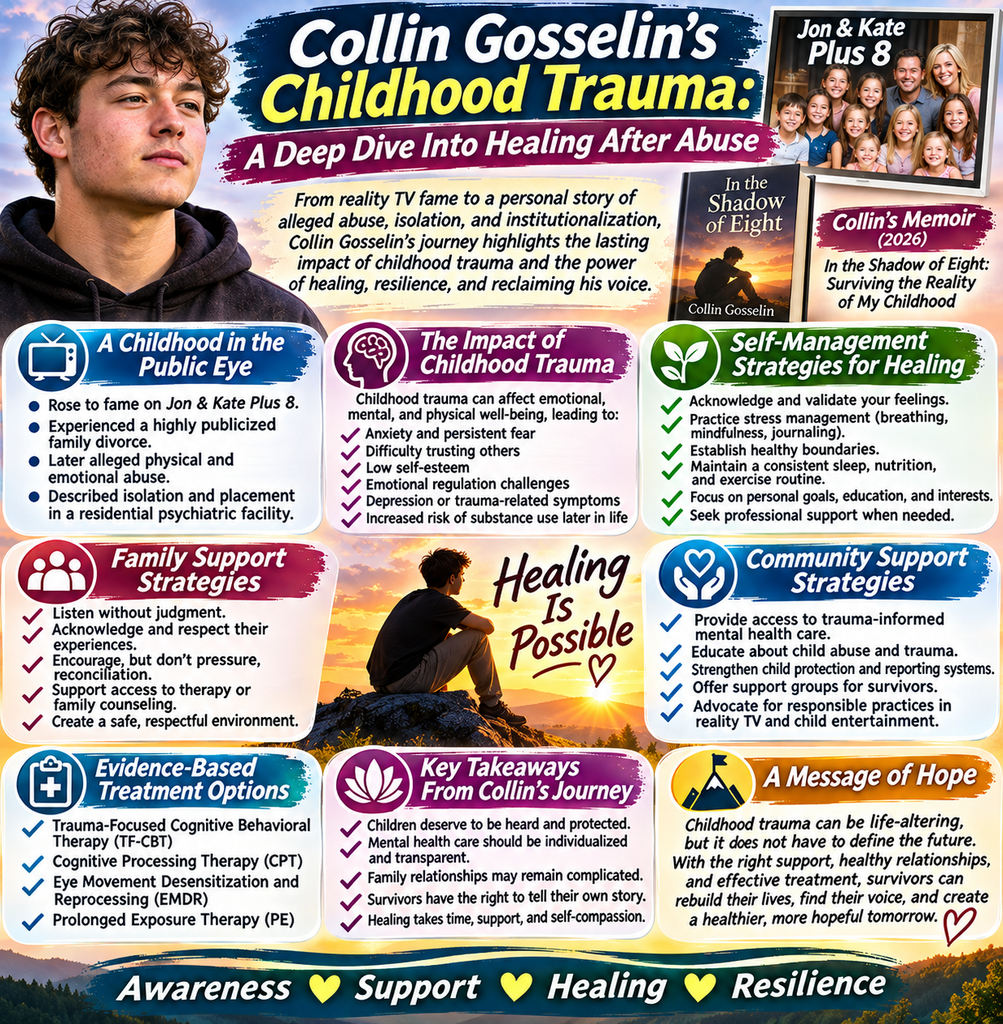
Growing up in the public eye may seem glamorous, but childhood fame can hide painful experiences, complicated family relationships, and emotional struggles audiences never see. For Collin Gosselin, who became known through the TLC reality series Jon & Kate Plus 8, childhood was far more complicated than the family-centered television program suggested.
In recent years, Collin has publicly described allegations of physical and emotional abuse, isolation from family members, and distressing experiences involving residential psychiatric care. His account has raised important conversations about childhood trauma, parental responsibility, mental health, and the long-term effects of growing up under intense public scrutiny.
In October 2026, Collin released his memoir, In the Shadow of Eight: Surviving the Reality of My Childhood, offering his perspective on his upbringing and his efforts to reclaim his personal story. His mother, Kate Gosselin, has disputed allegations of abuse.
Collin’s experiences provide an opportunity to examine how childhood adversity can affect emotional development, relationships, self-esteem, and mental health.
More importantly, his story highlights how survivors can heal through self-management strategies, supportive relationships, trauma-informed professional care, and community resources.
Editorial note: This article distinguishes Collin’s publicly reported allegations from independently established facts. It does not diagnose Collin or any member of his family. The recovery strategies discussed are general educational recommendations, not claims about treatment he has personally received.
Collin Gosselin’s Childhood: Growing Up Under Public Scrutiny
Collin Gosselin was born in 2004 as one of six sextuplets to Jon and Kate Gosselin. Along with his siblings, he became a familiar face on the reality television series Jon & Kate Plus 8.
The program followed the daily lives of a family raising eight children and attracted a large television audience.
However, behind the public image of family life, the Gosselins faced significant personal challenges, including Jon and Kate’s highly publicized 2009 divorce.
As Collin grew older, his relationship with his mother became increasingly strained.
Collin’s account of childhood isolation
In interviews and his 2026 memoir, Collin alleged that he experienced:
- Physical and verbal mistreatment during childhood.
- Isolation from siblings and other family members.
- Restrictions on his participation in normal childhood activities.
- Separation from his father.
- Placement in a residential psychiatric facility at approximately age 11.
- Emotional distress related to his family relationships and public portrayal.
Collin has alleged that he was confined to a basement room and subjected to physical punishment.
These are serious allegations. Kate Gosselin has disputed claims that she abused him, and her attorney previously stated that her actions were intended to protect the family.
Why childhood isolation can be harmful
Children need consistent emotional support, opportunities for social interaction, and safe relationships with trusted adults.
Prolonged isolation, especially when paired with fear or perceived rejection, can disrupt emotional development.
Potential consequences include:
- Difficulty trusting others.
- Anxiety and persistent fear.
- Low self-esteem.
- Emotional withdrawal.
- Difficulty regulating emotions.
- Challenges developing secure relationships.
- Increased vulnerability to depression or trauma-related symptoms.
Not every child exposed to adversity develops these difficulties. Outcomes depend on the severity and duration of experiences, individual characteristics, and the availability of protective relationships.
Institutionalization and the Importance of Appropriate Mental Healthcare
One of the most widely discussed aspects of Collin’s childhood involves his placement in a residential psychiatric facility.
Kate Gosselin previously explained that Collin required specialized assistance for educational and behavioral challenges.
Collin has disputed aspects of that explanation and has described his placement as emotionally distressing.
In October 2026, he told ABC News that he had undergone an independent psychological evaluation in 2023 that, according to his account, did not identify a mental health diagnosis at that time. The clinician declined to comment publicly.
These differing accounts highlight the importance of careful assessment, transparency, and ethical safeguards when children receive psychiatric treatment.
When is residential psychiatric treatment appropriate?
Residential psychiatric care may be necessary for children experiencing severe mental health symptoms or safety concerns that cannot be managed in less restrictive settings.
However, treatment decisions should be based on comprehensive clinical evaluations and the child’s individual needs.
Important safeguards include:
- Thorough psychiatric and developmental assessments.
- Clear documentation of treatment indications.
- Age-appropriate explanations of care.
- Family involvement when safe and appropriate.
- Regular reassessment of treatment necessity.
- Access to patient advocacy and grievance procedures.
- Planning for discharge and community-based follow-up.
Residential psychiatric treatment can be lifesaving when clinically indicated. A history of residential treatment alone does not establish that treatment was necessary or inappropriate.
Understanding Childhood Trauma and Its Long-Term Effects
Childhood trauma refers to experiences that overwhelm a child’s ability to cope and may interfere with their sense of safety, trust, or emotional stability.
Potentially traumatic experiences include physical abuse, emotional abuse, neglect, domestic violence, severe family conflict, and prolonged separation from caregivers.
How trauma affects the developing brain
Repeated exposure to severe stress can influence biological systems involved in emotional regulation, memory, attention, and threat detection.
The hypothalamic-pituitary-adrenal axis, which helps regulate the body’s stress response, may become dysregulated following prolonged adversity.
Trauma exposure can also affect how individuals interpret relationships and respond to perceived danger.
Common emotional and behavioral effects
- Hypervigilance: Remaining unusually alert to possible threats.
- Emotional dysregulation: Difficulty managing intense feelings.
- Avoidance: Avoiding reminders of distressing experiences.
- Negative self-beliefs: Developing persistent feelings of shame or worthlessness.
- Attachment difficulties: Struggling with trust and emotional closeness.
- Sleep disturbances: Experiencing insomnia, nightmares, or disrupted sleep.
- Concentration problems: Difficulty focusing during stressful situations.
These experiences do not automatically indicate post-traumatic stress disorder (PTSD). A qualified clinician must evaluate symptoms, duration, impairment, and alternative explanations.
Reclaiming His Voice: Collin’s Journey Toward Independence
An important part of Collin’s public story is his desire to describe his childhood experiences in his own words.
In his October 2026 interviews, he discussed the emotional significance of publishing his memoir and speaking publicly about experiences he believes were previously misunderstood.
He also expressed hope of reconnecting with estranged siblings, while acknowledging those relationships may remain complicated.
As of October 2026, Collin was attending college and studying finance.
Why reclaiming personal identity matters
People who experience childhood adversity may struggle with how others have defined them.
Developing an independent identity can involve recognizing personal strengths, establishing boundaries, and deciding how much of one’s history to share.
For some survivors, storytelling, journaling, creative expression, or advocacy can provide meaning.
However, publicly discussing trauma is not necessary for recovery. Survivors have the right to maintain privacy and determine whether sharing their experiences supports their well-being.
Lessons from Collin’s public journey
- Personal experiences deserve respectful consideration.
- Children should have safe opportunities to express concerns.
- Don’t use mental health labels to dismiss someone’s account.
- Family relationships may remain complicated into adulthood.
- Independence can mean setting boundaries and pursuing personal goals.
- Healing does not require public disclosure or family reconciliation.
Self-Management Strategies: Healing From Childhood Trauma
Healing from childhood trauma is rarely a straightforward process. Some survivors experience emotional distress for years, while others develop resilience through supportive relationships, professional care, and personal growth.
Self-management strategies can help survivors regain emotional stability, establish boundaries, and develop a stronger sense of personal control.
Recognize and validate emotional experiences
Individuals who have experienced childhood adversity may minimize their feelings or question whether their experiences were serious enough to warrant support.
Recognizing emotional reactions is an important part of healing.
Practical self-management strategies include:
- Identify emotions such as anger, grief, fear, or sadness.
- Practice self-compassion instead of self-blame.
- Recognize that healing does not follow a fixed timeline.
- Use journaling to identify emotional patterns.
- Allow time to process difficult memories.
- Seek professional guidance when emotions interfere with daily functioning.
Develop healthy emotional regulation skills
Trauma can make it difficult to manage stress, particularly when current situations resemble earlier distressing experiences.
Grounding techniques can help individuals reconnect with the present moment.
For example, the 5-4-3-2-1 grounding exercise involves identifying five things you can see, four things you can feel, three things you can hear, two things you can smell, and one thing you can taste.
Additional strategies include:
- Practicing slow, controlled breathing.
- Engaging in regular physical activity.
- Maintaining consistent sleep routines.
- Spending time in calming environments.
- Using music, art, or writing for emotional expression.
- Taking breaks from triggering social media content.
Establishing healthy personal boundaries
Childhood experiences with controlling or unpredictable relationships may make it harder to set boundaries later in life.
Healthy boundaries allow individuals to protect their emotional well-being without feeling responsible for another person’s reactions.
Examples include:
- Limiting contact with people who repeatedly violate personal boundaries.
- Declining conversations that become threatening or emotionally harmful.
- Choosing when and how to discuss painful experiences.
- Protecting personal information.
- Seeking relationships based on mutual respect.
Building a positive personal identity
Trauma survivors may benefit from activities that reinforce their strengths, values, and goals.
Education, employment, creative interests, volunteering, and meaningful relationships can strengthen independence.
The goal is not to erase difficult experiences but to build a fulfilling life not defined solely by them.
Evidence-Based Therapy for Childhood Trauma
Professional mental healthcare can help individuals understand trauma-related symptoms and develop effective coping strategies.
Treatment should be individualized based on symptoms, personal preferences, safety, and functional needs.
Trauma-focused cognitive behavioral therapy
Trauma-focused cognitive behavioral therapy (TF-CBT) is an evidence-based treatment primarily designed for children and adolescents experiencing trauma-related difficulties.
It can help individuals:
- Identify unhelpful thoughts associated with traumatic experiences.
- Develop emotional regulation skills.
- Reduce avoidance and trauma-related distress.
- Strengthen coping strategies.
- Improve communication with safe caregivers.
Cognitive processing therapy
Cognitive processing therapy (CPT) is an evidence-based treatment for PTSD.
It helps individuals examine beliefs related to guilt, shame, trust, safety, and self-worth.
This approach may be particularly helpful when traumatic experiences contribute to persistent negative beliefs about oneself.
Eye movement desensitization and reprocessing
EMDR is a structured, evidence-based psychotherapy used to treat PTSD.
It involves processing distressing memories through a therapeutic protocol that includes bilateral stimulation.
Prolonged exposure therapy
Prolonged exposure therapy helps individuals gradually confront trauma-related memories and situations they have been avoiding.
Treatment occurs in a structured, supportive clinical environment.
Choosing appropriate treatment
Not everyone who experiences childhood adversity develops PTSD or requires trauma-focused psychotherapy.
A qualified mental health professional can assess whether symptoms warrant treatment and recommend an appropriate approach.
Medication may also be considered for certain co-occurring psychiatric conditions when clinically indicated.
Family Support Strategies: Rebuilding Trust and Emotional Safety
Family relationships can become complicated when childhood experiences involve conflict, perceived rejection, or allegations of abuse.
For some survivors, reconnecting with family members may be meaningful. For others, maintaining distance may be necessary for emotional or physical safety.
Family reconciliation should never be treated as a requirement for healing.
Listen without judgment
When someone describes a painful childhood experience, family members should respond with patience and respect.
Helpful approaches include:
- Listen without interrupting.
- Avoid dismissing emotional experiences.
- Acknowledge the person’s feelings.
- Avoid pressuring them to forgive.
- Respect their decisions about contact.
- Offer practical assistance when requested.
Recognize the importance of accountability
Healthy family relationships require more than expressions of love.
When harmful behavior has occurred, meaningful repair may involve acknowledging the behavior, accepting responsibility, and demonstrating sustained change.
An apology alone does not automatically restore trust.
Support safe sibling relationships
Collin has publicly expressed a desire to reconnect with siblings from whom he has been estranged. His situation shows how family conflict can affect relationships beyond parent-child relationships.
For individuals experiencing sibling estrangement, helpful strategies may include:
- Respect each sibling’s personal boundaries.
- Avoid pressuring relatives to take sides.
- Allow relationships to develop gradually.
- Use neutral communication when appropriate.
- Consider family therapy if everyone participates voluntarily, and it is safe.
- Accept that reconciliation may not be possible or desirable.
Encourage professional family support
Family counseling may help address communication difficulties, unresolved conflict, and emotional distress.
However, joint therapy may be inappropriate when abuse, intimidation, or coercive control is ongoing.
When necessary, individual support and safety planning should take priority.
Community Support Strategies: Protecting Children and Supporting Survivors
Collin’s allegations have renewed conversations about the responsibilities of adults, schools, healthcare organizations, and entertainment companies when children report possible mistreatment.
Communities play an important role in recognizing warning signs, responding to disclosures, and connecting families with appropriate services.
Strengthen child protection awareness
Teachers, healthcare professionals, coaches, and community members should understand possible indicators of child maltreatment.
Warning signs may include:
- Unexplained injuries.
- Persistent fear of a caregiver.
- Sudden changes in behavior.
- Extreme withdrawal or isolation.
- Frequent unexplained school absences.
- Significant changes in academic performance.
- Direct disclosures of mistreatment.
No single sign proves abuse. Evaluate concerns appropriately, and report suspected maltreatment according to applicable laws.
Improve trauma-informed services
Trauma-informed organizations emphasize safety, trust, collaboration, empowerment, and respect.
Community organizations can strengthen services by:
- Training staff to recognize trauma-related distress.
- Avoiding unnecessarily coercive practices.
- Explaining procedures in age-appropriate language.
- Including children in decisions when developmentally appropriate.
- Offering confidential opportunities to report concerns.
- Connecting families with qualified mental health professionals.
Protect children involved in entertainment
Reality television and social media have created opportunities for children to become public figures before they can fully understand the consequences.
Communities and policymakers can advocate for safeguards involving:
- Limits on filming hours and working conditions.
- Independent child welfare oversight.
- Educational continuity.
- Financial protections for child performers.
- Age-appropriate consent and privacy protections.
- Access to independent advocates.
- Clear procedures for reporting suspected exploitation.
Children’s emotional and developmental needs should take priority over entertainment demands.
Expand access to trauma treatment
Affordable trauma-informed services are particularly important for children and adults who experience abuse, neglect, or family instability.
Community organizations can improve access through school counseling, community mental health clinics, telehealth, support groups, and partnerships with social service agencies.
The Connection Between Childhood Trauma and Addiction Risk
Childhood trauma does not inevitably lead to addiction. However, adverse childhood experiences are associated with an increased risk of substance use disorders and other health challenges later in life.
Some individuals may use alcohol or drugs to temporarily manage emotional distress, intrusive memories, anxiety, or sleep difficulties.
This pattern is sometimes described as self-medication.
Importantly, there is no basis for assuming that Collin Gosselin has a substance use disorder. His public story is relevant to addiction education because it illustrates childhood adversities that can be risk factors in the general population.
How trauma can increase vulnerability
- Chronic stress may interfere with emotional regulation.
- Depression and anxiety can contribute to maladaptive coping.
- Social isolation may reduce protective support.
- Difficulty trusting others can create barriers to seeking help.
- Exposure to substance use within an unsafe environment may increase risk.
Preventing substance use after childhood trauma
Helpful prevention strategies include:
- Providing early mental health assessment and support.
- Teaching emotional regulation and problem-solving skills.
- Strengthening relationships with trusted adults.
- Encouraging healthy recreational activities.
- Addressing co-occurring psychiatric symptoms.
- Providing accurate substance use education.
- Identifying emerging substance-related problems early.
For individuals with both PTSD and substance use disorder, integrated treatment addressing both conditions is often appropriate.
The Importance of Resilience and Post-Traumatic Growth
Resilience refers to the ability to adapt and function despite adversity.
It does not mean that traumatic experiences were harmless or that survivors should be expected to overcome them without support.
Some individuals also describe post-traumatic growth, involving positive changes in perspective, relationships, or personal goals following difficult experiences.
However, growth is not inevitable, and survivors should never feel pressured to find something positive in their trauma.
Factors that can strengthen resilience
- Supportive relationships.
- Access to mental healthcare.
- Emotional regulation skills.
- Opportunities for independence.
- Stable housing and financial security.
- Education and employment.
- Personal interests and meaningful goals.
- Freedom to make decisions about relationships and disclosure.
Collin’s decision to publish his memoir represents his stated desire to tell his story in his own voice. In an October 2026 interview, he described writing about his experiences as a meaningful part of his personal journey.
His example illustrates the potential value of personal agency without suggesting that every survivor must speak publicly.
The Role of Healthcare Professionals in Childhood Trauma Recovery
Physician assistants, physicians, psychologists, nurses, social workers, and behavioral health specialists play important roles in identifying and treating trauma-related difficulties.
A trauma-informed clinical approach emphasizes patient safety, informed consent, collaborative decision-making, and respectful communication.
Clinical strategies
- Screen for trauma exposure when clinically appropriate.
- Assess depression, anxiety, PTSD symptoms, and suicide risk.
- Evaluate sleep disturbances and functional impairment.
- Avoid assuming that behavioral difficulties automatically indicate a psychiatric disorder.
- Consider developmental, environmental, and family factors.
- Refer patients for evidence-based trauma-focused psychotherapy when indicated.
- Assess for co-occurring substance use disorders.
- Document concerns objectively.
- Follow mandatory reporting requirements for suspected child maltreatment.
- Coordinate care with appropriate community resources.
Healthcare professionals should avoid dismissing reported experiences or drawing conclusions about allegations not independently established.
The goal is to provide safe, individualized, evidence-based care.
Practical Healing Strategies for Trauma Survivors
| Area of healing | Recommended strategies |
|---|---|
| Emotional well-being | Journaling, grounding exercises, and therapy |
| Physical health | Consistent sleep, nutrition, and exercise |
| Personal identity | Education, hobbies, and meaningful goals |
| Relationships | Healthy boundaries and supportive friendships |
| Family healing | Respectful communication and safe counseling |
| Trauma symptoms | Professional assessment and evidence-based treatment |
| Community connection | Peer support, volunteering, and advocacy |
| Substance use prevention | Healthy coping skills and early intervention |
Healing is not measured by how quickly someone forgives, reconnects with family, or stops experiencing distress.
Progress may involve greater emotional stability, improved functioning, stronger boundaries, and increased confidence in personal decisions.
Lessons From Collin Gosselin’s Public Journey
Collin’s story raises important questions about childhood protection, family relationships, psychiatric care, and the rights of children growing up in the public eye.
Several broader lessons emerge.
First, children deserve to be heard. When children report mistreatment or raise safety concerns, adults should take them seriously and follow appropriate safeguarding procedures.
Second, mental health assessments must be individualized. Psychiatric treatment decisions should be based on comprehensive evaluations rather than assumptions or public narratives.
Third, emotional safety matters. Children benefit from stable, supportive relationships that encourage healthy development.
Fourth, survivors deserve control over their personal stories. Healing may involve private reflection, therapy, advocacy, or selective disclosure.
Fifth, family relationships should be grounded in safety and respect. Reconciliation may be meaningful, but it should never be forced.
Finally, childhood adversity does not determine someone’s future. With appropriate support, meaningful relationships, and access to treatment, individuals can build healthier lives.
Conclusion: Healing From Childhood Trauma Is Possible
Collin Gosselin’s public account of his childhood has brought renewed attention to the emotional challenges that can arise from family conflict, alleged abuse, isolation, and growing up under public scrutiny.
His 2026 memoir marks an important step in his effort to share his perspective and define himself beyond the reality television series that introduced him to the public.
Although the allegations involving his family remain disputed, his experiences raise broader issues that deserve serious consideration.
For trauma survivors, healing may involve recognizing emotional experiences, developing healthy coping strategies, seeking professional treatment, and establishing personal boundaries.
For families, meaningful support requires listening, accountability, emotional safety, and respect for individual choices.
For communities, protecting children and supporting survivors requires trauma-informed healthcare, accessible mental health services, effective safeguarding procedures, and responsible public awareness.
Childhood trauma may influence a person’s experiences, but it does not have to define their future. With safety, compassionate support, and appropriate treatment, survivors can build lives centered on independence, dignity, and hope.
Helpful Resources for Childhood Trauma and Abuse Survivors
- Childhelp National Child Abuse Hotline — Call or text 1-800-422-4453 for child abuse-related support and guidance.
- National Child Traumatic Stress Network — Educational resources about childhood trauma and evidence-based treatment.
- Substance Abuse and Mental Health Services Administration — Mental health and substance use resources.
- FindTreatment.gov — Locate mental health and addiction treatment.
- 988 Suicide & Crisis Lifeline: Call or text 988 for immediate emotional crisis support in the United States.
If a child is in immediate danger, contact emergency services. Suspected child abuse can also be reported to the appropriate local child protective services agency.
Frequently Asked Questions and Answers
Part 1: Understanding Collin Gosselin’s Childhood Experiences
1. Who is Collin Gosselin?
Collin Gosselin is an American former child reality television personality who appeared on TLC’s Jon & Kate Plus 8 alongside his parents, Jon and Kate Gosselin, and his seven siblings.
As an adult, he has publicly discussed his childhood experiences, strained family relationships, and efforts to establish an independent identity.
2. What childhood trauma has Collin Gosselin publicly described?
Collin has alleged that he experienced physical and emotional mistreatment, isolation, and separation from family members during childhood.
He has also described distress related to his placement in a residential psychiatric facility.
These allegations are based on his public statements, and his mother has disputed them.
3. Did Collin Gosselin experience childhood abuse?
Collin has publicly alleged that he experienced childhood abuse.
However, the allegations should not be presented as conclusively established facts. Kate Gosselin has denied abusing him.
Regardless of the outcome of any particular family dispute, reports of possible child maltreatment deserve careful, impartial assessment.
4. Why was Collin Gosselin placed in a residential psychiatric facility?
Kate Gosselin previously stated that Collin needed specialized assistance for behavioral and educational challenges.
Collin has disputed aspects of that explanation and described his placement as distressing.
The full clinical circumstances and records are not public, so it is inappropriate to draw definitive conclusions about the necessity of his treatment.
5. How did growing up on reality television potentially affect Collin’s childhood?
Children who appear on reality television may face challenges related to privacy, public scrutiny, family expectations, and identity development.
Growing up in the public eye can make family conflict more difficult to manage privately.
However, public visibility alone does not establish psychological harm, and Collin’s individual clinical experience cannot be determined from television footage.
6. What has Collin Gosselin said about his relationship with his siblings?
Collin has publicly discussed estrangement from some siblings and expressed interest in rebuilding relationships.
Family estrangement can involve grief, uncertainty, and conflicting perspectives.
Reconnection should occur voluntarily and with respect for everyone’s emotional safety and personal boundaries.
Part 2: Understanding Childhood Trauma
7. What is childhood trauma?
Childhood trauma refers to experiences that overwhelm a child’s ability to cope and may interfere with their sense of safety and emotional well-being.
Examples include:
- Physical or sexual abuse.
- Emotional abuse.
- Neglect.
- Domestic violence.
- Severe family conflict.
- Exposure to frightening or threatening events.
- Prolonged separation from trusted caregivers under distressing circumstances.
The effects depend on the nature of the experience, the child’s developmental stage, and available protective relationships.
8. How can childhood trauma affect brain development?
Severe or repeated childhood adversity can influence biological systems involved in stress regulation, attention, memory, and emotional processing.
Prolonged activation of the body’s stress response may affect how individuals respond to perceived threats.
However, these effects are not inevitable or necessarily permanent. Supportive relationships and appropriate treatment can promote healthier functioning.
9. What are common emotional symptoms associated with childhood trauma?
Possible symptoms include:
- Anxiety and persistent fear.
- Sadness or depressed mood.
- Difficulty trusting others.
- Emotional withdrawal.
- Irritability or anger.
- Low self-esteem.
- Feelings of guilt or shame.
- Sleep disturbances.
- Difficulty concentrating.
These symptoms are not specific to trauma and require appropriate assessment when persistent or impairing.
10. Can childhood trauma cause post-traumatic stress disorder (PTSD)?
Yes. Some individuals develop PTSD following exposure to qualifying traumatic events.
Symptoms may include intrusive memories, avoidance, negative changes in mood or beliefs, and increased physiological arousal.
However, not everyone who experiences childhood adversity develops PTSD.
Diagnosis requires a clinical assessment using established diagnostic criteria.
11. Can childhood trauma affect relationships during adulthood?
Yes. Childhood adversity may influence attachment patterns, communication, trust, and emotional regulation.
Some survivors struggle to set boundaries or maintain close relationships.
These patterns can improve with supportive relationships, self-awareness, and, when appropriate, psychotherapy.
12. Can childhood trauma increase the risk of addiction?
Research has identified associations between adverse childhood experiences and increased risk of substance use disorders.
Some individuals may use alcohol or drugs to cope with emotional distress, anxiety, or intrusive memories.
However, childhood trauma does not inevitably cause addiction.
There is no basis for assuming Collin Gosselin has a substance use disorder simply because he has described childhood adversity.
Part 3: Self-Management Strategies for Healing
13. How can survivors begin healing from childhood trauma?
Healing often begins with recognizing emotional experiences and developing a sense of safety.
Helpful strategies include:
- Acknowledging difficult feelings.
- Seeking supportive relationships.
- Practicing stress management.
- Establishing healthy boundaries.
- Maintaining consistent daily routines.
- Seeking professional mental health care when needed.
Recovery is individualized and does not follow a fixed timeline.
14. What self-management techniques help with trauma-related anxiety?
Several strategies may help reduce emotional distress.
These include grounding exercises, controlled breathing, physical activity, mindfulness, and journaling.
For example, the 5-4-3-2-1 grounding exercise encourages individuals to identify sensory details in their surroundings to redirect attention toward the present moment.
Such techniques can complement professional treatment but may not be sufficient for severe symptoms.
15. Why is self-compassion important for trauma survivors?
Individuals who experienced childhood mistreatment may develop persistent feelings of shame or self-blame.
Self-compassion involves recognizing emotional pain without harsh self-judgment.
It can support healthier self-esteem and emotional regulation.
Importantly, children are not responsible for abuse committed against them.
16. How can survivors establish healthy boundaries with family members?
Healthy boundaries may involve limiting emotionally harmful conversations, deciding when to communicate, and protecting personal privacy.
Examples include:
- Declining conversations involving threats or intimidation.
- Limiting contact when necessary.
- Communicating expectations respectfully.
- Seeking support when boundaries are repeatedly violated.
- Choosing whether reconciliation is appropriate.
Survivors do not have to maintain contact with unsafe individuals to demonstrate forgiveness or progress.
17. Can journaling help individuals process childhood trauma?
Journaling may help individuals identify emotional patterns, recognize triggers, and organize thoughts.
However, repeatedly writing about traumatic memories can increase distress for some people.
Individuals experiencing significant trauma symptoms may benefit from processing difficult memories with a qualified therapist rather than attempting intensive trauma-focused writing independently.
18. How can survivors rebuild self-confidence after childhood abuse?
Rebuilding confidence often involves developing personal goals, recognizing strengths, and forming supportive relationships.
Education, employment, hobbies, physical activity, and volunteering can provide opportunities for achievement and independence.
Progress may also involve challenging negative beliefs developed during childhood.
Part 4: Professional Treatment and Mental Health Support
19. What therapies are effective for childhood trauma?
Several evidence-based treatments can help individuals experiencing trauma-related symptoms.
- Trauma-Focused Cognitive Behavioral Therapy (TF-CBT): Primarily designed for children and adolescents.
- Cognitive Processing Therapy (CPT): Helps individuals examine trauma-related beliefs.
- Prolonged Exposure Therapy: Uses structured therapeutic exposure to reduce PTSD symptoms.
- Eye Movement Desensitization and Reprocessing (EMDR): A structured psychotherapy supported by evidence for PTSD.
Treatment selection depends on age, symptoms, clinical assessment, and personal preferences.
20. Can someone heal from childhood trauma without medication?
Yes. Many individuals improve through psychotherapy, supportive relationships, and healthy coping strategies without psychiatric medication.
Medication may be appropriate for certain co-occurring conditions, such as depression or anxiety disorders.
Treatment decisions should be individualized and made with a qualified healthcare professional.
21. How long does recovery from childhood trauma take?
There is no universal timeline.
Some individuals experience meaningful improvement after a structured course of psychotherapy, while others require longer-term support.
The duration depends on factors such as trauma severity, ongoing stressors, available support, and co-occurring mental health conditions.
22. How can healthcare professionals provide trauma-informed care?
Trauma-informed care emphasizes physical and emotional safety, trust, collaboration, empowerment, and respect.
Healthcare professionals can:
- Explain procedures before performing them.
- Obtain informed consent.
- Respect patient boundaries.
- Avoid unnecessarily coercive practices.
- Screen for trauma-related symptoms when appropriate.
- Provide referrals for evidence-based treatment.
- Encourage shared decision-making.
Part 5: Family Support and Rebuilding Relationships
23. How can families support someone recovering from childhood trauma?
Families can help by listening respectfully, acknowledging emotional experiences, and supporting access to appropriate care.
Helpful approaches include:
- Avoiding judgment or blame.
- Respecting personal boundaries.
- Encouraging professional support.
- Providing emotional consistency.
- Avoiding pressure to forgive.
- Demonstrating accountability for harmful behavior when applicable.
24. Is forgiveness necessary for healing after childhood abuse?
No. Forgiveness is a personal choice and is not required for psychological recovery.
Some survivors find forgiveness meaningful, while others heal by setting boundaries, accepting what happened, and building fulfilling lives without reconciliation.
Treatment should never pressure survivors to forgive individuals who harmed them.
25. Can family relationships be repaired after childhood trauma?
Sometimes.
Repair may be possible when individuals acknowledge harmful behavior, respect boundaries, and demonstrate sustained change.
Family therapy may help when participation is voluntary and safe.
However, reconciliation is not always possible or appropriate, particularly when abuse or intimidation continues.
26. How can siblings rebuild relationships after family estrangement?
Rebuilding sibling relationships may involve gradual communication, mutual respect, and recognition that family members can remember events differently.
Helpful strategies include:
- Starting with low-pressure communication.
- Avoiding accusations or demands.
- Respecting each person’s perspective.
- Establishing clear boundaries.
- Considering counseling when appropriate.
- Accepting that some relationships may remain distant.
Part 6: Community Support and Childhood Trauma Prevention
27. What can communities do to prevent childhood abuse?
Communities can strengthen child protection by supporting families, improving access to mental healthcare, and educating adults about warning signs of maltreatment.
Effective prevention efforts may include parenting education, family support services, school-based programs, and appropriate child protection reporting systems.
28. How can schools identify and support children experiencing trauma?
Teachers and school counselors may notice changes in attendance, academic performance, behavior, or social relationships.
Schools can respond by:
- Creating emotionally safe learning environments.
- Providing access to counseling.
- Training staff in trauma-informed practices.
- Avoiding unnecessarily punitive responses.
- Following mandated reporting requirements.
- Coordinating with appropriate community services.
Behavioral changes alone do not prove that abuse has occurred.
29. What protections should exist for children appearing on reality television?
Children involved in entertainment should have safeguards that prioritize their development, privacy, education, and emotional well-being.
Potential protections include independent child advocates, limits on filming hours, financial safeguards, and confidential reporting procedures.
Children should also have developmentally appropriate opportunities to express concerns about participation.
30. What is the most important lesson from Collin Gosselin’s public story?
One important lesson is that children deserve to have their concerns taken seriously and evaluated fairly.
Collin’s allegations and his family’s differing accounts illustrate the importance of careful assessment, child protection, and responsible public discussion.
More broadly, survivors of childhood trauma deserve access to safety, supportive relationships, and effective mental healthcare.
A difficult childhood does not have to determine a person’s future. Healing, independence, and meaningful personal growth remain possible.
Video: