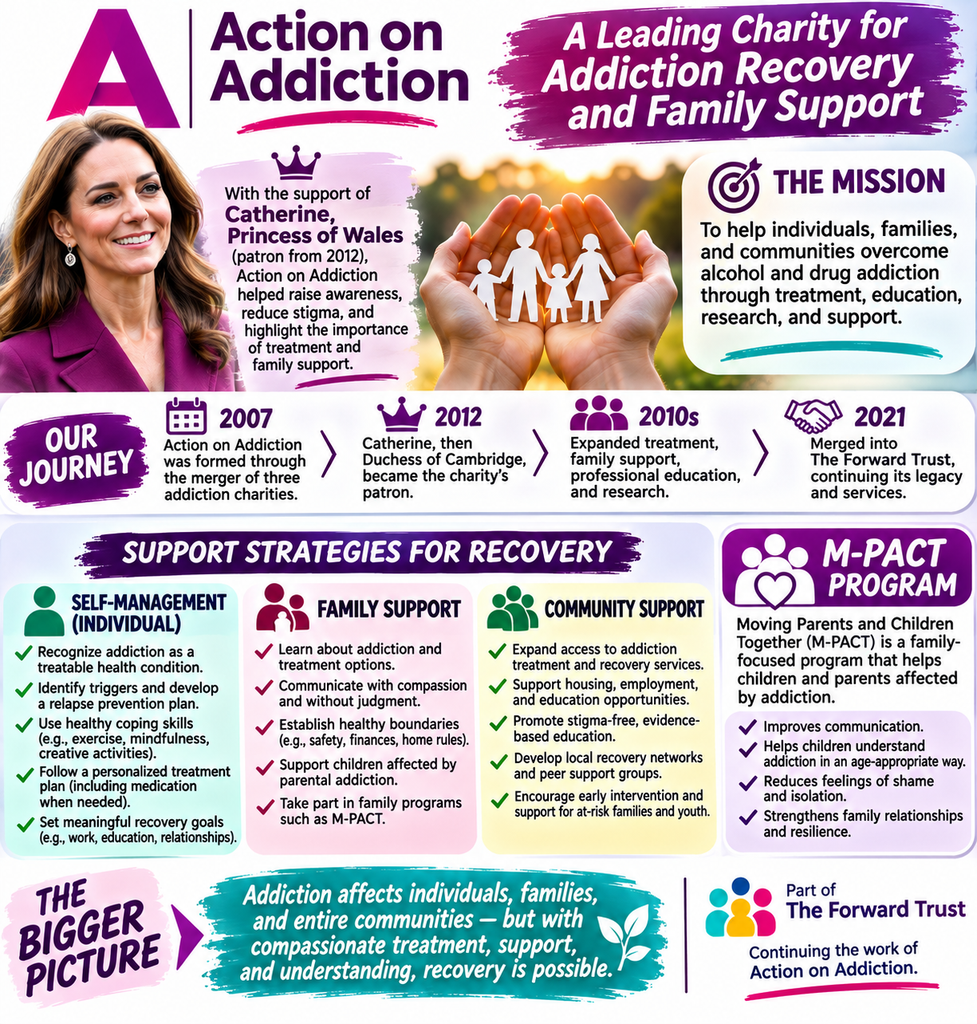
Addiction affects more than the individual experiencing substance use disorder. It can disrupt relationships, create financial instability, contribute to mental health challenges, and place enormous emotional pressure on families and communities.
For many years, the British charity Action on Addiction worked to address these challenges by supporting addiction treatment, education, research, and recovery services.
The organization became widely recognized for its commitment to helping individuals overcome alcohol and drug dependency while strengthening the families and communities affected by addiction.
Action on Addiction also gained international attention when Catherine, Princess of Wales, became its patron in 2012. Her involvement helped bring greater public awareness to addiction, recovery, and the importance of early intervention.
In 2021, Action on Addiction became part of The Forward Trust, expanding its reach through a larger organization that supports people affected by addiction, homelessness, unemployment, and involvement in the criminal justice system.
Although Action on Addiction no longer operates as a separate charity, its legacy continues through treatment, education, family support, and community recovery initiatives.

The History and Journey of Action on Addiction
Action on Addiction was formed in 2007 through the merger of three British organizations: Clouds, the Chemical Dependency Center, and the Addiction Recovery Foundation.
These organizations had established experience in addiction treatment, professional education, and recovery support.
By combining their resources, Action on Addiction sought to create a more comprehensive approach to substance use disorders.
Its work focused on helping individuals access treatment, supporting families, improving professional knowledge, and reducing stigma.
Major milestones
- 2007: Action on Addiction was established through the merger of three addiction-focused organizations.
- 2012: Catherine, then Duchess of Cambridge, became the charity’s patron.
- 2010s: The charity continued supporting treatment, education, family programs, and addiction research.
- 2021: Action on Addiction merged into The Forward Trust, bringing its work into a broader network of recovery and rehabilitation services.
- Today: Its legacy continues through The Forward Trust’s programs and partnerships.
The organization’s history demonstrates how collaboration between specialized charities can strengthen addiction services and expand access to care.
The Princess of Wales and Her Addiction Advocacy
Catherine, Princess of Wales, became patron of Action on Addiction in 2012 and used her public platform to highlight the importance of addiction treatment, family relationships, and mental health.
Her involvement reflected a broader interest in childhood development, emotional well-being, and the impact of family adversity.
Through visits to treatment facilities, meetings with individuals in recovery, and support for educational initiatives, she helped bring attention to the challenges faced by people affected by substance use disorders.
One important theme in her advocacy has been the relationship between childhood experiences, family environments, and later emotional and behavioral health.
Adverse childhood experiences, including neglect, violence, parental substance use, and chronic family instability, can increase the risk of later mental health problems and substance use disorders.
However, these experiences do not determine a person’s future. Protective relationships, early intervention, and appropriate healthcare can reduce risk and promote resilience.
Important lessons from her advocacy
- Addiction affects individuals, children, and entire families.
- Early childhood experiences can influence long-term health.
- Compassionate treatment can help reduce stigma.
- Families benefit from education and professional support.
- Prevention and early intervention are important public health priorities.
- Recovery requires sustained access to appropriate services.
The Princess of Wales’ involvement helped communicate that addiction is a societal concern deserving greater awareness and understanding.
Addiction Treatment: Addressing the Whole Person
Action on Addiction recognized that substance use disorders often involve interconnected medical, psychological, social, and family challenges.
Its services included residential rehabilitation, community treatment, family support, and professional training.
One of its best-known services was Clouds House, a residential addiction treatment center in Wiltshire, England. Following the merger, Clouds House became part of The Forward Trust’s service network.
Important components of comprehensive addiction treatment
- Medical assessment: Evaluating substance use, physical health, withdrawal risks, and co-occurring conditions.
- Psychological treatment: Addressing emotional distress, trauma, behavioral patterns, and relapse risks.
- Peer support: Building relationships with others who understand the challenges of recovery.
- Family involvement: Helping relatives improve communication and rebuild trust.
- Continuing care: Supporting individuals after residential or outpatient treatment.
- Social reintegration: Addressing housing, education, employment, and meaningful activities.
Residential rehabilitation can benefit some individuals, but it is not necessary or appropriate for everyone. Outpatient treatment, medication-assisted approaches, and community-based care may also be effective.
For opioid use disorder, medications such as buprenorphine and methadone are particularly important because they substantially reduce overdose and mortality risk.
Self-Management Strategies: Taking an Active Role in Recovery
Action on Addiction’s legacy emphasizes helping individuals develop the knowledge, skills, and confidence needed for long-term recovery.
Self-management does not mean attempting to overcome addiction without professional assistance. It means actively participating in treatment and developing healthier daily behaviors.
Recognize personal triggers
Triggers are internal or external experiences that increase the desire to use substances.
They may include emotional distress, relationship conflict, social environments, loneliness, or reminders of previous substance use.
Helpful self-management strategies include:
- Identify situations associated with cravings.
- Maintain a journal documenting emotions and triggers.
- Develop alternative responses to stressful situations.
- Avoid high-risk environments when possible.
- Contact a trusted supporter when cravings intensify.
- Discuss persistent cravings with a healthcare professional.
Develop healthy coping mechanisms
Some individuals use alcohol or drugs to temporarily manage anxiety, depression, trauma, or emotional discomfort.
Recovery involves learning alternative coping skills.
Useful approaches include:
- Cognitive behavioral therapy.
- Mindfulness and breathing exercises.
- Regular physical activity.
- Structured daily routines.
- Creative activities such as music, writing, or art.
- Peer recovery meetings.
- Professional mental health treatment when needed.
Build a relapse prevention plan
A personalized relapse prevention plan can help individuals recognize early warning signs and respond before substance use escalates.
The plan should identify:
- Personal triggers and warning signs.
- Healthy coping strategies.
- Supportive contacts.
- Treatment appointments and medications.
- Steps to take after a return to substance use.
- Emergency resources and overdose prevention measures.
A recurrence of substance use does not erase previous progress, but it may indicate that additional treatment or a revised care plan is necessary.
Establish meaningful recovery goals
Recovery can involve rebuilding multiple areas of life.
Individuals may benefit from setting goals related to employment, education, relationships, physical health, financial stability, and personal development.
Achievable goals can strengthen motivation and create a sense of purpose.
Family Support Strategies: Healing Together
One of Action on Addiction’s most important contributions was its recognition that addiction affects the entire family.
Children living with parental substance use disorders may experience uncertainty, disrupted routines, emotional distress, and difficulties at school.
Partners and other relatives may experience chronic stress, financial pressure, relationship conflict, and fear for their loved one’s safety.
Supporting family members can improve their well-being regardless of whether the person experiencing addiction immediately enters treatment.
Educate families about addiction
Understanding substance use disorders helps relatives respond with greater confidence and compassion.
Practical family strategies include:
- Learn about addiction, withdrawal, and treatment options.
- Recognize that addiction involves biological, psychological, and social factors.
- Avoid shame-based language and personal attacks.
- Encourage professional assessment and appropriate treatment.
- Understand overdose risks and emergency response.
- Seek family counseling and educational resources.
Practice compassionate communication
Families may feel frustrated when a loved one continues using substances despite serious consequences.
Supportive communication can reduce conflict and encourage engagement in treatment.
For example:
“I care about your health, and I’m concerned about how substance use is affecting you. I want to help you explore treatment options, and I also need us to maintain a safe home.”
This approach communicates concern while establishing clear expectations.
Establish healthy boundaries
Families should not be expected to tolerate threats, violence, financial exploitation, or unsafe behavior.
Healthy boundaries protect everyone involved.
Examples include:
- Refusing to allow substance use around children.
- Setting limits on financial assistance.
- Establishing expectations for respectful communication.
- Seeking professional guidance during family crises.
- Developing safety plans when necessary.
Support children affected by parental addiction
Children often need reassurance, predictable routines, and chances to talk about their feelings.
Parents and caregivers can help by providing age-appropriate explanations and emphasizing that children are not responsible for an adult’s substance use.
School counselors, child psychologists, and family support programs may also help
The M-PACT Program: Supporting Parents and Children Together
One of Action on Addiction’s significant contributions was the Moving Parents and Children Together (M-PACT) program.
M-PACT is a structured, family-focused program designed to support children and families affected by parental substance use.
The program helps family members communicate, understand the effects of addiction, and strengthen relationships.
Following the 2021 merger, The Forward Trust continued developing this family-centered approach.
Key goals of M-PACT
- Help children understand addiction in age-appropriate ways.
- Improve communication between parents and children.
- Reduce feelings of shame, blame, and isolation.
- Strengthen positive parenting practices.
- Encourage emotional expression and family resilience.
- Connect families with ongoing support services.
Why family-centered treatment matters
Children may experience parental addiction differently depending on their age, developmental stage, and family circumstances.
Some children withdraw, while others develop behavioral problems or take on responsibilities beyond their developmental abilities.
Early family intervention can help identify these challenges and provide appropriate support.
Importantly, not every child exposed to parental addiction will develop a substance use disorder or mental health condition. Supportive relationships and stable environments can provide significant protection.
Community Support Strategies: Building a Recovery-Friendly Society
Action on Addiction understands that sustainable recovery requires more than individual treatment.
People also need supportive communities, employment opportunities, stable housing, and freedom from unnecessary stigma.
The Forward Trust continues this broader approach through community and criminal justice services.
Expand access to treatment
Communities can improve addiction recovery outcomes by investing in accessible healthcare.
Important initiatives include:
- Affordable outpatient and residential treatment.
- Medically supervised withdrawal management when indicated.
- Medications for opioid and alcohol use disorders.
- Integrated mental health services.
- Transportation assistance.
- Peer recovery coaching.
- Continuing care after treatment completion.
Strengthen community recovery networks
Peer support organizations, recovery community centers, and mutual-help groups can provide social connection.
Examples include Alcoholics Anonymous, Narcotics Anonymous, SMART Recovery, and other locally available recovery programs.
These resources can complement professional treatment, although they should not replace indicated medical care.
Address housing and employment barriers
Housing instability and unemployment can complicate addiction treatment and recovery.
Communities can support individuals through vocational training, employment programs, educational opportunities, and recovery housing.
Stable living conditions may help individuals stay engaged in treatment and rebuild independence.
Reduce addiction stigma
Stigma can discourage individuals from seeking treatment and increase social isolation.
Community education should emphasize that substance use disorders are treatable health conditions.
Public awareness campaigns can highlight recovery experiences while avoiding stereotypes and judgmental language.
Support individuals involved in the criminal justice system
People leaving correctional facilities may face elevated overdose risk, especially after periods of reduced opioid tolerance.
Community programs should help ensure continuity of healthcare, medication treatment, housing, and employment services.
These supports can reduce preventable harm and improve opportunities for successful reintegration.
Taking Action on Addiction: Continuing the Legacy
In October 2021, The Forward Trust and partner charities launched the Taking Action on Addiction campaign, with Catherine, then Duchess of Cambridge, delivering the keynote address.
The campaign aimed to improve public understanding of addiction, challenge stigma, and encourage people to recognize that recovery is possible.
The campaign continues Action on Addiction’s awareness-raising work.
Its central priorities include:
- Increasing public understanding of addiction.
- Challenging shame and discrimination.
- Encouraging people to seek appropriate support.
- Sharing experiences of recovery.
- Promoting compassionate public discussion.
- Supporting changes that improve access to care.
The campaign also addresses behavioral addictions, including gambling-related problems, alongside alcohol and drug addiction.
Why public awareness matters
People may delay seeking treatment because they fear judgment from family members, employers, or healthcare professionals.
Public education can help people recognize addiction symptoms and understand available treatment options.
Awareness alone is not sufficient, however. It must be accompanied by accessible healthcare, effective interventions, and sustained community support.
The Role of Healthcare Professionals in Addiction Recovery
Healthcare professionals play an essential role in identifying substance use disorders, coordinating treatment, and educating families.
Physician assistants, physicians, nurses, addiction specialists, social workers, and behavioral health clinicians can work together to provide comprehensive care.
Important clinical strategies
- Screen patients for alcohol and drug use using validated assessment tools.
- Evaluate withdrawal risks and determine the appropriate level of care.
- Assess for co-occurring psychiatric disorders.
- Offer evidence-based medications when clinically indicated.
- Provide motivational interviewing and behavioral interventions.
- Educate patients about overdose prevention and naloxone.
- Involve families with the patient’s consent.
- Coordinate referrals to community recovery services.
- Monitor treatment progress and adjust care plans as needed.
A patient-centered approach recognizes that individuals differ in their readiness for change, treatment needs, and recovery goals.
Healthcare professionals should also consider trauma, cultural background, financial barriers, and social determinants of health.
Lessons From Action on Addiction’s Advocacy Journey
Action on Addiction’s history offers valuable lessons for individuals, families, healthcare professionals, and communities.
First, addiction treatment should address the whole person. Substance use disorders frequently involve medical, psychological, family, and social challenges that require coordinated care.
Second, family support is essential. Programs such as M-PACT demonstrate the importance of recognizing children’s experiences and helping families develop healthier relationships.
Third, stigma can become a barrier to recovery. Public education and compassionate communication may encourage individuals to seek treatment earlier.
Fourth, recovery requires ongoing support. Residential treatment or short-term counseling may be only one part of a longer process involving continuing care, employment, housing, and supportive relationships.
Fifth, partnerships can strengthen community services. The merger with The Forward Trust illustrates how organizations can combine expertise and resources to reach more people.
Finally, recovery is possible at every stage of life. Individuals deserve access to effective treatment and opportunities to rebuild their health, relationships, and sense of purpose.
Conclusion: Turning Compassion Into Meaningful Action
Action on Addiction helped advance a compassionate and comprehensive approach to addiction treatment in the United Kingdom.
Through rehabilitation services, professional education, family programs, and public awareness initiatives, the organization emphasized that addiction affects individuals, families, and entire communities.
Its 2021 merger with The Forward Trust allowed it to continue its work within a broader network of services.
The Princess of Wales’ involvement also helped bring public attention to addiction stigma, childhood adversity, and the importance of supporting families.
For individuals, recovery involves accessing appropriate treatment, developing healthier coping strategies, and building meaningful goals.
For families, support requires education, compassion, healthy boundaries, and opportunities for healing.
For communities, sustainable recovery depends on accessible healthcare, prevention programs, housing, employment, and coordinated support services.
Addiction can disrupt lives, but compassionate treatment, family involvement, and community support can help people create healthier futures. Recovery is possible, and everyone deserves the opportunity to pursue it.
Addiction Treatment and Support Resources
For readers in the United Kingdom, the following organizations provide information and support:
- The Forward Trust — Addiction treatment, rehabilitation, family support, and community services.
- Taking Action on Addiction — Addiction awareness, education, and recovery advocacy.
- NHS Addiction Support — Information about addiction and treatment options.
- WithYou — Drug, alcohol, and mental health support.
Readers in the United States can visit FindTreatment.gov or contact the SAMHSA National Helpline at 1-800-662-HELP (4357).
For an immediate overdose or other medical emergency, contact local emergency services.
Frequently Asked Questions and Answers
About Action on Addiction
1. What was Action on Addiction?
Action on Addiction was a United Kingdom-based charity dedicated to helping individuals and families affected by alcohol and drug dependency.
Its work included residential rehabilitation, family support, professional education, research, and public awareness campaigns designed to reduce addiction-related stigma.
2. When was Action on Addiction founded?
Action on Addiction was established in 2007 through the merger of three organizations: Clouds, the Chemical Dependency Center, and the Addiction Recovery Foundation.
The merger combined expertise in addiction treatment, education, and recovery support.
3. What was the main mission of Action on Addiction?
The charity sought to reduce the harms associated with alcohol and drug addiction through treatment, education, research, and support for affected families.
Its approach recognized that addiction can influence physical health, mental well-being, relationships, employment, and community stability.
4. Does Action on Addiction still exist as an independent charity?
No. Action on Addiction merged into The Forward Trust in 2021.
Its work and legacy continue through The Forward Trust and related initiatives, including Taking Action on Addiction.
5. What is The Forward Trust?
The Forward Trust is a British charity providing support for individuals affected by addiction, mental health challenges, unemployment, homelessness, and involvement in the criminal justice system.
Its services include treatment, rehabilitation, employment assistance, and community-based support.
The Princess of Wales and Addiction Advocacy
6. What was Catherine, Princess of Wales’ connection to Action on Addiction?
Catherine became patron of Action on Addiction in 2012.
She visited addiction treatment facilities, met individuals in recovery, and supported initiatives focused on families and children affected by substance use disorders.
Following the merger in May 2021, she became royal patron of The Forward Trust in June 2021.
7. Why is the Princess of Wales passionate about addiction awareness?
Her advocacy focuses on the relationship between childhood experiences, mental health, family stability, and addiction.
She has emphasized that addiction is a complex health condition and that people affected by it deserve compassion rather than shame.
She also encourages early intervention and support for vulnerable children and families.
8. What is the Taking Action on Addiction campaign?
Taking Action on Addiction is a national awareness campaign launched in October 2021.
Led by The Forward Trust, the campaign aims to improve public understanding of addiction, challenge stigma, and encourage people to seek appropriate treatment and support.
It addresses substance use disorders and certain behavioral addictions.
9. How has the Princess of Wales helped reduce addiction stigma?
Through public appearances, speeches, and visits to treatment organizations, Catherine has emphasized that addiction can affect people from many different backgrounds.
Her advocacy encourages society to understand the underlying causes of addiction and recognize the importance of treatment, empathy, and recovery support.
10. Is the Princess of Wales still involved in addiction advocacy?
Yes. She remains royal patron of The Forward Trust.
In September 2026, she visited a community gardening initiative associated with The Forward Trust to highlight how nature, social connection, and meaningful activities can support recovery.
Her involvement continues to draw attention to addiction treatment and stigma reduction.
Addiction Treatment and Self-Management
11. What addiction treatment services did Action on Addiction provide?
Action on Addiction supported residential rehabilitation, community treatment, family programs, professional training, and continuing care.
Its services included Clouds House, a residential addiction treatment facility in Wiltshire, and community-based programs.
The Forward Trust absorbed these services following the merger.
12. What is Clouds House?
Clouds House is a residential addiction rehabilitation center in Wiltshire, England.
It has historically provided structured treatment for people experiencing alcohol and drug dependency.
Residential rehabilitation may include therapeutic activities, counseling, peer support, and planning for continued recovery after discharge.
13. What self-management strategies can help someone overcome addiction?
Self-management involves actively participating in treatment and developing habits that support recovery.
Helpful strategies include:
- Recognize substance use triggers and warning signs.
- Seek professional addiction treatment.
- Develop a personalized relapse prevention plan.
- Practice mindfulness and stress management.
- Establish healthy sleep, nutrition, and exercise routines.
- Attend counseling or peer recovery meetings.
- Build supportive relationships.
- Set achievable recovery goals.
14. Can someone recover from addiction without residential rehabilitation?
Yes. Residential treatment is not necessary for everyone.
Many individuals benefit from outpatient counseling, medications, community-based programs, and peer support.
The appropriate level of care depends on substance use severity, withdrawal risks, co-occurring conditions, safety, and personal circumstances.
Alcohol or benzodiazepine withdrawal can be medically dangerous and may require supervised management.
15. Why is continuing care important after addiction treatment?
Recovery often requires ongoing support after the initial treatment phase.
Continuing care can help individuals manage cravings, address mental health concerns, rebuild relationships, and maintain stability.
Support may include counseling, medication management, recovery meetings, housing assistance, and employment services.
16. Does a return to substance use mean recovery has failed?
No. A return to substance use does not erase previous progress.
However, it may indicate that treatment needs reassessment or intensification.
Individuals should seek professional guidance, review their triggers, and update their recovery plans.
For opioid use disorder, reduced tolerance after abstinence increases overdose risk.
Family Support and the M-PACT Program
17. What is the M-PACT program?
M-PACT stands for Moving Parents and Children Together.
It is a structured, family-focused program developed to help children and parents affected by parental substance use.
The program encourages communication, emotional understanding, and healthier family relationships.
The Forward Trust brought M-PACT in as part of the 2021 merger.
18. How does M-PACT help children affected by parental addiction?
M-PACT helps children understand addiction in age-appropriate ways and provides opportunities to discuss their feelings.
Its goals include:
- Improving family communication.
- Reducing shame and isolation.
- Helping children understand that addiction is not their fault.
- Strengthening parenting skills.
- Supporting healthier family relationships.
- Encouraging emotional resilience.
19. How can families support a loved one experiencing addiction?
Families can encourage recovery through education, compassion, and healthy boundaries.
Helpful approaches include:
- Learn about substance use disorders.
- Encourage professional treatment.
- Listen without judgment.
- Avoid blame and humiliation.
- Establish clear expectations for safety.
- Participate in family counseling when appropriate.
- Seek independent emotional support.
20. What should parents tell children about addiction?
Parents should provide truthful, age-appropriate explanations.
Children need reassurance that they did not cause the addiction and are not responsible for fixing it.
They should also know which trusted adults they can approach when they feel worried or unsafe.
21. How can families rebuild trust after addiction?
Rebuilding trust takes time and consistent behavior.
Family members can build healthier relationships by communicating openly, respecting boundaries, participating in counseling, and setting realistic expectations.
Trust strengthens through sustained actions, not promises alone.
22. What support is available for families affected by addiction?
Families may benefit from:
- Family counseling.
- Addiction education.
- Parenting support programs.
- Peer support groups.
- Child and adolescent mental health services.
- Community recovery organizations.
Programs such as Al-Anon, Nar-Anon, and SMART Recovery Family & Friends may provide additional support.
Community Support and Addiction Prevention
23. Why is community support important in addiction recovery?
Community support can reduce isolation and provide practical resources that strengthen recovery.
Individuals may need access to healthcare, housing, employment, education, and supportive relationships.
Recovery-friendly communities create opportunities for people to rebuild their lives.
24. How can communities reduce addiction stigma?
Communities can reduce stigma through education, respectful communication, and public awareness campaigns.
Schools, employers, healthcare organizations, and community leaders can emphasize that substance use disorders are treatable medical conditions.
Sharing recovery experiences can also challenge harmful stereotypes.
25. What role do healthcare professionals play in addiction recovery?
Healthcare professionals can identify substance use disorders, assess withdrawal risks, provide evidence-based treatment, and coordinate ongoing care.
Important responsibilities include:
- Screening for alcohol and drug use.
- Evaluating co-occurring mental health conditions.
- Providing appropriate medications.
- Educating patients about overdose prevention.
- Supporting family involvement with patient consent.
- Coordinating referrals and continuing care.
26. How can communities support people leaving addiction rehabilitation?
Communities can provide recovery housing, employment assistance, vocational training, peer mentoring, and ongoing treatment.
Continuity of care is especially important following residential rehabilitation, hospitalization, or incarceration.
27. How can schools help prevent addiction among young people?
Schools can provide age-appropriate substance use education, mental health support, counseling, and early intervention.
Programs should also strengthen emotional regulation, decision-making, healthy relationships, and family engagement.
Action on Addiction’s Continuing Legacy
28. What is Action on Addiction’s most important contribution?
One of its most significant contributions was promoting a comprehensive approach to addiction that included treatment, professional education, family support, and public awareness.
Its M-PACT program helped highlight the needs of children and families affected by parental substance use.
29. How can someone support Action on Addiction’s continuing mission?
Individuals can support The Forward Trust and the Taking Action on Addiction campaign through donations, fundraising, volunteering, and sharing educational resources.
The campaign also encourages people to participate in conversations that challenge stigma.
In 2026, its Big Addiction Conversation initiative encouraged public discussions about addiction and recovery.
30. What is the most important message from Action on Addiction’s advocacy?
Its central message is that addiction is a treatable health condition and that recovery is possible with appropriate care and support.
Individuals deserve compassionate treatment, families deserve education and assistance, and communities have an important role in creating recovery opportunities.
Video: