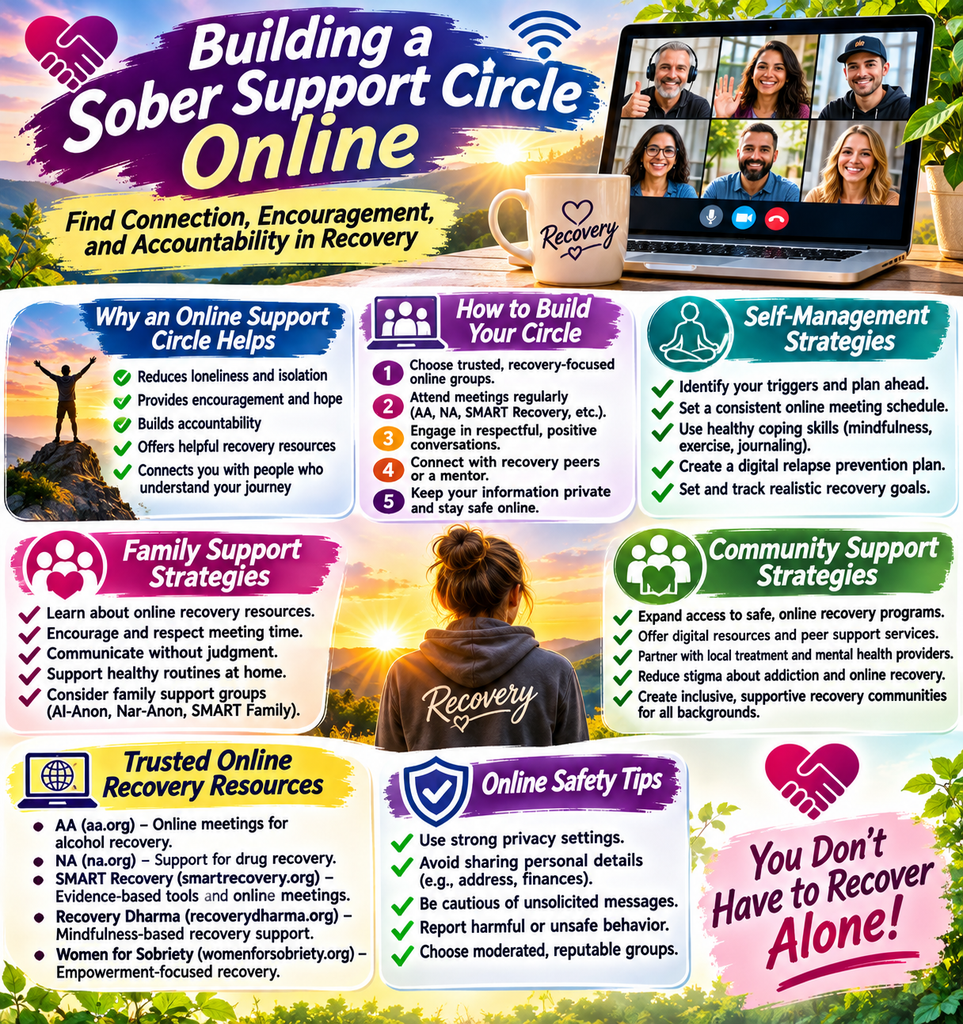
Recovery from addiction is not simply about stopping alcohol or drug use. It involves rebuilding relationships, developing healthier coping strategies, managing emotional challenges, and creating a lifestyle that supports long-term well-being. One of the greatest challenges individuals face during recovery is loneliness, particularly when distancing themselves from friends or environments associated with substance use.
Fortunately, technology has created new opportunities for individuals to connect with others who understand their recovery experiences. Online support groups, virtual recovery meetings, social media communities, and digital wellness platforms let people build meaningful relationships regardless of location.
Building an online sober support circle offers encouragement, accountability, education, and emotional connection. For people living in rural communities, facing transportation challenges, or uncomfortable attending in-person meetings, virtual recovery networks can provide accessible support.
However, creating a healthy online recovery community requires more than joining a social media group. It involves identifying trustworthy resources, establishing boundaries, protecting personal information, and developing relationships that support individual recovery goals.
By combining self-management strategies, family involvement, and community resources, individuals can build an online support network that strengthens their recovery journey.
Why Social Connection Matters in Addiction Recovery
Substance use disorders affect brain systems involved in reward, motivation, learning, and behavioral control. Recovery often requires individuals to develop new routines and social relationships that support healthier decision-making.
Social isolation can contribute to emotional distress, loneliness, and increased vulnerability to substance use. Supportive relationships, on the other hand, can provide encouragement, accountability, and opportunities to practice healthy coping skills.
Online recovery communities can help individuals connect with people who share similar experiences.
Benefits of a sober support circle
- Emotional support: Connecting with people who understand addiction and recovery challenges.
- Accountability: Encouraging individuals to remain engaged with their recovery goals.
- Shared experiences: Learning how others manage cravings, stress, and setbacks.
- Reduced isolation: Developing meaningful relationships despite geographic barriers.
- Accessible resources: Finding educational materials, meetings, and professional referrals.
- Motivation: Celebrating progress and recognizing personal achievements.
Although online communities can provide meaningful support, they should complement rather than replace professional addiction treatment when medical or psychological care is necessary.
Understanding the Journey of Building an Online Sober Community
Creating a sober support circle is a gradual process. Individuals may initially feel uncertain about sharing personal experiences or trusting people they have never met in person.
A successful online recovery network develops through consistent participation, respectful communication, and shared commitment to healthier lifestyles.
Stage 1: Recognizing the need for support
The first step is recognizing that recovery doesn’t have to be managed alone.
Some individuals lose friendships when they stop using substances. Others may struggle to discuss addiction with family members because of shame, conflict, or fear of judgment.
Online support groups can provide an alternative environment where individuals feel understood.
Stage 2: Exploring recovery communities
Different online communities offer different approaches to recovery.
Some emphasize abstinence, while others incorporate cognitive behavioral strategies, spiritual principles, medication-supported recovery, or harm reduction.
Individuals should choose communities that respect their treatment decisions and personal goals.
Stage 3: Developing meaningful connections
Joining a group is only the beginning.
Meaningful relationships develop through regular attendance, respectful participation, and mutual encouragement.
Individuals may start by listening to discussions before sharing personal experiences.
Stage 4: Establishing accountability
Recovery partners or peer mentors can provide encouragement during stressful situations.
For example, two members may agree to check in weekly, discuss coping strategies, and celebrate progress.
Accountability should remain supportive, not controlling.
Stage 5: Maintaining long-term engagement
As recovery progresses, individuals may develop new interests, responsibilities, and relationships.
Online support circles should evolve with these changes while continuing to provide reliable encouragement.
Choosing Safe and Reliable Online Recovery Communities
Not all online recovery communities provide the same quality of information or support.
Some groups are professionally facilitated, while others rely on volunteers or peer leadership.
Individuals should evaluate a community’s credibility, privacy practices, and approach to addiction treatment before participating.
Popular online recovery resources

SMART Recovery
Offers online meetings using evidence-informed behavioral tools to manage urges, motivation, thoughts, and emotions.SMART Recovery website

Alcoholics Anonymous (AA)
Offers virtual peer-led meetings based on the Twelve Steps and shared experiences with alcohol recovery.Alcoholics Anonymous website

Narcotics Anonymous (NA)
Provides peer support meetings for people seeking recovery from drug addiction, including virtual meeting options.Narcotics Anonymous website

Recovery Dharma
Offers peer-led recovery meetings incorporating Buddhist-inspired meditation, mindfulness, and community support.Recovery Dharma website

Women for Sobriety
Provides recovery support centered on emotional growth, self-esteem, and positive behavioral change.Women for Sobriety website
Before joining, review meeting guidelines, confidentiality expectations, moderation practices, and membership requirements. Online anonymity isn’t guaranteed, even if a group describes itself as confidential.
Self-Management Strategies: Creating a Healthy Online Recovery Routine
Self-management plays an essential role in maintaining sobriety and developing meaningful relationships.
Online recovery communities can reinforce healthy habits, but individuals must actively participate in their own treatment and wellness plans.
Establish a consistent meeting schedule
Regular participation builds accountability and familiarity with other members.
For example, someone might attend two virtual recovery meetings each week and communicate with a recovery partner between meetings.
Consistency is more important than attending an excessive number of meetings.
Identify personal triggers
Social media and digital environments can expose individuals to content involving alcohol, drugs, or unhealthy behaviors.
Helpful self-management strategies include:
- Unfollow accounts that repeatedly promote substance use.
- Limit exposure to triggering content.
- Identify emotional patterns associated with cravings.
- Use journaling to monitor recovery progress.
- Practice relaxation techniques during stressful situations.
- Contact a trusted supporter when cravings intensify.
- Maintain regular appointments with healthcare professionals.
Create a digital relapse prevention plan
A digital recovery plan can provide immediate access to coping strategies and support contacts.
It may include:
- Names and contact information for trusted supporters.
- Links to virtual recovery meetings.
- Personal warning signs and triggers.
- Healthy activities to manage cravings.
- Treatment provider contact information.
- Emergency resources and overdose prevention instructions.
Store sensitive information securely and avoid sharing private treatment details in public online spaces.
Set realistic recovery goals
Make recovery goals achievable and measurable.
Examples include attending weekly support meetings, maintaining a healthy sleep routine, practicing stress management, or reconnecting with supportive family members.
Small, consistent improvements can strengthen motivation and confidence.
Building Trust and Meaningful Relationships Online
Trust develops gradually through respectful interactions and consistent behavior.
People should not feel pressured to share personal information right away.
A healthy recovery community respects privacy, personal boundaries, and different treatment approaches.
Strategies for building trust
- Attend meetings consistently.
- Listen respectfully to other members.
- Share experiences at your own comfort level.
- Avoid criticizing another person’s recovery journey.
- Respect confidentiality.
- Offer encouragement without attempting to control others.
- Recognize when professional assistance is necessary.
Recognizing unhealthy online relationships
Not everyone in an online recovery group has healthy intentions.
Warning signs may include:
- Requests for money or financial information.
- Pressure to discontinue prescribed medications.
- Attempts to isolate someone from family or professional treatment.
- Harassment, manipulation, or unwanted romantic advances.
- Sharing another member’s private information.
- Promotion of unproven addiction treatments.
Individuals should report concerning behavior to group moderators and discontinue unsafe interactions.
Family Support Strategies: Encouraging Healthy Digital Recovery
Families can play an important role in helping loved ones build and maintain online recovery relationships.
However, support should respect personal autonomy and confidentiality.
Learn about online recovery resources
Family members can learn about virtual support groups, treatment programs, and digital recovery tools.
Understanding these resources can reduce uncertainty and encourage constructive conversations.
Helpful family strategies include:
- Encourage participation in reputable recovery communities.
- Respect private meeting attendance.
- Avoid monitoring personal conversations without consent.
- Offer assistance with technology when requested.
- Recognize progress without creating unrealistic expectations.
- Encourage continued professional treatment when indicated.
Create a supportive home environment
A stable home environment can strengthen recovery.
Families can help by reducing unnecessary conflict, establishing predictable routines, and supporting healthy activities.
They should also communicate openly about household boundaries related to substance use.
Participate in family-focused support groups
Family members may benefit from their own online recovery communities.
Programs such as SMART Recovery Family & Friends, Al-Anon, and Nar-Anon provide opportunities to learn coping strategies and connect with others facing similar challenges.
Family support should focus on emotional well-being rather than attempting to control another person’s recovery.
Encourage balanced technology use
Excessive screen time can interfere with sleep, physical activity, work, and in-person relationships.
Families can encourage a healthy balance between participation in online recovery and offline activities.
Community Support Strategies: Expanding Digital Recovery Opportunities
Communities can improve addiction recovery outcomes by expanding access to safe, affordable, and inclusive online services.
Healthcare organizations, nonprofit groups, schools, and local governments can collaborate to reduce participation barriers.
Improve digital access
Some individuals lack reliable internet service, appropriate devices, or the technical skills needed to participate in virtual meetings.
Community organizations can provide:
- Free internet access at libraries and community centers.
- Technology training.
- Private spaces for virtual counseling.
- Assistance locating online recovery meetings.
- Accessible platforms for individuals with disabilities.
Develop virtual peer recovery programs
Trained peer recovery specialists can provide encouragement, practical guidance, and connections to treatment resources.
Virtual peer programs may be especially helpful for people living in rural areas or experiencing transportation barriers.
Integrate online support with healthcare services
Healthcare professionals can help patients identify reputable online recovery resources.
Telehealth counseling, medication management, and virtual peer support may improve continuity of care.
However, patients with severe withdrawal symptoms, overdose risk, or acute psychiatric crises may require immediate in-person medical evaluation.
Promote inclusive recovery communities
Online recovery groups should welcome individuals from different backgrounds and respect diverse recovery goals.
Communities can improve accessibility by offering language interpretation, disability accommodations, and meeting times that accommodate work and caregiving responsibilities.
Advantages and Disadvantages of Online Sober Support Circles
Online recovery communities offer meaningful benefits but also have limitations.
| Advantages | Potential disadvantages |
|---|---|
| Accessible from home | Requires reliable technology |
| Reduces transportation barriers | Privacy and confidentiality risks |
| Connects people across geographic areas | Less face-to-face interaction |
| Offers flexible meeting schedules | Potential exposure to misinformation |
| May reduce feelings of isolation | Risk of online harassment |
| Provides ongoing peer encouragement | Cannot replace emergency or intensive medical care |
The most effective support approach often combines digital resources with professional treatment, supportive family relationships, and opportunities for in-person connection.
Protecting Privacy and Emotional Well-Being Online
Privacy is particularly important when discussing addiction, trauma, mental health, or personal relationships.
Even well-intentioned online communities may have limits on confidentiality.
Digital safety recommendations
- Use strong passwords and multifactor authentication.
- Review platform privacy settings.
- Avoid sharing home addresses, financial details, or identifying medical information.
- Ask whether meetings permit recording or screenshots.
- Be cautious when communicating privately with unfamiliar members.
- Avoid sending money to people you meet through recovery groups.
- Report harassment or threatening behavior.
- Leave groups that promote unsafe practices or discourage necessary medical treatment.
Individuals should also recognize that peer support groups generally do not provide the same legal privacy protections as healthcare services.
Example: Building a Sober Support Circle During Early Recovery
Consider a fictional example of a 32-year-old individual named Michael who recently completed outpatient treatment for alcohol use disorder.
Michael wants to maintain sobriety but feels isolated because many of his former social activities involved drinking.
He begins attending virtual SMART Recovery meetings twice a week.
Initially, he listens without speaking. Over time, he becomes more comfortable sharing his experiences and connects with several supportive members.
Michael also develops a weekly routine that includes exercise, counseling, and scheduled conversations with his family.
When he experiences cravings after a stressful workday, he uses coping techniques learned in treatment and contacts a trusted recovery peer.
His family supports his progress by respecting his meeting schedule and encouraging healthy activities.
After several months, Michael begins volunteering at a local community organization.
His online support circle becomes one part of a broader recovery network that includes professional care, family relationships, and meaningful community involvement.
This example illustrates how online support can complement individualized addiction treatment.
A 30-Day Plan for Building an Online Sober Support Circle
INTERACTIVE RECOVERY CHECKLIST
Your 30-day progress
Week 1: Explore and Connect. Identify two reputable online recovery communities. Attend one virtual meeting as an observer. Review group guidelines and privacy practices.
Week 2: Build Consistency. Attend two recovery meetings. Identify one trusted peer or support contact. Create a weekly recovery schedule.
Week 3: Strengthen Relationships. Participate in a group discussion if comfortable. Develop a written relapse prevention plan. Explore family or community support resources.
Week 4: Maintain and Evaluate. Review which online groups feel supportive and safe. Set realistic goals for the next month. Balance online support with offline relationships and activities.
This plan is flexible. Individuals can adjust the pace according to their treatment needs, comfort level, and personal circumstances.
The Role of Healthcare Professionals in Online Recovery Support
Healthcare professionals can help individuals determine whether online recovery communities are appropriate and how they should fit into a comprehensive treatment plan.
Physician assistants, physicians, therapists, addiction counselors, and peer recovery specialists can collaborate to support continuity of care.
Important clinical strategies
- Assess the severity of substance use and associated medical risks.
- Screen for co-occurring psychiatric conditions.
- Discuss patient preferences for virtual and in-person support.
- Recommend credible recovery resources.
- Provide medications when clinically indicated.
- Develop individualized relapse prevention plans.
- Address digital privacy and online safety concerns.
- Monitor treatment engagement and recovery outcomes.
Online peer support can improve access to encouragement and connection, but it should not substitute for medications, medical withdrawal management, or other indicated clinical services.
Long-Term Strategies for Maintaining a Healthy Online Recovery Network
A sober support circle should evolve as individuals progress through recovery.
During early recovery, frequent meetings and structured accountability may be particularly helpful.
Later, individuals may benefit from mentorship, volunteering, leadership opportunities, and broader social relationships.
Long-term strategies include:
- Continue participating in supportive recovery communities.
- Reevaluate relationships that create stress or encourage substance use.
- Maintain professional healthcare follow-up.
- Develop interests outside addiction-focused activities.
- Support newcomers without assuming responsibility for their recovery.
- Celebrate progress while remaining attentive to personal warning signs.
- Seek additional assistance during major life transitions.
Recovery support should remain flexible, respectful, and responsive to changing needs.
Conclusion: Building a Stronger Recovery Through Online Connection
Building an online sober support circle can help individuals overcome isolation, build meaningful relationships, and strengthen their commitment to recovery.
Digital communities offer accessible opportunities for encouragement, accountability, education, and emotional support.
However, successful online recovery networks require careful selection, healthy boundaries, privacy protection, and consistent participation.
For individuals, self-management strategies such as identifying triggers, attending meetings, and developing relapse prevention plans can strengthen recovery.
For families, compassion, education, and respect for personal boundaries create supportive environments.
For communities, expanding digital access, virtual peer programs, and integrated healthcare services can make recovery resources available to more people.
Recovery does not have to happen alone. Whether support comes from a virtual meeting, a trusted family member, a healthcare professional, or a community organization, meaningful connection can help individuals build healthier and more fulfilling lives.
Helpful Online Addiction Recovery Resources
- SMART Recovery — Online recovery meetings and self-management tools.
- Alcoholics Anonymous — Peer-led alcohol recovery support.
- Narcotics Anonymous — Peer support for recovery from drug addiction.
- Recovery Dharma — Mindfulness-based peer recovery meetings.
- Women for Sobriety — Recovery support focused on emotional growth and empowerment.
- FindTreatment.gov — Locate professional addiction treatment services.
SAMHSA National Helpline: 1-800-662-HELP (4357).
For immediate mental health crisis support in the United States, call or text 988. For a suspected overdose or other medical emergency, call 911.
Frequently Asked Questions and Answers
Understanding Online Sober Support Circles
1. What is an online sober support circle?
An online sober support circle is a network of individuals who connect through digital platforms to encourage and support one another in addiction recovery.
These connections may develop through virtual recovery meetings, online forums, social media communities, or peer support programs.
The goal is to provide encouragement, accountability, shared experiences, and emotional support.
2. Why is having a sober support circle important in addiction recovery?
Supportive relationships can help reduce loneliness, strengthen motivation, and provide encouragement during challenging situations.
People in recovery may need to distance themselves from relationships or environments associated with substance use.
A sober support circle offers opportunities to build healthier friendships and a sense of belonging.
3. Can online recovery groups be as helpful as in-person meetings?
Online recovery groups can provide meaningful peer support, particularly for individuals who cannot easily attend in-person meetings.
Research suggests that virtual mutual-help participation can be beneficial, although direct comparisons with in-person groups remain limited and outcomes vary.
Some individuals prefer online meetings, while others benefit more from face-to-face interactions. Combining both approaches may be helpful.
4. Who can benefit from online sober support groups?
Online recovery groups may benefit:
- Individuals beginning addiction recovery.
- People maintaining long-term sobriety.
- Individuals living in rural communities.
- People with transportation or mobility limitations.
- Parents and caregivers with demanding schedules.
- Individuals experiencing social anxiety.
- People seeking additional support alongside professional treatment.
5. Do I need to be completely sober before joining an online recovery group?
Not necessarily.
Some recovery communities welcome individuals who are exploring sobriety, reducing substance use, or seeking information about treatment.
Other groups have specific participation requirements.
Review each organization’s guidelines to determine whether its approach matches your goals.
Finding Reliable Online Recovery Communities
6. What are some reputable online addiction recovery support groups?
Several established organizations provide online recovery meetings and resources.
- SMART Recovery: Evidence-informed self-management tools and peer support.
- Alcoholics Anonymous (AA): Twelve-Step recovery meetings for alcohol-related problems.
- Narcotics Anonymous (NA): Peer support for recovery from drug addiction.
- Recovery Dharma: Mindfulness-based peer recovery meetings.
- Women for Sobriety: Recovery support emphasizing emotional growth and self-empowerment.
These organizations offer different recovery philosophies, allowing individuals to explore approaches that fit their needs.
7. How do I choose the right online recovery group?
Consider the group’s recovery philosophy, meeting schedule, moderation practices, confidentiality expectations, and accessibility.
A healthy recovery community should promote respectful communication, discourage harassment, and support evidence-based treatment.
Avoid groups that pressure members to discontinue prescribed medications or reject professional medical care.
8. Are online recovery meetings free?
Many peer-led recovery meetings are free, including meetings offered by AA, NA, and SMART Recovery.
Some organizations accept voluntary donations, while professionally facilitated programs or subscription-based services may charge fees.
Always review payment requirements before joining.
9. Can I participate anonymously in online recovery meetings?
Many online recovery communities allow participants to use first names or pseudonyms.
However, anonymity is not guaranteed.
Other participants may see usernames, profile photographs, or personal information. Meetings may also be vulnerable to unauthorized screenshots or recordings.
Review privacy settings and meeting guidelines before participating.
10. How can I recognize an unsafe online recovery group?
Warning signs include:
- Requests for money or sensitive financial information.
- Pressure to stop prescribed addiction medications.
- Harassment or inappropriate personal messages.
- Promotion of unproven addiction treatments.
- Sharing members’ private information.
- Attempts to isolate participants from family or healthcare professionals.
- Lack of clear moderation or safety guidelines.
Leave groups that compromise your safety or recovery goals.
Self-Management Strategies for Online Sobriety
11. How can online support groups help me maintain sobriety?
Online groups provide opportunities to discuss challenges, learn coping strategies, and receive encouragement from others with similar experiences.
Regular participation may help individuals recognize triggers, strengthen motivation, and remain engaged with recovery goals.
Online peer support works best when it fits into a broader recovery plan that includes appropriate professional care.
12. How often should I attend online recovery meetings?
Meeting frequency depends on individual needs and preferences.
Some people attend daily meetings during early recovery, while others benefit from weekly participation.
The most important factors are consistency, meaningful engagement, and whether the meetings support your recovery goals.
13. How can I build accountability with online recovery friends?
Accountability can develop through regular check-ins, shared goals, and supportive conversations.
For example, two recovery peers may agree to discuss their progress once a week.
Healthy accountability involves encouragement and mutual respect, not monitoring, pressure, or punishment.
14. What should I do if I experience cravings while participating in online recovery?
Cravings can occur even when someone is actively engaged in recovery.
Helpful strategies include:
- Contact a trusted recovery supporter.
- Attend an available online meeting.
- Practice breathing exercises or mindfulness.
- Change environments when possible.
- Engage in physical activity.
- Review a relapse prevention plan.
- Contact a treatment professional if cravings become difficult to manage.
Persistent cravings may indicate a need to reassess treatment, including medication options when appropriate.
15. Can online recovery communities help prevent relapse?
Online support can help prevent relapse by reducing isolation, offering encouragement, and helping individuals identify warning signs.
However, no support group can guarantee that relapse will not occur.
Effective relapse prevention may also require professional treatment, medication, behavioral therapy, and a personalized safety plan.
16. How can I balance online recovery meetings with everyday responsibilities?
Choose meetings that fit your work, family, and personal schedule.
Establish realistic participation goals and avoid excessive screen time that interferes with sleep, employment, or relationships.
Recovery support should strengthen daily functioning rather than create additional stress.
Building Healthy Sober Friendships Online
17. How can I make meaningful friendships in online recovery communities?
Meaningful friendships develop gradually through consistency, trust, and respectful communication.
Start by attending meetings regularly, listening to others, and participating when comfortable.
Over time, individuals may develop connections with peers who share similar recovery goals and values.
18. Is it safe to communicate privately with people from recovery groups?
Private communication can strengthen friendships, but it requires caution.
Avoid sharing financial information, home addresses, passwords, or sensitive medical details with unfamiliar individuals.
Be cautious about requests for money, romantic pressure, or attempts to move conversations to unmoderated platforms.
Trust should develop over time.
19. What boundaries should I establish in online recovery friendships?
Healthy boundaries may include:
- Limiting communication during work or sleeping hours.
- Protecting personal and financial information.
- Respecting confidentiality.
- Avoiding relationships that encourage substance use.
- Declining requests that create discomfort.
- Maintaining relationships outside recovery communities.
Boundaries help protect emotional well-being and support healthier relationships.
20. What should I do if an online recovery friendship becomes unhealthy?
If a relationship becomes manipulative, threatening, or emotionally harmful, communicate boundaries when safe.
You may need to limit contact, block the individual, or report concerning behavior to group moderators.
Seek support from trusted people or healthcare professionals if the situation affects your emotional health or recovery.
Family Support Strategies
21. How can families encourage a loved one to join online recovery groups?
Families can share reputable recovery resources and help with technology or meeting schedules.
However, participation should generally remain voluntary.
Encouragement is more constructive than pressure, criticism, or threats.
22. Should family members attend online recovery meetings with their loved ones?
Some recovery programs offer open meetings where family members may participate.
Other meetings are restricted to individuals seeking recovery.
Families should respect meeting rules and their loved one’s privacy.
Separate family support programs may be more appropriate for relatives seeking guidance.
23. Are there online support groups specifically for families affected by addiction?
Yes. Organizations such as Al-Anon, Nar-Anon, and SMART Recovery Family & Friends offer support for relatives and friends affected by another person’s substance use.
These programs can help families develop coping skills, establish boundaries, and manage emotional stress.
24. How can families support online recovery without becoming controlling?
Families can encourage meeting participation, respect privacy, and celebrate meaningful progress.
Avoid demanding access to private conversations, tracking attendance without consent, or using recovery participation as punishment.
Healthy support promotes autonomy and trust.
25. What should families do if a loved one returns to substance use?
Families should respond with concern for safety rather than shame.
Encourage professional reassessment and help the individual reconnect with treatment and recovery resources.
For opioid use disorder, a return to use after abstinence can carry significant overdose risk because tolerance may have decreased.
Keeping naloxone available and understanding overdose response procedures can save lives.
Community Support and Digital Recovery Resources
26. How can communities make online recovery support more accessible?
Communities can improve access by providing:
- Free or affordable internet access.
- Technology assistance.
- Private spaces for virtual meetings.
- Digital literacy training.
- Accessible platforms for people with disabilities.
- Information about reputable recovery programs.
- Partnerships between healthcare providers and peer support organizations.
27. What role do healthcare professionals play in online recovery support?
Healthcare professionals can recommend credible online recovery resources, assess treatment needs, and monitor progress.
Physician assistants, physicians, therapists, and addiction counselors can help patients integrate peer support with evidence-based medical treatment.
Online recovery groups should not replace necessary medical care, especially for individuals experiencing severe withdrawal symptoms or significant overdose risk.
28. Can online recovery communities help people living in rural areas?
Yes. Online meetings can reduce transportation barriers and connect individuals with recovery communities beyond their immediate geographic area.
However, reliable internet access and appropriate technology remain important.
Rural residents may benefit from combining virtual peer support with telehealth and local healthcare services.
29. Can social media platforms be used to build sober support circles?
Yes. Facebook groups, Reddit communities, and other social platforms may offer opportunities to connect with people pursuing recovery.
However, social media communities vary widely in moderation, privacy, and the quality of information.
Individuals should verify medical claims, avoid sharing sensitive information, and prioritize established recovery organizations when seeking structured support.
30. What is the most important step in building a lasting sober support circle online?
The most important step is developing consistent, trustworthy relationships that support personal recovery goals.
A strong sober support circle should provide encouragement, accountability, respect, and access to reliable information.
Meaningful connections can help individuals stay motivated as they build healthier lifestyles and stronger relationships.
Video: