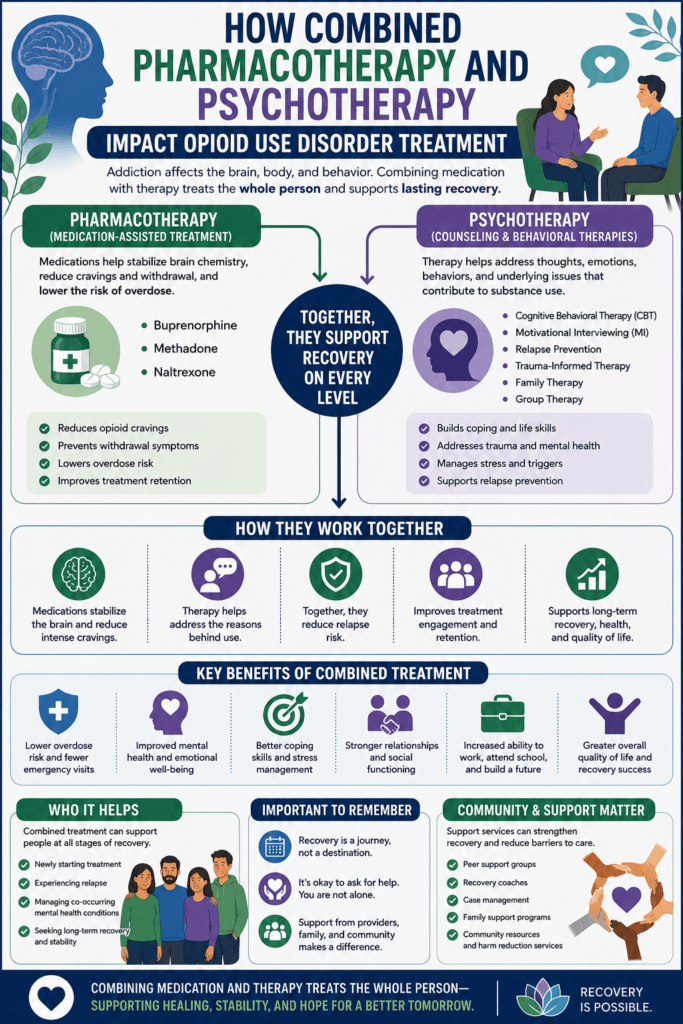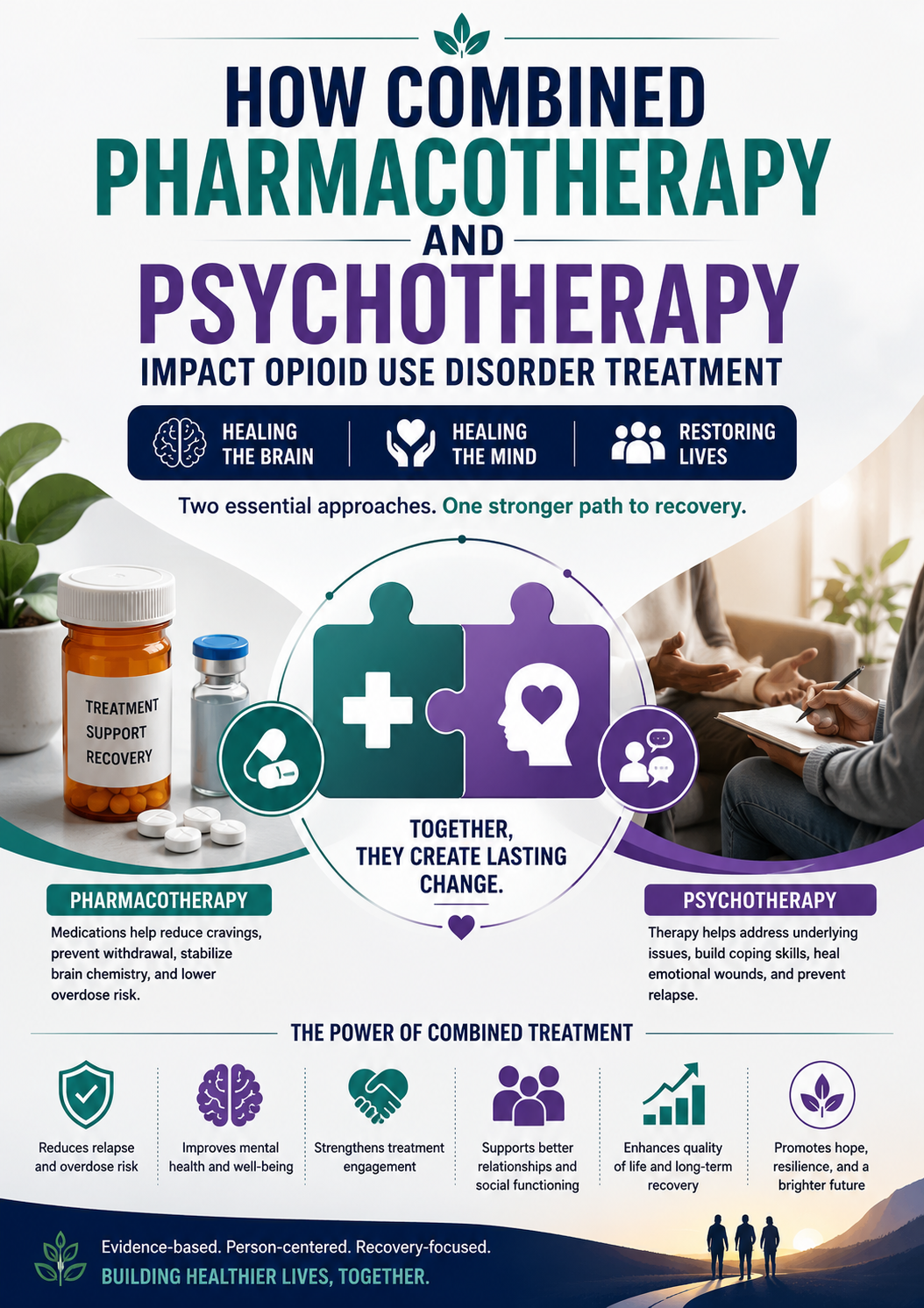
Opioid Use Disorder (OUD) is a chronic and complex medical condition that affects brain function, behavior, emotional well-being, and overall quality of life. Because addiction involves both physical dependence and psychological factors, effective treatment often requires a comprehensive approach that addresses multiple aspects of recovery. Combined pharmacotherapy and psychotherapy have emerged as one of the most effective evidence-based treatment models for OUD. Pharmacotherapy, including medications such as buprenorphine, methadone, and naltrexone, helps reduce cravings, prevent withdrawal symptoms, and lower the risk of overdose. Psychotherapy complements these medications by helping individuals develop coping skills, address underlying emotional and behavioral challenges, improve mental health, and strengthen relapse prevention strategies. Together, these approaches provide a more complete framework for recovery, helping individuals achieve greater stability, treatment engagement, and long-term success.
How Combined Pharmacotherapy and Psychotherapy Impact Opioid Use Disorder Treatment
Introduction
Opioid Use Disorder (OUD) is a complex chronic medical condition that affects the brain, behavior, physical health, and social functioning. Effective treatment often requires addressing both the biological and psychological aspects of addiction. Combined pharmacotherapy and psychotherapy is considered one of the most comprehensive approaches to OUD treatment because it integrates medication-assisted treatment (MAT) with counseling and behavioral therapies. Medications help reduce cravings, withdrawal symptoms, and overdose risk, while psychotherapy helps individuals develop coping skills, address underlying emotional issues, and build healthier lifestyles. Together, these approaches can improve treatment engagement, reduce relapse rates, and support long-term recovery.
What Is Pharmacotherapy?
Pharmacotherapy refers to the use of medications to treat opioid use disorder. Common medications include:
- Buprenorphine
- Methadone
- Naltrexone
These medications work by:
- Reducing opioid cravings
- Preventing withdrawal symptoms
- Lowering overdose risk
- Improving treatment retention
- Supporting brain stabilization during recovery
What Is Psychotherapy?
Psychotherapy involves structured counseling and behavioral interventions designed to help individuals:
- Understand addiction patterns
- Develop coping skills
- Manage stress
- Improve emotional regulation
- Address trauma and mental health concerns
- Prevent relapse
Common therapeutic approaches include:
- Cognitive Behavioral Therapy (CBT)
- Motivational Interviewing (MI)
- Contingency Management (CM)
- Family Therapy
- Relapse Prevention Therapy
- Trauma-Informed Therapy
Why Combining Both Approaches Matters
Addresses Both Biological and Psychological Factors
Addiction affects both the brain and behavior. Medications address the biological aspects of opioid dependence, while psychotherapy addresses thoughts, emotions, behaviors, and environmental triggers.
Together, they provide a more comprehensive treatment approach.
Improves Treatment Retention
Studies consistently show that individuals receiving medication-assisted treatment are more likely to remain engaged in treatment. When psychotherapy is added, patients often receive:
- Additional support
- Increased accountability
- Improved problem-solving skills
- Stronger therapeutic relationships
These factors can improve long-term participation.
Reduces Relapse Risk
Medication reduces cravings and withdrawal symptoms, while therapy teaches:
- Trigger identification
- Coping strategies
- Stress management
- Healthy decision-making
Combining both approaches helps reduce the likelihood of returning to opioid use.
Impact on Mental Health
Many individuals with OUD also experience:
- Depression
- Anxiety
- PTSD
- Bipolar disorder
- Trauma-related symptoms
Psychotherapy can address these co-occurring conditions while medications help stabilize opioid-related symptoms.
Treating both conditions simultaneously often leads to better outcomes.
Improves Recovery Skills
Psychotherapy helps individuals learn:
- Communication skills
- Emotional regulation
- Conflict resolution
- Time management
- Healthy relationship skills
These life skills support long-term recovery and overall functioning.
Strengthens Family Relationships
Family therapy and counseling can:
- Improve communication
- Reduce conflict
- Increase family understanding of addiction
- Strengthen support systems
- Promote healthy boundaries
Strong family support is often associated with improved treatment outcomes.
Reduces Overdose Risk
Pharmacotherapy significantly lowers overdose risk by:
- Reducing illicit opioid use
- Stabilizing opioid receptors
- Preventing withdrawal-driven relapse
When combined with psychotherapy, individuals often develop stronger relapse prevention strategies and safety plans.
Supports Long-Term Recovery
Recovery extends beyond stopping substance use. Combined treatment can improve:
- Employment stability
- Educational achievement
- Physical health
- Mental health
- Social functioning
- Quality of life
These improvements contribute to sustained recovery success.
Challenges of Combined Treatment
Despite its benefits, barriers may include:
- Limited access to providers
- Insurance restrictions
- Transportation difficulties
- Treatment stigma
- Shortages of behavioral health professionals
- Financial barriers
Addressing these obstacles can improve access to comprehensive care.
Research Findings
Research consistently demonstrates that medication-assisted treatment is highly effective for reducing opioid-related harms. While medications alone can produce significant benefits, psychotherapy often enhances outcomes by addressing behavioral and psychological factors that contribute to substance use and relapse.
Many treatment programs now emphasize integrated, patient-centered care that combines both approaches.
Conclusion
Combined pharmacotherapy and psychotherapy offer a powerful, evidence-based approach to treating opioid use disorder. Medications help stabilize brain function, reduce cravings, and lower overdose risk, while psychotherapy addresses the emotional, behavioral, and social challenges that often accompany addiction. Together, these treatments improve retention in care, reduce relapse rates, strengthen recovery skills, support mental health, and enhance overall quality of life. As healthcare systems continue to expand access to comprehensive addiction treatment, integrating pharmacotherapy and psychotherapy remains one of the most effective strategies for helping individuals achieve lasting recovery and long-term wellness.
Self-Management Strategies to Understand How Combined Pharmacotherapy and Psychotherapy Impact Opioid Use Disorder Treatment
Successful recovery from Opioid Use Disorder (OUD) often involves addressing both the physical effects of addiction and the emotional, behavioral, and social factors that contribute to substance use. Combined pharmacotherapy and psychotherapy provide a comprehensive treatment approach that helps individuals manage cravings, reduce relapse risk, improve coping skills, and build a healthier lifestyle. The following self-management strategies can help individuals better understand and maximize the benefits of combined treatment.
1. Learn How Both Treatments Work Together
Educate yourself about the role of:
- Medication-assisted treatment (MAT)
- Counseling and behavioral therapies
Understand that medications help stabilize the brain and reduce cravings, while therapy helps develop coping skills and address the underlying causes of substance use.
2. Develop Realistic Recovery Expectations
Recovery is a process, not a single event. Understand that:
- Medication is not a cure
- Therapy is not an instant solution
- Progress often occurs gradually
- Setbacks can be learning opportunities
Realistic expectations can improve motivation and reduce frustration.
3. Take Medications as Prescribed
If prescribed medication such as:
- Buprenorphine
- Methadone
- Naltrexone
Follow treatment instructions carefully and communicate with your healthcare provider about any concerns or side effects.
4. Actively Participate in Therapy
Make the most of psychotherapy by:
- Attending sessions consistently
- Being honest about challenges
- Practicing new skills between sessions
- Completing therapeutic assignments
Active participation often leads to better outcomes.
5. Identify Personal Triggers
Learn to recognize situations that increase cravings, such as:
- Stress
- Relationship conflicts
- Certain people or places
- Negative emotions
- Financial problems
Understanding triggers allows you to create effective coping plans.
6. Practice Healthy Coping Skills
Therapy often teaches strategies such as:
- Deep breathing
- Mindfulness
- Journaling
- Problem-solving
- Physical exercise
- Relaxation techniques
Regular practice strengthens resilience and reduces the risk of relapse.
7. Monitor Cravings and Emotional Health
Keep a journal to track:
- Craving intensity
- Mood changes
- Stress levels
- Sleep quality
- Recovery progress
Self-monitoring helps identify patterns and areas needing additional support.
8. Address Co-Occurring Mental Health Conditions
Many individuals with OUD also experience:
- Anxiety
- Depression
- PTSD
- Trauma-related symptoms
Engaging fully in mental health treatment can improve overall recovery outcomes.
9. Build a Daily Recovery Routine
Structure can support stability by including:
- Medication schedules
- Therapy appointments
- Healthy meals
- Exercise
- Sleep routines
- Recovery activities
Consistent routines reduce chaos and improve focus on recovery goals.
10. Create a Relapse Prevention Plan
Work with your treatment team to develop a plan that includes:
- Warning signs of relapse
- Emergency contacts
- Coping strategies
- Support resources
- Action steps during high-risk situations
Preparation increases confidence and safety.
11. Build a Recovery Support Network
Surround yourself with supportive individuals such as:
- Family members
- Friends in recovery
- Sponsors
- Therapists
- Peer Recovery Support Specialists (PRSS)
- Recovery groups
Strong support systems improve accountability and encouragement.
12. Communicate Regularly With Providers
Discuss:
- Medication effectiveness
- Side effects
- Mental health concerns
- Recovery goals
- Challenges and successes
Open communication helps providers tailor treatment to your needs.
13. Focus on Whole-Person Recovery
Recovery involves more than avoiding substances. Set goals related to:
- Physical health
- Emotional well-being
- Relationships
- Employment
- Education
- Personal growth
Comprehensive recovery supports long-term success.
14. Celebrate Progress
Recognize achievements such as:
- Attending appointments
- Maintaining medication adherence
- Using healthy coping skills
- Reaching sobriety milestones
- Improving relationships
Celebrating progress builds motivation and confidence.
Conclusion
Self-management is a key component of understanding how combined pharmacotherapy and psychotherapy support recovery from opioid use disorder. By learning about treatment, taking medications as prescribed, actively participating in therapy, monitoring triggers, developing healthy coping skills, and building strong support networks, individuals can maximize the benefits of comprehensive care. When medication and therapy work together, they address both the physical and psychological aspects of addiction, providing a stronger foundation for lasting recovery, improved health, and a better quality of life.
Family Support Strategies to Understand How Combined Pharmacotherapy and Psychotherapy Impact Opioid Use Disorder Treatment
Family members play a critical role in supporting loved ones receiving treatment for Opioid Use Disorder (OUD). Understanding how pharmacotherapy (medication-assisted treatment) and psychotherapy work together can help families provide effective support, reduce stigma, and improve recovery outcomes. When families are informed and involved, they can help create a recovery-focused environment that encourages long-term success and overall well-being.
1. Learn About Opioid Use Disorder as a Medical Condition
Families should understand that OUD is a chronic brain disorder rather than a moral failing or lack of willpower. Learning about addiction science can:
- Reduce stigma
- Increase empathy
- Improve communication
- Encourage treatment engagement
Education helps families become stronger recovery partners.
2. Understand the Role of Medication-Assisted Treatment (MAT)
Learn how medications such as:
- Buprenorphine
- Methadone
- Naltrexone
help reduce cravings, prevent withdrawal symptoms, lower overdose risk, and support recovery. Understanding these benefits can reduce misconceptions about medication use.
3. Recognize the Importance of Psychotherapy
Families should understand that therapy helps individuals:
- Develop coping skills
- Address trauma
- Manage stress
- Improve emotional regulation
- Prevent relapse
- Build healthy relationships
Psychotherapy addresses challenges that medication alone may not resolve.
4. Support Consistent Treatment Participation
Encourage loved ones to:
- Attend medical appointments
- Participate in counseling sessions
- Follow treatment recommendations
- Remain engaged in recovery activities
Consistent participation improves treatment effectiveness.
5. Maintain Open and Nonjudgmental Communication
Create an environment where loved ones feel safe discussing:
- Recovery challenges
- Cravings
- Emotional struggles
- Treatment concerns
- Recovery goals
Listening without criticism helps build trust and strengthen family relationships.
6. Avoid Stigmatizing Language
Families can support recovery by avoiding statements such as:
- “You’re just replacing one drug with another.”
- “You should be able to quit on your own.”
- “Medication isn’t real recovery.”
Supportive language encourages treatment adherence and reduces shame.
7. Participate in Family Therapy
Family therapy can help:
- Improve communication
- Address conflict
- Strengthen trust
- Develop healthy boundaries
- Increase understanding of addiction and recovery
Family involvement often improves long-term outcomes.
8. Learn to Recognize Relapse Warning Signs
Families should be aware of signs such as:
- Missing appointments
- Increased isolation
- Mood changes
- Returning to high-risk environments
- Reduced participation in recovery activities
Early recognition allows for timely support and intervention.
9. Encourage Healthy Lifestyle Habits
Families can support:
- Regular sleep schedules
- Healthy nutrition
- Exercise
- Stress management
- Positive social activities
Healthy routines complement both medication and therapy.
10. Support Mental Health Treatment
Many individuals with OUD also experience:
- Depression
- Anxiety
- PTSD
- Trauma-related disorders
Encouraging mental health treatment can improve overall recovery success.
11. Help Build a Strong Recovery Network
Encourage connections with:
- Recovery support groups
- Peer Recovery Support Specialists (PRSS)
- Sponsors
- Therapists
- Healthcare providers
A broad support network strengthens recovery and reduces isolation.
12. Respect Individual Recovery Paths
Every person’s recovery journey is different. Families should avoid comparing their loved one to others and instead focus on:
- Individual progress
- Personal goals
- Positive changes
- Long-term growth
Recovery is not one-size-fits-all.
13. Establish Healthy Boundaries
Supportive boundaries may include:
- Clear expectations
- Accountability
- Consistent consequences
- Protecting family well-being
Healthy boundaries support both recovery and family health.
14. Celebrate Recovery Milestones
Recognize accomplishments such as:
- Attending treatment consistently
- Reaching sobriety goals
- Improving relationships
- Returning to work or school
- Developing healthy coping skills
Celebrating progress reinforces motivation and hope.
15. Practice Patience and Compassion
Recovery often involves setbacks, challenges, and gradual improvement. Families can help by:
- Remaining patient
- Encouraging perseverance
- Offering emotional support
- Focusing on long-term progress rather than perfection
Conclusion
Families are powerful partners in helping individuals understand and benefit from combined pharmacotherapy and psychotherapy for opioid use disorder. By learning about addiction, supporting medication-assisted treatment, encouraging therapy participation, maintaining open communication, and fostering a recovery-oriented environment, families can significantly improve treatment outcomes. When medication and psychotherapy are supported by informed and compassionate family involvement, individuals have a stronger foundation for achieving lasting recovery, improved health, and a better quality of life.
Community Resource Strategies to Understand How Combined Pharmacotherapy and Psychotherapy Impact Opioid Use Disorder Treatment
Community resources play a vital role in helping individuals, families, healthcare professionals, and policymakers understand the benefits of combining pharmacotherapy and psychotherapy in the treatment of Opioid Use Disorder (OUD). Because OUD affects physical health, mental health, relationships, employment, and community well-being, comprehensive treatment approaches are often most effective. Community-based programs can improve education, increase access to treatment, reduce stigma, and support long-term recovery.
1. Provide Public Education on Comprehensive OUD Treatment
Community organizations can offer educational programs that explain:
- What is opioid use disorder
- How addiction affects the brain
- The role of medication-assisted treatment (MAT)
- The benefits of counseling and psychotherapy
- Why combining treatments often improves outcomes
Education helps reduce misinformation and promotes evidence-based care.
2. Expand Access to Medication-Assisted Treatment (MAT)
Communities can improve access to:
- Buprenorphine
- Methadone
- Naltrexone
Accessible medication services help reduce overdose risk and support treatment engagement.
3. Increase Availability of Behavioral Health Services
Communities can strengthen access to:
- Individual counseling
- Group therapy
- Family therapy
- Trauma-informed therapy
- Mental health treatment
Psychotherapy helps address the emotional and behavioral aspects of addiction.
4. Develop Integrated Treatment Programs
Integrated programs that offer both medication management and counseling in one setting can:
- Improve treatment coordination
- Reduce barriers to care
- Increase patient convenience
- Improve treatment retention
Comprehensive services often lead to better recovery outcomes.
5. Promote Peer Recovery Support Services
Peer Recovery Support Specialists (PRSS) can:
- Share lived experience
- Encourage treatment participation
- Help individuals navigate services
- Provide emotional support
- Promote long-term recovery
Peer support often strengthens engagement in both medication and therapy services.
6. Support Recovery Community Organizations
Recovery community centers can provide:
- Educational workshops
- Recovery coaching
- Support groups
- Social activities
- Resource referrals
These programs reinforce skills learned through therapy and treatment.
7. Offer Family Education Programs
Communities can provide resources that help families understand:
- Addiction science
- Medication-assisted treatment
- Psychotherapy benefits
- Relapse prevention
- Healthy communication skills
Educated families can become stronger sources of recovery support.
8. Reduce Stigma Through Public Awareness Campaigns
Community campaigns can help people understand that:
- Addiction is a treatable medical condition
- Medication-assisted treatment is evidence-based care
- Therapy is an important part of recovery
- Recovery is possible
Reducing stigma encourages individuals to seek treatment earlier.
9. Expand Telehealth Services
Telehealth can improve access to:
- Medication management
- Counseling services
- Recovery coaching
- Mental health treatment
This is especially important for rural and underserved communities.
10. Support Co-Occurring Mental Health Treatment
Many individuals with OUD also experience:
- Depression
- Anxiety
- PTSD
- Trauma-related disorders
Communities should promote integrated programs that address both addiction and mental health conditions simultaneously.
11. Improve Transportation and Case Management Services
Practical barriers often interfere with treatment participation. Communities can provide:
- Transportation assistance
- Care coordination
- Case management
- Appointment reminders
Reducing logistical challenges improves treatment retention.
12. Collaborate With Schools, Employers, and Faith-Based Organizations
Community partnerships can:
- Increase awareness
- Promote recovery-friendly environments
- Encourage treatment access
- Reduce discrimination
Collaboration broadens recovery support networks.
13. Support Recovery-Friendly Employment Programs
Employment assistance programs can help individuals:
- Return to work
- Develop job skills
- Improve financial stability
- Build confidence and purpose
Stable employment supports long-term recovery success.
14. Monitor Outcomes and Promote Continuous Improvement
Communities can partner with healthcare organizations and universities to:
- Evaluate treatment outcomes
- Identify service gaps
- Improve access
- Expand successful programs
Data-driven approaches strengthen community recovery systems.
15. Increase Access to Naloxone and Harm Reduction Services
Community programs can provide:
- Naloxone distribution
- Overdose prevention training
- Harm reduction education
- Connections to treatment services
These services save lives and create opportunities for recovery engagement.
Conclusion
Community resources are essential for helping individuals understand the powerful impact of combining pharmacotherapy and psychotherapy in opioid use disorder treatment. Through education, integrated care programs, peer support services, family involvement, mental health treatment, and recovery-friendly initiatives, communities can improve treatment access, increase retention, reduce relapse and overdose risks, and support long-term recovery. By investing in comprehensive, evidence-based approaches and fostering collaboration among healthcare providers, recovery organizations, families, and community leaders, communities can create stronger systems of care that promote healing, resilience, and lasting recovery from opioid use disorder.
Frequently Asked Questions
Here are some common questions:
1. What is Opioid Use Disorder (OUD)?
Opioid Use Disorder is a chronic medical condition characterized by compulsive opioid use despite harmful consequences. It affects brain function, behavior, physical health, and emotional well-being.
2. What is pharmacotherapy for OUD?
Pharmacotherapy refers to medications used to treat opioid use disorder, including:
- Buprenorphine
- Methadone
- Naltrexone
These medications help reduce cravings, prevent withdrawal symptoms, and lower overdose risk.
3. What is psychotherapy?
Psychotherapy involves counseling and behavioral therapies that help individuals:
- Understand addiction
- Develop coping skills
- Manage stress
- Address trauma
- Improve emotional regulation
- Prevent relapse
4. Why combine pharmacotherapy and psychotherapy?
Combining both treatments addresses the biological and psychological aspects of addiction. Medications stabilize the brain, while therapy helps individuals change behaviors and develop recovery skills.
5. Is combined treatment more effective than using only one approach?
Research suggests that combining medication and therapy often provides the most comprehensive support, improving treatment engagement, recovery skills, and overall functioning.
6. How do medications help recovery?
Medications can:
- Reduce opioid cravings
- Prevent withdrawal symptoms
- Decrease illicit opioid use
- Lower overdose risk
- Improve treatment retention
7. How does therapy help recovery?
Therapy helps individuals:
- Identify triggers
- Build healthy coping skills
- Address emotional challenges
- Improve relationships
- Develop relapse prevention plans
8. What types of therapy are commonly used?
Common therapies include:
- Cognitive Behavioral Therapy (CBT)
- Motivational Interviewing (MI)
- Contingency Management (CM)
- Family Therapy
- Group Therapy
- Trauma-Informed Therapy
9. Can medication alone treat OUD?
Medication alone can be highly effective and lifesaving. However, many individuals benefit from additional psychotherapy to address behavioral, emotional, and social challenges associated with addiction.
10. Does therapy replace medication?
No. Therapy and medication serve different purposes. They often work best when used together as part of a comprehensive treatment plan.
11. How does combined treatment reduce relapse risk?
Medication reduces physical cravings and withdrawal symptoms, while therapy teaches strategies for managing triggers, stress, and high-risk situations.
12. Can combined treatment help with mental health problems?
Yes. Many people with OUD also experience:
- Anxiety
- Depression
- PTSD
- Trauma-related disorders
Psychotherapy can address these conditions while medication supports recovery from opioid dependence.
13. How long should combined treatment continue?
Treatment length varies based on individual needs. Some people benefit from months of treatment, while others may require long-term medication and ongoing counseling.
14. Is medication-assisted treatment just replacing one drug with another?
No. Medications used for OUD are evidence-based medical treatments that help stabilize brain function, reduce harm, and support recovery. They are not the same as uncontrolled opioid misuse.
15. What role does family support play?
Family support can:
- Encourage treatment participation
- Improve communication
- Reduce isolation
- Help identify relapse warning signs
- Strengthen long-term recovery
16. Can combined treatment improve quality of life?
Yes. Many individuals experience improvements in:
- Physical health
- Mental health
- Employment
- Relationships
- Housing stability
- Overall well-being
17. What are common barriers to combined treatment?
Barriers may include:
- Limited treatment availability
- Transportation difficulties
- Financial concerns
- Insurance restrictions
- Stigma surrounding addiction treatment
18. What is treatment retention, and why is it important?
Treatment retention refers to remaining engaged in care over time. Longer participation in treatment is associated with:
- Reduced relapse risk
- Lower overdose rates
- Better recovery outcomes
19. What community resources can support combined treatment?
Helpful resources include:
- Recovery community organizations
- Peer Recovery Support Specialists (PRSS)
- Support groups
- Mental health services
- Case management programs
- Recovery coaching services
20. What is the biggest benefit of combining pharmacotherapy and psychotherapy?
The greatest benefit is that it treats the whole person. Medications help stabilize the physical aspects of addiction, while therapy addresses emotional, behavioral, and social challenges. Together, they provide a stronger foundation for long-term recovery, improved health, reduced overdose risk, and a better quality of life.
Conclusion
The combination of pharmacotherapy and psychotherapy represents a comprehensive and highly effective approach to treating opioid use disorder. While medications help stabilize brain chemistry, reduce cravings, and prevent relapse, psychotherapy addresses the emotional, behavioral, social, and psychological factors that contribute to addiction. Together, these treatments improve treatment retention, support mental health, strengthen coping skills, reduce overdose risk, and enhance overall quality of life. Although barriers such as stigma, limited access to care, and financial challenges may affect treatment participation, expanding access to integrated treatment programs can significantly improve recovery outcomes. By combining medication-assisted treatment with evidence-based counseling and recovery support services, healthcare providers, families, and communities can help individuals build a strong foundation for lasting recovery, improved health, and long-term well-being.
Video: Why Medication-Assisted Treatment Saves Lives #OpioidCrisis #MOUD