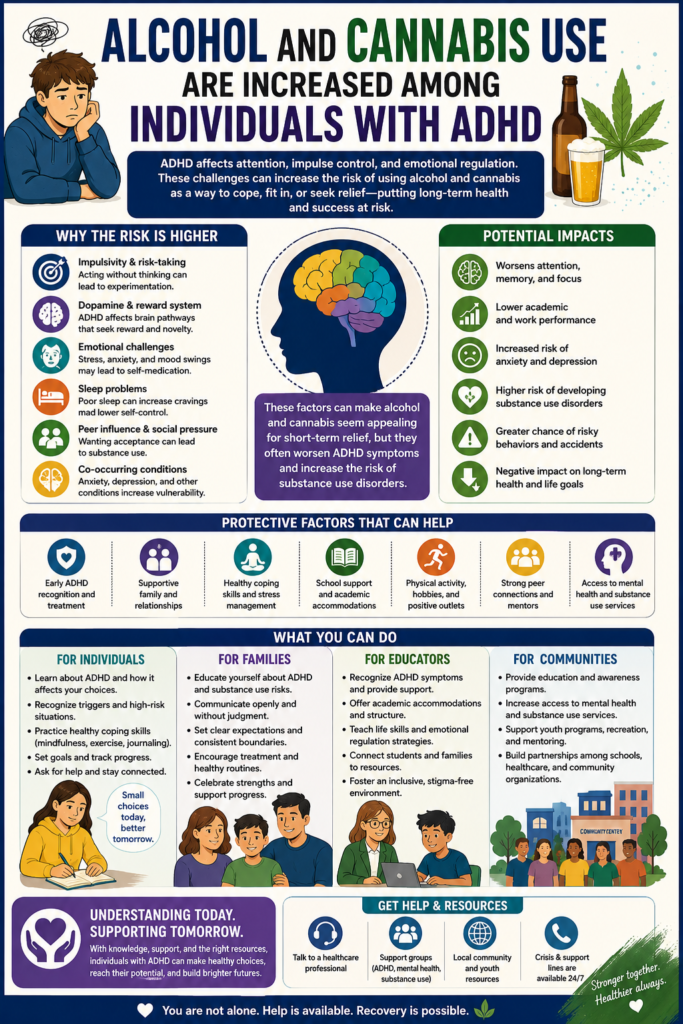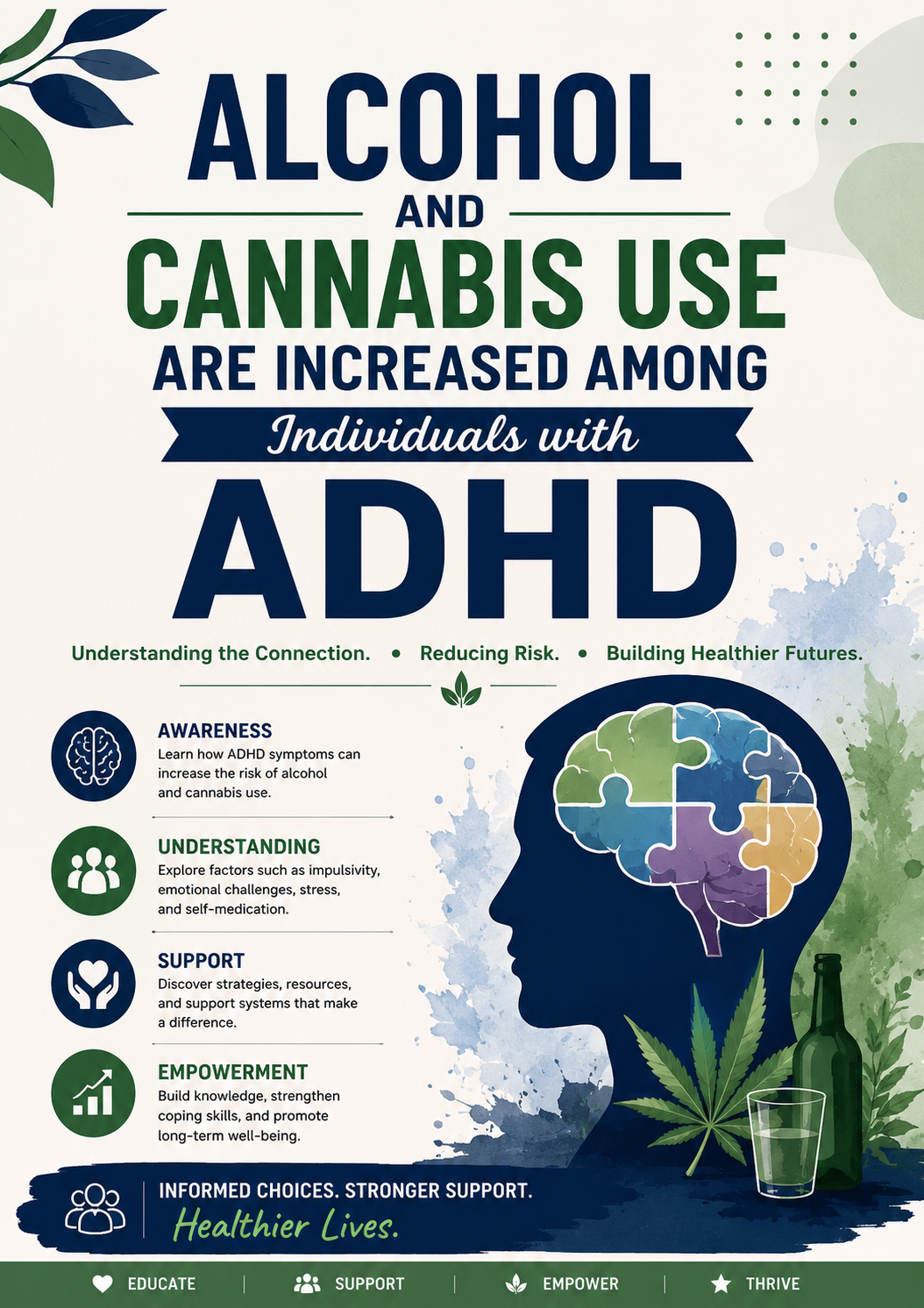
Attention-Deficit/Hyperactivity Disorder (ADHD) is a neurodevelopmental condition that affects attention, impulse control, emotional regulation, and executive functioning. Research has consistently shown that individuals with ADHD are at a greater risk of using alcohol and cannabis compared to the general population. Several factors contribute to this increased risk, including impulsivity, difficulties managing stress and emotions, sleep disturbances, co-occurring mental health conditions, and differences in the brain’s reward system. Some individuals may also use alcohol or cannabis in an attempt to self-medicate symptoms such as restlessness, anxiety, or difficulty concentrating. While these substances may provide temporary relief, they often worsen ADHD symptoms and increase the likelihood of developing substance use disorders. Understanding the relationship between ADHD and substance use is essential for promoting early intervention, healthy coping strategies, and effective treatment approaches that support long-term well-being.
Why Alcohol and Cannabis Use Are Increased Among Individuals With ADHD
Introduction
Individuals with Attention-Deficit/Hyperactivity Disorder (ADHD) have higher rates of substance use disorders than the general population, including increased use of alcohol and cannabis. ADHD is characterized by symptoms such as inattention, impulsivity, hyperactivity, emotional dysregulation, and difficulty with executive functioning. These challenges can affect relationships, academic performance, employment, and overall well-being. Researchers believe that a combination of biological, psychological, and social factors contributes to the increased likelihood of alcohol and cannabis use among people with ADHD. Understanding these factors can help individuals, families, and healthcare providers identify risks early and develop effective prevention and treatment strategies.
Self-Medication of Symptoms
One of the most common explanations is the self-medication hypothesis. Some individuals use alcohol or cannabis to cope with symptoms such as:
- Restlessness
- Racing thoughts
- Anxiety
- Emotional distress
- Difficulty relaxing
- Sleep problems
Although these substances may provide temporary relief, they often worsen symptoms over time and increase the risk of dependence.
Impulsivity and Risk-Taking Behavior
Impulsivity is a core feature of ADHD. Individuals may:
- Act without considering consequences
- Seek immediate rewards
- Experiment with substances at a younger age
- Engage in risky behaviors
This tendency can increase vulnerability to alcohol and cannabis use.
Dopamine and Brain Reward Systems
ADHD is associated with differences in dopamine regulation within the brain’s reward pathways. Dopamine plays a role in:
- Motivation
- Pleasure
- Reward processing
- Attention
Alcohol and cannabis can temporarily increase feelings of pleasure or relaxation, making them particularly appealing to some individuals with ADHD.
Emotional Dysregulation
Many people with ADHD struggle with:
- Frustration tolerance
- Mood swings
- Stress management
- Rejection sensitivity
Alcohol and cannabis may be used as coping mechanisms to manage difficult emotions, despite potential long-term consequences.
Academic and Social Challenges
ADHD can contribute to:
- Poor academic performance
- Workplace difficulties
- Low self-esteem
- Social rejection
These experiences may increase emotional distress and contribute to substance use as a form of escape or coping.
Sleep Problems
Sleep disturbances are common in ADHD. Individuals may use:
- Alcohol to help fall asleep
- Cannabis to relax at bedtime
While these substances may initially seem helpful, they can disrupt normal sleep architecture and worsen sleep quality over time.
Peer Influence
Adolescents and young adults with ADHD may be more susceptible to peer influence because of:
- Impulsivity
- Desire for social acceptance
- Difficulty resisting pressure
This can increase experimentation with alcohol and cannabis.
Co-Occurring Mental Health Conditions
People with ADHD frequently experience:
- Anxiety disorders
- Depression
- Trauma-related conditions
- Conduct disorders
These co-occurring conditions can further increase the risk of substance use.
Earlier Initiation of Substance Use
Research suggests that individuals with untreated ADHD may:
- Begin using substances at younger ages
- Progress more rapidly to problematic use
- Develop substance use disorders more frequently
Early intervention can help reduce these risks.
Impact of Alcohol on ADHD
Alcohol may:
- Increase impulsivity
- Impair judgment
- Worse attention difficulties
- Interfere with medications
- Increase accident risk
Although some individuals use alcohol to relax, it generally worsens ADHD-related functioning over time.
Impact of Cannabis on ADHD
Some individuals report that cannabis helps with:
- Anxiety
- Sleep
- Hyperactivity
However, research suggests cannabis may:
- Impair memory
- Reduce attention and concentration
- Affect motivation
- Worsen executive functioning
- Increase dependence risk
These effects can be particularly problematic for individuals already struggling with ADHD symptoms.
Protective Factors
Several factors can reduce the risk of substance use among individuals with ADHD:
- Early diagnosis and treatment
- Medication management when appropriate
- Behavioral therapy
- Family support
- Academic accommodations
- Healthy coping skills
- Strong social support systems
Conclusion
Alcohol and cannabis use are more common among individuals with ADHD due to a complex interaction of brain chemistry, impulsivity, emotional regulation difficulties, self-medication behaviors, and environmental influences. While these substances may provide temporary relief from stress, anxiety, or ADHD symptoms, they often worsen functioning and increase the risk of substance use disorders over time. Early identification of ADHD, effective treatment, healthy coping strategies, and strong support systems can help reduce substance use risk and improve overall quality of life for individuals living with ADHD.
Self-Management Strategies to Understand Why Alcohol and Cannabis Use Are Increased Among Individuals With ADHD
Individuals with ADHD are at a higher risk of using alcohol and cannabis due to challenges with impulsivity, emotional regulation, attention difficulties, stress management, and differences in the brain’s reward system. Understanding these risks can help individuals make informed decisions, develop healthier coping skills, and reduce the likelihood of substance misuse. The following self-management strategies can help individuals better understand and address the connection between ADHD and substance use.
1. Learn About ADHD and Substance Use Risk
Educate yourself about how ADHD affects:
- Attention and concentration
- Impulse control
- Emotional regulation
- Decision-making
- Reward-seeking behaviors
Understanding these connections can help explain why alcohol and cannabis may seem appealing and why individuals with ADHD may be more vulnerable to substance use.
2. Recognize Personal Triggers
Identify situations that increase the desire to use alcohol or cannabis, such as:
- Stress
- Boredom
- Anxiety
- Social pressure
- Frustration
- Sleep difficulties
Keeping a journal can help uncover patterns and increase self-awareness.
3. Develop Healthy Coping Skills
Instead of relying on substances, practice healthier ways to manage symptoms and emotions, including:
- Deep breathing exercises
- Mindfulness meditation
- Physical activity
- Creative hobbies
- Listening to music
- Spending time outdoors
Healthy coping skills can reduce the urge to self-medicate.
4. Build Structured Daily Routines
People with ADHD often benefit from predictable schedules. Establish routines for:
- Sleep
- Meals
- Work or school tasks
- Exercise
- Relaxation
Structure can reduce impulsive behaviors and improve emotional stability.
5. Improve Sleep Hygiene
Sleep problems are common in ADHD and may contribute to alcohol or cannabis use. Improve sleep by:
- Maintaining a consistent bedtime
- Limiting screen time before bed
- Avoiding caffeine late in the day
- Creating a relaxing bedtime routine
Better sleep often improves ADHD symptoms and reduces cravings.
6. Monitor Emotional Health
Pay attention to feelings of:
- Anxiety
- Depression
- Loneliness
- Anger
- Stress
Many individuals use substances to cope with emotional discomfort. Addressing emotions early can reduce the risk of unhealthy coping behaviors.
7. Strengthen Impulse Control Skills
Practice strategies such as:
- Pausing before making decisions
- Using reminder notes
- Breaking tasks into smaller steps
- Seeking accountability from trusted individuals
Improved impulse control can help reduce risky behaviors.
8. Understand the Effects of Alcohol and Cannabis on ADHD
Learn how these substances may:
- Worsen attention and concentration
- Increase in memory problems
- Reduce motivation
- Affect academic or work performance
- Interfere with ADHD treatment
Knowledge can support healthier decision-making.
9. Build a Support Network
Connect with:
- Family members
- Friends
- Therapists
- ADHD coaches
- Support groups
- Healthcare providers
Strong support systems provide encouragement and accountability.
10. Set Personal Goals
Create goals that focus on:
- Academic success
- Career development
- Physical health
- Financial stability
- Healthy relationships
Meaningful goals can increase motivation and reduce the appeal of substance use.
11. Manage Stress Proactively
Use stress-management techniques such as:
- Exercise
- Yoga
- Journaling
- Time management tools
- Relaxation exercises
Reducing stress can decrease the desire to use alcohol or cannabis as a coping mechanism.
12. Seek Appropriate ADHD Treatment
Work with healthcare providers to develop a treatment plan that may include:
- Medication management
- Behavioral therapy
- ADHD coaching
- Skills training
Effective ADHD treatment often reduces the risk of substance use.
13. Be Mindful of Peer Influence
Surround yourself with people who:
- Support healthy choices
- Respect your goals
- Encourage positive behaviors
Choosing supportive social environments can reduce substance use risk.
14. Track Progress and Celebrate Successes
Monitor improvements in:
- Focus
- Emotional regulation
- Sleep
- Stress management
- Substance-free days
Recognizing progress helps build confidence and motivation.
Conclusion
Self-management is a powerful tool for understanding why alcohol and cannabis use are more common among individuals with ADHD. By learning about ADHD-related risk factors, recognizing triggers, developing healthy coping strategies, improving sleep and stress management, and seeking appropriate treatment, individuals can reduce their vulnerability to substance misuse. Understanding the relationship between ADHD and substance use empowers individuals to make healthier choices, strengthen recovery, and improve their overall quality of life.
Family Support Strategies to Understand Why Alcohol and Cannabis Use Are Increased Among Individuals With ADHD
Family members play an important role in helping individuals with ADHD understand the increased risks associated with alcohol and cannabis use. ADHD affects attention, impulse control, emotional regulation, and decision-making, all of which can contribute to a greater likelihood of substance use. By learning about ADHD, fostering open communication, and providing supportive guidance, families can help reduce risk factors and promote healthier coping strategies.
1. Learn About ADHD and Substance Use Risk
Families should educate themselves about:
- ADHD symptoms and challenges
- Impulsivity and risk-taking behaviors
- Emotional regulation difficulties
- The relationship between ADHD and substance use disorders
Understanding these connections helps families respond with empathy rather than judgment.
2. Recognize That Substance Use May Be an Attempt to Cope
Some individuals with ADHD use alcohol or cannabis to manage:
- Stress
- Anxiety
- Restlessness
- Sleep difficulties
- Emotional discomfort
Understanding that substance use may be an attempt to self-medicate can help families focus on solutions rather than blame.
3. Encourage Open and Honest Communication
Create a safe environment where loved ones feel comfortable discussing:
- ADHD symptoms
- Substance use concerns
- Peer pressure
- Mental health struggles
- Recovery goals
Nonjudgmental conversations increase trust and improve problem-solving.
4. Avoid Shame and Criticism
Negative reactions can increase:
- Low self-esteem
- Secrecy
- Defensiveness
- Emotional distress
Instead, families can express concern, support, and willingness to help while maintaining healthy expectations.
5. Help Identify Triggers
Work together to recognize situations that may increase the risk of alcohol or cannabis use, including:
- Academic stress
- Work difficulties
- Social anxiety
- Relationship conflicts
- Boredom
- Sleep problems
Understanding triggers can help families support healthier coping plans.
6. Encourage Healthy Coping Skills
Families can promote alternatives such as:
- Exercise
- Hobbies
- Creative activities
- Mindfulness practices
- Outdoor recreation
- Social activities that do not involve substances
Healthy outlets help reduce the need for self-medication.
7. Support Consistent ADHD Treatment
Encourage adherence to:
- Medication plans
- Therapy appointments
- ADHD coaching
- Behavioral interventions
Effective ADHD management often reduces substance use risk.
8. Monitor Mental Health Concerns
Individuals with ADHD frequently experience:
- Anxiety
- Depression
- Low self-esteem
- Trauma-related symptoms
Families should encourage professional support when mental health symptoms emerge.
9. Promote Healthy Sleep Habits
Sleep difficulties are common in ADHD and can increase vulnerability to substance use. Families can help by encouraging:
- Consistent bedtimes
- Reduced screen time before sleep
- Healthy sleep routines
- A calm sleep environment
Improved sleep often reduces impulsivity and emotional distress.
10. Set Clear and Consistent Boundaries
Healthy boundaries may include:
- Expectations regarding substance use
- Household rules
- Consistent consequences
- Accountability measures
Clear boundaries create structure and promote responsible decision-making.
11. Be Aware of Peer Influences
Families should discuss:
- Peer pressure
- Social situations involving alcohol or cannabis
- Healthy friendships
- Strategies for saying “no”
Supportive peer relationships can reduce substance use risk.
12. Celebrate Strengths and Successes
Individuals with ADHD often hear criticism about their challenges. Families can build resilience by recognizing:
- Effort
- Progress
- Talents
- Personal achievements
- Positive choices
Encouragement strengthens self-confidence and motivation.
13. Participate in Family Therapy When Needed
Family therapy can help:
- Improve communication
- Address conflict
- Strengthen problem-solving skills
- Support recovery goals
- Increase understanding of ADHD and substance use
Professional guidance can benefit the entire family system.
14. Build a Strong Support Network
Encourage connections with:
- Healthcare providers
- Therapists
- ADHD support groups
- Recovery programs
- School counselors
- Community organizations
A strong support system provides additional resources and guidance.
Conclusion
Families can have a powerful influence on reducing the risks of alcohol and cannabis use among individuals with ADHD. By understanding the connection between ADHD symptoms and substance use, maintaining open communication, encouraging healthy coping strategies, supporting treatment, and fostering a positive home environment, families can help loved ones make informed choices and build healthier lives. Compassion, education, structure, and ongoing support can significantly improve outcomes and help individuals with ADHD develop effective ways to manage challenges without relying on alcohol or cannabis.
Community Resource Strategies to Understand Why Alcohol and Cannabis Use Are Increased Among Individuals With ADHD
Community resources play an important role in helping individuals, families, educators, and healthcare professionals understand the increased risk of alcohol and cannabis use among people with ADHD. Through education, early intervention, mental health services, and supportive community programs, communities can reduce substance use risks and promote healthier outcomes. The following strategies can help raise awareness and support individuals with ADHD.
1. Provide Community Education and Awareness Programs
Communities can offer:
- Public workshops on ADHD
- Substance use prevention programs
- Educational seminars for parents and caregivers
- Community health fairs
These programs can help explain how ADHD symptoms may contribute to increased alcohol and cannabis use.
2. Promote Early ADHD Screening and Identification
Schools, pediatric clinics, and community health centers can provide:
- ADHD screenings
- Behavioral assessments
- Early intervention referrals
Early diagnosis and treatment can reduce many of the risk factors associated with substance use later in life.
3. Expand Access to Mental Health Services
Many individuals with ADHD also experience:
- Anxiety
- Depression
- Trauma-related disorders
- Emotional regulation difficulties
Communities can improve access to:
- Counseling services
- Psychologists
- Psychiatrists
- Behavioral health clinics
- Telehealth services
Treating underlying mental health concerns can reduce reliance on alcohol or cannabis as coping mechanisms.
4. Develop ADHD-Specific Support Groups
Support groups can provide:
- Education about ADHD
- Peer support
- Coping strategies
- Problem-solving skills
- Accountability and encouragement
Both youth and adults with ADHD can benefit from connecting with others facing similar challenges.
5. Offer Substance Use Prevention Programs
Community prevention programs should include information about:
- ADHD-related substance use risks
- Healthy coping skills
- Decision-making strategies
- Peer pressure resistance
- Emotional regulation techniques
Tailored prevention efforts can be especially effective for high-risk populations.
6. Strengthen School-Based Support Services
Schools can provide:
- Academic accommodations
- School counseling
- Social-emotional learning programs
- Behavioral interventions
- ADHD education for staff
Supportive school environments can improve self-esteem and reduce stress that may contribute to substance use.
7. Provide Family Education Resources
Families benefit from programs that teach:
- ADHD management strategies
- Communication skills
- Boundary setting
- Substance use warning signs
- Healthy coping techniques
Educated families are better equipped to support positive outcomes.
8. Create Positive Recreational Opportunities
Communities can offer:
- Sports programs
- Arts and music activities
- Volunteer opportunities
- Youth clubs
- Outdoor recreation programs
Structured activities help reduce boredom, increase social connection, and provide healthy outlets for energy and stress.
9. Support Peer Mentoring Programs
Peer mentoring can:
- Promote positive role models
- Build self-confidence
- Encourage healthy choices
- Reduce social isolation
Positive peer influences often decrease the likelihood of substance use.
10. Reduce Stigma Surrounding ADHD and Mental Health
Community awareness campaigns can help:
- Correct misconceptions about ADHD
- Encourage treatment seeking
- Reduce shame and embarrassment
- Promote understanding and acceptance
Reducing stigma increases access to care and support.
11. Improve Access to ADHD Treatment
Communities can help connect individuals to:
- ADHD evaluations
- Medication management
- Behavioral therapy
- ADHD coaching
- Educational support services
Effective treatment often reduces symptoms that contribute to substance use risk.
12. Encourage Collaboration Among Community Partners
Successful prevention efforts often involve collaboration between:
- Schools
- Healthcare providers
- Mental health agencies
- Community centers
- Faith-based organizations
- Youth programs
Partnerships improve resource availability and coordination of care.
13. Offer Life Skills and Executive Function Training
Programs that teach:
- Time management
- Organization
- Goal setting
- Problem-solving
- Stress management
can help individuals with ADHD develop skills that reduce impulsive behaviors and improve decision-making.
14. Provide Crisis and Recovery Resources
Communities should ensure access to:
- Crisis hotlines
- Substance use treatment programs
- Recovery support groups
- Behavioral health services
- Peer recovery support specialists
These resources provide support when individuals are struggling with substance use or mental health concerns.
Conclusion
Community resources are essential for helping individuals understand why alcohol and cannabis use are more common among people with ADHD and for reducing the risks associated with substance use. Through education, early identification, mental health treatment, family support, school-based services, recreational programs, and community partnerships, individuals with ADHD can gain access to the tools and support needed to make healthy choices. By creating informed, supportive, and inclusive communities, we can help reduce substance use risks, improve mental health outcomes, and promote long-term success and well-being for individuals living with ADHD.
Frequently Asked Questions
Here are some common questions:
1. What is ADHD?
ADHD (Attention-Deficit/Hyperactivity Disorder) is a neurodevelopmental condition that affects attention, impulse control, emotional regulation, organization, and executive functioning.
2. Are people with ADHD more likely to use alcohol and cannabis?
Yes. Research has found that individuals with ADHD have a higher risk of using alcohol, cannabis, and other substances compared to people without ADHD.
3. Why are individuals with ADHD at greater risk for substance use?
Several factors contribute to this increased risk, including:
- Impulsivity
- Difficulty regulating emotions
- Stress and anxiety
- Sleep problems
- Peer influence
- Differences in the brain’s reward system
4. What is the self-medication theory?
The self-medication theory suggests that some individuals use alcohol or cannabis to temporarily relieve symptoms such as:
- Restlessness
- Anxiety
- Emotional distress
- Sleep difficulties
- Difficulty concentrating
However, these substances often create additional problems over time.
5. How does impulsivity contribute to alcohol and cannabis use?
Impulsivity can lead individuals to:
- Act without considering consequences
- Seek immediate rewards
- Take more risks
- Experiment with substances at a younger age
These behaviors increase the likelihood of substance use.
6. What role does dopamine play?
ADHD is associated with differences in dopamine activity in the brain. Because dopamine is involved in motivation and reward, individuals with ADHD may be more likely to seek experiences that provide temporary pleasure or stimulation.
7. Does alcohol help ADHD symptoms?
While alcohol may temporarily reduce feelings of stress or anxiety, it generally worsens:
- Attention
- Judgment
- Memory
- Impulse control
- Emotional regulation
Long-term use often increases difficulties associated with ADHD.
8. Does cannabis help with ADHD symptoms?
Some individuals report temporary relief of certain symptoms, but research suggests cannabis may worsen:
- Memory
- Attention
- Concentration
- Motivation
- Executive functioning
These effects can be especially problematic for people with ADHD.
9. Can ADHD increase the risk of developing a substance use disorder?
Yes. Individuals with ADHD have a higher risk of developing substance use disorders involving alcohol, cannabis, nicotine, and other substances.
10. Do people with ADHD start using substances earlier?
Research suggests that untreated ADHD may be associated with earlier initiation of alcohol and cannabis use, which can increase the risk of later substance-related problems.
11. How do sleep problems affect substance use risk?
Many individuals with ADHD experience sleep difficulties. Some may use alcohol or cannabis to help them sleep, but these substances can disrupt sleep quality and create dependence risks.
12. Can emotional dysregulation increase substance use?
Yes. Difficulty managing emotions such as:
- Frustration
- Anger
- Anxiety
- Sadness
- Stress
can increase the likelihood of using substances as a coping mechanism.
13. What mental health conditions commonly occur alongside ADHD?
Co-occurring conditions may include:
- Anxiety disorders
- Depression
- PTSD
- Bipolar disorder
- Learning disorders
These conditions can further increase substance use risk.
14. Does treating ADHD reduce substance use risk?
Research suggests that effective ADHD treatment may reduce the risk of substance misuse by improving symptom control, coping skills, and overall functioning.
15. What are some healthy alternatives to using alcohol or cannabis?
Healthy coping strategies include:
- Exercise
- Mindfulness
- Therapy
- Creative activities
- Social support
- Structured routines
- Healthy sleep habits
16. How can families help reduce substance use risk?
Families can:
- Learn about ADHD
- Encourage treatment
- Maintain open communication
- Provide emotional support
- Set healthy boundaries
- Promote healthy coping skills
17. What warning signs may indicate a substance use problem?
Possible signs include:
- Declining school or work performance
- Increased secrecy
- Mood changes
- Social withdrawal
- Financial problems
- Increased risk-taking behaviors
18. What community resources can help?
Helpful resources may include:
- ADHD support groups
- Mental health counseling
- Substance use prevention programs
- School support services
- Peer mentoring programs
- Recovery support groups
19. Can people with ADHD live healthy, substance-free lives?
Absolutely. With proper treatment, support, education, and healthy coping strategies, many individuals with ADHD successfully manage their symptoms and avoid substance-related problems.
20. What is the most important takeaway about ADHD and alcohol or cannabis use?
The most important takeaway is that ADHD can increase vulnerability to alcohol and cannabis use due to challenges with impulsivity, emotional regulation, reward-seeking behavior, and stress management. Understanding these risks, seeking appropriate treatment, building strong support systems, and developing healthy coping skills can significantly reduce substance use risk and improve long-term health, well-being, and quality of life.
Conclusion
The increased use of alcohol and cannabis among individuals with ADHD reflects a complex interaction of biological, psychological, and environmental factors. Challenges such as impulsivity, emotional dysregulation, reward-seeking behaviors, sleep problems, and co-occurring mental health conditions can make individuals with ADHD more vulnerable to substance use and addiction. Although alcohol and cannabis may appear to offer short-term relief from stress or ADHD symptoms, they often contribute to worsening attention, memory, motivation, and overall functioning over time. Early diagnosis, appropriate ADHD treatment, family support, community resources, education, and healthy coping skills can significantly reduce substance use risk and improve quality of life. By understanding these connections and addressing them proactively, individuals with ADHD can develop healthier strategies for managing symptoms and achieving long-term success and wellness.
Video: Alcohol Cannabis ADHD—The Cycle That Gets Worse #adhd #health