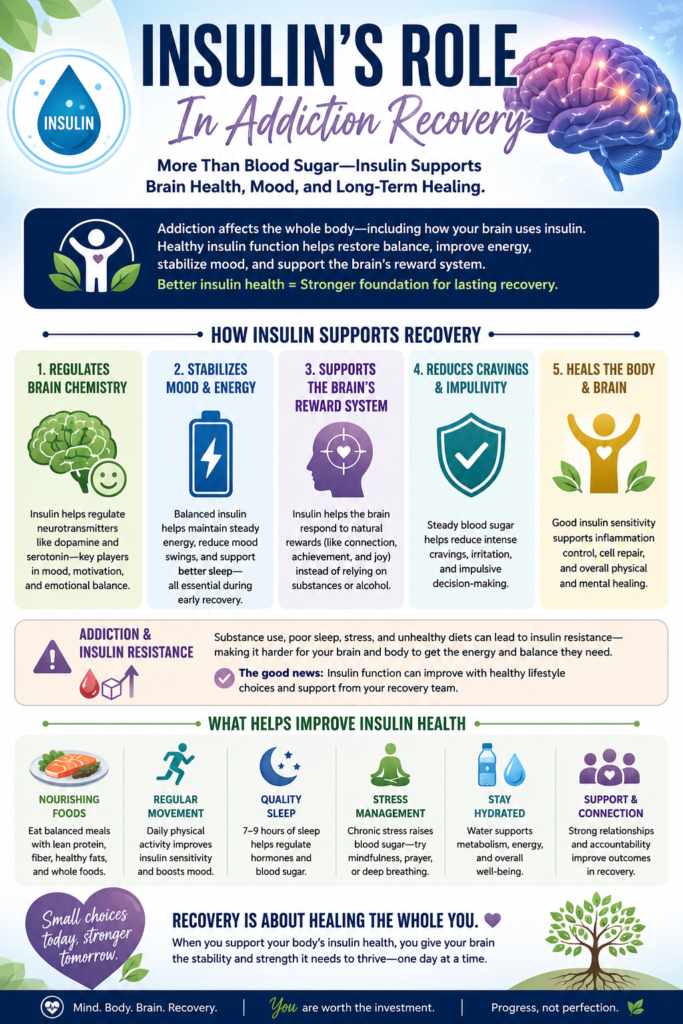
Insulin is best known for regulating blood sugar, but its influence extends well beyond glucose metabolism. Research shows that insulin also affects brain function, including areas involved in motivation, reward, learning, and emotional regulation. During addiction recovery, healthy insulin function may help stabilize mood, reduce cravings, and support the brain’s ability to heal after substance use. As scientists continue to explore the connection between metabolism and addiction, improving insulin health through proper nutrition, physical activity, quality sleep, and medical care may become an important part of a comprehensive recovery plan alongside counseling, medication, and behavioral therapies.
How Insulin Affects the Brain and Body in Recovery
Insulin helps move glucose (sugar) from your bloodstream into your cells, so your body can use it for energy. Most people think of this in terms of diabetes, but the real kicker is that insulin is also involved in brain chemistry and in how we experience pleasure and motivation. These two things are pretty central to addiction.
The brain has special regions called the “reward system”; these light up when we do something enjoyable, like eating chocolate or, on the darker side, using drugs or alcohol. Insulin has few receptors in these brain areas, influencing how sensitive we are to rewards and how our cravings work. When someone is recovering from substance use, changes in insulin response can throw off brain chemicals like dopamine, making recovery feel tougher.
It’s important to realize that addiction isn’t just a mental or emotional battle. It’s also physical, and insulin’s role drives this home in a really direct way. If you’re curious, there are studies that point to the role of insulin in mood, energy, and even how the brain repairs itself after someone stops using drugs or alcohol. (Learn more from the NIH.)
Key Ways Insulin Influences Addiction Recovery
When talking about addiction recovery, it’s not just cravings and willpower in play; your body is also trying to heal and adapt. Here are the top ways insulin gets involved:
- Brain Food Management: Insulin helps your brain get the glucose it needs. Recovery can mess with glucose balance, leading to mood swings and mental fatigue.
- Dopamine Regulation: Insulin interacts with dopamine, a brain chemical associated with motivation and pleasure. Imbalances here can mess with mood and the stress response during recovery.
- Stress and Anxiety: Blood sugar spikes and crashes (often seen with irregular insulin) can make feelings of stress or anxiety worse, making relapse more likely.
- Physical Healing: The body uses insulin not just for energy but also to rebuild tissue and repair damage from past substance use.
Recognizing these effects can explain why someone in recovery might feel shaky, have energy crashes, or struggle with focus even after they’ve stopped using drugs or alcohol. Care teams that include nutrition support or medical oversight often look for these signs.
Getting Started: Stabilizing Blood Sugar During Recovery
When you’re working through recovery, stabilizing blood sugar becomes way more important than people realize. Drugs and alcohol can cause blood sugar dips or spikes, leaving you feeling exhausted or suddenly irritable. That’s where insulin comes in. A steady flow keeps both your body and brain on more even ground.
Maintaining even blood sugar helps reduce those “rollercoaster” crashes that might otherwise trigger cravings or a relapse. Here are some practical tips:
- Balanced Meals: Mixing protein, fiber, and carbs at every meal helps prevent blood sugar spikes.
- Frequent Small Snacks: Eating regularly prevents energy dips that can worsen mood or cravings.
- Avoiding Sugar Binges: Simple sugars cause quick spikes and fast crashes, stressing both the body and the mind.
Some rehab centers have started working with registered dietitians for exactly this reason. Good nutrition habits can help support healthy insulin function during recovery.
Potential Challenges: Insulin Resistance and Recovery Setbacks
Insulin resistance happens when your body stops responding to insulin like it should, making it tough for blood sugar to get into your cells. People with a history of heavy alcohol use, methamphetamine use, or long-term stress can be especially prone to this problem. Insulin resistance doesn’t just impact your physical health; it also affects your mental sharpness and drive to stay in recovery.
- Physical Signs: Feeling super tired, slow wound healing, or increased appetite even without much activity.
- Mental Impact: Trouble focusing, irritability, and low motivation can all be tied back to poor insulin action.
Keeping an eye on these warning signs and working with healthcare providers can improve the odds of success in recovery programs. If someone has high-risk factors like a family history of diabetes or past metabolic issues, regular screening for blood sugar and insulin resistance may be suggested.
How to Spot Blood Sugar Swings in Recovery
A lot of people don’t even realize their blood sugar is off. Here are some common signs that might tip you off:
- You feel shaky, sweaty, or lightheaded when hungry.
- You’re super irritable before meals but feel better after eating.
- You get “crash” fatigue about one to two hours after eating a carb-heavy meal.
- Headaches and trouble concentrating, especially in the late afternoon.
Noticing these patterns early can help you tailor your nutrition and daily routine, making the recovery process way easier to handle. If you consistently see several of these signs, talk to your care team or nutritionist. Tracking your symptoms in a journal can also help pinpoint triggers and find practical solutions as you move through recovery.
Proactive Steps: Supporting Insulin Health in Recovery
If you want to support your recovery by keeping insulin working as it should, you don’t have to pull off any drastic tricks. Consistency is the main thing. Here’s what usually helps the most:
- Move Your Body: Light exercise, like walking, promotes insulin sensitivity and stable blood sugar.
- Eat Smart: Balance meals with protein, healthy fats, and carbs. Whole grains, veggies, and lean meats are your friends.
- Manage Stress: Stress hormones bump up blood sugar and mess with insulin. A quick relaxation technique, deep breathing, or even a chill playlist can keep things steadier.
- Stick to a Sleep Routine: Poor sleep disrupts many hormones, including insulin, so keeping a regular bedtime can make a real difference.
Checking in with a doctor or nutritionist can help fine-tune a recovery plan for individual needs. Adjustments are sometimes needed for those who have a double whammy of managing diabetes and addiction recovery at once. Staying connected with a support group or peer mentor can also provide valuable encouragement and practical tips—sometimes what works for one person might spark an idea for another.
Common Questions About Insulin and Addiction Recovery
Here are a few things people often ask about how insulin and addiction recovery go hand in hand:
Is an insulin imbalance really common during addiction recovery?
Yes, especially for people who have used substances that impact metabolism, such as alcohol or stimulants. The body needs time to reset after long-term drug or alcohol use. Insulin imbalances may not always be obvious right away, but staying aware of your symptoms and keeping regular appointments with your care team can help you catch these changes early.
Can diet really speed up my recovery or make it easier?
Diet can have a noticeable impact on energy, mood, and overall recovery progress. Foods that help maintain steady insulin levels can make recovery less physically taxing. Pairing a stable diet with other healthy habits, like sleep and movement, works even better when incorporated into your routine.
Do I need to take insulin medicine if I’m in recovery?
Most people don’t need insulin medication unless they have diabetes, but every situation is unique. If you have blood sugar swings, see a healthcare provider for advice and possible bloodwork. Don’t start or stop any medications on your own; it’s best to check in with a professional who knows your medical background.
Are there natural ways to improve insulin function?
Sure thing! Regular activity, stable sleep, and eating a balanced diet with less processed sugar are all helpful. Keeping stress low and staying hydrated can also support overall insulin health.
Putting It All Together: Why Insulin Awareness Matters in Recovery
Insulin’s influence stretches over energy levels, brain chemistry, cravings, and even how our bodies repair after substance use. This makes insulin support a pretty powerful—if sometimes overlooked—piece of the healing puzzle. Small steps like regular meals, daily movement, and stress management not only help with blood sugar and insulin but can also cushion the ups and downs that come with kicking a habit.
For those who are walking the road of recovery or supporting a loved one, recognizing the body’s needs is just as important as managing the mind. Tuning in to insulin’s role might make the ride a bit smoother, offering more consistent energy, lighter moods, and a better shot at long-term healing. Sticking with healthy routines, checking in with your care team, and sharing your experiences with others can all help turn that knowledge into real, positive changes for your recovery adventure.
Video: This Happens to Your Brain Without Proper Insulin #AddictionRecovery #Health