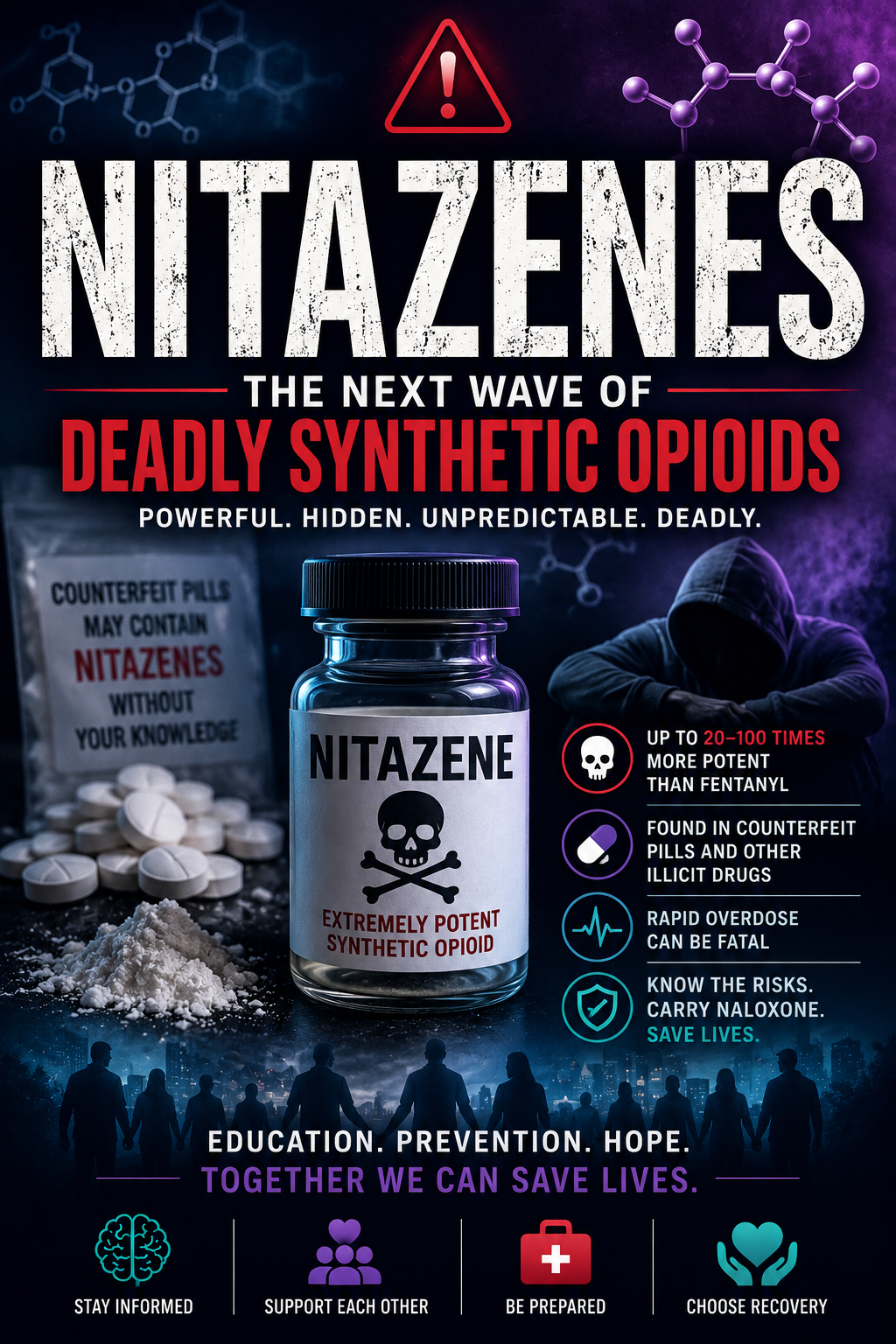
Nitazenes are a group of highly potent synthetic opioids that have emerged as a growing public health concern due to their increasing presence in the illicit drug supply. Originally developed decades ago for research purposes but never approved for medical use, these substances can be significantly more potent than fentanyl, depending on the specific compound. Because nitazenes are often mixed into counterfeit pills or other illicit drugs without a person’s knowledge, they greatly increase the risk of accidental overdose and death. Understanding what nitazenes are, how they affect the body, and why they are so dangerous is essential for individuals, families, healthcare professionals, and communities working to prevent opioid-related harm.
Nitazenes: A Growing Threat in the Illicit Drug Supply
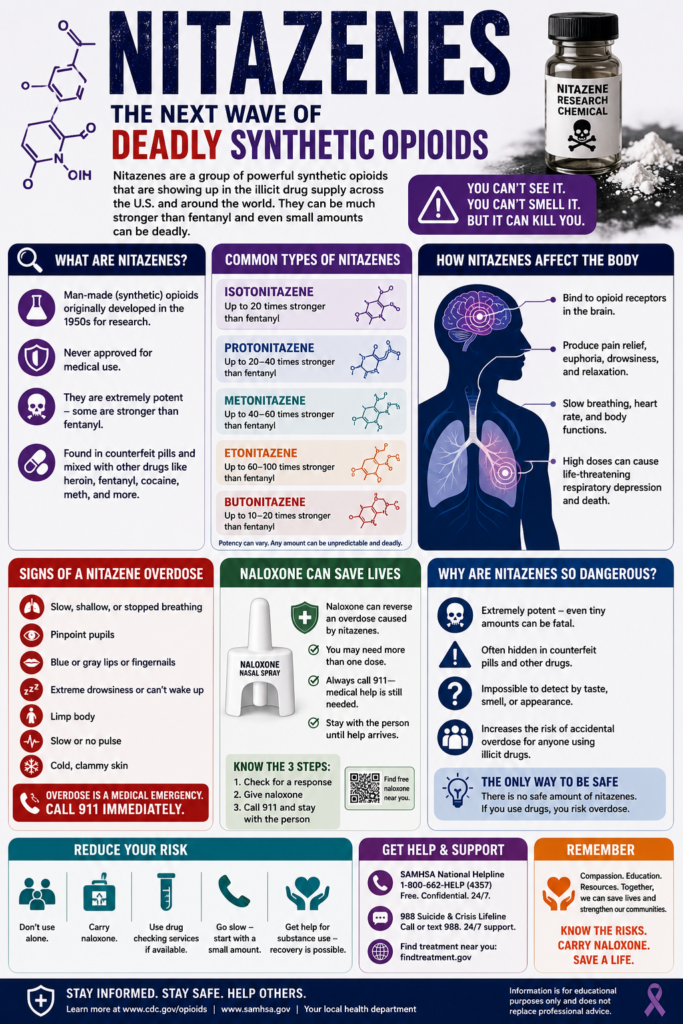
Nitazenes are a group of extremely potent synthetic opioids that have emerged as a major public health concern. Originally developed by researchers in the 1950s as potential pain medications, they were never approved for medical use because of their high potency and overdose risk. In recent years, illicit manufacturers have begun producing nitazenes, and they are increasingly being found in counterfeit pills and mixed with drugs such as fentanyl, heroin, cocaine, methamphetamine, and other substances—often without the user’s knowledge.
Why Are Nitazenes So Dangerous?
Nitazenes act on the same opioid receptors in the brain as morphine and fentanyl, but some nitazene compounds are considerably more potent than fentanyl, although potency varies widely among different nitazenes. Because they are active at extremely small doses, even a tiny measurement error during illicit manufacturing can lead to a fatal overdose.
People who use drugs may unknowingly consume nitazenes because they often cannot be detected by appearance, taste, or smell.
Common Types of Nitazenes
Several nitazene compounds have been identified in the illicit drug supply, including:
- Isotonitazene
- Protonitazene
- Metonitazene
- Etonitazene
- Butonitazene
Each compound has different potency and pharmacological characteristics, making their effects difficult to predict.
How Nitazenes Affect the Body
Like other opioids, nitazenes bind to opioid receptors and produce effects such as:
- Pain relief
- Euphoria
- Drowsiness
- Relaxation
- Slowed breathing
- Decreased heart rate
- Constricted (pinpoint) pupils
As the dose increases, the risk of life-threatening respiratory depression rises dramatically.
Signs of a Nitazene Overdose
Symptoms may include:
- Very slow or stopped breathing
- Extreme sleepiness or inability to wake up
- Blue or gray lips and fingertips
- Pinpoint pupils
- Limp body
- Cold, clammy skin
- Slow or absent pulse
- Loss of consciousness
A nitazene overdose is a medical emergency that requires immediate treatment.
Can Naloxone Work?
Yes. Naloxone can reverse opioid overdoses caused by nitazenes because they act on opioid receptors. However, due to the high potency of some nitazenes:
- Multiple doses of naloxone may be needed.
- Emergency medical services should always be called immediately.
- The person should continue to be monitored because opioid effects may outlast naloxone.
Even if someone wakes up after receiving naloxone, they still need emergency evaluation.
Why Are Nitazenes Becoming More Common?
Several factors contribute to their emergence:
- They can be manufactured illicitly.
- Small amounts produce powerful opioid effects.
- They may be used to increase the potency of other illicit drugs.
- Users often have no idea the substance contains nitazenes.
This unpredictability greatly increases overdose risk.
Reducing the Risk of Overdose
People who use opioids or other illicit drugs can reduce—but not eliminate—their risk by:
- Carrying naloxone and ensuring others know how to use it.
- Avoiding using drugs alone whenever possible.
- Being aware that counterfeit pills may contain unexpected opioids.
- Seeking treatment for opioid use disorder if ready.
- Calling emergency services immediately if an overdose is suspected.
No illicit drug source can reliably guarantee that a product is free of nitazenes.
Treatment for Nitazene Addiction
Treatment is generally similar to treatment for other opioid use disorders and may include:
- Medications such as Buprenorphine or Methadone.
- Behavioral therapies, including cognitive behavioral therapy (CBT).
- Peer recovery support.
- Counseling and family support.
- Long-term relapse prevention planning.
Individuals should work with healthcare professionals experienced in opioid addiction treatment.
Key Takeaway
Nitazenes are among the most potent synthetic opioids identified in the illicit drug supply and are contributing to an increasing risk of fatal overdoses. Because they are often mixed into other drugs without the user’s knowledge, they present a serious danger even to people who do not intentionally use opioids. Rapid recognition of overdose symptoms, immediate administration of naloxone, activation of emergency medical services, and access to evidence-based treatment for opioid use disorder are critical steps in reducing deaths associated with these powerful substances.
Self-Management Strategies to Understand Nitazenes
Nitazenes are a group of highly potent synthetic opioids that have been increasingly detected in the illicit drug supply. Because they are often mixed into other substances without a person’s knowledge, they significantly increase the risk of accidental overdose. While the safest way to avoid exposure is to avoid using illicit drugs, understanding nitazenes and taking practical steps to reduce risk can help protect your health.
1. Learn What Nitazenes Are
Educate yourself about nitazenes, how they differ from other opioids, and why they are so dangerous. Recognize that these substances may be present in counterfeit pills or mixed with fentanyl, heroin, cocaine, methamphetamine, or other illicit drugs without being visible, detectable by smell, or identified by appearance.
2. Avoid Using Illicit or Counterfeit Drugs
The most effective way to prevent nitazene exposure is to avoid non-prescribed or counterfeit drugs. Pills purchased online, through social media, or from unauthorized sources may contain unexpected and potentially deadly synthetic opioids.
3. Carry Naloxone
If you or someone close to you is at risk for opioid exposure, keep naloxone readily available and learn how to use it. Because nitazenes can be extremely potent, more than one dose of naloxone may be needed. Always call emergency medical services immediately after administering naloxone, even if the person wakes up.
4. Never Use Drugs Alone
If someone continues to use illicit substances, avoiding solitary use may increase the chance that another person can recognize an overdose, administer naloxone, call 911, and begin life-saving measures if needed.
5. Recognize the Signs of an Overdose
Know the warning signs of opioid overdose, including:
- Slow or stopped breathing.
- Pinpoint pupils.
- Blue or gray lips or fingertips.
- Extreme drowsiness or inability to wake up.
- Limp body.
- Slow or absent pulse.
Immediate medical attention can save a life.
6. Consider Drug-Checking Resources
Where legally available, fentanyl or expanded drug-checking services may help identify some dangerous contaminants. However, no currently available consumer test can guarantee that a substance is free of all nitazenes, so a negative result does not eliminate overdose risk.
7. Seek Treatment for Opioid Use Disorder
If opioid use has become difficult to control, speak with a healthcare provider about evidence-based treatments such as buprenorphine or methadone. Medication-assisted treatment can reduce overdose risk and improve long-term recovery outcomes.
8. Build Healthy Coping Skills
Stress, trauma, anxiety, and depression can increase the risk of substance use. Develop healthier coping strategies through counseling, exercise, mindfulness, hobbies, support groups, and strong social connections.
9. Stay Informed About Local Drug Alerts
Many public health departments issue alerts when highly potent synthetic opioids or contaminated drug supplies are identified in the community. Staying informed can increase awareness of changing overdose risks.
10. Create an Emergency Plan
Discuss overdose response with trusted family members or friends. Make sure they know where naloxone is stored, how to administer it, how to recognize an overdose, and the importance of calling 911 immediately.
Key Takeaway
Nitazenes are among the most potent synthetic opioids found in the illicit drug supply and can cause life-threatening overdoses even in very small amounts. Self-management begins with understanding the risks, avoiding illicit substances whenever possible, carrying naloxone if opioid exposure is a possibility, recognizing overdose symptoms, and seeking professional treatment for opioid use disorder. Combining education, harm reduction strategies, and evidence-based medical care offers the best protection against these dangerous substances.
Family Support Strategies to Understand Nitazenes
Nitazenes are a group of highly potent synthetic opioids that are increasingly being found in the illicit drug supply. Because they are often mixed into counterfeit pills or other drugs without a person’s knowledge, they have contributed to a growing number of life-threatening overdoses. Families can play an essential role in prevention, early recognition of overdose, and supporting loved ones in recovery through education, communication, and preparedness.
1. Learn About Nitazenes Together
Take time to understand what nitazenes are, how they differ from fentanyl and other opioids, and why they are so dangerous. Learning from reliable medical and public health sources can help family members recognize the risks and avoid misinformation.
2. Encourage Honest, Nonjudgmental Conversations
Create a safe environment where loved ones feel comfortable discussing substance use, mental health, or concerns about drug exposure. Open communication is more likely to encourage someone to seek help than criticism or punishment.
3. Know the Signs of an Opioid Overdose
Every family member should recognize common overdose symptoms, including:
- Slow or stopped breathing.
- Pinpoint pupils.
- Blue or gray lips or fingernails.
- Unresponsiveness.
- Limp body.
- Gurgling or choking sounds.
Recognizing these signs quickly can save a life.
4. Keep Naloxone Available
If someone in the household is at risk for opioid exposure, keep naloxone readily accessible and ensure family members know how to use it. Because nitazenes can be extremely potent, multiple doses may be required. Always call 911 immediately after giving naloxone, even if the person regains consciousness.
5. Encourage Professional Treatment
Support your loved one in seeking evidence-based treatment for opioid use disorder if needed. Medication-assisted treatment, counseling, behavioral therapies, and peer support programs have been shown to improve recovery outcomes and reduce the risk of overdose.
6. Promote Safe Medication Practices
Encourage proper storage and disposal of prescription medications and discuss the dangers of taking pills that were not prescribed by a healthcare provider. Remind family members that counterfeit pills may contain nitazenes or other dangerous synthetic opioids.
7. Support Healthy Coping Skills
Help your loved one build healthy routines that support recovery, including regular sleep, nutritious meals, physical activity, stress management, counseling, and participation in positive social activities.
8. Develop a Family Emergency Plan
Create a clear plan for responding to an overdose. Ensure everyone knows:
- Where naloxone is stored.
- How to administer it.
- When to call 911.
- How to provide rescue breathing or CPR if trained.
- The importance of staying with the person until emergency responders arrive.
Practicing this plan can improve confidence during an emergency.
9. Encourage Participation in Support Groups
Family support organizations and peer groups can provide education, coping strategies, and emotional support for both individuals affected by substance use and their loved ones. Connecting with others facing similar challenges can reduce isolation and strengthen resilience.
10. Care for Yourself
Supporting someone at risk for overdose can be emotionally overwhelming. Family members should prioritize their own mental health by maintaining healthy boundaries, seeking counseling if needed, participating in caregiver support groups, and practicing regular self-care.
Key Takeaway
Families are often the first line of defense against the dangers of nitazenes. By learning about these powerful synthetic opioids, keeping naloxone available, recognizing the signs of overdose, encouraging evidence-based treatment, and maintaining compassionate communication, loved ones can help reduce the risk of overdose and support long-term recovery. Education, preparedness, and ongoing family support are powerful tools in protecting lives.
Community Resource Strategies to Understand Nitazenes
Nitazenes are a group of highly potent synthetic opioids that are increasingly appearing in the illicit drug supply, often without the user’s knowledge. Because these substances can cause rapid, life-threatening overdoses, community education, prevention efforts, and access to treatment are essential. Community resources can help individuals, families, and healthcare providers stay informed, reduce overdose risk, and connect people with evidence-based care.
1. Learn from Trusted Public Health Organizations
Use educational materials from reputable organizations, including the Centers for Disease Control and Prevention (CDC), the Substance Abuse and Mental Health Services Administration (SAMHSA), the Drug Enforcement Administration (DEA), and state or local health departments. These organizations provide up-to-date information on emerging synthetic opioids, overdose prevention, and treatment options.
2. Participate in Community Education Programs
Many hospitals, public health departments, schools, and community organizations offer educational workshops on opioid safety, overdose recognition, naloxone use, and substance use prevention. These programs help individuals and families better understand the dangers of nitazenes and other synthetic opioids.
3. Access Harm Reduction Services
Community harm reduction programs may provide:
- Naloxone distribution.
- Overdose prevention education.
- Referrals to treatment programs.
- Syringe service programs where legally available.
- Drug-checking information or referrals, depending on local resources.
These services help reduce the risk of fatal overdose while connecting individuals to healthcare and recovery support.
4. Utilize Addiction Treatment Programs
Community-based treatment centers offer evidence-based care for opioid use disorder, including medications such as buprenorphine and methadone, counseling, behavioral therapies, peer recovery support, and relapse prevention services. Early treatment greatly improves long-term recovery outcomes.
5. Attend Peer Recovery Support Groups
Recovery organizations and peer support groups provide encouragement, accountability, education, and shared experiences. These groups help reduce isolation and connect individuals with others who understand the challenges of recovery.
6. Participate in Naloxone Training
Many pharmacies, health departments, and community organizations offer free or low-cost naloxone education. Learning how to recognize an overdose, administer naloxone, and activate emergency medical services can save lives.
7. Stay Informed About Local Drug Alerts
Public health agencies and community organizations may issue alerts when nitazenes or other highly potent synthetic opioids are detected in the local drug supply. Paying attention to these warnings can help individuals understand changing overdose risks in their communities.
8. Connect with Mental Health Services
Many individuals with opioid use disorder also experience depression, anxiety, PTSD, or other mental health conditions. Community mental health centers provide counseling, psychiatric evaluations, trauma-informed care, and crisis intervention that support both recovery and overall well-being.
9. Use Crisis and Emergency Resources
Anyone experiencing an overdose or witnessing one should call 911 immediately. Individuals struggling with substance use or emotional distress can also access crisis services, including the 988 Suicide & Crisis Lifeline, for immediate support and connection to local resources.
10. Support Community Awareness and Advocacy
Communities can help reduce overdose deaths by promoting public education, expanding access to addiction treatment, increasing naloxone availability, reducing stigma surrounding substance use disorders, and supporting policies that improve access to evidence-based healthcare.
Key Takeaway
Nitazenes represent a serious and evolving public health threat because of their extreme potency and increasing presence in the illicit drug supply. Community resources—including public health education, harm reduction programs, addiction treatment services, naloxone training, peer support groups, mental health services, and emergency response systems—play a critical role in preventing overdoses and supporting recovery. Working together, communities can improve awareness, save lives, and help individuals affected by opioid use disorder access the comprehensive care they need.
Frequently Asked Questions
Here are some common questions:
1. What are nitazenes?
Nitazenes are a group of highly potent synthetic opioids that were originally developed for research in the 1950s but were never approved for medical use. Today, they are found in the illicit drug supply and have been linked to a growing number of fatal overdoses.
2. Why are nitazenes so dangerous?
Some nitazene compounds are significantly more potent than fentanyl, although potency varies by compound. Because they are active in extremely small amounts and are often mixed into other drugs without a person’s knowledge, they can cause rapid, life-threatening respiratory depression and overdose.
3. Where are nitazenes commonly found?
Nitazenes have been detected in:
- Counterfeit prescription pills.
- Heroin.
- Fentanyl.
- Cocaine.
- Methamphetamine.
- Other illicit drug mixtures.
Many people exposed to nitazenes do not know they are present.
4. Can you see, smell, or taste nitazenes?
No. Nitazenes cannot be reliably identified by appearance, smell, or taste. There is no way for someone to know a drug contains nitazenes without specialized laboratory testing.
5. What are the signs of a nitazene overdose?
Common signs include:
- Slow or stopped breathing.
- Pinpoint pupils.
- Blue or gray lips or fingernails.
- Extreme drowsiness or inability to wake up.
- Limp body.
- Slow or absent pulse.
- Cold, clammy skin.
An overdose is a medical emergency requiring immediate treatment.
6. Does naloxone work on nitazenes?
Yes. Naloxone can reverse opioid overdoses caused by nitazenes because they act on opioid receptors. However, because some nitazenes are extremely potent, multiple doses of naloxone may be needed. Always call 911 immediately after administering naloxone.
7. Why are nitazenes being added to other drugs?
Illicit manufacturers may add nitazenes to increase potency or reduce production costs. Unfortunately, this greatly increases the risk of accidental overdose because users often do not know these substances are present.
8. Are nitazenes legal medications?
No. Nitazenes are not approved for medical use in the United States or many other countries. The nitazenes currently found on the street are illicitly manufactured synthetic opioids.
9. Can someone overdose the first time they use a drug containing nitazenes?
Yes. Because nitazenes are extremely potent and often hidden in counterfeit pills or other substances, even first-time or occasional users may experience a fatal overdose.
10. Who is most at risk?
Anyone using illicit drugs may be exposed unknowingly. Individuals with opioid use disorder are at particularly high risk, but people who believe they are taking a non-opioid drug or a legitimate prescription pill may also be affected if the product is counterfeit.
11. Can nitazene addiction be treated?
Yes. Opioid use disorder involving nitazenes is treated similarly to other opioid addictions. Effective treatments include medications such as buprenorphine or methadone, counseling, behavioral therapies, peer recovery support, and long-term follow-up care.
12. How can I reduce my risk?
Helpful strategies include:
- Avoid using illicit or counterfeit drugs.
- Carry naloxone if opioid exposure is possible.
- Never use drugs alone.
- Learn to recognize the signs of an overdose.
- Seek treatment if you have opioid use disorder.
These steps reduce risk but cannot eliminate it if illicit drugs are used.
13. Are nitazenes replacing fentanyl?
Not necessarily. Nitazenes are not replacing fentanyl but are increasingly being detected alongside fentanyl and other synthetic opioids in the illicit drug supply. The composition of street drugs can vary widely from one batch to another.
14. What should I do if I suspect a nitazene overdose?
Call 911 immediately, administer naloxone if available, follow dispatcher instructions, and stay with the person until emergency responders arrive. If trained, provide rescue breathing or CPR when appropriate. Prompt medical attention is critical.
15. What is the most important thing to remember about nitazenes?
Nitazenes are among the most dangerous synthetic opioids found in the illicit drug supply. Because they are often hidden in counterfeit pills or mixed into other drugs without a person’s knowledge, they pose a serious risk of accidental overdose. Education, carrying naloxone, recognizing overdose symptoms, seeking evidence-based treatment for opioid use disorder, and calling 911 immediately during an overdose are the most effective ways to reduce harm and save lives.
Conclusion
The emergence of nitazenes highlights the constantly evolving nature of the illicit drug supply and the ongoing challenges of preventing opioid overdoses. Since these powerful synthetic opioids are frequently hidden in counterfeit medications or mixed with other substances, anyone using illicit drugs may be at risk of unintentional exposure. Education, overdose prevention strategies, widespread availability of naloxone, rapid access to emergency medical care, and evidence-based treatment for opioid use disorder remain the most effective tools for reducing harm. By increasing public awareness, supporting harm reduction initiatives, and expanding access to comprehensive addiction treatment, communities can help save lives and improve recovery outcomes for individuals affected by these extremely dangerous substances.
Video: Why Nitazenes Are Deadlier Than Fentanyl #overdose #drugsafety