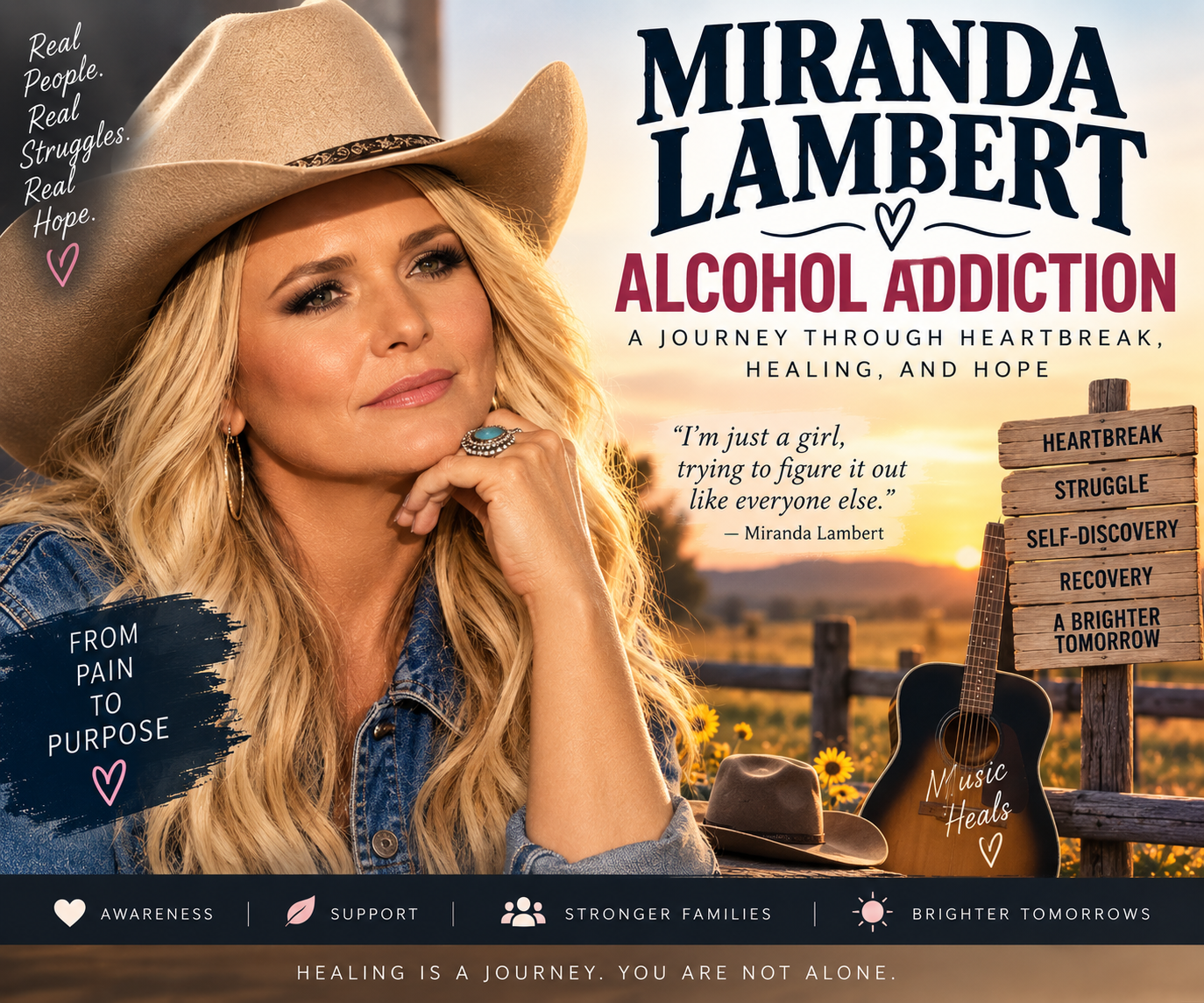
Country music star Miranda Lambert has built a career around songs about love, independence, heartbreak, anger, vulnerability, and starting over. Behind some of that music are real experiences with emotional pain and alcohol. Lambert has publicly acknowledged drinking more after her highly publicized 2015 divorce from Blake Shelton and has discussed how drinking can become intertwined with the culture of country music and entertainment. However, discussing heavy or increased alcohol use is not the same as having a diagnosed alcohol addiction. Her story is better understood as an opportunity to examine how emotional distress, environment, and coping behaviors can sometimes increase the risk of problematic drinking.
Heartbreak and Drinking
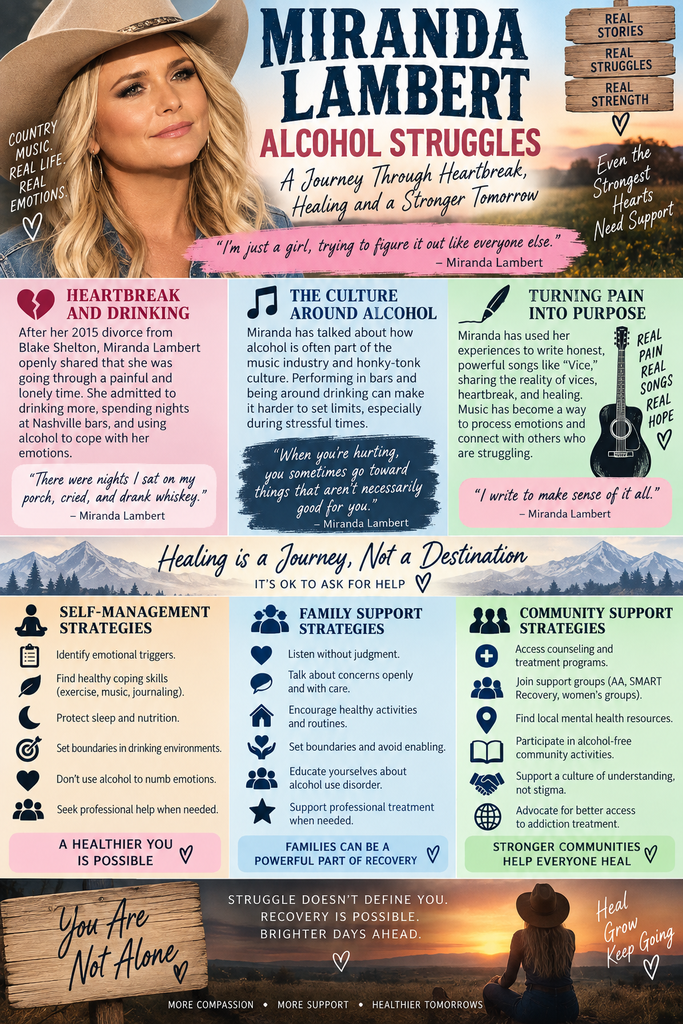
Following her divorce, Lambert openly described experiencing difficult and lonely periods. In a 2015 interview, she talked about nights spent crying on her porch and drinking whiskey while processing the end of her marriage. She later told a concert audience that after getting divorced, she began “drinking a little extra” and sometimes remained at Nashville bars until closing time.
Lambert also described her song “Vice” as dealing openly with vices that could involve love, alcohol, or something in between. She acknowledged that when people are hurting, they sometimes turn to things that may not be healthy for them.
Her experience illustrates an important principle in addiction prevention: the reason someone drinks can sometimes matter as much as how much they drink. Using alcohol repeatedly to escape grief, loneliness, anxiety, anger, or relationship problems can gradually reinforce a pattern in which emotional distress becomes a trigger for drinking.
Alcohol and the Culture Around You
Environment also matters. Lambert has described beginning her career performing in beer joints and acknowledged how alcohol and “partying” can become embedded within show-business and honky-tonk culture.
For musicians, bartenders, hospitality workers, entertainers, and others who regularly work around alcohol, drinking may become normalized. What begins as social participation can potentially become a coping routine.
Warning signs worth paying attention to include:
- Drinking more frequently during periods of emotional distress.
- Regularly using alcohol to escape uncomfortable feelings.
- Staying out drinking much longer than originally intended.
- Needing alcohol to relax or socialize.
- Experiencing repeated hangovers that interfere with responsibilities.
- Continuing to drink despite relationship, health, work, or financial consequences.
- Increasing the amount consumed to achieve the desired effect.
- Finding it difficult to reduce drinking despite wanting to change.
These signs do not prove that someone has an alcohol use disorder, but they can indicate that it is time to examine the relationship with alcohol more carefully.
Turning Pain Into Creative Expression
One potentially protective part of Lambert’s story has been her willingness to transform difficult emotions into music. She has described becoming more honest with fellow songwriters and spending time alone reflecting after her divorce.
Creative expression can provide an alternative to emotional avoidance. Writing, music, painting, journaling, exercise, prayer, meditation, therapy, or conversations with trusted people can allow difficult emotions to be processed rather than repeatedly suppressed.
Self-Management Strategies
Someone who recognizes that alcohol is becoming connected to stress, grief, or emotional pain can begin by examining patterns without shame.
Helpful self-management strategies include:
- Identify emotional triggers. Notice whether loneliness, rejection, anger, boredom, anxiety, or grief increases the desire to drink.
- Track drinking patterns. Recording when, where, why, and how much you drink can reveal patterns that are otherwise easy to overlook.
- Develop alternative coping skills. Exercise, music, journaling, hobbies, relaxation techniques, and supportive conversations can provide other ways to manage emotions.
- Change the environment. Spending less time in situations centered around drinking can reduce cues and temptation.
- Protect sleep and nutrition. Physical exhaustion and irregular routines can make emotional regulation more difficult.
- Avoid using alcohol as emotional medication. Alcohol may temporarily numb distress without addressing its underlying cause.
- Talk with a professional. A healthcare or behavioral-health professional can help determine whether drinking has progressed from risky use to alcohol use disorder.
- Seek treatment when needed. Counseling, mutual-help groups, medications, and structured addiction treatment can all play roles depending on individual needs.
Family Support Strategies
Family members often notice behavioral changes before the individual recognizes a developing problem. Support works best when concern is expressed without humiliation or confrontation.
Families can help by:
- Discussing specific behaviors rather than labeling someone an “alcoholic.”
- Listening to the emotional pain underneath the drinking.
- Avoiding arguments while the person is intoxicated.
- Refusing to repeatedly cover up alcohol-related consequences.
- Encouraging professional assessment when drinking becomes concerning.
- Offering alcohol-free activities and social opportunities.
- Learning about alcohol use disorder and available treatments.
- Establishing healthy boundaries while continuing to communicate care and concern.
Support does not mean ignoring harmful behavior. Compassion and accountability can exist together.
Community Support Strategies
Recovery and prevention are easier when people have access to supportive environments. Communities can reduce alcohol-related harm by making behavioral-health and substance-use resources easier to reach.
Helpful community resources may include:
- Primary-care screening for unhealthy alcohol use.
- Mental-health counseling for grief, depression, anxiety, and trauma.
- Substance-use treatment programs.
- Peer recovery specialists.
- Alcoholics Anonymous and other mutual-support groups.
- SMART Recovery and skills-based recovery programs.
- Women’s recovery groups.
- Family education and support programs such as Al-Anon.
- Community activities that do not revolve around alcohol.
These resources are not only for people with severe addiction. Someone can seek help whenever alcohol begins creating concerns.
Emotional Pain Can Become a Turning Point
Miranda Lambert’s public comments illustrate how heartbreak and alcohol can become connected during vulnerable periods. They also demonstrate why it is important not to diagnose a celebrity—or anyone else—based solely on interviews, songs, photographs, or media reports.
Her experiences can instead open a larger conversation about coping.
When someone is hurting, alcohol may offer temporary relief. But emotional healing usually requires something alcohol cannot provide: processing grief, understanding triggers, strengthening relationships, developing healthier coping strategies, and sometimes obtaining professional treatment.
Conclusion
Miranda Lambert’s story should not be reduced to an addiction label she has not publicly claimed. What she has described—heartbreak, increased drinking, late nights, vulnerability, reflection, relationships, and creative expression—provides an opportunity to understand how emotional pain and drinking can sometimes intersect.
Self-management begins with recognizing patterns and developing healthier ways to respond to difficult emotions. Families can provide support without enabling harmful behavior, while communities can make counseling, addiction treatment, peer support, and alcohol-free connections easier to access.
The lesson extends far beyond celebrity: you do not have to wait until alcohol has taken over your life before reconsidering its role in your life. Recognizing an unhealthy coping pattern early can be the first step toward meaningful change.
Frequently Asked Questions
Here are some common questions:
1. Has Miranda Lambert struggled with alcohol addiction?
Miranda Lambert has publicly discussed drinking more during emotionally difficult periods, particularly following her 2015 divorce from Blake Shelton. However, she has not publicly confirmed that she was diagnosed with alcohol use disorder or identified herself as having an alcohol addiction. It is therefore more accurate to describe her experience as involving alcohol struggles or increased drinking rather than a confirmed addiction.
2. Why did Miranda Lambert say she was drinking more?
Lambert has spoken about the emotional pain and loneliness she experienced following her divorce. She later acknowledged that she was “drinking a little extra” during that period. Her experience illustrates how grief, relationship loss, loneliness, and major life changes can sometimes contribute to increased alcohol consumption.
3. Did Miranda Lambert use alcohol to cope with heartbreak?
Her public comments suggest that alcohol was present during some of her most difficult moments. She has described sitting on her porch, crying and drinking whiskey after her marriage ended. While this does not establish an addiction diagnosis, using alcohol to manage emotional distress is an important pattern to recognize.
4. What does Miranda Lambert’s song “Vice” have to do with her struggles?
Lambert has discussed “Vice” in relation to behaviors people may turn toward when they are hurting. The song explores themes of unhealthy coping, relationships, alcohol, regret, and vulnerability. Music also provided Lambert with a way to express difficult emotions rather than keeping them hidden.
5. Can heartbreak increase the risk of problematic drinking?
Yes. Divorce, grief, rejection, loneliness, and other stressful experiences can increase vulnerability to unhealthy alcohol use. Alcohol may temporarily numb emotional distress, but repeated reliance on it can reinforce a cycle in which painful emotions trigger drinking.
6. Does drinking heavily automatically mean someone has alcohol use disorder?
No. Heavy or risky drinking does not automatically establish an alcohol use disorder. Diagnosis depends on a pattern of symptoms and their consequences, as evaluated by a qualified healthcare professional.
7. What are warning signs that drinking may be becoming a problem?
Warning signs can include drinking more than intended, unsuccessful attempts to cut down, cravings, increasing tolerance, drinking to cope with emotions, neglecting responsibilities, continuing despite relationship or health problems, or spending substantial amounts of time drinking or recovering from alcohol.
8. What self-management strategies can help with unhealthy alcohol use?
Helpful approaches may include:
- Identifying emotional and environmental drinking triggers.
- Tracking alcohol consumption.
- Developing healthier coping strategies for stress and grief.
- Finding social activities that do not revolve around alcohol.
- Protecting sleep, nutrition, and physical health.
- Talking openly with trusted people.
- Seeking a professional assessment when drinking becomes concerning.
- Following an individualized treatment plan when alcohol use disorder is diagnosed.
9. How can family members support someone struggling with alcohol?
Family members can listen without humiliation or judgment, express concerns using specific examples, encourage professional treatment, and participate in family education or counseling. Families should also establish appropriate boundaries rather than repeatedly protecting someone from the consequences of harmful drinking.
10. What should family members avoid doing?
Families should avoid shaming, threatening, arguing with someone while they are intoxicated, or assuming that addiction represents a lack of willpower. They should also avoid enabling behaviors such as making excuses, providing money for alcohol, or repeatedly covering up serious consequences.
11. How can community support help?
Community resources can reduce isolation and provide ongoing accountability. Depending on individual needs, support may include primary-care providers, addiction specialists, therapists, peer recovery programs, Alcoholics Anonymous, SMART Recovery, women’s recovery groups, family programs, and other behavioral-health services.
12. Can creativity be a healthy coping strategy?
Yes. Music, writing, art, journaling, exercise, and other meaningful activities can help people process difficult emotions. For Lambert, songwriting has provided an avenue to express experiences of heartbreak, vulnerability, relationships, and personal growth.
13. Does someone have to “hit rock bottom” before getting help?
No. A person does not need to lose a relationship, career, home, or health before seeking assistance. Early recognition of risky drinking can prevent more serious consequences. Anyone concerned about their alcohol consumption can discuss it with a healthcare professional.
14. Can alcohol use disorder be treated?
Yes. Alcohol use disorder is treatable. Treatment can include behavioral therapies, medications such as naltrexone, acamprosate, or disulfiram when clinically appropriate, mutual-support programs, recovery coaching, and treatment of co-occurring mental-health conditions. The best approach depends on the individual.
15. What can we learn from Miranda Lambert’s experience?
The most responsible lesson is not to label Lambert with a medical condition she has not publicly confirmed. Instead, her comments can help start a conversation about how heartbreak, loneliness, stress, alcohol, and coping behaviors can become connected.
Recognizing that connection early creates an opportunity to develop healthier coping strategies, strengthen family support, and seek professional or community assistance before drinking causes greater harm.
Video: What Miranda Lambert’s story teaches us about pain #mirandalambert #lessons