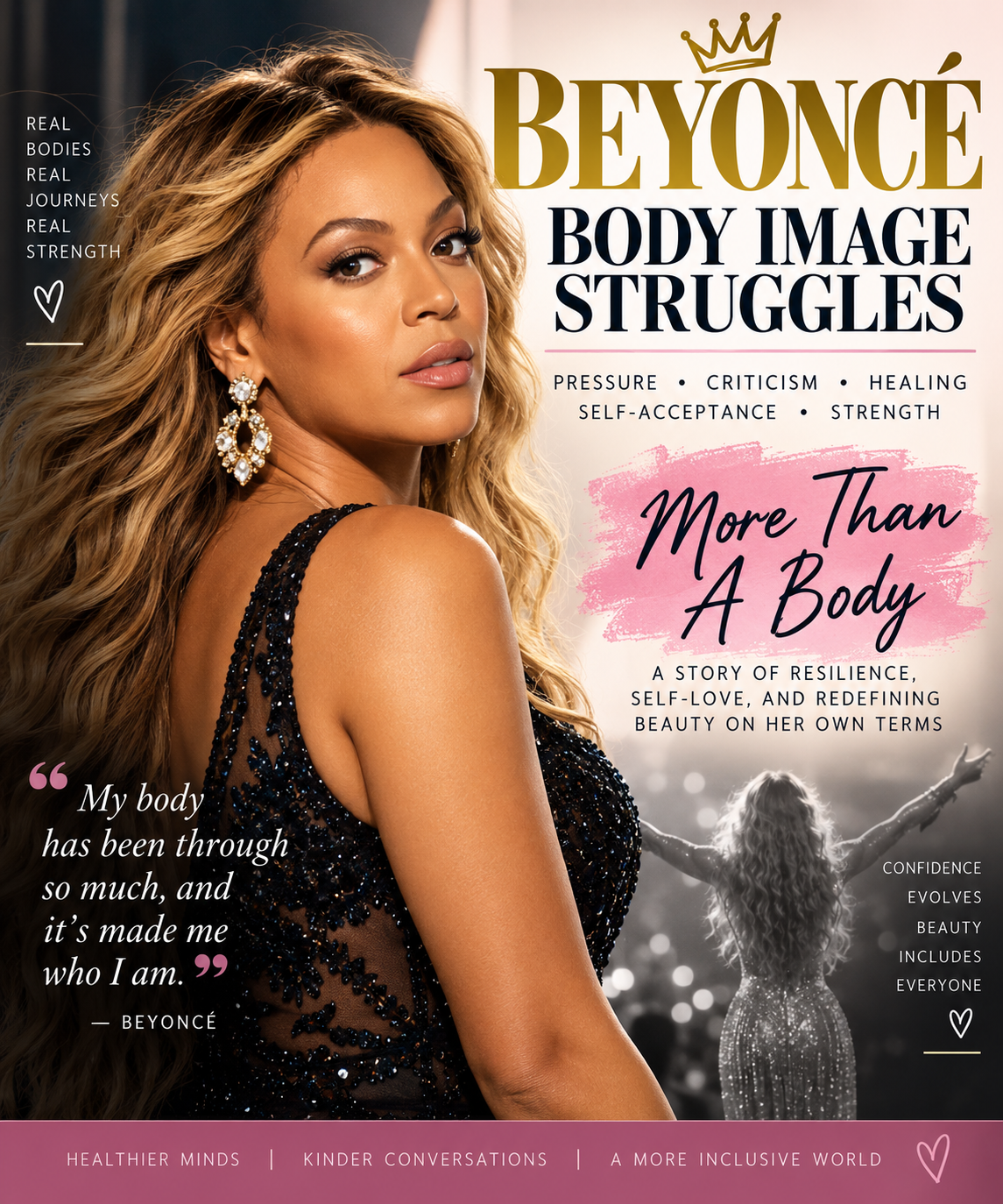
Beyoncé is often associated with confidence, beauty, physical fitness, and powerful performances. Yet her public comments over the years reveal a more complicated relationship with body image. Like many women, she has experienced criticism about her weight, pressure to meet appearance expectations, and the physical changes associated with pregnancy and motherhood. Her journey offers an important reminder that confidence does not necessarily mean a person has never struggled with insecurity. It can develop through learning to respect the body rather than constantly trying to change it.
Early Body Criticism and Insecurity
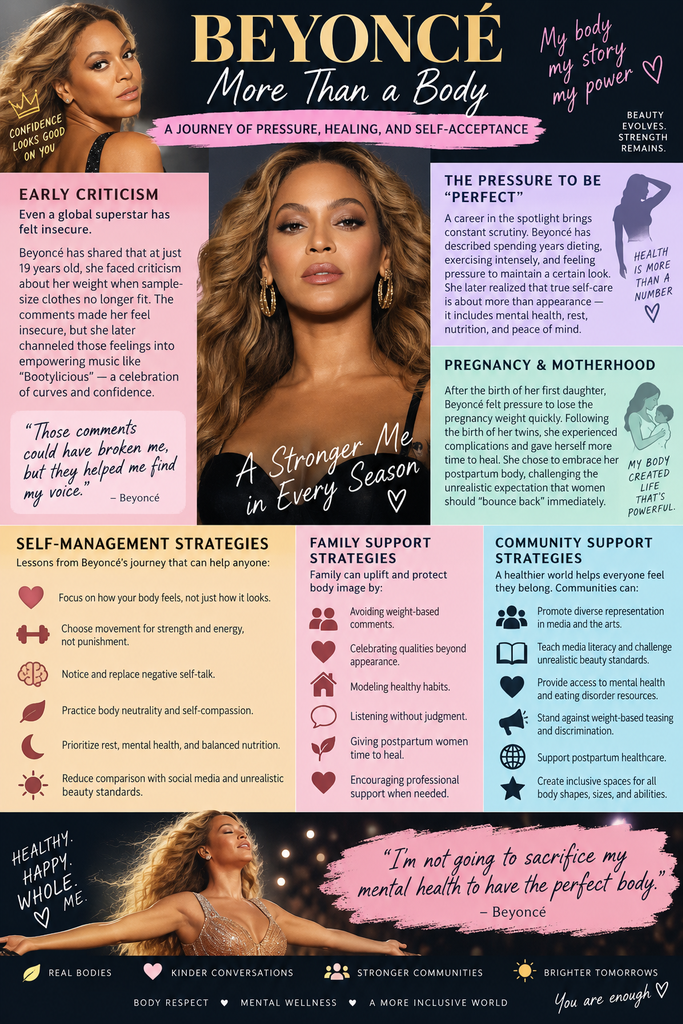
Beyoncé has described experiencing criticism about her weight when she was only 19. She recalled that sample-size clothing no longer fit and that comments about her appearance made her feel insecure. Rather than allowing those experiences to completely define how she viewed herself, she eventually transformed some of those feelings into creative expression. She has said the experience contributed to writing “Bootylicious,” which became associated with celebrating curves and body confidence.
Her experience illustrates how appearance-based criticism can affect someone even when that person appears confident publicly. Young adults can be particularly vulnerable when their bodies are changing while they are simultaneously receiving messages about what they are “supposed” to look like.
The Pressure to Maintain a Certain Body
A career built around touring, dancing, costumes, photography, and constant public attention can create enormous pressure surrounding appearance. Beyoncé has discussed spending significant time dieting and being overly conscious of her body. She later acknowledged that she had once misunderstood self-care as primarily exercising and controlling her appearance. Over time, she began defining wellness more broadly—including mental health, peace of mind, nutrition, rest, and listening to her body’s signals.
This shift is important because healthy self-management is not simply about reaching a particular number on the scale. It involves developing a sustainable relationship with food, movement, rest, emotions, and one’s body.
Pregnancy Changed Her Perspective
Motherhood appears to have been another significant turning point in Beyoncé’s relationship with her body. After the birth of her first daughter, she described putting pressure on herself to lose pregnancy weight quickly. Her experience after giving birth to twins Rumi and Sir was different. Following pregnancy complications and an emergency cesarean delivery, she allowed herself more time to recover and described embracing her curvier postpartum body.
Rather than treating postpartum changes as something that immediately needed to be corrected, she spoke about accepting what her body had become. Her comments challenged the cultural expectation that women should rapidly “bounce back” after childbirth.
Self-Management Strategies for Body Image
Beyoncé’s experiences can be used to highlight several strategies that may help anyone struggling with body dissatisfaction:
- Separate health from appearance. Ask how your body feels and functions rather than judging health only by weight, clothing size, or photographs.
- Notice negative self-talk. Identify thoughts such as “I have to look perfect” and replace them with more balanced statements.
- Reduce comparison. Social media, celebrities, advertising, and edited photographs can create unrealistic expectations.
- Choose sustainable movement. Exercise can support strength, energy, sleep, and emotional health without becoming punishment for eating.
- Listen to physical signals. Hunger, exhaustion, pain, stress, and the need for recovery deserve attention.
- Practice body neutrality. You do not have to love every part of your appearance every day. Learning to respect what your body does can be a meaningful beginning.
- Protect mental health. Emotional wellness is part of self-care, not something separate from physical health.
- Seek professional help when necessary. Persistent restriction, binge eating, purging, compulsive exercise, severe body dissatisfaction, or intense fear of weight gain deserves professional evaluation.
Family Support Strategies
Family members can strongly influence body image. Comments about weight—even comments intended as jokes or encouragement—may reinforce shame or insecurity.
Families can provide healthier support by:
- Avoiding criticism about weight, shape, food choices, or clothing size.
- Complimenting qualities such as creativity, kindness, determination, humor, and intelligence.
- Avoiding labeling foods as morally “good” or “bad.”
- Modeling balanced attitudes toward eating and physical activity.
- Allowing postpartum women appropriate time for physical and emotional recovery.
- Listening without immediately trying to solve someone’s insecurity.
- Encouraging professional support when body-image concerns begin interfering with everyday life.
Beyoncé has also spoken positively about the strong women in her life, including family members and longtime friends. Supportive relationships can provide a healthier counterbalance to outside criticism and unrealistic beauty expectations.
Community Support Strategies
Body image is not only an individual issue. Communities, schools, workplaces, entertainment industries, healthcare systems, and social-media environments all influence how people learn to evaluate their bodies.
Communities can help by:
- Promoting representation of different body shapes, sizes, ages, skin tones, and physical abilities.
- Teaching media literacy so young people understand how images may be posed, filtered, edited, or commercially constructed.
- Providing accessible counseling and eating-disorder resources.
- Challenging weight-based teasing and discrimination.
- Supporting postpartum mental and physical healthcare.
- Encouraging fitness programs centered on health and enjoyment rather than appearance.
- Creating spaces where people can discuss body-image concerns without shame.
Beyoncé has also used her work to question narrow beauty standards. The themes surrounding “Pretty Hurts,” for example, highlighted the emotional cost of pursuing society’s definition of physical perfection.
From Body Control to Body Respect
One of the most useful lessons from Beyoncé’s public reflections is that body confidence can evolve. A person may spend years trying to control weight or appearance before recognizing that wellness requires something broader.
Beyoncé has spoken about shifting her attention toward how she feels when she wakes up, her peace of mind, what she feeds her mind and body, and her overall health. That perspective shifts self-care from simply asking, “How do I look?” to asking, “How am I doing?”
Conclusion
Beyoncé’s body-image journey demonstrates that fame, success, beauty, and public confidence do not make someone immune to pressure around appearance. Her experiences with criticism, dieting, pregnancy, postpartum recovery, and changing priorities illustrate how a person’s relationship with their body can develop throughout life.
The larger lesson is not that everyone should try to achieve Beyoncé’s body or follow her personal routines. It is almost the opposite. Healthy body image involves learning that your worth does not depend on matching someone else’s appearance.
Through realistic self-management, supportive families, healthier community messages, and professional help when needed, people can move away from shame and toward a relationship with their bodies based on respect, health, function, and self-compassion.
Your body does not have to be perfect to deserve care. It deserves care because it is yours.
Frequently Asked Questions
Here are some common questions:
1. Has Beyoncé publicly discussed struggling with body image?
Yes. Beyoncé has spoken publicly about facing criticism for her weight and appearance, particularly when she was younger. She has also discussed dieting, the pressure surrounding her body, and, eventually, developing a broader understanding of health and self-care.
2. When did Beyoncé begin experiencing criticism about her body?
Beyoncé has recalled receiving criticism about her weight when she was around 19 years old. She said that when sample-size clothing stopped fitting her, comments about her body contributed to feelings of insecurity.
3. Did body criticism influence Beyoncé’s music?
Beyoncé has connected her early experiences with body criticism to “Bootylicious,” the Destiny’s Child song that celebrated curves and confidence. Turning an insecurity into creative expression illustrates one way difficult experiences can be reframed into empowerment.
4. Did Beyoncé experience pressure to maintain a certain appearance?
Yes. Beyoncé has discussed the demanding expectations associated with performing, dieting, exercising, and maintaining her appearance. Constant public attention can intensify body-image pressures because physical changes may be scrutinized by audiences and the media.
5. How did pregnancy affect Beyoncé’s relationship with her body?
Beyoncé has described putting significant pressure on herself to lose weight after the birth of her first child. After giving birth to twins following a difficult pregnancy and emergency cesarean delivery, she described taking more time to recover and accepting her postpartum curves.
6. Did Beyoncé struggle with an eating disorder?
Beyoncé has publicly discussed dieting, weight pressure, and body-image concerns, but those statements should not automatically be interpreted as evidence of an eating disorder. Only a qualified healthcare professional can diagnose an eating disorder, and it is important not to assign medical diagnoses to public figures without reliable evidence.
7. How has Beyoncé’s definition of self-care changed?
She has described realizing that self-care involves much more than exercise and physical appearance. Her later reflections have emphasized mental health, nutrition, peace of mind, rest, and paying attention to what her body needs.
8. What self-management strategies can help someone struggling with body image?
Helpful strategies can include reducing appearance-based comparisons, challenging negative self-talk, following balanced eating patterns, choosing enjoyable physical activity, getting adequate rest, limiting exposure to unrealistic social-media content, and practicing body neutrality or self-compassion.
9. What is body neutrality?
Body neutrality shifts attention away from having to love your appearance all the time. Instead, a person learns to respect the body for what it does—allowing them to move, breathe, communicate, work, create, recover, and experience life.
10. How can families support someone experiencing body-image difficulties?
Families can avoid criticizing weight or appearance and instead recognize qualities unrelated to physical beauty. Listening without judgment, avoiding constant dieting conversations, modeling balanced eating and exercise habits, and encouraging professional support when necessary can create a healthier environment.
11. How can communities promote healthier body image?
Schools, healthcare organizations, workplaces, media companies, and community programs can promote diverse body representation, challenge weight-based discrimination, teach media literacy, provide mental health resources, and create environments where people are valued for more than their appearance.
12. Can social media make body-image struggles worse?
For some people, yes. Repeated exposure to carefully selected, edited, filtered, or professionally produced images can encourage unrealistic comparisons. Following diverse accounts, limiting triggering content, and remembering that online images rarely represent someone’s entire life can help reduce this pressure.
13. Is wanting to lose weight automatically a sign of poor body image?
No. People may pursue weight changes for many reasons. The concern arises when weight or appearance becomes closely tied to self-worth or leads to extreme dieting, compulsive exercise, severe restriction, bingeing, purging, persistent anxiety, or significant disruption of everyday life.
14. When should someone seek professional help for body-image concerns?
Professional support may be appropriate when thoughts about food, weight, exercise, or appearance become overwhelming or interfere with relationships, work, school, physical health, or emotional well-being. A physician, mental-health professional, or registered dietitian experienced in eating disorders and body-image concerns can provide appropriate assessment and support.
15. What can people learn from Beyoncé’s body-image journey?
One important lesson is that outward confidence does not necessarily mean someone has never experienced insecurity. Beyoncé’s public reflections demonstrate how attitudes toward beauty, health, motherhood, and self-care can change over time.
Video: Did you know this about Beyoncé’s self-esteem? #beyonce #shorts