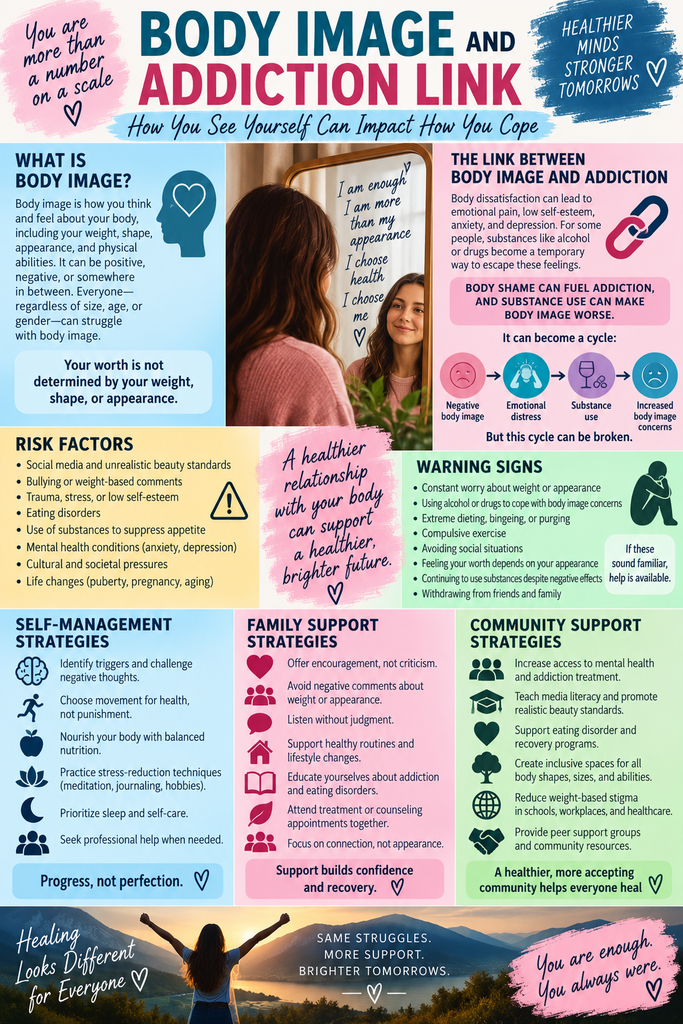
Body image is more than simply liking or disliking the way you look. It includes the thoughts, emotions, beliefs, and behaviors connected to your body, weight, shape, and appearance. When someone develops persistent body dissatisfaction, the emotional distress can influence eating, exercise, relationships, self-esteem, and sometimes substance use. For some people, alcohol or other drugs become a temporary way to escape shame, anxiety, loneliness, or feelings of inadequacy.
The connection can also work in the opposite direction. Substance use may affect weight, appetite, sleep, skin, physical health, and self-care, potentially worsening body-image concerns. Understanding this two-way relationship can help individuals and families recognize when appearance concerns and addictive behaviors are becoming part of the same unhealthy cycle.
What Is Body Image?
Body image describes how people perceive and feel about their bodies. A person can have a medically healthy body and still experience intense dissatisfaction with appearance. Conversely, someone may learn to respect and care for their body even when they do not feel completely confident about every aspect of it.
Body-image concerns can be influenced by many factors, including:
- Social-media comparisons.
- Weight stigma and bullying.
- Family attitudes about weight and appearance.
- Cultural beauty expectations.
- Trauma or rejection.
- Puberty, pregnancy, menopause, aging, or illness.
- Athletic or occupational pressures.
- Low self-esteem.
- Anxiety and depression.
- Repeated dieting and weight cycling.
There is rarely one single cause.
How Body Image and Addiction Can Become Connected
Someone who feels uncomfortable in their body may discover that alcohol or another substance temporarily changes how they feel. A substance might reduce social anxiety, numb emotional pain, increase confidence, suppress appetite, or provide temporary escape from obsessive thoughts.
The brain can begin learning a powerful association:
Body dissatisfaction → emotional distress → substance use → temporary relief.
When the uncomfortable feelings return, the person may use the substance again. Repetition can strengthen the behavior until substance use becomes an increasingly automatic response to distress.
This does not mean everyone with poor body image will develop addiction. Rather, body dissatisfaction can be one of several psychological and environmental factors that increase vulnerability in some individuals.
Eating Disorders and Substance Use
Body-image difficulties can also occur alongside eating disorders and substance-use disorders. Some individuals may misuse substances in attempts to change weight, suppress appetite, control emotions, or compensate for eating.
This combination can be particularly dangerous because malnutrition, dehydration, alcohol, medications, and other substances may place additional strain on the heart, liver, kidneys, brain, and other organs.
Warning signs may include:
- Severe food restriction.
- Binge eating or purging.
- Compulsive exercise.
- Constant weighing or body checking.
- Intense fear of gaining weight.
- Using substances to suppress appetite.
- Drinking or using drugs to cope with appearance-related anxiety.
- Avoiding social situations because of body shame.
- Feeling that personal worth depends primarily on weight or appearance.
These behaviors deserve professional assessment rather than criticism.
Social Media, Comparison, and Addiction Risk
Social media can expose people to an almost continuous stream of carefully selected bodies, fitness routines, diets, cosmetic procedures, and beauty trends. Filters, lighting, posing, editing, and professional styling can make unrealistic appearances seem ordinary.
Repeated comparison may leave someone thinking, “Why don’t I look like that?”
For a vulnerable person, those thoughts can contribute to shame, anxiety, extreme dieting, compulsive exercise, or unhealthy coping behaviors. Learning to question what we see online is therefore an important part of both body-image education and addiction prevention.
Body Image During Addiction Recovery
Recovery can bring unexpected body-image challenges.
When someone stops using alcohol or other drugs, appetite, metabolism, sleep, hydration, and daily routines may change. Weight may increase or decrease as the body stabilizes. Someone who expected recovery to make them immediately look healthier may become frustrated with these changes.
That frustration should not overshadow the larger goal.
Early recovery is about allowing the brain and body to heal—not achieving an ideal appearance.
Self-Management Strategies
Developing healthier body image does not require loving every part of your appearance every day. A more realistic goal may be to learn to respect the body and reduce the power that appearance has over self-worth.
Helpful strategies include:
- Identify triggers. Notice whether mirrors, photographs, certain people, social media, clothing sizes, or comments about weight trigger distress.
- Challenge negative self-talk. Replace “My body is terrible” with a more balanced statement such as “I am having a difficult body-image day, but my appearance does not determine my worth.”
- Practice body neutrality. Focus on what your body allows you to experience rather than constantly evaluating how it looks.
- Reduce comparison. Unfollow accounts that repeatedly trigger shame or unrealistic expectations.
- Choose movement for health. Exercise can support strength, mood, sleep, and recovery without becoming punishment for eating.
- Develop alternative coping skills. Journaling, meditation, hobbies, music, relaxation exercises, and supportive conversations can replace substance-based coping.
- Protect nutrition and sleep. Regular meals and adequate rest support emotional regulation and recovery.
- Ask for professional help. Persistent body-image distress, disordered eating, or substance misuse deserves appropriate assessment and treatment.
Family Support Strategies
Families can unintentionally strengthen body dissatisfaction through frequent conversations about weight, dieting, appearance, or food. Even seemingly positive comments about weight loss may be complicated for someone struggling with an eating disorder or addiction.
Families can help by:
- Avoiding negative comments about weight and body shape.
- Reducing constant diet and calorie conversations.
- Complimenting qualities unrelated to appearance.
- Modeling balanced eating and physical activity.
- Listening without minimizing someone’s concerns.
- Avoiding comparisons between siblings or family members.
- Supporting treatment appointments and recovery goals.
- Learning about both substance-use and eating disorders.
- Watching for significant changes in eating, exercise, mood, or substance use.
- Creating family activities that focus on connection rather than appearance.
The goal is not to monitor someone’s body. It is to create an environment where the person feels safe discussing what they are experiencing.
Community Support Strategies
Body image develops within a larger culture. Communities can therefore either reinforce unrealistic expectations or help challenge them.
Helpful community approaches include:
- Promoting diverse representation of body sizes, shapes, ages, abilities, and backgrounds.
- Providing accessible addiction and mental-health treatment.
- Teaching media literacy in schools.
- Addressing weight-based bullying and discrimination.
- Supporting eating-disorder prevention and treatment programs.
- Creating recovery groups where body-image concerns can be discussed safely.
- Training healthcare professionals to recognize co-occurring substance use and disordered eating.
- Offering recreational activities centered on enjoyment, health, and connection rather than weight loss.
- Challenging stigma surrounding addiction, eating disorders, and mental-health treatment.
A supportive community communicates a powerful message: people deserve care regardless of their appearance or diagnosis.
When Body Image Becomes a Warning Sign
Occasionally feeling dissatisfied with appearance is common. Concern increases when body-related thoughts begin controlling everyday life.
Someone may need additional support when they repeatedly avoid meals, binge or purge, misuse substances for weight control, compulsively exercise, isolate because of appearance, experience intense anxiety about weight gain, or feel unable to stop thinking about perceived physical flaws.
When substance use is also present, both issues should be evaluated. Treating only the addiction while ignoring severe body-image distress—or treating eating behaviors while ignoring substance misuse—may leave an important trigger unresolved.
Building Recovery Around Health, Not Perfection
Recovery offers an opportunity to redefine what it means to care for the body.
Instead of asking:
“How can I make my body look perfect?”
A person can begin asking:
“What does my body need to become healthier?”
The answer might involve nutrition, sleep, therapy, medication when appropriate, recovery support, meaningful relationships, movement, stress management, or simply giving the body time to heal.
Progress may mean becoming stronger rather than thinner, sleeping better rather than weighing less, attending treatment rather than hiding, or learning to experience uncomfortable emotions without escaping through substances.
Conclusion
Body image and addiction can become connected through shame, anxiety, social comparison, trauma, emotional distress, and attempts to control weight or escape uncomfortable feelings. Neither problem should be viewed as a failure of character or willpower.
Self-management can help people recognize triggers and develop healthier coping strategies. Families can reduce appearance-based criticism while providing encouragement and accountability. Communities can promote realistic body representation while improving access to addiction, eating-disorder, and mental-health services.
Recovery does not require creating a perfect body. It involves learning to care for the body you have while building a life no longer controlled by substances, shame, or appearance.
Your body is not a problem to solve. In recovery, it is something worth protecting.
Frequently Asked Questions
Here are some common questions:
1. Is there a connection between body image and addiction?
Yes. Body dissatisfaction can contribute to emotional distress, low self-esteem, anxiety, depression, and unhealthy coping behaviors. Some people may turn to alcohol or other drugs to temporarily escape these feelings. Substance use can then affect physical and mental health, potentially worsening body-image concerns and creating a difficult cycle.
2. How can poor body image contribute to substance use?
Someone who feels ashamed, anxious, or uncomfortable about their appearance may use substances to reduce emotional distress, feel more confident socially, escape negative thoughts, or attempt to control appetite or weight. Temporary relief can reinforce substance use as a coping strategy.
3. Can addiction make body-image problems worse?
Yes. Substance use can affect appetite, sleep, nutrition, weight, energy, skin, dental health, and overall physical well-being. These changes may increase dissatisfaction with one’s appearance, particularly for those who already struggle with self-esteem or body image.
4. Are eating disorders and substance-use disorders connected?
They can occur together. Some people with eating disorders also experience problematic alcohol or drug use. Substances may be used to suppress appetite, change weight, manage anxiety, numb emotional distress, or cope with concerns about eating and appearance.
Having one condition does not mean someone will automatically develop the other, but co-occurring symptoms deserve careful professional assessment.
5. Can someone become addicted to trying to change their appearance?
People can develop compulsive behaviors involving exercise, dieting, body checking, cosmetic procedures, or other attempts to change appearance. Not every repetitive appearance-related behavior represents addiction, however. A mental-health professional can determine whether the behavior reflects an eating disorder, body dysmorphic disorder, compulsive behavior, substance-use disorder, or another concern.
6. How does social media affect body image?
Social media can encourage comparison with carefully selected, filtered, posed, or edited images. Repeated exposure to unrealistic beauty standards may contribute to dissatisfaction and feelings of inadequacy in vulnerable individuals.
Media literacy can help people recognize that an online image does not necessarily represent someone’s everyday appearance or life.
7. What are warning signs that body image is becoming unhealthy?
Possible warning signs include:
- Constantly criticizing your appearance.
- Frequently checking mirrors or avoiding them entirely.
- Extreme dieting or food restriction.
- Binge eating or purging.
- Compulsive exercise.
- Intense fear of gaining weight.
- Avoiding social activities because of appearance.
- Believing your worth depends on your weight or shape.
- Using substances to cope with body-related anxiety.
- Using substances in attempts to control appetite or weight.
Persistent or severe symptoms should be discussed with a qualified healthcare professional.
8. Can body-image problems trigger relapse during addiction recovery?
They can be a trigger for some individuals. Changes in appetite, weight, appearance, and physical health may occur during recovery. If someone becomes distressed by these changes, alcohol or drugs may again appear to offer an escape.
A relapse-prevention plan should therefore consider body-image concerns when they are relevant to the individual.
9. Is gaining weight during recovery necessarily a bad thing?
No. Weight changes can occur as nutrition, hydration, sleep, hormones, medications, and daily routines stabilize. A person’s recovery progress should not be judged solely by the number on a scale.
Individual medical and nutritional concerns should be discussed with appropriate healthcare professionals.
10. What is body neutrality?
Body neutrality means reducing the emphasis placed on appearance and appreciating the body for its functions. Instead of feeling pressured to say, “I love everything about my body,” someone might say, “My body deserves nourishment, rest, movement, healthcare, and respect.”
This approach can be helpful for people who find traditional body-positive messages difficult.
11. What self-management strategies can improve body image during recovery?
Helpful strategies may include:
- Identifying body-image and substance-use triggers.
- Challenging negative self-talk.
- Reducing social-media comparison.
- Practicing body neutrality and self-compassion.
- Eating regularly and supporting adequate nutrition.
- Exercising for health rather than punishment.
- Developing alcohol- and drug-free coping strategies.
- Getting adequate sleep.
- Participating in therapy or recovery support.
- Asking for help when symptoms become difficult to manage.
12. How can families support someone struggling with body image and addiction?
Families can avoid criticizing weight, body shape, eating habits, or appearance. They can listen without judgment, recognize achievements unrelated to appearance, encourage healthy routines, learn about addiction and eating disorders, and support professional treatment.
Family members should focus on health, recovery, connection, and functioning rather than achieving a particular body size.
13. What should families avoid saying?
Comments such as “You look better because you’ve lost weight,” “You need to exercise more,” or “Just stop worrying about your body” may unintentionally increase distress.
Instead, families can recognize qualities such as courage, creativity, persistence, kindness, responsibility, and progress in recovery.
14. How can communities promote healthier body image and addiction recovery?
Communities can:
- Provide accessible mental health and addiction treatment.
- Promote diverse and realistic body representation.
- Address weight-based bullying and discrimination.
- Teach media literacy.
- Improve access to eating-disorder treatment.
- Provide peer recovery programs.
- Create inclusive recreational opportunities.
- Educate healthcare professionals about co-occurring disorders.
- Reduce stigma surrounding addiction and mental illness.
Community support helps people recognize that they do not have to recover alone.
15. When should someone seek professional help?
Professional evaluation is important when concerns about appearance, eating, exercise, alcohol, or drugs begin interfering with physical health, emotional well-being, relationships, school, work, or everyday activities.
Immediate medical attention may be necessary for severe intoxication, overdose, dangerous withdrawal symptoms, severe dehydration or malnutrition, fainting, chest symptoms, or other acute medical problems.
16. Can body-image problems and addiction be treated at the same time?
Yes. When the conditions co-occur, integrated treatment can address both rather than treating one while ignoring the other. Treatment may involve addiction professionals, mental-health clinicians, medical providers, registered dietitians, peer-support specialists, and family support depending on the person’s needs.
17. What is the most important message about body image and addiction?
A person’s appearance does not determine their value or the success of their recovery. Healing involves developing healthier ways to manage emotions while caring for physical and mental health.
Video: Why body image issues lead to substance use #addiction #mentalhealth