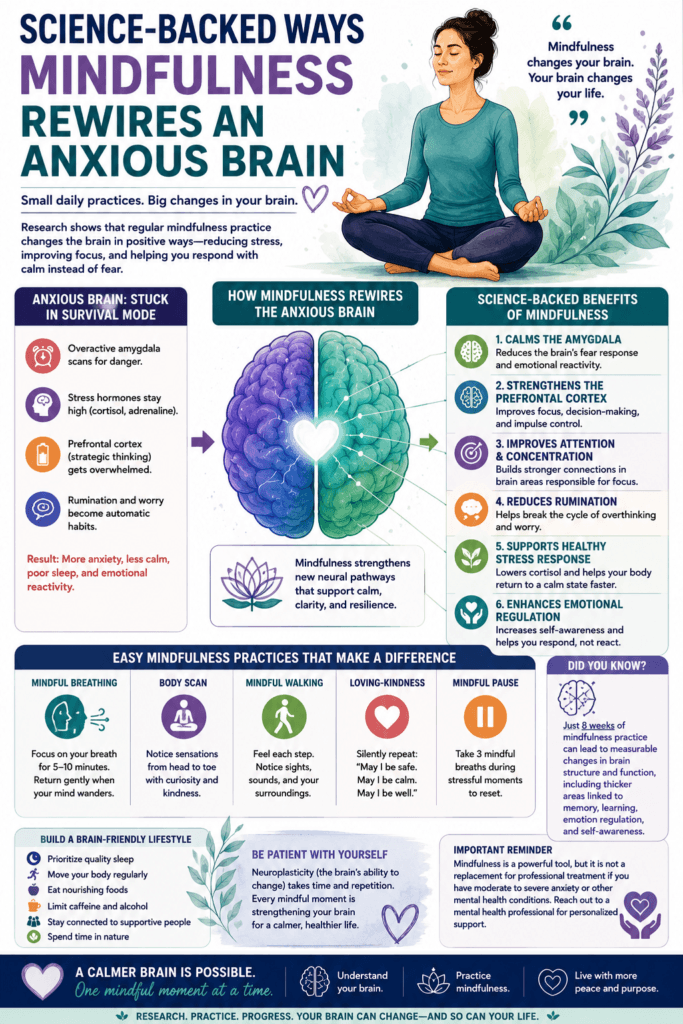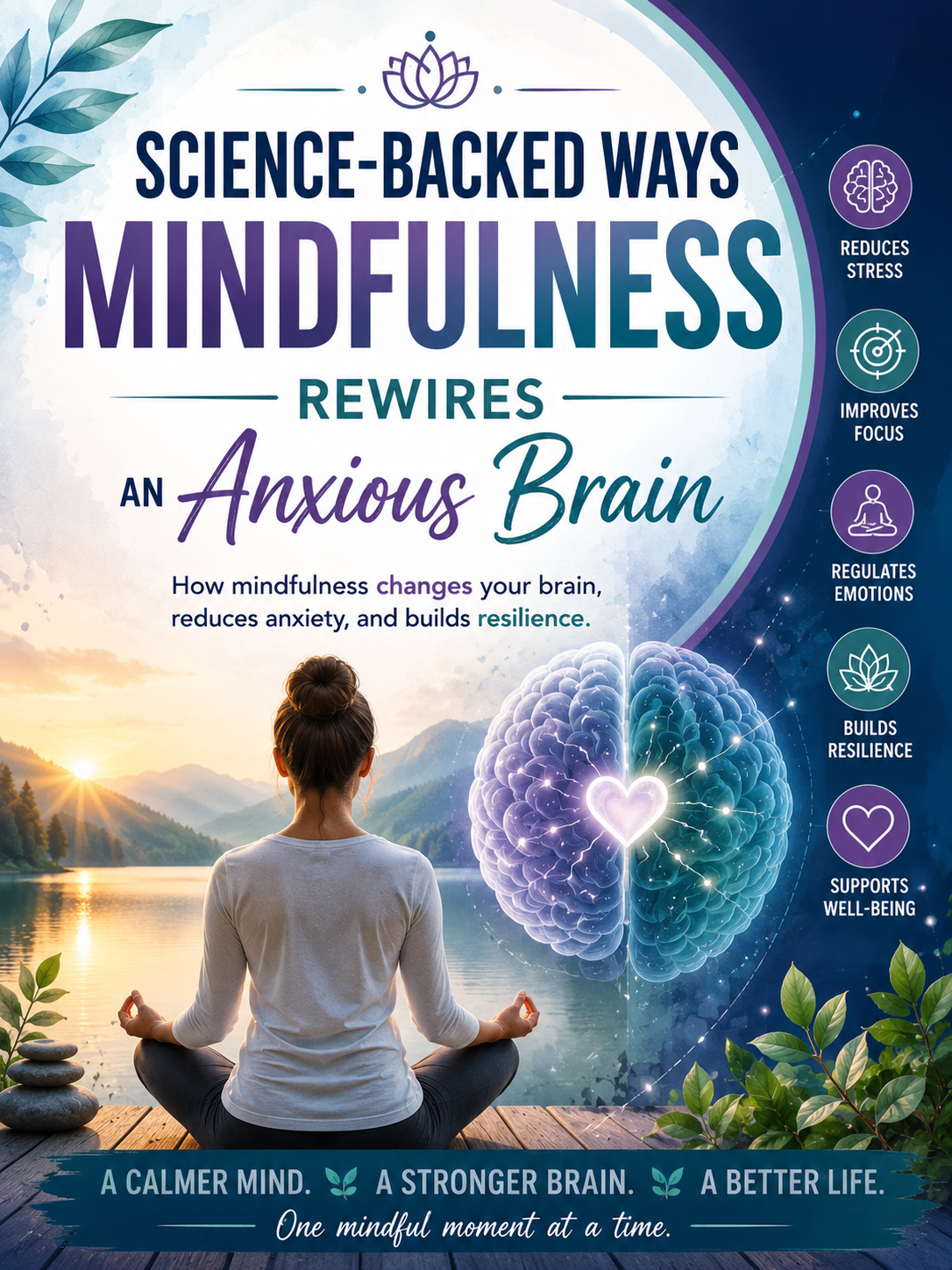
Anxiety is one of the most common mental health concerns worldwide, affecting how people think, feel, and respond to everyday stress. When anxiety becomes chronic, it can keep the brain in a constant state of heightened alertness, making it difficult to concentrate, relax, sleep, or regulate emotions. Growing research in neuroscience has shown that mindfulness—the practice of intentionally focusing on the present moment with openness and without judgment—can help strengthen the brain’s ability to manage stress and reduce anxiety. Regular mindfulness practice has been associated with improvements in attention, emotional regulation, self-awareness, and resilience by influencing brain networks involved in fear, learning, and decision-making. Understanding the science behind mindfulness helps individuals appreciate how consistent practice can complement healthy lifestyle habits and evidence-based mental health treatment.
Science-Backed Ways Mindfulness Rewires an Anxious Brain
Mindfulness is the practice of intentionally paying attention to the present moment with openness, curiosity, and without judgment. Over the past two decades, research in neuroscience and psychology has shown that regular mindfulness practice can improve emotional regulation, reduce anxiety symptoms, and change patterns of brain activity associated with chronic stress. Rather than eliminating anxious thoughts, mindfulness helps people respond to them more skillfully, reducing their emotional impact over time. Although mindfulness is not a cure for anxiety disorders and should not replace professional treatment when needed, it is a well-supported complementary strategy that can enhance mental well-being.
How Anxiety Affects the Brain
Anxiety activates the body’s stress response system, preparing a person to respond to perceived threats. While this response is protective in dangerous situations, chronic anxiety can keep the brain in a prolonged state of heightened alertness.
Brain areas commonly involved include:
- Amygdala: Detects potential threats and generates fear responses. Chronic anxiety is associated with increased amygdala activity.
- Prefrontal cortex: Helps regulate emotions, make decisions, and control impulses. Under chronic stress, this region may have more difficulty regulating emotional responses.
- Hippocampus: Supports learning and memory. Prolonged stress has been associated with changes in hippocampal structure and function.
- Anterior cingulate cortex: Contributes to attention, emotional regulation, and error monitoring.
Persistent activation of stress pathways may contribute to excessive worry, muscle tension, difficulty concentrating, irritability, and sleep problems.
How Mindfulness Influences the Brain
Research suggests that consistent mindfulness practice can strengthen brain networks involved in attention and emotional regulation while reducing reactivity to stress.
1. Reduces Amygdala Reactivity
One of the most consistent findings in mindfulness research is reduced amygdala activation during emotionally stressful situations.
Potential benefits include:
- Less emotional reactivity
- Reduced fear responses
- Improved stress tolerance
- Greater emotional stability
People may still experience anxious thoughts, but they often respond with less intensity.
2. Strengthens the Prefrontal Cortex
Mindfulness encourages deliberate, nonreactive awareness, engaging regions of the prefrontal cortex involved in executive functioning.
Regular practice has been associated with improvements in:
- Decision-making
- Attention
- Emotional regulation
- Impulse control
- Problem-solving
- Cognitive flexibility
These changes may help people pause before reacting automatically to anxious thoughts.
3. Improves Attention Control
Anxiety often pulls attention toward worries about the future or memories of past events. Mindfulness trains attention to return gently to the present moment.
With practice, individuals may develop a greater ability to:
- Notice distracting thoughts
- Refocus attention
- Reduce rumination
- Improve concentration
- Stay engaged in daily activities
4. Decreases Rumination
Rumination involves repeatedly dwelling on distressing thoughts or imagined worst-case scenarios.
Mindfulness helps individuals:
- Observe thoughts without becoming absorbed in them
- Recognize that thoughts are mental events rather than facts
- Shift attention away from repetitive worry
- Reduce emotional escalation
This skill can lessen the cycle of anxiety over time.
5. Supports Healthier Stress Hormone Regulation
Chronic anxiety is associated with repeated activation of the body’s stress response, including the release of cortisol.
Research suggests that mindfulness may help:
- Lower perceived stress
- Improve recovery after stressful events
- Reduce physiological arousal
- Promote relaxation
Results vary among individuals, and mindfulness is most effective when practiced consistently.
6. Improves Emotional Regulation
Mindfulness teaches people to acknowledge emotions without immediately reacting to them.
Benefits include:
- Greater awareness of emotional triggers
- Increased self-compassion
- Improved frustration tolerance
- Reduced impulsive reactions
- More thoughtful decision-making
Emotions become easier to recognize and manage rather than suppress.
7. Enhances Self-Awareness
Mindfulness increases awareness of internal experiences, including thoughts, emotions, physical sensations, and behavioral patterns.
This awareness can help individuals:
- Recognize early signs of anxiety
- Identify personal triggers
- Notice unhealthy coping habits
- Develop healthier responses
- Seek help sooner when symptoms worsen
8. Improves Sleep Quality
Anxiety frequently interferes with sleep by increasing mental and physical arousal.
Mindfulness practices before bedtime may help some individuals:
- Quiet repetitive thoughts
- Relax the body
- Improve sleep quality
- Reduce nighttime worry
- Establish healthier bedtime routines
Better sleep can, in turn, reduce anxiety symptoms.
9. Supports Recovery From Addiction
Mindfulness has also been incorporated into relapse prevention programs for substance use disorders.
It may help individuals:
- Recognize cravings without acting on them
- Increase tolerance for uncomfortable emotions
- Reduce impulsive behaviors
- Strengthen emotional regulation
- Develop healthier coping skills
Mindfulness-based interventions are generally used alongside, not instead of, evidence-based addiction treatment.
Effective Mindfulness Practices
Regular practice is more important than long sessions. Helpful techniques include:
- Mindful breathing
- Body scan meditation
- Mindful walking
- Guided meditation
- Mindful eating
- Gentle yoga
- Loving-kindness meditation
- Mindful observation of thoughts and emotions
- Progressive muscle relaxation combined with mindful awareness
Practicing for even 10–20 minutes most days may provide benefits over time.
What the Research Shows
Studies of mindfulness-based programs, such as Mindfulness-Based Stress Reduction (MBSR) and Mindfulness-Based Cognitive Therapy (MBCT), have found that they can reduce symptoms of anxiety, stress, and depression in many individuals. These approaches are supported by numerous clinical trials and are often recommended as complementary treatments alongside psychotherapy, medication when indicated, exercise, healthy sleep, and other evidence-based interventions. Individual results vary, and mindfulness is not a replacement for professional care in moderate to severe anxiety disorders.
When Professional Help Is Needed
Mindfulness is a valuable self-management tool, but it should not be the only treatment if anxiety is severe or significantly interferes with daily life.
Seek professional evaluation if anxiety:
- Persists for several weeks or months
- Causes panic attacks
- Interferes with work, school, or relationships
- Leads to avoidance of important activities
- Is accompanied by depression or substance misuse
- Includes thoughts of self-harm or suicide
Evidence-based treatments such as psychotherapy, medication when appropriate, or a combination of both may be necessary.
Conclusion
Scientific research continues to demonstrate that mindfulness can positively influence brain function by strengthening attention, improving emotional regulation, reducing stress reactivity, and decreasing habitual patterns of worry. While it does not eliminate anxiety or permanently “rewire” the brain in a simple or guaranteed way, consistent mindfulness practice can promote adaptive changes in brain function and support healthier responses to stress. Combined with professional treatment, healthy lifestyle habits, and strong social support when needed, mindfulness offers a practical, evidence-based approach to building resilience and improving overall mental well-being.
Self-Management Strategies to Understand Science-Backed Ways Mindfulness Rewires an Anxious Brain
Mindfulness is a practical, evidence-based skill that helps individuals become more aware of their thoughts, emotions, and physical sensations without reacting automatically. Research suggests that consistent mindfulness practice can reduce anxiety symptoms by improving attention, strengthening emotional regulation, and decreasing the brain’s stress response. Although mindfulness is not a cure for anxiety disorders, it can be an effective self-management strategy when combined with healthy lifestyle habits and professional treatment when needed. Developing a regular mindfulness routine allows individuals to respond more calmly to stress and build greater emotional resilience over time.
1. Practice Mindful Breathing Every Day
Mindful breathing is one of the simplest and most effective ways to calm the nervous system.
Try this exercise:
- Sit comfortably.
- Breathe in slowly through your nose.
- Exhale gently through your mouth.
- Focus only on your breathing.
- When your mind wanders, gently return your attention to your breath.
Practicing for 5–10 minutes daily can help reduce stress and improve focus.
2. Observe Thoughts Without Judging Them
Mindfulness teaches you to notice anxious thoughts without believing or fighting them.
Instead of thinking:
- “Something terrible is going to happen.”
Practice saying:
- “I’m noticing that I’m having an anxious thought.”
This simple shift creates psychological distance from worry and reduces emotional reactivity.
3. Practice the Body Scan Technique
Anxiety often causes muscle tension that goes unnoticed.
Once or twice each day:
- Close your eyes.
- Slowly focus attention from your head to your toes.
- Notice areas of tightness.
- Relax each muscle group with slow breathing.
Body scans improve awareness of stress before it becomes overwhelming.
4. Focus on the Present Moment
Anxiety often centers on future uncertainty or past events.
When you notice your mind wandering:
Ask yourself:
- What do I see?
- What do I hear?
- What do I feel?
- What do I smell?
- What can I touch?
Grounding yourself in the present moment interrupts cycles of excessive worry.
5. Develop a Consistent Meditation Routine
Consistency is more important than the length of each session.
Start with:
- 5 minutes daily
- Gradually increase to 15–20 minutes
- Practice at the same time each day
Regular practice strengthens attention and emotional regulation over time.
6. Limit Information Overload
Constant exposure to stressful news, social media, or digital notifications can increase anxiety.
Healthy strategies include:
- Setting screen-time limits
- Taking breaks from social media
- Turning off unnecessary notifications
- Scheduling specific times to check the news
- Spending time outdoors without electronic devices
Reducing mental overload allows the brain to recover from chronic stress.
7. Build Healthy Daily Habits
Mindfulness works best when combined with healthy lifestyle choices.
Support your brain by:
- Getting 7–9 hours of sleep
- Exercising regularly
- Eating nutritious meals
- Staying hydrated
- Limiting caffeine if it worsens anxiety
- Avoiding alcohol or recreational drugs as coping mechanisms
- Maintaining a consistent daily routine
Healthy habits improve emotional and physical resilience.
8. Practice Self-Compassion
Many anxious individuals are highly self-critical.
Replace harsh self-talk with compassionate reminders such as:
- “I’m doing the best I can today.”
- “It’s okay to feel anxious.”
- “I don’t have to be perfect.”
- “Recovery takes time.”
Treat yourself with the same kindness you would offer a close friend.
9. Keep a Mindfulness Journal
Writing about your experiences helps increase self-awareness.
Record:
- Stress triggers
- Physical sensations
- Emotional responses
- Mindfulness exercises practiced
- Anxiety levels before and after practice
- Positive changes you notice
Tracking progress can reinforce healthy habits and identify patterns over time.
10. Practice Mindfulness During Everyday Activities
Mindfulness is not limited to meditation.
Practice being fully present while:
- Eating meals
- Walking
- Washing dishes
- Drinking coffee or tea
- Showering
- Gardening
- Exercising
- Driving (while staying attentive to the road)
Every day, mindfulness strengthens attention and reduces automatic stress reactions.
11. Learn to Recognize Your Anxiety Triggers
Understanding what increases your anxiety allows you to prepare healthier responses.
Common triggers include:
- Work deadlines
- Financial concerns
- Relationship conflict
- Lack of sleep
- Excessive caffeine
- Health worries
- Major life changes
Recognizing triggers helps you respond proactively instead of reactively.
12. Know When to Seek Professional Help
Mindfulness is a valuable self-management tool, but it is not a substitute for professional care when anxiety becomes severe.
Seek professional evaluation if anxiety:
- Persists for several weeks or longer
- Interferes with work, school, or relationships
- Causes panic attacks
- Leads to avoidance of important activities
- Is accompanied by depression or substance misuse
- Includes thoughts of self-harm or suicide
Treatment may include psychotherapy, medication when appropriate, or mindfulness-based therapies such as Mindfulness-Based Stress Reduction (MBSR) or Mindfulness-Based Cognitive Therapy (MBCT).
Building a Mindful Brain for Long-Term Emotional Wellness
Mindfulness is a skill that becomes stronger with consistent practice. Research suggests that regularly practicing mindful awareness can improve attention, strengthen emotional regulation, reduce stress reactivity, and help individuals respond more calmly to anxious thoughts. While mindfulness does not eliminate anxiety or replace professional treatment when needed, it can support healthier brain function and improve overall well-being. By combining mindfulness with healthy lifestyle habits, self-compassion, supportive relationships, and evidence-based mental healthcare, individuals can develop greater resilience, manage stress more effectively, and foster long-term emotional health.
Family Support Strategies to Understand Science-Backed Ways Mindfulness Rewires an Anxious Brain
Families play an important role in supporting loved ones who experience anxiety. While mindfulness is a personal practice, a supportive family environment can encourage consistency, reduce stress, and reinforce healthy coping skills. Research suggests that regular mindfulness practice may improve attention, emotional regulation, and stress management by influencing brain networks involved in anxiety. Although mindfulness is not a replacement for professional treatment, families can help create conditions that make it easier for loved ones to practice mindfulness and apply these skills in everyday life.
1. Learn About Anxiety and Mindfulness Together
Educate yourself about how anxiety affects the brain and how mindfulness can support emotional well-being.
Learn about:
- The body’s stress response
- Common symptoms of anxiety
- Healthy coping strategies
- Mindfulness techniques
- The role of professional treatment
- The importance of consistent practice
Understanding these concepts helps families respond with empathy instead of frustration or misunderstanding.
2. Encourage Open Conversations About Anxiety
Create a safe environment where your loved one feels comfortable discussing their emotions.
Helpful conversation starters include:
- “How have you been feeling lately?”
- “What situations make you feel most anxious?”
- “How can I support you today?”
- “Would you like to practice a relaxation exercise together?”
Listening without interrupting or minimizing feelings helps strengthen trust.
3. Practice Mindfulness Together
Mindfulness often becomes easier when practiced as a family.
Activities may include:
- Five-minute breathing exercises
- Guided meditation
- Mindful walking
- Gentle stretching or yoga
- Body scan relaxation
- Gratitude exercises
- Quiet reflection before bedtime
Practicing together promotes accountability and strengthens family relationships.
4. Model Calm and Healthy Coping Skills
Family members influence one another through their own behaviors.
Demonstrate healthy coping by:
- Remaining calm during stressful situations.
- Practicing deep breathing.
- Taking breaks when overwhelmed.
- Using respectful communication.
- Managing conflicts constructively.
- Practicing mindfulness yourself.
Children and adults often learn healthy emotional regulation by observing others.
5. Reduce Unnecessary Stress at Home
A calm environment supports emotional regulation and complements mindfulness practice.
Helpful strategies include:
- Maintaining predictable routines
- Reducing excessive noise when possible
- Planning family schedules realistically
- Encouraging regular sleep schedules
- Creating quiet spaces for relaxation
- Promoting balanced work-life responsibilities
Reducing chronic stress makes mindfulness skills more effective.
6. Encourage Healthy Lifestyle Habits
Mindfulness works best alongside healthy daily routines.
Support your loved one by encouraging:
- Regular exercise
- Balanced nutrition
- Adequate hydration
- Consistent sleep
- Time outdoors
- Limited alcohol or recreational drug use
- Reduce caffeine intake if it worsens anxiety
Healthy habits support both brain function and emotional well-being.
7. Avoid Dismissing Anxiety
Statements that minimize anxiety may unintentionally increase shame or discourage open communication.
Avoid saying:
- “Just relax.”
- “You’re worrying too much.”
- “It’s all in your head.”
- “You should be over this.”
Instead, try saying:
- “I’m here for you.”
- “That sounds really difficult.”
- “Thank you for telling me.”
- “Let’s work through this together.”
Validation helps reduce isolation and builds emotional safety.
8. Support Consistent Mindfulness Practice
Mindfulness is most effective when practiced regularly.
Families can encourage consistency by:
- Setting aside quiet time each day.
- Practicing together.
- Celebrating progress rather than perfection.
- Respecting personal meditation time.
- Encouraging gentle persistence after missed sessions.
Small, consistent efforts are often more sustainable than occasional long sessions.
9. Recognize When Professional Help Is Needed
Mindfulness can be an excellent coping tool, but it may not be sufficient for moderate to severe anxiety disorders.
Encourage professional evaluation if your loved one experiences:
- Persistent anxiety lasting several weeks or longer
- Panic attacks
- Difficulty functioning at work or school
- Social withdrawal
- Depression
- Substance use as a coping strategy
- Thoughts of self-harm or suicide
Professional treatment may include psychotherapy, medication when appropriate, or structured mindfulness-based therapies.
10. Celebrate Progress and Be Patient
Recovery from anxiety is usually gradual rather than immediate.
Celebrate achievements such as:
- Completing a mindfulness session
- Managing a stressful situation calmly
- Attending therapy
- Using healthy coping strategies
- Improving sleep habits
- Returning to enjoyable activities
Recognizing small successes helps maintain motivation and confidence.
11. Care for Your Own Mental Well-Being
Supporting someone with anxiety can be emotionally demanding. Family members should also prioritize their own mental health.
Healthy caregiver strategies include:
- Practicing mindfulness yourself
- Maintaining hobbies and friendships
- Exercising regularly
- Setting healthy boundaries
- Seeking counseling if needed
- Joining caregiver or family support groups
- Taking time to rest and recharge
When caregivers care for themselves, they are better able to provide steady and compassionate support.
12. Foster a Family Culture of Emotional Wellness
Encourage mental wellness as an ongoing family value, rather than addressing it only during times of crisis.
Create habits such as:
- Regular family check-ins about stress and emotions
- Shared relaxation activities
- Open conversations about mental health
- Encouraging help-seeking without shame
- Celebrating resilience and healthy coping
A supportive family culture helps reduce stigma and promotes lifelong emotional health.
Strengthening Recovery Through Family Support
Families can play a meaningful role in helping loved ones benefit from mindfulness by creating an environment of patience, understanding, and encouragement. While mindfulness does not eliminate anxiety or replace professional treatment, research suggests that regular practice can improve emotional regulation, reduce stress reactivity, and support healthier responses to anxious thoughts. By learning about anxiety, practicing mindfulness together, modeling healthy coping skills, and encouraging professional care when needed, families can help build resilience and foster lasting emotional well-being. A compassionate, informed family approach provides a strong foundation for recovery and empowers individuals to navigate life’s challenges with greater confidence and calm.
Community Resource Strategies to Understand Science-Backed Ways Mindfulness Rewires an Anxious Brain
Communities play an important role in promoting mental wellness by providing education, support, and access to evidence-based resources that complement professional mental healthcare. Research suggests that mindfulness can help reduce anxiety by improving emotional regulation, strengthening attention, and decreasing stress reactivity. While mindfulness is not a replacement for psychotherapy or medication when clinically indicated, community programs can help individuals learn and practice mindfulness in supportive environments. Accessible resources also reduce stigma, encourage early intervention, and help people build healthy coping skills before anxiety becomes overwhelming.
1. Utilize Community Mental Health Centers
Community mental health centers often provide affordable behavioral health services and can incorporate mindfulness into comprehensive treatment plans.
Services may include:
- Mental health assessments
- Individual counseling
- Group therapy
- Mindfulness-based therapy groups
- Stress management classes
- Medication management
- Crisis intervention
- Referrals to specialized care
Many centers offer sliding-scale fees or accept public and private insurance.
2. Participate in Mindfulness-Based Programs
Many hospitals, wellness centers, universities, and nonprofit organizations offer structured mindfulness programs.
These may include:
- Mindfulness-Based Stress Reduction (MBSR)
- Mindfulness-Based Cognitive Therapy (MBCT)
- Meditation classes
- Stress reduction workshops
- Mindful movement programs
- Guided relaxation sessions
These evidence-informed programs teach practical skills for managing stress and anxiety.
3. Join Peer Support Groups
Peer support groups provide opportunities to connect with others who understand the challenges of anxiety and emotional stress.
Benefits include:
- Reduced isolation
- Shared coping strategies
- Emotional encouragement
- Increased confidence
- Greater accountability for healthy habits
- A sense of belonging
Peer support complements, but does not replace, professional mental health treatment.
4. Explore Community Wellness Centers
Many recreation centers, community organizations, and wellness programs offer activities that support mindfulness and emotional well-being.
Examples include:
- Yoga classes
- Tai Chi
- Qigong
- Guided breathing sessions
- Walking groups
- Nature-based wellness activities
- Relaxation workshops
These activities encourage physical movement while promoting mental calmness and resilience.
5. Utilize Libraries and Educational Programs
Public libraries, colleges, and community education programs frequently provide free or low-cost mental health education.
Topics may include:
- Understanding anxiety
- Mindfulness techniques
- Stress management
- Healthy sleep habits
- Emotional resilience
- Self-care practices
- Building healthy relationships
Educational opportunities empower individuals to better understand their mental health and learn practical coping skills.
6. Access Telehealth and Digital Mental Health Resources
Many communities now provide virtual behavioral health services, making mindfulness education more accessible.
Available resources may include:
- Online therapy
- Virtual mindfulness classes
- Guided meditation sessions
- Mental wellness webinars
- Mobile mindfulness applications
- Online support groups
Telehealth helps reduce transportation and scheduling barriers while maintaining access to quality care.
7. Participate in Workplace Wellness Programs
Many employers partner with community organizations to offer wellness initiatives that include mindfulness education.
Programs may feature:
- Stress management workshops
- Employee Assistance Programs (EAPs)
- Mindfulness training
- Burnout prevention seminars
- Mental health awareness events
- Resilience-building activities
These services encourage employees to develop healthy coping skills while reducing workplace stress.
8. Engage with Faith-Based and Community Organizations
Many faith communities and nonprofit organizations provide emotional support and wellness activities that complement professional care.
They may offer:
- Meditation or prayer groups
- Spiritual counseling
- Support groups
- Volunteer opportunities
- Family wellness programs
- Community outreach
For many individuals, combining spiritual support with evidence-based mental healthcare provides additional comfort and resilience.
9. Promote Mental Health Awareness in the Community
Communities can reduce stigma by increasing education about anxiety and mindfulness.
Examples include:
- Mental health awareness campaigns
- Public seminars
- School wellness initiatives
- Health fairs
- Community workshops
- Social media education
- Local wellness events
Increasing awareness encourages individuals to seek help early and recognize that anxiety is a treatable medical condition.
10. Know When to Access Crisis Services
Mindfulness is helpful for managing everyday stress and anxiety, but it is not appropriate as the sole intervention during a mental health crisis.
Seek immediate professional help if someone experiences:
- Thoughts of suicide or self-harm
- Severe panic that prevents normal functioning
- Hallucinations or delusions
- Extreme confusion
- Inability to care for themselves
- Rapidly worsening mental health symptoms
In the United States, individuals can call or text 988 to reach the 988 Suicide & Crisis Lifeline for immediate emotional support. If there is immediate danger, call 911 or go to the nearest emergency department.
11. Encourage Ongoing Learning and Practice
Mindfulness is a skill that improves with consistent practice. Community organizations can support long-term success by encouraging participation in:
- Weekly meditation groups
- Wellness challenges
- Continuing education classes
- Supportive social activities
- Volunteer opportunities
- Healthy lifestyle programs
Ongoing engagement helps reinforce healthy habits and strengthens emotional resilience.
12. Build a Community Network That Supports Mental Wellness
Long-term emotional health is strengthened when individuals have access to a broad network of support.
Helpful community connections include:
- Primary care providers
- Therapists and counselors
- Psychiatrists
- Community mental health centers
- Peer support specialists
- Wellness coaches
- Faith leaders
- Recreation centers
- Libraries
- Nonprofit mental health organizations
A diverse support network increases access to resources and encourages individuals to remain engaged in their mental wellness journey.
Building Healthier Communities Through Mindfulness and Mental Health Support
Communities have an important role in promoting emotional well-being by making mindfulness education, behavioral healthcare, and wellness resources accessible to everyone. Research suggests that regular mindfulness practice can support healthier responses to stress, improve emotional regulation, and reduce anxiety when integrated into a comprehensive approach to mental health. By combining mindfulness programs with professional treatment, peer support, healthy lifestyle initiatives, and public education, communities can help individuals develop resilience, reduce stigma, and improve overall quality of life. A collaborative, compassionate community environment empowers people to care for their mental health, seek help when needed, and build lasting emotional wellness for themselves and future generations.
Frequently Asked Questions
Here are some common questions:
1. What is mindfulness?
Answer:
Mindfulness is the practice of intentionally paying attention to the present moment with openness, curiosity, and without judgment. It involves noticing your thoughts, emotions, physical sensations, and surroundings rather than becoming overwhelmed by them. Mindfulness can be practiced through meditation and during everyday activities such as walking, eating, or breathing.
2. Can mindfulness really change the brain?
Answer:
Research suggests that regular mindfulness practice can lead to measurable changes in brain function and, in some studies, brain structure through neuroplasticity—the brain’s ability to adapt and form new neural connections. These changes are associated with improved attention, emotional regulation, and stress management. Results vary among individuals, and mindfulness works best when practiced consistently over time.
3. How does mindfulness help reduce anxiety?
Answer:
Mindfulness helps people recognize anxious thoughts without automatically reacting to them. With regular practice, many individuals experience:
- Less emotional reactivity
- Reduced rumination and worry
- Improved concentration
- Better emotional regulation
- Greater awareness of stress triggers
- Increased ability to remain calm during challenging situations
These skills can reduce the impact of anxiety on daily life.
4. Which parts of the brain are involved?
Answer:
Mindfulness is associated with changes in activity and connectivity in several brain regions involved in emotional processing and self-regulation, including:
- Amygdala: May become less reactive to perceived threats.
- Prefrontal cortex: Supports planning, attention, and emotion regulation.
- Hippocampus: Plays a role in learning and memory.
- Anterior cingulate cortex: Contributes to attention and emotional regulation.
These findings come from neuroimaging studies, although changes differ among individuals and depend on factors such as practice duration and study design.
5. How long does it take to notice benefits?
Answer:
Some people notice improvements in stress levels after a few weeks of regular practice, while others require more time. Studies of structured mindfulness programs often evaluate outcomes after about eight weeks, though individual experiences vary. Consistency is generally more important than the length of any single session.
6. How much mindfulness should I practice each day?
Answer:
Many experts recommend starting with 5–10 minutes per day and gradually increasing to 15–20 minutes or more as you become more comfortable. Short, consistent practice is often more effective than occasional long sessions.
7. Does mindfulness stop anxious thoughts completely?
Answer:
No. Mindfulness does not eliminate anxious thoughts. Instead, it teaches you to notice thoughts without automatically believing them or reacting to them. Over time, many people find that anxious thoughts become less disruptive and easier to manage.
8. Can mindfulness replace therapy or medication?
Answer:
Not usually. Mindfulness is considered a helpful complementary strategy, but it is not a replacement for evidence-based treatment when anxiety is moderate to severe. Many people benefit from combining mindfulness with psychotherapy, medication when appropriate, healthy lifestyle habits, and social support.
9. What are some simple mindfulness exercises?
Answer:
Beginner-friendly practices include:
- Mindful breathing
- Body scan meditation
- Mindful walking
- Guided meditation
- Mindful eating
- Loving-kindness meditation
- Gentle yoga with mindful awareness
- Five-senses grounding exercises
Choose one practice and perform it consistently each day.
10. Can mindfulness improve sleep?
Answer:
Yes. Many people find that mindfulness helps quiet racing thoughts, reduce physical tension, and establish relaxing bedtime routines. Improved sleep may also reduce anxiety symptoms, although persistent insomnia should be discussed with a healthcare provider.
11. Can mindfulness help people recovering from addiction?
Answer:
Yes. Mindfulness-based approaches can help some people recognize cravings, tolerate uncomfortable emotions, reduce impulsive reactions, and strengthen relapse prevention skills. These approaches are most effective when used alongside comprehensive addiction treatment rather than as a stand-alone intervention.
12. Are there scientific studies supporting mindfulness?
Answer:
Yes. Numerous clinical studies have found that structured programs such as Mindfulness-Based Stress Reduction (MBSR) and Mindfulness-Based Cognitive Therapy (MBCT) can reduce symptoms of anxiety, depression, and stress for many individuals. While results vary, mindfulness has become an evidence-informed component of many mental health treatment plans.
13. Is mindfulness safe for everyone?
Answer:
Mindfulness is generally safe for most people, but some individuals—particularly those with severe trauma histories, active psychosis, or significant emotional distress—may find certain practices difficult. In these situations, mindfulness should be introduced under the guidance of a qualified mental health professional who can tailor the approach to the individual’s needs.
14. What healthy habits make mindfulness more effective?
Answer:
Mindfulness is often most beneficial when combined with:
- Regular physical activity
- Healthy nutrition
- Adequate sleep
- Limiting excessive caffeine if it increases anxiety
- Avoiding alcohol or recreational drugs as coping mechanisms
- Maintaining supportive relationships
- Consistent daily routines
- Ongoing professional treatment when needed
A holistic approach supports overall brain and emotional health.
15. When should someone seek professional help for anxiety?
Answer:
Professional evaluation is recommended if anxiety:
- Persists for several weeks or longer
- Interferes with work, school, or relationships
- Causes panic attacks
- Leads to avoidance of important activities
- Occurs alongside depression or substance misuse
- Includes thoughts of self-harm or suicide
Early treatment often leads to better long-term outcomes.
16. Can children and older adults practice mindfulness?
Answer:
Yes. Mindfulness techniques can be adapted for different ages and abilities. Children may benefit from short, playful exercises, while older adults often use mindfulness to manage stress, chronic pain, sleep difficulties, or anxiety. Instruction should be appropriate for the individual’s developmental stage and health needs.
17. How can I stay motivated to practice mindfulness?
Answer:
Helpful strategies include:
- Scheduling practice at the same time each day
- Starting with brief sessions
- Using guided meditation recordings
- Practicing with family or friends
- Tracking your progress in a journal
- Focusing on gradual improvement rather than perfection
Consistency helps build mindfulness into a lasting habit.
18. What is the most important message about mindfulness and anxiety?
Answer:
Mindfulness is a practical, evidence-based skill that can help many people manage anxiety by improving attention, emotional regulation, and resilience to stress. Although it does not eliminate anxiety or replace professional treatment when needed, regular mindfulness practice can become an important part of a comprehensive mental wellness plan. When combined with healthy lifestyle habits, supportive relationships, and evidence-based healthcare, mindfulness empowers individuals to respond to life’s challenges with greater calm, self-awareness, and confidence, while supporting long-term emotional well-being.
Conclusion
Scientific research continues to support mindfulness as an effective tool for managing anxiety and improving emotional well-being. While mindfulness does not eliminate anxiety or cure mental health disorders, consistent practice can help individuals respond more calmly to stressful situations, reduce rumination, improve focus, and strengthen emotional regulation. When combined with healthy sleep, regular physical activity, supportive relationships, and professional care when needed, mindfulness becomes an important part of a comprehensive approach to mental wellness. By practicing mindfulness regularly and recognizing when additional support is necessary, individuals can build greater resilience, improve their quality of life, and develop healthier ways of responding to life’s challenges with greater confidence, balance, and self-compassion.
Video: The Neuroscience Hack That Stops Anxiety Spirals #braintraining #mentalwellness #stressrelief