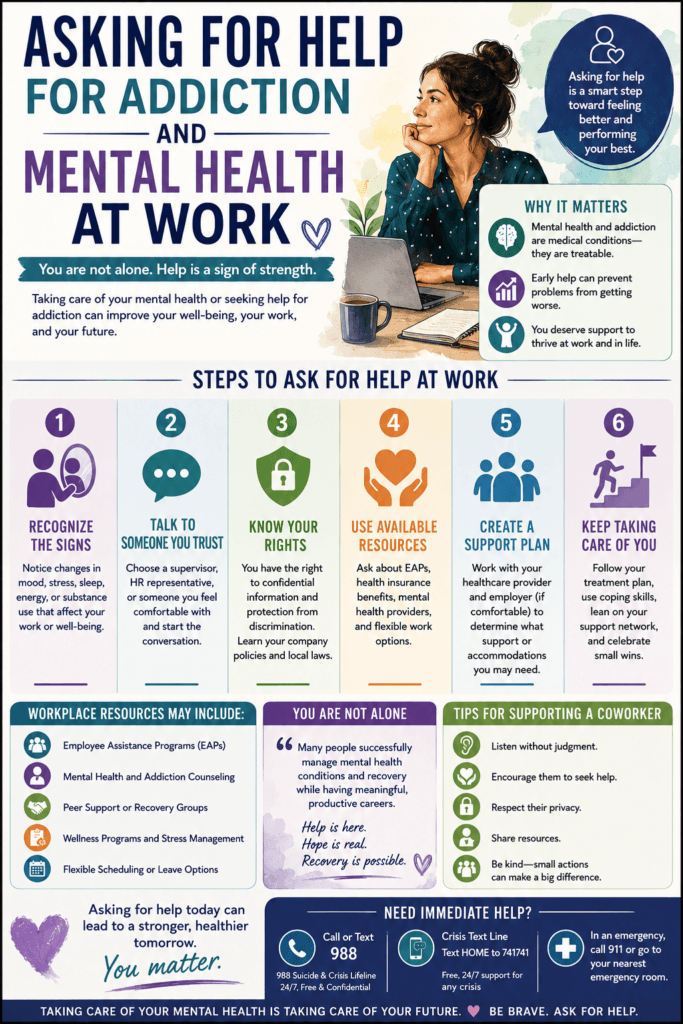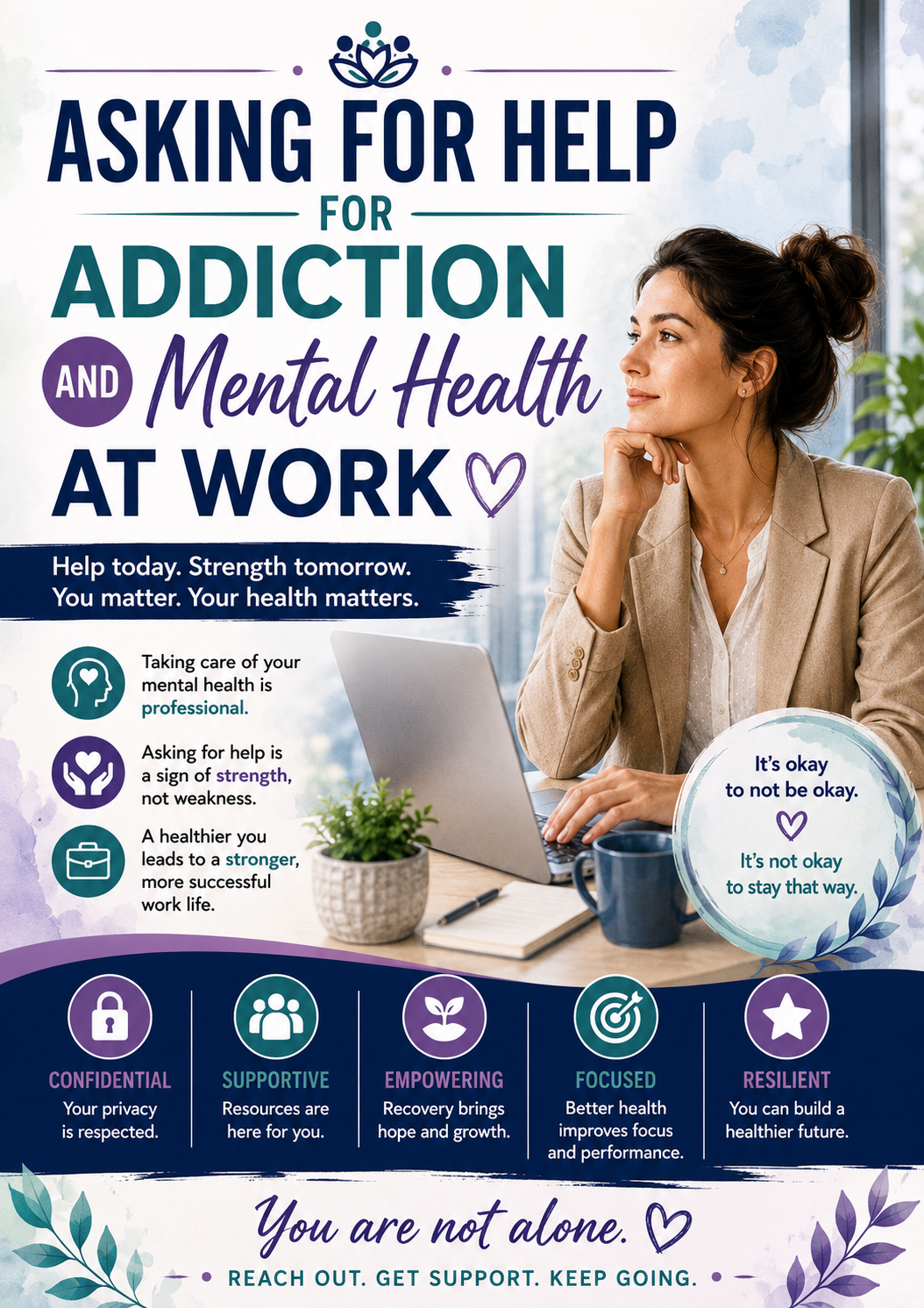
Addiction and mental health conditions can affect anyone, regardless of their profession, education, or level of experience. Because many adults spend a significant portion of their lives at work, the workplace often becomes one of the first environments where the effects of stress, anxiety, depression, burnout, or substance use disorders become noticeable. Unfortunately, fear of stigma, discrimination, damaged professional relationships, or concerns about job security may discourage employees from seeking the help they need. Delaying treatment can allow symptoms to worsen, affecting both personal well-being and workplace performance. Understanding how to ask for help, knowing what resources are available, and recognizing that mental health and addiction are treatable medical conditions empower employees to seek support early and continue building healthy, productive careers.
Stigma of Asking for Addiction and Mental Health Help at Work
Mental health conditions and substance use disorders affect millions of working adults each year, yet many employees hesitate to seek help because they fear being judged, treated differently, or facing negative consequences in the workplace. Although awareness of mental health has improved, stigma remains a significant barrier to early treatment. Employees may worry that disclosing depression, anxiety, addiction, or recovery efforts will lead coworkers or supervisors to question their competence, reliability, or ability to perform their job. As a result, many individuals delay seeking care until their symptoms become more severe, affecting both their personal well-being and professional performance.
Stigma is the collection of negative attitudes, stereotypes, and misconceptions about people living with mental health conditions or substance use disorders. In the workplace, stigma may be expressed through subtle comments, discrimination, social isolation, or assumptions that individuals with these conditions are weak, unreliable, or incapable of handling responsibility. These beliefs are inaccurate and contribute to unnecessary suffering by discouraging employees from asking for help when they need it most.
Why Employees Avoid Seeking Help
Many workers delay treatment because they fear:
- Losing their job
- Missing opportunities for promotions
- Being viewed as unreliable
- Negative performance evaluations
- Gossip among coworkers
- Damaging professional relationships
- Being treated differently by supervisors
- Concerns about confidentiality
- Being labeled as “weak” or “unstable”
These fears can prevent individuals from accessing effective treatment, even when services are available through their employer.
Common Signs That Someone May Be Struggling
Mental health conditions and addiction can affect work performance in many ways. Possible warning signs include:
Emotional Signs
- Persistent sadness
- Anxiety or excessive worry
- Irritability
- Mood swings
- Feeling overwhelmed
- Loss of motivation
Behavioral Signs
- Increased absenteeism
- Frequent lateness
- Missed deadlines
- Declining productivity
- Social withdrawal
- Increased conflicts with coworkers
- Difficulty concentrating
- Increased alcohol or drug use outside of work
These signs do not necessarily indicate a mental health condition or addiction, but they may signal that additional support is needed.
How Stigma Affects Employees
When employees avoid seeking treatment because of stigma, they may experience:
- Worsening depression or anxiety
- Progression of substance use disorders
- Increased risk of burnout
- Lower job satisfaction
- Poor physical health
- Financial stress
- Family conflict
- Reduced work performance
- Higher risk of workplace accidents
- Increased risk of suicide
Early treatment often prevents these complications.
The Importance of Early Intervention
Mental health conditions and addiction are highly treatable. Seeking professional help early allows individuals to:
- Improve emotional well-being
- Strengthen coping skills
- Reduce stress
- Improve concentration
- Enhance work performance
- Maintain healthier relationships
- Prevent crises
- Support long-term recovery
Receiving treatment early often reduces the amount of time needed for recovery and helps individuals remain productive in their careers.
Creating a Supportive Workplace
Employers can reduce stigma by fostering a workplace culture that values psychological safety and well-being.
Effective workplace strategies include:
- Providing mental health education
- Offering Employee Assistance Programs (EAPs)
- Encouraging work-life balance
- Training supervisors to recognize warning signs
- Promoting respectful communication
- Maintaining confidentiality
- Supporting flexible scheduling for treatment appointments
- Encouraging employees to use available mental health benefits
- Addressing discrimination promptly
- Promoting recovery-oriented workplace policies
When employees feel supported, they are more likely to seek help early and remain engaged in treatment.
Legal Protections for Employees
In many countries, employees with qualifying mental health conditions or substance use disorders may have legal protections against discrimination and may be entitled to reasonable workplace accommodations. These protections vary by jurisdiction and employer policies, but may include:
- Modified work schedules
- Time off for treatment appointments
- Temporary job modifications
- Flexible work arrangements
- Protection from discrimination based on disability
Employees who have questions about workplace accommodations can consult their human resources department or an employment attorney familiar with local laws.
Supporting a Coworker
If you believe a coworker may be struggling:
- Express concern privately and respectfully.
- Listen without judgment.
- Encourage them to seek professional help.
- Share information about available workplace resources, such as an Employee Assistance Program (EAP), if appropriate.
- Respect their privacy.
- Avoid gossip or speculation.
You are not responsible for diagnosing or treating a coworker, but compassionate support can encourage someone to seek help.
Reducing Self-Stigma
Many individuals internalize negative beliefs about mental illness or addiction, making it even harder to ask for help. Reducing self-stigma involves recognizing that:
- Mental health conditions and addiction are medical conditions.
- Recovery is possible.
- Seeking treatment is a sign of responsibility, not weakness.
- Many successful professionals have experienced mental health conditions or addiction and continued to thrive in their careers.
- Asking for help demonstrates strength, self-awareness, and commitment to personal and professional well-being.
Building a Recovery-Friendly Workplace
A recovery-friendly workplace recognizes that healthy employees are more engaged, productive, and resilient. Organizations that prioritize mental health education, reduce stigma, support confidential access to treatment, and encourage work-life balance create environments where employees feel safe asking for help. These workplaces often experience improved morale, lower turnover, fewer workplace injuries, reduced absenteeism, and greater employee satisfaction.
Conclusion
The stigma surrounding addiction and mental health in the workplace remains a significant obstacle to treatment, but it can be overcome through education, compassion, supportive leadership, and evidence-based policies. Employees should never feel ashamed to seek professional help for depression, anxiety, burnout, substance use disorders, or other mental health concerns. Early intervention not only improves personal health and recovery but also strengthens workplace performance, relationships, and long-term career success. By creating workplaces where asking for help is seen as a strength rather than a weakness, employers and employees can work together to build healthier, more supportive, and more productive organizations.
Self-Management Strategies to Understand Ways to Ask for Help for Addiction and Mental Health at Work
Seeking help for addiction or a mental health condition while maintaining employment can feel intimidating. Many employees worry about stigma, confidentiality, job security, or how coworkers and supervisors will respond. However, asking for help early is one of the most effective ways to protect both your health and your career. Self-management involves recognizing when you need support, preparing for conversations, understanding available workplace resources, and actively participating in your treatment and recovery. By taking proactive steps, you can improve your well-being while continuing to meet your professional responsibilities.
1. Recognize When You Need Help
The first step is honestly assessing how your mental health or substance use is affecting your life and work.
Warning signs may include:
- Difficulty concentrating
- Increased stress or anxiety
- Persistent sadness
- Emotional exhaustion
- Frequent absenteeism
- Declining work performance
- Increased alcohol or drug use
- Difficulty managing responsibilities
- Conflicts with coworkers
- Trouble sleeping or constant fatigue
Recognizing these signs early allows you to seek help before the situation becomes more serious.
2. Accept That Asking for Help Is a Strength
Many people avoid treatment because they fear being judged. Remind yourself that addiction and mental health conditions are medical conditions—not personal failures.
Healthy reminders include:
- Seeking help demonstrates responsibility.
- Early treatment often prevents more serious problems.
- Recovery improves both personal and professional life.
- Many successful professionals have received mental health or addiction treatment.
- You deserve support just as you would for a physical illness.
Replacing self-criticism with self-compassion makes it easier to reach out for assistance.
3. Learn About Your Workplace Resources
Before speaking with your employer, familiarize yourself with available resources.
These may include:
- Employee Assistance Programs (EAPs)
- Human Resources (HR)
- Occupational health services
- Employee wellness programs
- Mental health insurance benefits
- Flexible scheduling options
- Paid medical leave
- Family and medical leave policies
- Workplace accommodation procedures
Understanding these resources helps you make informed decisions.
4. Decide Who You Feel Comfortable Talking To
You are not required to tell everyone about your situation. Consider speaking with someone you trust, such as:
- Your supervisor (if appropriate)
- A Human Resources representative
- An Employee Assistance Program counselor
- An occupational health professional
- A trusted mentor
- A union representative, if applicable
Choose someone who can help connect you with resources while respecting your privacy.
5. Plan the Conversation
Preparing in advance can reduce anxiety and help you communicate clearly.
Before the meeting:
- Identify your concerns.
- Decide what information you want to share.
- Focus on how your condition is affecting your work rather than on unnecessary personal details.
- Think about what support or accommodations might help.
Example statements include:
- “I’ve been dealing with a health issue and would like to discuss some support options.”
- “I’m receiving treatment for a medical condition and may need flexibility for appointments.”
- “I’d like information about available employee assistance resources.”
You do not have to disclose more information than you are comfortable sharing unless required for specific workplace accommodations.
6. Understand Your Rights and Responsibilities
Become familiar with your employer’s policies regarding:
- Confidentiality
- Medical leave
- Workplace accommodations
- Employee assistance services
- Substance use policies
- Return-to-work programs
Knowing your rights helps reduce uncertainty and empowers you to advocate for yourself appropriately.
7. Follow Your Treatment Plan
Recovery is strengthened by remaining actively engaged in care.
Commit to:
- Attending counseling appointments.
- Taking prescribed medications as directed.
- Participating in support groups.
- Practicing relapse prevention strategies.
- Communicating honestly with your healthcare providers.
- Reporting any medication side effects or symptom changes.
Consistency often leads to better recovery outcomes.
8. Practice Healthy Stress Management at Work
Healthy coping strategies reduce emotional distress and lower the risk of relapse.
Consider:
- Taking short breaks during the workday
- Deep breathing exercises
- Mindfulness practices
- Stretching
- Walking during lunch breaks
- Prioritizing tasks
- Using organizational tools
- Maintaining healthy boundaries
- Avoiding excessive overtime whenever possible
Managing stress proactively supports both recovery and job performance.
9. Build a Personal Support Network
Recovery is stronger when you have people you can rely on.
Your support network may include:
- Family members
- Trusted friends
- Therapists
- Recovery coaches
- Peer support groups
- Sponsors
- Faith leaders
- Supportive coworkers (when appropriate)
Having people who encourage your recovery reduces feelings of isolation.
10. Protect Your Recovery in the Workplace
Develop strategies that reduce the risk of relapse.
Examples include:
- Avoiding workplace situations that encourage alcohol or drug use.
- Bring healthy lunches and snacks.
- Maintaining regular sleep habits.
- Taking vacation time when needed.
- Scheduling treatment appointments consistently.
- Using stress management techniques throughout the day.
- Leaving high-stress situations briefly when appropriate.
Planning ahead helps you respond effectively to workplace challenges.
11. Evaluate Your Progress Regularly
Recovery is an ongoing process. Ask yourself:
- Am I managing stress effectively?
- Have my symptoms improved?
- Am I following my treatment plan?
- Do I feel supported at work?
- Are my work responsibilities manageable?
- Do I need additional help or accommodations?
Regular self-reflection allows you to adjust your recovery plan as your needs change.
12. Know When Immediate Help Is Needed
Some situations require urgent professional intervention.
Seek immediate help if you experience:
- Thoughts of suicide or self-harm
- Severe emotional distress
- Relapse that places your safety at risk
- Panic attacks that prevent functioning
- Hallucinations or severe confusion
- Feeling unable to safely perform your job because of a mental health crisis or substance use
If you are in the United States, call or text 988 to reach the 988 Suicide & Crisis Lifeline for immediate support. If you or others are in immediate danger, call 911 or seek emergency medical care.
Taking the First Step Toward Recovery at Work
Asking for help with addiction or mental health concerns in the workplace can feel challenging, but it is an important investment in your health, career, and future. Self-management begins with recognizing when you need support, understanding your workplace resources, preparing for honest conversations, and actively participating in treatment and recovery. Protecting your mental health allows you to perform at your best, strengthen professional relationships, and maintain long-term career success. Remember that recovery is a journey, not a destination, and seeking help is a sign of courage, resilience, and commitment to both your personal well-being and professional growth.
Family Support Strategies to Understand Ways to Ask for Help for Addiction and Mental Health at Work
Family members can play a powerful role in helping a loved one seek support for addiction or mental health challenges while maintaining employment. Many individuals hesitate to ask for help at work because they fear stigma, discrimination, loss of privacy, or negative career consequences. Families can reduce these fears by offering encouragement, practical guidance, and emotional support while respecting the individual’s autonomy. A supportive home environment helps build the confidence needed to seek professional treatment and access workplace resources before problems become more serious.
1. Learn About Addiction, Mental Health, and Workplace Stigma
Educate yourself about common mental health conditions, substance use disorders, and the challenges employees may face when asking for help at work.
Learn about:
- Depression
- Anxiety disorders
- Burnout
- Bipolar disorder
- Substance use disorders
- Recovery and relapse prevention
- Employee Assistance Programs (EAPs)
- Workplace mental health resources
- Employee rights and workplace accommodations
Understanding these topics helps family members provide informed and compassionate support.
2. Recognize Early Warning Signs
Pay attention to changes that may indicate your loved one is struggling.
Common signs include:
- Increased stress or irritability
- Frequent fatigue
- Difficulty concentrating
- Missing work
- Declining job performance
- Social withdrawal
- Increased alcohol or drug use
- Mood swings
- Sleep disturbances
- Expressions of hopelessness or feeling trapped
Early recognition allows families to seek help before workplace problems become more severe.
3. Create a Safe Environment for Conversation
Many people fear judgment when discussing addiction or mental health concerns. Create a supportive atmosphere where your loved one feels comfortable sharing their experiences.
Helpful conversation starters include:
- “I’ve noticed you seem overwhelmed lately. How are you doing?”
- “You don’t have to carry this alone.”
- “How can I support you?”
- “Would it help to talk about what has been happening at work?”
Listen carefully without interrupting or trying to solve the problem immediately.
4. Reduce Stigma at Home
Family attitudes greatly influence whether someone feels comfortable seeking treatment.
Avoid comments such as:
- “Just work harder.”
- “Everyone gets stressed.”
- “Don’t let people know.”
- “You’ll lose your job if anyone finds out.”
Instead, reinforce positive messages:
- “Getting help is a sign of strength.”
- “Your health is more important than pretending everything is okay.”
- “Treatment can help you feel better.”
- “We’re proud of you for taking care of yourself.”
Reducing stigma at home helps build confidence in seeking help elsewhere.
5. Encourage Professional Treatment
Support your loved one in connecting with qualified healthcare professionals.
Offer assistance by:
- Helping locate therapists or addiction specialists
- Researching insurance coverage
- Exploring Employee Assistance Programs (EAPs)
- Scheduling appointments if requested
- Providing transportation
- Helping organize treatment information
Professional treatment often improves both health and work performance.
6. Help Prepare for Workplace Conversations
Many employees feel anxious about discussing mental health or addiction with a supervisor or Human Resources representative.
Family members can help by:
- Practicing conversations together
- Role-playing possible questions
- Discussing what information needs to be shared
- Encouraging honesty while respecting privacy
- Reminding your loved one that they do not have to disclose unnecessary personal details
Preparation often reduces anxiety and increases confidence.
7. Encourage Healthy Daily Habits
Recovery is strengthened by healthy routines that support emotional and physical well-being.
Encourage your loved one to:
- Get adequate sleep
- Eat balanced meals
- Exercise regularly
- Practice stress management
- Limit alcohol and avoid non-prescribed drugs
- Take scheduled breaks
- Maintain healthy work-life boundaries
- Attend therapy consistently
Healthy habits improve resilience both at work and at home.
8. Support Recovery Without Controlling It
Recovery belongs to the individual. Families should offer encouragement while respecting personal choices.
Helpful approaches include:
- Asking how you can help
- Celebrating progress
- Encouraging treatment attendance
- Respecting confidentiality
- Avoiding constant monitoring or criticism
- Allowing your loved one to make decisions about workplace disclosure
Supportive encouragement is generally more effective than pressure or ultimatums.
9. Learn About Workplace Resources
Become familiar with resources available through your loved one’s employer.
Examples include:
- Employee Assistance Programs (EAPs)
- Mental health insurance benefits
- Wellness programs
- Flexible scheduling
- Leave policies
- Return-to-work programs
- Workplace accommodations
Understanding these options helps families provide informed guidance.
10. Watch for Signs of Crisis
Some symptoms require immediate professional intervention.
Seek emergency help if your loved one:
- Talks about suicide or self-harm
- Has a suicide plan
- Experiences hallucinations or severe confusion
- Is unable to safely perform daily activities
- Relapses in a way that places themselves or others at immediate risk
If there is immediate danger, call 911 or seek emergency medical care. In the United States, individuals can also call or text 988 to reach the 988 Suicide & Crisis Lifeline for immediate support.
11. Take Care of Yourself
Supporting someone with addiction or mental health challenges can be emotionally demanding.
Family members should also:
- Maintain healthy boundaries
- Seek counseling if needed
- Join family support groups
- Practice stress management
- Continue hobbies and social activities
- Ask for help from other trusted family members or friends
Healthy caregivers are better equipped to provide consistent support.
12. Celebrate Recovery and Progress
Recovery is a journey that includes both successes and challenges.
Celebrate achievements such as:
- Scheduling a first appointment
- Completing treatment sessions
- Maintaining sobriety
- Successfully using workplace resources
- Returning to work after treatment
- Improving communication
- Reaching recovery milestones
Recognizing progress builds confidence and encourages continued healing.
Building a Supportive Family Environment
Families play a vital role in helping loved ones overcome the stigma of asking for addiction and mental health support at work. By promoting open communication, reducing judgment, encouraging professional treatment, and learning about workplace resources, families can help individuals feel empowered to prioritize their health without sacrificing their careers. Recovery is strengthened when loved ones feel accepted, respected, and supported throughout the process. Together, families, healthcare providers, employers, and communities can foster workplaces where seeking help is viewed as a sign of courage, responsibility, and commitment to long-term well-being.
Community Resource Strategies to Understand Ways to Ask for Help for Addiction and Mental Health at Work
Community resources provide valuable support for employees who are experiencing addiction or mental health challenges. Many individuals delay seeking help because they fear stigma, discrimination, financial barriers, or uncertainty about where to begin. Community organizations, healthcare providers, nonprofit agencies, recovery programs, and workplace wellness services help individuals access treatment, understand their rights, and develop the confidence to ask for support. By connecting employees with these resources early, communities can reduce barriers to care, improve recovery outcomes, and promote healthier, more productive workplaces.
1. Utilize Employee Assistance Programs (EAPs)
Many employers offer Employee Assistance Programs (EAPs) that provide confidential support for employees dealing with mental health conditions, substance use disorders, or personal stress.
EAP services may include:
- Confidential counseling
- Mental health assessments
- Substance use evaluations
- Short-term therapy
- Referrals to treatment providers
- Financial counseling
- Legal consultation
- Stress management resources
- Work-life balance support
Employees should ask their Human Resources department about available EAP benefits if they are unsure whether their workplace offers these services.
2. Access Community Mental Health Centers
Community mental health centers provide affordable behavioral health services regardless of employment status.
Services often include:
- Mental health evaluations
- Individual counseling
- Group therapy
- Family therapy
- Medication management
- Crisis intervention
- Case management
- Substance use treatment
Many centers offer sliding-scale fees based on income, making care more accessible for working individuals.
3. Connect with Addiction Treatment Programs
Community addiction treatment programs offer evidence-based care for individuals seeking recovery while continuing to work.
Programs may include:
- Outpatient treatment
- Intensive Outpatient Programs (IOPs)
- Medication for opioid use disorder (MOUD)
- Relapse prevention counseling
- Individual therapy
- Recovery coaching
- Family counseling
- Aftercare services
Many outpatient programs provide evening or weekend appointments to accommodate work schedules.
4. Participate in Peer Recovery Support Groups
Peer support groups provide opportunities to learn from others who have successfully balanced recovery and employment.
Examples include:
- Recovery support meetings
- Workplace recovery groups
- Mental health peer support programs
- Family support groups
- Online recovery communities
Benefits include:
- Reduced isolation
- Practical workplace coping strategies
- Increased accountability
- Emotional encouragement
- Greater confidence in asking for help
5. Utilize Occupational Health Services
Some employers partner with occupational health professionals who can:
- Evaluate work-related stress
- Recommend workplace accommodations
- Coordinate return-to-work planning
- Monitor recovery progress
- Collaborate with healthcare providers when appropriate
These services help employees safely continue working while receiving treatment.
6. Seek Assistance from Human Resources
Human Resources departments often help employees understand workplace policies related to:
- Medical leave
- Confidentiality
- Workplace accommodations
- Flexible scheduling
- Return-to-work programs
- Employee wellness initiatives
Employees do not always need to disclose detailed medical information to request assistance. HR professionals can explain available options while protecting confidentiality in accordance with company policies and applicable laws.
7. Utilize Telehealth Services
Virtual care has expanded access to addiction and mental health treatment.
Telehealth services may include:
- Individual therapy
- Psychiatric evaluations
- Medication management
- Recovery coaching
- Support groups
- Stress management counseling
Telehealth allows employees to receive treatment without extensive travel or time away from work.
8. Explore Community Education Programs
Many hospitals, public health departments, nonprofit organizations, and community colleges offer educational programs on mental health and addiction.
Topics often include:
- Stress management
- Burnout prevention
- Depression and anxiety
- Substance use awareness
- Recovery strategies
- Workplace wellness
- Communication skills
- Building resilience
Education reduces stigma and empowers employees to seek help early.
9. Utilize Legal and Employee Advocacy Resources
Community legal aid organizations, disability advocacy groups, and employment assistance programs can help employees understand their workplace rights.
These resources may provide information about:
- Reasonable workplace accommodations
- Medical leave options
- Protection from discrimination
- Confidentiality requirements
- Return-to-work planning
- Employee rights related to behavioral health conditions
Understanding these protections can reduce fear and encourage employees to seek treatment.
10. Know When to Use Crisis Resources
Immediate help should be sought if someone experiences:
- Thoughts of suicide
- Thoughts of self-harm
- Severe emotional distress
- Overdose or substance-related medical emergencies
- Hallucinations
- Severe confusion
- Inability to safely perform daily activities
In the United States, individuals can call or text 988 to reach the 988 Suicide & Crisis Lifeline for immediate emotional support. In life-threatening emergencies, call 911 or go to the nearest emergency department.
11. Build a Community Recovery Network
Recovery is strengthened through ongoing relationships with supportive professionals and organizations.
A community support network may include:
- Primary care providers
- Therapists
- Psychiatrists
- Recovery coaches
- Peer support specialists
- Community mental health centers
- Faith leaders
- Employee Assistance Program counselors
- Human Resources representatives
- Trusted mentors
Having multiple sources of support increases resilience and improves long-term recovery.
12. Promote Recovery-Friendly Workplaces
Communities can encourage employers to develop recovery-friendly workplace initiatives that support employees seeking treatment.
Examples include:
- Mental health awareness campaigns
- Supervisor education
- Employee wellness programs
- Recovery-friendly hiring practices
- Confidential access to treatment
- Flexible scheduling for healthcare appointments
- Anti-stigma education
- Peer support initiatives
Recovery-friendly workplaces benefit both employees and employers by improving morale, reducing absenteeism, increasing productivity, and supporting employee retention.
Strengthening Communities to Support Employees
Communities play a vital role in reducing the stigma surrounding addiction and mental health in the workplace. By providing accessible behavioral healthcare, recovery programs, peer support, educational opportunities, legal guidance, and confidential workplace resources, communities empower employees to seek help before problems become overwhelming. Collaboration among healthcare providers, employers, nonprofit organizations, public agencies, and recovery communities creates an environment where asking for help is viewed as a responsible and courageous decision. When employees know that compassionate support is available, they are more likely to seek treatment early, maintain successful careers, strengthen their recovery, and contribute to healthier workplaces and communities.
Frequently Asked Questions
Here are some common questions:
1. Why is it difficult to ask for help at work?
Answer:
Many employees fear being judged, discriminated against, losing career opportunities, or being viewed as unreliable. Concerns about confidentiality and job security may also prevent individuals from seeking help. Despite these fears, early support often improves both personal well-being and workplace performance.
2. Is asking for help a sign of weakness?
Answer:
No. Asking for help is a sign of strength, responsibility, and self-awareness. Seeking treatment demonstrates a commitment to your health, your recovery, and your ability to perform your job effectively.
3. Do I have to tell my employer about my mental health condition or addiction?
Answer:
Not always. The amount of information you choose or need to share depends on your circumstances, workplace policies, and whether you are requesting a workplace accommodation or leave. Many employees can begin by speaking confidentially with a healthcare provider or an Employee Assistance Program (EAP) counselor before deciding whether additional disclosure is necessary.
4. What is an Employee Assistance Program (EAP)?
Answer:
An Employee Assistance Program (EAP) is an employer-sponsored benefit that provides confidential services such as:
- Mental health counseling
- Substance use assessments
- Stress management
- Referrals to treatment providers
- Financial counseling
- Family support resources
Many EAP services are offered at no cost to employees.
5. How do I know if I need professional help?
Answer:
Consider seeking help if you experience:
- Persistent sadness or anxiety
- Burnout
- Difficulty concentrating
- Declining work performance
- Increased alcohol or drug use
- Frequent absenteeism
- Trouble sleeping
- Feeling overwhelmed most days
- Difficulty managing daily responsibilities
Early treatment often prevents symptoms from worsening.
6. Who should I talk to first?
Answer:
You may choose to speak with:
- A primary care provider
- A therapist or counselor
- A psychiatrist
- An Employee Assistance Program (EAP) counselor
- A Human Resources representative
- An occupational health professional
- A trusted supervisor, if appropriate
Choose someone you feel comfortable speaking with who can help connect you to appropriate resources.
7. Will my employer automatically know that I’m receiving treatment?
Answer:
Not necessarily. Medical information is generally handled confidentially. The specific information shared with an employer depends on applicable laws, workplace policies, and whether accommodations or leave are requested. Many aspects of treatment remain private between you and your healthcare provider.
8. Can treatment improve my work performance?
Answer:
Yes. Effective treatment can improve:
- Concentration
- Decision-making
- Emotional regulation
- Productivity
- Attendance
- Relationships with coworkers
- Stress management
- Overall job satisfaction
Many people find that seeking help allows them to perform more consistently at work.
9. What if I am in recovery from addiction?
Answer:
Recovery can successfully coexist with employment. Helpful strategies include:
- Following your treatment plan
- Attending recovery meetings
- Using healthy coping skills
- Managing stress effectively
- Avoiding workplace triggers when possible
- Building a strong support network
Many individuals maintain successful careers while in long-term recovery.
10. What workplace resources may be available?
Answer:
Resources may include:
- Employee Assistance Programs (EAPs)
- Health insurance benefits
- Flexible work schedules
- Wellness programs
- Mental health education
- Occupational health services
- Leave policies
- Return-to-work programs
Ask Human Resources for information about available employee benefits.
11. What if I am afraid of being judged?
Answer:
Fear of stigma is common, but delaying treatment can allow symptoms to worsen. Remember that addiction and mental health conditions are medical conditions, and many workplaces are increasingly recognizing the importance of supporting employee well-being. Seeking help early is an investment in both your health and your career.
12. Can family members help me decide whether to seek help?
Answer:
Yes. Trusted family members can:
- Listen without judgment
- Encourage treatment
- Help research available resources
- Assist with scheduling appointments
- Provide transportation
- Offer emotional support throughout recovery
A strong support system often makes it easier to take the first step.
13. What should I say if I decide to speak with my supervisor or Human Resources?
Answer:
Keep the conversation simple and focused on your needs. For example:
- “I’m dealing with a health issue and would like to discuss available workplace support.”
- “I’m receiving medical treatment and may need flexibility for appointments.”
- “Can you tell me about our Employee Assistance Program or workplace accommodations?”
You generally do not need to share more personal information than necessary.
14. What if I relapse while working?
Answer:
Relapse can occur during recovery and does not mean treatment has failed. If relapse happens:
- Contact your healthcare provider immediately.
- Re-engage with your treatment plan.
- Attend counseling or recovery meetings.
- Reach out to your support network.
- Discuss workplace needs with Human Resources if appropriate.
Prompt action can help you return to recovery safely.
15. When should someone seek emergency help?
Answer:
Immediate medical attention is needed if someone:
- Has thoughts of suicide or self-harm
- Experiences an overdose
- Has severe emotional distress
- Experiences hallucinations or severe confusion
- Becomes unable to safely care for themselves or perform essential daily activities
In the United States, call or text 988 to reach the 988 Suicide & Crisis Lifeline. If there is immediate danger, call 911 or go to the nearest emergency department.
16. How can coworkers support someone who may be struggling?
Answer:
Coworkers can:
- Listen with compassion.
- Respect privacy.
- Avoid gossip or judgment.
- Encourage professional help.
- Share information about workplace resources if appropriate.
- Offer support without trying to diagnose or treat the individual.
A respectful workplace culture helps reduce stigma and encourages recovery.
17. Can people recover and continue successful careers?
Answer:
Yes. Millions of people successfully manage mental health conditions and recover from substance use disorders while maintaining meaningful, productive careers. With evidence-based treatment, healthy coping skills, workplace support, and ongoing recovery efforts, individuals can continue to grow professionally and personally.
18. What is the most important message about asking for help at work?
Answer:
Asking for help for addiction or mental health concerns is a courageous and proactive step toward recovery. Early treatment protects your health, strengthens your relationships, improves job performance, and reduces the risk of more serious problems. No one should face addiction or mental health challenges alone. By using available workplace resources, seeking professional care, and building a supportive network, employees can recover, thrive, and continue to make valuable contributions both at work and in their personal lives.
Conclusion
Asking for help for addiction or mental health concerns in the workplace is a courageous and responsible step toward recovery, not a sign of weakness or failure. Early intervention, professional treatment, supportive workplace policies, and access to resources such as Employee Assistance Programs, healthcare providers, and community services can significantly improve both personal health and job performance. Families, coworkers, supervisors, and employers all play important roles in creating an environment where individuals feel safe seeking assistance without fear of judgment or discrimination. By reducing stigma, promoting open communication, and encouraging timely access to evidence-based care, workplaces can foster healthier employees, stronger teams, and more resilient organizations. When mental health and recovery are valued as essential components of overall wellness, everyone benefits from a more compassionate, productive, and supportive work environment
Video: The stigma keeping people from getting help at work #MentalHealth #WorkplaceCulture