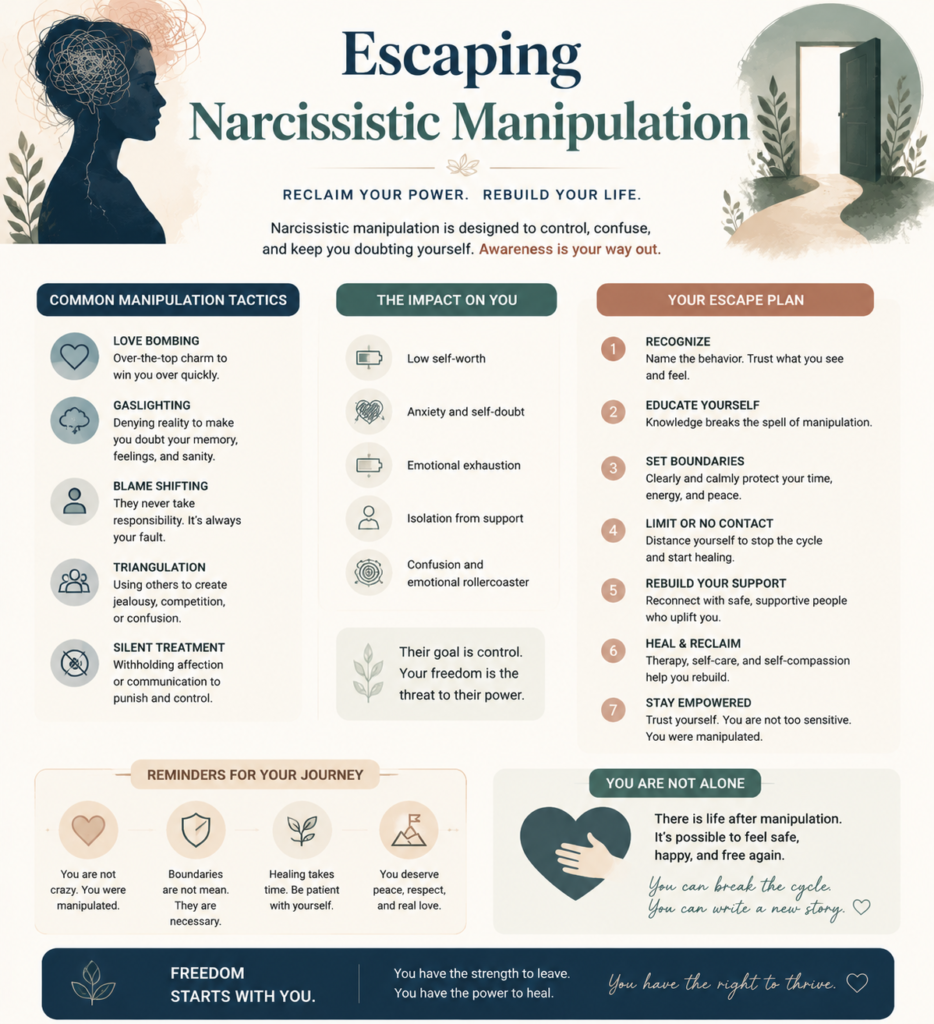
Escaping the grips of a narcissist can feel overwhelming, especially when the cycle of control and confusion drags on for months or even years. If you’ve been caught in a relationship with someone who always turns things back on themselves and leaves you doubting your own judgment, you’re not alone. I want to break down what it means to get out of a narcissist’s hold, share what to expect during the process, and offer steps you can actually start taking today.
Understanding Narcissistic Relationships
Living with or loving someone with strong narcissistic traits isn’t just challenging; it can actually change how you see yourself and the world around you. Narcissists usually put themselves at the center of everything. Their need for admiration, constant validation, and control can chip away at your self-esteem over time. This cycle looks like love and attention at first, but later turns into criticism, gaslighting, and manipulation.
The emotional rollercoaster keeps many people stuck. The good times can be incredibly convincing, making the manipulation and emotional pain that much harder to spot and get away from. It’s common for survivors to second-guess their memories, question their instincts, or feel guilty for wanting out. Getting a handle on this cycle is really important for anyone looking to break away or support someone else along the way.
You don’t have to know medical definitions to see the patterns: walking on eggshells, apologizing when you haven’t done anything wrong, and never quite feeling worthy. These are all signs that it’s time to start thinking about your own well-being first.
First Steps: Recognizing the Cycle and Wanting Out
The hardest part for most people is realizing what’s actually happening. A narcissist’s manipulation isn’t always easy to spot. They might hide control behind concern or twist your words until you doubt yourself, a tactic called gaslighting. Knowing these behaviors helps you spot them in your own life.
- Love Bombing: Overwhelming attention, gifts, or praise to gain trust and dependency early on.
- Devaluation: Shifting to put-downs, criticism, or emotional withdrawal.
- Discard: When they drop you cold, sometimes to reel you back in later (the hoovering stage).
- Gaslighting: Making you question your reality or memory so you become easier to control.
Wanting to break out of the cycle is a strong and healthy reaction. Many people reach this point after feeling “lost,” emotionally drained, or noticing a pattern of never-ending drama. It’s not about blaming yourself. Realizing the cycle is a big first step in the right direction.
Action Plan: Practical Steps to Escape
Escaping a narcissist is a process. It can be slow, emotional, and sometimes scary, but it’s possible for anyone. I’ve broken things down into simple, clear steps to make things feel a little less intimidating and more manageable.
- Gather Support: Choose a few safe friends, family members, or a support group. Talking to others makes a big difference.
- Get Your Documents in Order: Secure personal IDs, financial info, and important papers. Store digital copies somewhere safe, ideally outside the home.
- Set Boundaries: If direct confrontation isn’t safe, keep things neutral. Practice responses like “I need some space” or “I’m busy right now.”
- Prepare Your Next Moves: Find temporary housing if needed, set aside a little money when you can, or look into local services for help.
- Limit Contact: Narcissists thrive on reaction. If you can, block texts and calls. Co-parenting or other situations may require communication apps or a trusted third party for safety.
Every situation is different. Some people leave overnight, while others plan for weeks or months. Take it at your own pace. Staying safe, both physically and emotionally, is the priority.
Challenges and How to Handle Them
Breaking free often comes with its own set of hurdles, and narcissists tend not to let go easily. They may try everything from guilt trips to angry outbursts to keep the cycle going. Knowing the challenges ahead of time can help you spot them and keep your distance.
- Guilt and Self-Blame: It’s pretty normal to feel guilty, even when you’ve done nothing wrong. Remember why you decided to leave, and ground yourself in those reasons.
- Smear Campaigns: Some narcissists badmouth their exes to friends, family, or online. It’s tough, but staying calm and refusing to react often works best in the long run.
- Hoovering: Reaching out with promises, threats, or even fake emergencies to draw you back in. Having a script (or not responding at all) helps keep boundaries strong and clear.
- Legal Complications: In some cases, custody battles or financial disputes drag things out. Document every interaction, keep records, and reach out to legal or advocacy resources when needed.
Staying consistent with boundaries, even when it’s uncomfortable or lonely, helps you keep moving forward. With time, it does get easier.
Taking Care of Yourself After Escaping
The aftermath of a narcissistic relationship can feel cloudy or even scary. Recovery doesn’t always happen in a straight line, and that’s totally normal. Prioritizing self-care, even in tiny ways, can help rebuild your sense of self bit by bit.
- Therapy or Counseling: Mental health professionals with experience in narcissistic abuse and trauma can help sort through your experiences and rebuild confidence. Therapists can also help you learn to spot patterns, avoid falling back into them, and set new boundaries in future relationships.
- Journaling and Reflection: Writing things down, even just a little every day, creates space to process what’s happened and track your progress.
- Reconnect with Passions or Friends: Many people lose touch with things they love or old friends while stuck in the cycle. Taking small steps like texting a friend, visiting a favorite park, or picking up an old hobby can help you reconnect and find small joys again.
- Practice Self-Compassion: Healing takes patience. Being gentle with yourself on hard days is part of the process. There’s no set timeline, and everyone heals in their own way.
Setting Up New Boundaries for the Future
One of the best parts about reaching the other side is learning what healthy boundaries look like. Whether it’s saying “no” to things that drain you, keeping your needs in mind during new friendships or relationships, or simply picking up on warning signs earlier, these are skills that stick with you for life. Practicing them regularly will help you protect your future self and nurture positive relationships.
Common Concerns About Escaping Narcissistic Relationships
A lot of people worry about what happens once they finally get free or how they’ll handle the fallout that follows. Here are some things I hear often, with straightforward advice for each one:
Question: How do I avoid falling back into old patterns?
Answer: It’s common to slip back, especially when you’re lonely or second-guessing yourself. Having a support system and a list of reasons to leave are super useful. Therapy or support groups can make a real difference in helping you stay on track.
Question: Is it normal to feel sad or miss the person?
Answer: Absolutely. Even when things hurt, there are usually good memories or hopes for what could have been. Allow yourself to grieve, but try to shift your focus to moving forward rather than looking back.
Question: Will a narcissist ever change?
Answer: Narcissists rarely change unless they really want to. Even then, real change is slow and difficult. Focus on your own growth and healing, rather than pinning your hopes on them changing.
Question: How do I explain this to my kids or family?
Answer: Keep things simple and age-appropriate. For children: “We’re going to be safer and happier this way.” For adults: “I needed to take care of myself.” If others don’t get it, that’s on them. Your safety and well-being come first, no matter what others think or say.
Real Life Stories and Hope for the Future
Sometimes, the best encouragement comes from knowing other people have faced the same struggles. I’ve talked with folks who waited decades to leave, and others who acted after just a few months. Every single one has said the freedom and peace on the other side were worth the scary step of leaving.
Online communities, local support groups, and survivor blogs are filled with real stories you can relate to. Hearing how others rebuilt their lives, found their own voices, or stumbled upon new friendships and passions can be super motivating on the toughest days.
Even reading others’ experiences or reaching out to someone who’s been through it can break the isolation and help you feel connected. There’s so much power in simply knowing you’re not alone, and in seeing how hope and happiness truly are possible again.
Takeaway: Reclaiming Your Life Is Possible
No matter what the past looked like, breaking free from a narcissistic relationship is absolutely possible. While the process can be tough, focusing on small wins, surrounding yourself with support, and keeping your eyes on your own healing make all the difference. Life after narcissistic abuse can include more freedom, confidence, and quiet joy than you might expect now. Every person deserves a life filled with self-respect, safety, and the space to be themselves again.
Video: Spot the Narcissist Before They Drain You Dry #narcissist #manipulation