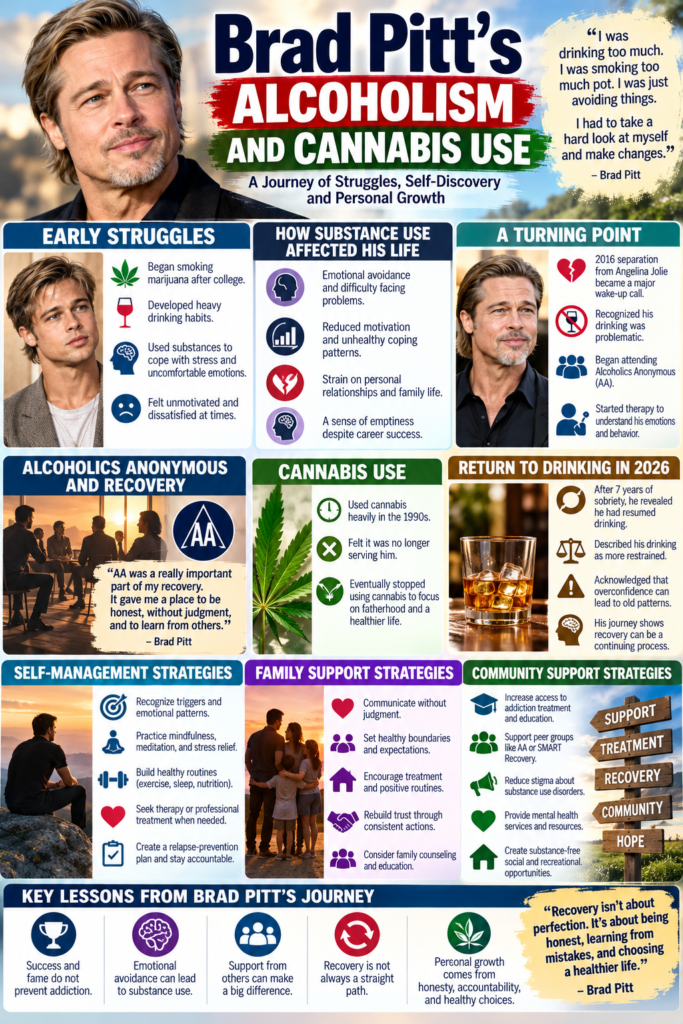
Behind the fame, success, and Hollywood recognition, Brad Pitt has experienced personal struggles involving heavy alcohol consumption, cannabis use, emotional avoidance, and complicated family relationships. The Academy Award-winning actor has spoken openly about using substances to escape uncomfortable emotions and eventually recognizing the need for meaningful changes in his life. Following his highly publicized separation from Angelina Jolie in 2016, Pitt stopped drinking, attended Alcoholics Anonymous (AA), and began exploring healthier ways to cope with emotional distress.
His journey, however, has not followed a perfectly straight path. In August 2026, Pitt revealed that after seven years of sobriety, he had resumed drinking alcohol in what he described as a more restrained manner. His experiences demonstrate that recovery can involve personal growth, setbacks, ongoing self-reflection, and difficult decisions about substance use. Understanding his story provides valuable lessons about self-management, family support, and community resources that can help individuals address alcohol and cannabis-related problems.
Brad Pitt’s Early Struggles With Alcohol and Cannabis
During the 1990s, Pitt became one of Hollywood’s most recognizable actors. Although his career continued to flourish, he later acknowledged that his relationship with cannabis and alcohol had become an unhealthy way of coping with stress, fame, and emotional discomfort.
In a 2017 interview with GQ Style, Pitt described a long history of drinking and smoking marijuana after college. He explained that he had frequently used substances to avoid confronting difficult feelings.
Pitt also described becoming dissatisfied with his cannabis use during the late 1990s. He felt that spending excessive time smoking marijuana and avoiding meaningful activities was preventing him from living the life he wanted.
He later reported substantially reducing or stopping cannabis use and eventually discontinuing it as he focused on fatherhood. However, alcohol remained a significant concern.
How substance use affected his life
- Emotional avoidance: Pitt acknowledged using alcohol and cannabis to escape uncomfortable feelings.
- Reduced motivation: He described periods when excessive marijuana use contributed to inactivity and dissatisfaction.
- Unhealthy coping patterns: Substance use became a way to manage stress rather than address its underlying causes.
- Relationship difficulties: Pitt later reflected on his emotional unavailability and the importance of accepting responsibility for his behavior.
- Personal dissatisfaction: Despite professional success, he recognized that certain habits were preventing him from achieving personal fulfillment.
His experiences illustrate how substance use can become a coping mechanism even when someone appears successful and financially secure.
The Turning Point: Divorce, Alcohol Use, and Seeking Help
In September 2016, Pitt and Angelina Jolie separated following an alleged confrontation aboard a private airplane. The incident led to an investigation and considerable public scrutiny. Pitt was not charged with a crime, and authorities closed the child welfare investigation.
The separation became a significant turning point in Pitt’s life.
In his 2017 interview, Pitt acknowledged that his alcohol consumption had become problematic. He described becoming more aware of the emotional issues he had avoided and recognizing the need to make changes.
He subsequently stopped drinking and began attending Alcoholics Anonymous. He also pursued psychotherapy to better understand his emotions, relationships, and personal behavior.
Important lessons from this turning point
- Recognizing problematic drinking is an important first step toward change.
- Major life events can motivate individuals to reevaluate unhealthy coping mechanisms.
- Emotional awareness can help identify underlying reasons for substance use.
- Professional counseling can support behavioral change and healthier relationships.
- Recovery requires personal accountability and a willingness to accept support.
Although stressful life events may encourage someone to seek treatment, recovery does not require reaching a crisis point. Early intervention can prevent further harm.
Alcoholics Anonymous and the Importance of Peer Support
One of the most significant parts of Pitt’s publicly discussed recovery experience was his participation in Alcoholics Anonymous.
In a 2019 interview with The New York Times, Pitt explained that he had attended AA meetings for approximately a year and a half.
He described the meetings as a supportive environment where participants could discuss personal struggles without fear of judgment.
During a June 2025 appearance on Dax Shepard’s Armchair Expert podcast, Pitt again discussed the importance of AA. He recalled initially feeling uncomfortable speaking openly but eventually appreciating the honesty, humor, and shared experiences of other participants.
His comments emphasized the emotional value of connecting with people who understand addiction and recovery.
Benefits of peer recovery support
- Shared experiences: Participants recognize that others face similar challenges.
- Reduced isolation: Group discussions help individuals feel less alone.
- Accountability: Regular participation encourages reflection and responsibility.
- Emotional expression: Members can discuss difficult feelings in a supportive environment.
- Healthy relationships: Recovery groups provide opportunities to build connections outside substance-using environments.
- Long-term encouragement: Ongoing support can help individuals maintain positive behavioral changes.
AA is one evidence-supported option for alcohol recovery. Other approaches, including cognitive behavioral therapy, medication treatment, and alternative peer support groups, may also be appropriate depending on individual needs.
Brad Pitt’s Return to Drinking in 2026
An important development in Pitt’s journey emerged in August 2026, when he revealed in an Esquire interview that he had resumed drinking after approximately seven years of sobriety.
Pitt described his current alcohol use as more restrained than his previous drinking patterns. However, he also acknowledged occasions when he became overconfident and realized that consuming larger amounts of alcohol was not beneficial for him.
This update adds complexity to his recovery story. Rather than presenting his journey as permanent abstinence, Pitt has publicly described an evolving relationship with alcohol.
From a clinical perspective, returning to alcohol use after a period of abstinence does not automatically establish whether someone meets diagnostic criteria for an active alcohol use disorder. That determination requires an individualized assessment of consumption patterns, impaired control, consequences, and other symptoms.
Nevertheless, people with a history of problematic drinking may face increased risks when they resume alcohol consumption.
Lessons about recovery and returning to substance use
- Recovery experiences differ from person to person.
- Previous alcohol-related problems warrant continued awareness of risk.
- Returning to drinking may increase the possibility of problematic consumption.
- Monitoring behavior and recognizing warning signs are important.
- Professional support can help individuals evaluate whether abstinence is the safest goal.
- A return to substance use does not erase earlier progress or prevent someone from seeking additional help.
Pitt’s experience reinforces the importance of understanding recovery as an ongoing process rather than a single achievement.
Self-Management Strategies: Developing Healthier Coping Skills
Self-management involves recognizing unhealthy behavioral patterns, developing emotional awareness, and taking responsibility for decisions that influence physical and psychological well-being.
Pitt has publicly discussed psychotherapy, creative activities, and personal reflection as important parts of his efforts to change.
For individuals experiencing alcohol or cannabis-related problems, self-management can provide a foundation for sustained improvement.
Effective self-management strategies
- Identify emotional triggers: Recognize situations involving stress, loneliness, anger, boredom, or relationship conflict that increase the desire to use substances.
- Develop healthier coping mechanisms: Practice mindfulness, meditation, journaling, and relaxation techniques.
- Seek professional treatment: Consider counseling, addiction medicine, or mental health services when substance use becomes difficult to control.
- Establish realistic recovery goals: Work with healthcare professionals to determine whether abstinence or another treatment approach is appropriate.
- Build healthy routines: Maintain consistent sleep, balanced nutrition, physical activity, and meaningful daily activities.
- Practice emotional awareness: Learn to recognize and express feelings rather than avoiding them through alcohol or cannabis.
- Monitor warning signs: Watch for increased substance use, cravings, secrecy, impaired functioning, or difficulty maintaining boundaries.
- Create a relapse-prevention plan: Identify high-risk situations and develop strategies for responding to cravings or setbacks.
- Maintain accountability: Use counseling, peer support, or trusted relationships to evaluate progress.
For alcohol use disorder, evidence-based treatments may include naltrexone, acamprosate, and behavioral therapy when clinically appropriate. Cannabis use disorder is generally treated with behavioral approaches, including cognitive behavioral therapy, motivational enhancement therapy, and contingency management.
Medical consideration: Individuals who drink heavily or regularly may experience dangerous alcohol withdrawal if they stop abruptly. Medical assessment is recommended when physiological dependence is suspected.
Family Support Strategies: Rebuilding Trust and Encouraging Healthy Relationships
Substance use problems can affect entire families, influencing communication, emotional security, trust, and daily responsibilities.
Pitt’s public discussions about his divorce and family relationships demonstrate the importance of emotional awareness and accountability. However, the private experiences and perspectives of his family members should not be assumed or reduced to a single explanation involving alcohol.
For families supporting someone with problematic alcohol or cannabis use, compassion and appropriate boundaries are essential.
How families can provide meaningful support
- Communicate without judgment: Encourage honest conversations about substance use, emotions, and recovery goals.
- Set healthy boundaries: Clearly communicate expectations for safety, respectful behavior, and personal responsibility.
- Encourage professional treatment: Support participation in counseling, addiction treatment, or recovery groups.
- Avoid enabling harmful behavior: Encourage without shielding someone from the consequences of unsafe actions.
- Recognize emotional triggers: Understand that stress, grief, relationship problems, and mental health symptoms may contribute to substance use.
- Support healthy routines: Encourage meaningful family activities that do not involve alcohol or cannabis.
- Rebuild trust gradually: Recognize that trust develops through consistent actions rather than promises alone.
- Seek family counseling: Consider professional support when communication difficulties or unresolved conflicts affect relationships.
- Protect children and vulnerable family members: Prioritize emotional and physical safety when substance use creates instability.
Family members should also recognize that they cannot control another person’s substance use. Their role is to offer appropriate support while protecting their own well-being.
Community Support Strategies: Building a Strong Recovery Network
Community support can reduce isolation, increase access to treatment, and help individuals develop a sense of belonging.
Pitt’s positive experience with Alcoholics Anonymous illustrates how supportive relationships can contribute to meaningful personal change.
Recovery communities can also provide practical resources, education, and opportunities for continued personal growth.
Community strategies for addiction recovery
- Expand access to treatment: Increase availability of addiction counseling, outpatient services, and medication treatment.
- Promote peer support: Encourage participation in AA, SMART Recovery, and other mutual-help programs.
- Reduce stigma: Educate communities about substance use disorders as treatable health conditions.
- Provide mental health services: Address depression, anxiety, trauma, and other concerns that may coexist with substance use.
- Develop family education programs: Teach communication skills, boundary-setting, and supportive intervention strategies.
- Create substance-free social opportunities: Offer recreational, volunteer, and wellness activities that support healthier lifestyles.
- Improve early screening: Encourage healthcare professionals to assess alcohol and cannabis use before serious complications develop.
- Support long-term recovery: Provide continuing care and community resources beyond initial treatment.
Helpful addiction recovery resources
- Alcoholics Anonymous — Peer support for individuals seeking help with alcohol problems.
- SMART Recovery — Evidence-informed mutual support emphasizing self-management skills.
- SAMHSA — Behavioral health information and treatment resources.
- FindTreatment.gov — Searchable directory of substance use and mental health treatment services.
- Al-Anon Family Groups — Support for families and friends affected by another person’s drinking.
- SAMHSA National Helpline: 1-800-662-HELP (4357) — Confidential treatment referral and information.
Understanding the Relationship Between Substance Use and Emotional Avoidance
One of the most significant themes in Pitt’s public reflections is his recognition that substance use had become a way to avoid uncomfortable emotions.
This pattern is common among individuals experiencing problematic alcohol or cannabis use.
Alcohol and cannabis can temporarily change mood, reduce perceived stress, or create feelings of relaxation. However, repeated reliance on substances for emotional relief may reinforce avoidance and interfere with the development of healthier coping skills.
Over time, this cycle can contribute to increasing substance use, emotional difficulties, and problems with relationships or daily functioning.
Breaking the cycle of emotional avoidance
- Recognize emotions instead of suppressing them.
- Identify situations that trigger substance cravings.
- Practice healthy emotional expression.
- Develop problem-solving and stress-management skills.
- Seek counseling when unresolved emotional issues interfere with daily life.
- Build supportive relationships that encourage honest communication.
- Replace substance-related routines with meaningful activities.
Psychotherapy, particularly cognitive behavioral therapy and other evidence-based approaches, can help individuals understand the connections between thoughts, emotions, and substance use.
The Role of Personal Accountability in Recovery
Pitt has repeatedly discussed the importance of recognizing his own behavior and accepting responsibility for personal mistakes.
During his 2025 podcast appearance, he emphasized the value of examining past actions and considering how to avoid repeating harmful patterns.
Accountability is an important part of addiction recovery, but it should not be confused with shame.
Healthy accountability involves acknowledging behavior, understanding its consequences, and making realistic changes.
For individuals addressing substance use problems, this may include:
- Recognizing the effects of alcohol or cannabis on relationships.
- Accepting responsibility for personal decisions.
- Making appropriate efforts to repair harm.
- Following through with treatment recommendations.
- Establishing boundaries that support safer behavior.
- Learning from setbacks without abandoning recovery goals.
Personal accountability becomes more effective when combined with compassion, professional guidance, and realistic expectations.
Lessons From Brad Pitt’s Journey
Brad Pitt’s experiences with alcohol and cannabis provide several important lessons about addiction, emotional health, and recovery.
First, professional success and financial security do not eliminate vulnerability to substance-related problems. Addiction and unhealthy coping behaviors can affect individuals from every background.
Second, emotional avoidance can contribute to continued substance use. Recognizing uncomfortable feelings and developing healthier coping strategies are important parts of behavioral change.
Third, recovery is strengthened by supportive relationships. Pitt’s positive reflections on Alcoholics Anonymous demonstrate the value of honest communication and shared experiences.
Fourth, recovery does not always follow a predictable path. His 2026 disclosure about resuming alcohol consumption illustrates the importance of continued self-awareness and risk assessment.
Finally, meaningful change requires more than simply reducing or stopping substance use. Long-term improvement may also involve rebuilding relationships, addressing emotional concerns, and developing a healthier sense of purpose.
Conclusion: Recovery Is a Continuing Journey of Growth and Responsibility
Brad Pitt’s publicly discussed experiences with alcohol, cannabis, therapy, and Alcoholics Anonymous offer an opportunity to examine the complicated relationship between substance use, emotional avoidance, and personal growth.
His decision to seek help following a difficult period in 2016 demonstrated the importance of recognizing unhealthy patterns and accepting support. His later acknowledgment that he resumed drinking after seven years of sobriety reminds us that recovery decisions can evolve and that maintaining awareness of substance-related risks remains essential.
Self-management strategies help individuals recognize triggers, develop healthier coping skills, and establish meaningful goals. Family support encourages communication, accountability, and healthier relationships. Community resources provide access to treatment, peer connections, and continuing recovery services.
The central lesson from Brad Pitt’s journey is that meaningful change begins with self-awareness, but lasting improvement requires ongoing responsibility, supportive relationships, and a willingness to seek help when needed.
Frequently Asked Questions and Answers
1. Did Brad Pitt struggle with alcoholism?
Brad Pitt has publicly acknowledged that his drinking became excessive and problematic. In a 2017 interview with GQ Style, he described his alcohol consumption and explained that he had decided to stop drinking following his separation from Angelina Jolie in 2016.
Although his statements suggest a history of problematic alcohol use, his specific medical diagnosis has not been publicly established.
2. Did Brad Pitt use marijuana?
Yes. Pitt has openly discussed smoking marijuana during earlier periods of his life, particularly during the 1990s. He described using cannabis frequently and eventually recognizing that it contributed to inactivity and emotional avoidance.
He later reported moving away from regular marijuana use as his personal priorities changed.
3. Why did Brad Pitt use alcohol and cannabis?
Pitt has described using substances partly to avoid uncomfortable emotions and manage stress. He acknowledged that alcohol and marijuana became ways to escape feelings rather than confront personal challenges.
His experience illustrates how substance use can develop into an unhealthy coping mechanism, particularly when emotional distress remains unresolved.
4. How did alcohol and cannabis affect Brad Pitt’s personal life?
Pitt has reflected on emotional avoidance, unhealthy habits, and difficulties in his relationships. His heavy drinking became a particular concern during the period surrounding his 2016 separation.
However, the private circumstances of his marriage and family relationships are complex. It would be inaccurate to attribute every difficulty to substance use alone.
5. When did Brad Pitt decide to stop drinking?
Pitt reported stopping alcohol consumption in 2016, following his separation from Angelina Jolie. He subsequently attended Alcoholics Anonymous and participated in psychotherapy.
He later described these experiences as important opportunities for self-reflection, emotional honesty, and personal growth.
6. Did Brad Pitt attend Alcoholics Anonymous?
Yes. Pitt attended Alcoholics Anonymous for approximately 18 months after deciding to stop drinking. He described the meetings as a supportive environment where participants could discuss their struggles honestly without fear of judgment.
In a 2019 interview with The New York Times, he emphasized the importance of openness, vulnerability, and connecting with people who understood similar experiences.
7. Did Brad Pitt seek therapy for his substance use?
Yes. Pitt publicly discussed participating in psychotherapy during the period when he was addressing his drinking and personal challenges.
Therapy can help individuals understand emotional triggers, develop healthier coping mechanisms, and address underlying problems that may contribute to substance use.
8. Is Brad Pitt still sober in 2026?
No. In an August 10, 2026, interview with Esquire, Pitt revealed that he had resumed drinking after approximately seven years of sobriety.
He described his current drinking as more restrained but acknowledged occasions when he consumed more alcohol than he considered healthy.
His disclosure highlights the importance of continued self-awareness when someone has a history of problematic drinking.
9. Does Brad Pitt’s return to drinking mean he has relapsed?
Not necessarily. Resuming alcohol consumption after abstinence is a return to use, but determining whether someone has experienced a recurrence of alcohol use disorder requires a clinical assessment.
Important considerations include the amount consumed, ability to control drinking, cravings, consequences, and interference with daily responsibilities.
Pitt has described his current relationship with alcohol publicly, but there is insufficient information to determine his present clinical status.
10. Has Brad Pitt stopped using cannabis?
Pitt reported in his 2017 interview that he had stopped smoking marijuana before addressing his alcohol consumption. He explained that cannabis no longer aligned with his personal priorities and lifestyle.
His current cannabis use has not been clearly established through recent public disclosures.
Understanding Alcohol and Cannabis Dependence
11. What is alcohol use disorder?
Alcohol use disorder (AUD) is a medical condition characterized by impaired control over alcohol consumption despite negative consequences.
Symptoms may include strong cravings, unsuccessful attempts to reduce drinking, increased tolerance, withdrawal symptoms, and continued alcohol use despite relationship, occupational, or health problems.
AUD can range from mild to severe and is treatable through behavioral interventions, medications, and recovery support.
12. Can cannabis become addictive?
Yes. Cannabis use disorder can develop when individuals experience difficulty controlling cannabis consumption despite harmful consequences.
Possible symptoms include:
- Strong cravings for cannabis.
- Increasing consumption over time.
- Difficulty reducing or stopping use.
- Withdrawal symptoms when cannabis use ends.
- Reduced motivation or interference with responsibilities.
- Continued use despite negative consequences.
Not everyone who uses cannabis develops cannabis use disorder, and Pitt’s public comments do not establish that he received this diagnosis.
13. Why do some people use alcohol or cannabis to cope with emotions?
Alcohol and cannabis can temporarily alter mood and reduce perceived stress. This short-term relief may reinforce repeated substance use.
Over time, relying on substances to manage anxiety, sadness, loneliness, or emotional discomfort can interfere with healthier coping strategies.
Pitt has acknowledged using substances to avoid confronting difficult feelings, making emotional awareness an important theme in his story.
14. Can alcohol and cannabis use affect mental health?
Yes. Excessive alcohol consumption can contribute to depression, anxiety, sleep disturbances, and impaired judgment.
Cannabis may also affect mood, memory, attention, and motivation. Frequent use, particularly of high-potency THC products, may increase the risk of certain psychiatric complications in vulnerable individuals.
The effects vary depending on frequency, quantity, individual susceptibility, and existing health conditions.
15. Can someone recover from alcohol or cannabis dependence?
Yes. Both alcohol use disorder and cannabis use disorder are treatable conditions.
Recovery may involve behavioral therapy, medication when appropriate, peer support, family involvement, and lifestyle changes.
Alcohol use disorder has several evidence-based medication options, including naltrexone and acamprosate. Cannabis use disorder is primarily treated through behavioral interventions, such as cognitive behavioral therapy and motivational enhancement therapy.
Self-Management and Personal Recovery
16. What self-management strategies can help someone overcome substance use problems?
Effective self-management focuses on recognizing triggers, establishing healthier routines, and developing practical coping skills.
Helpful strategies include:
- Identifying emotional and environmental triggers.
- Developing a personalized recovery plan.
- Participating in counseling or addiction treatment.
- Practicing mindfulness and stress management.
- Maintaining healthy sleep, nutrition, and exercise habits.
- Avoiding situations that encourage problematic substance use.
- Building accountability through supportive relationships.
- Monitoring cravings and warning signs of recurrence.
Individuals who drink heavily should seek medical guidance before abruptly stopping alcohol because withdrawal can sometimes be life-threatening.
17. How can therapy help someone struggling with alcohol or cannabis?
Therapy can help individuals recognize unhealthy thought patterns, understand emotional triggers, and develop alternative coping strategies.
Cognitive behavioral therapy (CBT), motivational interviewing, and relapse-prevention counseling are commonly used approaches.
Therapy may also address anxiety, depression, trauma, or relationship difficulties that coexist with substance use problems.
18. What is the connection between emotional avoidance and addiction?
Emotional avoidance occurs when individuals attempt to escape uncomfortable thoughts or feelings instead of addressing them directly.
Substances may temporarily provide relief, reinforcing continued use. However, repeated avoidance can contribute to emotional difficulties and interfere with problem-solving.
Pitt’s reflections on his past drinking illustrate why recognizing and processing emotions can be important during recovery.
19. Why is personal accountability important in recovery?
Personal accountability involves recognizing harmful behavior, accepting responsibility for decisions, and taking meaningful steps toward change.
It may include acknowledging the consequences of substance use, participating in treatment, establishing healthy boundaries, and making efforts to rebuild trust.
Accountability is most effective when combined with compassion and realistic expectations rather than shame.
20. What should someone do if they return to drinking after a period of sobriety?
A return to alcohol use should be treated as an opportunity to reassess risks and recovery goals rather than as proof of personal failure.
Helpful actions include discussing the situation with a healthcare professional, identifying triggers, evaluating drinking patterns, and reconnecting with supportive resources.
For individuals with a history of alcohol use disorder, returning to drinking can increase the risk of recurrence. Abstinence may be the safest long-term goal for many people.
Family and Community Support
21. How can family members support someone recovering from alcohol or cannabis problems?
Families can provide encouragement, emotional reassurance, and practical assistance.
Helpful approaches include:
- Communicating openly without criticism.
- Encouraging professional treatment.
- Establishing clear and healthy boundaries.
- Avoiding enabling harmful behaviors.
- Recognizing recovery progress.
- Supporting substance-free activities.
- Considering family counseling when appropriate.
Family members should also prioritize their own emotional well-being and safety.
22. Can addiction affect marriage and family relationships?
Yes. Problematic substance use can contribute to communication difficulties, broken trust, emotional distance, financial problems, and conflict.
However, relationship difficulties usually involve multiple factors. It is important not to assume that substance use alone explains the circumstances of Pitt’s marriage or family relationships.
Family counseling and addiction treatment can help address substance-related concerns when everyone involved feels safe participating.
23. Why are support groups important for addiction recovery?
Support groups provide opportunities to connect with people who understand the challenges of changing substance use behaviors.
They can reduce isolation, encourage accountability, and provide emotional support.
Pitt has spoken positively about Alcoholics Anonymous, particularly the opportunity to hear others discuss their experiences with honesty and humor.
24. What community resources are available for alcohol and cannabis recovery?
Several organizations provide education, treatment referrals, and peer support.
- Alcoholics Anonymous — Peer support for people seeking help with drinking.
- SMART Recovery — Mutual-help meetings focused on evidence-informed self-management.
- Marijuana Anonymous — Peer support for individuals seeking freedom from cannabis dependence.
- FindTreatment.gov — Directory of substance use and mental health treatment providers.
- Al-Anon Family Groups — Support for families and friends affected by another person’s drinking.
Individuals can also call 1-800-662-HELP (4357) for substance use treatment information and referrals.
25. How can communities reduce the stigma surrounding addiction?
Communities can reduce stigma by educating the public about substance use disorders, promoting respectful language, and improving access to treatment.
Public discussions by well-known individuals such as Pitt may encourage others to seek help, although celebrity experiences should not be treated as substitutes for medical evidence.
Community education should emphasize that substance use disorders are treatable health conditions and that individuals deserve compassionate, evidence-based care.
Lessons From Brad Pitt’s Journey
26. What is the biggest lesson from Brad Pitt’s experience with alcohol and cannabis?
One important lesson is that professional success does not protect someone from problematic substance use or emotional difficulties.
Pitt’s willingness to discuss his drinking, participation in AA, and experiences with therapy demonstrates the potential value of self-awareness and supportive relationships.
His later return to alcohol use also illustrates that decisions about recovery can change over time and require ongoing attention.
27. Does recovery always mean complete abstinence?
Recovery goals vary depending on the individual and the severity of their substance use problems.
For many people with alcohol use disorder, abstinence provides the safest and most sustainable approach. Others may pursue different treatment goals under professional supervision.
For cannabis use disorder, treatment typically focuses on reducing harmful use and often achieving abstinence.
The most appropriate goal should be determined through an individualized assessment of risks, functioning, and treatment needs.
28. Can someone rebuild their life after struggling with addiction?
Yes. People can improve their health, rebuild relationships, strengthen emotional coping skills, and develop meaningful lives after experiencing substance use problems.
Recovery often involves sustained effort, professional treatment, supportive relationships, and a willingness to make behavioral changes.
Progress may not be linear, but setbacks do not eliminate the possibility of future improvement.
29. How can Brad Pitt’s experience encourage others to seek help?
Pitt’s public discussions about alcohol use, emotional avoidance, therapy, and AA may help reduce the shame that prevents some individuals from seeking treatment.
His experience demonstrates that acknowledging a problem and accepting assistance can be meaningful steps toward healthier behavior.
It also reinforces that people do not need to wait for a major personal crisis before seeking support.
30. What is the most important message from Brad Pitt’s substance use journey?
The central message is that recognizing unhealthy patterns, accepting responsibility, and seeking appropriate support can create opportunities for personal growth.
Self-management helps individuals develop healthier coping skills. Family support can encourage emotional stability and accountability, while community resources provide treatment, education, and peer connections.
Recovery is not defined solely by a person’s past substance use. It also involves the ongoing choices and support systems that help protect physical health, emotional well-being, and relationships.