When a beloved celebrity experiences a return to alcohol or drug use after a period of recovery, the news often creates shock, disappointment, sadness, and widespread public discussion. Fans may wonder how someone with fame, wealth, professional success, and access to treatment could struggle with addiction again. Social media quickly fills with opinions, speculation, and criticism, sometimes overlooking the complicated medical and psychological realities of substance use disorders.
Celebrity relapse stories attract attention because the public often views famous individuals as symbols of strength, success, and inspiration. When a celebrity shares a recovery journey, fans may develop emotional connections and celebrate their progress. A return to substance use can challenge the belief that recovery follows a predictable path toward permanent sobriety.
However, addiction recovery is not always a straight line. Substance use disorders are treatable health conditions that may involve periods of improvement, setbacks, and renewed engagement with care. A recurrence of substance use does not automatically erase previous progress or mean that treatment has failed.
Understanding why celebrity relapse stories affect us so deeply can help reduce stigma, encourage compassion, and improve public awareness of addiction. Self-management strategies, family involvement, and community resources all play important roles in helping individuals navigate recovery challenges.
Why Celebrity Relapse Stories Capture Public Attention
Celebrities often represent success, confidence, talent, and achievement. Their public images can create the impression that they have greater control over their lives than ordinary individuals.
When a celebrity openly discusses sobriety, fans may begin viewing that person as a symbol of hope and resilience. Their recovery becomes part of a larger public narrative about overcoming adversity.
A return to substance use can therefore feel surprising or emotionally disappointing.
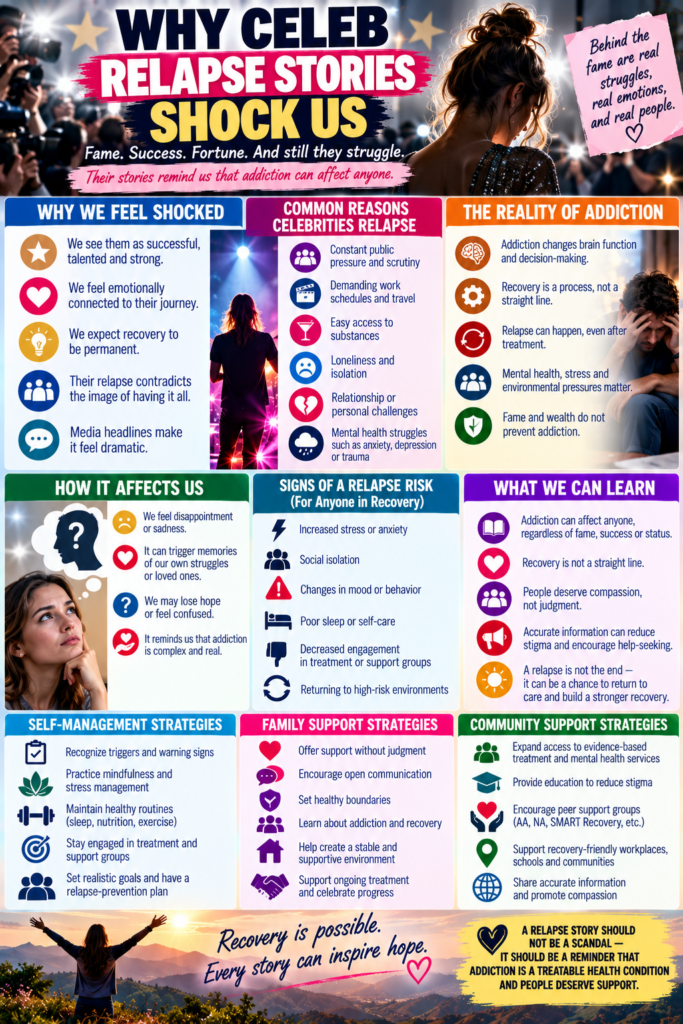
Reasons celebrity relapse stories shock the public
- Idealized public images: Fans may assume that successful celebrities have overcome their personal difficulties.
- Emotional attachment: People may feel connected to celebrities through music, movies, interviews, and social media.
- Public recovery narratives: Media coverage sometimes portrays sobriety as a permanent achievement rather than an ongoing process.
- Unrealistic expectations: Society often assumes that completing treatment means someone will never struggle again.
- Sensationalized headlines: News outlets may emphasize dramatic setbacks rather than the complexities of recovery.
- Fear and uncertainty: Celebrity relapse stories may remind individuals of their own experiences with addiction or those of loved ones.
- Misunderstanding addiction: Many people remain unfamiliar with the chronic and recurring patterns that can occur with substance use disorders.
These reactions reveal how strongly public expectations influence the way addiction is understood.
The Difference Between Relapse and Recovery
Recovery is a process of improving health, functioning, relationships, and quality of life while addressing problematic substance use.
For some individuals, recovery involves complete abstinence. Others may pursue different treatment goals depending on their diagnosis, risks, and clinical circumstances.
The word relapse is commonly used when someone returns to problematic substance use after a period of improvement. However, some healthcare professionals prefer the terms return to use or recurrence of symptoms because they can be more precise and less stigmatizing.
Not every instance of substance use after abstinence establishes a recurrence of a substance use disorder. Clinical context matters.
Important facts about relapse and recovery
- A return to substance use does not erase earlier achievements.
- Addiction can involve changes in brain reward, motivation, learning, and stress-response systems.
- Environmental triggers and emotional distress may increase vulnerability.
- Recovery goals and treatment needs may change over time.
- Ongoing care can reduce the likelihood and severity of recurrence.
- A setback may indicate that a recovery plan needs adjustment.
- Continued engagement with treatment can support long-term improvement.
The goal is to recognize warning signs early and respond with appropriate support rather than shame.
The Hidden Pressures Behind Celebrity Addiction
Fame may provide financial resources and professional opportunities, but it does not eliminate emotional distress or vulnerability to addiction.
Celebrities may experience unusual pressures involving public scrutiny, demanding work schedules, constant travel, and limited privacy.
Some also encounter environments where alcohol and drugs are readily available.
These circumstances can complicate efforts to maintain healthy routines and recovery support.
Challenges that may affect celebrities in recovery
- Constant public attention: Media coverage can increase anxiety and emotional pressure.
- Demanding schedules: Touring, filming, and promotional events may interfere with sleep and treatment routines.
- Social environments: Parties and entertainment-industry events may involve alcohol or other substances.
- Limited privacy: Seeking treatment may become a public issue rather than a private healthcare decision.
- Isolation: Fame can make it difficult to identify trustworthy relationships.
- Emotional stress: Career uncertainty, relationship difficulties, and personal loss may increase distress.
- Access to substances: Wealth and social connections may make substances easier to obtain.
These factors do not mean celebrities are destined to relapse. They demonstrate that successful recovery requires more than financial resources.
Celebrity Recovery Stories That Changed Public Conversations
Several well-known individuals have spoken publicly about substance use problems, recovery, and the difficulties of maintaining sobriety.
Their experiences help illustrate that addiction can affect people regardless of professional achievement.

Demi Lovato — Addiction, Overdose, and Recovery
Lovato has openly discussed substance use struggles and a near-fatal overdose in 2018. Their experience brought attention to the dangers of overdose, the importance of continued treatment, and the complexities of recovery.
Their story demonstrates why a return to substance use can have serious medical consequences, particularly when tolerance has decreased after abstinence.

Robert Downey Jr. — Recovery and Career Rebuilding
Downey experienced widely documented substance use problems and legal difficulties before establishing long-term sobriety.
His later professional success demonstrates that individuals can rebuild their lives after severe addiction-related challenges.
His story should not create the expectation that every recovery journey follows the same path.

Elton John — Long-Term Sobriety and Advocacy
Elton John has publicly discussed his past cocaine and alcohol problems and his commitment to sobriety since 1990.
His advocacy illustrates the importance of seeking help, maintaining supportive relationships, and addressing addiction without shame.
His experience also reminds us that recovery can be sustained over many years.
These examples represent different recovery experiences. They should not be interpreted as evidence that every celebrity has experienced relapse or that any single treatment approach works for everyone.
Why the Public Often Misunderstands Relapse
Many people still view addiction primarily as a matter of willpower or personal responsibility.
This misunderstanding can lead to harsh judgments when someone returns to substance use.
Statements suggesting that a person should simply stop drinking or using drugs overlook the biological, psychological, and social factors involved in addiction.
Substance use disorders can affect decision-making, stress regulation, reward processing, and behavioral control.
Common misconceptions about relapse
– Myth: Relapse means treatment failed. Fact: A return to use may indicate the need to reassess treatment, strengthen support, or address new challenges.
– Myth: Wealth and fame prevent addiction. Fact: Substance use disorders can affect people from every economic and social background.
– Myth: Someone who relapses lacks motivation. Fact: Motivation is only one factor in recovery. Cravings, stress, coexisting conditions, and environmental triggers also matter.
– Myth: One relapse erases years of progress. Fact: Previous improvements in health, relationships, and coping skills remain meaningful.
– Myth: Addiction recovery should be easy after rehabilitation. Fact: Many individuals benefit from continuing care and ongoing support after completing intensive treatment.
Public education can help replace these misconceptions with a more accurate understanding of recovery.
The Emotional Impact of Celebrity Relapse Stories on Fans
Fans may experience sadness, disappointment, or concern when a celebrity they admire returns to substance use.
For some, these stories can trigger memories of personal addiction experiences or family struggles.
Others may become discouraged about their own recovery when a public figure appears to experience difficulties despite receiving extensive support.
However, celebrity recovery stories should not determine anyone else’s expectations about treatment success.
Healthier ways to respond to celebrity relapse news
- Recognize that public information may be incomplete.
- Avoid speculating about private medical conditions.
- Remember that addiction recovery differs between individuals.
- Focus on compassion rather than blame.
- Avoid sharing rumors or sensationalized content.
- Seek emotional support if the news triggers personal distress.
- Use the story as an opportunity to learn about addiction treatment and prevention.
Celebrity experiences can encourage awareness, but they should not replace evidence-based medical information.
Self-Management Strategies: Strengthening Recovery and Preventing Recurrence
Self-management is an essential part of maintaining recovery from substance use disorders.
It involves recognizing personal triggers, developing coping skills, following treatment recommendations, and responding early when difficulties arise.
Celebrities and non-celebrities alike may benefit from practical recovery strategies that support physical and emotional health.
Effective self-management strategies
- Identify personal triggers: Recognize stress, loneliness, conflict, celebrations, or environments associated with substance use.
- Develop a relapse-prevention plan: Establish strategies for managing cravings and high-risk situations.
- Maintain professional treatment: Continue counseling, medication management, or addiction services when appropriate.
- Practice emotional regulation: Use mindfulness, relaxation techniques, journaling, or other healthy coping strategies.
- Build consistent routines: Prioritize sleep, nutrition, exercise, and meaningful activities.
- Monitor mental health: Seek treatment for depression, anxiety, trauma, or other coexisting conditions.
- Avoid high-risk environments: Reduce unnecessary exposure to situations strongly associated with previous substance use.
- Stay connected to support: Participate in peer recovery meetings or maintain regular contact with trusted individuals.
- Recognize early warning signs: Pay attention to increasing cravings, isolation, secrecy, or declining treatment engagement.
- Respond quickly to setbacks: Contact healthcare professionals or recovery supporters before problems escalate.
For alcohol use disorder, medications such as naltrexone or acamprosate may help when clinically appropriate. For opioid use disorder, buprenorphine and methadone substantially reduce overdose and mortality risks.
Family Support Strategies: Responding to Relapse With Compassion and Boundaries
Family members often experience fear, frustration, disappointment, and uncertainty when someone returns to substance use.
These feelings are understandable, particularly when families have witnessed previous addiction-related harm.
However, blame and humiliation can make honest communication more difficult.
Supportive families can encourage treatment while maintaining appropriate boundaries and protecting their own well-being.
How families can support a loved one after relapse
- Communicate without judgment: Express concern calmly and respectfully.
- Encourage professional evaluation: Help the individual reconnect with addiction treatment services.
- Recognize warning signs: Learn about changes in mood, behavior, sleep, and substance use patterns.
- Establish healthy boundaries: Clearly communicate expectations involving safety, finances, and responsibilities.
- Avoid enabling harmful behavior: Provide support without repeatedly concealing dangerous actions.
- Develop a safety plan: Learn how to respond to overdose, intoxication, or mental health emergencies.
- Support healthy routines: Encourage appropriate sleep, nutrition, physical activity, and meaningful activities.
- Participate in family counseling: Seek guidance when addiction has affected trust or communication.
- Practice patience: Understand that rebuilding stability may take time.
- Protect family well-being: Seek emotional support and maintain personal boundaries.
Family support should focus on helping individuals access appropriate care rather than attempting to control every aspect of recovery.
Community Support Strategies: Reducing Stigma and Improving Treatment Access
Communities play an important role in shaping how addiction and relapse are understood.
When relapse stories are treated as scandals, individuals may become reluctant to discuss substance use problems or seek help.
Communities that emphasize education, treatment access, and compassionate support can create healthier recovery environments.
Community strategies for supporting addiction recovery
- Expand evidence-based treatment: Improve access to addiction medicine, counseling, and medication treatment.
- Promote peer support: Encourage participation in AA, NA, SMART Recovery, and other mutual-help programs.
- Reduce stigma: Use respectful language and challenge harmful stereotypes.
- Provide overdose prevention education: Expand naloxone access and training.
- Support mental health services: Address coexisting depression, anxiety, trauma, and other conditions.
- Improve continuing care: Offer recovery support after inpatient or outpatient treatment.
- Provide family education: Teach communication, boundaries, and crisis-response skills.
- Encourage workplace support: Develop policies that help individuals access treatment without unnecessary discrimination.
- Promote accurate media reporting: Encourage responsible coverage that respects privacy and avoids sensationalism.
- Support recovery-friendly activities: Create opportunities for substance-free recreation and community connection.
Helpful addiction recovery resources
- SAMHSA — Behavioral health education and treatment resources.
- FindTreatment.gov — Searchable directory of addiction and mental health treatment services.
- Alcoholics Anonymous — Peer support for alcohol-related problems.
- Narcotics Anonymous — Mutual-help support for substance use recovery.
- SMART Recovery — Evidence-informed recovery support.
- Nar-Anon Family Groups — Support for families affected by another person’s substance use.
In the United States, individuals can also call 1-800-662-HELP (4357) for treatment referrals.
The Role of Media and Social Media in Addiction Stigma
Celebrity relapse stories often spread rapidly through entertainment news, social media, and online discussions.
Headlines may emphasize embarrassment, dramatic behavior, or career consequences rather than the medical realities of addiction.
This approach can reinforce stigma and discourage people from seeking treatment.
Responsible reporting should provide accurate information, respect privacy, and avoid portraying addiction as entertainment.
How media coverage can become more supportive
- Avoid stigmatizing terms such as junkie or addict when referring to individuals.
- Use person-first language, such as person with a substance use disorder.
- Avoid presenting relapse as a moral failure.
- Respect private medical information.
- Include accurate information about treatment and recovery.
- Provide links to support services when discussing addiction.
- Highlight that recovery is possible without guaranteeing specific outcomes.
Media organizations and audiences both influence public attitudes toward addiction.
Why Relapse Does Not Erase Recovery Progress
A return to substance use can be serious, but it does not eliminate the knowledge, coping skills, relationships, or improvements someone developed during recovery.
At the same time, relapse should not be minimized. Returning to opioids after abstinence can be especially dangerous because reduced tolerance increases overdose risk.
A compassionate response recognizes both realities: previous progress remains meaningful, and renewed substance use deserves prompt attention.
Steps to take after a return to substance use
- Assess immediate medical and overdose risks.
- Contact an addiction treatment professional.
- Review the circumstances that contributed to substance use.
- Reconnect with supportive individuals.
- Reevaluate medications and treatment needs.
- Update relapse-prevention and safety plans.
- Address coexisting mental health symptoms.
- Resume meaningful daily routines when medically appropriate.
Individuals experiencing an overdose, severe intoxication, seizures, or other medical emergencies should receive immediate emergency care.
Lessons From Celebrity Relapse Stories
Celebrity relapse stories provide opportunities to challenge unrealistic expectations about addiction and recovery.
They remind us that fame does not eliminate vulnerability, wealth does not guarantee recovery, and personal struggles cannot always be understood through public appearances.
Several important lessons emerge:
- Addiction can affect anyone, regardless of status or success.
- Recovery often requires continuing care and supportive relationships.
- A return to substance use should prompt assessment and support rather than humiliation.
- Mental health and addiction treatment frequently need to be addressed together.
- Families benefit from education, communication, and healthy boundaries.
- Communities can reduce stigma by expanding treatment access.
- Media coverage should prioritize accuracy, privacy, and compassion.
- Long-term recovery remains possible after setbacks.
Conclusion: Replacing Shock With Understanding and Compassion
Celebrity relapse stories shock us because they challenge the belief that success, financial security, and public recognition protect individuals from addiction.
When a famous person returns to substance use, the public may interpret the experience as a failure of character or recovery. In reality, substance use disorders involve complex biological, psychological, and environmental factors that can require ongoing treatment and support.
Self-management strategies help individuals recognize triggers, maintain healthier routines, and respond to warning signs. Family support encourages treatment, accountability, and emotional stability. Community resources provide access to professional care, peer connections, and overdose prevention services.
The most important lesson is that a relapse story should not be viewed only as a scandal or disappointment. It is an opportunity to understand addiction more accurately, encourage early intervention, and recognize that people deserve compassionate care throughout recovery.
Recovery is not defined by a perfect journey. It is strengthened by continued learning, meaningful support, and the willingness to seek help when challenges arise.
Frequently Asked Questions and Answers
Understanding Celebrity Relapse
1. Why do celebrity relapse stories shock the public?
Celebrity relapse stories are surprising because people often associate fame, wealth, and professional achievement with personal stability.
When celebrities openly celebrate sobriety, fans may assume their addiction struggles are permanently behind them. A return to substance use challenges this expectation and reminds audiences that recovery can involve ongoing difficulties.
2. Why do people become emotionally invested in celebrity recovery journeys?
Fans often develop emotional connections with celebrities through music, movies, interviews, and social media.
When public figures share personal struggles, their stories may inspire people experiencing similar challenges.
A celebrity’s relapse can therefore feel personally disappointing or upsetting, even though fans do not know the full circumstances of that person’s recovery.
3. Does fame protect celebrities from addiction?
No. Substance use disorders can affect individuals regardless of income, education, social status, or professional success.
Although celebrities may have greater financial access to treatment, they can also experience intense public scrutiny, demanding schedules, isolation, and environments where substances are readily available.
4. Why do some celebrities experience relapse after years of sobriety?
A return to substance use may occur after prolonged stress, exposure to substance-related triggers, changes in mental health, or disruptions in recovery support.
Other contributing factors may include:
- Relationship difficulties.
- Grief or personal loss.
- Chronic pain or other medical conditions.
- Social environments involving alcohol or drugs.
- Increased cravings.
- Reduced participation in treatment.
- Sleep disturbances and emotional exhaustion.
Relapse is not inevitable, and no single factor explains every person’s experience.
5. Does relapse mean someone has failed in recovery?
No. A return to substance use does not erase previous progress or mean that someone is incapable of recovery.
However, relapse can have serious medical consequences and should not be minimized.
It may indicate that the individual needs additional treatment, stronger support, or adjustments to an existing recovery plan.
Addiction, Recovery, and Relapse
6. What is the difference between a lapse and a relapse?
A lapse is sometimes used to describe a brief return to substance use, while relapse may refer to a more sustained return to problematic use.
These terms are not always applied consistently.
Healthcare professionals may instead use return to use or recurrence of symptoms to describe what happened more precisely and without unnecessary judgment.
7. Is addiction considered a chronic disease?
Substance use disorders are medical conditions involving changes in behavior, motivation, reward processing, and the ability to control substance use.
Some people experience a chronic or recurring course, while others achieve sustained remission.
Addiction is treatable, and evidence-based care can substantially improve health and long-term outcomes.
8. Can someone relapse even after completing rehabilitation?
Yes. Completing rehabilitation can provide valuable coping skills and treatment, but it does not guarantee that substance use problems will never recur.
Many individuals benefit from continuing care, medication when appropriate, counseling, and recovery support after leaving a treatment program.
9. Why is relapse sometimes dangerous after a long period of sobriety?
After abstinence, a person’s tolerance to certain substances, particularly opioids, may decrease.
Returning to a previously tolerated dose can cause a fatal overdose.
Other dangers include alcohol poisoning, impaired judgment, dangerous drug interactions, and complications involving contaminated or unexpectedly potent substances.
For opioid-related overdose risk, access to naloxone and evidence-based treatment is especially important.
10. Can relapse be prevented?
Relapse risk can be reduced, although no strategy guarantees prevention.
Effective approaches may include:
- Ongoing addiction treatment.
- Medication treatment when appropriate.
- Recognizing personal triggers.
- Developing coping skills.
- Maintaining supportive relationships.
- Managing coexisting mental health conditions.
- Avoiding high-risk situations.
- Establishing a written relapse-prevention plan.
Early intervention when warning signs appear can help prevent more serious complications.
Celebrity Examples and Public Perceptions
11. Which celebrities have publicly discussed addiction relapse or recovery setbacks?
Several well-known individuals have discussed substance use challenges, including:
- Demi Lovato: Publicly discussed substance use struggles and a life-threatening overdose in 2018.
- Robert Downey Jr.: Experienced substance use problems and repeated legal difficulties before establishing long-term sobriety.
- Macklemore: Has openly discussed substance use disorder and experiences with relapse.
- Eminem: Has discussed prescription drug addiction, overdose, and his subsequent recovery.
These individuals have different experiences. Their stories should not be treated as identical, and historical disclosures should not be interpreted as evidence of current substance use.
12. Why does the media sensationalize celebrity relapse?
Celebrity relapse stories can attract attention, online engagement, and advertising revenue.
Some headlines emphasize scandal, embarrassment, or professional consequences instead of explaining addiction as a health condition.
Sensationalized coverage may reinforce stigma and discourage individuals from seeking treatment.
13. Can celebrity relapse stories negatively affect people in recovery?
Yes. Some individuals may feel discouraged when a celebrity they admire experiences a setback.
They may worry that relapse is unavoidable or question whether their own recovery efforts will succeed.
However, one person’s experience does not determine another person’s outcome. Recovery trajectories differ considerably.
14. Can celebrity relapse stories have positive effects?
Yes. Responsible discussions can increase awareness of addiction, encourage early treatment, and reduce stigma.
When public figures share experiences voluntarily, their stories may help others recognize warning signs and seek support.
The benefit depends partly on whether the discussion emphasizes accurate information, privacy, and compassion rather than sensationalism.
15. Why should we avoid judging celebrities who relapse?
Public information rarely provides a complete understanding of someone’s medical history, emotional struggles, or treatment circumstances.
Judgment and public humiliation may reinforce harmful stereotypes about addiction.
A compassionate response recognizes the seriousness of substance use problems while respecting the individual’s dignity and privacy.
Self-Management Strategies for Recovery
16. What self-management strategies help individuals maintain sobriety?
Self-management involves recognizing triggers, following treatment recommendations, and developing healthy daily routines.
Helpful strategies include:
- Identifying emotional and environmental triggers.
- Attending counseling or recovery meetings.
- Practicing mindfulness and stress management.
- Maintaining regular sleep and exercise.
- Developing healthy recreational activities.
- Monitoring cravings and mood changes.
- Building supportive relationships.
- Seeking help when early warning signs appear.
- Creating a relapse-prevention plan.
These strategies can strengthen recovery when combined with appropriate professional care.
17. How can someone recognize early warning signs of relapse?
Warning signs may include increased cravings, emotional withdrawal, disrupted sleep, and renewed contact with environments associated with previous substance use.
Other signs include:
- Increased secrecy.
- Neglecting recovery activities.
- Romanticizing past substance use.
- Feeling overwhelmed by stress.
- Changes in mood or behavior.
- Avoiding supportive relationships.
- Believing treatment is no longer necessary despite continuing difficulties.
Warning signs vary, and none alone proves that relapse has occurred.
18. What should someone do immediately after returning to substance use?
The priority is safety.
The individual should assess immediate medical risks and seek emergency assistance if overdose, severe intoxication, seizures, or other dangerous symptoms occur.
When medically stable, helpful steps include contacting an addiction professional, reconnecting with supportive individuals, reviewing triggers, and updating the treatment plan.
Returning to use should prompt appropriate care rather than shame.
19. Can therapy help prevent addiction relapse?
Yes. Evidence-based therapies can help individuals identify triggers, develop coping skills, and change behaviors associated with substance use.
Common approaches include cognitive behavioral therapy, motivational interviewing, contingency management, and relapse-prevention counseling.
Treatment selection depends on the substance involved, individual needs, and coexisting conditions.
20. Are medications available to support long-term recovery?
Yes. Several medications are effective for specific substance use disorders.
For alcohol use disorder, treatment options include naltrexone and acamprosate.
For opioid use disorder, buprenorphine and methadone are highly effective treatments that reduce mortality risk. Extended-release naltrexone may also be appropriate for selected individuals.
Medication decisions should be made with qualified healthcare professionals.
Family Support Strategies
21. How should families respond when a loved one relapses?
Families should prioritize safety, encourage treatment, and communicate without humiliation or blame.
Helpful responses include:
- Remaining calm during conversations.
- Assessing immediate safety concerns.
- Encouraging professional evaluation.
- Offering practical support for treatment access.
- Establishing healthy boundaries.
- Avoiding threats or shaming.
- Recognizing that treatment plans may need adjustment.
- Seeking family support services when needed.
Compassion and accountability can coexist.
22. Can family support reduce the risk of relapse?
Supportive family relationships may improve treatment engagement, emotional stability, and recovery motivation.
Families can help by encouraging healthy routines, recognizing warning signs, and supporting appropriate healthcare.
However, family involvement does not guarantee sobriety, and relatives should not be held responsible for another person’s substance use.
23. What should families avoid saying after a relapse?
Statements that communicate shame or hopelessness may make honest communication more difficult.
Examples include:
- “You ruined everything.”
- “You clearly don’t want to recover.”
- “After all this time, you should know better.”
- “You will never change.”
- “You have disappointed everyone.”
A more constructive response is: “I’m concerned about your safety. What support would help you reconnect with treatment?”
24. How can families establish healthy boundaries during recovery?
Healthy boundaries clarify expectations involving safety, finances, communication, and responsibilities.
Families may decide not to provide money that could support substance use, permit intoxicated driving, or tolerate threatening behavior.
Boundaries should be communicated clearly and consistently, without using humiliation as punishment.
25. Should family members seek counseling after a loved one’s relapse?
Yes. Family counseling or individual support can help relatives manage stress, improve communication, and understand addiction.
Support groups such as Al-Anon and Nar-Anon may also provide opportunities to connect with others experiencing similar challenges.
Family members deserve support for their own well-being.
Community Support and Addiction Awareness
26. How can communities support people who experience relapse?
Communities can improve recovery outcomes by expanding access to evidence-based treatment and reducing barriers to care.
Important strategies include:
- Affordable addiction treatment.
- Medication treatment for alcohol and opioid use disorders.
- Peer recovery programs.
- Mental health counseling.
- Naloxone distribution and overdose education.
- Recovery-supportive housing and employment services.
- Family education.
- Continuing care after rehabilitation.
27. What community resources are available for addiction recovery?
Several organizations provide treatment information and peer support.
- FindTreatment.gov — Search for mental health and substance use treatment providers.
- SAMHSA — Behavioral health information and recovery resources.
- Alcoholics Anonymous — Peer support for alcohol-related problems.
- Narcotics Anonymous — Mutual-help recovery support.
- SMART Recovery — Evidence-informed self-management support.
- Al-Anon Family Groups — Support for people affected by another person’s drinking.
In the United States, the National Substance Use Treatment Referral Helpline is 1-800-662-HELP (4357).
28. How can the media report celebrity relapse more responsibly?
Responsible reporting should avoid stigmatizing language, speculation about private medical conditions, and sensationalized headlines.
Media organizations can improve coverage by:
- Using accurate medical terminology.
- Respecting privacy.
- Avoiding unsupported diagnoses.
- Providing treatment resources.
- Explaining that recovery experiences vary.
- Avoiding language that portrays addiction as a moral failure.
29. How can celebrity relapse stories help reduce addiction stigma?
When discussed responsibly, these stories can demonstrate that substance use disorders affect people from all backgrounds.
They can encourage conversations about treatment, mental health, overdose prevention, and the importance of supportive relationships.
Public awareness becomes more beneficial when it focuses on education and recovery rather than gossip.
30. What is the most important lesson from celebrity relapse stories?
The most important lesson is that fame, money, and success do not eliminate vulnerability to addiction.
A return to substance use can be medically serious, but it does not erase previous recovery progress or eliminate the possibility of future improvement.
Self-management strategies help individuals recognize triggers and maintain healthier behaviors. Family support encourages treatment and accountability, while community resources provide professional care, peer support, and overdose prevention services.
Video: