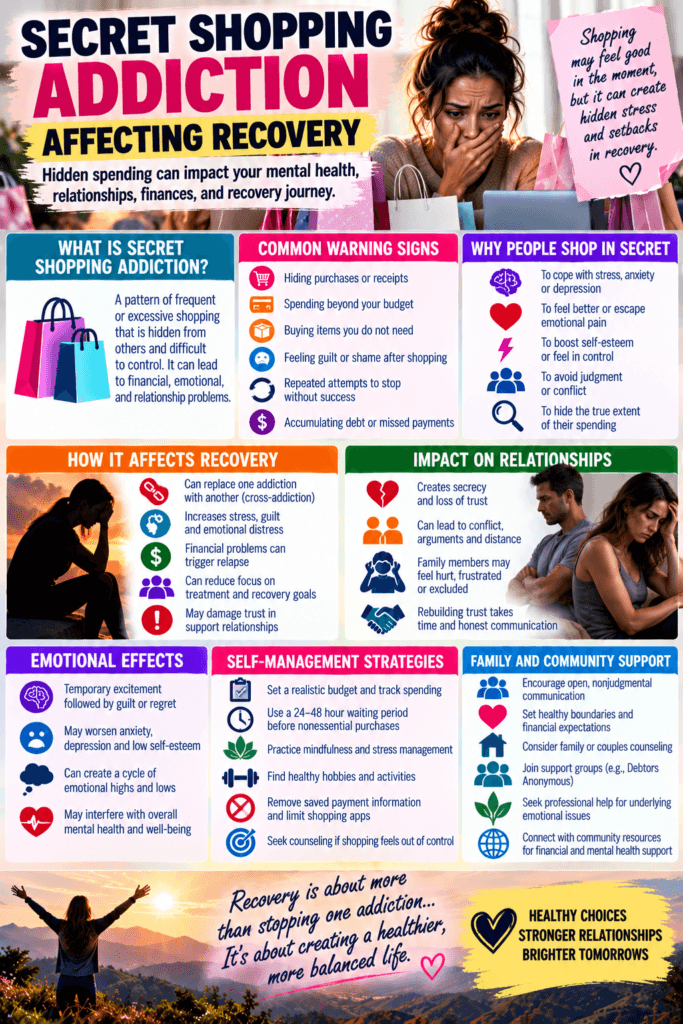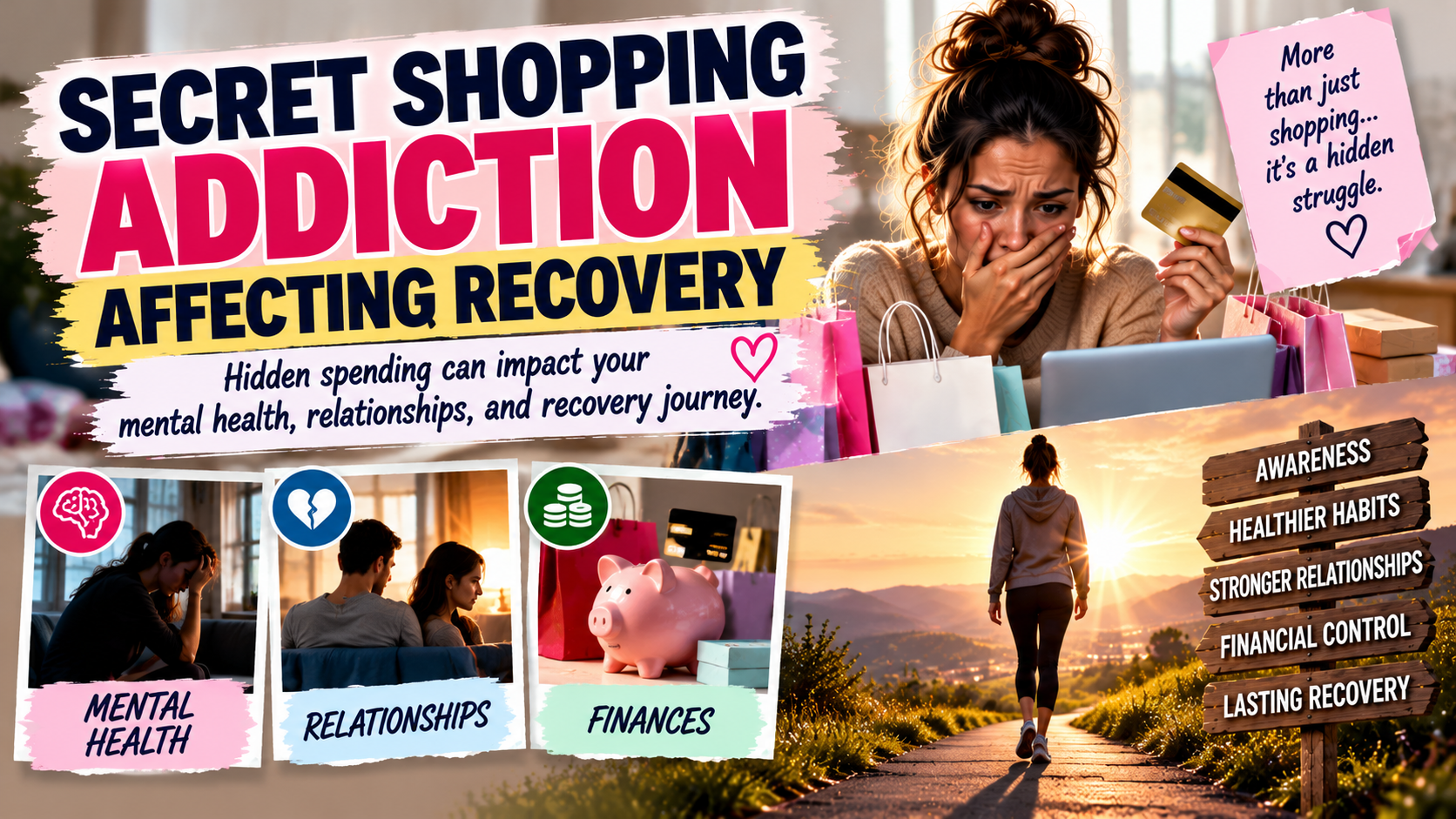
Shopping is a normal part of everyday life, but for some individuals, purchasing items becomes more than a simple activity. It develops into an uncontrollable pattern of spending that provides temporary emotional relief while creating financial problems, secrecy, guilt, and relationship difficulties. When individuals begin hiding purchases, concealing credit card statements, or lying about spending habits, their behavior may indicate a problem commonly described as secret shopping addiction, also known as compulsive buying or compulsive buying-shopping disorder.
Secret shopping can be especially concerning for individuals recovering from alcohol or drug addiction. As they reduce or stop substance use, some may begin relying on shopping to manage stress, boredom, loneliness, or emotional discomfort. This pattern is sometimes called addiction substitution or cross-addiction, although compulsive shopping is not formally classified as a substance use disorder.
The temporary excitement of making a purchase may provide emotional relief, but the resulting debt, secrecy, and shame can increase stress and threaten recovery stability.
Understanding the emotional and behavioral factors behind secret shopping is essential for developing healthier coping strategies. Self-management, family involvement, and community support can help individuals recognize problematic spending, rebuild financial stability, and protect their recovery.
What Is Secret Shopping Addiction?
Secret shopping addiction refers to a pattern of excessive or difficult-to-control purchasing that individuals deliberately conceal from family members, partners, or others.
The behavior may involve shopping online, visiting retail stores, purchasing unnecessary items, or accumulating products that are rarely used.
Unlike ordinary shopping, compulsive buying often involves a strong urge to purchase items even when the individual recognizes the financial or emotional consequences.
Although compulsive buying-shopping disorder is widely studied, it is not currently recognized as a separate diagnosis in the DSM-5-TR. The term shopping addiction is commonly used to describe the behavior, but a clinical assessment is important to distinguish it from other conditions.
Common signs of secret shopping addiction
- Hidden purchases: Concealing shopping bags, deliveries, or newly purchased items.
- Financial secrecy: Hiding credit card bills, bank statements, or outstanding debts.
- Compulsive spending: Feeling unable to resist buying unnecessary products.
- Emotional shopping: Purchasing items to escape sadness, anxiety, boredom, or stress.
- Guilt and shame: Experiencing regret after purchases but continuing the behavior.
- Relationship dishonesty: Lying about prices, purchases, or financial obligations.
- Increasing debt: Accumulating credit card balances or borrowing money to continue shopping.
- Loss of control: Repeatedly attempting to reduce spending without success.
- Unused purchases: Accumulating clothing, electronics, or household products that remain unopened.
- Emotional dependence: Feeling temporary happiness or excitement when buying something.
Occasional overspending does not necessarily indicate a disorder. The concern becomes more significant when purchasing behaviors repeatedly cause distress or interfere with daily functioning.
Why Do People Develop Compulsive Shopping Behaviors?
Compulsive shopping often develops through a combination of emotional, psychological, social, and environmental factors.
For some individuals, purchasing an item creates a temporary feeling of excitement, accomplishment, or control. This experience can reinforce the desire to shop again when uncomfortable emotions return.
Online shopping platforms make purchasing especially convenient through personalized advertisements, one-click checkout, promotional notifications, and buy-now-pay-later services.
These features can encourage impulsive decisions, particularly among individuals who already struggle with emotional regulation.
Factors that may contribute to compulsive shopping
- Stress and anxiety: Shopping may temporarily distract from difficult emotions.
- Depression or loneliness: Purchasing items may provide a short-lived improvement in mood.
- Low self-esteem: Some individuals use purchases to improve their self-image or social status.
- Boredom: Shopping can become a source of stimulation or excitement.
- Trauma-related distress: Purchasing may function as an avoidance strategy for uncomfortable memories or emotions.
- Impulsivity: Difficulty delaying gratification can increase unnecessary spending.
- Social media influence: Influencers, advertisements, and online trends may encourage frequent purchasing.
- Easy credit access: Credit cards and installment payment services can reduce the immediate feeling of financial consequences.
- Recovery-related changes: Individuals reducing substance use may seek alternative activities that provide excitement or emotional relief.
These factors do not affect everyone equally, and no single cause explains all cases of compulsive buying.
The Hidden Cycle of Shopping Addiction
Compulsive shopping frequently follows a repeating cycle in which emotional distress leads to purchasing, temporary relief, and then regret.
The compulsive shopping cycle: Financial and relationship stress can create new emotional triggers, reinforcing the urge to shop again.
Over time, the cycle may become increasingly difficult to interrupt. Individuals may begin concealing purchases to avoid confrontation, which can further increase shame and isolation.
How Secret Shopping Can Affect Addiction Recovery
For individuals recovering from alcohol or drug addiction, compulsive shopping may create additional challenges.
Recovery often involves learning how to manage emotional discomfort without relying on substances. However, when the underlying patterns of avoidance, impulsivity, or reward-seeking remain unaddressed, some individuals may develop other problematic behaviors.
Shopping may become an alternative way to experience excitement or temporary relief.
This does not mean everyone recovering from substance use disorders will develop shopping problems. However, recognizing changes in behavior is important for maintaining long-term recovery.
Ways compulsive shopping may interfere with recovery
- Emotional avoidance: Shopping may replace substances as a way to escape uncomfortable feelings.
- Financial stress: Debt and unpaid bills can increase anxiety and emotional distress.
- Relationship conflict: Hidden spending can damage trust with partners and family members.
- Shame and guilt: Repeated financial mistakes may contribute to negative self-perception.
- Loss of accountability: Concealing purchases can reinforce secrecy and avoidance.
- Reduced treatment engagement: Excessive shopping may interfere with counseling, work, or recovery activities.
- Increased relapse vulnerability: Financial problems and emotional distress can become triggers for renewed substance use.
- Difficulty developing healthy coping skills: Shopping may prevent individuals from practicing emotional regulation strategies.
Addressing compulsive buying during recovery can help individuals develop more stable routines and reduce additional sources of stress.
The Financial Consequences of Secret Shopping
One of the most serious consequences of compulsive shopping is financial instability.
Individuals may accumulate credit card debt, miss important payments, use savings intended for essential expenses, or rely on borrowing to continue purchasing items.
Some people begin opening additional credit accounts or using buy-now-pay-later services to conceal the full extent of their spending.
Over time, these behaviors can create significant financial pressure.
Common financial warning signs
- Increasing credit card balances.
- Multiple overdue payments.
- Frequent use of installment payment services.
- Borrowing money to cover unnecessary purchases.
- Using emergency savings for shopping.
- Hiding bank statements or credit accounts.
- Difficulty paying rent, utilities, or other essential expenses.
- Repeatedly promising to stop spending but continuing.
Financial problems can also affect emotional well-being, contributing to anxiety, depression, sleep disturbances, and family conflict.
The Emotional Impact of Hidden Spending
Secret shopping often involves more than financial difficulties. Individuals may experience intense shame, embarrassment, loneliness, and fear of being discovered.
Some people begin hiding purchases because they worry about disappointing family members or facing criticism.
However, secrecy can create additional stress and reinforce the cycle of compulsive buying.
Emotional consequences may include
- Persistent guilt after shopping.
- Fear of financial problems being discovered.
- Anxiety about credit card statements or deliveries.
- Reduced self-confidence.
- Increased relationship tension.
- Feelings of helplessness or loss of control.
- Social withdrawal.
- Difficulty discussing money openly.
Recognizing these emotional consequences is an important step toward developing healthier behaviors.
Self-Management Strategies: Breaking the Cycle of Secret Shopping
Self-management involves recognizing unhealthy spending patterns, developing emotional awareness, and establishing practical strategies to reduce compulsive purchasing.
For individuals recovering from addiction, these strategies can also support broader recovery goals.
Effective self-management strategies
- Identify emotional triggers: Keep a journal documenting feelings, situations, and thoughts that lead to shopping urges.
- Create a realistic budget: Establish spending limits for essential expenses, savings, and discretionary purchases.
- Use a waiting period: Delay nonessential purchases for 24–48 hours to reduce impulsive decisions.
- Remove shopping triggers: Unsubscribe from promotional emails, disable shopping notifications, and reduce exposure to online advertisements.
- Limit easy access to credit: Consider removing stored payment information or using spending alerts.
- Track purchases: Review bank statements and record spending to increase financial awareness.
- Develop alternative coping skills: Practice walking, mindfulness, exercise, journaling, or creative activities when shopping urges arise.
- Seek professional counseling: Cognitive behavioral therapy may help address compulsive buying patterns and emotional triggers.
- Practice self-compassion: Recognize mistakes without using shame as motivation.
- Create a relapse-prevention plan: Identify high-risk situations and prepare strategies for responding to urges.
- Celebrate progress: Recognize improvements in financial management and emotional regulation.
The goal is not necessarily to eliminate all shopping but to develop healthier control over purchasing decisions.
Family Support Strategies: Rebuilding Trust and Financial Honesty
Compulsive shopping can create significant strain within families, particularly when purchases and debts are hidden.
Partners may feel betrayed when they discover concealed credit accounts or financial obligations.
Family members may also struggle to understand why someone continues spending despite recognizing the consequences.
Supportive communication and clear financial boundaries can help families address these challenges.
How families can provide meaningful support
- Communicate without judgment: Encourage honest discussions about spending patterns and emotional triggers.
- Establish financial boundaries: Agree on reasonable spending limits and responsibilities.
- Encourage transparency: Develop mutually agreed methods for reviewing shared finances.
- Avoid shaming: Focus on changing behavior rather than criticizing the individual.
- Support professional treatment: Encourage counseling when compulsive shopping causes significant distress.
- Develop shared financial goals: Work together on budgeting, savings, and debt repayment.
- Recognize emotional triggers: Understand that shopping may be connected to stress, loneliness, or emotional difficulties.
- Celebrate improvement: Acknowledge progress in spending control and honesty.
- Consider family counseling: Seek professional guidance when financial secrecy has damaged trust.
- Protect financial safety: Maintain appropriate boundaries when repeated spending threatens essential household expenses.
Financial transparency should be collaborative rather than coercive. Support does not require surrendering all financial independence.
Community Support Strategies: Creating a Network for Financial and Emotional Recovery
Community resources can help individuals address compulsive shopping through education, financial counseling, mental health treatment, and peer support.
Because compulsive buying is not always recognized as a formal addiction diagnosis, individuals may struggle to identify appropriate services.
Increasing awareness can help people seek assistance before financial problems become severe.
Community strategies for addressing compulsive shopping
- Expand mental health services: Improve access to professionals familiar with compulsive buying and impulse-control difficulties.
- Provide financial education: Offer budgeting classes, debt-management workshops, and financial literacy programs.
- Support peer recovery groups: Encourage supportive environments where individuals can discuss spending behaviors without shame.
- Promote addiction education: Include behavioral addictions and problematic spending in recovery discussions.
- Offer affordable counseling: Increase access to community mental health programs and sliding-scale services.
- Encourage consumer awareness: Educate individuals about online advertising, credit risks, and installment payment services.
- Support family education: Provide resources for families affected by financial secrecy.
- Develop healthy recreational opportunities: Encourage community activities that do not revolve around purchasing.
- Improve early identification: Help healthcare professionals recognize problematic spending and related mental health concerns.
Helpful resources
- Debtors Anonymous — Peer support for individuals experiencing compulsive debt-related behaviors.
- National Foundation for Credit Counseling — Financial counseling and debt-management education.
- SAMHSA — Behavioral health education and treatment information.
- FindTreatment.gov — Directory of mental health and substance use treatment services.
- National Alliance on Mental Illness — Mental health education and support resources.
The Connection Between Shopping Addiction and Mental Health
Compulsive shopping may coexist with depression, anxiety, substance use disorders, attention-deficit/hyperactivity disorder, or other mental health conditions.
For some individuals, shopping provides temporary relief from negative emotions. For others, impulsivity, emotional dysregulation, or difficulty delaying gratification may contribute to excessive spending.
It is also important to distinguish compulsive shopping from spending during manic or hypomanic episodes, which can occur in bipolar disorder.
When professional evaluation is especially important
- Spending becomes increasingly difficult to control.
- Debt threatens housing or essential living expenses.
- Shopping interferes with work or family responsibilities.
- The individual experiences significant anxiety or depression.
- Spending occurs alongside unusually elevated mood, reduced need for sleep, or other possible symptoms of mania.
- Shopping is accompanied by substance use or other compulsive behaviors.
- Repeated attempts to stop shopping have been unsuccessful.
A qualified mental health professional can evaluate underlying conditions and recommend appropriate treatment.
How to Rebuild Financial Stability After Compulsive Shopping
Financial recovery often requires patience, realistic planning, and consistent behavioral changes.
Individuals may feel overwhelmed by accumulated debt, but gradual improvements can help restore a sense of control.
Practical steps toward financial recovery
- Review all credit card balances, loans, and outstanding bills.
- Identify essential expenses and prioritize housing, utilities, food, and healthcare.
- Create a manageable monthly budget.
- Contact creditors when repayment difficulties arise.
- Seek nonprofit credit counseling when appropriate.
- Reduce unnecessary subscriptions and shopping-related expenses.
- Establish a small emergency savings plan when financially feasible.
- Track progress toward debt reduction.
- Avoid taking on additional high-interest debt to cover unnecessary purchases.
- Seek professional financial guidance when obligations become overwhelming.
Financial recovery is not about achieving perfection. It involves developing sustainable habits that protect long-term stability.
Preventing Compulsive Shopping From Threatening Substance Use Recovery
For individuals recovering from alcohol or drug addiction, shopping-related problems should be addressed as part of a comprehensive recovery plan.
The same emotional triggers that contributed to substance use may also influence compulsive purchasing.
Recognizing these connections can help prevent new behavioral patterns from undermining recovery progress.
Strategies for protecting long-term recovery
- Discuss problematic shopping with an addiction counselor or therapist.
- Include financial stress in relapse-prevention planning.
- Monitor changes in impulsive or compulsive behaviors.
- Develop healthy rewards that do not involve excessive spending.
- Maintain regular participation in recovery support groups.
- Practice emotional regulation and stress-management techniques.
- Address anxiety, depression, or trauma-related symptoms when present.
- Build supportive relationships that encourage honesty and accountability.
- Seek financial counseling before debt becomes unmanageable.
The goal is to support emotional, financial, and behavioral stability while maintaining progress in substance use recovery.
Important Lessons About Secret Shopping Addiction
Secret shopping can be difficult to recognize because purchasing is a normal and socially accepted activity.
However, when spending becomes compulsive, hidden, or financially destructive, it may indicate a need for professional support.
Several important lessons emerge:
- Compulsive shopping can function as an unhealthy coping mechanism for emotional distress.
- Financial secrecy can damage trust and increase relationship conflict.
- Shopping-related problems may emerge during recovery from substance use disorders.
- Recognizing emotional triggers can help individuals interrupt compulsive spending patterns.
- Family support is most effective when combined with healthy boundaries.
- Financial counseling and mental health treatment can address different aspects of the problem.
- Recovery involves rebuilding emotional awareness, financial responsibility, and honest communication.
Conclusion: Breaking the Silence Around Secret Shopping Addiction
Secret shopping addiction is more than an issue of spending too much money. For some individuals, it becomes a repeating cycle of emotional discomfort, impulsive purchasing, temporary relief, secrecy, and financial regret.
When compulsive shopping develops during recovery from alcohol or drug addiction, it can create additional challenges by increasing stress, damaging relationships, and reinforcing emotional avoidance.
Self-management strategies help individuals recognize triggers, develop healthier coping skills, and regain control over spending. Family support encourages honest communication, accountability, and financial boundaries. Community resources provide access to mental health treatment, financial counseling, and peer support.
The most important lesson is that recovery involves more than stopping one harmful behavior. It requires understanding the emotions and patterns behind that behavior and developing healthier ways to manage life’s challenges.
Frequently Asked Questions and Answers
Understanding Secret Shopping Addiction
1. What is secret shopping addiction?
Secret shopping addiction describes a pattern of excessive or compulsive purchasing that individuals deliberately hide from partners, family members, or others.
It may involve concealing shopping bags, deleting purchase histories, hiding credit card statements, or lying about spending.
Compulsive buying-shopping disorder is a recognized area of clinical research, although it is not currently classified as a distinct diagnosis in the DSM-5-TR.
2. What are the warning signs of compulsive shopping?
Common warning signs include:
- Frequently purchasing unnecessary items.
- Hiding purchases or financial statements.
- Experiencing strong urges to shop.
- Spending more money than intended.
- Feeling guilty or ashamed after shopping.
- Accumulating debt or missing payments.
- Using shopping to manage stress or sadness.
- Repeatedly attempting to stop without success.
The main concern is not how often someone shops but whether the behavior causes significant distress, impaired control, or problems with daily functioning.
3. Why do people hide their shopping habits?
Individuals may conceal purchases because they feel embarrassed, fear criticism, or worry about relationship conflict.
Some people recognize that their spending has become excessive but feel unable to control their purchasing behavior.
Unfortunately, secrecy may increase shame, anxiety, and financial difficulties, making the cycle harder to interrupt.
4. Is shopping addiction a real mental health condition?
Compulsive buying is a clinically significant behavioral problem for some individuals, but its diagnostic classification remains under discussion.
It is not currently listed as a separate disorder in the DSM-5-TR.
Nevertheless, mental health professionals can evaluate and treat problematic buying behaviors, particularly when they interfere with finances, relationships, or emotional well-being.
5. What causes compulsive shopping behaviors?
There is no single cause. Contributing factors may include:
- Anxiety, depression, or loneliness.
- Emotional avoidance.
- Low self-esteem.
- Impulsivity.
- Stressful life events.
- Social media advertising.
- Easy access to credit.
- Difficulty delaying gratification.
- Other mental health or substance use problems.
Shopping may temporarily improve mood, reinforcing repeated purchasing when distress returns.
Shopping Addiction and Substance Use Recovery
6. Can shopping addiction develop during recovery from alcohol or drugs?
Yes. Some individuals recovering from substance use disorders may begin relying excessively on shopping as another way to manage emotions or seek excitement.
This is sometimes described as addiction substitution or cross-addiction.
However, developing compulsive shopping during recovery is not inevitable, and the term addiction substitution does not represent a separate formal diagnosis.
7. How can secret shopping affect addiction recovery?
Secret shopping can create additional stress through financial difficulties, dishonesty, guilt, and relationship conflict.
These challenges may interfere with recovery by increasing emotional distress and reducing engagement in healthy coping activities.
For some individuals, financial pressure or shame may also become triggers for returning to substance use.
8. Can shopping replace the emotional relief previously provided by drugs or alcohol?
Yes. Shopping may temporarily provide excitement, distraction, or a sense of accomplishment.
When someone repeatedly relies on purchasing to escape uncomfortable emotions, the behavior can become a maladaptive coping pattern.
Recovery involves learning healthier ways to manage distress rather than replacing one harmful behavior with another.
9. Does compulsive shopping mean someone is failing in addiction recovery?
No. Developing another problematic behavior does not erase progress made in reducing or stopping alcohol or drug use.
However, it may indicate that emotional triggers, impulsivity, or other concerns require additional attention.
Professional counseling can help individuals address these patterns without shame.
10. Can secret shopping increase the risk of substance use relapse?
It may contribute to relapse vulnerability in some individuals by increasing financial stress, relationship conflict, and emotional distress.
However, compulsive shopping does not automatically cause substance use recurrence.
Addressing problematic spending as part of a comprehensive recovery plan may help reduce additional sources of stress.
Emotional and Psychological Effects
11. Why does shopping temporarily make someone feel better?
Shopping can produce excitement, anticipation, and feelings of reward.
These experiences involve psychological reward processes that may temporarily distract from stress or uncomfortable emotions.
However, the emotional benefits may fade quickly, especially when purchases lead to guilt or financial consequences.
12. What is the cycle of compulsive shopping?
A common pattern involves emotional distress, an urge to shop, purchasing, temporary relief, and subsequent regret.
Financial and emotional consequences can trigger another episode of compulsive shopping.
Recognizing this cycle is an important first step toward interrupting it.
13. Is compulsive shopping connected to anxiety or depression?
Yes. Problematic shopping may coexist with anxiety, depression, and other mental health conditions.
Some individuals use shopping to distract themselves from negative emotions, while others experience worsening anxiety or depression because of debt and secrecy.
Treatment should address both the spending behavior and any underlying mental health concerns.
14. Can compulsive shopping be related to trauma?
For some individuals, compulsive purchasing may function as a way to avoid trauma-related emotions or distress.
However, trauma is not present in every case of problematic shopping.
Trauma-informed counseling may be helpful when past experiences contribute to emotional regulation difficulties.
15. How can someone distinguish normal shopping from compulsive shopping?
Normal shopping generally involves intentional purchasing within reasonable financial limits.
Compulsive shopping may involve repeated loss of control, intense urges, secrecy, and continued purchasing despite negative consequences.
A person who occasionally overspends does not necessarily have a clinical problem. Persistent distress and impaired functioning are more concerning indicators.
Self-Management Strategies
16. What self-management strategies can help control compulsive shopping?
Helpful strategies include:
- Identifying emotional triggers.
- Creating a realistic spending budget.
- Tracking purchases and financial obligations.
- Delaying nonessential purchases for 24–48 hours.
- Removing stored payment information from shopping websites.
- Unsubscribing from promotional messages.
- Practicing mindfulness and stress management.
- Developing hobbies that do not involve spending.
- Seeking counseling when urges become difficult to control.
- Establishing a plan for responding to setbacks.
These strategies can help individuals build awareness and regain control over purchasing decisions.
17. Can cognitive behavioral therapy help shopping addiction?
Yes. Cognitive behavioral therapy (CBT) has shown promising results in studies of compulsive buying.
CBT helps individuals identify thoughts, emotions, and behaviors that contribute to excessive purchasing.
Treatment may focus on impulse control, emotional regulation, financial decision-making, and healthier coping strategies.
Although evidence is still developing, CBT is commonly considered a reasonable treatment approach.
18. How can someone stop shopping impulsively online?
Practical strategies include removing shopping applications, disabling promotional notifications, and deleting saved credit card information.
Individuals can also establish spending limits, use shopping lists, and introduce a waiting period before making purchases.
For those with severe problems, financial counseling or structured behavioral treatment may provide additional support.
19. Is creating a budget enough to overcome compulsive shopping?
A budget is useful, but it may not address the emotional or psychological factors driving compulsive purchasing.
Individuals who repeatedly shop to manage anxiety, loneliness, or emotional discomfort may benefit from therapy and healthier coping strategies.
Combining financial planning with behavioral support is often more effective than budgeting alone.
20. What should someone do after a compulsive shopping episode?
The first step is to respond without excessive self-criticism.
Helpful actions include reviewing the purchase, identifying emotional triggers, considering appropriate returns or cancellations, and adjusting the spending plan.
Individuals should also discuss recurring episodes with a counselor or trusted support person when appropriate.
A setback can provide information for improving the recovery plan.
Family Support and Relationships
21. How does secret shopping affect marriage and family relationships?
Hidden purchases and concealed debt can damage trust and create emotional distance.
Partners may experience frustration, anxiety, or feelings of betrayal when they discover financial information that has been withheld.
Open communication, appropriate financial boundaries, and professional counseling may help families address these difficulties.
22. How can family members support someone with compulsive shopping?
Families can encourage while maintaining healthy boundaries.
Helpful approaches include:
- Listening without judgment.
- Encouraging honest conversations about finances.
- Supporting professional counseling.
- Establishing mutually agreed spending expectations.
- Avoiding shaming or humiliation.
- Encouraging healthier recreational activities.
- Working toward realistic financial goals.
- Considering family counseling when needed.
Family support should promote accountability without becoming controlling or punitive.
23. Should family members take away someone’s credit cards?
Not automatically. Restricting another adult’s financial access without consent can create additional problems, including loss of independence or coercive control.
A better approach is to develop collaborative financial safeguards, such as voluntary spending limits, separate discretionary accounts, transaction alerts, or professional financial counseling.
If serious financial exploitation, cognitive impairment, or other safety concerns exist, appropriate professional or legal guidance may be necessary.
24. How can couples rebuild trust after hidden spending?
Rebuilding trust requires honesty, consistent behavior, and realistic expectations.
Couples may benefit from openly reviewing shared financial obligations, developing a repayment plan, and agreeing on financial boundaries.
Professional counseling can help address the emotional impact of secrecy and improve communication.
Trust generally develops gradually through repeated, reliable actions.
25. Can family counseling help with shopping addiction?
Yes. Family or couples counseling may help improve communication, establish financial boundaries, and address relationship conflict.
It can also help family members understand the emotional factors associated with compulsive buying.
Individual treatment may still be necessary to address the underlying purchasing behavior.
Community Support and Financial Recovery
26. What community resources can help someone struggling with compulsive shopping?
Useful resources include mental health services, financial counseling organizations, and peer support groups.
Examples include Debtors Anonymous, National Foundation for Credit Counseling, and National Alliance on Mental Illness.
Individuals with coexisting substance use problems may also benefit from addiction treatment programs and recovery support communities.
27. Can peer support groups help with compulsive spending?
Yes. Peer support groups may reduce isolation and provide opportunities to discuss financial behaviors with others facing similar challenges.
Debtors Anonymous is one example of a mutual-help organization that addresses compulsive debt-related patterns.
Peer support can complement professional treatment but should not replace individualized mental health or financial care when those services are needed.
28. How can someone recover financially after secret shopping?
Financial recovery begins with understanding the full extent of debt and developing a manageable plan.
Helpful steps include reviewing outstanding balances, prioritizing essential expenses, contacting creditors, and seeking nonprofit credit counseling.
Individuals should avoid taking on additional high-interest debt to cover unnecessary purchases.
Gradual financial improvements can help reduce stress and restore stability.
29. How can communities raise awareness about compulsive shopping?
Communities can provide educational workshops, financial literacy programs, mental health screenings, and access to affordable counseling.
Public education can also help people recognize how social media advertising, easy credit, and emotional distress may contribute to problematic purchasing.
Reducing shame can encourage earlier help-seeking.
30. What is the most important lesson about secret shopping addiction and recovery?
The most important lesson is that compulsive shopping is often more than a financial problem. It may involve emotional avoidance, impulsivity, secrecy, and difficulty managing distress.
For individuals recovering from substance use disorders, recognizing problematic shopping early can help protect emotional stability and reduce additional recovery challenges.